Affordable Hernia Surgery Cost in Hyderabad, India
PACE Hospitals
All you need to know about Hernia Surgery
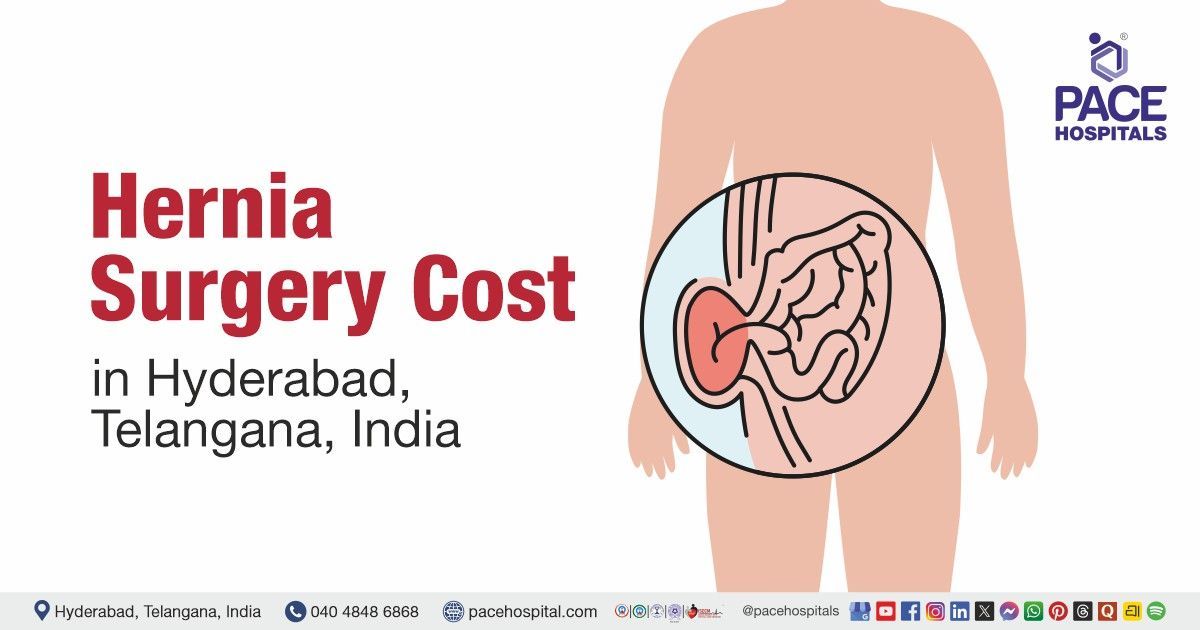
Hernia surgery (herniorrhaphy/hernia repair) is a surgical procedure performed to correct a hernia. A hernia is a condition in which an internal organ, fatty tissue, or part of the intestine protrudes through a weakened area or opening in the surrounding muscle, fascia (connective tissue), or abdominal wall. Surgery is intended to relocate the protruding tissue back where it belongs and to strengthen or close the weakened area in order to ensure the hernia does not recur.
Usually, a hernia does not go away on its own. In many cases, the weak muscle or tissue gets larger over time, causing the hernia to get larger and possibly leading to complications. Therefore, hernia surgery is the definitive treatment for most symptomatic hernias.
Get a Cost Estimate for Hernia Surgery
Hernia Surgery Cost Query
Hernia surgery cost in India
Hernia surgery cost in India varies depending on the type and complexity of the surgery, and on average, it ranges between ₹30,000 and ₹2,50,000 (approximately US $ 316 to US $2,632). But the actual cost may vary depending on a number of clinical and hospital-specific factors, including:
- The patient’s age, overall health status, and presence of comorbidities such as diabetes or obesity.
- Type of hernia (inguinal, umbilical, incisional, femoral, or recurrent hernia).
- Type of surgical technique used (open repair, laparoscopic repair, mesh repair, or robotic).
- Type of hospital (government, private, or corporate hospital setup).
- Hospital charges, including room category, operation theatre charges, and ICU stay if required.
- Surgeon’s experience and expertise in laparoscopic or advanced hernia repair.
- Approval of cashless facility or insurance coverage.
- Pre-operative investigations (blood tests, imaging, ECG, fitness for anaesthesia).
- Postoperative care, medications and follow-up visits.
- Complications such as infection, recurrence, or extended hospital stay
Cost of hernia surgery in Hyderabad, Telangana
On average, hernia surgery costs in Hyderabad range between ₹35,000 and ₹1,80,000 (approximately US $368 to US $1895). The city offers both economical and advanced treatment options, based on the hospital and procedure selected.
However, the cost may vary depending on the following factors:
- Type and severity of hernia, including whether it is a primary or recurrent case
- Surgical method used, such as open repair, laparoscopic mesh repair and robotic type.
- Patient’s overall health condition and presence of other medical illnesses
- The category of hospital and the type of room or care facilities chosen
- Insurance coverage and any postoperative complications affecting the recovery cost
Cost Breakdown According to Type of Hernia Surgery
- Open surgery – ₹30,000 - ₹60,000 (approximately US $316 - US $632)
- Laparoscopic surgery - ₹50,000 - ₹1,10,000 (approximately US $526 - US $1,158)
- Robotic surgery -₹1,10,000 - ₹1,80,000 (approximately US $1,158 - US $1,895)
- Mesh Repair (Standard/3D/Bio) (if needed) - ₹8000 - ₹36,000 (approximately US $84 - US $379)
Cost by Hernia Type
The cost of hernia surgery varies based on the hernia location, whether the repair is performed by open surgery, laparoscopic surgery, or mesh repair, and the patient’s overall condition.
- Inguinal hernia surgery cost- ₹30,000 -₹85,000
- Umbilical hernia surgery cost -₹50,000 – ₹80,000
- Incisional hernia surgery cost – ₹65,000 - ₹1,10,000
- Hiatal hernia surgery cost – ₹50,000 – ₹1,00,000
Note: These are estimated costs. The exact cost for an individual patient is determined after a detailed clinical evaluation by the surgical team.
Additional Information: The cost of hernia surgery depends on various factors such as the type and size of hernia, surgical approach (open, laparoscopic, robotic), use and type of mesh material, complexity of the case (recurrent or emergency hernia), duration of hospital stay, experience and expertise of the surgeon. This ensures that each patient receives an individualized treatment plan along with a clear and transparent cost estimate based on their specific medical condition.
Breakdown of Hernia Surgery Costs
The cost of hernia surgery consists of several factors that can vary depending on the type of hernia, the surgical approach (open, laparoscopic or robotic), the hospital’s facilities, and the overall health condition of the patient. Here is an entire overview of the costs associated with hernia surgery:
Pre-Surgery Costs
- Consultation fees: Charges for consulting a general surgeon or a laparoscopic surgeon. The charges may vary depending on the expertise of the doctor and the hospital setup.
- Diagnostic tests: This may include blood tests, an ultrasound of the abdomen or groin, an ECG, a chest X-ray and other imaging studies as necessary to assess the hernia and general health.
- Pre-Anaesthesia evaluation: Evaluation by an anaesthesiologist to determine if the patient is medically fit for the surgery and the anaesthesia.
Hernia Surgery Costs
- Hospitalization charges: Room charges on admission, including general ward, semi-private or private room options. ICU charges may apply for complex or emergency cases.
- Surgical procedure charges: Cost of the hernia repair procedure (open, laparoscopic or robotic), including surgeon’s fee and operation theatre cost.
- Mesh and Surgical Materials: Cost of mesh (standard synthetic or advanced mesh types), sutures, etc. and other surgical consumables used during the procedure.
- Anaesthesia and surgical team fees: Charges for anaesthesia services, anesthesiologist, and supporting surgical staff.
Post-Surgery Care Costs
- Postoperative monitoring: The charges for care and observation in the recovery room after surgery.
- Hospital stay: Usually 1-2 days for simple cases, longer if there are large/complicated hernias.
- Medications and dressing supplies: Analgesics, antibiotics, wound care supplies and supportive therapies.
- Follow-up visits: Follow-up checkups are important to monitor wound healing and recovery after surgery
This cost structure provides transparency and helps patients plan their finances effectively for hernia surgery. Hospitals provide detailed, personalized cost estimates based on the type of hernia, surgical technique, and the patient's specific medical requirements, ensuring safe and affordable surgical care.
Who needs hernia surgery?
Hernia surgery is recommended when the hernia causes symptoms or has a high risk of complications that can threaten organ function or life. These clinical situations are considered the accepted indications for surgical repair. These include:
- Patients with persistent or severe pain: Pain that continues or gets worse may mean the hernia is putting pressure on nearby tissue, nerves or bowel. A defect of clinical significance is one that causes severe pain that interferes with daily activities or pain that increases with lifting, coughing, or prolonged standing. Surgical repair is recommended as an elective procedure for relief of symptoms and prevention of further complications.
- Hernia increasing in size: A hernia that enlarges slowly shows that the weakness of the abdominal wall is continuing. The wider the defect, the more likely it is that bowel or fat can be trapped. Emergency surgery after complications develop is technically more difficult and less safe than early surgical repair.
- Irreducible (incarcerated) hernia: An incarcerated hernia occurs when the herniated contents cannot be pushed back into the abdomen. This condition may cause pain, swelling and bowel obstruction. Incarceration increases the risk of strangulation, requiring urgent surgical intervention.
- Strangulated hernia (emergency): A strangulated hernia occurs when the blood supply to the trapped tissue is cut off. This may result in tissue death (necrosis), infection and sepsis. Symptoms may include severe pain, redness, fever and vomiting. Life-threatening complications must be prevented with emergency surgery.
- Signs of bowel obstruction (vomiting, distension, constipation): If a hernia blocks part of the intestine, symptoms like vomiting, abdominal distension, constipation, and inability to pass gas may occur. This is a serious condition that can compromise bowel function. Immediate medical evaluation and often urgent surgery are necessary.
- Recurrent hernia: A hernia that recurs after surgical repair. Recurrence may be due to the weakness of the scar tissue or tension on the site of repair. Repeat surgery is commonly recommended to strengthen the abdominal wall and prevent further complications.
Who is Not Eligible for Hernia Surgery?
Not all patients are suitable candidates for hernia surgery. Certain medical conditions or risk factors may require delaying the procedure or considering non-surgical management to ensure patient safety and better outcomes. These include:
Active Local or Systemic Infection: Surgery should be avoided in the presence of local infection (e.g., cellulitis) or systemic infection (e.g., sepsis, bacteremia) due to high risk of wound and mesh infection.
Severe Cardiovascular or Pulmonary Disease: Uncontrolled heart failure, unstable angina or pulmonary embolism may hinder safe anaesthesia and increase the surgical risk.
Uncontrolled Diabetes: Poor glycemic control increases the risk of infection and delayed wound healing; blood sugar should be optimized before surgery.
Immunodeficiency: If untreated or in cases of severe immune suppression (e.g., advanced HIV) the risk of postoperative infection increases and patients need to be stabilized prior to surgery.
Active
Deep Vein Thrombosis (DVT) or Pulmonary Embolism: Surgery should be postponed until thromboembolic conditions are treated and the patient is stable.
Morbid Obesity and Active Smoking: Morbid obesity involves increased risks for surgical complications such as infection, poor healing, and recurrence. Smoking cigarettes reduces blood flow and slows healing. Therefore, quitting smoking and losing weight are recommended prior to surgery.
Severe, Uncorrected Anaemia or Malnutrition: Severe anaemia reduces the supply of oxygen and slows healing, while malnutrition weakens immunity. Both conditions should be corrected before proceeding with hernia surgery.
How is Hernia surgery done?
Hernia surgery is a structured surgical procedure performed to correct a defect in the muscle wall through which internal tissue protrudes. The following steps describe the standard operative process from pre-operative preparation to postoperative recovery in a clear and systematic manner. They include:
Pre-Operative Evaluation
The clinical examination confirms the type and site of the hernia. Imaging, blood tests and a basic cardiac examination are done as needed. Fasting preoperatively for 6-8 hours and temporary modification of some medications are suggested.
Administration of Anaesthesia
Anaesthesia is given to make the operation pain-free. Local, spinal or general anaesthesia is selected according to the type, size and surgical approach for the hernia.
Surgical Approach
- Open Hernia Repair: A single incision is made over the hernia site. The protruding tissue is returned to its normal position, and the muscle defect is repaired using sutures or mesh.
- Laparoscopic Hernia Repair: Three to four small incisions are made. A camera is placed in for visualization. Carbon dioxide is used to create working space. Mesh is placed to reinforce the defect.
Reduction of Hernia Contents
The protruded intestine or fatty tissue is gently repositioned into the abdominal cavity. The hernia sac is removed or secured, and tissues are inspected for viability.
Repair of the Muscle Defect
The defect is repaired either by suturing the muscle edges (herniorrhaphy) or by placing a synthetic mesh (hernioplasty). Mesh repair is more commonly used due to lower recurrence rates.
Closure of the Incision
Surgical layers are closed with sutures or staples, and a sterile dressing is applied.
Postoperative Recovery
Monitoring continues until the anaesthesia effects resolve. Mild pain and swelling are common. Early mobilization is encouraged, while strenuous activity is restricted for several weeks.
Types of Hernia Surgery
The procedure can be performed through:
- Open surgery, involving a larger incision directly over the hernia.
- Laparoscopic surgery uses several small incisions and a camera.
- Robotic-assisted surgery is a minimally invasive approach using robotic instruments controlled by the surgeon.
Post-Hernia Surgery Care Tips
Post-hernia surgery care is essential for proper healing and prevention of complications. Following postoperative instructions helps in maintaining a safe and smooth recovery. These include:
- After hernia repair, proper recovery measures are important to support healing and prevent complications.
- It is advised to attend regular review visits for checking wound healing and overall progress.
- It is advised to attend regular review visits for checking wound healing and overall progress.
- It is recommended to keep the operated area clean and follow the instructions for caring for the dressing.
- It is advisable to avoid heavy lifting and physical strain for about 4 – 6 weeks.
- It is advised to do light walking to improve recovery and blood circulation.
- It is suggested to complete all prescribed medications as instructed.
- It is recommended to prevent constipation and avoid straining during bowel movements.
- It is advisable to avoid bathing in pools or tubs until full healing has occurred.
- If pain, swelling, fever or discharge develop, it is advisable to seek medical advice.
Following these recommendations ensures proper healing, reduces complications, and supports long-term recovery after hernia surgery.
Key Factors Influencing Hernia Surgery Cost
- Type and severity of hernia: Hernia types like umbilical, inguinal and incisional have different costs. Repair of larger or complicated hernias takes longer and is more complex, adding to the overall expense.
- Surgical method (open or laparoscopic/robotic): Open surgery is usually less expensive. Laparoscopic and robotic procedures are more expensive due to advanced equipment and techniques. Some costs may be balanced by a shorter hospital stay as well, using minimally invasive methods.
- Use and type of mesh material: Mesh repair is commonly used to strengthen the weak muscle wall. The cost depends on the quality, brand, and type of mesh used during the procedure.
- Hospital type and facility standards: Government hospitals usually have lower charges compared to private or multi-speciality hospitals. Advanced infrastructure, ICU facilities, and comfort services can increase the total cost.
- Surgeon’s experience and expertise: Highly experienced surgeons or specialists may charge higher consultation and surgical fees. Their expertise improves surgical outcomes and reduces complications.
- Anaesthesia and operating theatre charges: The cost depends on the type of anaesthesia and the length of surgery. Operating theatre fees include equipment, staff and monitoring provisions.
- Pre-operative tests and investigations: Blood tests, imaging studies and cardiac evaluation are required prior to surgery. Such diagnostic procedures are included in the total cost of treatment.
- Length of hospital stay: Longer hospitalization increases room charges, nursing care, and medication costs. Laparoscopic procedures usually allow earlier discharge, reducing expenses.
- Insurance coverage and policy benefits: Depending on the coverage terms, health insurance expenses may significantly reduce out-of-pocket costs. Cashless facilities or reimbursement options influence the final payment burden.
- Location of the hospital and regional cost differences: Surgical costs vary depending on the city and region due to different medical costs and hospital pricing structures. Charges are generally higher in urban centres than in smaller towns.
Why Choose PACE Hospitals for Hernia Surgery in Hyderabad, India?
PACE Hospitals, Hyderabad, is a reputed and well-established centre for advanced hernia diagnosis and surgical repair.
- We have highly experienced general surgeons, laparoscopic surgeons, and gastrointestinal (GI) surgeons, along with anaesthesiologists and trained surgical nursing staff, who follow evidence-based protocols for safe and effective hernia management.
- Our facilities include modern operating theatres, advanced laparoscopic equipment, and well-equipped postoperative recovery units to ensure patient safety and comfort.
- Patient-centred care is provided with individualized treatment planning, minimal complication rates, and clear communication throughout the surgical process.
For patients seeking the Best Hospital for Hernia Surgery in Hyderabad, Telangana, India, PACE Hospitals offers advanced surgical care, competitive treatment costs, and transparent clinical planning.
Financial Assistance and Payment Plans at PACE Hospitals
Quality hernia care is made more affordable through structured financial support and transparent billing systems.
- Cashless hospitalization is available through empanelled insurance providers and TPAs.
- Assistance is provided for pre-authorization and required documentation to ensure smooth approval.
- Support is available for insurance reimbursement when a cashless facility is not applicable.
- Clear and detailed cost estimates are shared prior to admission to avoid financial uncertainty.
- Guidance is also offered for corporate health benefits and government healthcare schemes.
Hernia Surgery Success Rate
Hernia surgery is highly effective with a success rate of approximately 90% – 95%, depending on the type of hernia and surgical technique used.
Patient's experience:
- Reduction or complete relief of pain and discomfort
- Disappearance of the visible or felt swelling
- Better support and function
- Lower risk of serious complications such as blockage or trapped intestine
Long-term success depends on proper surgical technique, use of mesh when indicated, and adherence to postoperative care and follow-up instructions.
Frequently Asked Questions (FAQs) on Hernia Surgery
How much does it cost for hernia surgery in India?
The cost of hernia surgery depends on the type of hernia, type of surgery (open, laparoscopic or robotic), type of hospital and whether mesh is used. In India, the price ranges from generally ₹30,000 to ₹2,50,000 (approximately US $ 316 to US $2,632), with robotic surgery being the highest. The exact cost is confirmed after clinical evaluation and treatment planning.
How much does umbilical hernia surgery cost in India?
The cost of umbilical hernia surgery varies depending on the surgical technique (open or laparoscopic), hospital, mesh use, and patient condition. In India, it is usually between ₹35,000 to ₹1,50,000 (approx USD 368 to USD 1,580). The cost is finalized after clinical evaluation and selection of a proper treatment plan.
How long is the recovery after hernia surgery?
After hernia surgery, recovery generally takes 1 to 2 weeks for light daily activities, especially for laparoscopic cases. Depending on the type of surgery and overall health, full recovery, including return to heavy work or exercise, usually takes 4 to 6 weeks. Proper rest, wound care, and avoiding strain help ensure smooth healing.
What are the early signs of a hernia?
Early symptoms of a hernia usually involve a noticeable or palpable bulge in the abdomen or groin that becomes more pronounced when coughing, lifting, or standing. Mild pain, discomfort or a sensation of heaviness at the site of the affected area may also be present. A person might feel a burning or dragging sensation in the area, particularly during normal physical activity.
What is the three-finger test for a hernia?
The three-finger test for hernia is a simple clinical examination that can help in the identification of an inguinal hernia. The examiner places three fingers on the inguinal canal and asks the patient to cough or strain. A palpable or visible impulse at the fingertip indicates the presence of a hernia.
Can a hernia come back after surgery?
Yes, a hernia can recur after surgery, but with the proper repair, recurrence is rare. Careful observance of postoperative instructions and use of mesh will decrease the risk. Factors that may increase the chances of it happening again include obesity, chronic cough, poor wound healing or heavy lifting.
What is the expected life expectancy after Hernia Surgery at PACE Hospitals, Telangana, India?
Hernia surgery in PACE Hospitals, Telangana, India, is performed in order to correct the defect in the abdominal wall and restore normal function. Life expectancy is not usually affected by the procedure, and most patients can expect to live a normal lifespan after successful treatment. Long-term outcomes at PACE Hospitals depend on overall health status, type of hernia, surgical technique, and adherence to postoperative care and follow-up guidance.
What foods should be avoided after hernia surgery?
After hernia surgery, one should avoid certain foods that can cause constipation, bloating and cause extra strain on the abdominal wall. Fried, spicy and processed foods can slow digestion and increase discomfort during recovery. Limit carbonated drinks, excess caffeine and gas-producing foods such as beans and cabbage to reduce pressure in the abdomen.
What is the main cause of a hernia?
A hernia is caused when the wall of muscle or connective tissue is weak enough to allow internal tissue (intestine, fat, etc.) to push through. The weakness may be congenital or acquired by ageing, heavy lifting, chronic coughing, obesity or repeated abdominal strain.
Can hernias heal without surgery?
No, a hernia will not go away on its own. A hernia is caused by a weak spot in the muscle wall. Medicines or support belts might help with the discomfort temporarily, but they can't correct the problem. The only definitive way to repair this opening and avoid future problems is by surgery.
Who is most at risk for a hernia?
Hernias are most common in people with increased abdominal pressure or weak muscle walls. These include older adults, people who are overweight, people with a chronic cough or constipation and people who frequently lift heavy objects. Previous abdominal surgery and a family history of hernia may also increase the risk.
How long will a Hernia surgery take?
Hernia surgery generally takes 30 minutes to 2 hours, depending on the type of hernia and its complexity. Simple open procedures are often completed more quickly, whereas laparoscopic or robotic techniques may take longer. Complex or recurrent hernias may also prolong surgery.
What factors affect the cost of hernia surgery?
The cost of hernia surgery depends on the type and severity of the hernia and the type of surgery used (open, laparoscopic or robotic). Further, the cost is dependent on hospital category, surgeon expertise, use of mesh, anaesthesia charges and pre-operative investigations. Other factors include length of hospital stay, postoperative care and insurance coverage.
What are the types of hernia mesh?
Hernia mesh can be grouped into different types based on material and design. These include synthetic mesh, biologic mesh, and composite mesh, depending on how they are made. Based on absorption, they are also classified as absorbable, non-absorbable, or partially absorbable. In some cases, a 3D anatomical mesh is used to provide a better fit and improved support during repair.
Is hernia surgery painful?
Yes, mild pain or discomfort may be present after hernia surgery, but it is usually temporary and manageable. The procedure itself is painless, because anaesthesia is given. With the right medication and care, postoperative pain usually gets better in a few days.
Share on
Request an appointment
Fill in the appointment form or call us instantly to book a confirmed appointment with our super specialist at 04048486868
Appointment request - health articles
Recent Articles