
Hiatal Hernia Surgery - Types, Benefits & Procedure
PACE Hospitals offers advanced Hiatal Hernia Surgery in Hyderabad, India, providing effective treatment for hiatal hernias in which part of the stomach moves through the diaphragm into the chest. Our specialists use appropriate surgical techniques, including laparoscopic and minimally invasive approaches, based on the type and severity of the hernia.
With a focus on accurate diagnosis, personalized treatment planning, and safe surgical techniques, we provide comprehensive care for symptomatic, large, and complicated hiatal hernias, aiming to relieve symptoms, restore normal anatomy, prevent complications, and support long-term recovery.
Book an Appointment for Hiatal Hernia Surgery
Hiatal Hernia Surgery Appointment
Why Choose PACE Hospitals for Hiatal Hernia Repair?
Expert Surgical Gastroenterologists Specializing in Hiatal Hernia and GERD Management
Minimally Invasive Hiatal Hernia Repair with Laparoscopic Surgery, Diaphragmatic Closure & Anti-Reflux Procedure for Effective Symptom Relief
Transparent Hiatal Hernia Surgery with Insurance & Cashless Options
Recognized for excellence in healthcare delivery with
NABH, NABL, NBE/DNB, NABH Nursing Excellence, and ISCCM accreditations.
What is hiatal hernia surgery?
A hiatal hernia occurs when part of the stomach pushes through the diaphragm into the chest cavity. Many hiatal hernias do not cause symptoms; larger ones can lead to persistent heartburn, acid reflux (GERD), chest discomfort, difficulty swallowing, or regurgitation. Hiatal hernia repair surgery is performed to reposition the stomach, repair the opening in the diaphragm, and reduce reflux symptoms.
A paraesophageal hernia is a type of hiatal hernia in which a piece of the stomach passes through the diaphragm and resides next to the esophagus; this may necessitate surgery if it is large, symptomatic, or causes difficulties.
Hiatal hernia surgery is recommended when symptoms do not improve with medications and lifestyle changes, or if the patient has a large paraesophageal hernia, severe GERD, difficulty swallowing, recurrent bleeding, gastric volvulus (stomach twisting), or a strangulated hernia requiring emergency treatment.
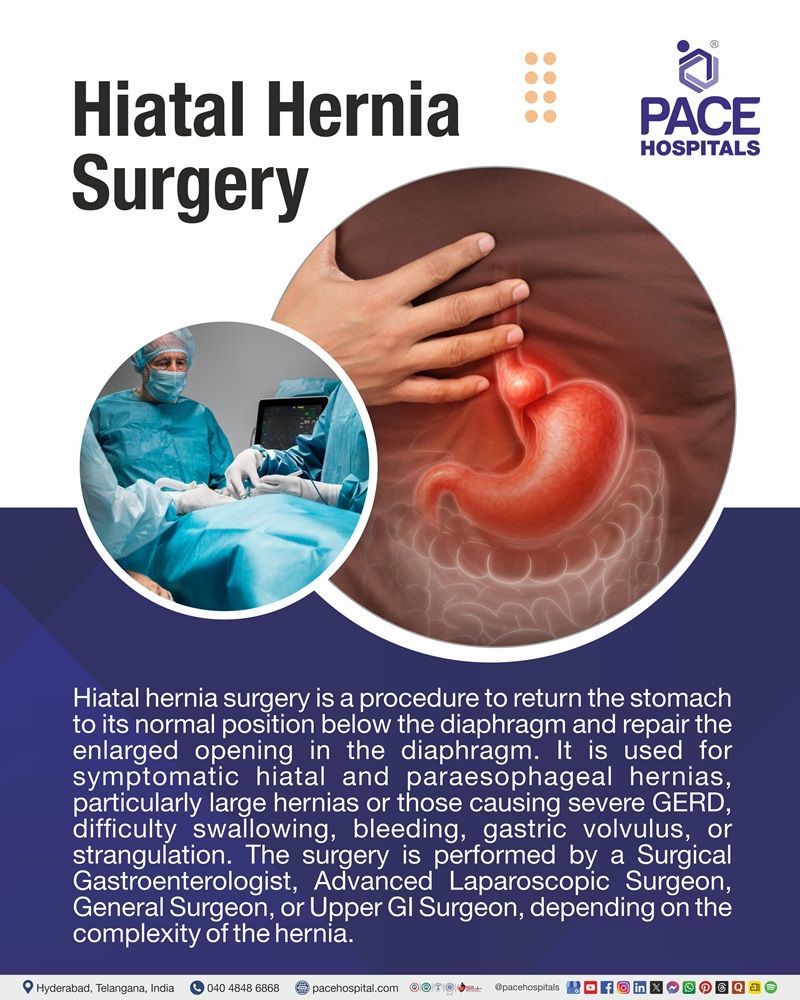
Hiatal hernia repair is usually performed by a Surgical Gastroenterologist, Advanced Laparoscopic Surgeon, or a General Surgeon with specialised training in upper gastrointestinal and minimally invasive surgery. In complex cases involving a very large paraesophageal hernia, recurrent hernia, or associated esophageal disorders, the surgery may be performed by an Upper Gastrointestinal (Upper GI) Surgeon or a multidisciplinary team to achieve the best possible outcome.
Types of hiatal hernia surgery
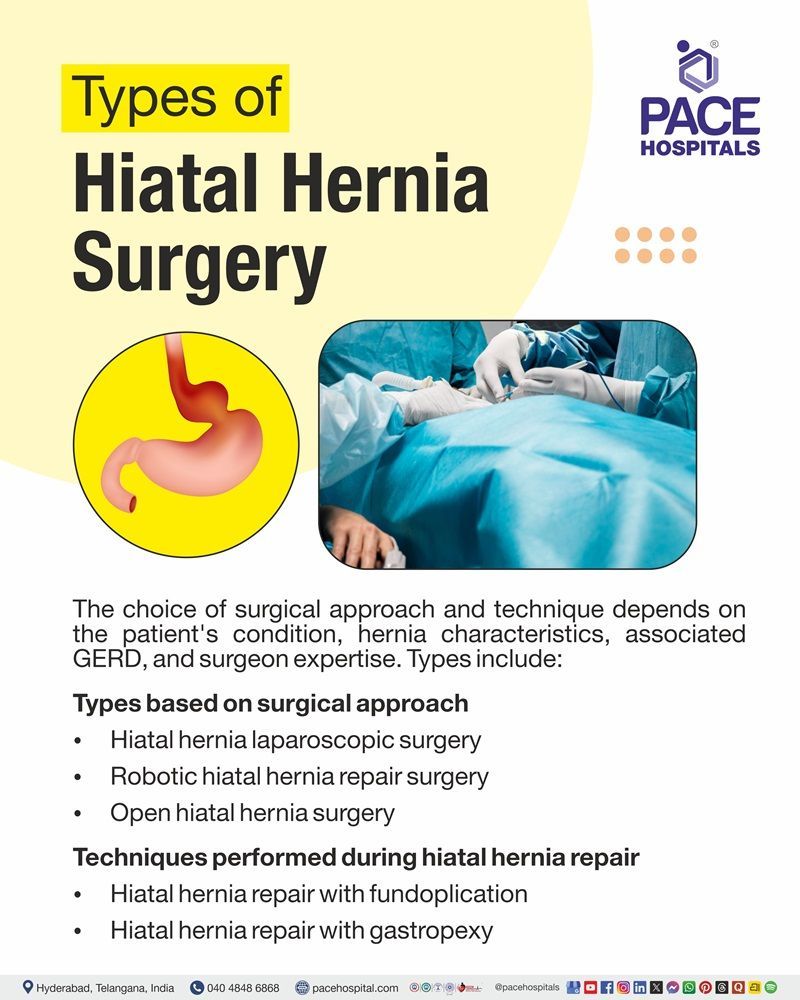
The choice of surgical procedure depends on factors including the type and size of the hernia, the presence of gastroesophageal reflux disease (GERD), the patient's overall health, and the surgeon's expertise. The surgical approach and techniques used during repair may vary according to the patient’s condition. The following are the approaches and techniques used in hiatal hernia surgery:
Types based on surgical approach
- Hiatal hernia laparoscopic surgery
- Robotic hiatal hernia repair surgery
- Open hiatal hernia surgery
Techniques performed during hiatal hernia repair
- Hiatal hernia repair with fundoplication
- Hiatal hernia repair with gastropexy
Types based on surgical approach
Hiatal hernia laparoscopic surgery
Laparoscopic repair is the most commonly used surgical approach for hiatal hernia repair. In this approach, the surgeon makes a few small incisions in the abdomen and uses a laparoscope and specialised surgical instruments to reposition the stomach into the abdomen and repair the enlarged opening in the diaphragm.
Robotic hiatal hernia repair surgery
It is a minimally invasive technique in which the surgeon performs the operation using a robotic surgical system. This approach may be particularly beneficial for complex or recurrent hiatal hernias while offering recovery benefits similar to laparoscopic surgery.
Open hiatal hernia surgery
This is performed through a larger incision in the abdomen or chest, which allows the surgeon direct access to the hernia. This approach is done for patients who have very large hiatal hernias, recurrent hernias, strangulated hernias, or when minimally invasive surgery is not feasible.
Techniques performed during hiatal hernia repair
Hiatal hernia repair with fundoplication
After the hernia is repaired, the surgeon may perform a fundoplication, in which the upper part of the stomach is wrapped around the lower end of the esophagus. This strengthens the lower esophageal sphincter, helps prevent acid reflux, and reduces symptoms such as heartburn and regurgitation. The type of fundoplication performed, such as Nissen, Toupet, or Dor, depends on the patient's condition and esophageal function.
Hiatal hernia repair with gastropexy
In patients with a large paraesophageal hernia, gastric volvulus, or a high risk of recurrence, the surgeon may perform gastropexy. In this technique, the stomach is secured to the diaphragm or abdominal wall after the hernia is repaired to help keep it in its normal position and reduce the risk of it moving back into the chest. It may be performed alone in selected patients or combined with fundoplication.
Indications for hiatal hernia surgery
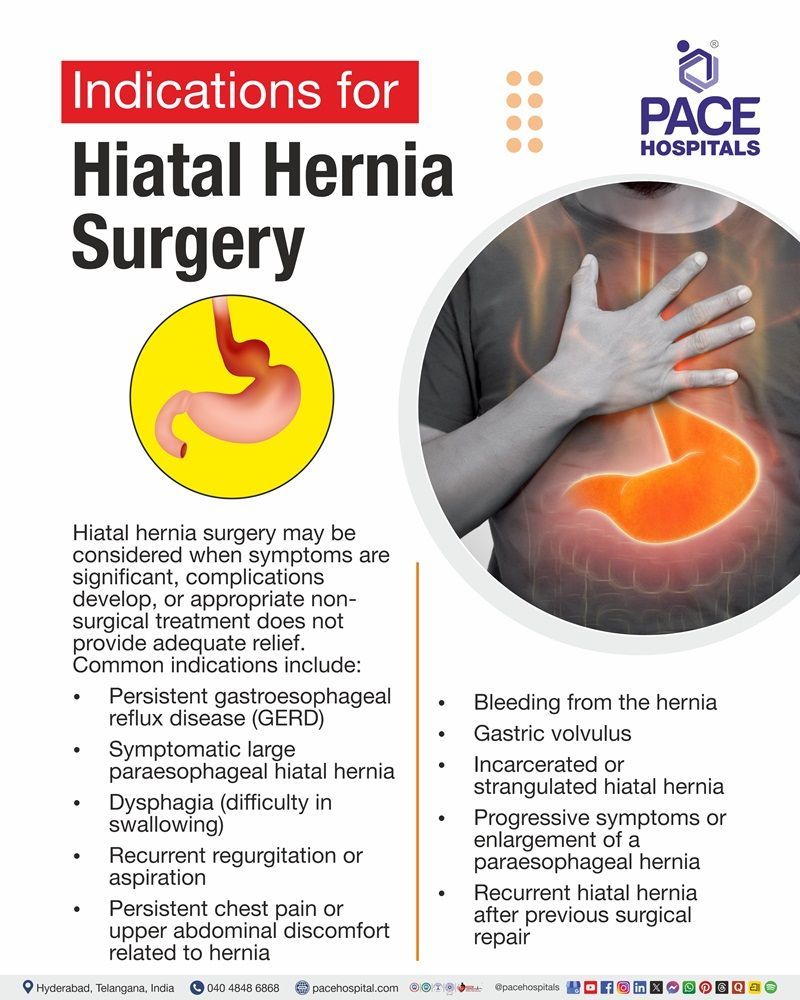
Hiatal hernia surgery is indicated when symptoms are severe, complications develop, or conservative treatments fail to provide adequate relief. The following are some common indications of hiatal hernia surgery:
- Persistent gastroesophageal reflux disease (GERD)
- Symptomatic large paraesophageal hiatal hernia
- Dysphagia (difficulty in swallowing)
- Recurrent regurgitation or aspiration
- Persistent chest pain or upper abdominal discomfort related to hernia
- Bleeding from the hernia
- Gastric volvulus
- Incarcerated or strangulated hiatal hernia
- Progressive symptoms or enlargement of a paraesophageal hernia
- Recurrent hiatal hernia after previous surgical repair
Persistent gastroesophageal reflux disease (GERD)
Persistent GERD symptoms, such as heartburn and acid regurgitation, that do not improve with medications and lifestyle changes. Hiatal hernia surgery helps repair the hernia and strengthens the barrier between the stomach and esophagus, which reduces acid reflux.
Symptomatic large paraesophageal hiatal hernia
Chest pain, difficulty eating, early fullness, dyspnea, or stomach compression are all possible symptoms of large paraesophageal hernias. In order to relocate the stomach into the abdomen and avoid serious complications like obstruction or strangulation, surgery is recommended.
Dysphagia (difficulty in swallowing)
The lower esophagus may be compressed by a hiatal hernia, making it more difficult for food to enter the stomach. Restoring normal anatomy via surgery helps to ease swallowing problems.
Recurrent regurgitation or aspiration
Patients who frequently regurgitate stomach contents or accidentally inhale them into the lungs (aspiration) are at increased risk of aspiration pneumonia and other respiratory problems. Hiatal hernia repair reduces reflux and prevents stomach contents from entering the airway.
Persistent chest pain or upper abdominal discomfort related to the hernia
Patients may suffer from persistent chest pain or discomfort in the upper abdomen as a result of a large hiatal hernia when possible heart problems have been ruled out. Surgery helps to relieve symptoms by restoring the stomach to its normal position.
Bleeding from the hernia
Large hiatal hernias can cause chronic irritation or ulcers (Cameron lesions) at the site where the stomach is compressed by the diaphragm, leading to bleeding and iron-deficiency anaemia. Surgery repairs the hernia and helps prevent further bleeding.
Gastric volvulus
A paraesophageal hiatal hernia may cause the stomach to twist on itself (gastric volvulus), leading to severe pain, obstruction, and reduced blood supply to the stomach. This is a potentially life-threatening condition that usually requires urgent surgical repair.
Incarcerated or strangulated hiatal hernia
An incarcerated hiatal hernia occurs when part of the stomach becomes trapped in the chest and cannot return to the abdomen. If the blood supply is cut off (strangulation), the stomach tissue can become damaged or die. This is a surgical emergency that requires immediate treatment.
Progressive symptoms or enlargement of a paraesophageal hernia
When a paraesophageal hernia continues to enlarge, or symptoms worsen over time, surgery is recommended to prevent complications such as obstruction, gastric volvulus, bleeding, or strangulation.
Recurrent hiatal hernia after previous surgical repair
In some patients, a hiatus hernia may recur after an earlier repair due to tissue weakness or other factors. If the recurrent hernia causes severe symptoms or complications, revision surgery needs to be done to restore normal anatomy and improve symptoms.
Contraindications of Hiatal Hernia Surgery
Hiatal hernia surgery may not be suitable for everyone. The decision mainly depends on the patient's overall health, the severity of symptoms, and whether the benefits outweigh the potential risks. The following are contraindications that may be absolute or relative:
Absolute Contraindications
- Uncontrolled sepsis or active systemic infection
- Haemodynamic instability or shock
- Uncorrectable severe bleeding disorders (coagulopathy)
- Inability to tolerate general anaesthesia
Relative Contraindications
- Severe cardiopulmonary disease
- Advanced liver disease or decompensated cirrhosis
- Poor general health or high surgery-related risk
- Morbid obesity
- Previous extensive upper abdominal or esophageal surgery
- Severe esophageal motility disorders
- Pregnancy
- Asymptomatic or less symptomatic sliding hiatal hernia
- Patients with limited life expectancy
Absolute Contraindications
Uncontrolled sepsis or active systemic infection
Patients with an active infection throughout the body are at a much higher risk of developing serious surgical complications, poor wound healing, and postoperative infections. Elective hiatal hernia surgery is usually postponed until the infection has been successfully treated and the patient's condition has stabilised.
Haemodynamic instability or shock
Patients who are in shock or have unstable blood pressure and circulation are not medically fit to undergo elective surgery. Performing hiatal hernia surgery in this condition can further compromise blood flow to vital organs and increase the risk of life-threatening complications. The underlying cause of the instability must be treated before surgery is considered.
Uncorrectable severe bleeding disorders (Coagulopathy)
Hiatal hernia surgery involves dissection and repair of tissues around the stomach and diaphragm. Patients with severe blood clotting disorders have a high risk of excessive bleeding during and after the operation.
Inability to tolerate general anaesthesia
Hiatal hernia repair is performed under general anaesthesia. Patients with severe heart disease, advanced lung disease, or other serious medical conditions that make general anaesthesia unsafe may not be suitable candidates for elective surgery.
Relative Contraindications
Severe cardiopulmonary disease
Patients with advanced heart or lung diseases, such as severe heart failure or chronic obstructive pulmonary disease (COPD), may have a higher risk of complications from general anaesthesia and surgery. Their condition should be carefully evaluated and optimised before hiatal hernia repair.
Advanced liver disease or decompensated cirrhosis
Patients with severe liver disease have an increased risk of excessive bleeding, poor wound healing, infection, and liver-related complications after surgery. Hiatal hernia repair is usually postponed unless the expected benefits outweigh these risks.
Poor general health or high surgery-related risk
Patients who are frail or have multiple serious medical conditions may not tolerate surgery or recover well afterwards. The healthcare team carefully assesses whether surgery is likely to improve the patient's quality of life before recommending the procedure.
Morbid obesity
Morbid obesity increases the risk of anaesthetic complications, wound infection, hernia recurrence, and poor surgical outcomes. In some patients, bariatric surgery combined with hiatal hernia repair or performed before hernia repair may be a more appropriate treatment option.
Previous extensive upper abdominal or esophageal surgery
Any previous surgery in the upper abdomen or esophagus can lead to scar tissue and altered anatomy, which makes hiatal hernia repair more technically challenging and increases the risk of injury to surrounding organs during surgery.
Severe esophageal motility disorders
Patients with conditions that impair normal esophageal movement may have difficulty swallowing after certain types of anti-reflux surgery, particularly a complete fundoplication. These patients require careful evaluation, and if surgery is performed, the surgical technique may need to be modified.
Pregnancy
Elective hiatal hernia surgery is generally postponed until after delivery because surgery and general anaesthesia may pose risks to both the mother and the developing baby. Surgery during pregnancy is usually reserved for emergencies, such as a strangulated hernia or gastric volvulus.
Asymptomatic or less symptomatic sliding hiatal hernia
Most small sliding hiatal hernias do not require surgery because they often respond well to lifestyle modifications and medications. Since the risks of surgery may outweigh the benefits, conservative treatment is usually preferred unless symptoms become severe or complications develop.
Patients with limited life expectancy
For patients with advanced incurable illnesses or a limited life expectancy, the potential benefits of hiatal hernia surgery may not justify the risks associated with the operation. In such cases, treatment usually focuses on relieving symptoms and improving comfort rather than performing surgery.
Benefits of Hiatal Hernia Surgery
Hiatal hernia surgery can provide long-term relief for many people who have failed other treatments. The surgery alleviates symptoms, prevents complications, and improves quality of life by correcting the hernia and strengthening the diaphragm. Some key benefits of hiatal hernia surgery are:
- Relieves acid reflux symptoms
- Improves swallowing
- Reduces chest and upper abdominal discomfort
- Prevents serious complications
- Decreases dependence on acid-suppressing medications
- Improves quality of life
- Reduces the risk of aspiration
- Provides durable long-term symptom relief
Relieves acid reflux symptoms
Hiatal hernia surgery restores the stomach's normal position and improves the barrier between the stomach and the esophagus, alleviating symptoms such as heartburn, acid regurgitation, and a sour taste in the mouth.
Improves swallowing
By repairing the hernia and correcting pressure on the esophagus, surgery can relieve difficulty swallowing (dysphagia) and allow food to pass more easily into the stomach.
Reduces chest and upper abdominal discomfort
Many patients experience relief from persistent chest pain, upper abdominal pain, bloating, or a feeling of fullness caused by the hiatal hernia.
Prevents serious complications
Surgical repair reduces the risk of complications such as gastric volvulus (twisting of the stomach), incarceration, strangulation, bleeding, and obstruction, particularly in patients with large paraesophageal hernias.
Decreases dependence on acid-suppressing medications
Many patients require fewer or no long-term medications after successful hiatal hernia repair and fundoplication.
Improves quality of life
Relief from chronic reflux and hernia-related symptoms allows many patients to eat more comfortably, sleep better, and perform daily activities with greater ease, hence improving quality of life.
Reduces the risk of aspiration
By preventing reflux of stomach contents into the esophagus, surgery lowers the risk of aspiration, that cause chronic cough, recurrent chest infections, or aspiration pneumonia.
Provides durable long-term symptom relief
In appropriately selected patients, hiatal hernia surgery offers long-lasting relief from symptoms and has a low recurrence rate when combined with healthy lifestyle habits and appropriate follow-up.
Get a Free Second Opinion for Hiatal hernia repair
At PACE Hospitals, we are committed to providing our patients with the best possible care, and that includes offering second medical opinions with super specialists for treatment or surgery. We recommend everyone to get an expert advance medical second opinion, before taking decision for your treatment or surgery.
Hiatal Hernia Procedure Steps
Procedure steps for hiatal hernia repair surgery include:
Before hiatal hernia surgery
- Preoperative investigations: The surgeon orders blood tests to assess haemoglobin levels, kidney function, liver function, blood sugar, and blood clotting ability. Imaging studies such as an upper gastrointestinal (GI) endoscopy, barium swallow (contrast X-ray), CT scan, esophageal manometry, or 24-hour pH monitoring may be performed to confirm the diagnosis, evaluate the size of the hernia, and assess esophageal function. An electrocardiogram (ECG) and chest X-ray may also be advised to evaluate fitness for general anaesthesia.
- Medical evaluation: The surgeon examines the patient's medical history, symptoms, history of any esophageal or abdominal procedures, and any liver, lung, heart, or other diseases that may be present. The patient's suitability for surgery is assessed by a physical examination.
- Medication review: Patients should inform the doctor about all medicines they are taking. Blood-thinning medications are stopped temporarily under medical supervision to reduce the risk of bleeding.
- Lifestyle optimisation: Patients should quit smoking and avoid nicotine products for at least 3 to 4 weeks prior to surgery, as smoking slows wound healing and increases the risk of respiratory problems. Maintaining a healthy body mass index (BMI), eating a balanced diet, managing diabetes, and limiting alcohol consumption can all improve surgery outcomes.
- Informed consent: The surgeon gives an explanation of the procedure, the benefits to be expected, the possible risks, the recovery process, and the alternative treatments available. It is then encouraged for patients to ask questions before signing the written informed consent.
- Fasting instructions: Patients are usually instructed not to eat or drink anything for 6 to 8 hours before surgery to reduce the risk of complications during general anaesthesia.
During Hiatal Hernia Surgery
- Anaesthesia and monitoring: The patient is positioned on the operating table and given general anaesthesia to remain asleep and pain-free throughout the procedure. The healthcare team continuously monitors the patient's heart rate, blood pressure, oxygen levels, breathing, and other vital signs.
- Creating surgical access: Depending on the surgical approach, the surgeon makes several small incisions (laparoscopic or robotic surgery) or a larger incision (open surgery). In minimally invasive surgery, carbon dioxide gas is used to inflate the abdomen, creating space for the surgeon to operate safely.
- Reduction of the hernia: The surgeon carefully pulls the herniated portion of the stomach and any other displaced abdominal organs back into their normal position below the diaphragm. The hernia sac may also be removed or reduced to minimise the risk of recurrence.
- Repair of the diaphragmatic opening (Hiatal repair): The enlarged opening in the diaphragm (hiatus) is tightened using strong sutures to restore its normal size. In selected patients with a large or weakened hiatus, a surgical mesh may be used to reinforce the repair.
- Fundoplication or gastropexy (if required): Depending on the patient's condition, the surgeon may perform a fundoplication, in which the upper part of the stomach is wrapped around the lower oesophagus to reduce acid reflux, or a gastropexy, in which the stomach is secured to the diaphragm or abdominal wall to help prevent it from moving back into the chest.
- Final inspection and closure: The surgeon checks the repair to ensure the stomach is in the correct position and there is no bleeding or injury to nearby structures. The instruments are removed, the carbon dioxide gas is released (in minimally invasive surgery), and the incisions are closed with sutures or surgical staples before applying sterile dressings.
After Hiatal Hernia Surgery
- Recovery room monitoring: After surgery, the patient is moved to the recovery room, where the healthcare team closely monitors heart rate, blood pressure, oxygen levels, breathing, pain, and the surgical incision sites. Patients are observed until the effects of anaesthesia wear off and their condition is stable.
- Pain management and early mobilisation: Pain-relieving medications are given to keep the patient comfortable. Patients are encouraged to sit up, walk, and move around as soon as possible to improve circulation, reduce the risk of blood clots, and promote faster recovery.
- Diet progression: Patients usually begin with small sips of water or clear liquids and gradually progress to a liquid or soft diet as advised by the surgeon. Over the following weeks, they can slowly return to a normal diet while chewing food thoroughly and eating smaller, more frequent meals.
- Incision care: The surgical incision sites should be kept clean and dry. Patients are given instructions on wound care and advised to watch for signs of infection, such as increasing redness, swelling, warmth, discharge, or fever.
- Activity restrictions: It is also suggested that heavy objects be avoided, as well as strenuous physical exercise and any activities which increase the pressure in the abdomen, for several weeks so that the surgical repair may heal properly.
- Follow-up appointments: Follow-up visits should be scheduled periodically to assess healing, improve symptoms, and identify complications early. Further testing may be needed for those who develop any swallowing problems, ongoing reflux or other concerns.
Side effects of hiatal hernia surgery
Hiatal hernia surgery is generally safe and effective in relieving symptoms, but like any surgery, it can cause temporary side effects during the recovery period. Most of these are expected, improve gradually as the body heals and can generally be managed with medications, dietary changes and proper follow-up care. Below are some of the common hiatal hernia side effects:
- Pain or soreness at the incision sites
- Temporary difficulty swallowing
- Bloating and gas
- Difficulty burping or vomiting
- Nausea
- Fatigue
- Changes in bowel habits
- Shoulder pain
- Reduced appetite
- Mild throat discomfort
Pain or soreness at the incision sites
It is common to have mild pain, tenderness, or discomfort around the small surgical incisions after laparoscopic surgery. This improves over the first few days and can be managed with prescribed pain medication.
Temporary difficulty swallowing
Some patients may find it difficult to swallow solid foods after surgery. This happens because the area near the repaired hiatal opening and the stomach wrap may be temporarily swollen. Eating soft foods and chewing them well is suggested until the swelling settles.
Bloating and gas
A feeling of fullness, bloating, or increased gas can be experienced after surgery. This occurs because it may be harder to release swallowed air while the repaired area heals. This problem can be relieved by walking regularly, eating slowly, and avoiding carbonated drinks.
Difficulty burping or vomiting
Some people may experience difficulty burping or vomiting after surgery since the upper region of the stomach was tightened during the repair. This is usually a temporary condition that improves as the healing process continues.
Nausea
Mild nausea may occur due to the effects of anaesthesia, pain medications, or changes in eating habits. It generally settles within a few days, and medications can help if needed.
Fatigue
Feeling tired or having less energy is common after any operation. After surgery, the body utilises extra energy to heal, so getting enough rest, staying hydrated, and gradually increasing activity can help the patient regain strength.
Changes in bowel habits
Patients may also experience bowel changes like constipation, diarrhea, or irregular bowel movements during recovery. These changes are related to pain medicines, minimal activity, dietary changes, or the effects of anaesthesia, which usually improve with time.
Shoulder pain
Laparoscopic surgery can induce pain in one or both shoulders as a result of the gas used to inflate the abdomen. This discomfort is transient and usually goes away within a few days when the gas is naturally absorbed.
Reduced appetite
A decreased appetite is common during the early recovery period. As the digestive system heals and patients gradually return to a normal diet, appetite usually improves.
Mild throat discomfort
Some patients may have a sore or scratchy throat after surgery due to the breathing tube used during general anaesthesia. This irritation is usually mild and disappears within a few days.
Hiatal hernia surgery complications
Although hiatal hernia surgery is generally safe and effective, complications can occur. Most are uncommon and can often be managed successfully with prompt medical care. The following are complications after hiatal hernia surgery:
- Bleeding
- Infection
- Injury to nearby organs
- Persistent or recurrent difficulty swallowing (Dysphagia)
- Hiatal hernia recurrence
Bleeding
Bleeding may occur during or after surgery from the blood vessels around the stomach, esophagus, or diaphragm. Minor bleeding usually resolves on its own, but significant bleeding may require additional treatment and may also require an additional procedure.
Infection
The surgical incisions or, less commonly, the deeper tissues may become infected after surgery. These infections can usually be treated with antibiotics, but severe infections may require drainage or further intervention.
Injury to nearby organs
During surgery, surrounding structures like esophagus, stomach, spleen, liver, diaphragm, or vagus nerve may be accidentally injured. This is a rare occurrence, and these injuries need to be repaired immediately.
Persistent or recurrent difficulty swallowing (Dysphagia)
While temporary difficulty swallowing is common, persistent difficulty in swallowing may occur if the repair is too tight or if scar tissue develops.
Hiatal hernia recurrence
The healed hernia can come back in the future due to weakening tissues, increasing abdominal pressure, or insufficient healing. Some recurring hernias are asymptomatic, but additional surgery may be required.
Hiatal hernia surgery recovery
Recovery after hiatal hernia surgery is generally smooth, and many patients slowly return to their routines in a few weeks. Following hiatal hernia surgery, patients can have mild pain, temporary trouble with swallowing, a feeling of bloating, and fatigue, all of which are common and get better as recovery takes place. Light walking is encouraged, but lifting heavy objects and strenuous physical activities should be avoided for 4-6 weeks. Most people can return to desk-based work in 2-4 weeks, but complete internal healing takes 6-8 weeks. Following the surgeon's instructions, attending follow-up appointments, and maintaining a healthy lifestyle is important to ensure safe recovery and long-term success.
Questions Patients Can Ask the Healthcare Team About Hiatal Hernia Surgery
- Why is hiatal hernia surgery recommended for my condition?
- Which type of hiatal hernia surgery is best for me, and why?
- What are the expected benefits of the surgery?
- How should I prepare before the surgery?
- How long does the surgery usually take?
- How many days will I need to stay in the hospital?
- What can I expect during the recovery period?
- When can I return to work, exercise, and my normal daily activities?
- What type of diet should I follow after surgery, and for how long?
- What side effects are common after hiatal hernia surgery?
- What warning signs or symptoms should make me seek immediate medical attention?
- What are the chances of the hernia coming back after surgery?
Difference between hiatal hernia repair and Nissen fundoplication
Hiatal hernia repair vs.
Nissen fundoplication
| Parameters | Hiatal hernia repair | Nissen fundoplication |
|---|---|---|
| Primary purpose | This repairs the hiatal hernia by returning the stomach to the abdomen and tightening the diaphragm opening. | This prevents acid reflux by strengthening the lower esophageal sphincter with a 360° stomach wrap. |
| Main condition treated | Hiatal hernia | Gastro-esophageal reflux disease (GERD) |
| Can be performed alone? | Yes, depending on the type of hernia and symptoms. | Yes, although it is commonly combined with hiatal hernia repair when both conditions are present. |
| What the surgeon does | Moves the stomach back into its normal position and repairs the enlarged hiatus. | Wraps the upper part of the stomach (fundus) completely around the lower esophagus. |
| Expected outcome | Relieves symptoms caused by the hernia and prevents complications such as stomach incarceration or volvulus. | Reduces heartburn, regurgitation, and dependence on acid-suppressing medications. |
Frequently Asked Questions (FAQs) on Hiatal Hernia Surgery
What size hiatal hernia needs surgery?
The need for hiatal hernia surgery is not based on size alone. Some small hernias can cause severe symptoms, while some large hernias may cause few or no symptoms. Surgery is generally recommended for patients with persistent acid reflux that does not improve with medications, symptomatic large paraesophageal hernias, difficulty swallowing, bleeding, gastric volvulus, or when there is a risk of the stomach becoming trapped or losing its blood supply.
Can a hiatal hernia come back after surgery?
Yes, a hiatal hernia can come back after surgery. However, the risk of recurrence depends on the size of the original hernia, the strength of the tissues, the excessive body weight, prolonged coughing, the lifting of heavy things or the increased abdominal pressure. Following the surgeon’s advice, maintaining proper weight, and avoiding any activity that strains the abdomen can help reduce the risk of recurrence.
What to expect after hiatal hernia surgery?
After hiatal hernia surgery, it is normal to experience mild pain around the incision sites, temporary difficulty swallowing, bloating, tiredness, and a reduced appetite. Most patients begin with a liquid or soft diet and progressively switch to regular foods over the next few weeks. Light activities can be resumed in a few days, but heavy lifting and intense activity should be avoided until advised by the surgeon.
What is the success rate of hiatal hernia surgery?
Hiatal hernia surgery has a high success rate, with most patients experiencing relief from symptoms such as heartburn, acid reflux, and difficulty swallowing. Success is determined by the size of the hernia, the surgical technique employed, and compliance with postoperative instructions, which include food and lifestyle suggestions.
Can hiatal hernia surgery cure GERD permanently?
Hiatal hernia surgery can provide long-term relief from GERD symptoms for many patients by repairing the hernia and strengthening the barrier that prevents acid reflux. While many people no longer need acid-reducing medications after surgery, a small number may experience recurrent reflux over time and may require medicines or, rarely, additional treatment.
How soon can I return to work after hiatal hernia surgery?
The time to return to work depends on the type of surgery performed and the nature of the job. Most people with desk jobs can return to work within 2 to 4 weeks, while those with physically demanding jobs that involve heavy lifting may need 4 to 6 weeks or longer.
How to cure a hiatal hernia without surgery?
A hiatal hernia cannot be cured without surgery because the opening in the diaphragm does not close on its own. However, many people can successfully manage their symptoms with lifestyle changes and medications. Eating smaller meals, avoiding lying down soon after eating, maintaining a healthy weight, quitting smoking, avoiding foods that trigger acid reflux, and taking medicines to reduce stomach acid can help control symptoms. Surgery is recommended if symptoms are severe, do not improve with treatment, or complications develop.
Is a hiatal hernia a serious surgery?
Hiatal hernia repair is a major operation, but it is mainly performed using minimally invasive laparoscopic or robotic techniques. These approaches generally result in less pain, smaller scars, a shorter hospitalization, and faster recovery than open surgery. Like any operation, there are risks, but serious complications are not common when the procedure is performed by an experienced surgical team.
Is hiatal hernia surgery painful?
Some pain or soreness is normal after hiatal hernia surgery, especially around the incision sites and in the upper abdomen. If the surgery is performed laparoscopically, the pain is usually mild to moderate and improves over the first few days. The healthcare team will prescribe pain-relieving medicines to keep you comfortable during recovery.
Is laparoscopic hiatal hernia surgery better than open surgery?
For most patients, laparoscopic hiatal hernia surgery is a good approach because it uses smaller incisions, causes less pain, results in less scarring, and allows a faster recovery compared to open surgery. However, open surgery may be recommended for very large, recurrent, or complicated hiatal hernias when it offers a safer or more effective repair.
What can I eat after hiatal hernia surgery?
Dietary recovery after hiatal hernia surgery usually starts with clear liquids or pureed foods and progresses to a liquid or soft diet before returning to regular foods. During the early stage of recovery, it is helpful to eat small amounts of food, eat more frequently, chew the food thoroughly and to avoid spicy, oily or difficult-to-swallow foods in order to reduce discomfort and aid healing.
How do doctors diagnose a hiatal hernia before surgery?
Doctors diagnose a hiatal hernia using a combination of clinical examination and imaging tests. Common tests generally includes upper gastrointestinal (GI) endoscopy to examine the esophagus and stomach, a barium swallow to show the position of the stomach, and, in some cases, CT scans, esophageal manometry, or 24-hour pH monitoring to assess esophageal function and acid reflux. These tests help determine the type and size of the hernia and whether surgery is the most appropriate treatment.
What type of anaesthesia is used during hiatal hernia surgery?
Hiatal hernia surgery is usually performed under general anaesthesia, which means the patient will be completely asleep and will not feel any pain during the surgery. An anaesthesiologist closely monitors the heart rate, blood pressure, breathing, and oxygen levels throughout the procedure to ensure the patient's safety.
Can I sleep on my side after hiatal hernia surgery?
Yes, most patients can sleep on their side after hiatal hernia surgery if it is comfortable and approved by the surgeon. During the first few days, many people find it more comfortable to sleep on their back with their head and upper body slightly elevated to reduce swelling and reflux. As healing progresses, the patient can gradually return to their preferred sleeping position based on their comfort and their surgeon's advice.
Is paraesophageal hernia surgery the same as hiatal hernia surgery?
Yes, paraesophageal hernia surgery is a type of hiatal hernia surgery. Paraesophageal hernias are generally classified as Type II, III, or IV hiatal hernias. It involves repairing the opening in the diaphragm (hiatus) and returning the stomach to its normal position. However, paraesophageal hernia repair can be more complex because part of the stomach may move into the chest alongside the esophagus.
Why choose PACE Hospitals?
- A Multi-Super Speciality Hospital.
- NABH, NABL, NBE & NABH - Nursing Excellence accreditation.
- State-of-the-art Liver and Kidney transplant centre.
- Empanelled with all TPAs for smooth cashless benefits.
- Centralized HIMS (Hospital Information System).
- Computerized health records available via website.
- Minimum waiting time for Inpatient and Outpatient.
- Round-the-clock guidance from highly qualified super specialist doctors, surgeons and physicians.
- Standardization of ethical medical care.
- 24X7 Outpatient & Inpatient Pharmacy Services.
- State-of-the-art operation theaters.
- Intensive Care Units (Surgical and Medical) with ISO-9001 accreditation.


