Home Remedies for Heat Rash (Miliaria) in Summer
PACE Hospitals
Written by: Editorial Team
Medically reviewed by: Dr. Shiva Shankar Marri - Consultant Dermatologist & Cosmetologist
During the summer season, rising temperatures and humidity can significantly affect the skin. One of the most common conditions seen in hot climates is Miliaria, which is also called heat rash or prickly heat. This condition develops when sweat gets trapped under the skin due to blockage of sweat ducts, leading to irritation and inflammation.
Heat rash is especially common in countries like India, where high temperatures, humidity, and sweating are very common. Although it is not a serious condition in most cases, it can cause considerable discomfort if not managed properly. Understanding how it occurs and how simple home remedies work can help in effective relief and prevention.
What is Heat Rash?
Heat rash is a skin condition that occurs when sweat cannot come out properly through the sweat ducts. Instead of evaporating from the skin surface, sweat gets trapped under the skin and causes small bumps, itching, and inflammation. This is why heat rash is also called sweat rash, prickly heat, or miliaria.
Skin heat rash is not only a baby's skin problem. Heat rash in adults is also common, especially in people who sweat heavily, work outdoors, wear tight clothes, exercise in hot weather, or stay in poorly ventilated places. It commonly appears on areas where sweat collects, such as the neck, back, chest, underarms, groin, thighs, stomach, under the breasts, and skin folds.
Types of Heat Rash
Heat rash can appear in different forms, which depend on how deeply the sweat ducts are blocked:
- Miliaria crystallina: Mild form with tiny, clear blisters, usually without itching
- Miliaria rubra: Known as prickly heat, it is most common type, causing red bumps, itching, and a prickling sensation
- Miliaria pustulosa: A more inflamed type of miliaria rubra, causing small-bumps that are filled with pus
- Miliaria profunda: Rare and deeper form causing firm bumps under the skin
Heat Rash Symptoms
Symptoms of heat rash may seem simple, but understanding them helps in early identification:
- Red bumps: These occur because of inflammation caused by trapped sweat
- Prickling sensation: It is described as pins and needles, caused by irritation of skin nerves
- Itching: The body reacts to irritation and inflammation
- Burning feeling: Due to increased skin sensitivity in affected areas
- Blisters (in some cases): They are the result of fluid accumulation beneath the skin
These symptoms are commonly seen in areas where sweat accumulates, such as the neck, chest, back, underarms, and groin.
What Causes Heat Rash?
Heat rash occurs when sweat ducts become blocked, trapping sweat beneath the skin, causing inflammation, itching, and red bumps. Heat rash is caused by:
Excessive Sweating: Heavy sweating is the main cause of heat rash. When sweat is produced more faster than it can evaporate, sweat ducts may get blocked. This commonly happens during summer, exercise, fever, outdoor work, or heat waves.
Hot and Humid Weather: Humidity makes it difficult for sweat to dry. The skin remains damp for a longer time, which increases irritation and blockage of sweat glands.
Tight or Synthetic Clothing: Clothes made from polyester, nylon, or tight-fitting fabrics trap heat and sweat. This increases friction and prevents air circulation, making heat rash worse.
Heavy Creams, Oils, and Ointments: Oily moisturizers, thick sunscreens, heavy body oils, and greasy creams can block pores and worsen heat rash. It is advised to avoid oily or greasy products that can block pores further.
Skin Friction: Heat rash often occurs in areas where skin rubs against skin or clothing, such as the groin, thighs, underarms, and under the breasts.
Overheating in Babies: Heat rash in babies is common when babies are overdressed, wrapped tightly, kept in hot rooms, or left sweating in car seats or strollers for long periods. Loose cotton clothing and cool surroundings help prevent baby heat rash.
Home Remedies for Heat Rash
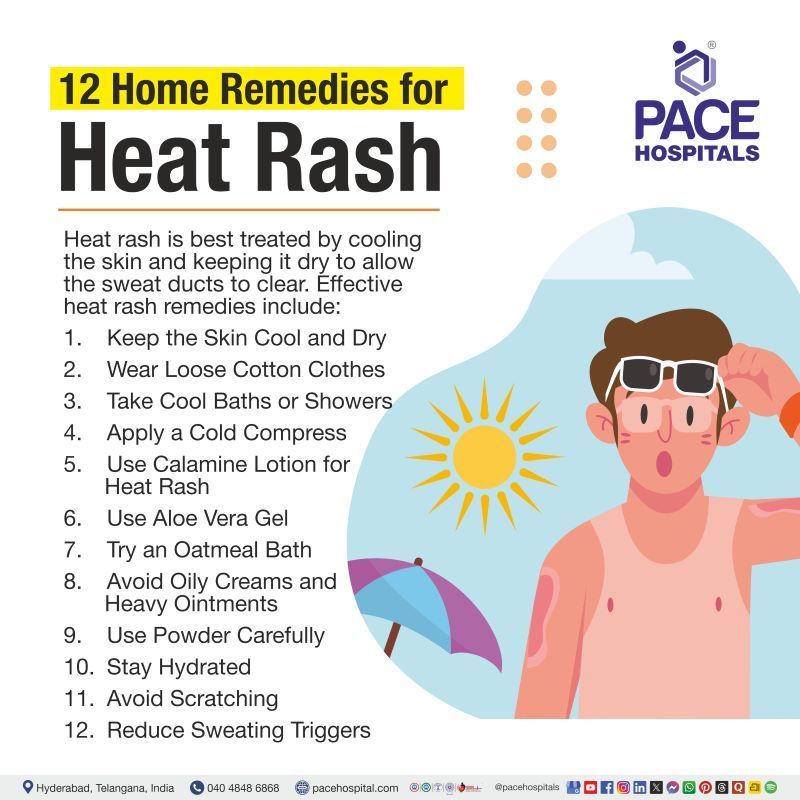
Heat rash is best treated by cooling the skin and keeping it dry to allow the sweat ducts to clear. Effective heat rash remedies include:
1. Keep the Skin Cool and Dry
The most important step in heat rash treatment is cooling the skin. Move to a shaded, cool, or air-conditioned place. Use a fan, avoid direct sunlight, and reduce activities that cause sweating. Once the skin cools down, mild heat rash usually improves faster.
2. Wear Loose Cotton Clothes
Loose cotton cloths allows air to circulate and helps sweat evaporate. Avoid wearing tight jeans, synthetic dresses, tight unbreathable undergarments, and heavy fabrics during summer. For babies, avoid extra layers and tight wrapping.
3. Take Cool Baths or Showers
A cool bath or shower can help get rid of sweat, dust, and other irritants from the skin. It also helps to relieve burning and irritation. Hot water can aggravate discomfort. After bathing, just gently pat the skin dry instead of rubbing.
4. Apply a Cold Compress
A cold compress gives instant relief from itching and burning. Dip a clean cloth in cool water, then squeeze it gently, and place it on the affected area (for 10–15 minutes). Do not apply ice directly onto the skin, as it may irritate sensitive skin.
5. Use Calamine Lotion for Heat Rash
Calamine lotion for heat rash can help by soothing itching and give a cooling effect. It is commonly used for mild prickly heat rash and irritated skin. Apply a thin layer on clean, dry skin. Avoid applying calamine lotion to open wounds cracks or infected areas unless advised by a doctor.
6. Use Aloe Vera Gel
Aloe vera gel has a natural cooling properties and may help reduce redness, burning, and irritation. But should be applied carefully, after proper washing. Apply a thin layer of fresh aloe vera gel to the affected area. Avoid products that contain perfume or alcohol, as they may irritate the skin.
7. Try an Oatmeal Bath
Oatmeal baths helps to relieve itching and irritation. Add finely powdered oatmeal to cool bathwater and soak for a short duration of time. This can be helpful when heat rash is extensive or when the skin feels very itchy.
8. Avoid Oily Creams and Heavy Ointments
Many people seek for heat rash cream or heat rash ointment, however not all creams are appropriate. Thick lotions and oily ointments may clog sweat ducts even further. Use only light and non-greasy products. If the itching is severe, the doctor may recommend a moderate medicated cream.
9. Use Powder Carefully
Powder for heat rash helps keep skin folds dry, especially under the breasts, thighs, and groin. However, use small amount and avoid applying powder on broken, wet, or infected skin. Avoid using large amount of powder on babies, and do not let them inhale powder particles.
10. Stay Hydrated
Drinking adequate water helps to regulate body temperature and reduce overheating. Proper hydration from water, coconut water, lemon water, fresh fruit juices and oral rehydration solutions when needed can help maintain hydration during summer. Hydration helps to support the body's natural cooling process.
11. Avoid Scratching
Scratching can give temporary relief, but it can damage the skin layers and increase the risk of infection. Keeping the nails short and use cooling methods instead of scratching.
12. Reduce Sweating Triggers
Avoid outdoor activities during peak heat hours. If exercise is necessary, schedule it for the early morning or evening when temperatures are cooler. Taking a bath after sweating and change out of sweat damp cloths.
How to Get Rid of Heat Rash Quickly?
Heat rash improves after the skin is cooled and kept dry. Moving to a cooler areas, avoiding excessive sweating, removing tight clothing, and taking a cool shower, thats all needed to help relieve symptoms. Allowing the skin to air-dry, using a cold compress, and applying calamine lotion can also reduce discomfort and itching.
How Long Does Heat Rash Last?
Mild heat rash often improves within a few days when the skin is cooled and sweating is reduced. If the person continues to sweat heavily or wears tight clothing, the rash may take longer to heal or may keep coming back. If the rash does not improve, becomes painful, or shows signs of infection, medical advice is recommended.
Heat Rash in Babies: Home Care
Heat rash in babies home remedy helps by cooling and avoiding overheating. Dress the baby in loose cotton clothing, keep the room cool, avoid tight diapers and extra layers, and gently clean the skin creases. Do not use strong lotions or pharmaceutical ointments to the baby's skin without first consulting a doctor.
For a heat rash baby face, avoid oily creams and keep the baby’s face clean and dry. If the rash spreads, the baby has fever, pus, swelling, poor feeding, or unusual crying, consult a pediatrician.
Heat Rash and Pregnancy
Heat rash during pregnancy is a common, harmless condition that occurs due to increased sweating, hormonal changes, weight gain, and skin friction. It is commonly seen under the breasts, abdomen, thighs and skin folds. Pregnant women should wear loose cotton clothes, stay hydrated, avoid overheating, and keep skin folds dry. Avoid using strongly medicated creams without consulting the doctor.
Heat Rash vs Allergic Reaction
Heat rash usually appears after sweating, heat exposure, tight clothing, or humidity. It generally affect sweaty areas, which improves with cooling. An allergic rash may appear after exposure to a new food, medicine, skincare product, fabric, or chemical and may spread more widely. If there is facial swelling, difficulty in breathing, dizziness, or sudden widespread rashes, don't wait and seek emergency care immediately.
Heat Rash Prevention Tips
- Wear loose cotton clothes in summer
- Avoid wear tight and synthetic fabrics
- Keep skin dry, especially in folds
- Bathe after heavy sweating
- Avoid oily creams and heavy moisturizers
- Use fans or air conditioning when possible
- Avoid outdoor work during peak afternoon heat
- Keep babies cool and avoid overwrapping of cloths
- Change sweaty clothes quickly
- Use lightweight bedsheets and breathable clothing
- Keep babies cool and avoid over-dressing
When to Consult a Dermatologist or Skin Specialist?
Even though miliaria is usually mild, certain warning signs should not be ignored. Seek medical advice in the following situations:
Warning Signs (Consult Immediately):
- Severe heat rash – intense burning, discomfort, or irritation
- Rash spreading rapidly – increased size or affecting multiple areas
- No improvement after 3 to 5 days – after proper home care
- Pus or discharge from bumps – indicates possible infection
- Swelling, tenderness or warmth - indicates inflammation or infection
- Fever and rash - may suggest systemic involvement
- Red streaks around the rash - may indicate spreading infection
- Excessive itching can cause wounds and increase the risk of subsequent infection
Conclusion
Heat rash, also known as prickly heat rash or miliaria, is a common summer skin condition caused by blocked sweat ducts. It usually happens due to excessive sweating, humidity, tight-fitting clothing, poor ventilation, and skin friction. In many cases, it is managed at home by keeping the skin cool, dry, and well-ventilated. Simple remedies like cool baths, cold compresses, loose cotton clothing, calamine lotion, aloe vera gel, and proper hydration can help reduce itching and discomfort.
Frequently Asked Questions (FAQs)
How to manage heat rash?
Managing heat rash involves keeping the affected area cool and dry. Wearing loose, breathable clothing and avoiding prolonged exposure to heat can help. Taking cool showers or baths can provide relief to the skin. Gentle treatments, that are calamine or hydrocortisone cream, can help with itching and inflammation. To avoid heat rashes from getting worse, don't scratch them and stay hydrated, because it can prevent flare-ups.
Can heat rash spread?
No, heat rash does not spread like a contagious infection. It is caused by blocked sweat glands and is usually localised to the area of the body that is most affected by heat and sweating. However, if the rash is scratched, the skin can become infected, which may lead to additional irritation or the appearance of new areas of rash.
Can heat rash spread?
No, heat rash does not spread like a contagious infection. It is caused by blocked sweat glands and is usually localised to the area of the body that is most affected by heat and sweating. However, if the rash is scratched, the skin can become infected, which may lead to additional irritation or the appearance of new areas of rash.
How does heat rash look like?
Heat rash usually appears as small, red-pink bumps on the skin. It may develop in areas where sweat is usually trapped (like under the arms, on the chest, back, or in skin folds). The rash can be itchy or cause a prickling sensation, which is why it is often referred to as prickly heat. In more severe cases, the bumps may appear as blisters or pustules.
How to cure prickly heat rash on the face?
Curing prickly heat rash on the face generally involves keeping the skin cool and preventing further sweating. Gently washing the face with cool water and avoiding using harsh skincare products can also help. Applications of soothing ointments (for example calamine lotion) might be helpful in reducing itch. Avoiding makeup and heavy creams is recommended until the rash clears up. Using fans or air conditioning can help maintain a cool environment. If the rash persists or becomes infected, seeking medical advice is advisable.
How to tell the difference between heat rash and chickenpox?
Heat rash and chickenpox can appear similar, but there are key differences. Heat rash usually presents as small, red or pink bumps, which may be itchy or cause a prickling sensation. The rashes are generally localised and appears in areas where sweat is trapped. Chickenpox, on the other hand, starts as red spots that develop into fluid-filled blisters and may spread across the entire body. The chickenpox rash is also accompanied by other symptoms like fever and fatigue. If there is any uncertainty, it is advisable to consult a doctor for an accurate diagnosis.
What cream to use for heat rash?
For heat rash, a person can use soothing creams that can help reduce irritation and discomfort. Calamine lotion is commonly used. Additionally, hydrocortisone cream can reduce inflammation and itching. For sensitive skin, in babies, gentle creams like those containing aloe vera or chamomile may also be helpful. It’s important to avoid using harsh or fragranced products that could irritate the skin further.
Is powder good for heat rash?
Powder, particularly talcum or baby powder, can help manage heat rash by absorbing excess moisture and reducing friction on the skin. This can prevent the sweat from being trapped, which allows clear irritation. However, powders should be used carefully, as excessive use may further irritate the skin.
How to Differentiate Heat Rash from Fungal Infection?
Heat rash and fungal infections can look similar but have distinct differences:
- Heat rashes are small red or pink bumps, often in areas where sweat is trapped, such as underarms, groin, and skin folds. It may feel itchy or cause a prickling sensation.
- Fungal infections such as ringworm or athlete's foot usually appear as red, scaly, and itchy patches, sometimes with a raised border. Fungal infections tend to spread and have a more defined, circular shape.
A fungal infection may also be continuous and worsen without treatment, while heat rash usually resolves once the skin cools and sweat is no longer trapped. If confused between the two conditions, it’s best to consult a dermatologist for an accurate diagnosis and appropriate treatment.
What is prickly heat rash?
Prickly heat rash, also known as miliaria rubra, is a skin condition that occurs when sweat becomes trapped in the sweat glands, causing irritation and inflammation. It typically develops in hot, humid conditions, but can also occur when the body is overheated due to excessive sweating or when tight clothing traps sweat on the skin.
Is calamine lotion good for heat rash?
Yes, calamine lotion is an effective, soothing remedy for heat rash (prickly heat) because its zinc oxide ingredients calm itching and dry out sweat-trapped skin. can be helpful for managing heat rash. They provide a barrier that helps protect the affected area. However, it's important to apply it to clean, dry skin and avoid overuse, as it can sometimes dry out the skin.
How to prevent prickly heat rash?
Preventing prickly heat rash requires minimising sweating and skin irritation. Preventive tips include:
- Wearing lightweight and loose-fitting clothing made of breathable fabrics material like cotton helps maintain air circulation.
- Limiting time in hot, humid conditions and taking breaks in cool environments can reduce sweating.
- Showering or wiping off sweat frequently also helps keep the skin dry.
- Using baby powder or anti-chafing creams can reduce friction and moisture buildup on the skin.
Can fever cause heat rash?
Fever can contribute to the development of heat rash as the body’s temperature increases and causes sweating. Sweating can block the sweat glands, which is one of the main causes of heat rash. The rash may appear in areas where the skin is most likely to sweat, such as under the arms or in skin folds. While heat rash can occur with fever, it is very important to manage both conditions to prevent further complications.
Can antibiotics cause heat rash?
No, antibiotics do not cause heat rash directly, but they are a leading cause of drug-induced rashes, which may seem like heat rash (miliaria). These skin reactions range from minor allergic responses to severe sensitivity issues, often presenting as itchy red spots or hives.
Where does heat rash occur?
Heat rash occurs in areas of the body where sweat generally traps, particularly in areas with skin folds or where clothing rubs against the skin. Common areas where heat rashes develops are underarms, the back, chest, neck, groin, and behind the knees. It is more likely to develop in hot, humid environments where sweating is frequent or excessive.
Can babies get heat rash in cold weather?
Yes, babies can get heat rash even in cold weather. While heat rash is more common in hot, humid conditions, it can also occur in cooler temperatures if a baby is overdressed or wrapped too warmly. Overheating due to layers of clothing or excessive use of blankets can cause the sweat glands to become blocked, leading to a rash.
What can be mistaken for a heat rash?
Heat rash can be mistaken for several other skin conditions, including:
- Allergic reactions: Hives or skin rashes due to allergies may look similar but often involve raised, welts or bumps that can spread across the body.
- Chickenpox: The chickenpox rash starts as red spots and develops into fluid-filled blisters, whereas heat rash presents as small bumps or blisters, that are confined to specific areas like skin folds.
- Infections: Fungal or bacterial infections may present with similar skin irritations or redness, though they tend to have different causes and may require different treatments.
What are the three types of heat rash?
There are three main types of heat rash, those are:
- Miliaria Crystallina: This is the mildest form, characterised by clear, small blisters or bumps that appear on the surface of the skin. It typically occurs in areas that sweat the most, such as the forehead and chest.
- Miliaria Rubra: This is also called prickly heat. This is the most common type and present with red, inflamed bumps that cause itching or a prickling sensation. They occur in skin folds and areas where sweat is trapped.
- Miliaria Profunda: This is the most severe form, where the rash extends deeper into the skin and forms larger, firm bumps. It may cause more discomfort and can sometimes result in infection.
When to worry about a heat rash in adults?
In adults, a heat rash resolves on its own with simple home care. However, it is important to seek medical attention if:
- The rash does not improve after a few days of self-care.
- There are signs of infection, such as increased redness, swelling, or pus in the rash.
- The rash becomes painful or is accompanied by fever.
- The rash is widespread or occurs in areas with a lot of sweating.
If the heat rash shows no improvement or gets worse, it's advisable to consult a doctor to rule out other conditions or infections.
Does bathing frequently help heat rash?
Bathing frequently can help to soothe heat rash when cool water is used. Bathing can cleanse the skin, remove sweat, and help cool the body down, which helps to reduce irritation. It is also important to avoid hot or long baths, as they can make the rash worse by raising body temperature.
Does sweating make heat rash worse?
Yes, sweating can worsen heat rash. Sweat is the main cause of heat rash, because it can clog sweat glands and lead to the rash development. In hot or humid situations, more sweating can exacerbate the condition, making the rash more severe and prolonged.
Share on
Request an appointment
Fill in the appointment form or call us instantly to book a confirmed appointment with our super specialist at 04048486868
Appointment request - health articles
Recent Articles