
Inguinal Hernia Surgery - Types, Benefits, Procedure & Recovery
PACE Hospitals offers advanced Inguinal Hernia Surgery in Hyderabad, India, providing effective treatment for inguinal hernias that develop in the groin or inguinal region. Our specialists perform precise inguinal hernia repair using appropriate surgical techniques, including laparoscopic inguinal hernia repair and mesh repair when indicated, to treat reducible, irreducible, recurrent, and complex hernias.
With a focus on accurate diagnosis, understanding the inguinal hernia causes and symptoms, personalized treatment planning, and safe surgical techniques, we provide comprehensive care for different inguinal hernia types, including direct and indirect inguinal hernias. Treatment is tailored to individual needs, with the aim of reducing inguinal hernia complications, supporting recovery, and improving long-term outcomes.
Book an Appointment for Inguinal Hernia Surgery
Inguinal Hernia Surgery Appointment
Why Choose PACE Hospitals for Inguinal Hernia Repair?
Expert Hernia Surgeons Specializing in Complex, Recurrent & Post-Surgical Incisional Hernias
Open & Laparoscopic Incisional Hernia Repair with Mesh Reinforcement for Effective Abdominal Wall Restoration
Transparent Incisional Hernia Surgery with Insurance & Cashless Treatment Options
Recognized for excellence in healthcare delivery with
NABH, NABL, NBE/DNB, NABH Nursing Excellence, and ISCCM accreditations.
What is inguinal hernia surgery?
Inguinal hernia surgery, also called inguinal hernia repair, is an operation performed to return protruding abdominal tissue to its normal position and strengthen the weak area in the groin. An inguinal hernia occurs when tissue from the abdomen, usually fat or part of the small intestine, pushes through the inguinal canal, a weak spot in the lower abdominal wall near the groin, resulting in a bulge that can be felt or seen. It is more common in men than in women, often affects one side of the groin, and the bulge may appear and disappear from the abdominal wall or become more apparent when coughing, straining or standing.
When the lower abdominal wall's muscles and connective tissue are weak or have a hole that lets the contents of the abdomen protrude, an inguinal hernia occurs. Some inguinal hernias occur later in life because of weakening of the abdominal wall, whereas others are present from birth due to inadequate closure of the inguinal canal. Most inguinal hernias need to be surgically repaired, particularly if they become symptomatic, become trapped (incarcerated), or lose their blood supply (strangulated).
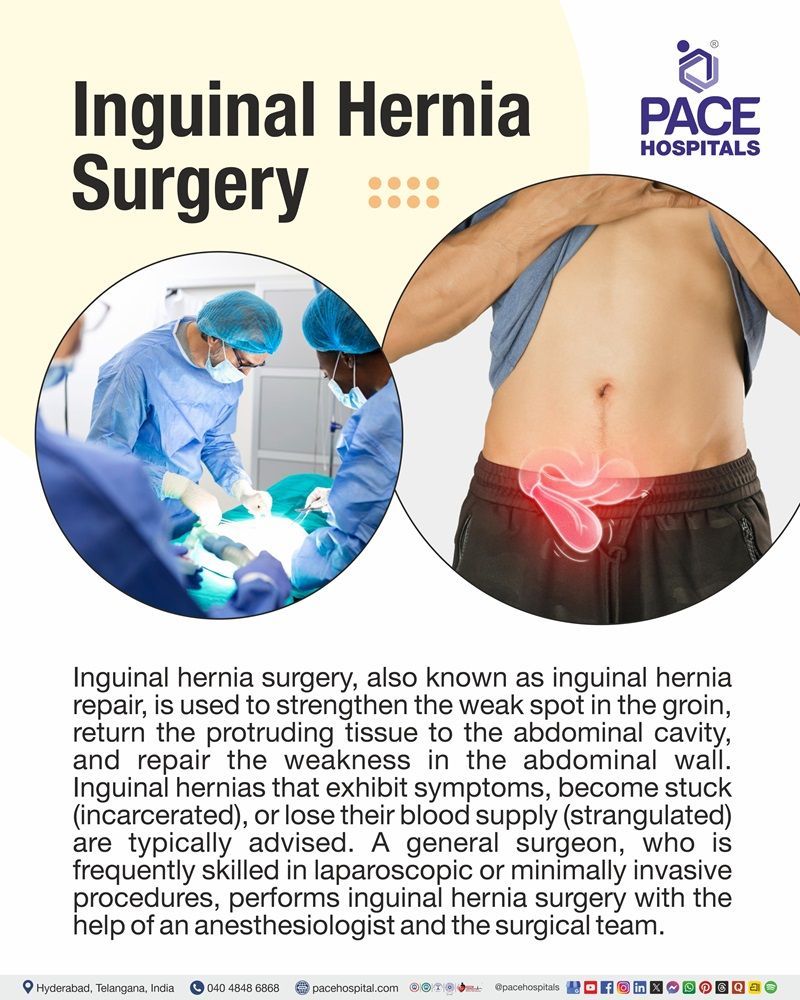
A general surgeon, particularly one who specializes in abdominal wall or minimally invasive laparoscopic and robotic techniques, performs inguinal hernia surgery, supported by a specialized clinical team, such as an anesthesiologist, surgical nurses, or technicians.
Inguinal hernia meaning
The term inguinal hernia comes from two Latin-derived words:
- “Inguinal”— derived from the Latin inguinalis, meaning “of or pertaining to the groin.” It comes from inguen (genitive: inguinis), meaning “groin.”
- “Hernia” — derived from the Latin hernia, meaning “a rupture” or “protrusion.”
So, inguinal hernia refers to a hernia in the groin region. In medical usage, it describes a condition in which part of the intestine or fatty tissue pushes through a weak spot in the lower abdominal wall into the groin region.
Inguinal hernia surgery types
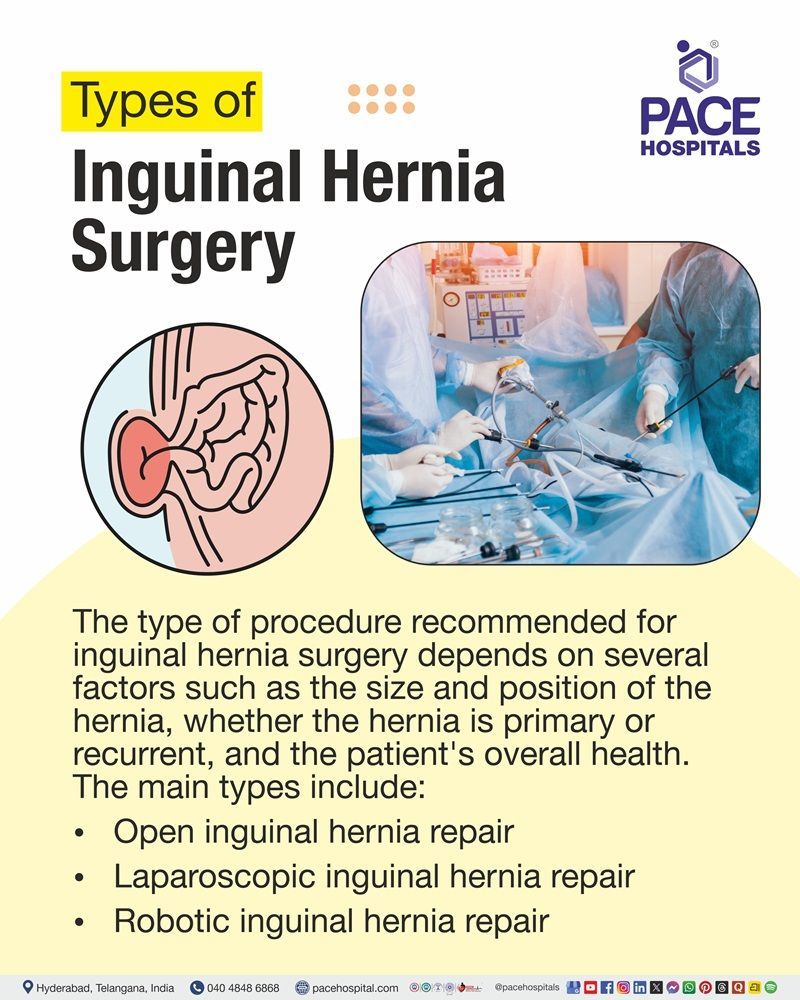
The type of procedure recommended for inguinal hernia surgery depends on several factors such as the size and position of the hernia, whether the hernia is primary or recurrent, and the patient's overall health. The main types include:
- Open inguinal hernia repair
- Laparoscopic inguinal hernia repair
- Robotic inguinal hernia repair
Open inguinal hernia repair
To access the hernia and return the protruding tissue to the abdomen, the surgeon creates a single groin incision during open inguinal hernia surgery. After that, the weakened groin wall is repaired, typically using surgical mesh to strengthen the tissue; however, in some situations, stitches alone may be used. Open repair can be done under local, spinal, or general anesthesia, depending on the case.
Laparoscopic inguinal hernia repair
A minimally invasive procedure called laparoscopic inguinal hernia repair involves the surgeon making multiple tiny incisions in the lower abdomen and inserting a laparoscope—a thin camera—along with specialized tools to repair the hernia. Surgical mesh is used to strengthen the weakened abdominal wall, and general anesthesia is usually used during the procedure. Laparoscopic repair typically requires fewer incisions than inguinal hernia open surgery and may allow a quicker recovery and earlier return to normal activities for appropriate patients. The commonest laparoscopic approaches are the TEP (totally extraperitoneal approach) and TAPP (transabdominal preperitoneal approach).
Robotic inguinal hernia repair
Robotic inguinal hernia repair is a minimally invasive (keyhole) surgery performed using robotic-assisted instruments that are controlled by the surgeon from a console. To repair the hernia and typically reinforce the weakened area with a surgical mesh, the surgeon makes small abdominal incisions to introduce a camera and robotic equipment. The robotic technology offers improved accuracy and a magnified three-dimensional vision, especially in cases of complicated or recurrent hernias. Robotic repair is a safe and efficient alternative to open and laparoscopic procedures in appropriately selected patients.
Note: The choice of inguinal hernia repair technique depends on the hospital's available surgical facilities, the surgeon's recommendation, and the patient's clinical condition.
Inguinal hernia surgery indications
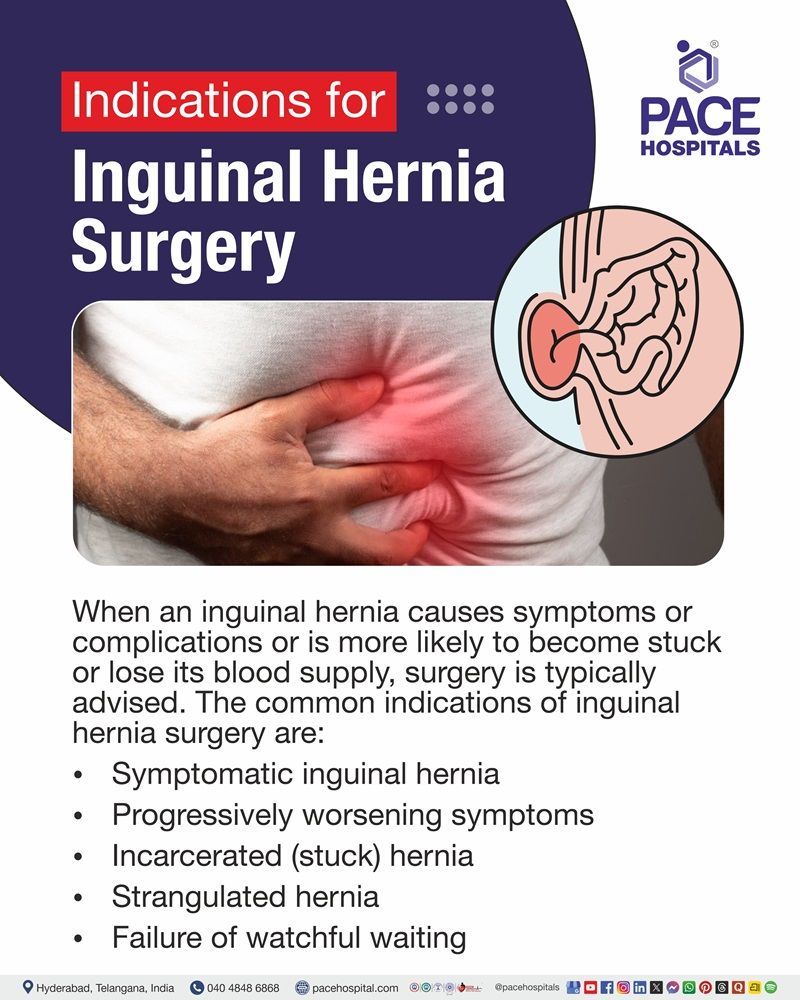
When an inguinal hernia causes symptoms or complications or is more likely to become stuck or lose its blood supply, surgery is typically advised. The common indications of inguinal hernia surgery are:
- Symptomatic inguinal hernia
- Progressively worsening symptoms
- Incarcerated (stuck) hernia
- Strangulated hernia
- Failure of watchful waiting
Symptomatic inguinal hernia
Surgical repair is considered necessary in cases where patients present with symptoms associated with an inguinal hernia, such as pain, discomfort, heaviness, or a burning sensation that impedes their ability to carry out daily activities. Watchful waiting can be considered in asymptomatic cases among men, while symptomatic cases are repaired due to the possibility that symptoms often worsen over time.
Progressively worsening symptoms
An inguinal hernia that presents with increasing pain, enlargement, or discomfort with movement such as standing, lifting, coughing, or exercise needs to undergo surgical repair. This implies that the inguinal hernia is negatively impacting the patient's quality of life and may increase the risk of future complications if left untreated.
Incarcerated (stuck) hernia
An incarcerated hernia occurs when the prolapsed tissues become trapped and cannot easily return to the abdominal cavity. An incarcerated hernia can become a strangulated hernia (loss of blood supply to the hernia), and thus surgical repair is advised as soon as possible to prevent bowel obstruction and tissue damage.
Strangulated hernia
A strangulated hernia is where there is loss of blood supply to the hernia and the tissues start dying due to lack of blood. A strangulated hernia requires emergency surgery to relieve the trapped tissue and prevent serious complications, such as bowel obstruction, tissue death, or infection. In some cases, damaged bowel may need to be removed.
Failure of watchful waiting
The option of watchful waiting is reserved for inguinal hernias that cause minimal symptoms or are asymptomatic. Surgery is required if there is an onset of symptoms, as many patients will ultimately require surgical intervention due to increasing pain or discomfort.
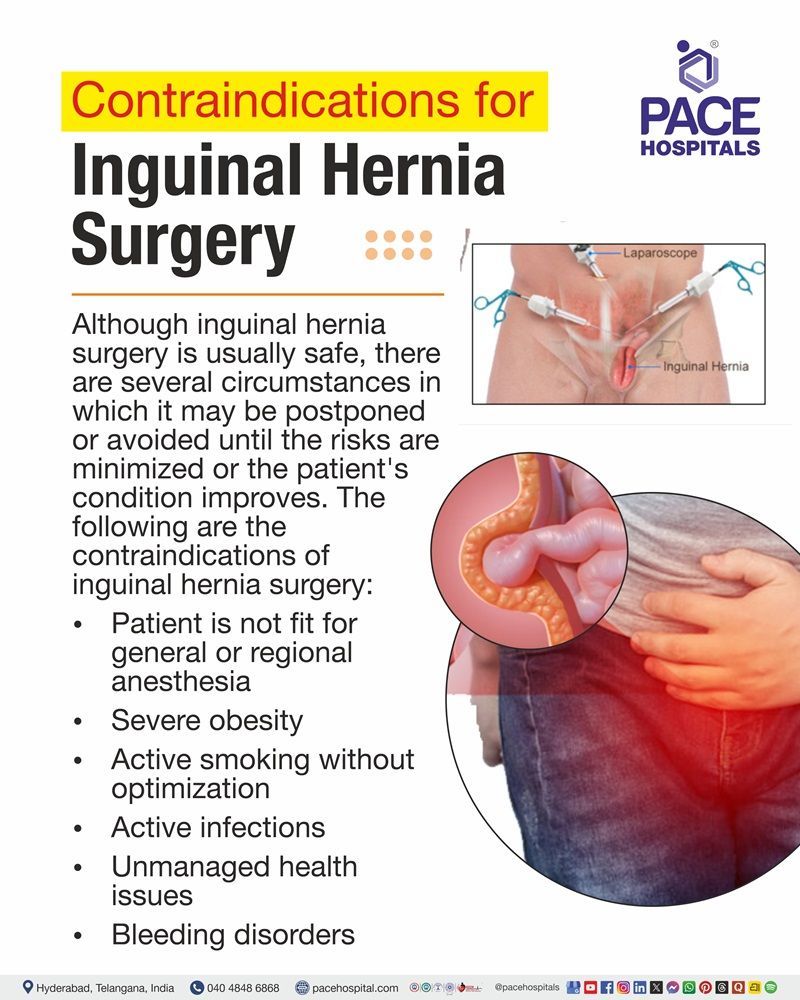
Inguinal hernia surgery contraindications
Although inguinal hernia surgery is usually safe, there are several circumstances in which it may be postponed or avoided until the risks are minimized or the patient's condition improves. The following are the contraindications of inguinal hernia surgery:
- Patient is not fit for general or regional anesthesia
- Severe obesity
- Active smoking without optimization
- Active infections
- Unmanaged health issues
- Bleeding disorders
Patient is not fit for general or regional anesthesia
If the patient cannot be subjected to anesthesia owing to serious health problems or poor overall health condition, the operation will be delayed until the patient's medical condition improves to reduce perioperative risks before surgery is considered.
Severe obesity
Severe obesity raises the likelihood of wound complications, difficulty in healing, the recurrence of hernias, and problems related to anesthesia. Patients who have a high body mass index (BMI) level, especially those above 35, are always recommended to lose weight and prepare for an elective hernia surgery procedure.
Active smoking without optimization
Active smoking results in an increased likelihood of wound infections, difficulties in wound healing, and the recurrence of the condition after surgery. It is recommended that patients stop smoking before an elective surgery to improve surgical outcomes.
Active infections
In patients with an infection, elective inguinal hernia repair surgery may be delayed because infection increases the risk of complications from surgery, particularly the use of surgical mesh. The infection should first be treated and cleared up before proceeding to surgery.
Unmanaged health issues
Those patients with unstable health conditions like serious heart disease, respiratory disease, or metabolic problems must stabilize their condition before elective hernia repair surgery. Optimizing overall health helps reduce anesthesia-related and postoperative complications.
Bleeding disorders
Individuals with bleeding disorders or uncontrolled coagulopathy are at increased risk of significant bleeding perioperatively and post-surgery. The elective procedure of inguinal hernia repair is often postponed until such conditions have been adequately treated.
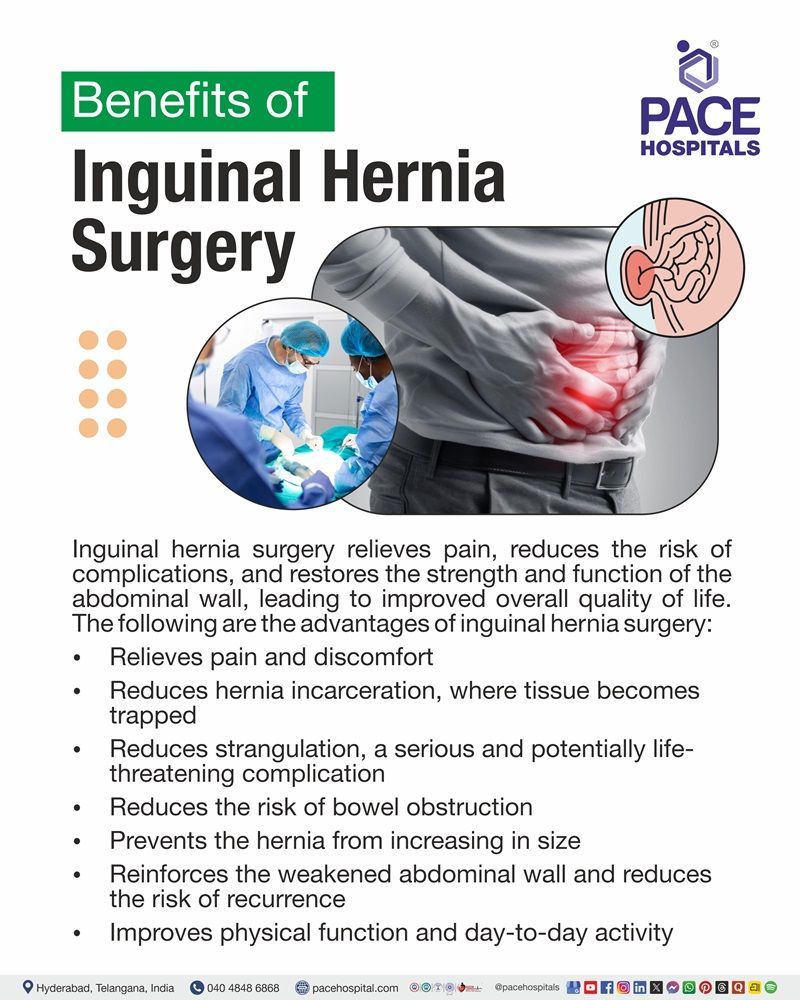
Inguinal Hernia Surgery Benefits
Inguinal hernia surgery relieves pain, reduces the risk of complications, and restores the strength and function of the abdominal wall, leading to improved overall quality of life. The following are the advantages of inguinal hernia surgery:
- Relieves pain and discomfort
- Reduces hernia incarceration, where tissue becomes trapped
- Reduces strangulation, a serious and potentially life-threatening complication
- Reduces the risk of bowel obstruction
- Prevents the hernia from increasing in size
- Reinforces the weakened abdominal wall and reduces the risk of recurrence
- Improves physical function and day-to-day activity
Relieves pain and discomfort
Inguinal hernia surgery can relieve groin pain, discomfort, burning, or heaviness caused by the hernia by repairing the weakened area of the abdominal wall and returning the projecting tissue to its usual position. As they heal, most patients report significant symptom improvement, despite the typical occurrence of modest postoperative pain. After surgery, many patients can return to their regular daily activities within a few days.
Reduces hernia incarceration, where tissue becomes trapped
Surgical treatment avoids the condition known as "incarcerated hernia," in which the projecting tissue becomes trapped outside the abdominal wall and cannot be pulled back into place. If left untreated, an incarcerated hernia can cause major problems and necessitate emergency surgery. This risk is decreased if the hernia is repaired before incarceration.
Reduces strangulation, a serious and potentially life-threatening complication
Strangulation, in which the blood supply to the confined tissue is cut off, can develop from an incarcerated hernia. This is regarded as a medical emergency and may cause tissue death. Strangulation and its serious complications can be avoided with prompt inguinal hernia surgery.
Reduces the risk of bowel obstruction
Abdominal pain, bloating, nausea, and vomiting may result from intestinal (bowel) obstruction if a portion of the small intestine gets stuck and strangled inside the hernia. Surgery reduces the risk of intestinal blockage and the requirement for emergency care by fixing the hernia before these problems arise.
Prevents the hernia from increasing in size
Inguinal hernias that are left untreated typically do not heal on their own and can get larger over time. The risk of complications rises, and symptoms may worsen as the hernia grows. Surgical treatment fixes the flaw and stops the hernia from getting larger.
Reinforces the weakened abdominal wall and reduces the risk of recurrence
During inguinal hernia surgery, the surgeon typically uses surgical mesh to fortify the weaker area and closes the defect with sutures. In addition to strengthening the abdominal wall, this lessens the likelihood that the hernia will recur.
Improves physical function and day-to-day activity
With less discomfort than before surgery, most patients can safely resume their regular daily activities, such as work and exercise. Physical function and general quality of life are improved when the integrity of the abdominal wall is restored by hernia surgery.
Get a Free Second Opinion for Inguinal Hernia Surgery
At PACE Hospitals, we are committed to providing our patients with the best possible care, and that includes offering second medical opinions with super specialists for treatment or surgery. We recommend everyone to get an expert advance medical second opinion, before taking decision for your treatment or surgery.
Inguinal Hernia Surgery Steps
Procedure steps for inguinal hernia surgery include the following:
Before inguinal hernia surgery
- Preoperative medical assessment: To assess suitability for surgery, the medical team reviews past medical history, current health issues, allergies, past operations, and medications. If necessary, blood tests or other examinations may be carried out.
- Medication review and adjustment: Inform the doctor about medications being taken, such as vitamins, herbal supplements, over-the-counter medications, and prescription medications. Before surgery, individuals are advised to stop taking certain vitamins or blood thinners temporarily, but only under physician supervision.
- Fasting before surgery: Before the procedure, the patient will be given instructions on when to stop eating and drinking. To lower the chance of aspiration and vomiting while under anesthesia, it is crucial to have an empty stomach.
- Preoperative hygiene: Before visiting the hospital, individuals may be required to shower or bathe. To lower the risk of infection and allow appropriate monitoring during surgery, remove jewellery and body piercings.
- Smoking cessation: As smoking can delay wound healing and raise the risk of surgical complications, the healthcare professional may advise individuals to stop smoking before surgery.
- Management of existing medical conditions: Before surgery, conditions like diabetes, heart disease, or other chronic illnesses should be optimized. Before the procedure, the surgeon could ask the patient to speak with the physician treating these diseases.
- Anesthesia evaluation and informed consent: Before surgery, the anesthesia team determines whether the patient is suitable for anesthesia, discusses the intended anesthetic approach, and answers any questions they may have. They provide an informed consent form after the surgeon has explained the operation, advantages, risks, and available options.
- Arrange transportation and postoperative support: Since anesthesia impairs alertness and driving ability, the patient should arrange for someone to drive them home following surgery and, if necessary, to help them during the early stages of recovery.
During inguinal hernia surgery
- Administration of anesthesia: Anesthesia is administered to the patient before the procedure. This might be general, regional (spinal), or local anesthesia with sedation, depending on the surgical technique.
- Making the surgical incision
- Open repair: A single groin incision is made over the hernia by the surgeon.
- Laparoscopic repair: To accommodate the camera and surgical tools, the surgeon makes multiple small incisions in the lower abdomen.
- Identifying and reducing the hernia: Depending on the type of hernia and surgical method, the hernia sac or projecting tissue is either excised or gently forced back into the abdominal cavity.
- Repairing the weakened abdominal wall: Sutures, or stitches, are used to fix the weak spot in the abdominal wall. To strengthen the repair and lower the chance of recurrence, a surgical mesh is typically used.
- Closing the incision: After the repair is finished, dressing is applied over the wound, and the incision or incisions are sealed with stitches, staples, or surgical glue.
After inguinal hernia surgery
- Rest for the first 2–3 days: After going home, get enough sleep, but start moving gently as instructed. During the early stages of rehabilitation, ask friends or family for assistance with everyday tasks.
- Start walking early: As soon as possible after surgery, walk and move around to improve circulation, reduce the risk of blood clots, and aid healing.
- Take pain medicines as prescribed: Follow the surgeon's instructions when using painkillers. To lessen discomfort and swelling during the first few days, cold packs can be applied to the incision for 15 to 20 minutes at a time.
- Care for the surgical wound: It is necessary to make sure the wound is dry and clean. When changing dressings, showering, and caring for the wound, follow the surgeon's advice. During the initial stages of healing, avoid submerging the wound in a bath, hot tub, or swimming pool.
- Eat a high-fiber diet and stay hydrated: Constipation can be avoided by drinking plenty of water and eating meals high in fiber, particularly while taking opioid painkillers.
- Gradually resume normal activities: When comfortable, resume light everyday activities like walking, but gradually raise the activity level in accordance with the concerned surgeon's recommendations.
- Avoid heavy lifting and strenuous exercise: For four to six weeks, or until the surgeon deems it safe, avoid lifting anything more than ten pounds (4.5 kg) or engaging in physically demanding activities.
- Attend the follow-up appointment: Consult the surgeon as planned (usually two weeks following surgery) to evaluate recovery and wound healing.
- Watch for warning signs: If individuals have significant pain, growing redness or swelling, pus-like drainage, persistent bleeding, fever, difficulty urinating, or any other troubling symptoms, get in touch with the emergency doctor right away.
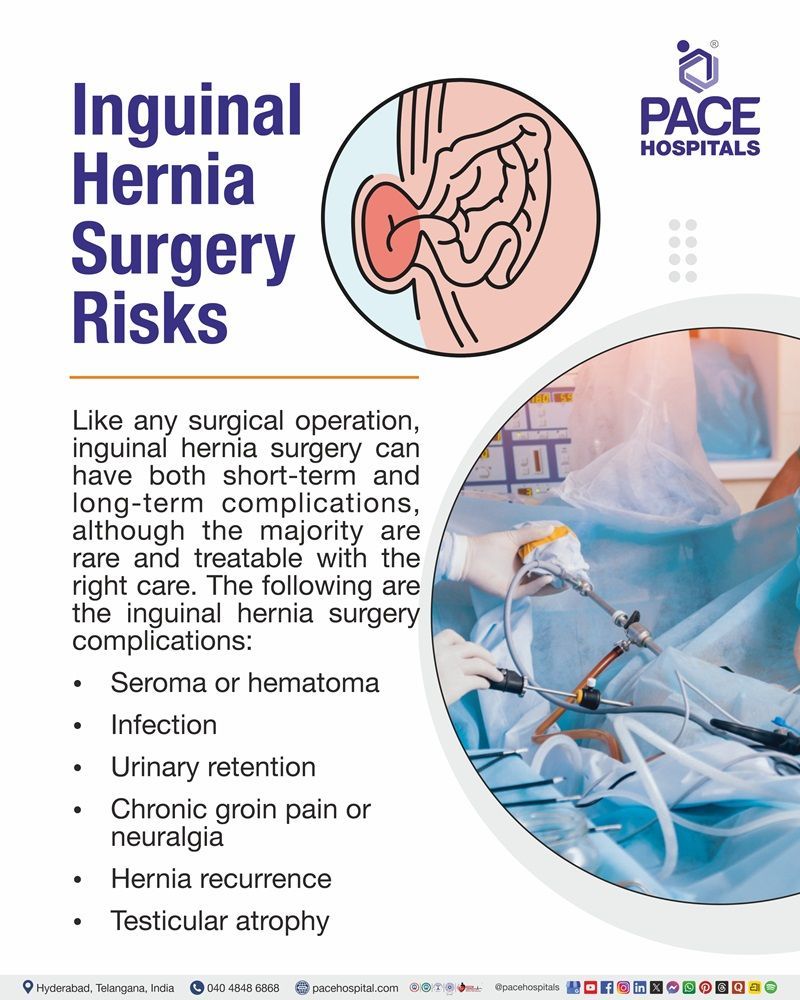
Inguinal hernia surgery risks
Like any surgical operation, inguinal hernia surgery can have both short-term and long-term complications, although the majority are rare and treatable with the right care.
The following are the inguinal hernia surgery complications:
- Short-term complications
- Seroma or hematoma
- Infection
- Urinary retention
- Testicular swelling and pain
- Bleeding or bruising
- Groin pain or numbness
- Rare injury to nearby structures like the bowel, bladder, or blood vessels
- Long-term complications
- Chronic groin pain or neuralgia
- Hernia recurrence
- Testicular atrophy
Short-term complications
Seroma or hematoma
A hematoma is a collection of blood that may form around the surgical site following hernia surgery, whereas a seroma is a collection of clear fluid. These typically result in a transient groin lump, swelling, soreness, or pain. Large hematomas may occasionally need drainage or another operation, although most go away on their own over time.
Infection
An infection may develop at the incision site or near the surgical repair. Redness, warmth, swelling, increasing pain, pus discharge, and fever are some of the symptoms. While deeper infections may require more care, most infections can be effectively treated with medications and good wound care.
Urinary retention
This is the inability to completely evacuate the bladder following surgery due to anesthesia, pain, or swelling. It tends to affect older patients or people with existing urinary problems or prostate problems. In most instances, it resolves spontaneously within a short time, but at times a temporary urinary catheterization will be necessary.
Testicular swelling and pain
Swelling and pain in the testicles or scrotum may result from manipulation of the tissues and inflammation. The symptoms normally improve after some weeks. If the condition persists, it needs to be evaluated to rule out any possible testicular injury.
Bleeding or bruising
Some bleeding and bruising in the region of the incision, groin, or genitals following surgery occurs owing to damage to small blood vessels during the process. Such changes usually disappear on their own in a few weeks. Excessive bleeding is rare but requires medical attention.
Groin pain or numbness
Groin pain or numbness is common right after the procedure due to wound healing and nerve irritation. These symptoms usually resolve on their own over time. Sometimes a small area of numbness can remain even after the wound has fully healed.
Rare injury to nearby structures like the bowel, bladder, or blood vessels
While it is uncommon, injury to adjacent tissues such as the bowel, bladder, or blood vessels may occur during hernia repair. The injury might cause problems such as bleeding, infection, or organ damage and may need immediate attention and surgery. However, these complications are rare if performed by experienced specialists.
Long-term complications
Chronic groin pain or neuralgia
This is chronic pain (more than three months) in the groin region that may be caused by nerve irritation, inflammation, or scarring after surgery. It may be either mild or severe enough to affect daily life. Most people with chronic groin pain do well with medication or other treatment options, while a few will need more help.
Hernia recurrence
Recurrent hernia is the reappearance of the hernia through the same abdominal wall opening as the first time because the opening has reopened. The causes of a recurrent hernia include tissue weakness, infection, straining, or problems with the surgical procedure. Even though mesh repairs have a low recurrence rate, additional surgery may be needed if symptoms develop.
Testicular atrophy
Testicular atrophy is an infrequent complication in which the size of the testis is reduced due to an issue with blood flow to the testis during or postoperatively. It can be accompanied by pain and decreased testicular function. Although uncommon, it requires prompt evaluation by the treating surgeon or a urologist if suspected.
Inguinal hernia surgery recovery time
Recovery from surgery for inguinal hernia repair depends on the type of surgery performed, the patient's overall health, and whether postoperative instructions are strictly followed. Patients usually resume light activities after a few days, but full recovery typically takes 2-6 weeks.
Inguinal hernia recovery stages include:
Day of surgery
Patients are advised to walk around within a few hours of the procedure to improve blood circulation, reduce the risk of blood clots, and support bowel function. Patients are often discharged on the same day, depending on the type of repair and the patient’s overall health.
First 24-48 hours
Moderate pain, swelling, bruising, and stiffness around the groin region are common in the first 24-48 hours. Rest, take the prescribed pain medications, use ice packs if advised, and walk for short distances to increase blood flow. Avoid driving, alcohol, and important decision making while taking narcotic pain medicines.
First 2-3 days
Rest as needed but slowly increase light activity like walking. Also, drink a lot of fluids and consume a high-fiber diet or use stool softeners if prescribed to help prevent constipation and straining, which are common after surgery and pain medicines.
Within 3-5 days
Most people can return to desk work, regular daily activities, and light activity when they feel comfortable and with approval from their healthcare professionals.
1-2 weeks
Pain usually improves significantly over the first 1–2 weeks, and many patients are pain free or have only mild discomfort by this time. Avoid any strenuous activities, heavy lifting, and sports if recommended by the surgeon.
2-4 weeks
Most patients are well enough to return to normal activities. The recovery process is faster through a laparoscopic procedure than an open procedure. However, high impact exercise and heavy lifting may still need to be delayed as advised by the surgeon.
4-6 weeks
Lifting more than 10 pounds, physical activity, and activities involving the abdominal muscles should not be undertaken until the surgeon approves it, usually within 4-6 weeks.
Follow-up appointment
Attend all planned follow-up appointments, usually within one to two weeks following surgery, so the surgeon may assess the wound healing process, remove any necessary staples or sutures, and advise the patient on when to return to full activity.
Complete recovery
Complete recovery from hernia surgery is normally completed in 2-6 weeks. However, this will depend on factors such as open surgery or laparoscopic surgery, the size of the hernia, age, and overall health.
What questions can patients ask the healthcare team about Inguinal hernia surgery?
- Do I really need inguinal hernia surgery, or are there other treatment options?
- Which type of inguinal hernia surgery is best for me—open surgery or laparoscopic surgery?
- What kind of anesthesia will be used during the surgery?
- How should I prepare for the surgery, and when should I stop eating or drinking?
- How long does the inguinal hernia surgery usually take?
- What are the possible risks and complications of inguinal hernia surgery?
- Will a surgical mesh be used, and is it safe?
- How much pain should I expect after the surgery, and how will it be managed?
- How long will it take to recover, and when can I return to work, exercise, and normal daily activities?
- What precautions should I take after the surgery to reduce the risk of the hernia coming back?
- What warning signs should I watch for after surgery, and when should I contact my doctor?
- How often will I need follow-up visits after the surgery?
Difference between open vs laparoscopic
Inguinal hernia surgery
Inguinal hernia surgery open vs laparoscopic
Open and laparoscopic surgeries for inguinal hernias are both effective approaches, and the choice of surgical approach should be determined by the patient's condition, the characteristics of the hernia, and the surgeon's clinical assessment and expertise. The table below shows the key differences between these procedures.
| Characteristics | Open inguinal hernia surgery | Laparoscopic (Keyhole) inguinal hernia surgery |
|---|---|---|
| Incision | To access and repair the hernia, a single groin incision is made. | A camera and surgical instruments are inserted into several small incisions in the lower abdomen. |
| How the repair is performed | In most situations, mesh is used to reconstruct the abdominal wall once the hernia is pushed back into place (or stitches alone in certain people). | A camera-guided technique is performed to repair the hernia from inside the abdomen, and the abdominal wall is reinforced with mesh. |
| Type of anesthesia | Usually performed under sedation and local anesthesia; depending on the patient, general or spinal anesthesia may also be used. | Usually requires general anesthesia. |
| Recovery | Compared to laparoscopic surgery, recovery is typically longer. | Recovery is often shorter, with an earlier return to normal daily activities. |
| Postoperative pain | May have more postoperative discomfort due to the larger incision. | Generally associated with less postoperative pain. |
| Scarring | Leaves a single larger scar in the groin. | Leaves several small scars on the abdomen. |
| Best suited for | Can be suitable for many primary hernias and for patients who cannot undergo general anesthesia. | Often preferred for selected patients with bilateral or recurrent inguinal hernias and those suitable for general anesthesia. |
| Important consideration | Choice depends on the patient's condition, the type of hernia, and the surgeon's expertise. | Choice depends on the patient's condition, the type of hernia, and the surgeon's expertise. |
Frequently Asked Questions (FAQs) on Inguinal Hernia Repair
What is inguinal hernia surgery?
Inguinal hernia surgery is done to correct a weakness in the groin where tissue from inside the abdomen or part of the bowel comes out. During the surgery, the protruding tissue is pushed back in place while the weak area is reinforced using sutures or a mesh. This surgery can be done using an open or laparoscopic (keyhole) technique. The goal is to relieve symptoms and prevent serious complications.
When is inguinal hernia surgery necessary?
If the patient is experiencing pain or discomfort, or if the hernia grows over time, surgery should be performed. Surgery is also performed to avoid any complications, including bowel obstruction or strangulation, wherein the blood supply of the herniated tissues gets blocked. Urgent surgery is required in case of strangulated or incarcerated inguinal hernias. Small, symptom-free hernias may sometimes be monitored with watchful waiting.
What are the Do's and Don'ts after inguinal hernia surgery?
Do’s: Take regular walks, take the prescribed pain medications, keep the wound site clean and dry, eat a diet rich in fiber, and slowly return to the usual a5ctivities as directed.
Don’ts: Pick up heavy items, do vigorous exercise until the physician gives the all-clear, drive while taking pain medication, or disregard signs of infection, such as fever and pus discharge. Follow the surgeon's instructions for recovery.
What to wear after inguinal hernia surgery?
Comfortable, loose-fitting clothes that do not irritate the surgical area should be worn. Trousers, soft shorts, and cotton garments would usually be the most comfortable options to wear. Tight belts or constricting clothes should be avoided until swelling and sensitivity subside. Comfortable clothes help avoid irritation while recovering from surgery.
Can an inguinal hernia be treated without surgery?
Surgery is the only way to successfully treat the problem since there are no medicines available to heal the hernia. Patients with smaller and less painful hernias can be safely observed by a doctor (observation method). But the problem does not go away on its own, and many patients require surgery later. Emergency surgery is needed if complications occur.
What to eat after inguinal hernia surgery?
Follow a balanced, fibre-rich diet consisting of fruits, vegetables, and whole grains to avoid constipation and consume plenty of water. Constipation could put additional pressure on the repair. If required, the physician may prescribe stool softeners. Resume their usual eating habits slowly.
How long does swelling last after inguinal hernia surgery?
Swelling and discoloration of skin around the incision area or genital area are common after an operation. Swelling is reported to go down in a few weeks. Mild discomfort may continue for a short time but generally improves steadily. Consult the physician if the swelling gets worse along with fever or intense pain.
Which surgery is best for inguinal hernia?
There is no single best way to treat this condition; however, the best approach depends on factors such as the size of the hernia, past surgical experience, general health, and the doctor's advice. Laparoscopic surgery may help individuals recover faster than open surgery.
What to expect after inguinal hernia surgery?
It is possible to be discharged on the same day that the patient underwent surgery. Expected symptoms include mild pain, bruising, swelling, and some discomfort near the area of operation. Individuals can walk immediately after surgery but should avoid heavy activity. Recovery gradually improves over several weeks.
When can I drive after inguinal hernia surgery?
Driving should only be done when individuals are pain-free and able to make an emergency stop safely. They should also stop taking any medications that cause drowsiness. Ask the surgeon for specific instructions, as this differs from person to person. Make sure they are comfortable and always drive safely.
Can an inguinal hernia recur after surgery?
Yes. After repair, an inguinal hernia may recur, although this is rare. Mesh reduces the chance of recurrence and strengthens the abdominal wall during surgery. This risk can also be decreased by following the surgeon's recovery instructions.
How long will I take to recover from inguinal hernia surgery?
People normally take 4-6 weeks to recover, and it depends on the type of surgery performed. Some individuals get well enough in a few days to resume daily tasks and office work, whereas others need a few weeks before returning to more physically demanding tasks. Follow the surgeon's recommendations before lifting anything heavy.
Is inguinal hernia surgery painful?
It is quite normal to feel pain and discomfort after surgery, and this may last for 2 weeks for most people. Pain relievers are used during recovery. Pain normally reduces within 2 weeks.
What kind of anesthesia is used for inguinal hernia surgery?
Local anesthesia along with sedation, spinal anesthesia, and general anesthesia can be used to perform an open repair depending upon the patient. General anesthesia is usually used in laparoscopic inguinal hernia repair. The choice will depend upon the anesthetist.
Does inguinal hernia surgery leave a scar?
Yes, there will be one scar from open surgery that appears in the groin area and several small scars from laparoscopic surgery that appear in the abdominal region. The scarring fades with time, but some scarring will remain. Proper wound care helps promote healing.
What are the risks and complications of inguinal hernia surgery?
Complications may arise due to bleeding, infection, seroma formation, urinary retention, groin pain, hernia recurrence, damage to adjacent areas, and side effects from the anesthesia process. Complications are rare, and most individuals recover from the procedure uneventfully. The surgeon will provide details regarding the personal risks before the surgery.
How long does inguinal hernia surgery take?
Inguinal hernia repair takes between 30 minutes to 90 minutes, depending on the severity of the condition and the type of operation performed. Most operations are performed as day surgery operations, allowing patients to return home the same day.
Is mesh used in inguinal hernia surgery, and is it safe?
Yes. Mesh is used to reinforce the weakened area in the abdominal wall during both open and laparoscopic procedures. In some cases, only sutures may be used. The procedure involving the use of mesh is widely recognized as the gold standard for repairing inguinal hernias in adults.
Is laparoscopic inguinal hernia surgery better than open surgery?
No. As every situation is unique, neither operation is the best option. Compared to open surgery, laparoscopic hernia surgery has fewer incisions and a faster recovery period. However, open surgery is equally effective and sometimes more suitable. The surgeon's evaluation and the patient's condition determine the optimal course of action.
When can I return to work after inguinal hernia surgery?
Many people with desk-based employment return to work within 3–5 days, while positions involving heavy physical effort often require a longer recovery. Recovery after inguinal hernia surgery and the type of work individuals do will determine the precise timing. Before going back to work, follow the surgeon's advice.
Can I walk after inguinal hernia surgery?
Yes. Walking is advised shortly after surgery because it improves circulation, lowers the chance of blood clots, and accelerates healing. As tolerated, gradually increase the degree of activity after beginning with short walks. Hold off on doing heavy lifting or strenuous exercise until the surgeon gives the go-ahead.
Why choose PACE Hospitals?
- A Multi-Super Speciality Hospital.
- NABH, NABL, NBE & NABH - Nursing Excellence accreditation.
- State-of-the-art Liver and Kidney transplant centre.
- Empanelled with all TPAs for smooth cashless benefits.
- Centralized HIMS (Hospital Information System).
- Computerized health records available via website.
- Minimum waiting time for Inpatient and Outpatient.
- Round-the-clock guidance from highly qualified super specialist doctors, surgeons and physicians.
- Standardization of ethical medical care.
- 24X7 Outpatient & Inpatient Pharmacy Services.
- State-of-the-art operation theaters.
- Intensive Care Units (Surgical and Medical) with ISO-9001 accreditation.


