Affordable Knee Arthroscopy Cost in Hyderabad, India
PACE Hospitals
All You Need To Know About Knee Arthroscopy Procedure
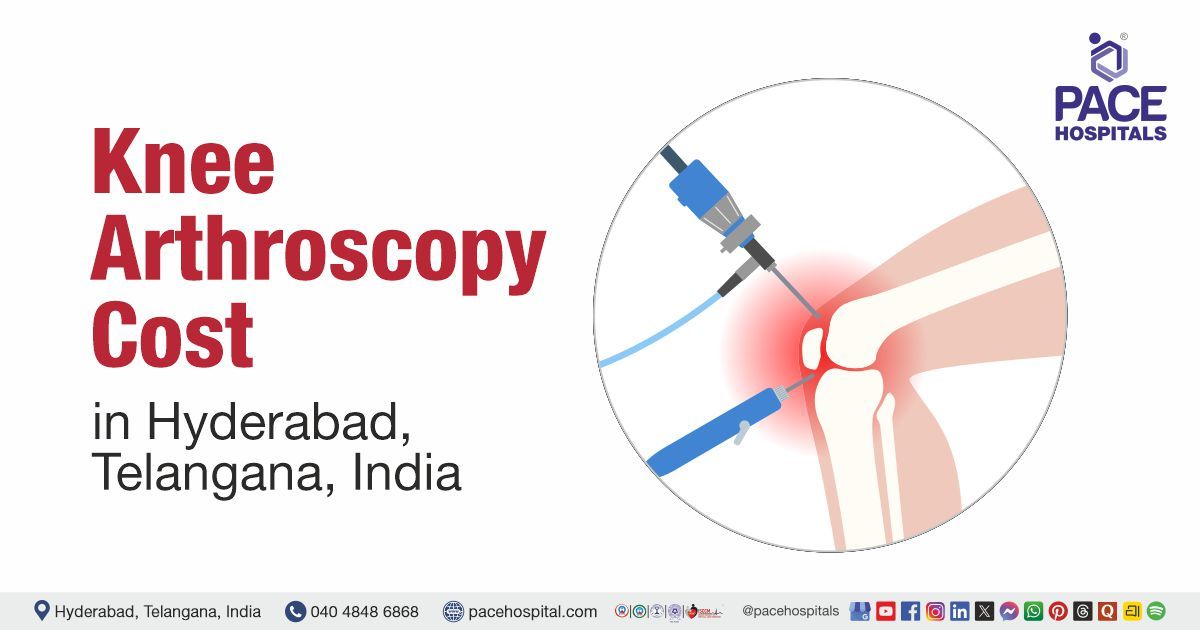
Knee arthroscopy is a minimally invasive surgical procedure used to diagnose and treat problems within the knee joint. The Orthopaedic surgeon makes a small incision during the procedure and inserts a small camera called an arthroscope into the knee. On a monitor, a camera displays the interior of the knee joint, and the surgeon can view and treat the affected area with special surgical instruments.
Knee arthroscopy may be indicated in selected patients for meniscus tears, loose bodies, cartilage injury, ligament injury, synovial inflammation, knee locking or persistent knee pain that is not relieved by nonsurgical treatment. It is widely used because it uses smaller incisions than open surgery and can result in faster recovery in appropriate patients.
The aim of knee arthroscopy surgery is to relieve pain, improve knee movement, treat mechanical symptoms such as locking or catching, repair or remove damaged tissue when necessary, and allow the patient to return to everyday activities with improved knee function.
Get a Cost Estimate for Knee Arthroscopy
Knee Arthroscopy Cost Query
Knee Arthroscopy Cost in India
On average, Knee Arthroscopy cost in India ranges between ₹40,000 and ₹2,80,000 (approximately US $423 to US $2,959). However, the actual cost may vary depending on several factors, including:
- The patient’s age, body weight, activity level, and overall health.
- Type of knee problem being treated.
- Whether the procedure is diagnostic or therapeutic.
- Type of arthroscopic procedure performed, such as meniscus repair, partial meniscectomy, loose body removal, cartilage treatment, or ligament procedure.
- Whether implants, anchors, sutures, screws, or fixation devices are required.
- Hospital charges, including room category and facilities.
- Surgeon’s expertise and surgical team charges.
- Pre-operative investigations and post-operative physiotherapy requirements.
- Insurance coverage or corporate approvals for cashless treatment.
- Any complications that may arise during or after the procedure.
Knee Arthroscopy Cost in Hyderabad, Telangana
On average, Knee Arthroscopy cost in Hyderabad ranges between ₹50,000 and ₹2,30,000 (approximately US $528 to US $2,431) for standard arthroscopic knee procedures.
These rates offer a competitive and cost-effective option compared to other hospitals in the city, with advanced orthopaedic and arthroscopic surgical care readily available.
However, the cost of Knee Arthroscopy Surgery in Hyderabad is influenced by several factors, such as:
- The patient’s age, activity level, and medical history.
- Type and severity of knee injury.
- Presence of meniscus tear, cartilage damage, loose bodies, ligament injury, or knee locking.
- Type of arthroscopic procedure required.
- Use of implants, anchors, sutures, or fixation devices.
- •The hospital facility chosen and its infrastructure.
- Duration of hospital stay and room category selected.
- Insurance or corporate approvals for cashless services.
- Extent of pre-operative evaluation and post-operative physiotherapy.
- Potential complications during or after the procedure.
Cost Breakdown According to Type of Knee Arthroscopy Procedure
- Diagnostic Knee Arthroscopy – ₹70,000 – ₹1,00,000 (US $740 – US $1,057) approx.
- Arthroscopic Partial Meniscectomy – ₹80,000 – ₹1,50,000 (US $845 – US $1,585) approx.
- Arthroscopic Meniscus Repair – ₹1,20,000 – ₹2,50,000 (US $1,268 – US $2,642) approx.
- Arthroscopic Loose Body Removal – ₹80,000 – ₹1,60,000 (US $845 – US $1,691) approx.
- Arthroscopic Chondroplasty / Cartilage Debridement – ₹1,00,000 – ₹2,50,000 (US $1,057 – US $2,642) approx.
- Arthroscopic Synovectomy – ₹1,00,000 – ₹2,20,000 (US $1,057 – US $2,325) approx.
- Arthroscopic Lateral Release – ₹1,20,000 – ₹2,50,000 (US $1,268 – US $2,642) approx.
- Knee Arthroscopy with Ligament Procedure – ₹1,50,000 – ₹2,50,000 or more (US $1,588 – US $2,642+) approx.
Note: These are estimated costs. The exact cost for an individual patient is determined after a detailed orthopaedic evaluation, MRI review, X-ray assessment, and evaluation of associated meniscus, cartilage, or ligament injuries.
Additional Information: Knee Arthroscopy Surgery cost may vary depending on the type of procedure performed, use of implants or fixation devices, hospital stay, associated meniscus or cartilage repair, physiotherapy requirements, and surgical complexity. Meniscus repair, cartilage restoration, and ligament procedures usually cost more than simple diagnostic arthroscopy or loose body removal because they may require additional implants, advanced instruments, and longer rehabilitation.
Breakdown of Knee Arthroscopy Procedure Costs
The cost of a knee arthroscopy procedure has multiple components and can differ based on the hospital, the type of arthroscopic procedure, the pattern of the knee injury, the implants used, and the patient's overall health. A detailed breakdown of the costs typically involved in the Knee Arthroscopy Procedure:
Pre-Surgery Costs
- Consultation Fees: Fees may be charged for consultation by an orthopaedic surgeon or sports medicine specialist and will vary according to the experience of the doctor and hospital.
- Diagnostic Tests: Includes X-ray, MRI scan, Blood Tests, ECG and other investigations to assess meniscus tears, cartilage damage, ligament injury, loose bodies and surgical fitness.
- Pre-Surgical Screening: Complete medical evaluation to determine fitness for anaesthesia and surgery, particularly in patients with diabetes, high blood pressure, heart disease, obesity, kidney disease, or other medical conditions.
Knee Arthroscopy Procedure Costs
- Hospitalization Charges: During admission and post-operative recovery room charges. In selected cases, day-care or short-stay admission may be possible.
- Surgical Procedure: Knee arthroscopy cost includes surgeon’s fee, operation theatre charges, arthroscopy equipment, sterile consumables and procedure specific instruments.
- Implant and Consumable Charges: If anchors, sutures, screws, buttons, or fixation devices are utilised for meniscus repair, cartilage treatment, or ligament-related treatments, the cost may change.
- Anesthesia and Surgical Team Fees: Charges for the orthopaedic surgery team, anaesthesiologist, surgical assistants, and anaesthesia used during the treatment.
Post-Surgery Care Costs
- Hospital Stay: Monitoring and recovery costs in the general hospital. Many people need a shorter hospital stay, based on their medical condition, type of treatment, mobility, and pain management.
- Follow-Up Visits: Monitoring wound healing, knee mobility, pain reduction, and rehabilitation progress requires routine follow-up visits.
- Physiotherapy and Rehabilitation: Knee mobility, muscle strength, balance, walking ability, and a safe return to everyday activities or sports are all restored with physiotherapy.
For patients undergoing a knee arthroscopy procedure, this cost structure guarantees transparency and facilitates efficient financial planning. We at PACE Hospitals, Hyderabad, offer thorough, customised estimates based on each patient's knee condition, operation needs, and rehabilitation requirements.
Who Needs Knee Arthroscopy Procedure?
Not all patients with knee pain require a knee arthroscopy procedure. It is only advised in cases where the knee joint's symptoms, examination results, and imaging reports indicate a treatable problem.
Common Conditions Indicating Need for Knee Arthroscopy Procedure
- Loose Bodies in the Knee Joint: Pain, swelling, clicking, or locking may be caused by small fragments of bone or cartilage inside the knee. These loose bodies may be removed by performing an arthroscopy.
- Meniscus Tear: For meniscus tears that result in pain, swelling, locking, catching, or trouble walking, knee arthroscopy may be advised, particularly if non-surgical treatment fails to alleviate symptoms.
- Knee Locking or Catching: If a meniscus tear or loose body is causing mechanical symptoms, patients who feel that their knee is stuck, catching, or unable to move freely may require an arthroscopy.
- Synovial Inflammation: In certain patients with inflammatory joint lining that results in chronic pain, swelling, or limited mobility, arthroscopic synovectomy may be recommended.
- Cartilage Injury: Certain cartilage injuries can be treated arthroscopically to remove unstable fragments, smooth damaged cartilage, or perform cartilage-specific treatments as indicated by the defect.
- Persistent Knee Pain After Failed Non-Surgical Treatment: After a thorough assessment, a knee arthroscopy procedure may be considered if medications, physiotherapy, bracing, injections, and activity adjustment fail to improve symptoms.
- Ligament-Related Knee Injury: Ligament-related knee injuries, including meniscus or cartilage damage, can be diagnosed or treated via arthroscopy.
- Sports-Related Knee Injuries: Arthroscopic treatment may be necessary for athletes and active people with meniscus, cartilage, or ligament injuries in order to restore function and safely resume their activities.
Who is Not Eligible for Knee Arthroscopy Procedure?
Knee arthroscopy procedure may not be appropriate for everyone, even if it can be helpful for certain knee conditions. Certain conditions may raise the risk of surgery or lessen the expected benefit.
- Mild Knee Pain Without Clear Structural Damage: Arthroscopy may not be beneficial for patients who have mild pain and no clear, treatable problem on imaging or clinical assessment.
- Active Infection: Prior to surgery, patients who have an active infection in their knee, skin, or other body part may require treatment.
- Advanced Knee Osteoarthritis: For advanced arthritis with significant cartilage loss, deformity, or bone-on-bone changes, arthroscopy is typically not the preferred method of treatment.
- Severe Medical Illness: Before surgery, patients with uncontrolled heart, lung, renal, or other serious medical conditions may need to be stabilised.
- Poorly Controlled Diabetes: Infection and delayed wound healing are two risks associated with high blood sugar.
- Poor Physiotherapy Compliance: Following rehabilitation recommendations is essential for recovery following arthroscopy. Recovery may be delayed for patients who are unable to adhere to physiotherapy.
- Severe Obesity: Being overweight can raise the risk of anaesthesia, wound problems, and rehabilitation difficulties.
- Unrealistic Expectations: Although knee arthroscopy can address certain internal knee issues, it may not be able to correct severe arthritis or provide every patient with total pain relief.
To determine eligibility, an evaluation by a qualified orthopaedic surgeon is necessary. Whether knee arthroscopy surgery is likely to be beneficial is determined by a comprehensive pre-operative evaluation that includes a clinical examination, MRI, X-ray, and general health assessment.
Knee Arthroscopy - How is Knee Arthroscopy Procedure Done?
Knee Arthroscopy is usually performed using small incisions, a camera, and specialised surgical instruments. The procedure may be done under spinal, regional, or general anaesthesia based on the patient’s condition and anaesthesia evaluation.
The steps include:
- Pre-procedure evaluation: Clinical evaluation, MRI review, X-ray if necessary, and assessment of meniscus injury, cartilage damage, knee pain, swelling, locking, stability, and overall fitness.
- Anesthesia: Depending on medical fitness and anaesthesia evaluation, the procedure is carried out under spinal, regional, or general anaesthesia.
- Small incisions: To insert the arthroscope and surgical equipment, the surgeon creates small incisions around the knee joint.
- Arthroscopic examination: To view the meniscus, cartilage, ligaments, synovium, and joint surfaces, a small camera is placed into the knee joint.
- Treatment of knee problem: The surgeon may remove loose bodies, smooth damaged cartilage, treat inflamed tissue, trim or repair the meniscus, or carry out other necessary procedures, depending on the condition.
- Joint wash and assessment: After cleaning the knee joint, the treated area is examined for movement, stability, and appropriate clearance.
- Closure and dressing: After the small incisions are closed and a dressing is applied, the patient is moved to be monitored for their recovery.
- Rehabilitation: As advised by the surgical team, physiotherapy is initiated to enhance mobility, strength, walking ability, and recovery.
Types of Knee Arthroscopy Procedure
Different types of knee arthroscopy are used depending on the patient’s symptoms, MRI findings, knee stability, cartilage condition, and associated injuries.
- Diagnostic Knee Arthroscopy: This is performed to examine the inside of the knee joint when symptoms persist, and imaging does not fully explain the problem. It may also be combined with treatment during the same procedure.
- Arthroscopic Partial Meniscectomy: This procedure removes the damaged portion of a torn meniscus while preserving as much healthy meniscus tissue as possible. It may be advised when the torn part cannot be repaired.
- Arthroscopic Meniscus Repair: This procedure repairs a torn meniscus using sutures or fixation devices. It is usually considered when the tear pattern, tear location, and tissue quality are suitable for repair.
- Arthroscopic Loose Body Removal: This procedure removes loose fragments of bone or cartilage from the knee joint that may cause locking, catching, pain, or swelling.
- Arthroscopic Chondroplasty: This procedure smooths damaged cartilage and removes unstable cartilage fragments to reduce irritation inside the knee joint.
- Arthroscopic Synovectomy: This procedure removes inflamed synovial tissue from the knee joint in selected cases where synovial inflammation causes pain, swelling, or stiffness.
- Arthroscopic Lateral Release: This procedure may be considered in selected patients with kneecap tracking problems where tight soft tissue on the outer side of the kneecap contributes to symptoms.
- Knee Arthroscopy with Ligament Procedure: In selected cases, arthroscopy may be used along with ligament-related procedures such as ACL reconstruction or treatment of associated meniscus and cartilage injuries.
Common Surgical Techniques for Knee Arthroscopy
- Standard Arthroscopic Knee Surgery: This is the most commonly used technique. A small camera is inserted into the knee joint, and miniature instruments are used through separate small incisions to treat the problem.
- Meniscus Trimming Technique: This technique is used when the torn meniscus segment is unstable and not repairable. The damaged part is trimmed while preserving healthy meniscus tissue.
- Meniscus Repair Technique: This technique uses sutures, anchors, or fixation devices to repair a meniscus tear when healing potential is suitable.
- Loose Body Removal Technique: This technique is used to remove free-floating cartilage or bone fragments from the knee joint.
- Cartilage Debridement / Chondroplasty: This technique smooths rough or unstable cartilage surfaces and removes loose cartilage fragments.
- Synovectomy Technique: This technique removes inflamed synovial lining from the knee joint in selected cases.
- Elective vs Emergency Knee Arthroscopy: Knee arthroscopy is usually a planned procedure after proper diagnosis and pre-surgery assessment. Emergency or urgent arthroscopy may be considered in selected cases, such as locked knee, severe mechanical symptoms, septic arthritis, or complex traumatic knee injury.
Note: The cost of Knee Arthroscopy Surgery may vary depending on the type of technique used, implants or fixation devices required, associated meniscus or cartilage treatment, hospital stay, and complexity of the knee condition.
Post Knee Arthroscopy Procedure Care Tips
After a knee arthroscopy procedure, careful attention to recovery and physiotherapy is needed to ensure proper healing, knee movement, and long-term function.
- It is recommended to adhere to the orthopaedic and rehabilitation team's physiotherapy plan.
- It is advised to keep the wound dry and clean until the doctor confirms that it is healing properly.
- During the early stages of recovery, using a knee brace, walker, or crutches is advised.
- For pain management, infection prevention, and swelling control, it is recommended to take prescription medications as directed.
- It is recommended to avoid running, jumping, twisting, squatting, and sports activities until cleared by the surgeon.
- It is advised to perform knee bending, straightening, and strengthening exercises under a physiotherapist’s guidance.
- It is advised to apply ice packs and elevate the leg if advised to reduce swelling.
- It is advised to attend scheduled follow-up appointments to monitor wound healing, knee movement, and recovery progress.
- It is advised to report fever, increasing swelling, wound discharge, severe calf pain, sudden knee locking, or worsening pain immediately.
Following these recommendations supports safe recovery and better long-term knee function after Knee Arthroscopy Surgery.
Key Factors Influencing Knee Arthroscopy Procedure Cost
The overall cost of a knee arthroscopy procedure, a specialised orthopaedic treatment, may differ based on the diagnosis, type of procedure, length of hospital stay, implants, and rehabilitation requirements. Patients can plan their treatment costs more clearly when they are aware of these factors.
Pre-Surgery Evaluation
The total cost may be affected by the pre-surgery workup, which consists of a clinical examination, an MRI scan, an X-ray, blood tests, an ECG, fitness for anaesthesia, and specialist consultations.
Insurance Coverage
Final out-of-pocket expense relies on insurance coverage, cashless approval, policy limitations, waiting period, eligibility of room, implant coverage and corporate or TPA approvals.
Hospital and Location
Charges in hospitals in major cities like Hyderabad may vary on the basis of infrastructure, availability of arthroscopy equipment, quality of operation theatre, infection control protocols and rehabilitation support.
Post-Surgery Care
Physiotherapy sessions, medications, dressing care, a knee brace, follow-up visits, crutches, and rehabilitation support can add to the overall treatment cost after Knee Arthroscopy Surgery.
Complications During or After Surgery
Additional treatment and increased total cost could result from unexpected problems such as infection, bleeding, stiffness, slower healing, blood clots or swelling that does not resolve.
Surgeon Expertise
Specialist orthopaedic surgeons and sports medicine specialists may charge more depending on their expertise in arthroscopic knee procedures and complex sports injury management.
Procedure Type and Implants Used
Simple diagnostic arthroscopy may cost less, while cartilage procedures, meniscus repair, ligament procedures, anchors, sutures, screws, or fixation implants may increase the overall cost.
Associated Knee Injuries
Surgical complexity and overall cost can be increased by meniscus tears, cartilage injuries, ACL, PCL, MCL, loose bodies, or multi-ligament injuries.
Patient Health
Surgical planning, recovery time, rehabilitation requirements, and overall treatment costs can all be impacted by factors such as age, body weight, muscular strength, exercise level, diabetes, smoking status, and overall health.
Why Choose PACE Hospitals for Knee Arthroscopy in Hyderabad, India?
PACE Hospitals, Hyderabad, is a renowned centre for Knee Arthroscopy procedure and advanced orthopaedic care.
- Our skilled orthopaedic surgeons, sports medicine specialists, anaesthesiologists, physiotherapists, and specialised nursing personnel adhere to evidence-based standards for safe and efficient procedures.
- Our facilities include state-of-the-art operating rooms, sophisticated arthroscopic tools, superior fixation methods, and committed post-operative rehabilitation assistance. Focused recovery assistance, clear cost estimates, and individualised treatment planning are all guaranteed by patient-centered care.
For patients searching for the Best Hospital for the Knee Arthroscopy Procedure in Hyderabad, Telangana, India, PACE Hospitals offers cutting-edge orthopaedic care, affordable prices, and clear treatment planning for patients.
Financial Assistance and Payment Plans at PACE Hospitals
Care for orthopaedic conditions and sports injuries should be affordable. Our staff helps patients with cashless support and insurance.
- Cashless hospitalisation with empanelled insurers and TPAs
- Pre-authorisation and documentation guidance
- Reimbursement support if a cashless facility is not available
- Transparent pre-admission cost estimates
- Support for corporate and government health schemes
Knee Arthroscopy Procedure Success Rate
Knee Arthroscopy Surgery is generally effective in properly selected patients with treatable internal knee problems such as meniscus tears, loose bodies, cartilage fragments, or mechanical knee symptoms.
Patients may experience:
- Decreased knee pain
- Improved knee movement
- Better walking comfort
- Relief from locking or catching symptoms
- Improved ability to return to routine activities or sports after rehabilitation
- Long-term success depends on accurate diagnosis, correct patient selection, the type of arthroscopic procedure, associated knee damage, physiotherapy, weight control, and regular follow-up.
Frequently Asked Questions (FAQs) on Knee Arthroscopy
How to choose the right type of Knee Arthroscopy Procedure?
The right procedure depends on the patient’s symptoms, MRI findings, meniscus condition, cartilage damage, ligament stability, age, activity level, and surgeon assessment. The orthopaedic surgeon decides whether trimming, repair, loose body removal, cartilage treatment, or another arthroscopic procedure is required.
Is the Knee Arthroscopy Procedure safe?
When done by a skilled orthopaedic surgeon on a qualified patient, knee arthroscopy is usually safe. Infection, bleeding, swelling, stiffness, blood clots, chronic discomfort, or a delayed recovery are among the possible risks. These risks can be reduced by appropriate assessment and rehabilitation.
Who may not be suitable for the Knee Arthroscopy Procedure?
Patients with mild knee pain without clear structural damage, advanced knee osteoarthritis, active infection, uncontrolled medical conditions, poor physiotherapy compliance, or unrealistic expectations may not be suitable candidates. Proper orthopaedic evaluation is required.
How long is the recovery period after a knee arthroscopy procedure?
Depending on the procedure, recovery is different. While meniscus repair, cartilage treatments, or ligament-related treatment may require many weeks to months with physiotherapy, simple arthroscopy may be recovered in a few weeks.
What are the risks or complications associated with the Knee Arthroscopy Procedure?
Infection, bleeding, swelling, stiffness, blood clots, chronic pain, wound issues, nerve irritation, or a delayed recovery are all possible complications. Physiotherapy and routine follow-up help reduce complications.
What is the expected outcome after Knee Arthroscopy Procedure at PACE Hospitals, Telangana, India?
At PACE Hospitals, Hyderabad, Knee Arthroscopy is planned based on the patient’s knee condition, MRI findings, procedure requirements, and rehabilitation needs. Consistent physiotherapy and follow-up visits at PACE Hospitals are crucial to ensure a safe recovery, improved knee movement, and long-term functional outcomes after a knee arthroscopy procedure.
What is the Knee Arthroscopy Procedure, and why is it needed?
A minimally invasive procedure called knee arthroscopy surgery is performed to identify and address specific knee joint issues. Meniscus tears, loose bodies, cartilage damage, knee locking, synovial inflammation, or chronic symptoms that don't go away with non-surgical treatment may require surgery.
What is the cost of Knee Arthroscopy Procedure in Hyderabad?
Knee Arthroscopy Procedure cost in Hyderabad usually ranges between ₹50,000 and ₹2,30,000 (approximately US $528 to US $2,431) for standard arthroscopic knee procedures. Complex cases involving meniscus repair, cartilage treatment, ligament procedures, implants, or multiple knee injuries may cost more.
What is the cost of Knee Arthroscopy Procedure in India?
Knee Arthroscopy Surgery cost in India usually ranges between ₹40,000 and ₹2,80,000 (approximately US $423 to US $2,959). The final cost depends on the hospital's location, surgeon's expertise, MRI findings, procedure type, implants used, hospital stay, and physiotherapy needs.
Which factors are included in the total cost of the Knee Arthroscopy Procedure?
Consultation, MRI and diagnostic tests, anaesthesia, surgeon fees, operating room charges, arthroscopy equipment, implants or consumables, hospital stay, medications, follow-up visits, and physiotherapy support are usually included in the overall cost.
Is the Knee Arthroscopy Procedure covered by insurance at PACE Hospitals?
When a knee arthroscopy procedure is medically required, the majority of health insurance policies cover it. The policy's conditions, waiting periods, implant limitations, room eligibility, and insurance provider approvals all affect coverage. For cashless approvals and reimbursement advice, PACE Hospitals offers dedicated support.
Can knee arthroscopy treat meniscus tears?
Yes, some meniscus injuries can be treated with knee arthroscopy. A partial meniscectomy or meniscus repair may be performed by the surgeon, depending on the tear pattern and possibility for healing.
How long does the Knee Arthroscopy Procedure take?
Depending on the procedure performed, knee arthroscopy typically takes 30 minutes to 2 hours. Meniscus repair, cartilage treatment, or ligament procedures could take longer than simple diagnostic arthroscopy or loose body removal.
Is physiotherapy necessary after Knee Arthroscopy Procedure?
Physiotherapy is crucial following knee arthroscopy. It facilitates a safe return to daily activities or sports, reduces swelling, enhances knee mobility, rebuilds muscle strength, and improves balance.
Can Knee Arthroscopy be done for both diagnosis and treatment?
Yes, knee arthroscopy is a diagnostic and therapeutic procedure. During the same surgery, the surgeon can check the inside of the knee and repair specific issues such as meniscus tears, loose bodies, cartilage fragments, or inflammatory tissue.
Share on
Request an appointment
Fill in the appointment form or call us instantly to book a confirmed appointment with our super specialist at 04048486868
Appointment request - health articles
Recent Articles