
Laparoscopic Hernia Surgery - Types, Benefits & Procedure
PACE Hospitals offers advanced laparoscopic hernia surgery in Hyderabad, India, providing minimally invasive treatment for inguinal, umbilical, incisional, and other hernias. Our specialists use small incisions and advanced laparoscopic techniques to repair the weakened abdominal wall, with mesh used when clinically appropriate.
With personalized treatment and expert surgical care, we aim to support safe laparoscopic hernia repair, reduce postoperative discomfort, and help patients recover and return to daily activities sooner.
Book an Appointment for Laparoscopic Hernia Surgery
Laparoscopic Hernia Surgery Appointment
Why Choose PACE Hospitals for Laparoscopic Hernia Repair?
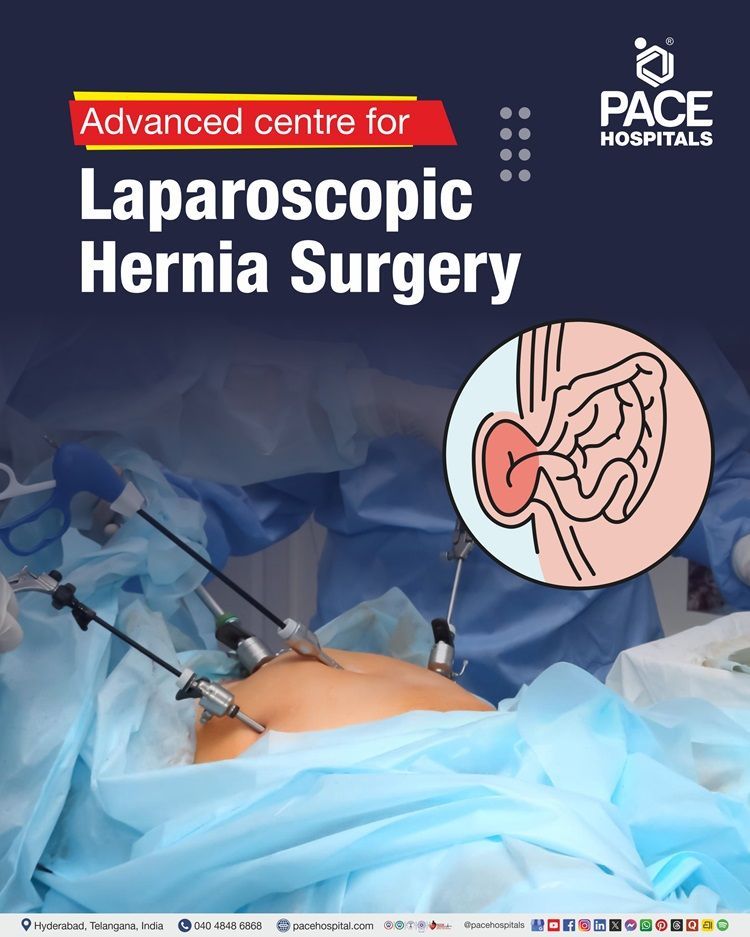
Expert hernia doctors and surgeons Specialized in Minimally Invasive Treatment of Inguinal, Umbilical, Incisional & Complex Hernias
Laparoscopic Hernia Repair with Small Incisions, Secure Mesh Placement, Less Postoperative Pain & Faster Recovery
Transparent Laparoscopic Hernia Surgery with Insurance & Cashless Options
Recognized for excellence in healthcare delivery with
NABH, NABL, NBE/DNB, NABH Nursing Excellence, and ISCCM accreditations.
What is laparoscopic hernia surgery?
Laparoscopic hernia surgery, also called keyhole hernia repair, is a minimally invasive procedure used to treat certain hernias. A hernia occurs when fatty tissue or part of the intestine pushes through a weak area in the abdominal wall, causing a bulge.
During the procedure, the surgeon makes a few small incisions in the abdomen and inserts a laparoscope, a thin camera that provides a clear view of the hernia from inside. Special instruments are used to return the protruding tissue to its normal position and repair the weak area.
A surgical mesh is often used to strengthen the abdominal wall and reduce the chance of the hernia returning. The choice between laparoscopic and open surgery depends on the type and size of the hernia, the patient’s health, previous surgeries, and the surgeon’s recommendation.
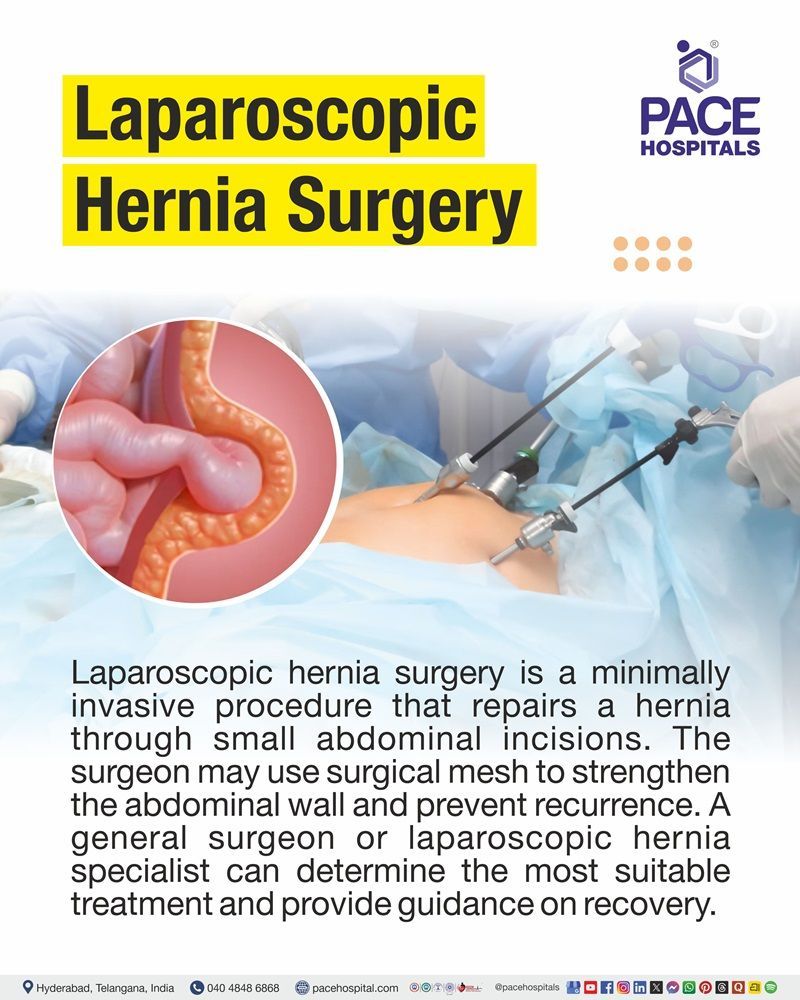
Most patients can return home the same day or after a short hospital stay. Light activities can usually be resumed gradually within a few days, while heavy lifting and strenuous exercise may need to be avoided for several weeks. A general surgeon or laparoscopic hernia specialist will guide patients on the most suitable treatment approach and recovery plan.
Laparoscopic hernia surgery meaning
The term "laparoscopic hernia surgery" is derived from the following words:
- "Laparoscopic" refers to a minimally invasive surgical technique that uses a laparoscope (a thin tube with a camera) to view the inside of the abdomen through small incisions.
- "Hernia" refers to a condition where an internal organ or tissue pushes through a weak area in the surrounding muscle or connective tissue.
In medical terminology, laparoscopic hernia surgery is a minimally invasive procedure used to repair a hernia by inserting a laparoscope and surgical instruments through small incisions. It helps strengthen the weakened area of the abdominal wall using a mesh, preventing the hernia from coming back.
Types of laparoscopic hernia surgery
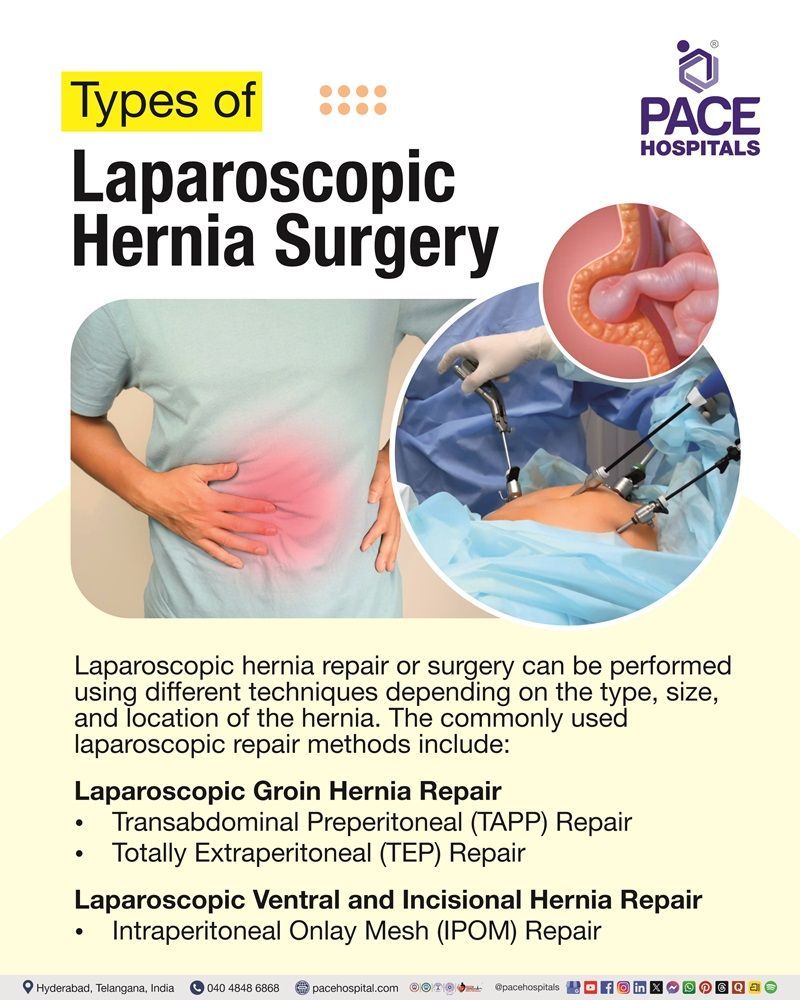
Laparoscopic hernia repair or surgery can be performed using different techniques depending on the type, size, and location of the hernia. The commonly used laparoscopic repair methods include:
- Laparoscopic Groin Hernia Repair
- Transabdominal Preperitoneal (TAPP) Repair
- Totally Extraperitoneal (TEP) Repair
- Laparoscopic Ventral and Incisional Hernia Repair
- Intraperitoneal Onlay Mesh (IPOM) Repair
Laparoscopic Groin Hernia Repair
Laparoscopic groin hernia repair is used mainly for inguinal hernias and may also identify and repair a femoral hernia. The two main approaches are TAPP and TEP.
- Transabdominal Preperitoneal (TAPP) Repair: In this procedure, the surgeon makes small cuts and inserts a laparoscope to reach the hernia. A mesh is then placed in the preperitoneal space over the weak area to strengthen the abdominal wall and prevent the hernia from recurring.
- Totally Extraperitoneal (TEP) Repair: In this approach, the surgeon repairs the hernia without entering the abdominal cavity. A mesh is placed between the layers of the abdominal wall to cover the hernia defect and reduce the risk of recurrence.
Laparoscopic Ventral and Incisional Hernia Repair
Laparoscopic ventral hernia repair may be used for selected hernias in the abdominal wall. These include incisional hernias, which develop at the site of a previous abdominal operation, as well as some umbilical and epigastric hernias.
- Intraperitoneal Onlay Mesh (IPOM) Repair: This technique is often used to repair ventral and incisional hernias. A surgical mesh is placed inside the abdomen over the weakened area and fixed to the abdominal wall. The mesh strengthens the abdominal wall and helps prevent the hernia from coming back.
Laparoscopic hernia surgery indications
Laparoscopic hernia surgery is recommended for selected patients based on the type of hernia, patient-related factors, and surgeon expertise. Compared with open surgery, the laparoscopic approach provides advantages like reduced postoperative pain, lesser hospital stay, earlier return to daily activities, and a lower risk of wound-related complications in appropriately selected patients.
Common Indications for Laparoscopic Hernia Surgery:
- Bilateral inguinal hernias
- Recurrent inguinal hernia after previous open repair
- Primary unilateral inguinal hernia (selected patients)
- Femoral hernia
- Occult contralateral hernia
- Patients seeking faster recovery
- Obese patients
- Need to evaluate the entire groin region
Bilateral inguinal hernias
Laparoscopic repair is considered the preferred approach for patients with hernias on both sides, as both defects can be repaired through the same small incisions without requiring separate open incisions.
Recurrent inguinal hernia after previous open repair
For patients who develop a recurrence following an anterior (open) hernia repair, laparoscopic repair is recommended because it approaches the hernia through an undisturbed tissue plane, reducing operative difficulty and minimizing the risk of injury.
Primary unilateral inguinal hernia (selected patients)
Laparoscopic repair is suitable for many patients with a primary unilateral inguinal hernia, particularly when performed by surgeons experienced in minimally invasive techniques. It is associated with faster recovery, less postoperative pain, and earlier return to normal activities.
Femoral hernia
Laparoscopic surgery provides excellent visualization of the groin anatomy, making it particularly useful for diagnosing and repairing femoral hernias while also identifying any associated occult hernias.
Occult contralateral hernia
During laparoscopic repair, the opposite groin can be examined for an asymptomatic hernia, allowing simultaneous repair if clinically appropriate.
Patients seeking faster recovery
Patients who wish to return to work, sports, or routine physical activities as early as possible may benefit from laparoscopic repair because of its minimally invasive nature and reduced postoperative discomfort.
Obese patients
In selected patients with obesity, laparoscopic repair may decrease wound-related complications, including surgical site infections, due to smaller incisions.
Need to evaluate the entire groin region
Laparoscopy allows comprehensive visualization of the myopectineal orifice, enabling identification and treatment of direct, indirect, femoral, and combined hernias during the same procedure.
Laparoscopic hernia surgery contraindications
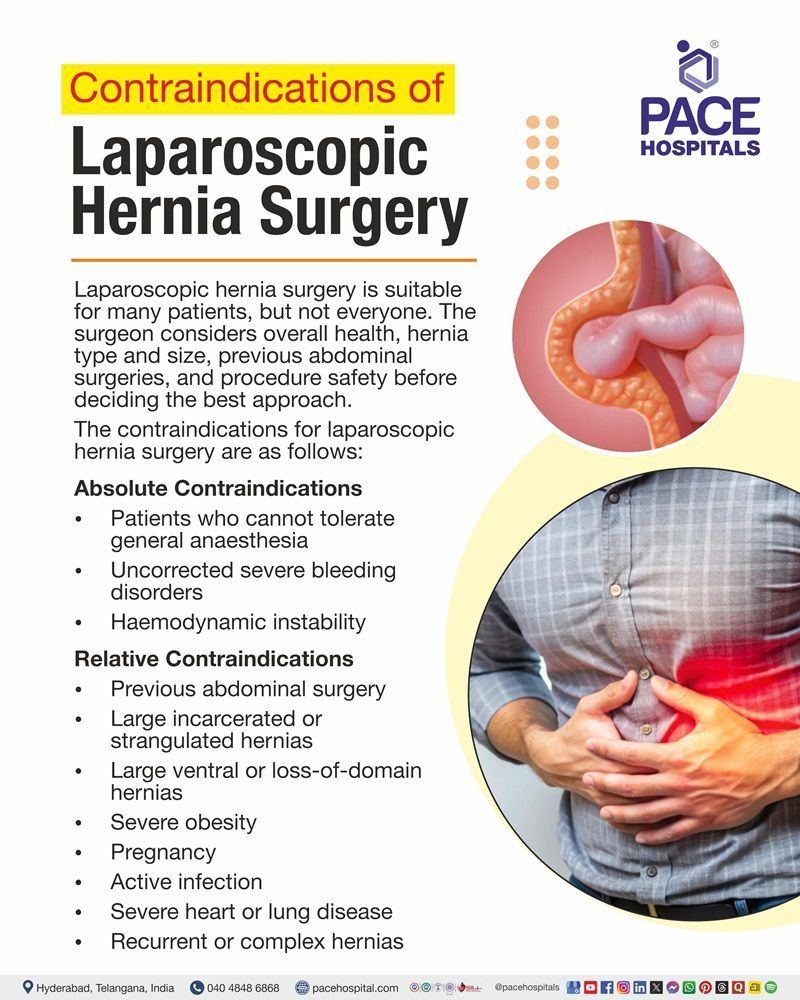
Laparoscopic hernia surgery can be used to treat many types of hernias, but it is not the right choice for everyone. The surgeon will consider the patient's general health, the type and size of the hernia, any previous abdominal surgeries, and whether the procedure can be carried out safely before deciding on the best approach.
The contraindications for laparoscopic hernia surgery are as follows:
Absolute Contraindications
- Patients who cannot tolerate general anaesthesia
- Uncorrected severe bleeding disorders
- Haemodynamic instability
Relative Contraindications
- Previous abdominal surgery
- Large incarcerated or strangulated hernias
- Large ventral or loss-of-domain hernias
- Severe obesity
- Pregnancy
- Active infection
- Severe heart or lung disease
- Recurrent or complex hernias
Absolute Contraindications
Laparoscopic hernia surgery is generally avoided in the following situations:
- Patients who cannot tolerate general anaesthesia: Laparoscopic hernia repair requires general anaesthesia. Patients with severe cardiopulmonary instability or other conditions that make general anaesthesia unsafe may not be suitable candidates.
- Uncorrected severe bleeding disorders: Patients with uncontrolled coagulopathy have a significantly increased risk of bleeding during surgery and should have the disorder corrected before undergoing laparoscopic repair.
- Haemodynamic instability: Patients with shock or unstable vital signs require emergency stabilisation before any elective laparoscopic procedure is considered.
Relative Contraindications
The following conditions do not automatically rule out laparoscopic hernia surgery. However, they require careful evaluation, and the surgeon will decide whether a laparoscopic or open approach is the safer option.
- Previous abdominal surgery: Patients who have had multiple abdominal operations may develop scar tissue (adhesions), which can make laparoscopic surgery more challenging and increase the risk of injury to the bowel or blood vessels.
- Large incarcerated or strangulated hernias: In emergency situations where the blood supply to the trapped intestine may be affected or bowel removal is likely, open surgery is often preferred. However, laparoscopic repair may still be possible in carefully selected patients.
- Large ventral or loss-of-domain hernias: Very large abdominal wall hernias can be difficult to repair using a laparoscopic approach alone. In such cases, an open or combined (hybrid) procedure may be more appropriate.
- Severe obesity: Obesity by itself does not prevent a patient from undergoing laparoscopic hernia surgery. In many cases, the minimally invasive approach can offer good outcomes. However, in patients with severe obesity, the operation may be more technically challenging.
- Pregnancy: Hernia surgery is usually postponed until after childbirth unless the hernia becomes trapped or strangulated and requires emergency treatment.
- Active infection: Elective laparoscopic hernia surgery is generally delayed until any local skin infection or uncontrolled infection elsewhere in the body has been treated, especially when surgical mesh will be used.
- Severe heart or lung disease: Patients with advanced heart or lung conditions may not tolerate the increased abdominal pressure created during laparoscopic surgery. These cases require careful assessment before surgery.
- Recurrent or complex hernias: Patients who have had previous hernia repairs, particularly with mesh, may need an individualized surgical plan. The choice of procedure depends on the location of the hernia, previous operations, and the surgeon's experience.
Laparoscopic hernia surgery benefits
Laparoscopic hernia surgery offers several advantages over traditional open surgery in appropriately selected patients. Because the procedure is performed through small incisions using a camera and specialized instruments, many patients experience a quick recovery with less discomfort. The following are the benefits of laparoscopic hernia surgery:
- Pain relief
- Smaller incisions
- Faster recovery
- Shorter hospital stay
- Lower risk of wound complications
- Better cosmetic results
- Repair of bilateral hernias in one surgery
- Earlier return to daily activities
Pain relief
Laparoscopic hernia surgery helps relieve the pain and discomfort caused by the hernia by repairing the weakened area of the abdominal wall. Patients also tend to experience less pain after surgery compared with open hernia repair because the procedure involves smaller incisions and less tissue disruption.
Smaller incisions
The procedure is performed through a few small incisions instead of a single large cut. This results in less damage to the surrounding tissues, smaller scars, and improved cosmetic outcomes.
Faster recovery
Most patients recover more quickly after laparoscopic hernia surgery and can return to their normal routine, including work and light daily activities, sooner than after open surgery. Recovery time may differ depending on the type of hernia and the patient's overall health.
Shorter hospital stay
Many laparoscopic hernia repairs are performed as day-care procedures or require only a short hospital stay. This allows patients to return home earlier and continue their recovery in a comfortable environment.
Lower risk of wound complications
Smaller surgical incisions reduce the likelihood of wound-related problems such as infection, delayed healing, and wound breakdown. This benefit may be particularly important for patients at higher risk of wound complications.
Better cosmetic results
Because the incisions are small, laparoscopic hernia surgery usually leaves minimal scarring, which many patients find cosmetically preferable to a larger surgical incision.
Repair of bilateral hernias in one surgery
For patients with hernias on both sides of the groin, laparoscopic surgery often allows both hernias to be repaired during the same operation without additional large incisions.
Earlier return to daily activities
Reduced postoperative pain and faster recovery enable many patients to resume walking, routine daily activities, and work earlier, following their surgeon's advice.
Get a Free Second Opinion for Laparoscopic hernia repair
At PACE Hospitals, we are committed to providing our patients with the best possible care, and that includes offering second medical opinions with super specialists for treatment or surgery. We recommend everyone to get an expert advance medical second opinion, before taking decision for your treatment or surgery.
Laparoscopic hernia surgery steps
Procedure steps for Laparoscopic hernia surgery include the following:
Before laparoscopic hernia surgery
- Medical evaluation and physical examination: Before surgery, the surgeon reviews the patient's medical history, performs a physical examination, and may recommend blood tests, an electrocardiogram (ECG), chest X-ray, or other investigations to ensure the patient is fit for surgery and general anaesthesia.
- Discuss medications and allergies: Inform the surgeon about all prescription medicines, over-the-counter medicines, and herbal supplements being taken. Any allergies to medicines, latex, or anaesthetic agents should also be reported before the surgery.
- Adjust blood-thinning medications if advised: Patients taking blood thinners may be advised to stop these medicines temporarily before surgery to reduce the risk of excessive bleeding. These medications should only be stopped under medical supervision.
- Follow fasting instructions: Patients are instructed not to eat or drink for a specified period before surgery. Following these instructions helps reduce the risk of complications related to general anaesthesia.
- Complete informed consent: Before the surgery, the surgeon discusses the procedure, its benefits, possible risks, and other available treatment options with the patient. The patient can ask questions and, after understanding the information, signs the consent form to proceed with the surgery.
- Stop smoking if advised: Patients who smoke may be encouraged to stop smoking several weeks before surgery, as this can improve wound healing and reduce the risk of postoperative complications.
- Arrange transportation and postoperative support: Since laparoscopic hernia surgery is usually performed under general anaesthesia, patients should arrange for a responsible adult to take them home and assist them during the first 24 hours after surgery.
- Prepare appropriate clothing: Patients should wear loose, comfortable clothing that is easy to put on after surgery and avoid wearing jewellery, contact lenses, or valuables on the day of the procedure.
During laparoscopic hernia surgery
- Administration of general anaesthesia: General anaesthesia is administered to keep the patient asleep and pain-free throughout the operation.
- Positioning and preparation: The patient is positioned on the operating table, and the abdomen is cleaned with an antiseptic solution and covered with sterile drapes to reduce the risk of infection.
- Making the incision(s): The surgeon makes several small incisions in the abdomen to allow insertion of the laparoscope and specialised surgical instruments.
- Insertion of the laparoscope: A laparoscope (a thin tube with a camera and light source) is inserted through one of the small incisions, allowing the surgeon to view the hernia and surrounding structures on a monitor.
- Inflation of the abdomen: Carbon dioxide gas is introduced into the abdominal cavity to create working space and improve visualisation during the procedure.
- Repair of the hernia: The protruding tissue is gently returned to its normal position, and the weakened area of the abdominal wall is reinforced. In most cases, a surgical mesh is placed over the defect to strengthen the repair and reduce the risk of recurrence.
- Closure of the incision(s): Once the repair is complete, the surgical instruments are removed, the carbon dioxide gas is released, and the small incisions are closed using sutures, surgical glue, or adhesive strips.
- Application of dressings: Sterile dressings are applied over the incision sites to protect the wounds and promote healing.
After laparoscopic hernia surgery
- Follow discharge and self-care instructions: Patients should carefully follow the surgeon's instructions regarding wound care, medications, diet, activity, and follow-up appointments to support proper healing.
- Manage postoperative pain: Mild pain or discomfort is common after surgery and is usually controlled with prescribed pain-relieving medications. Some patients may also experience temporary shoulder-tip pain caused by the carbon dioxide gas used during the procedure.
- Begin walking early: Walking is encouraged as soon as possible after surgery to improve circulation, reduce the risk of blood clots, and support recovery.
- Avoid heavy lifting: Patients should avoid lifting heavy objects and performing strenuous activities until the surgeon confirms that healing is adequate.
- Gradually return to normal activities: Most patients can resume light daily activities within a few days and return to work based on the nature of their job and the surgeon's advice.
- Attend follow-up appointments: Follow-up visits allow the surgeon to monitor healing, assess the success of the repair, and address any concerns or complications.
- Watch for warning signs: Contact the healthcare team if pain becomes worse, fever develops, or there is redness, swelling, or discharge from the incision. Difficulty passing urine, repeated vomiting, or a new bulge at the treated area should also be checked by a doctor.
Laparoscopic hernia surgery complications
Laparoscopic hernia surgery is a commonly performed procedure for repairing hernias. Although it is generally safe, complications can still occur, as with any surgery. The risk varies based on the type and size of the hernia, the surgical method used, and the patient's overall health. Possible complications include:
- Seroma
- Hematoma or bleeding
- Infection
- Persistent or chronic pain
- Urinary retention
- Injury to the bowel or other abdominal organs
- Bladder or urinary tract injury
- Nerve injury or neuralgia
- Hernia recurrence
- Bowel obstruction
- Mesh-related complications
- Port-site complications
Seroma
A seroma is a collection of fluid that can develop in the area of the repaired hernia. It is common after hernia surgery and usually goes away on its own as the fluid is absorbed by the body. A large or persistent seroma may require medical treatment.
Hematoma or bleeding
Bleeding may occur during or after laparoscopic hernia surgery if a blood vessel is damaged during the procedure or while inserting the instruments. Sometimes, blood can collect near the surgical site and form a hematoma. Most minor bleeding settles on its own, but heavy bleeding may need additional treatment.
Infection
An infection can develop at one of the small incision sites or around the mesh used for the repair. Most infections can be treated with appropriate medical care. If the mesh becomes infected, additional treatment may be required and, in some cases, the mesh may need to be removed.
Persistent or chronic pain
Pain and discomfort are common for a short time after surgery. In some patients, pain may continue for longer than expected. Persistent groin pain after laparoscopic inguinal hernia repair can sometimes be related to nerve irritation, mesh placement, or mesh fixation. Further treatment may be needed if the pain continues.
Urinary retention
Some patients may have difficulty passing urine after laparoscopic inguinal hernia surgery. This is more common in older men and in those with existing urinary problems, such as an enlarged prostate. The problem is usually temporary, but a catheter may be needed until normal urination returns.
Injury to the bowel or other abdominal organs
There is a small risk of injury to the bowel or other abdominal organs during laparoscopic hernia surgery. This can happen while inserting the instruments or separating adhesions from previous surgery. If a bowel injury is not detected early, it can lead to serious infection and may require another operation.
Bladder or urinary tract injury
The bladder or other parts of the urinary tract can rarely be injured during laparoscopic hernia repair. The treatment depends on the nature and severity of the injury. In rare cases, complications involving the bladder and mesh may develop after surgery and require further treatment.
Nerve injury or neuralgia
Nerves around the groin may be affected during hernia surgery. This can lead to numbness, tingling, burning, or pain in the area. These symptoms often improve as the nerves recover, but persistent symptoms may require medical evaluation.
Hernia recurrence
A hernia can come back even after surgery. The risk of recurrence may depend on the type and size of the hernia, the patient's health, the surgical technique, and how well the weakened area is repaired and covered with mesh.
Bowel obstruction
Bowel obstruction is an uncommon complication of laparoscopic hernia surgery. It may occur because of adhesions or, rarely, problems involving the bowel near the repaired area. Depending on the cause and severity, treatment may sometimes require another operation.
Mesh-related complications
Mesh is used to support the weakened area and lower the risk of the hernia coming back. In some patients, the mesh may cause problems such as infection, movement from its original position, or continued pain. If these problems are severe or do not improve, further treatment may be needed and, in rare cases, the mesh may have to be removed.
Port-site complications
Small incisions, called port sites, are made to insert the laparoscopic instruments. These sites can sometimes develop bleeding, a hematoma, or an infection. Rarely, a hernia can develop at one of these incision sites. Proper wound care after surgery can help reduce the risk of these complications.
Laparoscopic hernia surgery recovery time
Recovery after laparoscopic hernia surgery is usually quicker than after open surgery, but the exact time varies depending on the type of hernia, the extent of the repair, and the patient's overall health. Most people can gradually return to normal daily activities within a few days and resume work and other physical activities as their comfort and healing allow.
For uncomplicated laparoscopic inguinal hernia repair, many patients return to normal daily activities within a few days to 1–2 weeks, while heavy lifting and strenuous activities may take longer. Recovery after laparoscopic ventral or incisional hernia repair can take several weeks, depending on the size and complexity of the repair.
What questions can patients ask the healthcare team about Laparoscopic Hernia Surgery?
- Why is laparoscopic hernia surgery recommended for me?
- Are there any non-surgical treatment options available for my hernia?
- What type of laparoscopic hernia repair will be performed?
- Why is laparoscopic surgery suitable for my type of hernia?
- What are the potential benefits of laparoscopic hernia surgery?
- What risks and complications can occur during or after the procedure?
- How should I prepare for laparoscopic hernia surgery?
- What type of anaesthesia will be used during the procedure?
- How long will the surgery take, and will I need to stay in the hospital afterwards?
- What can I expect during the first few days after surgery?
- How much pain or discomfort should I expect after the surgery?
- How soon can I return to normal daily activities?
- When can I return to work, drive, exercise, and lift heavy objects?
- How long will it take to fully recover from laparoscopic hernia surgery?
- What signs or symptoms after surgery should prompt me to contact the healthcare team?
Frequently Asked Questions (FAQs) on Laparoscopic Hernia surgery
Is laparoscopic hernia surgery safe?
Laparoscopic hernia surgery is generally a safe and effective procedure for many patients. The use of small incisions may result in less postoperative pain, smaller scars, and a quicker return to normal activities compared with some open procedures. However, as with any surgery, there are risks, including bleeding, infection, injury to nearby organs, urinary problems, and hernia recurrence. The surgeon will assess the patient's condition and hernia before deciding whether laparoscopic repair is appropriate.
What is the recovery time for laparoscopic hernia surgery?
Recovery depends on the type of hernia and the extent of the repair. After laparoscopic inguinal hernia surgery, many patients can return to normal activities within a few days to 1–2 weeks. Recovery after ventral or incisional hernia repair may take several weeks. The surgeon will advise when it is appropriate to return to strenuous work, exercise, and heavy lifting.
Which is better, open or laparoscopic hernia repair?
Neither approach is best for every patient. Laparoscopic repair may offer smaller incisions, less postoperative discomfort, and an earlier return to normal activities in selected cases, while open repair may be more suitable for certain hernias or patients. The choice depends on the type and size of the hernia, previous operations, overall health, and the surgeon's experience.
Why does the stomach get bigger after hernia surgery?
Some abdominal swelling or bloating can occur after surgery and usually improves as recovery progresses. Temporary swelling, constipation, or the effects of the gas used during laparoscopy may contribute to this feeling. A persistent or increasing bulge, particularly with pain or other symptoms, should be checked to rule out a seroma, other postoperative problem, or hernia recurrence.
Can a hernia heal itself without surgery?
A true abdominal-wall hernia generally does not close or heal on its own because the underlying weakness or opening in the abdominal wall remains. Small, minimally symptomatic hernias may sometimes be monitored under medical guidance. Surgery is generally considered when symptoms develop, the hernia enlarges, or complications such as obstruction or strangulation occur.
How long does laparoscopic hernia surgery take?
Laparoscopic hernia surgery usually takes about 30–90 minutes, although the duration can vary depending on the type, size, and complexity of the hernia. More complicated ventral or incisional hernias may take longer. The time also includes preparation and anaesthesia, so the total time in the operating area may be longer.
Can a person get a hernia after laparoscopic surgery?
Yes, although it is uncommon, a hernia can develop at one of the small incision sites used for laparoscopic surgery. This is called a port-site or incisional hernia. The risk may depend on factors such as the size and location of the incision, wound healing, obesity, and other patient-related factors. A new lump or swelling near a previous incision should be examined by a doctor.
How is laparoscopic hernia surgery done?
The procedure is performed through small cuts in the abdomen rather than one large incision. A laparoscope and surgical instruments are inserted through these openings, and the surgeon moves the hernia back into place. A mesh is usually positioned over the weakened area to strengthen the abdominal wall and reduce the risk of recurrence.
How serious is laparoscopic hernia surgery?
Laparoscopic hernia surgery is usually a planned procedure with a good safety record, but it is still a surgical operation. Most patients recover without major problems, although complications such as bleeding, infection, bowel or bladder injury, chronic pain, and hernia recurrence are possible. The individual risk depends on the patient's health and the complexity of the hernia.
What to eat before hernia surgery?
The healthcare team will provide specific instructions about when to stop eating and drinking before surgery, particularly if general anaesthesia is planned. Usually, patients are advised to have a light meal before the fasting period begins and avoid heavy or difficult-to-digest foods. Medicines and supplements should only be taken before surgery as advised by the healthcare team.
What is the best age to get hernia surgery?
There is no single "best age" for hernia surgery. The decision is based mainly on the type of hernia, symptoms, complications, overall health, and the risk of the hernia becoming trapped or strangulated. In some people with a minimally symptomatic inguinal hernia, watchful waiting may be appropriate, while symptomatic or complicated hernias may need repair.
Can a person walk after laparoscopic hernia surgery?
Yes, Walking is usually encouraged soon after laparoscopic hernia surgery, as long as the patient feels comfortable. Short, gentle walks can help with recovery and prevent prolonged inactivity. Activity should be increased gradually, while heavy lifting and strenuous exercise should be avoided until the surgeon gives clearance.
What are the 5 warning signs of a hernia?
Five concerning signs include a painful or suddenly enlarging bulge, severe or increasing abdominal or groin pain, a hernia that becomes firm and cannot be pushed back, nausea or vomiting, and difficulty passing stool or gas. These symptoms may indicate that the hernia is trapped or has become strangulated. Urgent medical assessment is needed if these symptoms occur.
Can a person climb stairs after hernia surgery?
In most uncomplicated cases, climbing stairs is possible after laparoscopic hernia surgery as soon as the patient feels comfortable and can do so safely. It is better to start slowly and avoid rushing or carrying heavy objects while using the stairs. The timing may differ for larger or more complex hernia repairs, so postoperative instructions should be followed.
What exercises help reduce a hernia?
Exercise cannot close or repair the opening in the abdominal wall caused by a hernia. After medical evaluation, gentle activities such as walking may help maintain general fitness without putting excessive strain on the abdominal wall. Heavy lifting and exercises that cause pain or significant abdominal pressure should be avoided until the surgeon advises that they are safe.
How to prevent hernia naturally?
A hernia cannot always be prevented, particularly when there is an underlying weakness in the abdominal wall. Maintaining a healthy weight, avoiding smoking, treating a persistent cough, preventing constipation and avoiding excessive straining may help reduce pressure on the abdominal wall. Proper lifting techniques and gradual strengthening after recovery may also help, but these measures cannot repair an existing hernia.
Why choose PACE Hospitals?
- A Multi-Super Speciality Hospital.
- NABH, NABL, NBE & NABH - Nursing Excellence accreditation.
- State-of-the-art Liver and Kidney transplant centre.
- Empanelled with all TPAs for smooth cashless benefits.
- Centralized HIMS (Hospital Information System).
- Computerized health records available via website.
- Minimum waiting time for Inpatient and Outpatient.
- Round-the-clock guidance from highly qualified super specialist doctors, surgeons and physicians.
- Standardization of ethical medical care.
- 24X7 Outpatient & Inpatient Pharmacy Services.
- State-of-the-art operation theaters.
- Intensive Care Units (Surgical and Medical) with ISO-9001 accreditation.


