Snake Bite: Types, Symptoms, Causes & Treatment
PACE Hospitals
Written by: Editorial Team
Medically reviewed by: Dr. Manasa Gaddam - Consultant Critical Care Specialist
Overview | Statistics | Types | Pathophysiology | Symptoms | Causes and Risk Factors | Complications | Diagnosis | Treatment | Prevention | Poisonous vs Nonpoisonous Snake Bite | FAQs | When to consult a Doctor
Snake bite definition
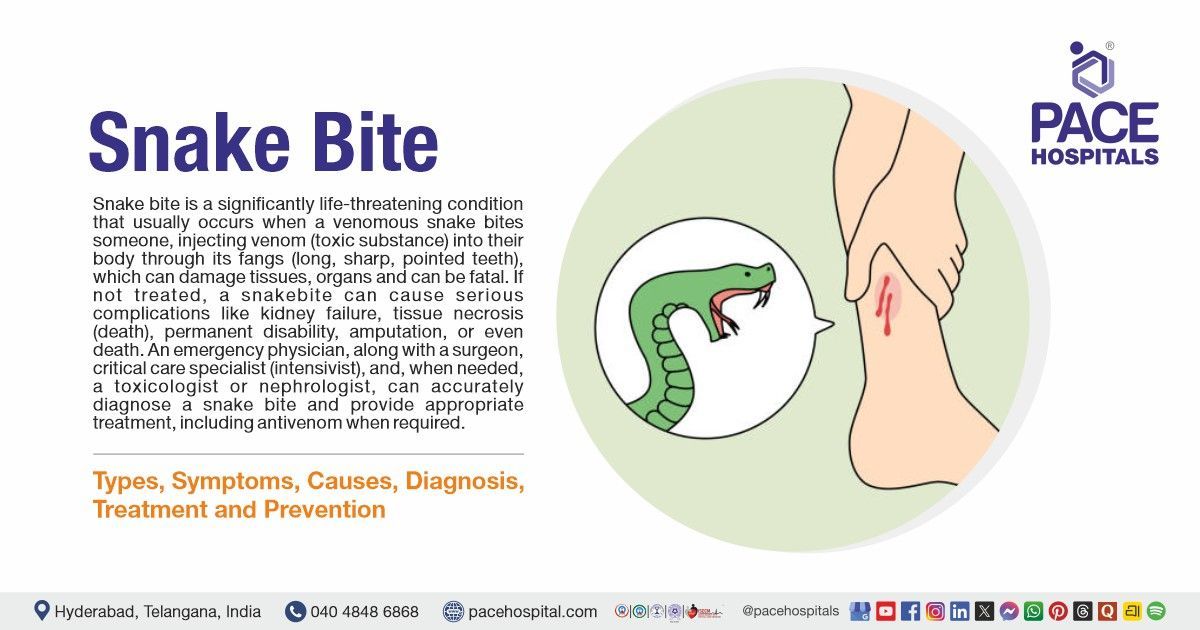
Snake bite is a significantly life-threatening condition that usually occurs when a venomous snake bites someone, injecting venom (toxic substance) into their body through its fangs (long, sharp, pointed teeth), which can damage tissues, organs and can be fatal. Depending on the type and amount of venom, common symptoms include severe pain and swelling at the bite site, bleeding, nausea, vomiting, trouble breathing, and paralysis. A defensive bite usually happens when someone accidentally bothers or provokes a snake. A diagnosis is mostly based on the history of the bite, clinical signs of snake bite envenoming, and a physical examination. Sometimes, supported by lab tests. If not treated, a snakebite can cause serious complications like kidney failure, tissue necrosis (death), permanent disability, amputation, or even death.
An emergency physician, along with a surgeon, critical care specialist (intensivist), and, when needed, a toxicologist or nephrologist trained in managing medical emergencies and toxic exposures, can accurately diagnose a snake bite and provide appropriate treatment, including antivenom when required.
Snake bite meaning
The word "snakebite" comes from two Old English/Proto-Germanic words:
- "Snake," which means a legless reptile.
- "Bite," which means to cut or wound with the teeth.
So, snakebite literally means "a bite from a snake," indicating an injury that occurs when a snake's teeth or fangs pierce the skin of individuals and sometimes inject venom into the body.
Snake Bite Statistics
Snake bite statistics worldwide
Data from 2025 and 2023 reports say that about 54 lakhs people are bitten by snakes every year. This leads to 18 to 27 lakhs envenomings and 81,410 to 137,880 deaths. India is still the most dangerous place in the world, with more than 50% deaths (about 46,000–60,000 each year) occurring globally. This is due to the "Big Four" species and to worsening climate change.
Snake bite statistics in India
India is still the "snakebite capital of the world," with reports from 2025 showing that about 58,000 people die from snakebites every year, which is almost half of all snakebite deaths worldwide. There are thought to be between 1, 11,000 and 1, 77,000 bites a year, mostly affecting rural farmers. Most of these happen during the monsoon season (July to October).
Types of Snake Bite
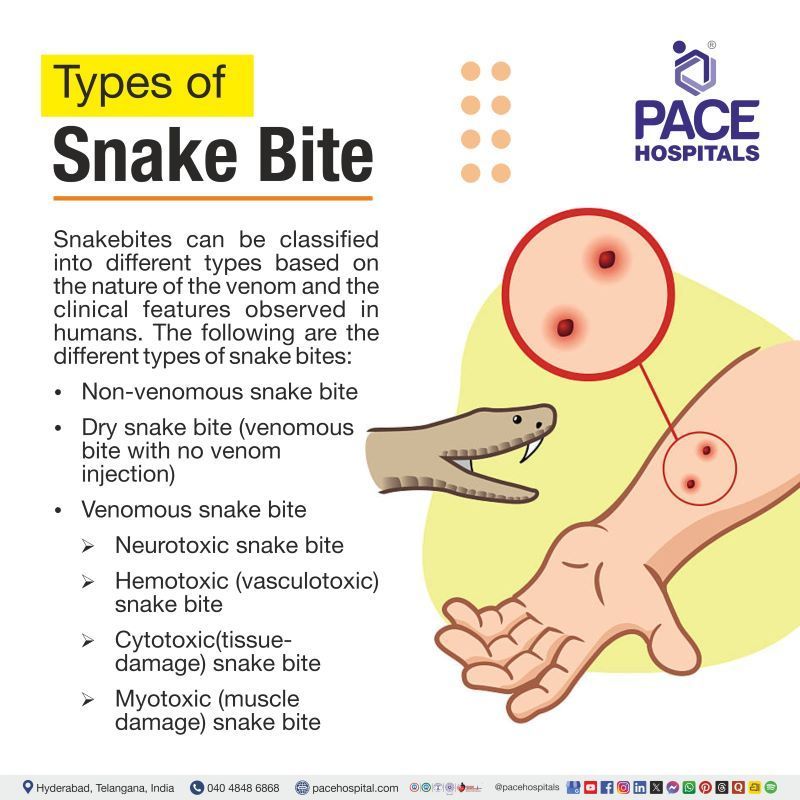
Snakebites can be classified into different types based on the nature of the venom and the clinical features observed in humans. Identifying the type of snakebite helps determine the severity of the venom and guides appropriate medical management.
The following are the different types of snake bites:
- Non-venomous snake bite
- Dry snake bite (venomous bite with no venom injection)
- Venomous snake bite
- Neurotoxic snake bite
- Hemotoxic (vasculotoxic) snake bite
- Cytotoxic (tissue-damage) snake bite
- Myotoxic (muscle damage) snake bite
Non-venomous snake bite
A bite from a non-venomous snake means a non-fanged or non-venomous snake bites the individual. The consequences include minor mechanical damage to the skin, such as tooth marks, bruises, mild pain, and minor bleeding, without systemic toxicity.
Dry snake bite (venomous bite with no venom injection)
A dry bite occurs when a venomous snake bites individuals but doesn't inject any venom into the victim's body, and the bite is associated with fang marks, pain at the bite site, mild swelling, or bleeding, but there are no signs of systemic envenomation (venom toxicity). Many venomous snake bites are dry bites, which means they don't injure the whole body, don't cause toxic side effects, but may cause individuals to feel anxious.
Venomous snake bite
A snake's fangs can inject venom into the body, resulting in local or systemic toxic effects. The severity depends on the type and amount of venom, the type of snake species, and the condition of the victim. Venom contains proteins and enzymes that are venomous and can affect nerves, blood, tissues, or organs.
Neurotoxic snake bite
Neurotoxic envenomation mainly damages the nervous system. The venom stops transmission of nerve signals, which can cause symptoms like drooping eyelids, muscle weakness, paralysis, trouble swallowing, and, in severe cases, respiratory failure. This type is associated with snakebites from cobras and kraits some other venomous snakes, though mixed toxin venoms can also produce neurotoxic type paralysis.
Hemotoxic(vasculotoxic) snake bite
Hemotoxic venom injures blood cells and blood vessels, leading to bleeding disorders and problems with blood clotting. Patients may exhibit symptoms including internal or external bleeding, hematuria (loss of blood in the urine), bruising (referring to discoloration of skin due to underlying bleeding) and in severe cases, shock and disseminated intravascular coagulation (DIC). It is commonly seen with viper and some pit viper species, though many venoms combine hematotoxic and other effects.
Cytotoxic(tissue-damage) snake bite
Cytotoxic venom destroys cells and local tissues near the site of the bite. It causes severe pain, swelling, blisters, and tissue death, which can lead to permanent damage, deformity or loss of function, if not treated. Some vipers and pit vipers cause cytotoxic effects, resulting in local tissue destruction, but many snake venoms are mixed and may combine cytotoxic, hemotoxic, or neurotoxic actions.
Myotoxic (muscle damage) snake bite
The effects of myotoxic snake bite envenomation include extensive muscle damage, manifested as muscle pain, spasms, and muscle swelling. In extreme cases, the condition may lead to compartment syndrome as well as rhabdomyolysis, which involves the breakdown of muscle tissue. Proper treatment of the condition is necessary for management of myotoxic effects. It is commonly seen with vipers and some elapid species.
Pathophysiology of Snake Bite
The following are the steps involved in snake bite pathophysiology, which begins with the biting mechanism of snakes:
Venom enters the body: The fangs, which are long and sharp teeth meant for piercing, release venom directly into the skin and muscles and leave two puncture marks in the skin. This is rapid because body enzymes, such as hyaluronidase, break down tissues and enable the mobility of toxins. Initially, there will be a slight pain and burning sensation, which will progress to intense pain.
Local tissue damage: Enzymes such as phospholipases and metalloproteinases break down cells, which causes the area around the bite to swell (oedema), blister, and bruise. When blood vessels are damaged, they leak, which causes bleeding under the skin (ecchymosis) and tissue death (necrosis). The affected area turns red, hot, and swollen within minutes to hours, and sometimes spreads to the whole limb.
Blood clotting: Procoagulant toxins cause excessive clotting, depleting blood factors and platelets (called VICC), leading to bleeding that can't be stopped. This can cause wounds to ooze, gums to bleed, or even bleeding inside the body. Fluid loss and hypotension (low blood pressure) can cause shock.
Nerve and muscle attack: Neurotoxins block signals between nerves and muscles. This starts with droopy eyelids (ptosis) and can lead to weakness, slurred speech, or breathing failure. Myotoxins break down muscle fibres, causing pain, stiffness, dark urine (from myoglobin), and putting a lot of strain on the kidneys. Heart rhythm problems or paralysis can happen in severe cases.
Whole body inflammation: Chemicals released, such as cytokines, worsen swelling, fever, and pain. If untreated, it can progress to shock or organ failure. Kidneys can fail from debris that clogs them, which is especially common after viper snake bites.
Snake Bite Symptoms
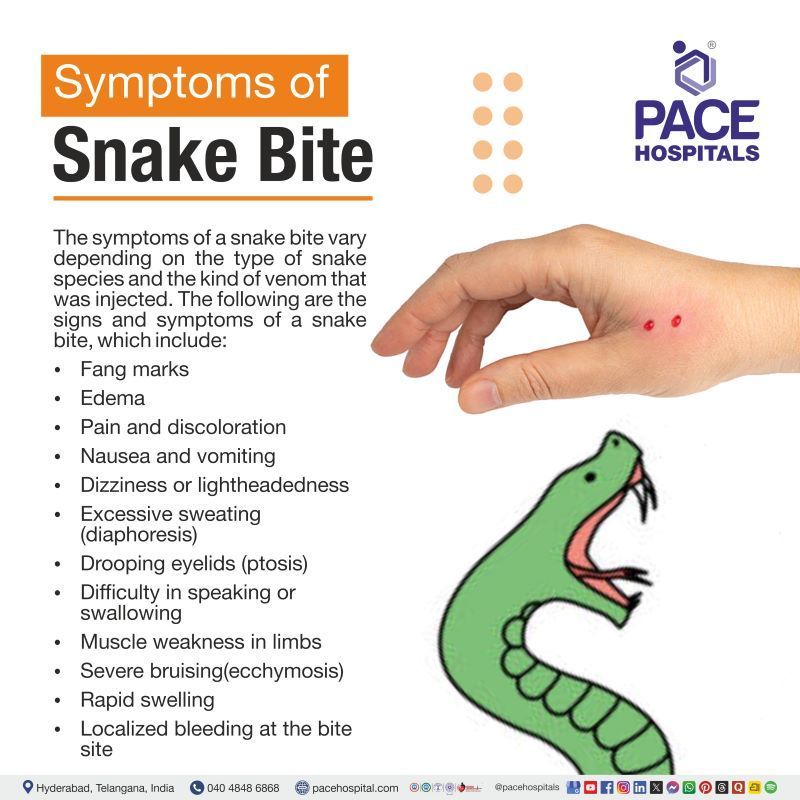
The symptoms of a snake bite vary depending on the type of snake species and the kind of venom that was injected. They can include local effects at the bite site as well as systemic symptoms affecting different body systems.
The following are the signs and symptoms of a snake bite, which include:
Local symptoms (at the bite site)
- Fang marks
- Edema
- Pain and discoloration
- Tissue necrosis
- Sensory changes
- Infection indicators
General/systemic symptoms (Early/non-specific)
- Nausea and vomiting
- Dizziness or lightheadedness
- Excessive sweating (diaphoresis)
- Rapid heartbeat (tachycardia)
- Fever or chills
- Increased thirst
- Anxiety or confusion
Neurotoxic snake bite symptoms/Cobra and krait snake bite symptoms
- Drooping eyelids (ptosis)
- Difficulty in speaking or swallowing
- Muscle weakness in limbs
- Blurred or double vision
- Difficulty in breathing due to respiratory muscle paralysis
Hemotoxic snake bite symptoms/Viper and kalach snake bite symptoms
- Severe bruising (ecchymosis)
- Rapid swelling
- Localized bleeding at the bite site
- Unusual bleeding from gums or wounds
- Epistaxis (nosebleed)
- Hematuria (loss of blood in urine)
Fang marks: Fang marks appear as one or two puncture marks in the skin where the snake bites. They may appear as single or multiple punctures and indicate the location of the bite, but their presence doesn't always confirm snake bite injection (envenomation-the process by which venom enters the body).
Edema: It is swelling that can occur around the bite site within minutes of being bitten. The swelling can quickly spread from the bite area to the whole limb and even to nearby tissues because of the venom's ability to cause inflammation and damage to tissues.
Pain and discoloration: Victims of snake bites often feel sharp pain (throbbing pain) or a burning sensation at the site of the bite. Bleeding under the skin and damage to nearby tissue caused by venom can cause the skin around the bite to become bruised or discolored.
Tissue necrosis: It is the death of skin and other tissues that happens when venom's cytotoxic components get into them. It can occur hours to days after the bite and cause blisters, ulcers, and severe damage to the surrounding tissue.
Sensory changes: It can include numbness, tingling, or abnormal feelings around the bite site. These happen because the venom irritates the nerves or induces pressure from swelling in the affected tissues.
Infection indicators: Secondary infection can occur when bacteria from the snake's mouth enter the wound during the bite. Redness, pus formation, warmth, or the formation of an abscess at the site of the bite are all signs of infection.
Nausea and vomiting: People who are bitten by snakes may experience nausea and vomiting as early signs of envenomation after the venom enters their bloodstream.
Dizziness or lightheadedness: After a snake bite, patients may feel faint or dizzy because of the venom's effects on the body and changes in blood pressure.
Excessive sweating (diaphoresis): After a snakebite, the venom or sympathetic nervous system stimulation can cause excessive sweating.
Rapid heartbeat (tachycardia): Snakebite can cause a fast heart rate as part of systemic reactions like shock, anxiety, or cardiovascular effects caused by the venom.
Fever or chills: Some victims may experience fever or chills because of a systemic inflammatory response following envenomation.
Increased thirst: People after a snake bite may feel thirsty due to the venom's effects and dehydration from sweating or vomiting.
Anxiety or confusion: Fear and the physiological consequences of envenomation may induce anxiety, confusion, or altered mental status in individuals who have sustained a snakebite.
Drooping eyelids (ptosis): Ptosis is the earliest sign of neurotoxic envenomation. It occurs when the venom blocks neuromuscular transmission, weakening the muscles that elevate the eyelids. It occurs because the cranial nerves that control the eye muscles are paralyzed, and it usually precedes other neurological symptoms.
Difficulty in speaking or swallowing: Neurotoxins affect the cranial nerves and the muscles of the throat and tongue, causing speech difficulty (dysarthria) and swallowing (dysphagia). This happens after being bitten by a snake; progressive paralysis spreads to the palate, jaw, and pharyngeal muscles.
Muscle weakness in limbs: Venom toxins interfere with neurotransmitter transmission at the neuromuscular junction, which makes skeletal muscles, including the limbs, weaker or paralyzed over time. The weakness usually starts in the muscles of the face or eyes and then gradually spreads downward to the neck and limb muscles.
Blurred or double vision: Neurotoxins paralyze the extra-ocular muscles, leading to diplopia (double vision) or blurred vision due to impaired eye movement. This occurs because of the involvement of cranial nerves that control eye movement.
Difficulty in breathing due to respiratory muscle paralysis: In severe neurotoxic envenomation, the venom paralyzes the diaphragm and intercostal muscles, which causes respiratory failure. This breathing problem (dyspnea) is a serious complication that can be fatal and may need ventilatory support.
Severe bruising (ecchymosis): Ecchymosis is a bluish-purple discoloration of the skin that occurs when blood leaks beneath the skin, as venom damages blood vessels and disrupts clotting factors. In viper envenomation, it usually looks like ecchymotic patches.
Rapid swelling: Hemotoxic snake venom causes inflammation and damage to the tissue at the bite site, leading to progressive swelling and pain around the affected area. This swelling may spread to nearby tissues and can get worse in viper bites.
Localized bleeding at the bite site: Hemotoxic venom disrupts the normal blood clotting process, leading to bleeding or oozing at bite wounds. Continuous bleeding from the bite site is a common sign of viper envenomation.
Unusual bleeding from gums or wounds: Hemotoxic venom causes consumption coagulopathy and platelet dysfunction, which can cause bleeding without any obvious cause, like bleeding from the gums or minor wounds. Bleeding gums are often one of the early signs of hemotoxic envenomation.
Epistaxis (nosebleed): Epistaxis occurs when venom damages blood vessels and clotting factors, leading to systemic bleeding. It is one of the most common signs of systemic bleeding after a viper bite.
Hematuria (loss of blood in urine): Hematuria occurs from bleeding within the urinary tract or kidneys because of coagulation problems caused by venom. It is often seen in people who have been bitten by hemotoxic snakebite envenomation.
Causes of Snake Bite and Risk Factors
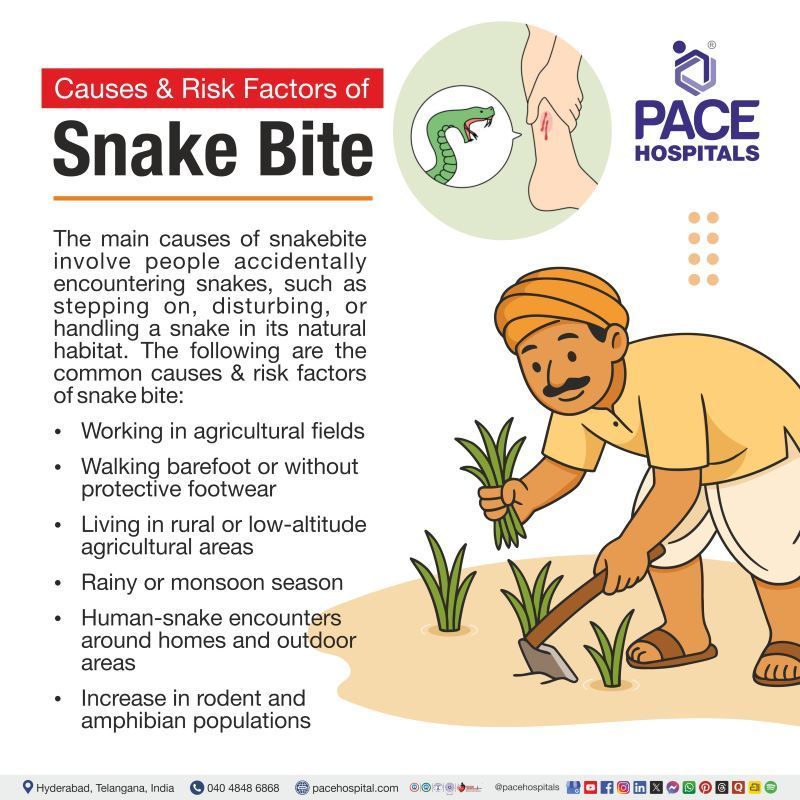
The main causes of snakebite involve people accidentally encountering snakes, such as stepping on, disturbing, or handling a snake in its natural habitat.
The following are the common causes and risk factors of snake bite:
- Working in agricultural fields
- Walking barefoot or without protective footwear
- Living in rural or low-altitude agricultural areas
- Rainy or monsoon season
- Human-snake encounters around homes and outdoor areas
- Increase in rodent and amphibian populations
Working in agricultural fields: Agricultural laborers are more likely to encounter snakes hiding in fields or plants during farming activities such as plowing, planting, and harvesting. In rural areas, traditional farming methods expose workers directly to snake habitats.
Walking barefoot or without protective footwear: People often get bitten by snakes when they accidentally step on them while walking outside, and not wearing protective shoes makes individuals more likely to get bitten because bites often occur on the lower extremities during such accidental encounters.
Living in rural or low-altitude agricultural areas: Snakebites occur more often in rural areas with densely populated, low-altitude regions, especially in areas with extensive agricultural land. These places have more snakes, and people encounter them more frequently.
Rainy or monsoon season: Snakebite cases increase during the rainy season because flooding or wet conditions force snakes to move out of their shelters. At the same time, farming activity increases, leading to more encounters with humans.
Human-snake encounters around homes and outdoor areas: When snakes are searching for food or shelter, they may enter homes or nearby areas. If people accidentally bother them, they may bite. In rural areas, these kinds of encounters occur in both indoor and outdoor settings.
Increase in rodent and amphibian populations: Snakes are attracted to areas with many rodents and amphibians, such as toads, frogs and salamanders, because they are their main food sources. Agricultural areas that grow grain often have higher rodent populations, increasing the likelihood of snake and human contact.
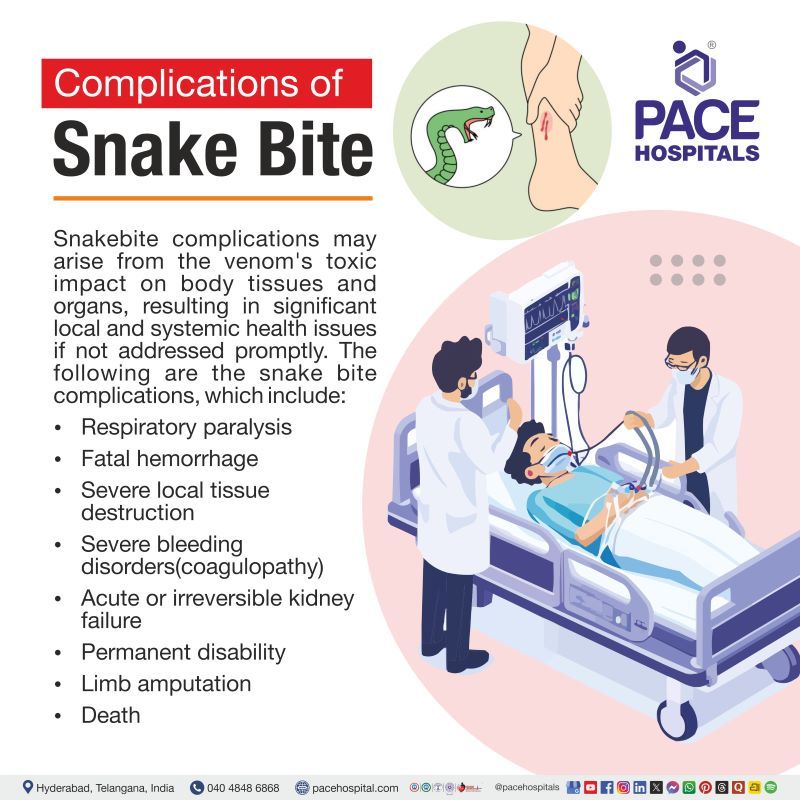
Complications of Snake Bite
Snakebite complications may arise from the venom's toxic impact on body tissues and organs, resulting in significant local and systemic health issues if not addressed promptly.
The following are the snake bite complications, which include:
- Respiratory paralysis
- Fatal hemorrhage
- Severe local tissue destruction
- Severe bleeding disorders (coagulopathy)
- Acute or irreversible kidney failure
- Permanent disability
- Limb amputation
- Death
Respiratory paralysis: Neurotoxic snake bites, like those from cobras or kraits, are the main cause of respiratory paralysis. Venom disturbs the neuromuscular junction, thereby preventing nerve signals from reaching the muscles that control breathing, resulting in muscle weakness and paralysis that worsen over time. The victim can't breathe normally anymore because the diaphragm and intercostal muscles stop working. This problem can lead to respiratory failure and death if it is not treated quickly and with ventilatory support.
Fatal hemorrhage: Some snake venoms, especially those from vipers, have poisons that disrupt the body's ability to clot blood. These poisons cause serious bleeding disorders and damage to blood vessels, causing uncontrolled bleeding from the gums, nose, wounds, or internal organs. In severe cases, there may be massive internal bleeding or an intracranial haemorrhage occur. If not treated quickly with antivenom and supportive care, the bleeding could cause death.
Severe local tissue destruction: Snake venom can cause cytotoxic effects and damage skin, muscles, and other tissues around the bite site. The venom destroys cells and blood vessels, which causes swelling, blisters, necrosis, and severe inflammation. As the tissue dies, large areas may get infected or form ulcers. This extensive local damage may necessitate surgical intervention and could lead to irreversible loss of tissue or limb functionality.
Severe bleeding disorders (coagulopathy): Many snake venoms disrupt the body's normal coagulation mechanisms, leading to venom-induced consumption coagulopathy. This condition prevents blood from clotting properly, leading to bleeding in different parts of the body, and people experience bruises, bleeding gums, hematuria, and internal bleeding. If not treated, severe coagulopathy can lead to bleeding problems that could be fatal.
Acute or irreversible kidney failure: Snake venom toxins can damage the kidneys via different mechanisms, including hemolysis (breakdown of red blood cells), hypotension (low blood pressure), and direct nephrotoxic effects, resulting in acute kidney injury characterized by decreased urine output and a buildup of waste products in the blood. In extreme cases, long-term damage to the kidneys may become permanent and lead to chronic kidney failure. These patients might need dialysis or long-term medical care.
Permanent disability: Severe poisoning can lead to long-term issues that injure nerves, muscles, and tissues. After recovery, individuals still have neurological problems, stiffness of joints, chronic ulcers, or muscle wasting. These conditions may cause difficulty in movement and physical function, resulting in permanent disability in many snakebite survivors, affecting their quality of life.
Limb amputation: Severe infection or extensive tissue necrosis at the bite site can destroy muscles, skin, and blood vessels. If the damaged tissue can't be fixed, amputation (surgical removal of the affected part may be required, and sometimes, it is the only way to stop an infection or gangrene (the death of body tissue due to infection or lack of blood flow) from spreading. This complication often occurs from severe local tissue destruction caused by venom.
Death: The most serious effect of snakebite poisoning is death. It can happen because of respiratory failure, severe hemorrhage, serious organ damage, or systemic toxicity that hasn't been treated. There is a higher risk of death if medical care and antivenom are not administered immediately.
Snake Bite Diagnosis
Snake bite identification is important for recognizing envenomation early and initiating medical treatment immediately. To provide appropriate care that could save a life, healthcare workers need to know how to identify snake bite marks, symptoms, and the snake species involved.
The following are the steps involved in the diagnosis of snake bite:
- ABC assessment
- Medical history
- Physical examination
- Bedside snake bite blood test
- 20-minute whole blood clotting test (20WBCT)
- Laboratory test for snake bite
- Complete blood count (CBC)
- Coagulation profile (PT, INR, PTT, Fibrinogen)
- Serum creatinine
- Serum electrolytes
- Serum creatine kinase
- Urinalysis
- Serum glucose
- Monitor vital signs and electrocardiogram (ECG)
- Assess for envenoming
Snake Bite Treatment
Snake bite management is a medical emergency that requires immediate evaluation and treatment to prevent serious complications and death. First aid management of snake bite, prompt hospital care, and timely administration of antivenom are all part of the early management of snakebite, which can reduce the risk of mortality and morbidity.
The following are the steps involved in the snake bite treatment protocol:
- First aid treatment for snake bite on leg
- Urgent transport
- Hospital assessment
- Antivenom therapy (snake bite antidote)
- Supportive care
Why Choose PACE Hospitals?
Expert Super Specialist Doctors
Advanced Diagnostics & Treatment
Affordable & Transparent Care
24x7 Emergency & ICU Support
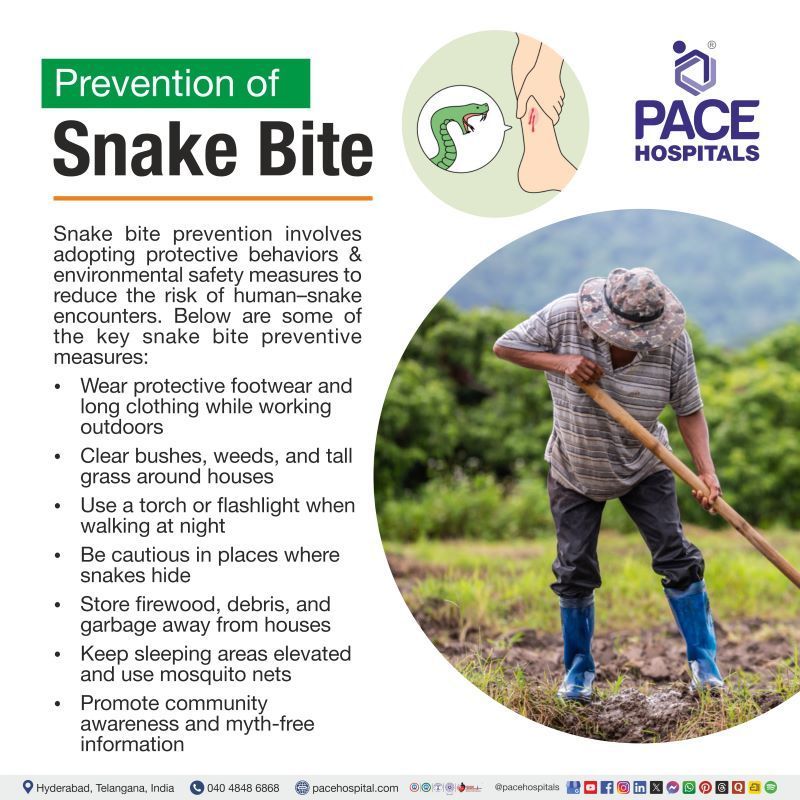
Prevention of Snake Bite
Snake bite prevention involves adopting protective behaviors and environmental safety measures to reduce the risk of human–snake encounters and minimize the chances of snake bites. Below are some of the key snake bite preventive measures:
- Wear protective footwear and long clothing while working outdoors
- Clear bushes, weeds, and tall grass around houses
- Use a torch or flashlight when walking at night
- Be cautious in places where snakes hide
- Store firewood, debris, and garbage away from houses
- Keep sleeping areas elevated and use mosquito nets
- Promote community awareness and myth-free information
- Keep the nearest medical facility and emergency contacts
- Avoid trying to catch, handle, or kill snakes
- Educating family and community members about snakebite risks
Wear protective footwear and long clothing while working outdoors: When working in agricultural fields or outdoor areas, as a preventive measure, wear boots or sturdy shoes and long pants, as the feet and legs are the most common sites for snakebites. Wearing protective clothing acts as a barrier, reducing the risk of a snake biting directly to the skin.
Clear bushes, weeds, and tall grass around houses: Snakes often prefer to hide in dense vegetation near houses because it offers protection and access to prey such as rodents (rats). Regularly clearing bushes and tall grass around homes reduces hiding places for snakes and lowers the chance of human-snake encounters.
Use a torch or flashlight when walking at night: Many snakebites occur at night, when visibility is poor, and snakes are more active. People can see snakes on the ground and avoid stepping on them accidentally by using a torch or flashlight while walking outside.
Be cautious in places where snakes hide: In fields and rural areas, snakes often hide in holes, under rocks, wood piles, or other debris. Individuals should avoid putting their hands or feet into areas where visibility is poor, especially where snakes are likely to live.
Store firewood, debris, and garbage away from houses: Piles of firewood, trash, and debris are places where snakes can hide and attract rodents, which are snake prey. Keeping these things away from where people live reduces the likelihood that snakes will get into houses or nearby areas.
Keep sleeping areas elevated and use mosquito nets: Sleeping on raised beds instead of the floor lowers the risk of accidentally touching snakes at night. Well-tucked mosquito nets also prevent snakes from entering sleeping areas by acting as a barrier.
Promote community awareness and myth-free information: Public education programs teach community members about snake behavior, preventive measures, and proper snake bite first aid practices. Awareness campaigns also dispel harmful myths and encourage people to seek medical help rather than use unproven treatments.
Keep the nearest medical facility and emergency contacts: People living in areas where snakes are common should know which hospitals or health centres are closest that can treat victims with medication for snake bites, such as antivenom. Having emergency contact numbers on hand helps ensure people get to the hospital quickly and receive medical care as soon as possible, which is important for reducing the risk of complications and deaths.
Avoid trying to catch, handle, or kill snakes: If individuals try to kill a snake, they are more likely to get bitten because snakes may bite back. Health guidelines say people should stay at a safe distance and let trained snake rescuers or wildlife officials handle the problem.
Educating family and community members about snakebite risks: Educating family members and community groups about snakebite risks, prevention, and safe behavior can help reduce snakebite incidents. Community education ensures that people are aware of dangers early on and take the right steps to avoid them.
Difference between Poisonous and Non-Poisonous Snake Bite
Poisonous vs nonpoisonous snake bite
It's important to know the difference between poisonous and non-poisonous snake bites because they have very different effects on the body. Poisonous snake bites inject venom that can cause systemic toxicity and cause serious complications that can be fatal. Non-poisonous snake bites, on the other hand, usually only cause mild injuries at the bite site and don't have any poisonous effects. Below are the key differences between poisonous and non-poisonous snake bites:
| Characteristics | Poisonous(venomous) snake bite | Non-poisonous(non-venomous) snake bite |
|---|---|---|
| Definition | A bite from a venomous species that can inject venom, which can cause systemic toxicity | A snake bite that doesn't inject venom (doesn't insert poison into the body). |
| Venom injection | Venom can be injected, which can cause local and systemic envenoming, such as neuroparalysis or hemotoxic effects. | No venom or poison injection, just a mechanical bite injury. |
| Signs and symptoms | Progressive symptoms of envenoming include neuroparalysis (ptosis, muscle weakness), systemic effects, respiratory compromise, localized swelling, and hemorrhage, varying by venom type; symptoms may take hours to manifest. | Usually, there are no systemic toxic effects. May only have a local bite reaction, like pain or redness, or symptoms of anxiety. |
| Dry bite possibility | A venomous snake can bite without injecting venom, which is called a "dry bite." This is like a non-venomous bite at first. | All bites are basically dry (no venom). |
| Diagnosis | The fang mark pattern does not consistently differentiate between venomous and non-venomous bites; diagnosis relies on clinical manifestations of envenomation rather than fang marks alone. | Bites may have fang or tooth marks, but there are no signs of venom after that. |
| Medical risk | A high risk of serious complications and death if envenomed; needs immediate medical attention and possibly Anti-Snake Venom (ASV) treatment. | The medical risk is usually low, and wound care and observation are sufficient, but a medical evaluation is still recommended. |
| Treatment approach | Administration of ASV as soon as there are signs of envenomation and monitor for progression (both locally and systemically). | Take care of the wound, keep it clean, and monitor it; ASV is not needed because there is no venom effect. |
Frequently Asked Questions (FAQs) on Snake Bite
How to identify a snake bite?
Snake bites can be identified by observing local and systemic clinical signs and symptoms at the bite site, including fang marks, pain, and swelling, bruising, or bleeding at the bite site, and swelling of nearby lymph nodes. In some cases, victims may also show neurological symptoms like drooping eyelids, trouble breathing or swallowing, and unusual bleeding. These are signs of snake bite and venom effects, and careful evaluation of these signs helps clinicians identify and confirm a suspected snake bite.
What to do after a snake bite?
If a snake bites, stay calm, move away from the snake, wrap the bitten limb tightly in a bandage (like a sprain) starting at the bite site and going up to the end of the limb. Then, splint it and stay still; seek medical attention immediately. Keep the bitten limb immobilized and below heart level, and remove any tight clothing or jewellery. Clean the wound with soap and water if possible, and don't use a tourniquet, cut the wound, or suck the venom.
What are the symptoms of a snake bite?
Snake bite symptoms can be mild, like pain and swelling in one area, or severe, like nausea, trouble breathing, paralysis, and tachycardia (fast heart rate). In serious cases, venomous bites can cause tissue death and bleeding, and the marks show two distinct fang marks. It's important to get medical help promptly (emergency services) because symptoms can get worse quickly.
Is a snake bite painful?
Yes, snake bites usually hurt, but the pain frequency depends on whether venom was injected. Venomous bites usually cause severe burning or throbbing pain and immediate intense swelling. "Dry bites" (no venom) or non-venomous bites, on the other hand, may feel more like small, sharp and pin-prick scratches.
How long do you have after a snake bite?
A venomous snake bite is a medical emergency. Some neurotoxic venoms, like those from cobras, can be fatal in 30 minutes to an hour, while others can cause the victim's death in hours if not treated. However, prompt antivenom treatment usually saves lives. Immediate medical care is very important to stop paralysis or death from respiratory failure.
How to know if a snake bite is venomous?
When a venomous snake bites, the victim usually gets two deep puncture wounds (fangs), severe pain, and rapid swelling. In severe cases, the victim may also feel numbness, nausea, or dizziness within minutes. Bites that aren't venomous usually leave U-shaped rows of small tooth marks. Treat every bite as if it were venomous and get medical help immediately.
Can snake bite victims survive without treatment?
Yes, snake bite victims can live without treatment, but only if the bite was a "dry bite" (no venom was injected) or the venom dose was low. But venomous bites can cause kidney failure, severe bleeding, or death from respiratory failure. Immediate medical care is very important because more than 1 lakh people die every year, largely due to a lack of antivenom.
What is a snake bite?
A snakebite is a puncture wound from a snake's fangs. It can be as harmless as a shallow bite or as dangerous as a life-threatening injury if venom is injected. Bites from venomous/poisonous animals need immediate medical attention because they can cause pain, swelling, and systemic symptoms like nausea. Antivenom is used to treat them.
How can snake bites be prevented?
To avoid snake bites, take preventive measures such as staying alert, wearing protective clothing like boots and long pants, and keeping surrounding areas clean so that snakes and rodents lack places to hide and don't walk through tall grass, using flashlights at night, and never handling snakes, even if they look dead, because some species can fake death.
Do snake bites cause bleeding?
Yes, a bite from a venomous snake may result in significant haematological complications, such as haemostatic abnormalities and potentially life-threatening haemorrhage, caused by interference with normal coagulation pathways. Such a situation is likely to be caused by snake venom-induced consumption coagulopathy (VICC) or thrombocytopenia. This includes excessive bleeding from the bite wound, nosebleeds, or systemic bleeding throughout the body. These effects warrant urgent attention, as they indicate systemic envenomation.
Can snakes bite underwater?
Yes, snakes can bite underwater, but they usually only do so when they feel threatened, are stepped on, or are hunting. Water snakes can bite and hold their breath while swimming or being underwater. Some of them are venomous (like cottonmouths and sea snakes), and some are non-venomous.
Which organ is affected by snake bites?
Snake bites mostly affect the skin and tissues at the bite site of the victim's body, causing swelling, necrosis, or gangrene (the death of body tissue due to infection or lack of blood flow). Depending on the type of snake, systemic effects can affect the heart, kidneys (causing failure), blood (causing clotting disorders), and nervous system (causing paralysis).
How long does it take for snake bite symptoms to show?
Symptoms of a snake bite can appear immediately or take up to a few hours. For pit vipers, severe reactions usually show up within 30 to 60 minutes. Local pain and swelling can start immediately, but neurotoxic symptoms (like paralysis) or, in the case of coral snakes, more severe symptoms can take a few hours to appear.
What are the two types of snake bites?
There are two main types of snake bites: venomous (envenomation) and non-venomous (dry bite). Venomous bites inject a toxic substance that can cause serious tissue damage, systemic symptoms, or paralysis. Dry bites occur when venomous or non-venomous snakes bite without releasing any venom. This only causes local mechanical injury, swelling, or pain.
What are the delayed effects of snake bites?
Long-term tissue necrosis, chronic pain, and permanent disability are some of the long-term effects of snake bites. Other complications that don't occur immediately can appear days or weeks later. These include serum sickness (fever, rash, joint pain), chronic renal failure, neurological deficits (like paralysis), and mental trauma.
What types of snakes are venomous?
Venomous snakes are often grouped by the main effects of their venom, such as neurotoxic, hemotoxic, or cytotoxic. These include the following: Inland Taipan, which produces the most toxic kind; the Black Mamba, which acts quickly; and the "Big Four" of India: Russell's viper (also called as ghonas snake bite), Common Krait, Indian Cobra, and Saw-Scaled Viper, which cause the highest human fatalities.
How can I treat a snake bite at home before reaching the hospital?
Snake bites should be treated by remaining calm, contacting emergency services, and immobilizing the victim to prevent the poison from spreading further. Clothes and jewelry that restrict blood flow should be taken off. The bite area should be washed with water. Keep the affected limb in a neutral position (level with the body) and immobilized with a splint to minimize venom spread. Apply a firm pressure immobilization bandage (not a tourniquet) and seek immediate hospital care.
What are the long-term complications of snake bites?
Chronic envenomation caused by snake bites usually leads to permanent disabilities and a poor quality of life. Some common effects include severe injuries such as persistent swelling in the bitten body parts (oedema), necrosis, amputations, chronic kidney disease (CKD), and neurological problems. Psychological problems such as post-traumatic stress disorder, along with chronic pain, are other frequent symptoms; some patients suffer from headaches and vision problems many years after being bitten.
What are the treatment options for venomous snake bites?
Treatment for bites from venomous snakes should include immediate administration of antivenom, which works like an antibody that neutralizes the venom. First aid in such cases would involve cleansing the bite, ensuring that the victim remains calm and does not move, and raising the affected limb without using a tourniquet, cutting or sucking the venom. Emergency medical care (call emergency services) is essential.
What happens if the victim is not treated after a snake bite?
The consequences of untreated envenomation by a snake bite may include necrosis, amputation (surgical removal of affected limb), organ dysfunction, respiratory arrest, or even death. In addition to local reactions, systemic reactions to envenomation include extreme pain, hypotension (low blood pressure), and coagulation problems. Immediate medical attention is essential for preventing severe injury and death.
What should not be eaten after a snake bite?
Avoid eating and drinking anything, particularly caffeine and alcohol, after being bitten by a snake, as they can cause the toxin to be absorbed faster, raise the heartbeat, and speed up metabolism. No food or drink can be classified as the "golden rule" to avoid further complicating the body's condition while waiting for immediate medical help.
When to consult a doctor for a snake bite?
Consult a doctor immediately if a snake has bitten someone. All snake bites should be treated as medical emergencies, and the victim should be transported to a health facility without delay for assessment and possible antivenom treatment. Seek emergency medical attention if the following signs appear:
- Any suspected bite from a venomous snake or uncertainty about whether the snake was venomous
- Swelling, pain, or tenderness at the bite site
- Fang marks or bleeding from the wound
- Rapid progression of swelling or spread of symptoms up the limb
- Systemic symptoms such as difficulty breathing, dizziness, vomiting, weakness, or drooping of eyelids
- Changes in consciousness, abnormal bleeding, or signs of shock
- Difficulty swallowing or breathing, muscle paralysis, or numbness
If these symptoms continue, it is best to see an emergency physician for an accurate diagnosis and treatment. Seek emergency medical attention in case of having trouble breathing, severe swelling or pain at the bite site, vomiting, or dizziness, as these may signal complications. An emergency medicine doctor, surgeon, critical care specialist (intensivist), toxicologist, or nephrologist can provide the right snakebite treatment, including administering antivenom, managing symptoms, and reducing long-term risks.
Share on
Request an appointment
Fill in the appointment form or call us instantly to book a confirmed appointment with our super specialist at 04048486868
Appointment request - health articles
Recent Articles