Knock Knees (Genu valgum): Symptoms, Causes & Treatment
PACE Hospitals
Written by: Editorial Team
Medically reviewed by: Dr. Raghuram - Orthopaedic Consultant, Trauma, Shoulder and Knee Arthroscopic Surgeon, Hip and Knee Joint Replacement Specialist
Overview | Epidemiology | Types | Symptoms | Causes and Risk Factors | Complications | Diagnosis | Treatment | Prevention | Knock knees vs Normal knees | Genu valgum vs Varum | FAQs | When to consult a Doctor
Knock knees (Genu valgum) definition
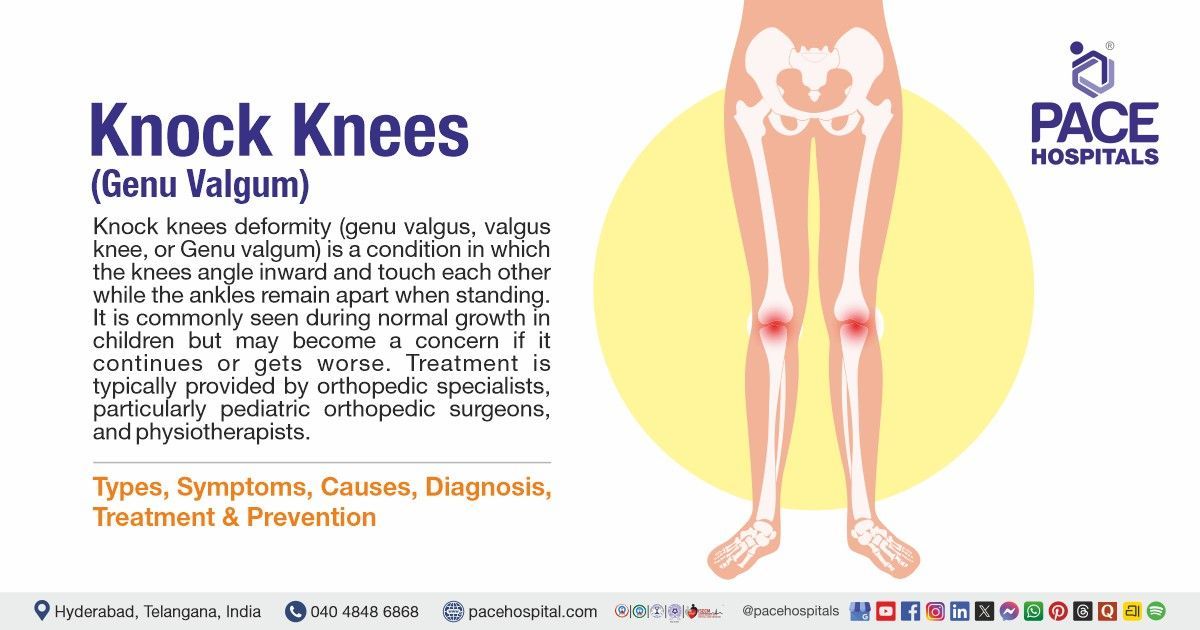
Knock knees deformity (genu valgus, valgus knee, or Genu valgum) is a condition in which the knees angle inward and touch each other while the ankles remain apart when standing. It is commonly seen during normal growth in children, but may become a concern if it continues or gets worse. Symptoms generally include visible knee misalignment, knee pain, difficulty in walking, and an abnormal gait pattern.
This condition can be a normal part of growing up in children, or it may happen due to issues like vitamin D deficiency (rickets), obesity, inherited bone problems, or past injuries to the growth plate. Poor nutrition, being overweight, or a history of bone injuries can also increase the risk. If left untreated or if the condition worsens, knock knees can lead to several complications, including knee pain, altered gait, joint damage, difficulty in physical activities, and postural problems.
Diagnosis is done through a clinical evaluation and imaging tests to check the alignment and severity of the limbs. Treatment depends on the cause and how severe it is, ranging from observation and physiotherapy to bracing or surgery in severe cases. Treatment is typically provided by orthopedic specialists, particularly pediatric orthopedic surgeons, and physiotherapists.
Knock knees meaning
The term knock knees is a layperson’s term used to describe the condition medically known as genu valgum.
- "Knock": refers to the inward angle of the knees, which may appear to "knock" together.
- "Knees": referring to the knee joints themselves.
Knock knees refers to a condition in which the knees angle inward and touch each other while the ankles remain apart, resulting in a characteristic alignment of the lower limbs.
Knock Knees (Genu Valgum) Epidemiology
Knock knees epidemiology in the world
Genu valgum, or knock knees, is common in young children, particularly between the ages of 3 and 4, and usually go away by age 7. Around 7.1% of schoolchildren experience it, with higher rates in obese children. In adults, around 10% of people, especially those who are overweight, have knock knees. The condition is often part of normal childhood development. New cases in adults usually happen because of factors like obesity, joint damage, or injury.
Knock knee epidemiology in India
In India, genu valgum (knock knees) is common in children under 7, with knee angles peaking around age 6 and typically improving by age 10. However, pathological genu valgum affects about 10-11% of school-aged children, especially in rural areas. Contributing factors include fluorosis, obesity, and nutritional deficiencies like rickets. Children with high body mass index (BMI), family history, or those living in areas with fluoride exposure are at high risk. While mild genu valgum is normal, persistent or severe cases may require medical attention.
Types of Knock Knees
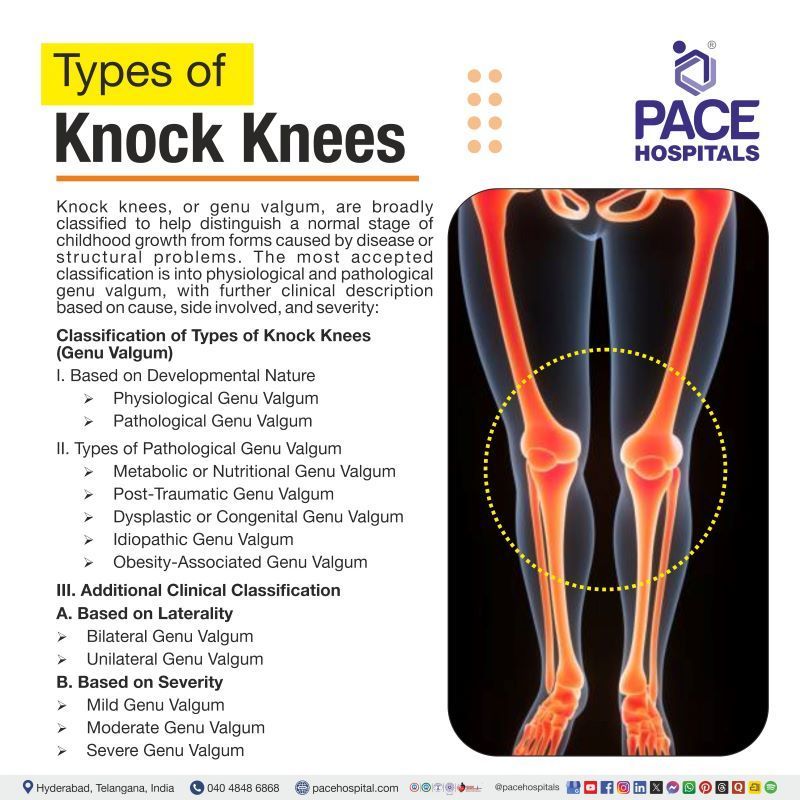
Knock knees, or genu valgum, are broadly classified to help distinguish a normal stage of childhood growth from forms caused by disease or structural problems. The most accepted classification is into physiological and pathological genu valgum, with further clinical description based on cause, side involved, and severity.
Classification of Types of Knock Knees (Genu Valgum)
Based on Developmental Nature
- Physiological Genu Valgum
- Pathological Genu Valgum
Types of Pathological Genu Valgum
- Metabolic or Nutritional Genu Valgum
- Post-Traumatic Genu Valgum
- Dysplastic or Congenital Genu Valgum
- Idiopathic Genu Valgum
- Obesity-Associated Genu Valgum
Additional Clinical Classification
- Based on Laterality
- Bilateral Genu Valgum
- Unilateral Genu Valgum
- Based on Severity
- Mild Genu Valgum
- Moderate Genu Valgum
- Severe Genu Valgum
Based on Developmental Nature
Physiological genu valgum: This is the normal developmental type seen in children. It usually appears after the age of about 2 years, becomes most noticeable around 3 to 4 years, and gradually improves to near-normal alignment by around 7 years. It is usually bilateral, symmetrical, painless, and self-correcting, so it generally does not need treatment unless it is severe, progressive, or persists beyond the expected age.
Pathological genu valgum: This is the abnormal type of knock knees. It is suspected that the deformity is severe, worsening, asymmetric, painful, associated with gait problems, or persists after about 7 years of age. Unlike physiological genu valgum, this form is usually related to an underlying disorder and may need medical or surgical treatment.
Types of Pathological Genu Valgum
Metabolic or nutritional genu valgum: This type usually develops due to disorders that affect bone mineralization and growth, especially rickets or vitamin D deficiency. Because the bones are softer and weaker, the knees may gradually angle inward under body weight.
Post-traumatic genu valgum: This occurs after an injury near the knee, especially when the growth plate is affected. Uneven growth after the injury can lead to progressive inward angulation of one or both knees.
Dysplastic or congenital genu valgum: This type is associated with skeletal dysplasia or congenital bone-growth abnormalities. It is less likely to correct on its own and often requires orthopaedic care because the bone structure itself is abnormal.
Idiopathic genu valgum: In this type, genu valgum persists, but no definite underlying disease is identified. It is considered a diagnosis after excluding more obvious causes such as rickets, trauma, or skeletal disorders.
Obesity-associated genu valgum: Genu valgum is related to obesity, particularly in children and adolescents. Excess body weight increases mechanical loading across the knee joint, which can accentuate the valgus alignment and contribute to the persistence or progression of the deformity.
Additional Clinical Classification
Based on Laterality
- Bilateral Genu Valgum: This refers to knock knees affecting both legs. It is more commonly seen in physiological (normal developmental) cases and some metabolic conditions. The deformity is usually symmetrical and less concerning if it follows the normal growth pattern in children.
- Unilateral Genu Valgum: Unilateral deformity involves just one leg and is uncommon. It often points to underlying problems such as past injury, growth plate issues, infection, or bone conditions. Because it's more likely pathological, it needs careful evaluation.
Based on Severity
- Mild Genu Valgum: In mild cases, the inward angulation of the knees is minimal. There is usually no impact on walking, function, or daily activities. It is often observed in growing children and may not require treatment.
- Moderate Genu Valgum: At this stage, the knees bend inward more noticeably, which may affect walking or cause mild discomfort. It is important to monitor the condition closely, and in some cases, non-surgical treatment may be suggested.
- Severe Genu Valgum: Severe cases involve marked inward angulation of the knees, which often lead to functional problems like difficulty walking, joint strain, or cosmetic concerns. It may also increase the risk of chronic (long-term) joint issues, and medical or surgical intervention is usually considered.
Knock Knees Symptoms
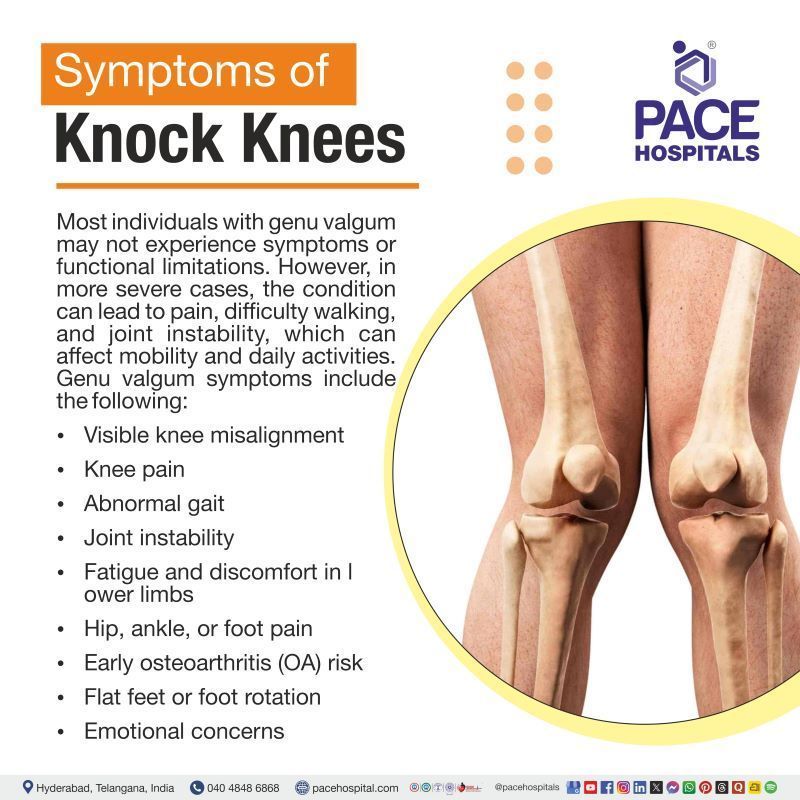
Most individuals with genu valgum may not experience symptoms or functional limitations. However, in more severe cases, the condition can lead to pain, difficulty walking, and joint instability, which can affect mobility and daily activities. Genu valgum symptoms include the following:
- Visible knee misalignment
- Knee pain
- Abnormal gait
- Joint instability
- Fatigue and discomfort in lower limbs
- Hip, ankle, or foot pain
- Early osteoarthritis (OA) risk
- Flat feet or foot rotation
- Emotional concerns
Visible knee misalignment: The primary symptom of genu valgum is the inward angulation of the knees, where the knees touch while the ankles remain apart, often more than 8 cm.
Knee pain: Individuals with genu valgum may experience discomfort or pain in the knees, particularly during activities such as walking, running, or standing for long periods. The pain is caused by abnormal stress on the knee joints due to misalignment, and it tends to worsen with physical activity.
Abnormal gait: This knock knee syndrome is caused by an altered walking pattern. This can include a limp, waddling, or difficulty walking in a straight line due to the knee misalignment.
Joint instability: In severe cases, knees may feel weak or unstable, especially on stairs or long walks. This raises the risk of falls and injuries.
Fatigue and discomfort in the lower limbs: Standing or walking for a long time can make the legs tired or sore. The misaligned knees put extra stress on the legs, making it harder to keep going.
Hip, ankle, or foot pain: The misalignment of the knees can cause uneven distribution of the body's weight, leading to pain in the hips, ankles, or feet over time. This is because the altered mechanics place additional strain on these joints.
Early osteoarthritis (OA) risk: Persistent genu valgum, especially in adults, can lead to increased stress on the knee cartilage, which raises the risk of early osteoarthritis. Over time, the misalignment can contribute to the degeneration of knee joints.
Flat feet or foot rotation: Knock knees can contribute to flat feet (pes planus) or outward rotation of the feet. As the knees are misaligned, the body compensates by changing the mechanics of the feet, which can lead to further discomfort.
Emotional concerns: Knock knee deformity, due to its visible nature, often leads to self-consciousness. Both children and adults may experience emotional distress because of the noticeable misalignment, which can affect self-esteem, social interactions, and overall quality of life. Parents of affected children may also worry about how the condition will progress.
Knock Knees Causes and Risk Factors
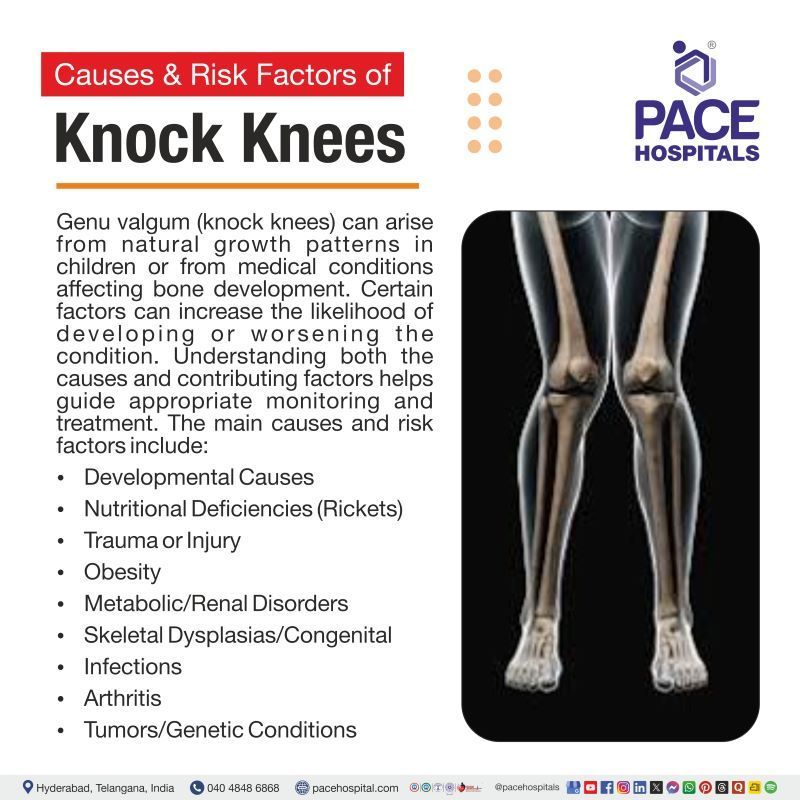
Genu valgum (knock knees) can arise from natural growth patterns in children or from medical conditions affecting bone development. Certain factors can increase the likelihood of developing or worsening the condition. Understanding both the causes and contributing factors helps guide appropriate monitoring and treatment. The main causes and risk factors include:
- Developmental Causes
- Nutritional Deficiencies (Rickets)
- Trauma or Injury
- Obesity
- Metabolic/Renal Disorders
- Skeletal Dysplasias/Congenital
- Infections
- Arthritis
- Tumors/Genetic Conditions
Developmental Causes: Genu valgum can be a normal part of childhood development, particularly in children between the ages of 2 and 5. During this growth phase, the alignment of the knees may appear bowed, but it typically corrects itself as the child matures.
Nutritional Deficiencies (Rickets): Vitamin D deficiency, often resulting in rickets, causes weakened bones that may result in misalignment. The condition impairs bone mineralization, leading to deformities like knock knees, especially in growing children.
Trauma or Injury: Injuries to the knee or growth plates in the leg can interfere with normal bone development. Trauma may result in permanent deformities like genu valgum if it disrupts bone growth or alignment.
Obesity: Excess body weight places additional stress on the legs, which can contribute to inward angling of the knees. In children, this increased load may lead to or worsen genu valgum due to the ongoing growth and development of the bones.
Metabolic/Renal Disorders: Metabolic conditions like renal osteodystrophy can make bones weak and affect their growth. Imbalances in calcium and phosphate can stop bones from developing normally, causing knees to turn inward.
Skeletal Dysplasias/Congenital: Skeletal dysplasias are a group of disorders that affect bone development and may result in abnormal bone growth. Congenital knock knees can occur due to underlying genetic conditions that affect skeletal growth and alignment.
Infections: Infections in bones or joints, such as osteomyelitis, can affect how bones grow. If the knees or nearby areas get infected during growth, the bones may grow crooked, causing the knees to angle inward.
Arthritis: Conditions like juvenile arthritis or rheumatoid arthritis can cause long-term inflammation in the knee joint. If the growth areas of the bones are affected, this can make the knees angle inward, resulting in genu valgum.
Tumors/Genetic Conditions: Tumors, whether non-cancerous or cancerous, that affect the bones or nearby tissues can disturb normal bone growth and lead to deformities. Additionally, genetic conditions that affect bone development can also increase the chances of developing this condition.
Knock Knees Complications
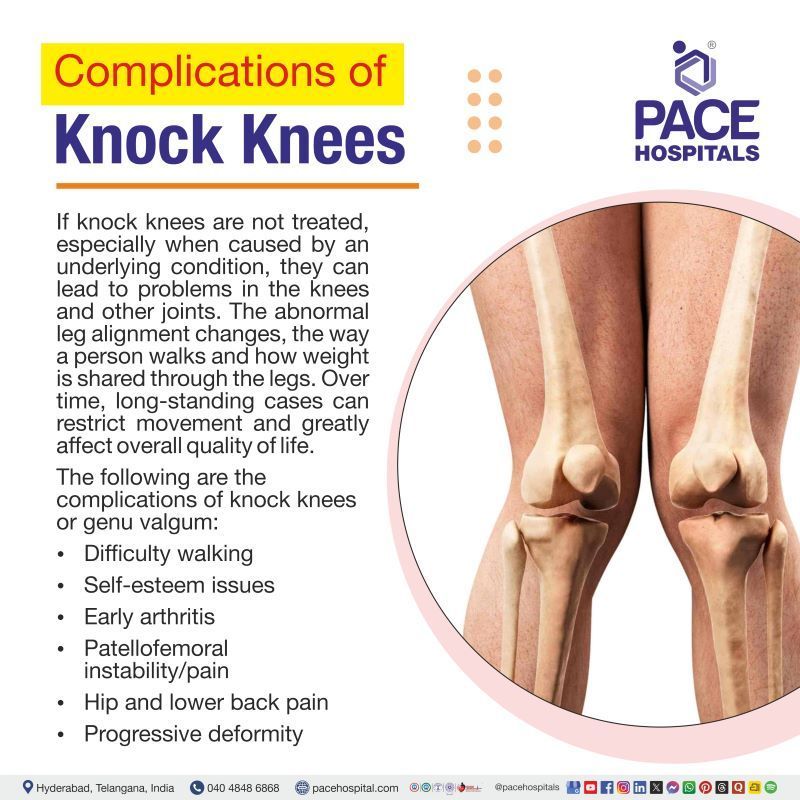
If knock knees are not treated, especially when caused by an underlying condition, they can lead to problems in the knees and other joints. The abnormal leg alignment changes, the way a person walks and how weight is shared through the legs. Over time, long standing cases can restrict movement and greatly affect overall quality of life.
The following are the complications of knock knees or genu valgum:
- Difficulty walking
- Self-esteem issues
- Early arthritis
- Patellofemoral instability/pain
- Hip and lower back pain
- Progressive deformity
Difficulty Walking: Knock knees, especially in severe cases, can cause changes in walking patterns, leading to difficulty walking, imbalance, and fatigue. The altered alignment can force the individual to adopt inefficient walking mechanics, making it harder to walk long distances.
Self-Esteem Issues: Visible deformities like knock knees can lead to emotional and social distress, especially in children and adolescents, who may feel self-conscious about their appearance. This can affect their confidence, social interactions, and participation in physical activities.
Early Arthritis: Abnormal knee alignment, particularly when left untreated, increases stress on the knee joints and can lead to the early onset of osteoarthritis (OA). Misalignment causes uneven distribution of weight, which accelerates cartilage wear and increases the risk of joint degeneration.
Patellofemoral Instability/Pain: Genu valgum can lead to abnormal tracking of the patella (kneecap), which can cause anterior knee pain, chondromalacia (softening of the cartilage), and recurrent subluxations (partial dislocations). Chronic knee instability becomes more pronounced with physical activity and growth.
Hip and Lower Back Pain: Misalignment of the knees can cause compensatory changes in the hips and lower back, leading to additional strain and chronic pain in these areas. Over time, altered mechanics can affect posture and contribute to discomfort in the pelvis, hips, and spine.
Progressive Deformity: In cases where genu valgum is severe or persists beyond childhood, the deformity may progress over time, especially if left untreated. If the condition continues beyond the typical age of resolution (around age 7), it may worsen and affect functionality.
Knock Knees Diagnosis
Diagnosis of genu valgum involves several key steps to assess the severity, underlying causes, and potential impact on the patient's overall health and function. The goal of the diagnosis is to understand the cause, severity, and degree of misalignment and determine the most appropriate treatment plan.
The following are the steps commonly included in the genu valgum diagnosis criteria:
- Medical History
- Physical Examination
- Measurement of Knee Angles
- Gait and Rotational Profile Analysis
- Blood Tests (Metabolic Causes)
- Serum creatinine
- Calcium
- Phosphate
- Alkaline phosphatase
- 25‑hydroxy vitamin D [25(OH)D]
- Parathyroid hormone (PTH)
- Renal function profile
- Imaging tests
- X-rays
- EOS Imaging (Pediatric)
- Computed Tomography with 3D reconstruction (CT scan)
- Magnetic Resonance Imaging (MRI)
- Functional Assessment
- Physiotherapy / biomechanical assessment
Knock Knees Treatment
Genu valgum treatment depends on the severity of the condition, patient age, and any underlying causes. Management ranges from simple observation and supportive therapies to surgical correction in more severe or persistent cases. Early evaluation helps in selecting the most appropriate and effective treatment approach.
The following are the treatment options for knock knees or genu valgum:
Non-surgical knock-knee correction (conservative management)
- Observation (for mild cases, especially in children)
- Physical therapy and exercises
- Muscle Strengthening
- Stretching Exercises
- Posture Training
- Foot Orthotics
- Bracing
- Knee Braces/Supports
- Adjustable Splints
- Night Bracing
- Lifestyle Modifications
- Weight Management
- Low-Impact Exercises
- Avoiding High-Impact Activities
- Medications (for pain and inflammation)
- Nonsteroidal anti-inflammatory drugs (NSAIDs)
- Analgesics
Surgical management (Genu valgum correction surgery)
- Osteotomy
- Tibial Osteotomy
- Femoral Osteotomy
- Guided Growth Surgery (For Children)
- Hemiepiphysiodesis
- Knee Realignment Surgery (Proximal Tibial Osteotomy)
Complementary and Alternative Treatment Options
- Chiropractic Care
- Acupuncture
- Massage Therapy
Why Choose PACE Hospitals?
Expert Super Specialist Doctors
Advanced Diagnostics & Treatment
Affordable & Transparent Care
24x7 Emergency & ICU Support
Prevention of Knock Knees
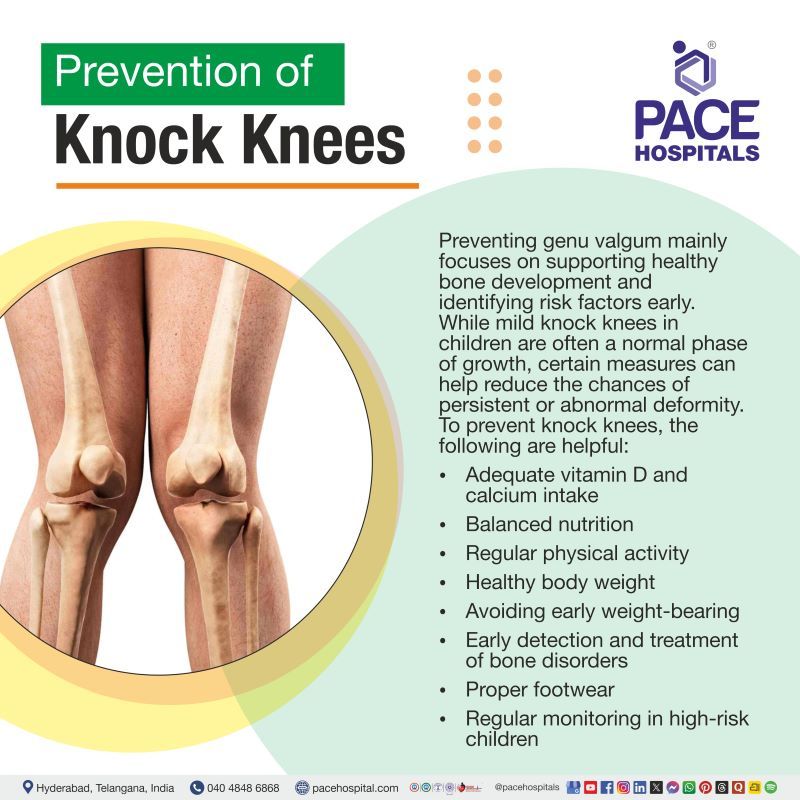
Preventing genu valgum mainly focuses on supporting healthy bone development and identifying risk factors early. While mild knock knees in children are often a normal phase of growth, certain measures can help reduce the chances of persistent or abnormal deformity. To prevent knock knees, the following are helpful:
- Adequate vitamin D and calcium intake
- Balanced nutrition
- Regular physical activity
- Healthy body weight
- Avoiding early weight-bearing
- Early detection and treatment of bone disorders
- Proper footwear
- Regular monitoring in high-risk children
Adequate vitamin D and calcium intake: Getting enough vitamin D and calcium is important for building strong and healthy bones. These nutrients help bones grow properly and maintain their strength. When levels are low, conditions like rickets can develop, which may affect the alignment of the legs.
Balanced nutrition: A nutritious diet plays an important role during the growing years. Foods that provide proteins, vitamins, and minerals support overall bone health and development. Poor nutrition over time can interfere with normal bone formation and may contribute to alignment problems.
Regular physical activity: Staying physically active helps in building muscle strength around the hips and knees. Strong muscles provide better support to the joints and improve posture. Regular movement also encourages healthy growth patterns in children.
Healthy body weight: Maintaining a healthy body mass index (BMI) reduces extra pressure on the knees. When body weight is higher than normal, it can place added stress on developing bones and joints. Over time, this may worsen alignment issues if not addressed.
Avoiding early weight-bearing: In infants and young children, bones are still soft and developing. Putting too much weight on the legs too early, such as forcing early walking, can strain these bones. Allowing natural development helps in maintaining proper alignment.
Early detection and treatment of bone disorders: Some medical conditions can affect bone strength and growth. Identifying and treating these conditions early can prevent further complications. Timely care reduces the risk of long-term deformities, including knock knees.
Proper footwear: Wearing comfortable and well-fitting footwear supports natural walking patterns. Shoes that provide good support can help maintain proper alignment of the feet and legs. Poor footwear, on the other hand, may contribute to imbalance over time.
Regular monitoring in high-risk children: Children with a family history or developmental concerns may need closer observation. Regular check-ups can help detect early signs of alignment changes. Early attention allows for simple measures before the condition becomes more noticeable.
Difference between Knock Knee and Normal Knee
Knock knees (also called Genu valgum) and normal knees differ mainly in their alignment and how they affect posture and movement. Understanding this difference helps identify whether the leg structure is normal or needs attention. The comparison below highlights key features of both conditions:
knock knees vs normal knees
| Feature | Knock Knees (Genu valgum) | Normal Knees (Neutral alignment) |
|---|---|---|
| Knee position | Knees bend inward and often touch each other. This creates a noticeable inward angle at the knee. | Knees point straight forward when standing. They align naturally with the hips and ankles in one straight line. |
| Leg shape | Legs form an “X” shape when standing. The knees come closer while the ankles stay apart. | Legs appear straight and well-aligned from hip to ankle. There is no inward or outward curvature. |
| Ankle position | Ankles remain apart even when knees touch. This shows an imbalance in leg alignment. | Ankles stay comfortably close or aligned when standing. The feet support body weight evenly. |
| Weight distribution | More stress is placed on the inner side of the knees. This can lead to joint strain over time. | Body weight is evenly distributed across both knees. This helps in stable posture and movement. |
| Movement | Walking may look slightly awkward or uneven in severe cases. Balance can be mildly affected. | Walking and running are smooth and balanced. There is proper coordination of all leg joints. |
| Symptoms | May cause knee, hip, or ankle pain if the condition is more severe. Discomfort may increase with activity. | Usually, no pain or discomfort in normal alignment. It supports healthy joint function. |
Genu Valgum and Genu Varum Difference
Genu valgum (knock knees) and genu varum (bow legs) are common lower limb alignment conditions that affect the position of the knees and legs. They can occur during growth in children or persist into adulthood due to underlying bone or joint issues. Below is a comparison of genu varum and genu valgum:
Genu valgum vs varum
| Feature | Genu Valgum (Knock Knees) | Genu Varum (Bow Legs) |
|---|---|---|
| Alignment | Knees bend inward and touch each other while ankles remain apart | Knees remain apart while ankles come together |
| Leg shape | “X-shaped” appearance, with knees pointing inward. | “O-shaped” appearance, with knees pointing outward. |
| Weight distribution | More stress is placed on the outer side of the knees. | More stress is placed on the inner side of the knees. |
| Common age | Often normal in young children and improves with age | Seen in infants and may persist in some adults |
| Causes | Growth variation in children, obesity, or arthritis in adults | Vitamin D deficiency, bone growth disorders, or Blount’s disease |
Frequently Asked Questions (FAQs) Knock Knees (Genu Valgum)
What is knock knee (genu valgum)?
Knock knee, also known as genu valgum, is a condition where the knees angle inward, causing the knees to touch while the ankles remain apart. It is most noticeable in children and can be either physiologic (temporary and self-correcting) or pathologic (due to underlying medical conditions). It may cause difficulty walking and lead to long-term knee and hip issues if untreated.
Is knock knees curable?
While knock knees may not always be curable, it can be managed and corrected in many cases, especially if caught early. In children, the condition often improves with growth. In adults, treatment through physiotherapy or surgery can help correct or manage symptoms, although severe cases may require more invasive interventions.
What causes knock knees in adults and children?
In children, knock knee (genu valgum) is a developmental phase that resolves with growth. In adults, it can be caused by obesity, arthritis, injury, or metabolic disorders like rickets or osteomalacia. It can also result from improper bone development during childhood or from weakened muscles around the knee joint due to certain conditions.
Is knock knees hereditary?
Yes, knock knees can have a hereditary component. If one or both parents had this condition, children may be more likely to develop it. Environmental variables, such as obesity or poor posture, as well as genetic predispositions, can all contribute to its development.
At what age is genu valgum a concern?
Genu valgum is considered a normal condition in children under the age of 7 years and generally improves as a child grows. In fact, many children naturally outgrow the condition as their bones develop and the alignment improves. But, if genu valgum persists beyond age 7 or worsens over time, it may require medical evaluation.
In adults, genu valgum becomes a concern if it causes pain, difficulty walking, or leads to progressive joint damage. In such cases, treatment may be necessary to address the condition and prevent further complications.
Is knock knee a disability?
Knock knees, or genu valgum, are typically not considered a disability unless they cause significant functional impairment. In most cases, it is a common condition that can resolve with growth in children. However, if the deformity persists into adulthood or causes pain, mobility issues, or difficulty performing daily activities, it may qualify as a disability that could require medical intervention to improve quality of life.
What exercises help correct knock knees?
Strengthening the muscles around the knees, hips, and ankles can help improve alignment. Exercises like squats, lunges, and leg lifts, along with stretching, can help strengthen the muscles and stabilize the knee joint. A physiotherapist can design a personalized exercise plan based on individual needs.
How to know if knock knees are present?
Genu valgum can be identified when, on standing with the legs straight, the knees touch while the ankles remain apart. This malalignment may be associated with discomfort or difficulty in walking. A proper orthopedic evaluation is required for accurate diagnosis, which may include physical examination and imaging studies to assess the severity of the condition.
What are the early signs of knock knees?
In children, the early signs include the knees appearing closer together while standing, and there may be difficulty walking due to the altered gait. In adults, early signs often include knee pain, discomfort while walking, or difficulty maintaining balance. If untreated, symptoms may deteriorate, leading to joint degeneration.
Who gets knock knees?
Knock knees can occur in children, especially as they go through developmental stages. It is most common in children aged 2 to 4 years as a normal part of growth. Adults can also have it, particularly if they are obese (overweight), have joint problems, or certain inherited conditions. It is seen more often in women than men because of differences in bone structure.
Are knock knees normal?
Knock knees are normal in young children and usually appear between 2 to 4 years of age. In most cases, they improve naturally and go away by around 7 years as the child grows. However, if knock knees continue beyond this age or occur in adults, it may be a sign of underlying bone problems, medical conditions, or nutritional deficiencies, and a doctor’s evaluation is needed.
Can flat feet cause knock knees?
Yes, flat feet can contribute to knock knees. When the arches of the feet are flat, it affects the alignment of the lower body, causing extra stress on the knees. This misalignment can make the knees more likely to turn inward over time. The condition may worsen if not addressed, leading to further knee problems.
Why do knock knees develop with age?
As people age, the wear and tear on the knees, combined with muscle weakening or imbalances, can lead to the development of genu valgum. Conditions like osteoarthritis can also cause structural changes in the knees, which may contribute to knock knees. Other factors, such as obesity or joint injury, may exacerbate the condition.
Are knock knees common in children?
Yes, knock knees are prevalent among children, especially between the ages of 2 and 5. It is a normal part of the growth process, and most of the children outgrow it as they become older. In some cases, it persists throughout puberty or age, requiring medical care if severe.
Is knock knee a serious condition?
Knock knees are generally not serious if they are physiologic and resolve naturally in childhood. However, if the problem persists into adulthood or is accompanied by pain, instability, or early arthritis, it can worsen.If left untreated, it may lead to joint degeneration or functional impairment.
Can genu valgum correct itself?
Genu valgum (knock knees) in children often corrects naturally as they grow. It is a normal part of development in many kids, and the legs usually straighten out on their own by around 6–7 years of age without any treatment.
In adults, genu valgum usually does not improve on its own because bone growth has already stopped. Subtle (mild) cases may be managed with physiotherapy, strengthening exercises, and lifestyle changes, but more severe deformities may require surgical correction to realign the bones and improve function.
Which doctor to consult for knock knees?
For knock knees, it is recommended to consult an orthopedic specialist. Children should be referred to a pediatric orthopedic surgeon, while adults should see an adult orthopedic surgeon. The severity of the condition will be assessed, and appropriate treatment options such as physiotherapy, braces, or surgery may be advised.
How do physiotherapists treat genu valgum?
Physiotherapists treat genu valgum by focusing on strengthening and improving the flexibility of the muscles surrounding the knee joint. Physiotherapists may use techniques such as manual therapy, specific exercises to correct knee alignment, and posture training to help realign the knees and reduce pain.
What is the fastest way to cure knock knees?
The fastest treatment option for knock knees depends on the severity. In mild cases, physical therapy and exercises may help within a few months. For more severe cases, surgery (such as osteotomy or realignment of the bones) may be needed for quicker correction, but recovery times vary.
Is there any surgery for knock knees?
Yes, surgery is an option for severe cases of genu valgum, especially when it causes significant pain, instability, or dysfunction. Procedures like osteotomy (realigning the bones) are commonly used. In some cases, a total knee replacement may be required if arthritis has developed.
Are knock knees caused by obesity?
Obesity can contribute to the development or worsening of knock knees, especially in adults. Excess body weight places additional stress on the knee joints, which may exacerbate alignment issues. While obesity alone may not directly cause genu valgum, it can be a significant factor in aggravating the condition and contributing to joint degeneration.
What happens if knock knees go untreated?
Untreated genu valgum, particularly in adults, can lead to further joint damage, pain, and increased risk of developing osteoarthritis. Over time, misalignment of the knees can affect walking, which causes hip and lower back pain and reduces overall mobility. Early treatment helps prevent long-term complications.
When to consult a doctor for knock knees?
Consult a doctor for knock knees if the condition persists beyond the age of 7 years, worsens over time, or causes pain or discomfort. Signs that need attention include:
- Difficulty walking or running
- Knee pain or stiffness
- Abnormal gait or limping
- Worsening deformity or imbalance
- Difficulty with daily activities due to knee misalignment
If these symptoms continue, it is important to consult a knock knee specialist who can assess the severity of the condition and recommend the appropriate knock knee treatment. Early intervention can help prevent further complications and improve overall quality of life.
Share on
Request an appointment
Fill in the appointment form or call us instantly to book a confirmed appointment with our super specialist at 04048486868
Appointment request - health articles
Recent Articles