World Day for Safety and Health at Work, 28 April 2026 | Theme, History & Importance

PACE Hospitals
World Day for Safety and Health at Work is observed every year on 28 April which aims to prevent occupational illnesses and accidents globally. This day is an initiative of the International Labour Organization (ILO) and aims to increase awareness of the value of providing a safe and healthy work environment for everyone.
World Day for Safety and Health at Work 2026 Theme
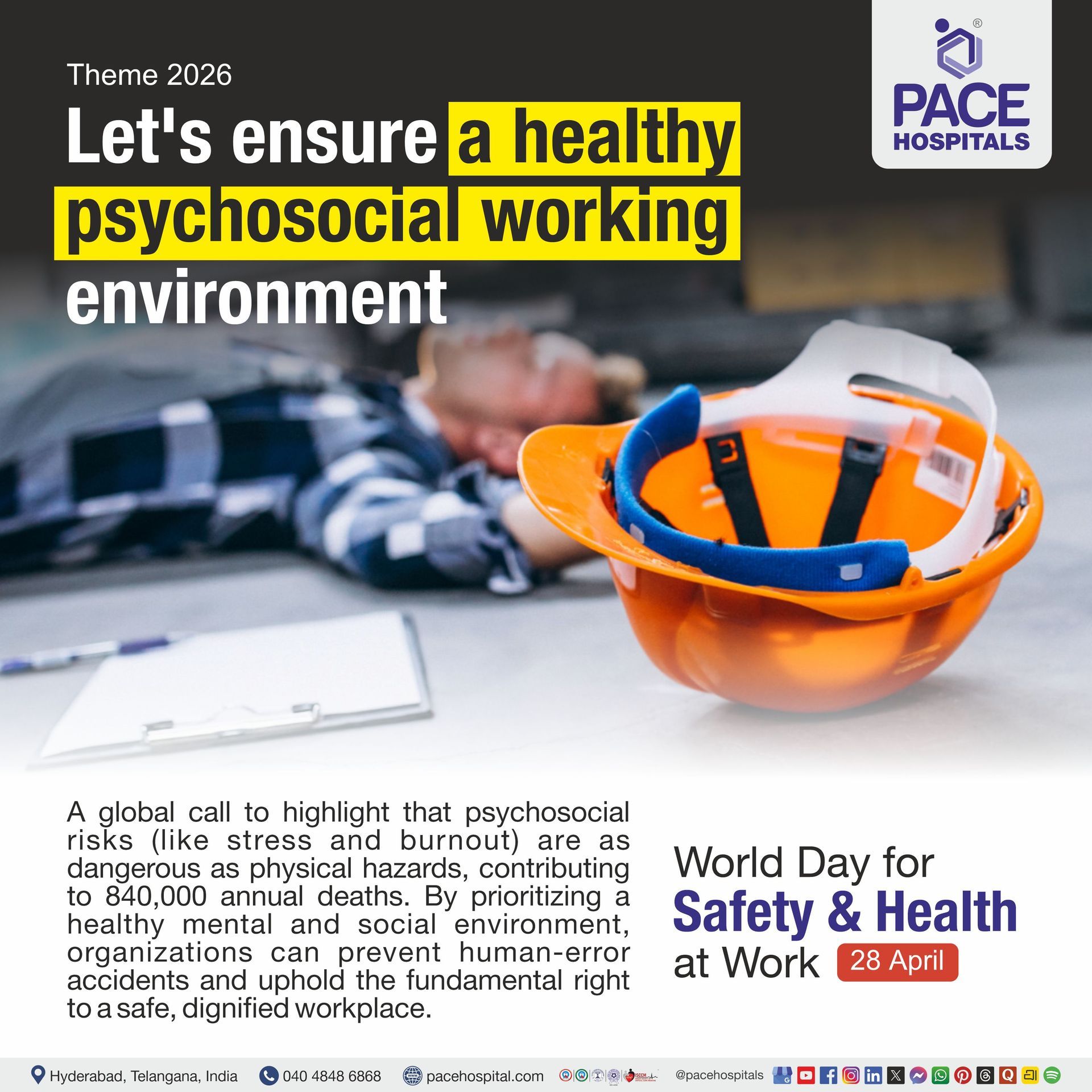
This year, 2026, the theme for World Day for Safety and Health at Work is “Let's ensure a
healthy psychosocial working environment”. This theme highlights that psychosocial risks (like stress and burnout) are as dangerous as physical hazards, contributing to 840,000 annual deaths. By prioritizing a healthy mental and social environment, organizations can prevent human-error accidents and uphold the fundamental right to a safe, dignified workplace.
Year by Year themes of World Day for Safety and Health at Work
- World Day for Safety and Health at Work 2025 Theme: Revolutionizing Health and Safety: The Role of AI and Digitalization at Work
- World Day for Safety and Health at Work 2024 Theme: Impacts of climate change on occupational safety and health.
- World Day for Safety and Health at Work 2023 Theme: A safe and healthy working environment as a fundamental principle and right at work.
- World Day for Safety and Health at Work 2022 Theme: Act together to build a positive safety and health culture.
- World Day for Safety and Health at Work 2021 Theme: Anticipate, prepare, and respond to crises: Invest now in resilient OSH systems.
- World Day for Safety and Health at Work 2020 Theme: Stop the pandemic: Safety and health at work can save lives.
History and Background
- The International Labour Organization (ILO) established the day in 2003 as part of its global initiative to promote a culture of prevention in workplaces and increase awareness of occupational safety and health (OSH).
- The purpose of the observance is to draw attention to the extent of occupational illness, injury, and death as well as new developments and hazards in occupational safety and health on a global scale.
- Additionally, the International Commemoration Day for Dead and Injured Workers falls on April 28. Since 1996, the global trade union movement has observed this day to pay tribute to those who have lost their lives in occupational diseases and accidents.
- The emergence of industrialization in the 18th and 19th centuries, which significantly altered production methods but also raised workplace risks and accidents, is connected to the historical foundations of the day.
- International organizations like the ILO became global advocates for workers' welfare in the 20th century, establishing guidelines and standards to safeguard workers' health and welfare through agreements, treaties, and awareness-raising campaigns.
- This day provides a chance for governments, employers, staff members, and other important stakeholders to work together to advance a global culture of preventative safety and health.
- In recent years, the observance has become even more significant, particularly in light of the difficulties brought about by globalization, technological advancement, and public health emergencies like the COVID-19 pandemic.
- The United Nations now recognizes and supports the World Day for Safety and Health at Work, highlighting its global importance in fostering decent, safe, and healthy work environments for everyone.
Importance of Workplace Safety and Health
- The necessity of updating workplace safety protocols to keep up with technological advancements is highlighted by the World Day for Safety and Health at Work.
- While artificial intelligence (AI) and digitisation present chances to improve productivity and lower physical risks, they also bring with them new difficulties, such as algorithmic bias, ergonomic hazards, mental health issues, cybersecurity threats, and the fuzziness of work-life boundaries.
- Encouraging a human-centered digital transition is crucial to ensuring that technology improves all workers' health, safety, and dignity rather than replaces it.
Key Focus Areas in 2026
Workload Management: Keeping the amount of work within a manageable level helps avoid stress and burnout. When roles are clearly defined and there is some control over daily tasks, it becomes easier to handle work in a balanced and healthy way.
Communication and support: Promoting supportive leadership, fair treatment, and open communication helps improve mental well-being and build trust. This creates a positive and supportive work environment where people feel valued and comfortable.
Algorithmic and Digital Influences: Using digital tools such as monitoring systems, automated scheduling, and hybrid work setups can sometimes reduce a person’s control over their work and interfere with personal time. Managing these challenges is important to maintain a clear balance between work and daily life.
Risk Identification and Participation:
Checking for stress and work-related problems early can help avoid bigger issues later. When workers are included in finding solutions, it creates a sense of respect and helps everyone work better together.
System-wide prevention:
Integrating mental health into workplace design beyond physical safety, targeting violence, harassment, and emotional strain
Share on
Request an appointment
Fill in the appointment form or call us instantly to book a confirmed appointment with our super specialist at 04048486868
Appointment request - health articles
Recent Articles