Successful Debridement and Flap Reconstruction for Left Mastoid Ulcer
PACE Hospitals
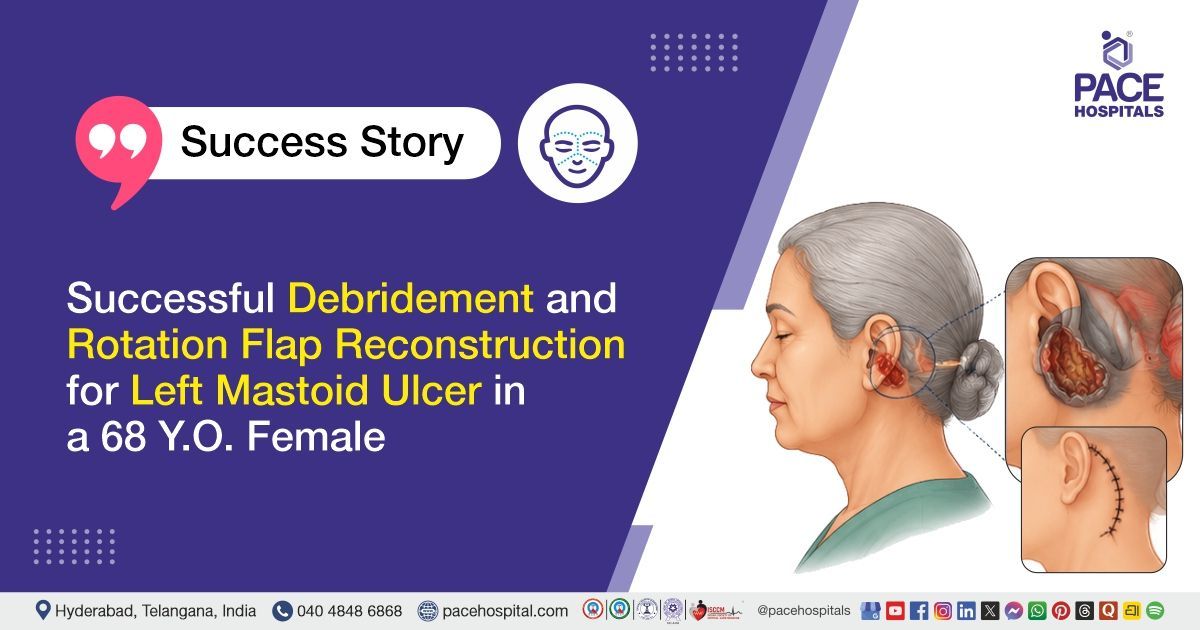
PACE Hospitals’ expert Plastic and Reconstructive Surgery team successfully performed Debridement with Flap Cover on a 68-year-old female patient diagnosed with a left mastoid ulcer, with the aim of removing necrotic tissue, controlling infection, and restoring healthy tissue coverage to promote optimal healing and protect the underlying structures.
Chief Complaints
A 68-year-old female patient with a body mass index (BMI) of 21 presented to the Plastic and Reconstructive Surgery Department at PACE Hospitals, Hitech City, Hyderabad, with a one-week history of an ulcer behind the ear. She reported that the condition began 15 days earlier as a swelling at the same site, which was associated with pus discharge. She underwent incision and drainage (I&D) at an outside hospital, following which she developed a persistent ulcer at the affected area.
Past Medical History
The patient was a known case of hypertension and diabetes mellitus and was on regular treatment for both conditions. She had a history of percutaneous transluminal coronary angioplasty (PTCA). She had also undergone previous surgical procedures, including tubectomy and hysterectomy. There was no history of any known drug or food allergies.
On Examination
On examination, the patient was conscious, coherent, and cooperative. There was no evidence of pallor, icterus, cyanosis, clubbing, lymphadenopathy, or pedal edema. Her vital signs were stable. Local examination revealed an ulcer over the left mastoid region.
Diagnosis
Upon admission to PACE Hospitals, the patient underwent a comprehensive evaluation, including a detailed review of her medical history and a thorough physical examination by the Plastic and Reconstructive Surgery team. The patient presented with a non-healing ulcer behind the left ear for one week duration, associated with a prior history of swelling and pus discharge at the same site, for which incision and drainage had been performed at an outside hospital. Clinical examination revealed an ulcer over the left mastoid region, suggestive of a post-infective non-healing wound.
A complete diagnostic workup was carried out, including laboratory investigations and tissue analysis. Tissue obtained from the ulcer site was sent for culture and sensitivity, which showed no bacterial growth after incubation. General clinical assessment indicated a stable systemic status without signs of active systemic infection. Her known history of diabetes mellitus, PTCA, and hypertension was also taken into consideration, as these conditions can contribute to delayed wound healing.
Based on the confirmed findings, the patient was advised to undergo a
Left Mastoid Ulcer Treatment in Hyderabad, India, under the expert care of the Plastic and Reconstructive Surgery team.
Medical Decision Making (MDM)
After a thorough evaluation by Dr. Kantamneni Lakshmi, Senior Consultant Plastic, Reconstructive & Aesthetic Surgeon, and in coordination with cross-consultations from Dr. Shiva Shankar Marri (Dermatologist) and Dr. Tripti Sharma (Endocrinologist), a comprehensive assessment was carried out to determine the most appropriate management plan for the patient diagnosed with a left mastoid ulcer.
Based on the clinical findings of a non-healing ulcer over the left mastoid region following prior swelling, pus discharge, and incision and drainage performed at an outside hospital, along with the patient’s comorbid conditions, including diabetes mellitus, hypertension, and history of PTCA, it was determined that surgical management with thorough wound debridement and rotational flap cover was the most appropriate treatment approach. This decision was made after careful evaluation of the wound status, infection risk, and the need for definitive soft tissue coverage to promote optimal healing and prevent further complications.
The patient and her family members were counselled in detail regarding the condition, the need for surgical intervention, and the associated risks and benefits. They were also informed about the importance of glycemic control, infection prevention, and adherence to postoperative care to ensure successful wound healing and recovery.
Surgical Procedure
Following the diagnosis, the patient was scheduled to undergo Debridement with Flap Cover Procedure in Hyderabad at PACE Hospitals, under the supervision of the expert Plastic and Reconstructive Surgery team.
The surgical procedure involved the following steps:
- Anaesthesia and Patient Preparation: The procedure was performed under general anaesthesia under strict aseptic precautions. The patient was positioned appropriately, and the operative site over the left mastoid region was thoroughly painted and draped in a sterile manner to maintain surgical field sterility.
- Wound Assessment and Debridement: The ulcer over the mastoid area was carefully assessed. All necrotic, slough, and unhealthy tissues were thoroughly debrided to achieve a clean and viable wound bed. Tissue samples were sent for culture and sensitivity to identify any underlying infection.
- Flap Planning and Design: Based on the size of the defect (approximately 1.5 × 2.5 cm), a local rotation flap was planned to achieve adequate coverage while maintaining vascularity and minimizing tension at the repair site.
- Flap Elevation and Inset: The designed rotation flap was carefully elevated, ensuring preservation of its blood supply. The flap was then rotated and positioned into the defect, achieving proper alignment and complete coverage of the wound area. The flap was secured in place using appropriate suturing techniques.
- Hemostasis and Wound Closure: Meticulous hemostasis was achieved to prevent post-operative bleeding. The surgical site was closed in layers using appropriate sutures, and an aseptic dressing was applied. The procedure was completed uneventfully with no intraoperative complications.
Postoperative Care
Postoperatively, the patient was managed with intravenous fluids for hydration and circulatory support, intravenous medications for infection control, intravenous medications for pain management, and gastric protective measures for stress-related ulcer prevention. Ongoing treatment was continued for control of blood sugar levels and blood pressure in view of underlying diabetes mellitus and hypertension. Specialist consultations were obtained for evaluation of skin-related itching and optimization of metabolic control. The postoperative period remained uneventful with stable recovery and healthy flap condition. At discharge, the patient was stable and advised strict wound care and proper control of comorbid conditions to ensure optimal healing.
Discharge Medications
Upon discharge, the patient was advised oral medications for the prevention of infection at the surgical site, reduction of gastric irritation, and relief from postoperative pain. Medications were also prescribed to improve nutritional status and support wound healing. Treatment was continued for control of blood sugar levels in view of diabetes mellitus and for regulation of blood pressure due to hypertension. Additional medications were advised for the management of scalp and neck itching, skin irritation, and allergic symptoms. Further, in view of the past history of PTCA, appropriate cardiac protective therapy was considered for the prevention of thrombotic complications and long-term cardiovascular risk reduction. The overall aim of the prescribed medications was to promote wound healing, prevent infection, maintain metabolic and cardiovascular stability, and ensure smooth postoperative recovery.
Advice on Discharge
The patient was advised to follow a diabetic diet. She was instructed on proper wound care and to keep the surgical site clean and protected. She was also advised to avoid applying pressure on the wound site to promote optimal healing. In addition, mechanical combing was recommended once weekly as part of scalp care instructions.
Emergency Care
The patient was informed to contact the emergency ward at PACE Hospitals in case of any emergency or development of symptoms like fever, increasing pain, swelling or discharge from the wound, or any signs of altered consciousness, uncontrolled blood sugar levels, or any other unexpected postoperative complications.
Review and Follow-up Notes
The patient was advised to return for a follow-up consultation with the Consultant Plastic, Reconstructive & Aesthetic Surgeon in Hyderabad at PACE Hospitals after 2 days for dressing and review with prior appointment in the Plastic Surgery OPD. She was also advised to attend the Dermatology OPD for review after 2 weeks and the Endocrinology OPD for review after 1 week with FBS and PPBS reports for further evaluation and management.
Conclusion
This case highlights successful surgical management of a left mastoid ulcer using debridement and flap cover under general anaesthesia. The postoperative course was uneventful with good wound healing and stable recovery. Multidisciplinary care and appropriate wound management contributed to an optimal clinical outcome.
Importance of Multidisciplinary Approach in Complex Wound Management
Effective management of complex wounds requires a coordinated multidisciplinary approach to address both local and systemic factors influencing healing. A plastic surgeon / plastic surgery doctor plays a key role in surgical planning, debridement, and reconstruction to achieve optimal wound closure and functional restoration. Timely surgical intervention, including appropriate debridement and soft tissue coverage, is crucial in preventing complications. Proper evaluation and control of underlying comorbid conditions are essential for improving healing outcomes.
Infection control and appropriate antimicrobial stewardship further support recovery. Collaboration between surgical and medical specialties ensures comprehensive care and reduces the risk of recurrence or delayed healing. A structured perioperative plan and careful follow-up significantly enhance overall treatment success and patient outcomes. Patient education and adherence to postoperative care instructions are equally important in achieving long-term recovery.
Frequently Asked Questions (FAQs)
What is the recovery process after a mastoid ulcer surgery?
After surgery, it is important to follow wound care instructions to prevent infection and control pain. The patient should avoid pressure on the wound site and attend regular follow-up visits for dressing changes. A proper diet should be followed to help maintain blood sugar levels and support healing. Routine follow-up with the surgeon is necessary to ensure proper recovery. Adequate hydration should be maintained and the wound should be monitored for any changes.
What medications are required after the procedure for a mastoid ulcer?
After surgery, medicines are given to prevent infection, relieve pain, and protect the stomach from irritation. Additional support may be provided to promote proper healing of tissues. Medicines are also used to maintain stable blood sugar levels in diabetic patients. Skin care treatments and medicines to reduce inflammation may also be advised to support overall recovery.
How should the wound be cared for at home after the flap surgery?
Wound care involves keeping the area clean using sterile dressings and avoiding pressure on the surgical site. The patient should follow instructions carefully to keep the wound clean and dry. Recommended topical care should be used regularly to reduce irritation and support healing. Follow-up visits for dressing changes are important for proper recovery. The wound should be checked for any signs of infection, and medical attention should be taken if any problems are noticed.
Why is a diabetic diet recommended after this surgery?
A diabetic diet helps regulate blood sugar levels, which is crucial for the healing process. High blood sugar can slow recovery and increase the risk of complications like infection. By managing glucose levels, the body can heal more efficiently and reduce the risk of wound-related issues. A balanced diet helps maintain energy levels during recovery. Following this diet ensures better overall health during the post-surgery period.
Is it necessary to follow up with a dermatologist after the surgery?
Yes, Follow-up with a dermatologist is important to manage skin reactions such as itching or rashes, especially over the scalp and neck areas. The dermatologist can suggest appropriate skin care and treatment to relieve discomfort. Regular skin examination helps in early detection of any problems and prevents complications during healing. Maintaining good skin hygiene helps avoid further irritation. Regular visits ensure proper management of post-surgical skin concerns.
What are the signs of complications I should watch out for after surgery?
Patients should look out for signs of infection such as increased redness, swelling, or pus at the wound site. Fever, worsening pain, or any unusual discharge should also be taken seriously. If any of these symptoms are noticed, medical attention should be sought without delay. Regular observation of the wound and general health helps in identifying problems early. In case of any uncertainty, it is important to consult a healthcare provider immediately.
What role do the prescribed multivitamins play in recovery?
Multivitamins support overall health and help strengthen the body’s immune response during recovery. They provide essential nutrients required for tissue repair and general well-being. They also help address nutritional deficiencies that may occur after surgery. In addition, they contribute to improved energy levels and support the healing process. Regular use ensures adequate vitamin supply to aid complete recovery.
How will the flap surgery affect the appearance of the skin around the ear?
The flap surgery aims to cover the ulcer with healthy tissue, which helps in both functional and aesthetic recovery. There may be some scarring as the wound heals, but the goal is to restore the appearance of the affected area. Proper wound care and follow-up visits are crucial for ensuring the best cosmetic outcome. Over time, the appearance of the skin will improve, but some changes are expected. The procedure is designed to minimize long-term effects on the skin.
Can I resume normal activities after being discharged from the hospital?
Avoid strenuous activities for a few weeks after surgery, as they can put stress on the surgical site and delay healing. Rest should be taken adequately, along with proper wound care as advised during the recovery period. Normal routine activities can be resumed gradually only after the doctor confirms proper healing. The patient should avoid overexertion and take rest whenever needed to support smooth and complete recovery.
What is the importance of regular blood sugar monitoring after the surgery?
Regular blood sugar monitoring is essential to prevent complications like infections, which can slow healing. Managing blood sugar helps reduce the risk of post-surgery infections and other complications. It ensures that the body is in an optimal state for recovery and healing. Regular monitoring helps keep blood sugar levels within a healthy range, improving overall health. Proper blood sugar control supports quicker recovery and minimizes the risk of surgical site issues.
Share on
Request an appointment
Fill in the appointment form or call us instantly to book a confirmed appointment with our super specialist at 04048486868
Appointment request - health articles
Recent Articles