Successful ERCP with Pancreatic Duct Sphincterotomy for Chronic Calcific Pancreatitis
PACE Hospitals
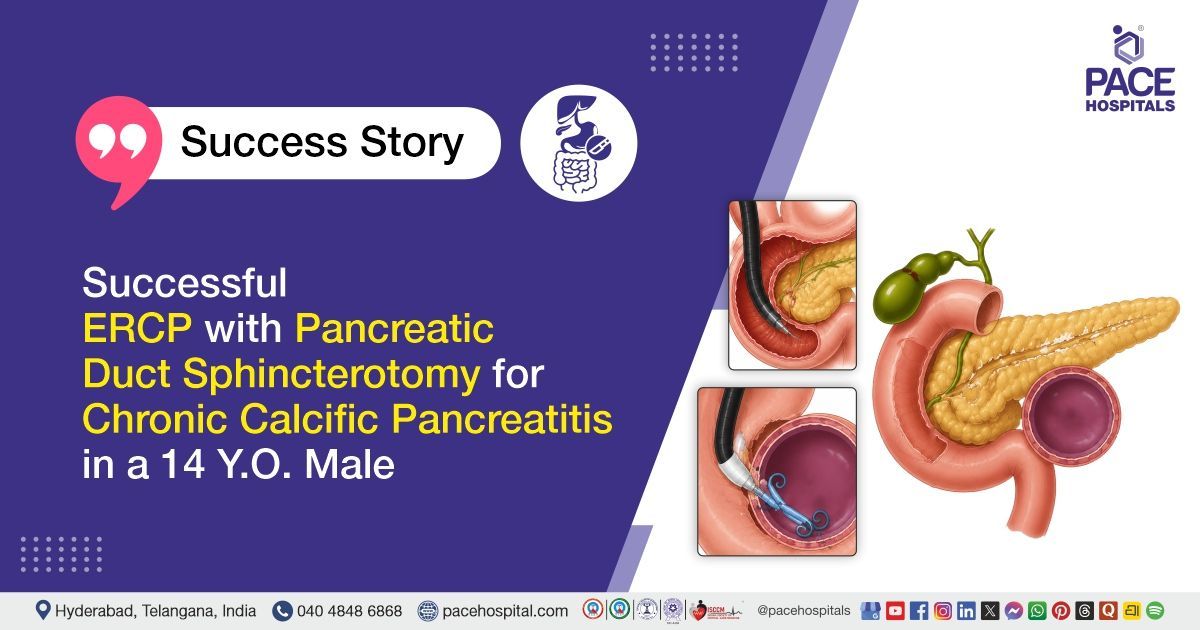
PACE Hospitals’ expert gastroenterology team successfully performed Endoscopic Retrograde Cholangiopancreatography (ERCP) with Pancreatic Duct (PD) sphincterotomy, along with Endoscopic Ultrasound (EUS)-guided cystogastrostomy and double pigtail stenting, on a 14-year-old male patient diagnosed with Chronic Calcific Pancreatitis, pancreatic pseudocyst, and Pancreatic Duct (PD) stricture. The aim of the procedure was to relieve pancreatic duct obstruction and facilitate drainage of the pancreatic pseudocyst. It also helped reduce pain, recurrent inflammation, and prevent further pancreatic complications.
Chief Complaints
A 14-year-old male patient with a body mass index (BMI) of 18 presented to the Gastroenterology Department at PACE Hospitals, Hitech City, Hyderabad, with complaints of mild to moderate left upper abdominal pain for the past 10 days. He also had a history of intermittent abdominal pain over the last one year, with no history of steatorrhea or weight loss.
Past Medical History
The patient was a known case of chronic calcific pancreatitis with a pancreatic pseudocyst for the past one year.
On Examination
On examination, the patient was conscious, coherent, oriented, and hemodynamically stable. Abdominal examination revealed a soft and non-tender abdomen with no signs of acute peritoneal irritation. Systemic examination was otherwise unremarkable.
Diagnosis
Upon admission to PACE Hospitals, following the clinical assessment, the Gastroenterology team conducted a comprehensive evaluation of the patient’s history of Chronic Calcific Pancreatitis with pancreatic pseudocyst and pancreatic duct (PD) stricture. A detailed review of his medical and surgical history was performed. Baseline investigations, including complete blood picture, liver function tests, renal function tests, serum electrolytes, coagulation profile, viral screening, and chest X-ray, were performed and were within acceptable limits for further intervention.
Clinical examination and radiological evaluation revealed chronic calcific pancreatitis with diffuse pancreatic atrophic changes and parenchymal calcifications predominantly involving the head and uncinate process of the pancreas. A mildly dilated pancreatic duct was noted along with possible intraductal calculi at the uncinate region. A well-defined loculated pancreatic pseudocyst was identified near the head and proximal body of the pancreas. These findings, along with endoscopic ultrasound and ERCP findings, were consistent with Chronic Calcific Pancreatitis complicated by pancreatic pseudocyst and PD stricture.
Based on the confirmed diagnosis, the patient was advised to undergo
Chronic Calcific Pancreatitis Treatment in Hyderabad, India, along with pancreatic pseudocyst and pancreatic duct (PD) stricture treatment, under the expert care of the Gastroenterology Department.
Medical Decision Making (MDM)
After a detailed consultation with consultant gastroenterologists Dr. Govind Verma, Dr. M. Sudhir, and Dr. Padma Priya, a comprehensive evaluation was performed to determine the most appropriate diagnostic and therapeutic approach. Considering the patient’s diagnosis of Chronic Calcific Pancreatitis with pancreatic pseudocyst and pancreatic duct (PD) stricture, along with radiological and endoscopic findings suggestive of pancreatic duct obstruction, intraductal calculi, and a large loculated pseudocyst, an optimal treatment strategy was formulated.
Based on clinical assessment, imaging studies (ultrasonography and CECT abdomen), endoscopic ultrasound findings, and ERCP findings demonstrating pancreatic duct narrowing with inability to negotiate beyond the neck of the pancreas, along with a well-defined pancreatic pseudocyst, it was determined that Endoscopic Retrograde Cholangiopancreatography (ERCP) with Pancreatic Duct (PD) sphincterotomy combined with Endoscopic Ultrasound (EUS)-guided cystogastrostomy and double pigtail stenting was the most suitable therapeutic intervention to relieve ductal obstruction, achieve effective pseudocyst drainage, reduce pancreatic ductal pressure, prevent recurrent pancreatitis, and avoid the need for surgical intervention.
The patient and his family members were counselled regarding the diagnosis, the planned endoscopic procedures, associated risks, benefits, and expected clinical outcomes, including symptom relief, resolution of pseudocyst, and improvement in pancreatic drainage and overall quality of life.
Surgical Procedure
Following the decision, the patient was scheduled for Pancreatic Duct (PD) sphincterotomy with Endoscopic Retrograde Cholangiopancreatography (ERCP) procedure in Hyderabad at PACE Hospitals, combined with endoscopic ultrasound (EUS)-guided cystogastrostomy and double pigtail stenting under the expert care of the Gastroenterology Department.
The following steps were carried out during the procedure:
- Endoscopic Evaluation (EUS and ERCP Assessment): Endoscopic Ultrasound (EUS) revealed altered pancreatic echotexture with a honeycomb pattern and parenchymal calcifications consistent with chronic calcific pancreatitis. The pancreatic duct (PD) was mildly dilated (3.2 mm). A well-defined 5.47 × 5.57 cm hypoechoic loculated pancreatic pseudocyst with necrotic contents was also noted. Side-viewing endoscopy (SVE) was advanced up to the second part of the duodenum (D2) for assessment.
- Pancreatic Duct Cannulation: Selective cannulation of the pancreatic duct was achieved up to the head region of the pancreas. However, further negotiation of the guidewire beyond the pancreatic neck was not possible due to a suspected ductal stricture.
- Pancreatic Sphincterotomy and Stone Extraction: Pancreatic duct (PD) sphincterotomy was performed to relieve obstruction. Following sphincterotomy, small pancreatic calculi were successfully dislodged and passed over the guidewire, resulting in improved ductal clearance.
- EUS-Guided Cystogastrostomy: Under Endoscopic Ultrasound guidance, a controlled fistulous tract was created between the pancreatic pseudocyst and the stomach, allowing internal drainage of the cystic collection into the gastric lumen.
- Double Pigtail Stent Placement: A double pigtail stent (7 Fr × 7 cm) was placed across the cystogastrostomy tract to maintain continuous drainage of the pancreatic pseudocyst, ensure tract patency, and prevent recurrence of fluid collection.
Postoperative Care
During the postoperative period, the patient remained stable and the procedure was uneventful. He was managed with intravenous fluids for hydration, treatment to prevent postoperative infection, acid suppression therapy for gastric protection, and pancreatic enzyme support for improved digestion. Supportive medications were given for pain relief and symptomatic management. The patient showed significant clinical improvement and tolerated an oral diet well. He was discharged in stable condition with follow-up instructions.
Discharge Medications
Upon discharge, the patient was prescribed medications for prevention of post-procedure infection, reduction of gastric acidity to promote healing, improvement of pancreatic digestion and enzyme deficiency, nutritional and antioxidant support for pancreatic recovery, and relief of pain when required. The patient was advised to continue these medications as prescribed and follow up regularly in the gastroenterology outpatient department for reassessment and further management.
Advice on Discharge
The patient was advised to follow a low-fat diet and to avoid deep-fried and oily foods.
Emergency Care
The patient was informed to contact the emergency ward at PACE Hospitals in case of any emergency or development of symptoms such as fever, abdominal pain, or vomiting.
Review and Follow-up Notes
The patient was advised to return for a follow-up visit with the Gastroenterologist in Hyderabad at PACE Hospitals after 1 week.
Conclusion
This case highlights Chronic Calcific Pancreatitis complicated by a pancreatic pseudocyst and pancreatic duct stricture, requiring endoscopic intervention for definitive management. The patient underwent successful ERCP with pancreatic duct sphincterotomy and EUS-guided cystogastrostomy with double pigtail stent placement for pseudocyst drainage. Post-procedure recovery was uneventful with clinical improvement, and the patient was discharged in stable condition with appropriate follow-up advice.
Role of Advanced Endoscopic Therapy in Pancreatic Ductal Disorders
Chronic pancreatic ductal disorders such as chronic pancreatitis with ductal obstruction and pseudocyst formation result from long-standing inflammation leading to ductal narrowing, increased intraductal pressure, and formation of pancreatic fluid collections. These conditions are typically evaluated by a Gastroenterologist / Gastroenterology doctor using imaging and endoscopic modalities to assess ductal anatomy and cystic lesions.
Advanced endoscopic procedures such as ERCP for ductal decompression and EUS-guided drainage provide effective minimally invasive treatment by relieving obstruction, enabling internal drainage of pseudocysts, and reducing pancreatic ductal pressure. Stent placement helps maintain long-term drainage and supports resolution of collections, thereby reducing symptoms, preventing recurrence, and improving overall pancreatic function without the need for surgical intervention.
Frequently Asked Questions (FAQs)
What is the expected recovery timeline after undergoing ERCP and PD sphincterotomy for chronic calcific pancreatitis?
Recovery time varies for each patient, but pain relief is usually seen within a few days to weeks. The initial recovery from the procedure can take about 1-2 weeks, depending on the patient’s condition. Regular follow-ups will help monitor progress. The healthcare team will adjust medications as needed. Full recovery from chronic pancreatitis may take longer.
What are the potential risks associated with ERCP and PD sphincterotomy procedures?
Risks include infection, bleeding, pancreatitis, or perforation of the pancreatic duct. Patients are closely monitored after the procedure for any signs of complications. If any issues arise, timely intervention can address them. Most patients recover without major issues. However, the risk of recurrence of pancreatitis or pseudocyst is possible.
How long should the double pigtail stent be kept in place after the procedure?
The double pigtail stent is typically kept in place for several weeks to months, depending on the patient’s recovery. It helps maintain proper drainage from the pancreatic pseudocyst. Regular follow-up visits will determine when the stent can be removed. If the drainage is successful, removal may happen sooner. The patient will be informed when it is safe to remove the stent.
What dietary changes are necessary after the procedure?
Following the procedure, a low-fat diet is recommended to reduce strain on the pancreas. Avoiding deep-fried and fatty foods is crucial. A balanced diet with adequate protein and carbohydrates is encouraged. Patients are also advised to avoid alcohol. Regular monitoring by the healthcare team will help manage dietary needs.
How should medications be managed after discharge?
The patient should continue taking medications as prescribed to manage infection, support digestion, and reduce stomach acid. Adherence to the prescribed schedule is crucial for optimal healing. Regular follow-up visits will allow the doctor to monitor the patient’s response to the treatment. If any side effects or new symptoms arise, they should be reported promptly. Adjustments to the treatment may be made based on the follow-up assessments.
What are the warning signs that would require urgent medical attention post-procedure?
If there is severe abdominal pain, vomiting, or a fever, it's important to get medical help right away. If the area where the procedure was done becomes swollen or shows signs of infection, it should be checked. If symptoms suddenly get worse, it could mean there’s a problem with the pancreas or the stent. Any bleeding should be taken seriously and treated quickly. Getting help early can lead to a faster and safer recovery.
Can normal physical activities be resumed after the procedure?
Physical activity should be limited for a few weeks after the procedure. Light activities like walking can be resumed gradually. However, strenuous activities or heavy lifting should be avoided during the initial recovery period. It’s important to listen to the body and avoid overexertion. Follow-up visits will assess readiness for more vigorous exercise.
How will the patient know if the pancreatic pseudocyst is properly draining after the procedure?
Proper drainage is monitored during follow-up visits with imaging studies or physical examinations. If the drainage is successful, the pseudocyst will reduce in size over time. The patient may experience relief from abdominal pain if drainage is effective. If symptoms persist, further intervention may be necessary. The healthcare team will assess stent function regularly.
Why is follow-up care necessary after discharge?
Follow-up care is important to ensure the healing process is on track and to catch any potential complications early. It allows the healthcare team to assess how well treatments and procedures, like the stent, are working. The recovery progress will be monitored, and adjustments can be made if needed. Regular visits help prevent the recurrence of pancreatitis or pseudocyst formation. Timely follow-ups contribute to better long-term health outcomes.
How can pancreatic enzyme replacement therapy (PERT) be effectively managed?
Pancreatic enzyme replacement should be taken with meals to assist in digestion and help the body absorb nutrients. It is important to follow the prescribed dosage and timing exactly. If there are any digestive concerns, the healthcare provider may adjust the dosage. This therapy may need to be continued for an extended period. Regular check-ups will help ensure the treatment remains effective in managing symptoms.
Share on
Request an appointment
Fill in the appointment form or call us instantly to book a confirmed appointment with our super specialist at 04048486868
Appointment request - health articles
Recent Articles