
Umbilical Hernia Surgery - Types, Benefits & Procedure
PACE Hospitals offers
advanced umbilical hernia surgery in Hyderabad, India, with care tailored to the hernia’s size, symptoms, and severity. Our experienced surgeons perform umbilical hernia surgery and umbilical hernia repair, including open and laparoscopic approaches, to strengthen the abdominal wall, relieve symptoms, and reduce the risk of complications. Patients receive personalized guidance on umbilical hernia surgery recovery, including wound care, activity restrictions, exercise, and returning to daily activities, with a focus on safe recovery and lasting results.
Book an Appointment for Umbilical Hernia Surgery
Umbilical Hernia Surgery Appointment
Why Choose PACE Hospitals for Umbilical Hernia Repair?
Expert Surgical Gastroenterologists for Personalized Management of Simple, Large & Complex Umbilical Hernias
Open & Laparoscopic Repair with Secure Mesh Placement, Precise Defect Closure & Faster Recovery
Transparent Umbilical Hernia Surgery with Insurance & Cashless Options
Recognized for excellence in healthcare delivery with
NABH, NABL, NBE/DNB, NABH Nursing Excellence, and ISCCM accreditations.
What is umbilical hernia surgery?
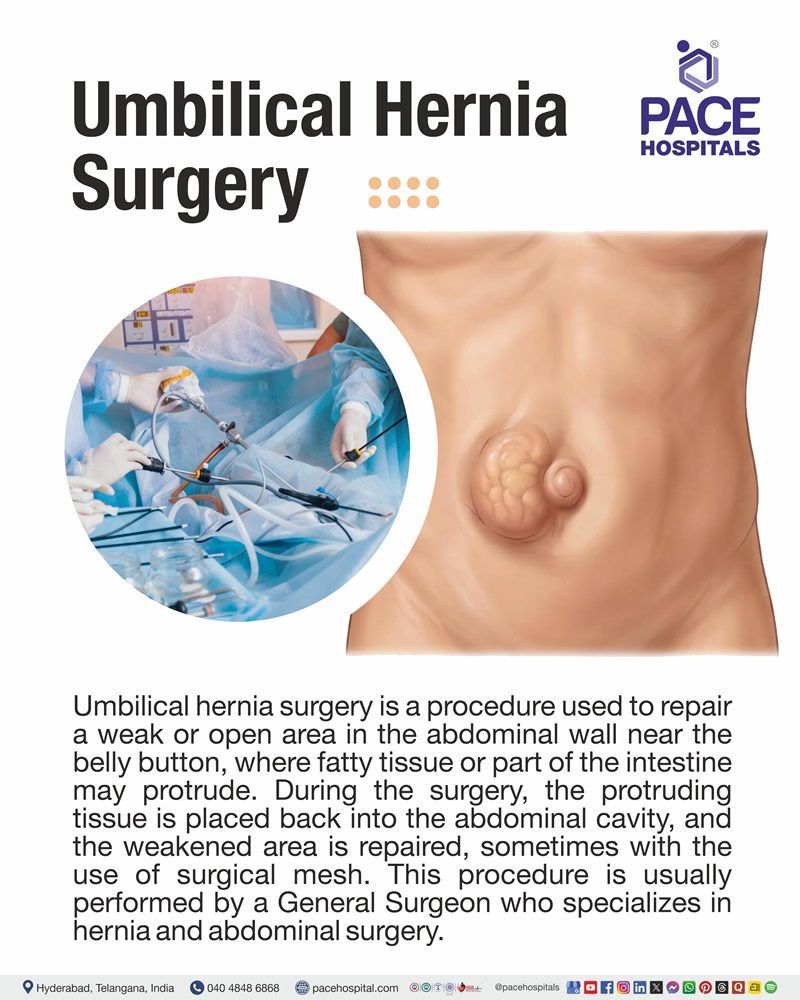
An umbilical hernia surgery is a procedure performed to repair a weakness or opening in the abdominal wall near the belly button (umbilicus), where fatty tissue or a portion of the intestine may protrude. Surgery is generally recommended for hernias that cause symptoms, increase in size, become incarcerated or strangulated, and for most adult umbilical hernias because they do not resolve on their own.
The operation can be performed using either an open or laparoscopic technique, depending on the size of the hernia, the patient's overall health, and the surgeon's assessment.
During the procedure, the protruding tissue is carefully returned to the abdominal cavity, and the abdominal wall defect is repaired. Small hernias may be closed with sutures alone, while larger defects are usually reinforced with a surgical mesh to reduce the risk of recurrence.
Umbilical hernia surgery is commonly performed by a general surgeon to repair the weakened area around the navel. Most patients recover well and can gradually return to their usual activities within a few weeks. Proper wound care, following activity restrictions, and attending follow-up appointments can help ensure a smooth recovery.
Umbilical hernia surgery meaning
The word "umbilical hernia surgery" is derived from three words:
- "Umbilical" refers to the navel (belly button).
- "Hernia" refers to the protrusion of an organ or tissue through a weak or defective area in the surrounding muscle or connective tissue.
- "Surgery" refers to a medical procedure performed to repair or correct a disease, injury, or abnormal condition.
In medical terminology, umbilical hernia surgery is a surgical procedure performed to repair an umbilical hernia by returning the protruding abdominal contents to their normal position and closing the weakness or defect in the abdominal wall near the navel, often using sutures or a surgical mesh to strengthen the repair.
Umbilical hernia surgery types
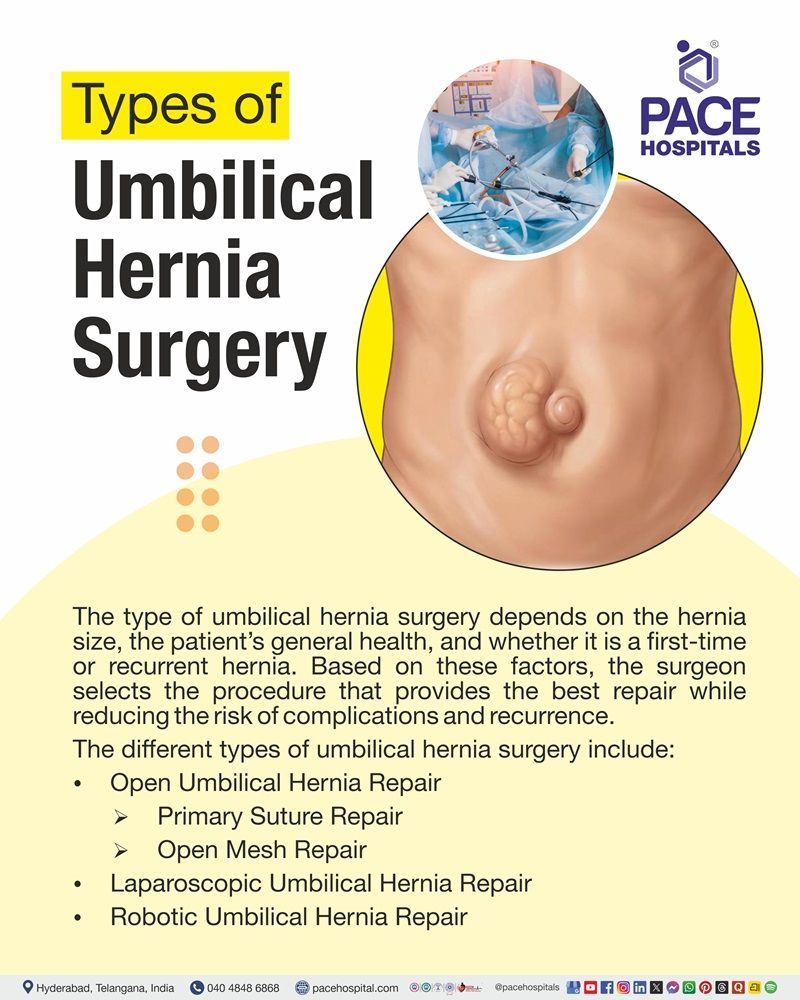
The type of surgery recommended for an umbilical hernia depends on the size of the hernia, the patient's general health, and whether it is a first-time or recurrent hernia. Based on these factors, the surgeon chooses the procedure that offers the best repair while aiming to lower the risk of complications and hernia recurrence.
The different types of umbilical hernia surgery include:
- Open Umbilical Hernia Repair
- Primary Suture Repair
- Open Mesh Repair
- Laparoscopic Umbilical Hernia Repair
- Robotic Umbilical Hernia Repair
Open Umbilical Hernia Repair
Open umbilical hernia repair is a commonly performed surgery to treat an umbilical hernia. The surgeon makes a small incision near the belly button to move the protruding tissue or intestine back into the abdomen and close the weakened area of the abdominal wall. Depending on the size of the hernia and the risk of recurrence, the defect may be repaired with stitches alone or reinforced with surgical mesh.
- Primary Suture Repair: Primary suture repair is a technique in which the surgeon closes the opening in the abdominal wall using strong stitches without placing a surgical mesh. According to the European Hernia Society (EHS) and the Americas Hernia Society (AHS), this method is generally suitable for carefully selected patients with very small umbilical hernias measuring less than 1 cm.
- Open Mesh Repair: Mesh repair involves placing the herniated tissue back into the abdomen and reinforcing the weakened area of the abdominal wall with a surgical mesh. For most adults with an umbilical hernia measuring 1 cm or larger, international guidelines recommend mesh repair because it provides a stronger repair and lowers the risk of the hernia coming back. Studies have also shown that it does not increase the risk of long-term pain after surgery compared with repair using stitches alone.
Laparoscopic Umbilical Hernia Repair
Laparoscopic umbilical hernia repair (umbilical hernia keyhole surgery) is a minimally invasive procedure performed through a few small incisions in the abdomen using a tiny camera (laparoscope) and specialized surgical instruments. During the operation, the hernia is repaired, and a surgical mesh is usually placed to strengthen the abdominal wall. This technique is often recommended for larger or recurrent hernias and may also be a good option for some people with obesity or those at a higher risk of wound-related problems.
Robotic Umbilical Hernia Repair
Robotic hernia repair is a minimally invasive procedure in which the surgeon operates through a few small incisions using robotic-assisted instruments. The technique allows precise dissection, closure of the abdominal wall defect, and placement of mesh when needed. It may be considered for selected complex or recurrent hernias, depending on the type and size of the hernia, the patient's condition, availability of robotic facilities, cost, and the surgeon's experience.
Umbilical hernia surgery indications
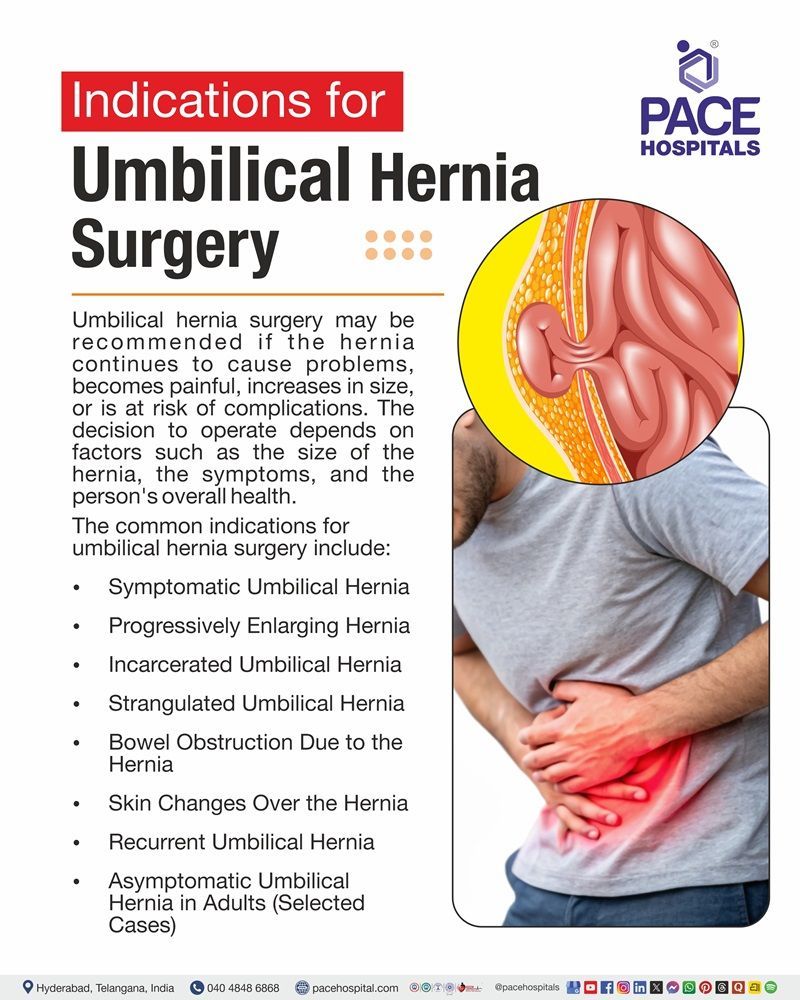
Umbilical hernia surgery may be recommended if the hernia continues to cause problems, becomes painful, increases in size, or is at risk of complications. The decision to operate depends on factors such as the size of the hernia, the symptoms, and the person's overall health.
The common indications for umbilical hernia surgery include:
- Symptomatic Umbilical Hernia
- Progressively Enlarging Hernia
- Incarcerated Umbilical Hernia
- Strangulated Umbilical Hernia
- Bowel Obstruction Due to the Hernia
- Skin Changes Over the Hernia
- Recurrent Umbilical Hernia
- Asymptomatic Umbilical Hernia in Adults (Selected Cases)
Symptomatic Umbilical Hernia
Umbilical hernia surgery is recommended when the hernia causes symptoms such as pain, discomfort, tenderness, or a feeling of pressure around the belly button. These symptoms may become more noticeable during activities such as lifting, coughing, or prolonged standing. Persistent symptoms can affect daily activities and quality of life. Surgical repair helps relieve symptoms and prevents the condition from worsening.
Progressively Enlarging Hernia
An umbilical hernia that continues to grow over time is more likely to weaken the abdominal wall and increase the risk of complications. As the opening becomes larger, more fatty tissue or intestine may bulge through it, which can make the hernia more difficult to repair. Surgery is often recommended before the hernia becomes too large or causes serious problems.
Incarcerated Umbilical Hernia
An incarcerated umbilical hernia develops when the tissue that has pushed through the abdominal wall becomes trapped and cannot be moved back into the abdomen. It may cause ongoing pain, swelling, and tenderness around the belly button. If the trapped tissue loses its blood supply, the hernia can become strangulated, which is a serious complication. Prompt medical and surgical evaluation is important in such cases.
Strangulated Umbilical Hernia
A strangulated umbilical hernia is a medical emergency that occurs when the blood supply to the trapped tissue is cut off. Without prompt treatment, the affected tissue can become damaged or die, leading to serious complications such as bowel perforation and infection. Common symptoms include severe abdominal pain, redness or discoloration over the hernia, nausea, vomiting, and fever. Immediate surgery is needed to treat the hernia and prevent further complications.
Bowel Obstruction Due to the Hernia
Surgery is indicated when an umbilical hernia causes intestinal obstruction by trapping a portion of the bowel. Patients may experience severe abdominal pain, abdominal distension, nausea, vomiting, and an inability to pass stool or gas. Bowel obstruction can rapidly become a medical emergency if the blood supply to the intestine is affected. Surgical intervention relieves the obstruction and prevents further complications.
Skin Changes Over the Hernia
The skin around an umbilical hernia can become thin, discoloured, sore, or damaged if the tissues are under pressure or are not receiving enough blood. These changes may increase the chance of infection and other complications. A prompt surgical assessment is important to check the condition of the hernia and decide whether surgery is needed.
Recurrent Umbilical Hernia
A recurrent umbilical hernia is one that returns after previous surgical repair. Recurrence may occur because of weakening of the abdominal wall, increased abdominal pressure, or other patient-related factors. Repeat repair may be recommended to restore the strength of the abdominal wall and reduce the risk of further recurrence. The choice of repair technique depends on the size of the recurrent defect and previous treatment.
Asymptomatic Umbilical Hernia in Adults (Selected Cases)
Some adults have umbilical hernias without noticeable symptoms. In selected patients, elective surgical repair may be recommended if the hernia is increasing in size or if there is concern about future incarceration or strangulation. However, for very small, stable, and asymptomatic hernias, watchful waiting may be considered after careful clinical evaluation and discussion with the surgeon.
Umbilical hernia surgery contraindications
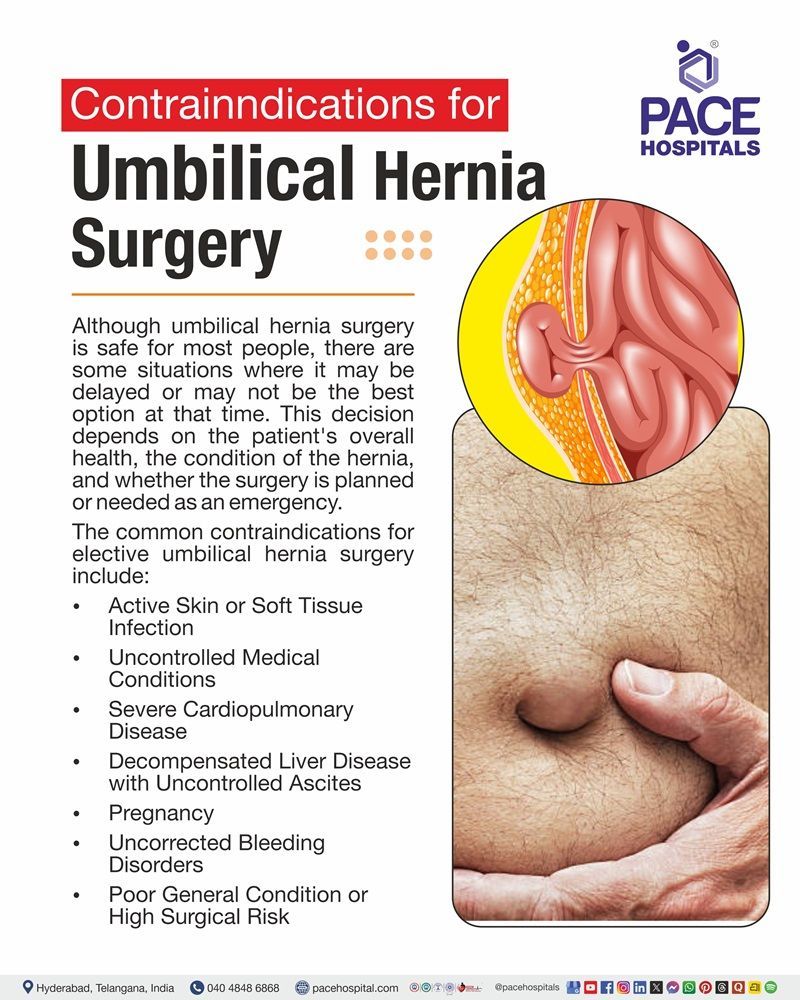
Although umbilical hernia surgery is safe for most people, there are some situations where it may be delayed or may not be the best option at that time. This decision depends on the patient's overall health, the condition of the hernia, and whether the surgery is planned or needed as an emergency. The surgeon carefully weighs the potential benefits and risks before recommending the most appropriate treatment.
The common contraindications for elective umbilical hernia surgery include:
- Active Skin or Soft Tissue Infection
- Uncontrolled Medical Conditions
- Severe Cardiopulmonary Disease
- Decompensated Liver Disease with Uncontrolled Ascites
- Pregnancy
- Uncorrected Bleeding Disorders
- Poor General Condition or High Surgical Risk
Active Skin or Soft Tissue Infection
Elective surgery should be postponed in patients with an active infection over or around the hernia site. Repairing the hernia in the presence of infection increases the risk of wound complications and surgical site infection, particularly if a mesh is used.
Uncontrolled Medical Conditions
Patients with poorly controlled conditions such as diabetes mellitus, severe hypertension, or active heart failure should have these conditions stabilized before elective surgery. Optimizing the patient's health helps reduce the risk of perioperative complications.
Severe Cardiopulmonary Disease
Patients with advanced heart or lung disease who are unable to tolerate anaesthesia may not be suitable candidates for elective hernia repair until their condition is optimized. The decision is made after careful assessment of the risks and benefits.
Decompensated Liver Disease with Uncontrolled Ascites
People with advanced liver disease and ongoing ascites are more likely to develop wound problems, infections, and recurrence after umbilical hernia repair. Elective surgery is usually considered only after the ascites is well controlled. Emergency surgery may still be required if the hernia becomes incarcerated or strangulated.
Pregnancy
Umbilical hernia repair is usually postponed during pregnancy when the hernia is not causing major symptoms or complications. If the hernia becomes trapped or its blood supply is cut off, emergency surgery may be required. Otherwise, repair is generally planned after delivery.
Uncorrected Bleeding Disorders
People with untreated blood clotting problems or those taking blood-thinning medicines may have a higher risk of bleeding during surgery. Before a planned umbilical hernia repair, these conditions are usually managed or corrected to make the procedure as safe as possible.
Poor General Condition or High Surgical Risk
For people who are very frail, have serious long-term illnesses, or have a limited life expectancy, the risks of elective umbilical hernia surgery may be greater than its potential benefits. In these situations, the decision to operate is made on an individual basis after carefully considering the person's overall health, symptoms, and quality of life.
Umbilical hernia surgery benefits
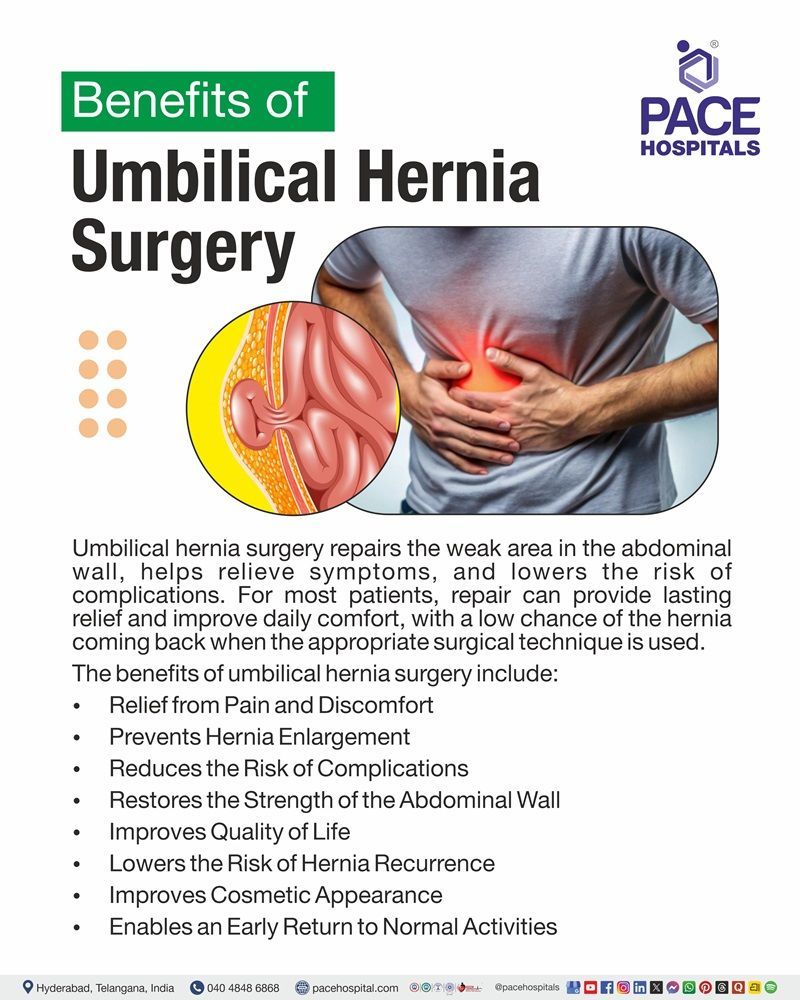
Umbilical hernia surgery repairs the weak area in the abdominal wall, helps relieve symptoms, and lowers the risk of complications. For most patients, repair can provide lasting relief and improve daily comfort, with a low chance of the hernia coming back when the appropriate surgical technique is used.
The benefits of umbilical hernia surgery include:
- Relief from Pain and Discomfort
- Prevents Hernia Enlargement
- Reduces the Risk of Complications
- Restores the Strength of the Abdominal Wall
- Improves Quality of Life
- Lowers the Risk of Hernia Recurrence
- Improves Cosmetic Appearance
- Enables an Early Return to Normal Activities
Relief from Pain and Discomfort
Surgical repair helps relieve symptoms such as pain, tenderness, discomfort, or a feeling of pressure around the belly button. Most patients experience significant symptom improvement after recovery.
Prevents Hernia Enlargement
Repairing the hernia prevents the abdominal wall defect from becoming larger over time. Early treatment reduces the likelihood of the hernia becoming more complex and difficult to repair.
Reduces the Risk of Complications
Umbilical hernia surgery helps prevent serious complications that can occur if the hernia is left untreated. It reduces the risk of the hernia becoming trapped (incarcerated), losing its blood supply (strangulated), or causing a bowel blockage, all of which may require emergency surgery.
Restores the Strength of the Abdominal Wall
Repairing the hernia helps strengthen the weakened abdominal wall and restores its normal support. When needed, a surgical mesh is used to reinforce the repair, making it stronger and helping reduce the chance of the hernia coming back.
Improves Quality of Life
Umbilical hernia surgery repairs the weakened area of the abdominal wall, which helps relieve the symptoms caused by the hernia. Once healing is complete, most people can get back to their everyday activities more comfortably and carry on with their normal routine.
Lowers the Risk of Hernia Recurrence
When performed using guideline-recommended techniques, particularly mesh repair for appropriate patients, umbilical hernia surgery significantly reduces the likelihood of the hernia returning.
Improves Cosmetic Appearance
Repairing the hernia removes or reduces the bulge around the belly button, giving the abdomen a more natural appearance. Many people also feel more comfortable and confident after the hernia has been repaired.
Enables an Early Return to Normal Activities
After umbilical hernia surgery, most people are able to return to their normal routine gradually as the body heals. Recovery time varies depending on the type of surgery and the person's overall health. Taking medicines as prescribed, avoiding heavy activities, and following the surgeon's advice can help support a smooth recovery.
Get a Free Second Opinion for Umbilical hernia repair
At PACE Hospitals, we are committed to providing our patients with the best possible care, and that includes offering second medical opinions with super specialists for treatment or surgery. We recommend everyone to get an expert advance medical second opinion, before taking decision for your treatment or surgery.
Umbilical hernia surgery steps
Procedure steps for umbilical hernia surgery include the following:
Before Umbilical Hernia Surgery
- Medical evaluation and physical examination: To ensure the patient is fit for surgery and anaesthesia, the surgeon reviews the medical history, performs a physical examination, and may recommend blood tests, an electrocardiogram (ECG), chest X-ray, or other investigations based on the patient's health condition.
- Discuss medications and allergies: Before surgery, tell the surgeon about all the medicines and supplements you take, including prescription medicines, over-the-counter drugs, vitamins, and herbal products. You should also let the medical team know about any known allergies, especially to medicines or anaesthetic agents. Providing this information helps the team plan the procedure safely and avoid potential complications.
- Adjust blood-thinning medications if advised: Patients taking anticoagulants or antiplatelet medications may be instructed to temporarily stop or modify these medicines before surgery to reduce the risk of excessive bleeding. This should only be done under medical supervision.
- Follow fasting instructions: Patients are usually advised not to eat or drink for several hours before surgery, as instructed by the anaesthesia team. Following these instructions helps reduce the risk of complications related to anaesthesia.
- Complete informed consent: Before surgery, the surgeon explains how the procedure will be performed, its expected benefits, possible risks, and any available treatment alternatives. Once all questions have been answered, the patient is asked to sign a consent form to confirm that they understand the procedure and agree to undergo the surgery.
- Smoking cessation and optimization of medical conditions: Patients who smoke are encouraged to stop smoking before surgery to improve wound healing and reduce postoperative complications. Medical conditions such as diabetes, hypertension, or heart disease should also be well controlled before the procedure.
- Arrange transportation and postoperative support: Because the effects of anaesthesia can last for several hours after surgery, it is important to arrange for a responsible adult to accompany the patient home. Having someone available during the first day after surgery can also provide extra support and assistance during the initial recovery period.
During Umbilical Hernia Surgery
- Administration of anaesthesia: Umbilical hernia surgery is commonly performed under general anaesthesia. In selected patients with small hernias, local or regional anaesthesia with sedation may be considered.
- Preparation of the surgical site: The abdominal area is cleaned with an antiseptic solution and covered with sterile drapes to minimize the risk of infection before the procedure begins.
- Making the incision: The surgeon makes an incision near the belly button during umbilical hernia open surgery or several small incisions during umbilical hernia laparoscopic surgery, depending on the planned surgical approach.
- Reduction of the hernia: The protruding fatty tissue or intestine is carefully returned to its normal position inside the abdominal cavity. The hernia sac may be removed or repositioned based on the operative findings.
- Repair of the abdominal wall defect: The weakened opening in the abdominal wall is repaired using sutures alone or reinforced with a surgical mesh, depending on the size of the hernia and the risk of recurrence.
- Closure of the incision: After completing the repair, the incision is closed with sutures, surgical glue, or staples to promote proper wound healing.
- Application of dressings: A sterile dressing is applied over the incision to protect the surgical site and reduce the risk of infection during the initial healing period.
After Umbilical Hernia Surgery
- Follow discharge and self-care instructions: After umbilical hernia surgery, follow the instructions given by your surgeon for wound care, medicines, activity, and follow-up visits. Avoid heavy lifting and activities that strain the abdomen until you are advised to resume them. Following these instructions can support proper healing and help prevent complications.
- Manage postoperative pain: Mild to moderate pain or discomfort after surgery is common and can usually be controlled with prescribed or recommended pain-relieving medications.
- Care for the surgical wound: The incision should be kept clean and dry, and dressings should be changed according to the surgeon's advice. Patients should monitor the wound for signs of infection, such as redness, swelling, or discharge.
- Resume physical activity gradually: Taking short walks after surgery is beneficial and can help the body recover by improving blood flow. At the same time, heavy lifting, strenuous exercise, and any activity that puts pressure on the abdomen should be avoided until the surgeon advises that it is safe to resume them.
- Maintain a healthy diet and prevent constipation: Staying well hydrated, eating foods that are high in fibre, such as fruits, vegetables, and whole grains, and taking stool softeners if prescribed can help keep bowel movements regular. This helps avoid unnecessary straining and supports proper healing after umbilical hernia surgery.
- Attend follow-up appointments: Regular follow-up appointments help the surgeon monitor the healing process, remove stitches if required, and check that the repair is healing well. These visits also help identify and treat any problems early, including signs of the hernia returning.
- Allow adequate time for recovery: Most people can get back to light daily activities within a few days to two weeks after surgery. Returning to heavy lifting, strenuous exercise, or physically demanding work usually takes about 4 to 6 weeks, depending on the type of surgery performed and how well the individual is recovering.
Umbilical hernia surgery complications
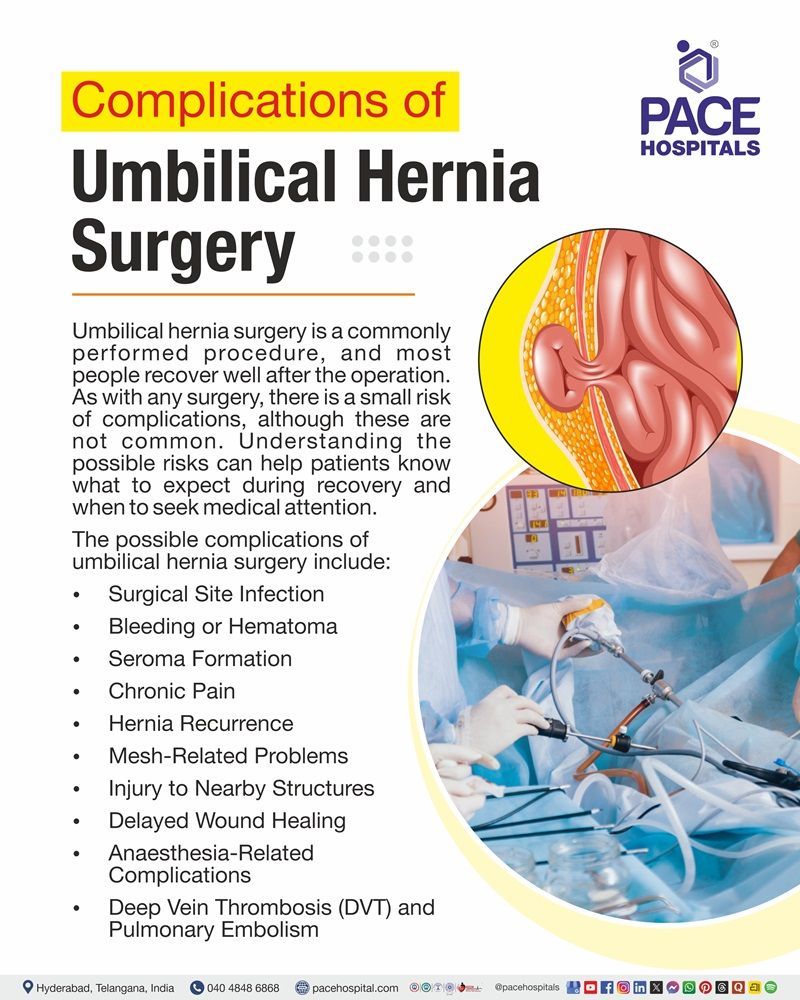
Umbilical hernia surgery is a commonly performed procedure, and most people recover well after the operation. As with any surgery, there is a small risk of complications, although these are not common. Understanding the possible risks can help patients know what to expect during recovery and when to seek medical attention.
The possible complications of umbilical hernia surgery include:
- Surgical Site Infection
- Bleeding or Hematoma
- Seroma Formation
- Chronic Pain
- Hernia Recurrence
- Mesh-Related Problems
- Injury to Nearby Structures
- Delayed Wound Healing
- Anaesthesia-Related Complications
- Deep Vein Thrombosis (DVT) and Pulmonary Embolism
Surgical Site Infection
The wound can sometimes become infected after the operation. Signs may include redness, swelling, warmth, increasing pain, or discharge from the wound. Many infections improve with antibiotics and proper wound care, although some may need further treatment.
Bleeding or Hematoma
A hematoma is a collection of blood that can form under the skin after umbilical hernia surgery. Small hematomas usually settle on their own as the body heals. If the collection is large, painful, or continues to increase in size, additional treatment or drainage may be needed.
Seroma Formation
Sometimes, clear fluid collects around the surgical site after the hernia is repaired. This condition, known as a seroma, usually resolves naturally over the following weeks, although persistent fluid collections may need to be removed with a needle.
Chronic Pain
Some people may have discomfort around the surgical area even after the wound has healed. This may be due to scar tissue, ongoing healing, or irritation of nearby nerves. The discomfort usually settles gradually as the tissues continue to heal.
Hernia Recurrence
Although umbilical hernia repair is designed to provide a permanent solution, the hernia can occasionally return. The chances of recurrence are higher in people who smoke, are overweight, have a chronic cough, or place repeated strain on the abdominal wall.
Mesh-Related Problems
In patients undergoing mesh repair, problems such as infection or irritation around the mesh can rarely develop. If these complications do not improve with treatment, an additional procedure may be required to manage or remove the mesh.
Injury to Nearby Structures
The intestine, blood vessels, or surrounding tissues can occasionally be injured during surgery. Although this is rare, any injury is usually recognised and treated immediately by the surgical team.
Delayed Wound Healing
Healing may take a little longer in people with diabetes, obesity, poor nutrition, or a history of smoking. Keeping the surgical wound clean, following the prescribed treatment, and attending follow-up visits can help it heal properly and reduce the chance of complications.
Anaesthesia-Related Complications
Although anaesthesia is considered safe for most patients, it can occasionally cause side effects such as nausea, vomiting, sore throat, allergic reactions, or breathing difficulties. The anaesthesia team monitors the patient closely throughout the procedure to ensure that any problems are recognised and treated without delay.
Deep Vein Thrombosis (DVT) and Pulmonary Embolism
Although rare, blood clots can develop in the legs after surgery. If a clot travels to the lungs, it becomes a medical emergency known as a pulmonary embolism. Walking soon after surgery and following the doctor's advice help reduce this risk.
Umbilical Hernia Surgery Recovery Time
Recovery after umbilical hernia surgery is different for each person. It is influenced by the type of surgery performed, the size of the hernia, and the person's general health. In most cases, people can return to their usual daily activities within a few weeks while allowing enough time for the body to heal.
First 24 Hours
- Patients are monitored until the effects of anaesthesia wear off.
- Mild pain, swelling, and bruising are common.
- Most patients can go home the same day.
First Week
- Pain and discomfort gradually improve.
- Light activities such as walking are encouraged.
- Heavy lifting and strenuous activities should be avoided.
Two to Four Weeks
- Most patients can return to work and other light daily activities.
- The surgical wound continues to heal.
- Follow-up visits are scheduled to monitor recovery.
Four to Six Weeks
- Normal daily activities can usually be resumed gradually.
- Heavy lifting and vigorous exercise should only be started after the surgeon's approval.
Six Weeks and Beyond
- Most patients have recovered completely and can return to their usual routine.
- Maintaining a healthy weight and avoiding excessive strain on the abdomen can help reduce the risk of hernia recurrence.
What Questions Can Patients Ask the Healthcare Team About Umbilical Hernia Surgery?
- Why is umbilical hernia surgery recommended for me?
- Are there any non-surgical treatment options available for my condition?
- What type of umbilical hernia surgery is most suitable for me?
- Will my hernia be repaired using sutures or a surgical mesh?
- What are the benefits of undergoing umbilical hernia surgery?
- What are the possible risks and complications of the procedure?
- How should I prepare before the surgery?
- What type of anaesthesia will be used during the procedure?
- How long will the surgery take, and will I need to stay in the hospital?
- What can I expect during the recovery period?
- When can I return to work, exercise, and other normal activities?
- What can I do to reduce the risk of the hernia coming back?
Frequently Asked Questions (FAQs) on Umbilical Hernia Surgery
When is umbilical hernia surgery necessary?
Umbilical hernia surgery is usually advised if the hernia is painful, gets bigger over time, or cannot be gently pushed back into the abdomen. It is also necessary if the hernia becomes trapped or loses its blood supply, as this requires emergency treatment. Since umbilical hernias in adults do not heal on their own, surgery is the only way to permanently repair the weakened area in the abdominal wall.
Which surgery is best for an umbilical hernia?
The most suitable surgery depends on the size of the hernia, whether it has come back after a previous repair, and overall health. Small hernias can often be repaired with stitches, while larger hernias are usually reinforced with a surgical mesh to reduce the risk of recurrence. The surgeon will recommend the most appropriate approach, which may be open, laparoscopic, or robotic-assisted surgery.
Can an umbilical hernia be treated without surgery?
In adults, an umbilical hernia cannot be permanently cured without surgery because the opening in the abdominal wall does not close by itself. Small hernias that do not cause symptoms may simply be observed for a period of time. However, surgery is the only treatment that repairs the defect and prevents future complications.
What are the different types of umbilical hernia surgery?
Umbilical hernia repair can be carried out using open, laparoscopic, or robotic-assisted surgery. During the operation, the surgeon repairs the weak opening in the abdominal wall with stitches or uses a surgical mesh when additional support is needed. The most suitable procedure is selected based on the size of the hernia, whether it has come back after a previous repair, and the patient's overall health.
How long does it take to recover from umbilical hernia surgery?
Most people are able to return to light daily activities within 1 to 2 weeks. Complete healing usually takes about 4 to 6 weeks, although recovery may be longer after more complex repairs. Following the surgeon's advice on activity, wound care, and lifting restrictions helps support a smooth recovery.
Can an umbilical hernia come back after surgery?
Yes, although recurrence is uncommon, it is still possible. The risk is higher in people who are overweight, smoke, have a chronic cough, lift heavy weights too soon, or develop a wound infection. Maintaining a healthy lifestyle and following the surgeon's recovery instructions can help lower the chance of the hernia returning.
Is umbilical hernia surgery painful?
Patients will not feel pain during the operation because it is performed under anaesthesia. After surgery, it is normal to have mild pain, soreness, or tightness around the incision for a few days. These symptoms usually improve with prescribed pain medicines and become less noticeable as the body heals.
How long does umbilical hernia surgery take?
Most umbilical hernia operations are completed within 30 to 60 minutes. The exact duration depends on the size of the hernia, the surgical method used, and whether a mesh is required. In many cases, patients can go home on the same day after a short period of observation.
How long does the pain last after umbilical hernia surgery?
Pain is usually strongest during the first few days after surgery and gradually improves over the next 1 to 2 weeks. Some mild tenderness or a pulling sensation may continue for a few more weeks while the tissues heal. If the pain becomes worse instead of better or is accompanied by fever or swelling, patients should contact the doctor
What should I eat after umbilical hernia surgery?
After surgery, start with clear fluids and soft, easy-to-digest foods, then gradually return to a normal diet as appetite improves. Include protein-rich foods, fruits, vegetables, and whole grains to help the body heal and keep bowels moving regularly. Drink plenty of water and avoid large, greasy, or gas-producing meals for the first few days to reduce bloating and discomfort.
How should I sleep after umbilical hernia surgery?
During the first few days, many people find it more comfortable to sleep on their back with their head and upper body slightly raised using pillows. This position reduces pressure on the abdominal muscles and may make it easier to get in and out of bed. Avoid sleeping on the stomach until the surgeon advises that it is safe.
What are the do's and don'ts after umbilical hernia surgery?
After surgery, try to walk regularly and keep the wound clean and dry. Take your medicines as prescribed and include enough fibre in your diet to help prevent constipation. Avoid heavy lifting, strenuous exercise, smoking, and activities that strain the abdominal muscles until your doctor advises that you can resume them. Keep your follow-up appointments so your recovery can be checked.
When can I return to work or normal activities after umbilical hernia surgery?
People with office or desk jobs can often return to work within 1 to 2 weeks, provided they feel comfortable. Jobs that involve heavy lifting or physical labour may require 4 to 6 weeks or longer before returning. Always follow the surgeon's advice, as recovery time varies from person to person.
What warning signs after umbilical hernia surgery require immediate medical attention?
Warning signs after umbilical hernia surgery that require immediate medical attention include severe or increasing pain, fever, persistent vomiting, redness, pus, or unusual discharge from the surgical wound, as well as excessive swelling or bleeding. Difficulty passing urine or stool, the appearance of a sudden bulge at the surgical site, chest pain, or shortness of breath also require urgent medical evaluation. Prompt medical attention can help prevent serious complications.
Why choose PACE Hospitals?
- A Multi-Super Speciality Hospital.
- NABH, NABL, NBE & NABH - Nursing Excellence accreditation.
- State-of-the-art Liver and Kidney transplant centre.
- Empanelled with all TPAs for smooth cashless benefits.
- Centralized HIMS (Hospital Information System).
- Computerized health records available via website.
- Minimum waiting time for Inpatient and Outpatient.
- Round-the-clock guidance from highly qualified super specialist doctors, surgeons and physicians.
- Standardization of ethical medical care.
- 24X7 Outpatient & Inpatient Pharmacy Services.
- State-of-the-art operation theaters.
- Intensive Care Units (Surgical and Medical) with ISO-9001 accreditation.


