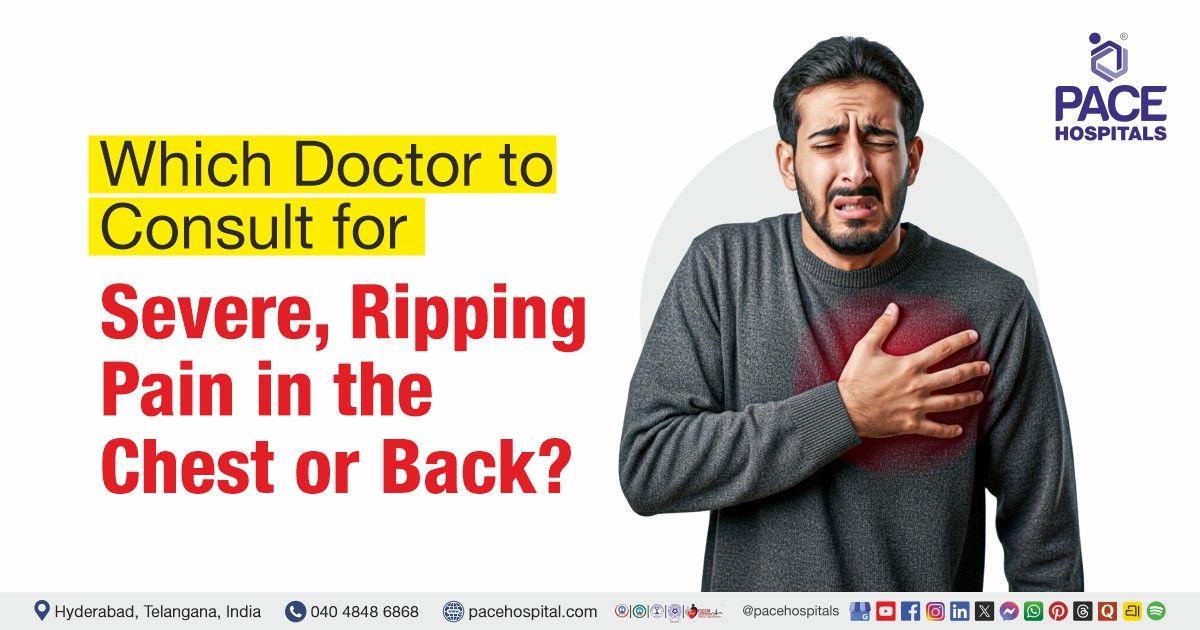
Which Doctor to Consult for Severe, Ripping Pain in the Chest or Back?
PACE Hospitals
Written by: Editorial Team
Medically reviewed by: Dr. Seshi Vardhan Janjirala - Interventional Cardiologist & Endovascular Specialist
Introduction
Severe, ripping or tearing pain in the chest or back is not ordinary pain. It is not acidity. It is not a pulled muscle. It is not something to sleep off.
This type of pain — sudden, intense, and often described as a "ripping," "tearing," or "knife-like" sensation — is one of medicine's most serious warning signs. It may indicate a life-threatening condition such as aortic dissection, heart attack, pulmonary embolism, or pneumothorax.
Every minute matters. The right action is to go to an Emergency Department immediately, or call emergency services so an ambulance can bring you there safely.
This article explains which doctors are involved in evaluating and treating severe ripping chest or
back pain, why this pain must never be dismissed, what tests are done, what treatments may be needed, and why PACE Hospitals, Hyderabad, is equipped to manage these emergencies with speed and expertise.
Quick Answer: Which Doctor Should You Consult for Severe, Ripping Pain in the Chest or Back?
Severe, ripping or tearing pain in the chest or back is a medical emergency. Go to an Emergency Department immediately or call emergency services. Do not wait for a routine doctor appointment. An Emergency Physician should assess first, and a Cardiologist, Cardiothoracic Surgeon, Vascular Surgeon, or Critical Care specialist may be needed if aortic dissection, heart attack, pulmonary embolism, or another serious condition is suspected.
What Does Severe, Ripping Chest or Back Pain Mean?
Severe ripping or tearing pain in the chest or back refers to pain that:
- Comes on suddenly and reaches peak intensity within seconds to minutes
- Feels like something inside is being torn, split, or ripped apart
- May radiate from the front of the chest to the back, between the shoulder blades, or down toward the abdomen
- Does not go away with rest, position change, or antacids
- Is often accompanied by other alarming symptoms such as sweating, breathlessness, fainting, or arm weakness
This pattern of pain is a hallmark of several life-threatening cardiovascular emergencies, most notably aortic dissection — a condition in which the inner wall of the aorta (the body's main artery) tears, allowing blood to flow between the layers of the arterial wall.
Other serious causes that can cause similar symptoms include:
- Acute Myocardial Infarction (Heart Attack): Blockage of a coronary artery causing heart muscle damage, typically with crushing or pressure-like chest pain that may radiate to the jaw, left arm, or back
- Pulmonary Embolism (PE): A blood clot blocking a pulmonary artery, causing sudden chest pain and breathlessness
- Tension Pneumothorax: A collapsed lung causing sudden sharp chest pain and severe breathing difficulty
- Hypertensive Emergency: Extremely high blood pressure causing organ damage, sometimes associated with severe chest or head pain
All of these conditions are emergencies. None of them should be evaluated first at an outpatient clinic.
Why Ripping Chest or Back Pain Is a Medical Emergency?
The word "emergency" is not an exaggeration here. Aortic dissection — the most dangerous cause of ripping chest or back pain — carries one of the highest short-term mortality rates of any cardiovascular condition.
According to data published through the International Registry of Acute Aortic Dissection (IRAD) and reviewed in the American Heart Association/American College of Cardiology 2022 Guidelines for Aortic Disease, untreated Type A aortic dissection (involving the ascending aorta closest to the heart) can result in mortality approaching 0.5% per hour in the critical early period for medically managed patients. Within 48 hours without surgical treatment, mortality rises substantially.
Research also shows that only 15% to 43% of confirmed aortic dissection cases are correctly diagnosed at the first presentation — underscoring how often this life-threatening condition is missed when patients delay care or present to inappropriate settings.
Heart attacks, the other major cause of severe chest pain, are similarly time-sensitive. The principle of "time is muscle" applies: every minute of delay in restoring blood flow to the heart muscle results in irreversible damage. Current AHA/ACC guidelines recommend a 12-lead ECG within 10 minutes of Emergency Department arrival for suspected cardiac chest pain.
There is no safe way to evaluate severe, ripping chest or back pain at home, in a pharmacy, or at a general OPD clinic.
Doctor Selection Guide for Severe, Ripping Pain in the Chest or Back
| Situation | First Doctor to Consult | Specialist Needed If |
|---|---|---|
| Sudden, severe ripping or tearing chest or back pain | Emergency Physician (go to Emergency Department immediately) | Cardiologist (heart attack, arrhythmia, BP crisis); Cardiothoracic/Vascular Surgeon (aortic dissection, Type A or complex Type B); Critical Care Specialist (shock, organ failure) |
| Severe chest pain with sweating, breathlessness, or arm pain | Emergency Physician | Cardiologist — suspected acute heart attack or unstable angina |
| Ripping chest/back pain with pulse difference between arms, very high BP | Emergency Physician | Vascular Surgeon or CTVS Surgeon — suspected aortic dissection |
| Severe chest pain with sudden fainting or confusion | Emergency Physician | Cardiologist + Neurology or CTVS if stroke symptoms or cardiac tamponade suspected |
| Severe chest pain with one-sided leg weakness, stroke-like symptoms | Emergency Physician | Cardiologist + Neurologist + CTVS Surgeon (aortic dissection with neurological involvement) |
| Sudden severe back pain between the shoulder blades, no trauma | Emergency Physician | Vascular Surgeon/CTVS — suspected Type B aortic dissection |
| Known as Marfan syndrome or connective tissue disorder with severe chest/back pain | Emergency Physician (highest priority) | CTVS or Vascular Surgeon, Cardiologist — very high-risk for aortic dissection |
| Pregnant or postpartum with sudden, severe chest or back pain | Emergency Physician (obstetric emergency protocol) | Cardiologist + CTVS Surgeon — pregnancy-associated aortic dissection is rare but catastrophic |
When to Go to Emergency Immediately?
Go to the nearest Emergency Department right now — or call an ambulance — if you or someone near you has:
- Sudden, severe ripping, tearing, or stabbing pain in the chest or back
- Chest or back pain with sweating, nausea, or vomiting
- Chest pain with breathlessness or difficulty speaking
- Pain radiating from the chest to the back, jaw, or one or both arms
- Fainting, collapse, or sudden extreme weakness
- Very high blood pressure with chest or head pain
- A pulse that feels different or weaker in one arm compared to the other
- Chest or back pain in a person with Marfan syndrome, a known aortic aneurysm, or family history of aortic disease
- Sudden severe back pain between the shoulder blades with no injury
- Chest or back pain with one-sided face drooping, arm weakness, or slurred speech
- Chest or back pain in a pregnant woman or someone who recently gave birth
Do not drive yourself. Call an ambulance or have someone take you to the Emergency Department.
When to See an Emergency Physician?
An Emergency Physician is the first and most important doctor to see for severe, ripping chest or back pain.
The Emergency Physician's role is to:
- Rapidly assess your condition using clinical history, physical examination, blood pressure in both arms, pulse assessment, and oxygen saturation
- Order urgent tests such as ECG, chest X-ray, troponin, D-dimer, and CT angiography as needed
- Stabilise your condition with oxygen, IV access, pain control, and blood pressure management
- Identify life-threatening diagnoses, including aortic dissection, pulmonary embolism, heart attack, or pneumothorax
- Call in the appropriate specialist immediately — Cardiologist, Cardiothoracic Surgeon, or Vascular Surgeon — based on findings
The Emergency Physician is specifically trained to work under time pressure and manage multiple life-threatening conditions simultaneously. This is not a role that can be substituted by an outpatient general physician or a walk-in clinic.
When to See a Cardiologist?
A Cardiologist becomes directly involved when the Emergency Physician's evaluation points toward:
- Acute Myocardial Infarction (STEMI or NSTEMI): A heart attack requiring urgent coronary angiography, angioplasty, or stenting
- Unstable Angina: Severe chest pain from blocked or narrowed coronary arteries that may not yet have caused measurable heart muscle damage
- Hypertensive Emergency: Extremely high blood pressure causing chest pain and risk of organ damage
- Cardiac Arrhythmia: Life-threatening irregular heart rhythms producing chest pain, breathlessness, or collapse
- Pericarditis or Myocarditis: Inflammation of the heart lining or muscle, causing chest pain
- Aortic Dissection with Cardiac Involvement: The Cardiologist works alongside the CTVS/Vascular Surgeon when the dissection affects the coronary arteries or heart valves
Importantly, differentiating a heart attack from an aortic dissection is critical — because some treatments used for heart attacks (such as thrombolytics or anticoagulants) can be extremely dangerous and even fatal if the actual diagnosis is aortic dissection. This is why Emergency Physician assessment and CT angiography come first.
When to See a Cardiothoracic or Vascular Surgeon?
A Cardiothoracic Surgeon (CTVS) or Vascular Surgeon is urgently involved when:
- Type A Aortic Dissection is confirmed: This is a surgical emergency. The ascending aorta (the portion closest to the heart) is involved, and emergency open-heart surgery is the definitive treatment. Without surgery, mortality is extremely high.
- Complicated Type B Aortic Dissection: The descending aorta is involved, and there is evidence of organ malperfusion (kidney, bowel, or limb ischaemia), rupture, or rapid expansion. Treatment may involve Thoracic Endovascular Aortic Repair (TEVAR) — a minimally invasive procedure using a stent graft.
- Aortic Aneurysm Rupture: A pre-existing aneurysm has ruptured, causing catastrophic internal bleeding.
According to the 2024 ESC Guidelines for Peripheral Arterial and Aortic Diseases and the 2022 ACC/AHA Guideline for Aortic Disease, a multidisciplinary aortic team — including Emergency Physician, Cardiologist, and CTVS/Vascular Surgeon — is the recommended approach for complex aortic emergencies.
When Critical Care May Be Needed?
A Critical Care (Intensive Care Unit) Specialist or Intensivist becomes part of the team when the patient is:
- In haemodynamic shock — dangerously low blood pressure, weak or absent pulse
- Requiring invasive monitoring such as arterial lines, central venous catheters, or ventilatory support
- In multi-organ failure — kidneys, bowel, or limbs not receiving adequate blood flow due to the dissection
- Requiring post-surgical ICU care after open aortic surgery or endovascular repair
- Showing cardiac tamponade — blood accumulating around the heart, compressing it
The ICU team manages the patient's overall stability while the Cardiologist and CTVS Surgeon address the primary cardiac or aortic problem.
Aortic Dissection: Why It Must Be Ruled Out?
Aortic dissection is the condition most closely associated with the description "ripping" or "tearing" chest or back pain. It occurs when the inner layer (intima) of the aorta — the body's largest artery — tears, allowing blood to push between the walls of the aorta and create a false channel (false lumen).
What Happens During an Aortic Dissection?
As blood forces its way through the tear, the dissection can propagate along the entire length of the aorta, cutting off blood supply to the heart, brain, kidneys, intestines, or legs. This is why aortic dissection can simultaneously mimic a heart attack, stroke, and kidney failure.
Classification of Aortic Dissection
Doctors use two main classification systems:
Stanford Classification:
- Type A: Involves the ascending aorta (the part closest to the heart). This is a surgical emergency.
- Type B: Involves only the descending aorta (beyond the left subclavian artery). Managed medically in uncomplicated cases; endovascular or surgical repair for complicated cases.
DeBakey Classification:
- Type 1: Originates in the ascending aorta and extends the full length
- Type 2: Limited to the ascending aorta only
- Type 3: Begins in the descending aorta
Who Is at Risk?
According to NIH/NCBI StatPearls (2024) and the IRAD database, the key risk factors include:
- Hypertension (present in approximately 65–75% of aortic dissection patients)
- Marfan syndrome (responsible for 50% of dissections in patients under age 40)
- Ehlers-Danlos syndrome, Loeys-Dietz syndrome, Turner syndrome
- Bicuspid aortic valve or coarctation of the aorta
- Known aortic aneurysm
- Pregnancy and the postpartum period (particularly in women with connective tissue disorders)
- Men aged 40–70 (approximately 75% of cases occur between ages 50 and 65)
- Prior aortic surgery or cardiac catheterisation
Heart Attack vs Aortic Dissection
Both conditions can cause severe chest pain, but distinguishing them is critical because their treatments are different — and giving the wrong treatment for one can be fatal in the other.
| Feature | Heart Attack (AMI) | Aortic Dissection |
|---|---|---|
| Pain quality | Pressure, squeezing, heaviness | Ripping, tearing, knife-like |
| Pain onset | Builds up over minutes | Sudden, maximal at onset |
| Pain radiation | Left arm, jaw, neck, back | From chest to back/abdomen; may migrate |
| ECG changes | ST elevation or depression | Usually normal or non-specific |
| Troponin | Elevated (within hours) | May be normal or mildly elevated |
| Blood pressure difference between arms | Usually absent | Present (>20 mmHg difference is a red flag) |
| Chest X-ray | Usually normal | May show widened mediastinum |
| CT Angiography | Shows coronary blockage | Shows intimal flap, false lumen |
| Emergency treatment | Thrombolytics, angioplasty | Surgery (Type A) or BP control/TEVAR (Type B) |
| Danger of wrong treatment | Giving thrombolytics in dissection → catastrophic bleeding | Giving antiplatelet drugs in dissection → danger |
This is why CT Angiography of the aorta is the gold-standard first-line imaging test when aortic dissection is suspected, as recommended by the 2022 ACC/AHA Guideline for Aortic Disease.
Severe Chest Pain with Sweating or Breathlessness
Sweating (diaphoresis) combined with chest pain is the body's alarm response to cardiovascular shock or extreme pain. This combination significantly raises the urgency of the situation.
If chest pain is accompanied by:
- Profuse sweating: Points strongly to cardiac event (heart attack) or severe aortic emergency
- Breathlessness or inability to breathe deeply: May indicate pulmonary embolism, tension pneumothorax, or pulmonary oedema from heart failure
- Nausea and vomiting: Common in both heart attacks and aortic dissection
These combined symptoms demand immediate Emergency Department assessment. Do not attribute sweating and chest pain to anxiety or indigestion without medical evaluation.
Severe Back Pain Between Shoulder Blades
Sudden, severe pain between the shoulder blades — particularly when there is no preceding injury, fall, or physical exertion — is a classic presentation of Type B aortic dissection, where the tear originates in the descending aorta.
According to research published in Endovascular Today (2024), patients with Type B aortic dissection most commonly present with abrupt-onset, severe pain located in the chest, back (classically midscapular — between the shoulder blades), or abdomen. Up to 20% of patients describe pain that migrates — moving from one location to another — as the dissection propagates along the aorta.
This is fundamentally different from muscular back pain, which:
- Develops gradually or after a specific movement
- Worsens and eases with position change
- Responds to rest or simple pain relief
- Is not associated with sweating, breathlessness, or blood pressure differences between arms
If back pain between the shoulder blades is sudden, severe, and maximal at onset — treat it as an emergency until proven otherwise.
Chest or Back Pain with High Blood Pressure
A hypertensive emergency — where blood pressure rises to dangerously high levels (typically systolic above 180 mmHg) — can itself cause severe chest or back pain and significantly raises the risk of aortic dissection.
Approximately 65–75% of aortic dissection patients have a history of hypertension, making it the single most common modifiable risk factor. Sudden, severe spikes in blood pressure — from extreme exertion, or uncontrolled hypertension — can trigger an intimal tear in the aorta.
If chest or back pain is accompanied by extremely high blood pressure readings, go immediately to the Emergency Department. Do not take extra blood pressure medication at home without evaluation — in aortic dissection, blood pressure management is a critical, carefully titrated medical intervention performed under specialist supervision.
Chest Pain with Fainting or Weakness
Fainting (syncope) or sudden extreme weakness during or immediately after the onset of chest or back pain is a red flag for:
- Cardiac tamponade: Blood filling the sac around the heart, compressing it — most often caused by Type A aortic dissection extending to the aortic root
- Massive pulmonary embolism: A large clot blocking blood flow through the lungs
- Severe arrhythmia from a heart attack: Life-threatening irregular rhythm causing loss of consciousness
- Aortic dissection with shock: Catastrophic blood pressure drop from haemorrhage into the chest
Any loss of consciousness associated with chest or back pain requires an emergency ambulance call. Do not wait to "see if it gets better."
Chest Pain with Stroke-Like Symptoms
Neurological symptoms — sudden face drooping, arm weakness, slurred speech, or leg paralysis — occurring alongside chest or back pain point to an aortic dissection that has extended to involve the blood vessels supplying the brain or spinal cord.
According to NIH/NCBI data, neurological symptoms are seen in approximately 20% of aortic dissection patients and include stroke-like symptoms, limb weakness, numbness, or sudden leg paralysis.
This is a combined cardiovascular and neurological emergency requiring immediate multi-specialist care — Emergency Physician, Cardiologist, CTVS Surgeon, and
Neurologist — simultaneously.
What Not to Do During Severe Chest or Back Pain?
Do NOT:
- Wait at home hoping the pain will subside
- Attribute ripping chest or back pain to gas, acidity, or indigestion without evaluation
- Take antacids, painkillers, extra blood pressure tablets, or any home remedy without medical evaluation
- Drive yourself to the hospital — call an ambulance
- Wait for a scheduled OPD appointment — go to the Emergency Department
- Delay seeking care because you feel slightly better (the pain of aortic dissection can temporarily ease even as the condition worsens)
- Ignore sweating, breathlessness, or fainting accompanying the pain
Red-Flag Symptoms Checklist
Seek emergency care immediately if you have any of the following:
- Sudden, severe ripping or tearing sensation in the chest or back
- Chest pain spreading to the back, jaw, or arms
- Back pain between the shoulder blades with sudden onset and no injury
- Sweating, pallor, or cold, clammy skin with chest or back pain
- Breathlessness or inability to take a full breath
- Fainting, near-fainting, or sudden extreme weakness
- Very high blood pressure with chest or back pain
- A weaker or absent pulse in one arm compared to the other
- Stroke-like symptoms: face drooping, arm weakness, slurred speech
- Sudden leg weakness or paralysis with chest or back pain
- Known aortic aneurysm or Marfan/connective tissue disorder with any new chest or back pain
- Pregnancy or recent childbirth with sudden, severe chest or back pain
- Vomiting and collapse alongside chest or back pain
Tests Doctors May Recommend
In the Emergency Department, the evaluation of severe ripping chest or back pain typically includes a combination of the following:
| Test | Purpose | Notes |
|---|---|---|
| 12-Lead Electrocardiogram (ECG) | Detect heart attack (STEMI/NSTEMI), arrhythmia, and pericarditis | Performed within 10 minutes of arrival per AHA/ACC guidelines |
| Chest X-Ray | Detect widened mediastinum (aortic dissection), pneumothorax, pulmonary oedema | Rapid, bedside-accessible |
| CT Angiography (CTA) of Aorta/Chest | Gold standard for diagnosing aortic dissection, pulmonary embolism | Shows intimal flap, false lumen, and extent of dissection |
| High-Sensitivity Troponin | Detect heart muscle damage (heart attack) | Serial measurements over 1–3 hours; 99.5% negative predictive value per 2021 AHA/ACC chest pain guidelines |
| D-Dimer | Screening for aortic dissection and pulmonary embolism | D-dimer >500 ng/mL is highly sensitive for aortic dissection; also used in PE evaluation |
| Blood Pressure in Both Arms | Detect BP discrepancy >20 mmHg (classic aortic dissection sign) | Simple but critical bedside test |
| Echocardiography (TTE or TEE) | Assess heart function, aortic valve, cardiac tamponade, and aortic root | TEE is preferred for haemodynamically unstable patients |
| Full Blood Count (FBC) | Detect anaemia, leukocytosis | Supports clinical assessment |
| Renal Function Tests (Creatinine, eGFR) | Detect kidney involvement from dissection or shock | Creatinine elevation indicates renal artery involvement |
| Serum Lactate | An indicator of poor tissue perfusion or shock | Elevated in severe cases |
| Arterial Blood Gas (ABG) | Assess oxygenation and ventilatory status | Important in breathless patients |
| Coagulation Profile (PT, APTT) | Pre-surgical assessment | Critical before any surgical intervention |
Treatment Options
Treatment depends on the specific diagnosis confirmed in the Emergency Department. The key evidence-based options are:
For Aortic Dissection
Stanford Type A Aortic Dissection (Surgical Emergency):
- Emergency open-heart surgery is the definitive treatment. The torn segment of the ascending aorta is replaced with a synthetic graft. If the aortic root or valve is involved, root replacement or valve repair (Bentall procedure) is performed.
- Without surgery, Type A dissection carries extremely high short-term mortality.
Stanford Type B Aortic Dissection:
- Uncomplicated Type B: Aggressive medical management — IV beta-blockers to target heart rate <60–80 bpm and systolic blood pressure <120 mmHg, along with analgesia.
- Complicated Type B (rupture, malperfusion, uncontrolled pain): Thoracic Endovascular Aortic Repair (TEVAR) — a minimally invasive stent-graft procedure inserted through the femoral artery. Open surgery is reserved for cases where TEVAR is not feasible.
For Acute Heart Attack (Myocardial Infarction)
- STEMI (ST-Elevation MI): Primary Percutaneous Coronary Intervention (Primary PCI) — emergency coronary angioplasty and stenting, ideally within 90 minutes of hospital arrival
- NSTEMI/Unstable Angina: Risk-stratified management with antiplatelets, anticoagulation, and coronary angiography within 24 hours
For Pulmonary Embolism
- Massive/Submassive PE: Systemic thrombolysis or catheter-directed thrombolysis; surgical embolectomy in selected cases
- Haemodynamically stable PE: Anticoagulation therapy
For Tension Pneumothorax
- Emergency needle decompression followed by chest tube insertion (intercostal drain)
Stabilisation Measures Across All Cases
- Supplemental oxygen
- IV access and fluid management
- Pain control
- Continuous cardiac monitoring
- ICU admission for high-risk patients
Specialists at PACE Hospitals, Hyderabad
PACE Hospitals, Hyderabad, offers 24/7 round the clock emergency care with a dedicated multidisciplinary team to evaluate and manage severe chest and back pain emergencies, including suspected aortic dissection, heart attack, and other life-threatening cardiovascular conditions.
Our specialist team includes:
- Emergency Medicine Physicians: Available around the clock with full resuscitation and critical care capability
- Interventional Cardiologists: Experienced in emergency coronary angiography, primary PCI (angioplasty), and management of acute coronary syndromes and hypertensive emergencies
- Cardiothoracic and Vascular Surgeons (CTVS): Experienced in emergency open aortic surgery, aortic graft replacement, and complex cardiac surgical procedures
- Critical Care Specialists (Intensivists): Managing post-operative recovery, haemodynamic instability, and multi-organ support in the ICU
- Cardiac Anaesthesiologists: Supporting high-risk emergency surgical cases
PACE Hospitals is equipped with:
- Advanced CT Angiography for rapid aortic and coronary imaging
- Dedicated Cardiac Catheterisation Laboratory (Cath Lab) for emergency PCI
- Cardiac Surgery Operating Theatres
- Multi-bed Cardiac ICU (CICU) and Surgical ICU
- Round-the-clock ECG, echocardiography, and laboratory services
- Ambulance services for emergency transport
Why Choose PACE Hospitals?
PACE Hospitals, Hyderabad brings together emergency medicine, cardiology, cardiothoracic and vascular surgery, and critical care under one roof — ensuring that patients with the most serious chest and back pain emergencies receive rapid, coordinated, and high-quality specialist care without transfer delays.
Key reasons patients and families trust PACE Hospitals:
- 24/7 Round the Clock Emergency Department with full resuscitation capability and senior physician availability at all times
- Dedicated cardiac emergency pathway aligned with international guidelines for chest pain and aortic emergencies
- Rapid diagnostic infrastructure: CT Angiography, high-sensitivity troponin, ECG, echocardiography — all available around the clock
- Experienced CTVS and Vascular Surgery team for emergency aortic surgery and endovascular repair (TEVAR)
- State-of-the-art Cath Lab for emergency coronary interventions including primary PCI
- Multi-disciplinary approach: Emergency Physician, Cardiologist, CTVS Surgeon, Intensivist, and Cardiac Anaesthesiologist work as a coordinated team — not in isolation
- Transparent, patient-centred communication with families during emergencies
- Post-emergency rehabilitation and follow-up: Cardiac rehabilitation, long-term monitoring, and aortic surveillance imaging (CT/MRI) are available as part of comprehensive aortic care
Key Takeaway
- Severe, ripping or tearing pain in the chest or back is a medical emergency. It is not acidity, gas, or a muscle pull until a full emergency evaluation has been completed.
- Go to the Emergency Department immediately or call an ambulance. Do not drive yourself.
- The first doctor to see is an Emergency Physician, who will initiate rapid evaluation and call in the appropriate specialist.
- A Cardiologist is needed for heart attack, arrhythmia, hypertensive emergency, or cardiac causes.
- A Cardiothoracic or Vascular Surgeon is needed for aortic dissection — especially Type A, which is a surgical emergency.
- Critical Care specialists manage shock, organ failure, and post-surgical recovery.
- CT Angiography is the gold-standard test to rule out or confirm aortic dissection.
- Time is the most critical factor. Every minute of delay increases the risk of irreversible damage or death.
Frequently Asked Questions (FAQs)
Which doctor should I consult for severe ripping chest pain?
Severe ripping chest pain is a medical emergency. The first doctor you must see is an Emergency Physician in an Emergency Department — not an OPD cardiologist or general physician. The Emergency Physician will evaluate you rapidly, order urgent tests including ECG and CT angiography, and call in a Cardiologist, Cardiothoracic Surgeon, or Vascular Surgeon, depending on the findings. Do not go to a pharmacy or wait for a scheduled appointment. Call an ambulance or go directly to the nearest Emergency Department immediately. At PACE Hospitals, Hyderabad, our emergency team is available 24/7.
What is aortic dissection?
Aortic dissection is a life-threatening condition in which the inner layer (intima) of the aorta — the largest artery in the body — tears, allowing blood to force its way between the wall layers and create a false passage. According to NIH/StatPearls (2024), it is classified as Stanford Type A (involving the ascending aorta, closest to the heart — a surgical emergency) or Type B (involving the descending aorta — managed medically or with endovascular repair). It causes sudden, severe ripping or tearing chest or back pain and can cut off blood supply to the heart, brain, kidneys, or limbs. It requires immediate emergency hospital care.
When is chest pain an emergency?
Chest pain is an emergency when it is: sudden and severe; described as ripping, tearing, squeezing, or pressure-like; accompanied by sweating, breathlessness, fainting, nausea, or arm/jaw pain; associated with a blood pressure difference between arms; occurring in someone with a history of hypertension, aortic aneurysm, or connective tissue disorder; or occurring during pregnancy or the postpartum period. The 2021 AHA/ACC Chest Pain Guidelines recommend an ECG within 10 minutes of Emergency Department arrival for suspected cardiac chest pain. Any doubt about whether your chest pain is serious should be resolved by going to the Emergency Department — not waiting.
Can a heart attack cause chest and back pain?
Yes. While a heart attack (acute myocardial infarction) most commonly causes crushing or pressure-like chest pain radiating to the left arm or jaw, it can also cause pain radiating to the upper back or between the shoulder blades. When a heart attack affects the inferior (lower) wall of the heart — often due to blockage of the right coronary artery — back pain may be a prominent feature. This can make it difficult to distinguish from aortic dissection on symptoms alone, which is why emergency evaluation with ECG, troponin, and CT angiography is essential to make the correct diagnosis quickly and initiate appropriate treatment.
What should I avoid during severe chest pain?
During severe chest pain — especially ripping or tearing pain: Do not take antacids, aspirin, painkillers, or extra blood pressure tablets without medical advice. Do not drive yourself to the hospital — call an ambulance. Do not eat or drink anything in case emergency surgery is needed. Do not wait to see if it improves — pain from aortic dissection can temporarily ease while the condition worsens internally. Do not walk around or exert yourself. Sit or lie in whichever position is most comfortable, stay calm, loosen tight clothing, and call emergency services or have someone take you to the Emergency Department immediately.
Which is the best hospital for severe chest or back pain emergency in Hyderabad?
For severe chest or back pain emergencies in Hyderabad, PACE Hospitals offers 24/7 emergency care with a dedicated multidisciplinary team including Emergency Physicians, Interventional Cardiologists, Cardiothoracic and Vascular Surgeons, and Critical Care Specialists. The hospital is equipped with round-the-clock CT Angiography, a Cardiac Catheterisation Lab for emergency PCI, cardiac surgery operation theatres, and a Cardiac ICU — all aligned with AHA/ACC and ESC 2024 guidelines. PACE Hospitals is designed to deliver rapid, coordinated, high-quality care for life-threatening chest and back pain emergencies, including aortic dissection and acute heart attack, without transfer delays.
Is tearing chest or back pain an emergency?
Yes — tearing or ripping pain in the chest or back is always treated as a medical emergency until proven otherwise. It is the classic symptom description for aortic dissection, one of the most life-threatening cardiovascular conditions, where the inner wall of the main artery of the body tears. It can also signal a heart attack, pulmonary embolism, or pneumothorax — all of which are life-threatening. Do not wait at home, take antacids, or assume it will pass. Go to an Emergency Department immediately or call for an ambulance.
Which doctor treats aortic dissection?
Aortic dissection is treated by a multidisciplinary team. An Emergency Physician manages the initial stabilisation. A Cardiothoracic (CTVS) Surgeon performs emergency open-heart surgery for Type A dissection — replacing the torn section of the aorta with a synthetic graft. A Vascular Surgeon or CTVS Surgeon performs Thoracic Endovascular Aortic Repair (TEVAR) for complicated Type B dissection. A Cardiologist is involved if the heart valves or coronary arteries are affected. A Critical Care Specialist manages ICU care. All specialists at PACE Hospitals are available around the clock.
Should I see a cardiologist for severe chest pain?
Not directly and not first — for severe, sudden ripping or tearing chest pain, you should go to the Emergency Department first, where an Emergency Physician will evaluate you and determine whether a Cardiologist is needed. A Cardiologist is the right specialist when the cause is confirmed or suspected to be a heart attack, unstable angina, arrhythmia, or hypertensive emergency. However, if aortic dissection is suspected, a Cardiothoracic or Vascular Surgeon takes the primary surgical role. Going directly to a Cardiologist's outpatient clinic for this type of pain delays life-saving emergency assessment.
Can high blood pressure cause severe chest or back pain?
Yes. Approximately 65–75% of aortic dissection patients have a history of high blood pressure (hypertension), making it the most common risk factor for this condition. A sudden, severe spike in blood pressure — from uncontrolled hypertension, extreme physical exertion, — can trigger an aortic tear. Hypertensive emergency itself (systolic BP typically >180 mmHg with organ damage) can also cause severe headache, chest pain, or back pain. This requires emergency evaluation and carefully managed IV blood pressure treatment — not self-medication or extra tablets at home. Go to the Emergency Department.
What tests are done for severe chest pain?
In the Emergency Department, the standard evaluation for severe chest pain includes: 12-lead ECG (within 10 minutes of person arrival), chest X-ray, CT Angiography (gold standard for aortic dissection and pulmonary embolism), high-sensitivity troponin (to detect heart muscle damage), D-dimer (for aortic dissection and pulmonary embolism screening), blood pressure in both arms (a difference >20 mmHg is a red flag for dissection), echocardiography (to assess heart function and aortic root), and blood tests including full blood count, renal function, and serum lactate. The combination and sequence of tests depend on the clinical presentation.
Is CT angiography needed for suspected aortic dissection?
Yes. CT Angiography (CTA) of the chest and aorta is the gold-standard, first-line imaging test for suspected aortic dissection, as advised by the 2022 ACC/AHA Guideline for Aortic Disease and the 2024 ESC Guidelines for Aortic Diseases. It has very high sensitivity and specificity, can be performed rapidly, and clearly shows the intimal flap, true and false lumen, extent of the dissection, and involvement of branch vessels. For haemodynamically unstable patients who cannot be moved for CTA, Transesophageal Echocardiography (TEE) at the bedside is an alternative. CTA is available at PACE Hospitals, Hyderabad.
Can severe ripping back pain be muscular?
While muscular back pain is common, sudden, severe ripping or tearing back pain that appears without any preceding injury, physical effort, or movement should never be assumed to be muscular without emergency evaluation. Muscular back pain typically develops gradually after activity, worsens with specific movements, and improves with rest. Aortic dissection and other vascular emergencies cause pain that is maximal at onset, may be associated with sweating, breathlessness, pulse differences between arms, or very high blood pressure, and does not respond to postural changes. Always seek emergency evaluation for sudden severe back pain of unknown cause, especially when accompanied by other alarm symptoms.
How is aortic dissection treated?
Treatment depends on the type of aortic dissection: Type A (involving the ascending aorta) is a surgical emergency — the torn section is replaced with a synthetic graft in emergency open-heart surgery. Without surgery, mortality is very high. Uncomplicated Type B (involving the descending aorta) is managed with aggressive IV medications to control blood pressure (target systolic <120 mmHg) and heart rate (<60–80 bpm) using beta-blockers. Complicated Type B (with rupture, organ ischaemia, or uncontrolled pain) requires Thoracic Endovascular Aortic Repair (TEVAR) — a minimally invasive stent-graft procedure. Long-term follow-up with blood pressure management and periodic aortic imaging is essential for all types.
Can severe chest pain be treated if caught early?
Yes — early diagnosis and rapid treatment significantly improve outcomes. For heart attack (STEMI), restoring blood flow through emergency angioplasty within 90 minutes of hospital arrival minimises permanent heart damage. For Type A aortic dissection, emergency surgery performed promptly gives the best chance of survival. For pulmonary embolism, timely thrombolysis or anticoagulation can prevent deterioration. The key message is this: outcomes are directly linked to how quickly you reach an Emergency Department. Every minute of delay reduces the chances of a full recovery. For severe, ripping chest or back pain — time is not on your side unless you act immediately.
Conclusion
Severe, ripping or tearing pain in the chest or back is one of medicine's clearest calls to emergency action. It carries the hallmark presentation of aortic dissection — a condition that can become fatal within hours if not identified and treated correctly. It can also signal a heart attack, pulmonary embolism, or other life-threatening cardiovascular emergency.
The right response is immediate: go to the Emergency Department or call an ambulance. An Emergency Physician will evaluate first, then order the appropriate tests, and bring in a Cardiologist, Cardiothoracic Surgeon, or Vascular Surgeon as the diagnosis demands.
There is no safe place for this kind of pain except an emergency medical setting with full diagnostic and surgical capability. Time saved is life saved.
At PACE Hospitals, Hyderabad, our Emergency, Cardiology, and CTVS teams are ready around the clock to evaluate and manage the most serious chest and back pain emergencies — so that patients receive fast, expert, life-saving care when it matters most.
Share on
Request an appointment
Fill in the appointment form or call us instantly to book a confirmed appointment with our super specialist at 04048486868
Appointment request - health articles
Recent Articles