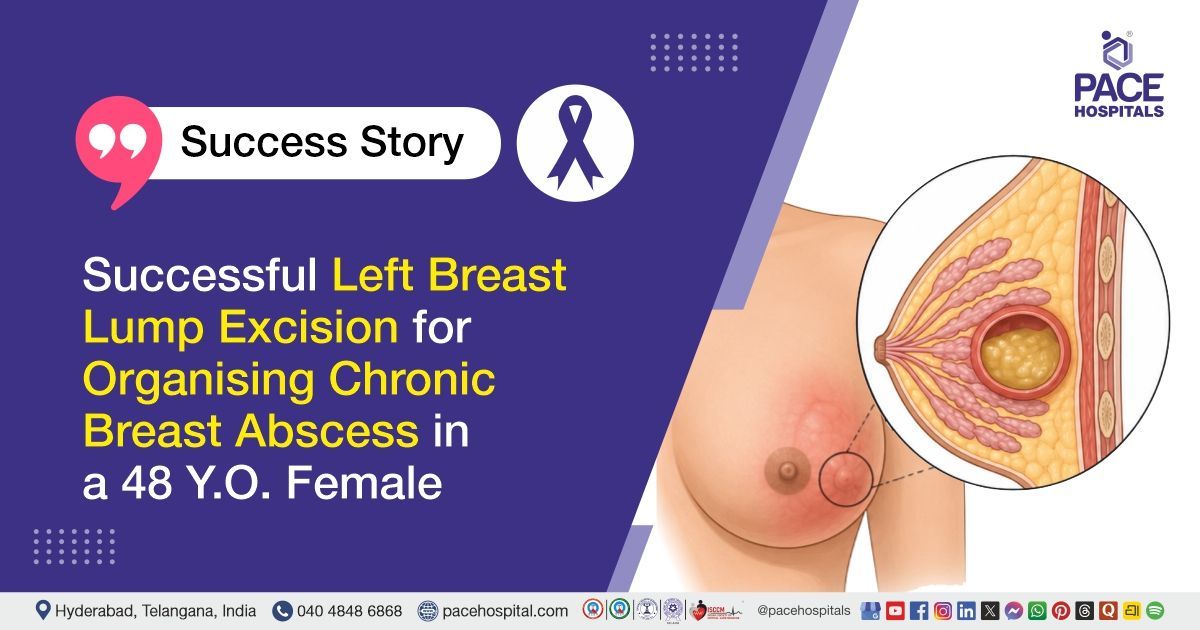
Successful Left Breast Lump Excision for Organising Chronic Breast Abscess
PACE Hospitals
PACE Hospitals' expert Oncology team successfully performed a left Breast Lump Excision on a 48-year-old female patient diagnosed with a benign left breast lump, which was confirmed as an organising chronic breast abscess. The aim of the procedure was to completely remove the infected lump tissue, relieve breast pain and swelling, prevent recurrence, and preserve the surrounding healthy breast tissue for better functional and cosmetic outcomes.
Chief Complaints
A 48-year-old female patient with a body mass index (BMI) of 20 presented to the Oncology Department at PACE Hospitals, Hitech City, Hyderabad, with complaints of pain and swelling in the left breast for 20 days, with increased severity for the last 1 week. She also had a left breast lump associated with milky discharge for about 1 month.
Past Medical History
The patient was a known case of type 2 diabetes mellitus and was on regular medication. Her HbA1c was elevated at 12.2%, indicating poorly controlled blood sugar levels. There was no other significant past medical or surgical history mentioned.
On Examination
On examination, the patient was conscious, coherent, and oriented. Systemic examination was within normal limits. Cardiovascular examination showed normal heart sounds, respiratory examination showed bilateral air entry, central nervous system examination revealed no focal neurological deficit, and per abdominal examination was soft. Local breast examination revealed a tender, indurated swelling in the left breast with mild erythematous skin changes, suggestive of an infective breast lump.
Diagnosis
Upon admission to PACE Hospitals, following the clinical assessment, the Oncology team conducted a comprehensive evaluation based on the patient’s complaints of left breast pain, swelling, lump, and milky discharge. A detailed medical history, physical examination, and preoperative assessment were performed to evaluate the nature of the breast lump and the patient’s overall fitness for surgery.
The patient was a known case of type 2 diabetes mellitus, and her HbA1c was elevated at 12.2%, indicating poorly controlled blood sugar levels. Baseline investigations, including renal function tests, serum electrolytes, chest X-ray, and 2D Echo, were carried out as part of the preoperative workup and were found acceptable for surgical intervention. Chest X-ray showed clear lung fields, and 2D Echo showed good cardiac function.
Local breast examination revealed a tender and indurated lump in the left breast with mild skin redness, suggestive of an infective breast lump. Based on the clinical findings and preoperative evaluation, the patient was diagnosed with a benign left breast lump with chronic abscess formation.
Based on the confirmed diagnosis, the patient was advised to undergo Left
Benign Breast Lump with Chronic Abscess Treatment in Hyderabad, India, under the expert care of the Oncology Department.
Medical Decision Making (MDM)
After a detailed evaluation by Dr. Ramesh Parimi (Consultant Surgical Oncologist), along with the cross consultation with Dr. Snigdha Panuganti (Consultant General Physician), a comprehensive assessment was performed to determine the most appropriate management plan.
Considering the patient’s complaints of left breast pain, swelling, lump, and milky discharge, along with clinical examination findings suggestive of an infective breast lump, the case was carefully reviewed. The patient was also a known case of type 2 diabetes mellitus with elevated HbA1c, which required careful medical evaluation and blood sugar optimisation before and after the procedure.
Based on the clinical assessment, examination findings, and preoperative evaluation, the patient was diagnosed with a benign left breast lump with chronic abscess formation. As the swelling persisted despite initial medical treatment, it was determined that left breast lump excision was the most appropriate and effective management strategy. The plan was to remove the diseased tissue, relieve pain and swelling, prevent further infection or recurrence, and preserve the surrounding healthy breast tissue.
The patient and her family members were counselled regarding the diagnosis, clinical findings, planned surgical procedure, possible risks, postoperative care,
diabetes control, and the importance of regular follow-up.
Surgical Procedure
Following the decision, the patient was scheduled for a Left Breast Lump Excision Procedure in Hyderabad at PACE Hospitals, under the expert care and supervision of the Oncology team.
The following steps were carried out during the procedure:
- Patient Preparation and Positioning: The patient was taken to the operating room and positioned appropriately on the operating table. Standard aseptic precautions were followed, and the operative area over the left breast was cleaned and draped in a sterile manner.
- Anaesthesia Administration: The procedure was performed under general anaesthesia. Adequate anaesthetic support and monitoring were ensured throughout the surgery.
- Incision and Exposure: An incision was made over the affected area of the left breast. The skin and underlying soft tissues were carefully dissected to reach the lump and the surrounding chronically inflamed tissue.
- Excision of the Breast Lump: The benign left breast lump with chronic abscess changes was carefully excised. The diseased tissue was removed while preserving the surrounding healthy breast tissue as much as possible to support better healing and cosmetic outcome.
- Hemostasis and Wound Closure: Meticulous hemostasis was achieved to control bleeding. The surgical site was cleaned, and the wound was closed in layers using appropriate sutures. A sterile dressing was applied over the operated area.
Postoperative Care
Postoperatively, the patient was closely monitored for pain, bleeding, wound condition, infection, and blood sugar levels. The surgical site was maintained under sterile care to support proper healing and reduce the risk of wound infection. The patient was managed with medications for infection prevention, pain control, diabetes management, and supportive care.
The patient was hemodynamically stable throughout the hospital stay and showed satisfactory recovery after the procedure. The removed breast tissue was sent for histopathology, which confirmed an organising breast abscess with benign breast changes with no evidence of malignancy. The patient was discharged in stable condition with advice for regular follow-up.
Discharge Medications
Upon discharge, the patient was prescribed medications for gastric protection, pain control, nutritional support, prevention of post-operative infection, and blood sugar control.
Advice on Discharge
The patient was advised to maintain proper wound care and keep the surgical site clean and dry. She was instructed to take the prescribed medications as advised, follow proper diabetes care, monitor blood sugar levels regularly, and avoid touching or applying anything over the wound without medical advice.
Emergency Care
The patient was informed to contact the emergency ward at PACE Hospitals in case of emergency or development of any concerning symptoms such as fever, increased breast pain or swelling, redness around the wound, bleeding, pus discharge from the wound, vomiting, dizziness, or uncontrolled blood sugar levels.
Review and Follow-up
The patient was advised to schedule a follow-up appointment with the Oncologist in Hyderabad at PACE Hospitals after 1 week. A follow-up visit with the general physician was also advised after 7 days with fasting blood sugar (FBS) and postprandial blood sugar (PPBS) reports.
Conclusion
This case highlights a benign left breast lump with chronic abscess formation in a 48-year-old female patient with type 2 diabetes mellitus and poorly controlled blood sugar levels. The condition was effectively managed with left breast lump excision under the care of the Oncology team at PACE Hospitals. The procedure was uneventful, and histopathology confirmed an organising breast abscess with benign breast changes. The patient recovered well and was discharged in stable condition with appropriate follow-up advice.
Key Insights in Managing Persistent Breast Lump with Chronic Abscess in Diabetic Patients
A persistent breast lump with pain, swelling, redness, or discharge should not be ignored, even when it appears to be infective or benign. Some breast abscesses may reduce temporarily with medicines but can continue as a chronic swelling due to ongoing inflammation. In such cases, proper clinical examination, imaging or needle-based evaluation, and assessment by an Oncologist / cancer specialist are important to confirm the nature of the lump and plan the right treatment.
Diabetes plays an important role in breast infections and wound healing. Poorly controlled blood sugar can increase the risk of infection, delay healing, and make abscesses more difficult to treat with medicines alone. Therefore, blood sugar monitoring and medical management are important before and after surgery to support safe recovery.
In this case, surgical excision helped remove the chronically infected breast tissue, relieve symptoms, and allow tissue confirmation. Histopathology confirmed an organizing breast abscess with benign breast changes. This case highlights the importance of timely specialist care, diabetes control, complete treatment, and regular follow-up in patients with persistent breast lump and chronic abscess.
Frequently Asked Questions (FAQs)
What is an organizing breast abscess?
An organizing breast abscess is a long-standing infection in the breast where the infected area becomes thick, firm, and lump-like over time. It may contain inflamed tissue, pus cells, and fibrosis. Because it can feel like a breast lump, proper medical evaluation is needed.
Can a breast abscess feel like a breast lump?
Yes, a breast abscess can feel like a painful or tender breast lump. It may also cause swelling, redness, warmth, or discharge from the breast. Sometimes, the lump may remain even after initial medicines, especially if the infection becomes chronic.
Is every breast lump cancerous?
No, every breast lump is not cancerous. Many breast lumps are benign and may be due to infection, cysts, abscess, or non-cancerous breast changes. However, any persistent lump should be checked by a specialist to confirm the cause.
Why was breast lump excision advised in this case?
Breast lump excision was advised because the patient had a persistent, painful lump with features of a chronic abscess. The lump did not completely settle with initial medical treatment. Surgery helped remove the affected tissue, relieve symptoms, and confirm the diagnosis.
Can antibiotics alone treat a chronic breast abscess?
Antibiotics may help control infection in the early stage or reduce active inflammation. However, a chronic or organizing breast abscess may not fully resolve with medicines alone. If the lump persists, surgical removal or drainage may be needed.
How does diabetes affect breast abscess healing?
Diabetes can increase the risk of infection and slow down wound healing, especially when blood sugar levels are poorly controlled. High blood sugar can make infections harder to treat. Good diabetes control before and after surgery helps support better recovery.
Is breast lump excision a major surgery?
Breast lump excision is usually a planned surgical procedure to remove the affected lump or tissue. It may not be considered a very major surgery in many cases, but it still requires proper anaesthesia, sterile care, and postoperative monitoring. The risk depends on the patient’s health, infection, and diabetes control.
Can a breast abscess come back after surgery?
A breast abscess can come back if infection remains, wound care is poor, or blood sugar is not controlled properly. Complete removal of the affected tissue, proper medicines, wound care, and regular follow-up help reduce the risk of recurrence.
When should a patient seek emergency care after breast lump surgery?
A patient should seek emergency care if there is fever, increasing pain, swelling, redness, bleeding, pus discharge, dizziness, vomiting, or uncontrolled blood sugar levels. These signs may indicate infection or delayed wound healing. Early medical attention helps prevent complications.
How long does it take to recover after breast lump excision?
Recovery time may vary from patient to patient. Many patients start feeling better within a few days, but complete wound healing may take a few weeks. Recovery may take longer in patients with diabetes or infection, so regular follow-up is important.
Share on
Request an appointment
Fill in the appointment form or call us instantly to book a confirmed appointment with our super specialist at 04048486868
Appointment request - health articles
Recent Articles