Affordable Coronary Angioplasty Cost in Hyderabad, India
PACE Hospitals
All You Need To Know About Coronary Angioplasty Procedure
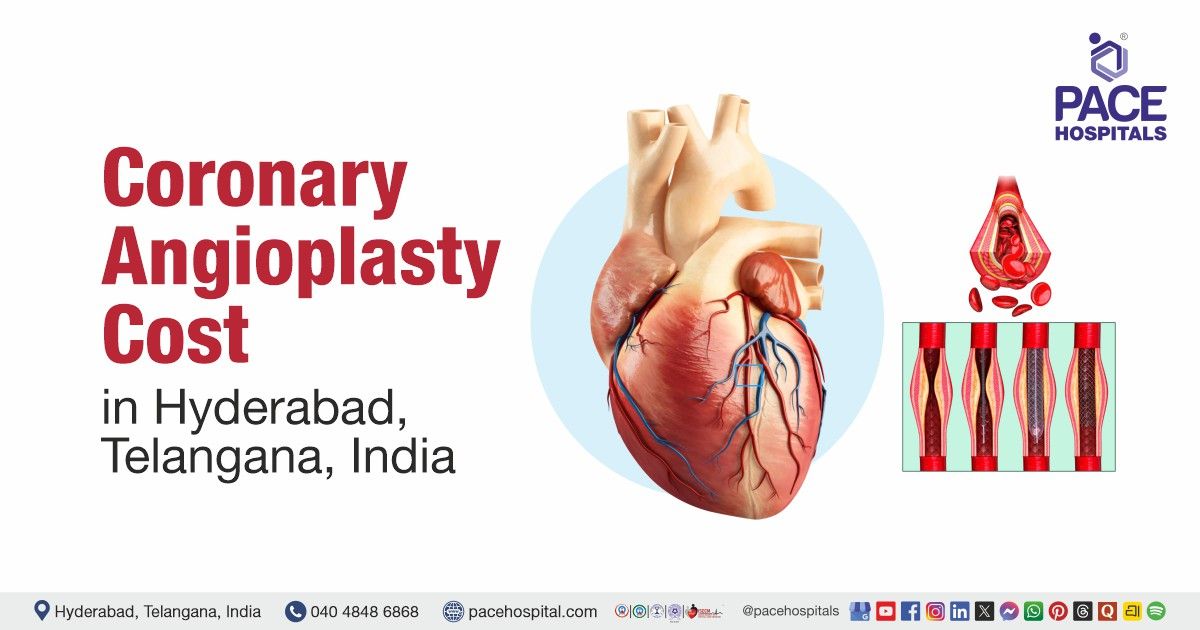
Coronary angioplasty, also called as percutaneous coronary intervention (PCI), is a minimally invasive cardiac procedure that opens narrowed or blocked coronary arteries and improves blood flow to the heart muscle. During this cardiac procedure, an interventional cardiologist inserts a catheter (a thin tube) through a blood vessel, generally in the wrist or groin, and guides it to the blocked artery.
A small balloon may be inflated at the narrowed area to widen the artery. A coronary stent is inserted in many patients to keep the artery open and sustain blood flow. Coronary angioplasty may help reduce chest pain, improve heart function in selected patients, and restore blood supply during a heart attack when performed at the right time.
Coronary angioplasty may be recommended for patients with coronary artery disease, recurrent chest pain, heart attack, severe artery narrowing, abnormal stress test findings, or blockages identified on coronary angiography when medicines alone may not provide adequate relief.
Get a Cost Estimate for Coronary Angioplasty Procedure
Coronary Angioplasty Procedure Cost Query
Coronary Angioplasty Cost in India
On average, Coronary Angioplasty procedure cost in India ranges between ₹85,000 and ₹5,00,000 (approximately US $898 to US $5,282). However, the actual cost may vary depending on several factors, including:
- The patient’s age, heart condition, and overall health.
- Number, location, and severity of coronary artery blockages.
- Whether balloon angioplasty, stent angioplasty, or complex angioplasty is required.
- Number and type of coronary stents used.
- Whether the procedure is planned, urgent, or emergency angioplasty.
- Need for coronary angiography, intravascular imaging, or advanced cardiac monitoring.
- Hospital charges, including room category, cat lab charges, and facilities.
- Interventional cardiologist’s expertise and cardiac team charges.
- Pre-operative investigations and post-procedure follow-up requirements.
- Insurance coverage or corporate approvals for cashless treatment.
- Any complications that may arise during or after the procedure.
Coronary Angioplasty Cost in Hyderabad, Telangana
On average, the Coronary Angioplasty Procedure cost in Hyderabad ranges between ₹90,000 and ₹3,50,000 (approximately US $951 to US $3,697) for standard coronary angioplasty procedures. Complex angioplasty, emergency angioplasty, bifurcation angioplasty, multiple stents, left main angioplasty, or chronic total occlusion angioplasty may cost more depending on the condition of the patient and procedural complexity.
These rates offer a competitive and cost-effective option compared to many hospitals in major Indian cities, with advanced interventional cardiac care readily available.
However, the cost of Coronary Angioplasty in Hyderabad is influenced by several factors, such as:
- The patient’s age, heart function, and medical history.
- Severity and number of coronary artery blockages.
- Number and type of stents required.
- Type of angioplasty technique recommended by the interventional cardiologist.
- Whether the procedure is elective, urgent, or emergency.
- Presence of diabetes, kidney disease, heart attack, poor heart function, or previous heart procedure.
- The hospital facility chosen and its infrastructure.
- Duration of hospital stay, ICU stay if required, and room category selected.
- Insurance or corporate approvals for cashless services.
- Extent of pre-procedure evaluation and post-procedure follow-up.
- Potential complications during or after the procedure.
Cost Breakdown According to Type of Coronary Angioplasty
- Balloon Angioplasty – ₹70,000 – ₹1,50,000 (US $741 – US $1,587) approx.
- Coronary Angioplasty with Bare-Metal Stent – ₹1,00,000 – ₹2,00,000 (US $1,058 – US $2,116) approx.
- Coronary Angioplasty with Drug-Eluting Stent – ₹1,50,000 – ₹3,00,000 (US $1,587 – US $3,175) approx.
- Single Stent Angioplasty – ₹1,50,000 – ₹2,75,000 (US $1,587 – US $2,910) approx.
- Multiple Stent Angioplasty – ₹2,50,000 – ₹4,50,000 or more (US $2,646 – US $4,754+) approx.
- Primary Angioplasty / Emergency Angioplasty – ₹2,00,000 – ₹5,00,000 or more (US $2,116 – US $5,282+) approx.
- Bifurcation Angioplasty – ₹2,50,000 – ₹5,50,000 or more (US $2,646 – US $5,811+) approx.
- Left Main Coronary Angioplasty – ₹3,50,000 – ₹7,00,000 or more (US $3,698 – US $7,395+) approx.
- Chronic Total Occlusion Angioplasty / CTO Angioplasty – ₹3,50,000 – ₹7,50,000 or more (US $3,698 – US $7,924+) approx.
- Imaging-Guided Complex Angioplasty / IVUS or OCT-Guided Angioplasty – ₹3,00,000 – ₹7,00,000 or more (US $3,169 – US $7,395+) approx.
- Rotational Atherectomy-Assisted Angioplasty – ₹3,50,000 – ₹8,00,000 or more (US $3,698 – US $8,452+) approx.
Note: These are estimated costs. The exact cost for an individual patient is determined after a detailed cardiology evaluation, coronary angiogram review, heart function assessment, stent requirement, and evaluation of associated medical conditions.
Additional Information: Coronary Angioplasty Procedure cost may vary depending on the number of blockages, number and type of stents used, cath lab charges, hospital stay, ICU support if required, emergency care, intravascular imaging, cardiac monitoring, and procedural complexity. Multiple stent angioplasty, left main angioplasty, bifurcation angioplasty, CTO angioplasty, IVUS/OCT-guided angioplasty, rotational atherectomy-assisted angioplasty, and emergency angioplasty usually cost more because they may require advanced planning, special equipment, longer procedure time, and intensive monitoring.
Breakdown of Coronary Angioplasty Procedure Costs
Coronary Angioplasty Procedure Cost includes many components, the cost may vary depending upon the hospital, the type of angioplasty procedure, the number of stents, heart function and overall medical condition of the patient. Detailed Breakdown of Typical Expenses Involved in Coronary Angioplasty Procedure:
Pre-Surgery Costs
- Consultation Fees: The charge for a consultation with a cardiologist or interventional cardiologist may vary depending on the doctor's experience and the hospital.
- Diagnostic Tests: These include ECG, 2D Echo, coronary angiography, blood tests, kidney function tests, lipid profile, chest X-ray, and other investigations needed prior to the procedure.
- Pre-Surgical Screening: A comprehensive health assessment including heart function, kidney function, blood sugar control, blood pressure, bleeding risk, allergy history and fitness for the procedure.
Coronary Angioplasty Procedure Costs
- Hospitalisation Charges: Room charges at time of admission, cath lab fees, nursing care, cardiac monitoring and post-procedure recovery costs.
- Surgical Procedure: The costs of coronary angioplasty include the interventional cardiologist's fee, Cath lab charges, balloon catheter, guidewires, stents, contrast dye and sterile consumables.
- Stent and Consumable Charges: The cost varies based on the number and type of stents utilised, such as drug-eluting stents, bare-metal stents, and other procedure-specific consumables.
- Anaesthesia and Cardiac Team Fees: Charges for the cardiac technicians, nursing staff, cardiac monitoring team, and any necessary sedation or anaesthesia.
Post-Surgery Care Costs
- ICU Stay Post-Surgery: In cases of emergency angioplasty, heart attacks, high-risk patients, or complicated angioplasty procedures, ICU or high-dependency monitoring may be required.
- Hospital Stay: General hospitalisation costs after the procedure. The duration depends on recovery, heart function, kidney function, access-site healing, and medical stability.
- Follow-Up Visits and Cardiac Rehabilitation: Important parts of recovery include follow-up appointments, ECG, blood tests, if necessary, lifestyle counselling, cardiac rehabilitation, and heart health monitoring.
Patients can more effectively understand the main financial aspects of the coronary angioplasty procedure with the help of this cost structure. At PACE Hospitals, Hyderabad, detailed and personalised estimates are provided depending on the patient’s heart condition, angiogram findings, stent requirement, procedure plan, and recovery needs.
Who Needs Coronary Angioplasty Procedure?
Not every patient with coronary artery disease needs a coronary angioplasty procedure. It is advised in cases of severe coronary artery narrowing, persistent symptoms, or decreased blood supply to the heart muscle.
Common Conditions Indicating Need for Coronary Angioplasty Procedure
- Coronary Artery Disease (CAD): When blood flow to the heart muscle is decreased, and one or more coronary arteries are narrowed or blocked, angioplasty may be advised.
- Persistent Chest Pain or Angina: If coronary artery narrowing is the cause of symptoms, patients who experience chest pain in spite of medication may require angioplasty.
- Heart Attack: During a heart attack, primary angioplasty may be performed to quickly open the blocked artery and restore blood flow.
- Severe Coronary Artery Narrowing: Angioplasty may be necessary if significant narrowing on coronary angiography affects blood flow and causes symptoms.
- Abnormal Stress Test: Angioplasty may be considered for patients with abnormal stress test results and blockages confirmed by an angiogram.
- Failed Medical Management: When medication and lifestyle modifications are insufficient to manage symptoms, angioplasty may be advised.
- Single or Limited Vessel Disease: Patients with suitable single-vessel or limited-vessel disease may benefit from an angioplasty procedure, depending on artery anatomy and cardiology assessment.
- Recurrent Symptoms After Previous Stenting: If restenosis or new blockages occur following a prior stent procedure, some patients may require repeat angioplasty.
Who is Not Eligible for Coronary Angioplasty?
Although many patients find benefit from the coronary angioplasty procedure, not everyone may benefit from it. Certain conditions may lower the expected benefit or increase procedural risk.
Very Small or Diffuse Coronary Artery Disease: If the artery is too small or the blockages are spread over long segments, angioplasty may not be appropriate.
- Active Infection: Treatment may be necessary for patients with active infection prior to scheduled angioplasty.
- Severe Kidney Disease: Due to the potential impact of contrast dye on kidney function during angioplasty, patients with advanced kidney disease may require specific planning.
- Multiple Complex Blockages Better Suited for CABG: Bypass surgery may be more appropriate for patients with multiple complicated blockages, particularly those with diabetes or left main disease, following examination by the heart team.
- Uncontrolled Bleeding Risk: Patients with severe bleeding disorders or those who are unable to take required blood-thinning medicines may not be appropriate without specialist planning.
- Severe Allergy to Contrast Dye: Alternative planning and preventive actions may be necessary for patients with severe contrast allergies.
- Very Poor Overall Health or Severe Frailty: Procedural risk may be increased in patients with advanced disease or extreme fragility.
- Patient Declines Procedure: Prior to any scheduled coronary angioplasty procedure, informed consent is necessary.
To determine eligibility, an evaluation by a qualified cardiologist or interventional cardiologist is necessary. The appropriateness and safety of the coronary angioplasty procedure are determined by a thorough examination that includes an ECG, 2D Echo, coronary angiogram, kidney function testing, and an overall health review.
Coronary Angioplasty Procedure - How is Coronary Angioplasty Done?
An interventional cardiologist often performs a coronary angioplasty procedure in a cardiac catheterisation laboratory. Usually, there is no need to open the chest during this minimally invasive procedure.
The steps include:
- Pre-procedure evaluation: The cardiologist examines the patient's symptoms, blood tests, ECG, 2D Echo, renal function, coronary angiogram, heart function, and overall procedural fitness.
- Access site preparation: After cleaning and numbing the area, a small puncture is made in a blood vessel, usually in the groin or wrist.
- Catheter insertion: To access the narrowed or blocked coronary artery, a tiny catheter is inserted through the blood vessel.
- Coronary angiography: To visualise the coronary arteries clearly and pinpoint the precise blockage, a contrast dye is injected.
- Balloon inflation: To widen the artery, a small balloon is placed where it has narrowed and inflated.
- Stent placement: A coronary stent is often placed to keep the artery open and sustain blood flow.
- Final assessment: Before removing the catheter, the cardiologist checks the artery opening, blood flow, and stent position.
- Closure and monitoring: A device is used to compress or close the access site, and the patient's recovery, blood pressure, heart rhythm, chest pain, and bleeding are all monitored.
Types of Coronary Angioplasty Procedure
Depending on the number of blockages, the structure of the arteries, the condition of the heart, the angiogram results, and the procedure, different types of coronary angioplasty are performed.
- Balloon Angioplasty: To increase blood flow and relax the narrowed coronary artery, a small balloon is inflated inside the artery.
- Coronary Angioplasty with Bare-Metal Stent: A bare-metal stent may be inserted to keep the artery open after balloon widening in some cases.
- Coronary Angioplasty with Drug-Eluting Stent: In certain patients, a drug-eluting stent is frequently utilised to assist in maintaining the artery open and lower the risk of re-narrowing.
- Single Stent Angioplasty: When a single coronary artery is narrowed or blocked, this procedure is carried out using a single stent.
- Multiple Stent Angioplasty: When more than one stent is needed to treat multiple blockages or longer arterial narrowing, this procedure is carried out.
- Primary Angioplasty / Emergency Angioplasty: This is done during a heart attack or unstable cardiac emergency to quickly open the blocked artery and restore blood flow.
- Bifurcation Angioplasty: This is used when there is a blockage where a coronary artery divides into 2 branches.
- Left Main Coronary Angioplasty: This is performed for selected individuals with left main coronary artery disease in whom angioplasty is considered appropriate.
- CTO Angioplasty / Chronic Total Occlusion Angioplasty: This is usually more complex and is done for long-standing complete blockages of the coronary arteries.
Common Surgical Techniques for Coronary Angioplasty
Radial Access Angioplasty: The procedure is done through a blood vessel in the wrist. It can allow for faster mobility and less access-site pain in selected patients.
- Femoral Access Angioplasty: The procedure is carried out via a groin blood vessel. When wrist access is inappropriate or in certain complex cases, it may be the better option.
- Balloon Angioplasty Technique: To increase blood flow and widen the blockage, a balloon catheter is inflated inside the narrowed artery.
- Stent-Assisted Angioplasty: After balloon widening, a coronary stent is placed to keep the artery open and sustain blood flow.
- Intravascular Imaging-Guided Angioplasty: In specific cases, imaging techniques like IVUS or OCT may be utilised to evaluate the artery from the inside out and direct the placement of a stent.
- Rotational Atherectomy-Assisted Angioplasty: Special devices may be utilised to prepare the artery prior to stent placement for certain, heavily calcified blockages.
- Elective vs Emergency Coronary Angioplasty: After evaluation and angiogram review, elective angioplasty is scheduled. In order to quickly restore blood flow during a heart attack or unstable symptoms, emergency angioplasty may be necessary.
Note: The cost of Coronary Angioplasty may change depending on the technique used, number of stents required, stent type, hospital stay, cath lab charges, ICU assistance if required, intravascular imaging, and overall procedure complexity.
Post Coronary Angioplasty Care Tips
After Coronary Angioplasty, careful attention to medications, access-site care, lifestyle modifications, and follow-up is essential for safe recovery and long-term heart health.
- It is advised to attend all scheduled follow-up visits with the cardiologist.
- It is recommended to keep the wrist or groin access site clean and dry as instructed by the doctor.
- It is advised to take prescribed medicines exactly as directed and not stop them without medical advice.
- It is recommended to avoid heavy lifting, strenuous activity, and pressure on the access site until cleared by the cardiac team.
- It is advised to follow a heart-healthy diet, maintain a healthy body mass index (BMI), control blood sugar, blood pressure, and cholesterol.
- It is advised to avoid smoking and tobacco use because they increase the risk of further artery disease and stent-related problems.
- It is recommended to follow cardiac rehabilitation or gradual activity advice as suggested by the cardiologist.
- It is advised to monitor warning signs such as chest pain, breathlessness, palpitations, access-site swelling, bleeding, fever, or severe weakness.
- It is recommended to seek urgent medical care if severe chest pain, breathing difficulty, fainting, stroke-like symptoms, or heavy bleeding occur.
Following these recommendations supports safe recovery and better long-term heart function after the Coronary Angioplasty Procedure.
Key Factors Influencing Coronary Angioplasty Cost
The overall cost of coronary angioplasty, a specialised cardiac procedure, may vary depending on the patient's heart condition, the number of blockages, the number of stents, the length of hospital stay, and related medical concerns. Patients can plan their treatment costs more clearly when they are aware of these factors.
Pre-Surgery Evaluation
Cardiology consultation, ECG, 2D Echo, coronary angiography, blood tests, renal function testing, lipid profile, blood sugar evaluation, and any necessary specialist appointments are all factors that impact the total cost.
Insurance Coverage
Insurance coverage, waiting time, policy limitations, cashless approval, stent coverage, room eligibility, cardiac procedure coverage, and corporate or TPA approvals all affect the final out-of-pocket expense.
Hospital and Location
Based on the emergency cardiac care, type of hospital room, interventional cardiology infrastructure, cardiac ICU help, and cath lab facilities, major city hospitals such as Hyderabad may charge varying prices.
Post-Surgery Care
The overall cost may be increased by post-procedure monitoring, medications, access-site care, follow-up appointments, ECG, blood tests, cardiac rehabilitation, and heart health monitoring.
Complications During or After Procedure
Sudden complications like bleeding, swelling at the access site, contrast reaction, kidney problems, irregular heartbeat, artery re-narrowing, stent-related issues, or an extended hospital stay may need further treatment and increase the total cost.
Interventional Cardiologist Expertise
Due to their expertise in complex angioplasty, emergency angioplasty, and high-risk cardiac procedures, skilled interventional cardiologists may charge more.
Number and Type of Stents Required
When more than one stent is needed, the overall cost may increase. The final estimate may be affected by bare-metal stents, drug-eluting stents, and specific stent requirements.
Type of Angioplasty Technique
Depending on technique and complexity, the cost of balloon angioplasty, stent angioplasty, primary angioplasty, bifurcation angioplasty, left main angioplasty, CTO angioplasty, and imaging-guided angioplasty may vary.
Patient Health
Procedural planning, monitoring requirements, hospital stay, and total treatment cost can all be impacted by factors such as age, diabetes, high blood pressure, kidney disease, prior heart attack, prior angioplasty or bypass surgery, heart pumping function, smoking status, and overall condition.
Why Choose PACE Hospitals for Coronary Angioplasty in Hyderabad, India?
PACE Hospitals, Hyderabad, is a trusted centre for Coronary Angioplasty and advanced cardiac care.
- We have experienced cardiologists, interventional cardiologists, cardiac anaesthesiologists, critical care specialists, and specialized cardiac nursing staff who follow evidence-based protocols for safe and effective procedures.
- Modern catheterisation laboratory assistance, sophisticated cardiac monitoring, cardiac intensive care support, interventional cardiac tools, and specialised post-procedure recovery care are all available at our facilities. Patient-centered care facilitates targeted recovery support, precise cost projections, and individualised treatment planning.
For patients looking for the Best Hospital for Coronary Angioplasty in Hyderabad, Telangana, India, PACE Hospitals provides cutting-edge cardiac care, affordable prices, and clear treatment planning.
Financial Assistance and Payment Plans at PACE Hospitals
Cardiac care should be accessible without financial stress. Our team assists patients with insurance and cashless support.
- Cashless hospitalisation with empanelled insurers and TPAs
- Pre-authorisation and documentation guidance
- Transparent pre-admission cost estimates
- Support for corporate and government health schemes
- Reimbursement support if a cashless facility is unavailable
Coronary Angioplasty Procedure Success Rate
Coronary Angioplasty Procedure is usually effective in properly selected patients with narrowed or blocked coronary arteries. It helps improve blood flow to the heart muscle and may reduce symptoms such as chest pain and breathlessness.
Patients may experience:
- Improved blood flow to the heart
- Improved exercise tolerance
- Decreased chest pain or angina
- Better heart function in selected patients
- Improved quality of life after recovery
- Reduced risk of further heart damage during heart attack treatment
- Long-term success depends on correct diagnosis, correct stent placement, medication adherence, lifestyle modifications, cardiac rehabilitation, blood pressure control, diabetes control, management of cholesterol, smoking cessation, and regular follow-up.
Frequently Asked Questions (FAQs) on Coronary Angioplasty
What is the cost of Coronary Angioplasty in Hyderabad?
On average, the Coronary Angioplasty Procedure cost in Hyderabad ranges between ₹90,000 and ₹3,50,000 (approximately US $951 to US $3,697) for standard coronary angioplasty procedures. Complex angioplasty, multiple stents, emergency angioplasty, left main angioplasty, bifurcation angioplasty, or CTO angioplasty may cost more.
How to choose the right type of Coronary Angioplasty?
The right type of coronary angioplasty depends on coronary angiogram findings, number of blockages, artery size, blockage location, heart pumping function, emergency status, kidney function, and interventional cardiologist assessment. The cardiac team decides whether balloon angioplasty, stent angioplasty, complex angioplasty, or another technique is suitable.
Is the Coronary Angioplasty Procedure safe?
Coronary Angioplasty Procedure is generally safe when performed by an experienced interventional cardiology team in properly selected patients. Possible risks include bleeding, access-site swelling, irregular heartbeat, contrast reaction, kidney problems, artery re-narrowing, stent-related problems, heart attack, stroke, or delayed recovery.
How long is the recovery period after Coronary Angioplasty Procedure?
Starting recovery after coronary angioplasty may take a few days to one week for many patients, depending on access site healing and overall health. Full recovery and return to routine activities depend on heart condition, procedure complexity, and cardiologist's advice.
What is the expected outcome after Coronary Angioplasty Procedure at PACE Hospitals, Telangana, India?
At PACE Hospitals, Hyderabad, Coronary Angioplasty is planned based on the patient’s coronary angiogram findings, heart function, number of blockages, stent requirement, medical condition, and recovery needs. Consistent follow-up visits and cardiac rehabilitation at PACE Hospitals are essential to ensure safe recovery, better heart function, and long-term cardiac health after the Coronary Angioplasty Procedure.
What is Coronary Angioplasty, and why is it needed?
Coronary angioplasty, also called PCI, is a minimally invasive cardiac procedure used to open narrowed or blocked coronary arteries. It is needed when reduced blood flow to the heart causes chest pain, heart attack, or significant artery narrowing found on coronary angiography.
How much does Coronary Angioplasty cost in India?
On average, Coronary Angioplasty cost in India ranges between ₹85,000 and ₹5,00,000 (approximately US $898 to US $5,282). The final cost may change depending on hospital location, number of stents, type of stent, interventional cardiologist’s expertise, hospital stay, and patient’s heart condition.
Which factors are included in the total cost of Coronary Angioplasty?
Cardiology consultation, coronary angiogram review, ECG, 2D Echo, blood tests, cath lab charges, interventional cardiologist fees, stent cost, balloon catheter, guidewires, contrast dye, nursing care, hospital stay, medicines, follow-up visits, and cardiac rehabilitation support are usually included in the total cost.
Is the Coronary Angioplasty Procedure covered by insurance at PACE Hospitals?
Most of the health insurance plans cover Coronary Angioplasty when it is medically required. Coverage depends on policy terms, waiting periods, room eligibility, stent coverage, cashless approval, and insurer requirements. PACE Hospitals offers dedicated support for cashless approvals and reimbursement guidance.
Who may not be suitable for the Coronary Angioplasty Procedure?
Patients with very small or diffuse coronary artery disease, multiple complex blockages better suited for CABG, active infection, severe kidney disease, severe contrast allergy, uncontrolled bleeding risk, severe frailty, or inability to take required blood-thinning medicines may not be suitable without detailed evaluation.
How long does the Coronary Angioplasty Procedure take?
Coronary Angioplasty Procedure generally takes 30 minutes to 2 hours, based on the number of blockages, stents required, artery anatomy, and procedural complexity. Emergency or complex angioplasty may take longer.
When can a patient walk after Coronary Angioplasty Procedure?
Many patients can begin walking within a short time after the procedure, once the cardiology team confirms that the access site is stable. Activity is gradually increased based on heart rate, symptoms, access-site healing, and overall condition.
Is cardiac rehabilitation necessary after Coronary Angioplasty?
Cardiac rehabilitation may be recommended after coronary angioplasty, especially after a heart attack or complex coronary artery disease. It supports recovery through supervised exercise, diet advice, medication adherence, risk factor control, and gradual return to daily activities.
What is the difference between angiography and angioplasty?
Coronary angiography is a diagnostic test used to identify narrowed or blocked coronary arteries. Coronary angioplasty is a treatment procedure used to open narrowed or blocked arteries, usually with a balloon and stent when required.
Share on
Request an appointment
Fill in the appointment form or call us instantly to book a confirmed appointment with our super specialist at 04048486868
Appointment request - health articles
Recent Articles