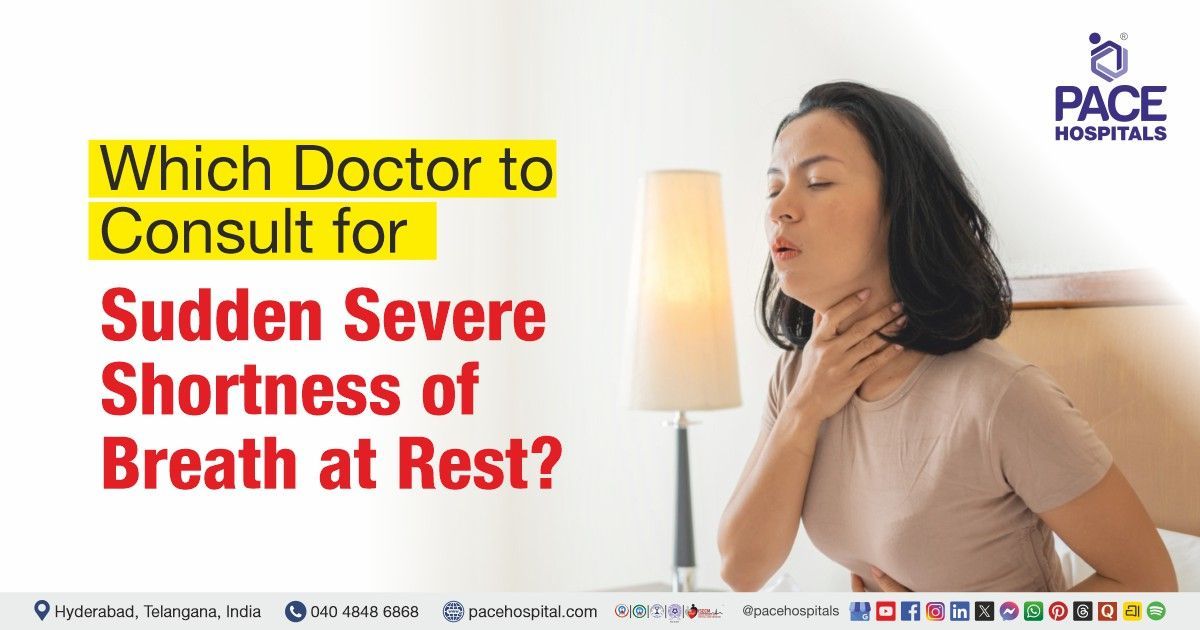
Which Doctor to Consult for Sudden, Severe Shortness of Breath at Rest?
PACE Hospitals
Written by: Editorial Team
Medically reviewed by: Dr. Pradeep Kiran Panchadi - Consultant Pulmonologist, Specialist in Bronchoscopy and EBUS
Introduction
Sudden, severe breathlessness while sitting or resting is a serious warning sign. It may happen because of heart, lung, or blood vessel problems like a heart attack, lung infection, asthma attack, pulmonary embolism, or heart failure. In some people, it can start suddenly even when they are not doing any physical work.
Do not wait for the breathlessness to settle on its own, and do not depend on home remedies. Get medical help immediately, especially if it comes with chest pain, sweating, bluish lips, dizziness, fainting, fast heartbeat, or extreme tiredness. Early diagnosis and treatment can help prevent serious, life-threatening complications.
Quick Answer
Sudden, severe shortness of breath at rest is a medical emergency. Visit an Emergency Department immediately or call emergency services. An Emergency Physician should assess first, and a Pulmonologist, Cardiologist, or Critical Care specialist may be needed depending on whether the cause is lung-related, heart-related, pulmonary embolism, infection, asthma/COPD attack, or low oxygen. Do not wait for an OPD appointment.
At PACE Hospitals, Hyderabad, a 24/7 Emergency Department, experienced Pulmonologists, Cardiologists, and Critical Care specialists are available to diagnose and manage sudden breathlessness. This article helps you understand when to go to the emergency room, which specialist is needed, and what to expect.
What Does Sudden, Severe Shortness of Breath at Rest Mean?
Shortness of breath — medically called dyspnea — is the uncomfortable sensation of not being able to breathe adequately. When it comes on suddenly while you are at rest, sitting, or lying down, and is severe in nature, it is a different matter entirely from mild breathlessness after exercise.
Sudden, severe dyspnea at rest means your body is not getting enough oxygen or is working extremely hard to maintain normal breathing. This is not normal. It demands immediate medical evaluation.
Sudden severe dyspnea at rest can indicate life-threatening conditions including:
- Massive pulmonary embolism (a blood clot blocking the lung arteries)
- Tension pneumothorax (collapsed lung with dangerous pressure build-up)
- Acute myocardial infarction (heart attack)
- Acute airway obstruction
- Acute decompensated heart failure
- Severe asthma or COPD exacerbation
- Severe pneumonia or sepsis
Any of these conditions requires hospital-level care, not a home remedy or a next-day clinic appointment.
Why Severe Breathlessness at Rest Is a Medical Emergency?
Many people hesitate to go to the emergency room because they hope the breathlessness will pass on its own. This hesitation can be dangerous.
Severe breathlessness at rest becomes a medical emergency when any of the following objective signs are present:
- Heart rate (HR) above 120 beats per minute
- Respiratory rate above 30 breaths per minute
- Oxygen saturation (SpO2) below 90%
- Use of neck and shoulder muscles to breathe (accessory muscle use)
- Inability to speak in full sentences
- Altered mental status or confusion
- Bluish or grey discolouration of lips, tongue, or fingertips (cyanosis)
These red-flag signs indicate that the body's oxygen supply is critically low or under serious threat. Each minute without appropriate treatment increases the risk of organ damage, cardiac arrest, and death.
The NHS advises going to Accident & Emergency (A&E) immediately for severe difficulty breathing, chest pain, fast heartbeat, or fainting — and the same principle applies in India. In Hyderabad, the PACE Hospitals Emergency Department is equipped to handle these presentations around the clock.
Causes of Sudden Severe Breathlessness: Conditions Table
The table below summarises the most important conditions that cause sudden severe breathlessness at rest, their features, the specialist to consult, and the reason why that specialist is needed.
| Condition / Cause | Common Features | Doctor / Specialist to Consult | Why? |
|---|---|---|---|
| Pulmonary Embolism (PE) | Sudden breathlessness, sharp chest pain, fast heartbeat, leg swelling, recent surgery/long travel | Emergency Physician → Pulmonologist | Life-threatening lung artery clot; requires CTPA, anticoagulation or thrombolysis |
| Acute Heart Attack (MI) | Chest pressure/tightness, breathlessness, sweating, arm/jaw pain | Emergency Physician → Cardiologist | Myocardial injury; needs urgent ECG, troponin, and possible primary PCI |
| Acute Heart Failure / Pulmonary Oedema | Breathlessness worsening when lying flat, swollen ankles, pink frothy sputum | Emergency Physician → Cardiologist | Fluid in lungs due to pump failure; diuretics and NIV urgently needed |
| Tension Pneumothorax | Sudden severe breathlessness, chest pain, absent breath sounds on one side, falling BP | Emergency Physician (immediate) | Collapsed lung with life-threatening pressure; needs needle decompression |
| Severe Asthma Exacerbation | Loud wheeze, chest tightness, inability to speak full sentences, low SpO2 | Emergency Physician → Pulmonologist | Severe bronchospasm; needs nebulised bronchodilators, steroids, possibly NIV |
| Severe COPD Exacerbation | Increasing breathlessness, wheeze, productive cough, confusion, CO2 retention | Emergency Physician → Pulmonologist | Respiratory failure risk; requires controlled O2 (SpO2 88–92%), NIV |
| Severe Pneumonia / Sepsis | Fever, productive cough, fast breathing, confusion, low SpO2 | Emergency Physician → Pulmonologist | Infection causing respiratory failure; IV antibiotics, O2, ICU if severe |
| Arrhythmia (Fast/Irregular Heart Rhythm) | Palpitations, sudden breathlessness, dizziness, fast/irregular pulse | Emergency Physician → Cardiologist | Reduced cardiac output from rhythm abnormality; ECG and rhythm management needed |
| Pleural Effusion (Large) | Gradual or sudden breathlessness, dullness on chest percussion | Emergency Physician → Pulmonologist | Fluid compressing lung; drainage and cause identification required |
| Pericardial Tamponade | Breathlessness, low BP, muffled heart sounds, distended neck veins | Emergency Physician → Cardiologist | Fluid around heart; emergency pericardiocentesis needed |
| Anaemia (Severe) | Pale appearance, fatigue, breathlessness on minimal exertion, fast heartbeat | Emergency Physician → Haematologist/Internist | Low haemoglobin means inadequate oxygen-carrying capacity; transfusion may be needed |
| Aortic Dissection | Tearing chest/back pain, breathlessness, unequal BP in arms | Emergency Physician → Cardiothoracic Surgeon / Cardiologist | Tear in aortic wall; urgent CT angiography and surgical/interventional care |
Doctor Selection Guide
The table below helps you understand which doctor to approach first based on your situation, and which specialist may need to be involved.
| Situation | First Doctor to Consult | Specialist Needed If |
|---|---|---|
| Sudden severe breathlessness at rest (any cause) | Emergency Physician (A&E) — immediate | Pulmonologist, Cardiologist, or Critical Care Intensivist, depending on cause |
| Breathlessness + chest pain + sweating | Emergency Physician immediately | Cardiologist (rule out heart attack or dissection) |
| Breathlessness + leg swelling + recent long travel or surgery | Emergency Physician immediately | Pulmonologist or Hematologist (rule out pulmonary embolism / DVT) |
| Breathlessness + wheezing + known asthma/COPD | Emergency Physician immediately | Pulmonologist for ongoing management |
| Breathlessness + fever + cough + sputum | Emergency Physician | Pulmonologist (pneumonia, severe infection) |
| Breathlessness + bluish lips + confusion + SpO2 < 90% | Emergency Physician + ICU team immediately | Critical Care Intensivist |
| Breathlessness + palpitations + swollen ankles (known heart disease) | Emergency Physician immediately | Cardiologist (acute heart failure) |
| Breathlessness + coughing blood | Emergency Physician immediately | Pulmonologist (haemoptysis — TB, PE, lung cancer) |
| Breathlessness after injury to chest | Emergency Physician immediately | Cardiothoracic Surgeon (pneumothorax, haemothorax) |
| Breathlessness in pregnancy or postpartum | Emergency Physician immediately | Obstetrician + Pulmonologist or Cardiologist |
When to Go to Emergency Immediately?
Do not call a regular clinic or wait for a scheduled appointment. Go to the nearest hospital Emergency Department immediately — or call emergency services — if you or someone near you experiences:
- Sudden breathlessness that came on with no warning
- Inability to complete a full sentence due to breathlessness
- Bluish, grey, or pale lips, tongue, fingers, or face
- Chest pain, tightness, or pressure along with breathlessness
- Fainting, near-fainting, or sudden confusion
- Heart racing or pounding (palpitations)
- Coughing up blood
- SpO2 (pulse oximeter reading) below 90%
- High fever with rapid, laboured breathing
- Breathlessness following a recent surgery, injury, or long-distance travel
In Hyderabad, the PACE Hospitals Emergency and Trauma Centre at Hitech City is available 24 hours a day, 7 days a week, staffed with trained Emergency Physicians and equipped with resuscitation facilities.
Red-Flag Symptoms Checklist
The following symptoms are red flags in breathlessness that require immediate Emergency Department care. If any of these are present, do not wait.
- Sudden severe breathlessness at rest with no clear trigger
- Oxygen saturation (SpO2) below 90% on a pulse oximeter
- Bluish or grey lips, tongue, fingertips, or face (cyanosis)
- Inability to speak more than a few words between breaths
- Chest pain, pressure, or tightness alongside breathlessness
- Fast heartbeat (over 120 beats per minute)
- Very fast breathing (over 30 breaths per minute)
- Use of neck and shoulder muscles to assist breathing
- Coughing up blood
- Confusion, altered mental status, or sudden drowsiness
- Fainting or near-fainting
- One-sided swollen, painful, or warm leg (possible DVT/PE)
- High fever with rapid, laboured breathing (possible pneumonia/sepsis)
- Sudden severe breathlessness in a pregnant or postpartum patient
- Breathlessness following recent surgery, hospitalisation, or long-distance travel
- Sudden worsening breathlessness in a known heart or lung disease patient
- Sweating, nausea, or vomiting alongside breathlessness (possible heart attack)
If any of the above are present, go to the Emergency Department immediately or call emergency services. Do not drive yourself if you are severely breathless.
When to See an Emergency Physician?
An Emergency Physician is the first and most critical contact for any case of sudden severe breathlessness. Their role is to:
- Stabilise the patient — secure the airway, provide supplemental oxygen, monitor vital signs
- Perform rapid initial diagnostics — ECG, chest X-ray, pulse oximetry, blood gases, blood tests
- Identify life-threatening causes rapidly — using bedside ultrasound (BLUE protocol), ECG findings, and clinical examination
- Initiate emergency treatment immediately while arranging specialist consultation
The Emergency Physician does not just act as a gatekeeper — they perform the most critical initial steps that determine whether a patient survives long enough to see a specialist.
Every case of sudden severe breathlessness at rest should go through the Emergency Department first, regardless of whether the patient has a known heart or lung condition.
When to See a Pulmonologist?
A Pulmonologist (respiratory specialist) becomes the primary specialist when the cause of breathlessness is determined — or strongly suspected — to be originating in the lungs, airways, or pulmonary blood vessels. Situations where a Pulmonologist takes the lead include:
- Pulmonary embolism — clot in the lung arteries; managed alongside haematology
- Severe asthma exacerbation — especially requiring non-invasive ventilation or ICU-level care
- Severe COPD exacerbation — with respiratory failure
- Severe pneumonia or sepsis of pulmonary origin
- Pneumothorax (collapsed lung) — managed with the Emergency team
- Pleural effusion (fluid around the lung)
- Interstitial lung disease flare
- Haemoptysis (coughing blood) from a pulmonary source
Even after stabilisation in the Emergency Department, Pulmonologists guide continued management including oxygen therapy, bronchodilator treatment, ventilation decisions, and anticoagulation for PE under appropriate protocols.
When to See a Cardiologist?
A Cardiologist (heart specialist) leads management when breathlessness is caused by a cardiac condition. Sudden breathlessness related to the heart can be caused by:
- Acute myocardial infarction (heart attack) — causing the heart to pump less effectively
- Acute decompensated heart failure — fluid backs up into the lungs (pulmonary oedema)
- Arrhythmias — abnormal heart rhythms that compromise cardiac output
- Acute pericardial effusion or tamponade — fluid around the heart compressing it
- Valvular heart disease decompensation
Key clues that suggest a cardiac origin include breathlessness that worsens when lying flat (orthopnoea), swollen ankles, prior history of heart disease, chest pressure, and elevated cardiac biomarkers (troponin, BNP/NT-proBNP).
Cardiac biomarkers such as troponin and BNP help clinicians differentiate cardiac causes from pulmonary causes of breathlessness. A Cardiologist will review the ECG, echocardiogram, and biomarker trends to guide treatment.
When Critical Care May Be Needed?
Some patients with sudden severe breathlessness deteriorate rapidly and require admission to the Intensive Care Unit (ICU) under the care of a Critical Care Intensivist. ICU-level care is typically needed when:
- Oxygen saturation cannot be maintained above 90% despite supplemental oxygen
- The patient requires mechanical ventilation (intubation) or non-invasive ventilation (NIV) such as BiPAP or CPAP
- There is haemodynamic instability — very low blood pressure, poor perfusion
- Altered mental status or confusion is present
- Multiple organ systems appear affected (sepsis, massive PE, acute respiratory distress syndrome)
- The patient is deteriorating rapidly despite initial treatment
ICU care is not just "monitoring" — it is active, multi-system management. Critical Care Intensivists at PACE Hospitals work closely with Pulmonologists, Cardiologists, and Emergency Physicians to manage complex breathlessness cases.
Pulmonary Embolism Warning Signs
Pulmonary embolism (PE) is a blood clot that travels to and blocks the arteries supplying the lungs. It is one of the most serious causes of sudden breathlessness and is a major cause of preventable death worldwide.
Red-Flag Warning Signs of Pulmonary Embolism
- Sudden severe breathlessness at rest — with no obvious cause
- Sharp chest pain that worsens when breathing deeply (pleuritic chest pain)
- Rapid heartbeat (tachycardia)
- Coughing up blood (haemoptysis)
- Swollen, painful, or warm leg — particularly one-sided (suggesting deep vein thrombosis, DVT)
- Lightheadedness or fainting
- Low oxygen saturation
Who Is at Higher Risk?
The Wells criteria — an internationally validated clinical tool (used by NIH and BTS guidelines) — identifies high-risk individuals:
- Recent surgery or hospitalisation within 30 days
- Immobilisation for 3 or more days
- Long-distance travel (especially air travel)
- Pregnancy or the postpartum period
- Previous history of PE or DVT
- Active cancer
If PE is suspected, immediate Emergency evaluation is essential. Tests include D-dimer blood test and CT Pulmonary Angiography (CTPA), the gold standard imaging for confirming or ruling out PE.
Severe Breathlessness with Chest Pain
Breathlessness combined with chest pain requires emergency evaluation without delay. The combination can indicate:
- Acute myocardial infarction (heart attack) — chest pressure or tightness, radiating to the arm, jaw, or back
- Pulmonary embolism — sharp, stabbing chest pain with sudden breathlessness
- Tension pneumothorax — sudden severe breathlessness with sharp chest pain and declining oxygen
- Aortic dissection — tearing chest or back pain with breathlessness
- Acute pericarditis or cardiac tamponade — sharp chest pain, worse lying flat
None of these can be safely distinguished without ECG, imaging, and blood tests. An Emergency Physician must evaluate immediately. Do not drive yourself to the hospital if this combination is present — call for emergency assistance.
Severe Breathlessness with Low Oxygen or Bluish Lips
Cyanosis — the bluish or grey discolouration of lips, tongue, or fingertips — is a sign that oxygen levels in the blood are dangerously low. It typically occurs when oxygen saturation falls below approximately 85–88%.
This is one of the most critical red-flag signs in emergency medicine.
Breathlessness with cyanosis or with an SpO2 reading below 90% requires:
- Immediate Emergency Department care
- Rapid administration of supplemental oxygen
- Airway assessment and, if necessary, assisted ventilation
- Urgent identification of the underlying cause
The target oxygen saturation according to BTS Oxygen Guidelines is 94–98% for most patients, or 88–92% for patients with chronic COPD who are at risk of hypercapnia. Oxygen therapy in these patients must be carefully titrated — which is why self-administering oxygen at home without medical guidance is not advisable.
Breathlessness with Wheezing or Asthma/COPD
A sudden severe wheeze accompanied by breathlessness, particularly in a person with known asthma or COPD, may indicate a severe exacerbation. This can rapidly progress to respiratory failure.
Signs of a Severe Asthma/COPD Exacerbation
- Loud, persistent wheeze
- Inability to speak more than a few words between breaths
- Rapid breathing (respiratory rate above 30/min)
- Accessory muscle use (neck and shoulder muscles visibly working)
- Silent chest (no wheeze audible — a sign of near-complete obstruction and a dire emergency)
- Confusion or drowsiness
Even if the patient has a personal inhaler at home, severe exacerbations typically require hospital-level treatment including nebulised bronchodilators, systemic steroids, controlled oxygen therapy, and possibly non-invasive ventilation. Emergency care followed by Pulmonology assessment is essential.
Breathlessness with Fever or Pneumonia Symptoms
Breathlessness that develops alongside:
- High fever (temperature above 38.5°C)
- Productive cough (yellow, green, or rust-coloured sputum)
- Muscle aches, fatigue, and reduced appetite
- Rapid breathing
- Confusion (especially in elderly patients)
Should raise concern for severe pneumonia or sepsis originating in the lungs.
Pneumonia can be deceptively severe — a patient may initially appear not too unwell, then deteriorate rapidly within hours. Severity scoring tools (such as CURB-65 used in NHS guidelines) help clinicians assess whether hospitalisation is required.
Patients with pneumonia who have breathlessness at rest, low oxygen, confusion, or very fast breathing should be managed in hospital, not at home. Pulmonologists lead the management alongside the Emergency team.
Breathlessness with Leg Swelling or Calf Pain
One-sided leg swelling, warmth, redness, or calf pain — particularly when appearing alongside sudden breathlessness — is a classic presentation of deep vein thrombosis (DVT) complicated by pulmonary embolism (PE).
According to BTS/Wells criteria guidance, leg swelling with pain — especially in someone who has recently had surgery, been immobilised, or taken a long-haul flight — significantly increases the clinical probability of DVT/PE.
This combination of symptoms should be treated as a medical emergency. There is a real and time-sensitive risk of the clot extending, leading to a larger pulmonary embolism or causing sudden hemodynamic collapse. Immediate assessment by an Emergency Physician is required, along with appropriate investigations such as D-dimer testing, Doppler ultrasound of the lower limbs, and CT pulmonary
angiography when indicated.
Breathlessness in Heart Disease Patients
Patients with a history of heart failure, ischemic heart disease, valvular heart disease, or arrhythmias who develop sudden or worsening breathlessness at rest should be assessed urgently. Early evaluation helps in identifying the cause at the earliest and ensures prompt treatment is initiated without delay. This could indicate:
- Acute decompensation of heart failure — sudden fluid build-up in the lungs
- Acute coronary syndrome — including heart attack
- New or worsening arrhythmia — reducing cardiac output
- Worsening valvular disease
Patients and caregivers often know that breathlessness is "one of their symptoms" and delay seeking help, assuming it will settle. However, a new or sudden worsening of breathlessness in a known heart patient is always an indication to seek emergency evaluation. Cardiologists at PACE Hospitals work alongside Emergency Physicians to stabilise and manage these patients.
What Not to Do at Home?
When someone experiences sudden severe breathlessness at rest, certain actions should be avoided:
- Do not wait and see if it improves on its own. Time is critical in emergencies like heart attack, PE, and tension pneumothorax.
- Do not self-medicate. Do not take someone else's inhalers, blood thinners, diuretics, antibiotics, or sedatives. Incorrect medication can worsen the condition.
- Do not drive yourself to hospital if breathlessness is severe. Ask someone to drive you or call emergency services.
- Do not lie flat if breathlessness worsens when lying down — sitting upright often eases work of breathing temporarily.
- Do not ignore cyanosis (bluish lips or fingers). This is an emergency sign, not a minor symptom.
- Do not book a routine OPD appointment. Sudden severe breathlessness at rest is not an outpatient problem — it requires emergency assessment.
- Do not assume it is "just anxiety." While anxiety can cause breathlessness, life-threatening causes must be ruled out before assuming a psychological origin.
Tests Doctors May Recommend
Once you arrive at the Emergency Department, the medical team will initiate a structured set of investigations to identify the cause quickly. The initial diagnostics for acute dyspnea include the following:
Bedside / Immediate Tests
| Test | What It Detects |
|---|---|
| Pulse Oximetry (SpO2) | Immediate oxygen saturation; identifies hypoxia |
| 12-Lead ECG | Heart rhythm abnormalities, signs of heart attack, right heart strain (PE) |
| Arterial Blood Gas (ABG) | Blood oxygen, CO2, and pH levels; respiratory failure assessment |
| Bedside Chest X-Ray | Pneumonia, pneumothorax, pulmonary oedema, pleural effusion |
| Bedside Ultrasound (BLUE Protocol) | Rapid detection of pneumothorax, heart failure, PE, pericardial effusion |
| Blood Glucose | Diabetic emergencies can cause metabolic acidosis and breathlessness |
Blood Tests
| Test | What It Detects |
|---|---|
| Complete Blood Count (CBC) | Anaemia, infection (elevated WBC), sepsis |
| Serum Electrolytes + Renal Function | Metabolic causes, electrolyte disturbances |
| D-Dimer | Elevated in pulmonary embolism (used with Wells criteria) |
| Troponin (I or T) | Myocardial injury — heart attack |
| BNP / NT-proBNP | Heart failure severity marker |
| C-Reactive Protein (CRP) / Procalcitonin | Severity of infection / sepsis |
| Serum Lactate | Tissue perfusion; elevated in shock/sepsis |
Imaging and Advanced Tests
| Test | What It Detects |
|---|---|
| CT Pulmonary Angiography (CTPA) | Pulmonary embolism — gold standard imaging |
| High-Resolution CT Chest (HRCT) | Pneumonia, interstitial lung disease, other lung pathology |
| Echocardiogram (Echo) | Heart function, fluid around heart, valvular disease, right heart strain |
| Doppler Ultrasound of Legs | Deep vein thrombosis (DVT) |
| Spirometry / Pulmonary Function Tests | Airflow limitation in asthma/COPD (used after stabilisation) |
| V/Q Scan | Alternative to CTPA for PE when CTPA is contraindicated |
Treatment Options
Treatment of sudden severe breathlessness is always cause-directed. No single treatment fits all presentations. The following are the standard approaches by cause:
Pulmonary Embolism (PE)
- Anticoagulation therapy (blood thinners) — initiated once PE is confirmed
- In high-risk or massive PE: thrombolysis (clot-dissolving medication) or catheter-directed therapy
- Monitoring in ICU for haemodynamic stability
- No self-medication; anticoagulants require dosing under strict medical supervision
Acute Heart Failure / Pulmonary Oedema
- Diuretics (to remove excess fluid from the lungs)
- Nitrates (to reduce preload and dilate blood vessels)
- Non-invasive ventilation (NIV/CPAP/BiPAP) for respiratory support
- Management of the underlying trigger (e.g., arrhythmia, heart attack)
Severe Asthma / COPD Exacerbation
- Nebulised bronchodilators (short-acting beta-agonists, ipratropium)
- Systemic corticosteroids (reduce airway inflammation)
- Controlled oxygen therapy — SpO2 target 88–92% for COPD, 94–98% for asthma (BTS Oxygen Guidelines)
- Non-invasive ventilation (BiPAP) in severe cases
- Mechanical ventilation in life-threatening cases
Tension Pneumothorax
- Emergency needle decompression followed by chest drain insertion
- This is a life-saving procedure performed by the Emergency team
Severe Pneumonia / Sepsis
- Intravenous antibiotics (appropriate to the organism)
- Supplemental oxygen
- IV fluids for haemodynamic support
- ICU admission for severe sepsis or septic shock
Other Causes
- Pericardial tamponade: pericardiocentesis (drainage of fluid around the heart)
- Arrhythmia-related breathlessness: rhythm management (cardioversion, antiarrhythmics, pacing)
- Anaemia: blood transfusion if severe and symptomatic
Specialists at PACE Hospitals, Hyderabad
PACE Hospitals, Hyderabad offers a multi-specialty team for the evaluation and management of sudden severe breathlessness.
Emergency Physicians
PACE Hospitals' Emergency and Trauma Centre is staffed round the clock with trained Emergency Medicine specialists. They perform rapid assessment, stabilisation, oxygen therapy, emergency imaging, and life-saving procedures for all presentations of sudden severe breathlessness.
Pulmonologists (Respiratory Medicine Specialists)
The Department of Pulmonology at PACE Hospitals manages:
- Severe asthma and COPD exacerbations
- Pulmonary embolism
- Pneumonia and respiratory infections
- Pleural diseases (effusion, pneumothorax)
- Interstitial lung disease
- Haemoptysis
Pulmonologists at PACE Hospitals are experienced in non-invasive ventilation (NIV), bronchoscopy, and advanced pulmonary function assessment.
Cardiologists
The Department of Cardiology at PACE Hospitals manages breathlessness related to:
- Acute heart failure and decompensation
- Acute coronary syndromes (heart attack)
- Arrhythmias and palpitations
- Valvular heart disease
- Pericardial effusion and tamponade
The Cardiology team is supported by a dedicated Cardiac Catheterization Laboratory (Cath Lab) for emergency procedures.
Critical Care Intensivists
Patients who require ICU-level management are cared for by experienced Critical Care Intensivists at PACE Hospitals. The ICU is equipped with:
- Mechanical ventilators
- Non-invasive ventilation (BiPAP/CPAP)
- Continuous multi-parameter monitoring
- Hemodynamic support facilities
Why Choose PACE Hospitals?
- 24/7 Emergency and Trauma Centre: PACE Hospitals operates a round-the-clock Emergency Department in Hyderabad staffed with Emergency Medicine specialists, equipped for rapid triage, resuscitation, and critical diagnostics — ensuring that sudden breathlessness emergencies are managed without delay.
- Multi-Specialty Integration Under One Roof: Emergency Physicians, Pulmonologists, Cardiologists, and Critical Care Intensivists work together within a single, coordinated care pathway. Patients do not need to be transferred between hospitals when their condition involves multiple organ systems.
- Advanced Diagnostic Capabilities: CTPA for pulmonary embolism, echocardiography, digital radiology, arterial blood gas analysis, and bedside ultrasound are available at PACE Hospitals to support rapid diagnosis in acute breathlessness cases.
- Dedicated ICU and High-Dependency Unit: Patients requiring intensive monitoring or mechanical ventilation receive specialised critical care from trained Intensivists in a well-equipped ICU.
- Patient-Centred, Transparent Care: PACE Hospitals follows evidence-based clinical protocols and ensures that patients and families are informed and involved in care decisions throughout the hospital stay.
Key Takeaway
- Sudden, severe shortness of breath at rest is a medical emergency — do not wait, do not self-treat, or do not book a routine clinic appointment.
- The first doctor to see is always an Emergency Physician — they stabilise the patient and arrange for the right specialist.
- Depending on the cause, a Pulmonologist (lung or PE causes), Cardiologist (heart causes), or Critical Care Intensivist (ICU-level illness) will lead ongoing management.
- Key warning signs requiring immediate action: cyanosis (bluish lips), SpO2 below 90%, inability to speak full sentences, chest pain, confusion, and leg swelling with breathlessness.
- At PACE Hospitals, Hyderabad, a 24/7 emergency team and multi-specialty panel are equipped to manage all causes of sudden severe breathlessness.
Frequently Asked Questions (FAQs)
Which doctor should I consult for sudden severe shortness of breath?
Go to the Emergency Department immediately — do not visit a regular outpatient clinic. An Emergency Physician is the right first doctor for sudden severe shortness of breath at rest. They will stabilise you, perform initial diagnostics, and involve the appropriate specialist. Depending on the cause identified, a Pulmonologist (for lung or PE causes), a Cardiologist (for heart causes), or a Critical Care Intensivist (if ICU admission is needed) will take over your management. At PACE Hospitals, Hyderabad, all these specialists are available around the clock.
Can pulmonary embolism cause sudden shortness of breath?
Yes — pulmonary embolism (PE) is one of the most serious causes of sudden breathlessness at rest. It occurs when a blood clot blocks an artery in the lung, reducing oxygen delivery. Symptoms include sudden breathlessness, sharp chest pain that worsens with deep breathing, fast heartbeat, coughing blood, and a swollen or painful leg. People who have had recent surgery, prolonged immobility, long-haul travel, or a prior history of PE or DVT are at higher risk. PE is diagnosed using D-dimer blood tests and CT Pulmonary Angiography (CTPA). Emergency evaluation is essential.
What does breathlessness with chest pain mean?
Breathlessness combined with chest pain can indicate several serious conditions including heart attack, pulmonary embolism, tension pneumothorax, or aortic dissection. Each of these is potentially life-threatening and cannot be safely distinguished without emergency evaluation including ECG, blood tests, and imaging. Do not wait to see if the chest pain passes. If breathlessness is accompanied by chest pain — particularly if the pain is crushing, pressure-like, tearing, or sharp and worsens with deep breathing — go to the Emergency Department immediately or call emergency services. This combination is always treated as a cardiac or vascular emergency until proven otherwise.
What tests are done for sudden shortness of breath?
Initial evaluation of sudden severe breathlessness includes checking oxygen levels using pulse oximetry (SpO₂) along with an ECG and chest X-ray. Arterial blood gas analysis and basic blood tests such as complete blood count, electrolytes, cardiac markers, BNP, D-dimer, CRP, and lactate help assess the underlying cause and severity. Bedside ultrasound (BLUE protocol) can be used for rapid assessment of conditions like pneumothorax, heart failure, or pulmonary embolism. Depending on the findings, further investigations such as CT pulmonary angiography, high-resolution CT chest, echocardiography, Doppler study of the lower limbs, or pulmonary function tests may be required. These investigations together help in quickly identifying the cause so that appropriate treatment can be started without delay.
What should I avoid during severe breathlessness?
During severe breathlessness, avoid: lying completely flat (sit upright instead, as this eases breathing effort); self-medicating with inhalers, blood thinners, diuretics, or sedatives without medical instruction; driving yourself to hospital if breathlessness is severe (ask someone else to drive or call emergency services); delaying emergency care by trying home remedies; and dismissing the symptom as "just stress" without medical evaluation. Also avoid physical exertion, as it increases oxygen demand. Panic and hyperventilation can worsen perception of breathlessness — try to remain as calm as possible while ensuring you or the person affected reaches emergency care quickly.
Which is the best hospital for sudden breathlessness emergency in Hyderabad?
PACE Hospitals, Hyderabad is equipped with a 24/7 Emergency and Trauma Centre staffed by trained Emergency Physicians for immediate breathlessness evaluation and stabilisation. It offers multi-specialty care under one roof — with Pulmonologists, Cardiologists, and Critical Care Intensivists available for cause-specific management. Advanced diagnostics including CTPA, echocardiography, arterial blood gas analysis, and bedside ultrasound are available for rapid diagnosis. If you or a family member experiences sudden severe shortness of breath in Hyderabad, go to PACE Hospitals Emergency immediately or call 040-4848-6868 for guidance.
Is shortness of breath at rest an emergency?
Yes — sudden, severe shortness of breath at rest is a medical emergency. It can be caused by life-threatening conditions including pulmonary embolism, heart attack, acute heart failure, tension pneumothorax, or severe pneumonia. Unlike mild breathlessness after physical activity, breathlessness at rest has no normal explanation and must be evaluated immediately. If you or someone near you is experiencing this, go to the Emergency Department at once or call emergency services. Do not delay by attempting home remedies or booking a routine appointment.
Should I see a pulmonologist for severe breathlessness?
A Pulmonologist is the right specialist if your breathlessness is caused by a lung or respiratory condition — such as pulmonary embolism, severe asthma, COPD exacerbation, pneumonia, pneumothorax, or pleural effusion. However, in an acute emergency, you should go to the Emergency Department first rather than directly booking a Pulmonology OPD appointment. Emergency Physicians will assess you and involve the Pulmonologist once the situation is stabilised or when the cause is identified as pulmonary. At PACE Hospitals, Hyderabad, the Pulmonology department is well-equipped to manage all respiratory emergencies.
When should I see a cardiologist for breathlessness?
See a Cardiologist — after Emergency assessment — when breathlessness is caused by a heart condition. This includes acute decompensated heart failure, heart attack, arrhythmia, valvular disease, or cardiac tamponade. Warning signs pointing to a cardiac cause include breathlessness that worsens when lying flat, swollen ankles, chest pressure, palpitations, and a history of heart disease. Elevated cardiac biomarkers (troponin, BNP) on blood tests also guide the diagnosis. In all cases, the Emergency Department should be the first point of contact — the Cardiologist is involved based on the diagnostic findings.
Can heart disease cause breathlessness at rest?
Yes — heart disease is a common cause of breathlessness at rest, particularly in patients with known heart failure, coronary artery disease, arrhythmias, or valvular disease. When the heart cannot pump blood effectively, fluid accumulates in the lungs (pulmonary oedema), causing sudden severe breathlessness. This can happen at night (paroxysmal nocturnal dyspnoea) or when lying flat. If you have known heart disease and develop sudden or worsening breathlessness at rest, do not assume it will settle — visit the Emergency Department immediately. Cardiac biomarkers, ECG, and echocardiography will guide diagnosis and treatment.
Can asthma cause sudden severe breathlessness?
Yes — asthma can cause sudden severe breathlessness, particularly during a severe exacerbation. Triggers such as allergens, respiratory infections, cold air, exercise, or smoke can provoke acute bronchospasm where the airways narrow significantly. Symptoms include sudden breathlessness, loud wheezing, chest tightness, and difficulty speaking. A life-threatening asthma attack — called status asthmaticus — requires immediate Emergency Department care and cannot be safely managed at home. If breathlessness is severe, do not rely solely on a personal inhaler; go to the Emergency Department. Pulmonologists at PACE Hospitals manage severe asthma exacerbations with nebulisation, steroids, and ventilatory support as needed.
What does breathlessness with bluish lips mean?
Bluish lips or fingertips (cyanosis) during breathlessness means that the level of oxygen in the blood has fallen to a critically low level — typically when SpO2 drops below approximately 85–88%. This is a life-threatening emergency sign. Cyanosis can occur in conditions like severe asthma, COPD exacerbation, massive pulmonary embolism, acute heart failure, tension pneumothorax, or any cause of severe respiratory failure. Do not wait or assume it will improve. Go to the Emergency Department immediately. Emergency Physicians will initiate oxygen therapy and resuscitation without delay. ICU care is frequently needed when cyanosis is present.
Is CT pulmonary angiography needed for pulmonary embolism?
CT Pulmonary Angiography (CTPA) is the gold standard imaging test for confirming or ruling out pulmonary embolism. When PE is suspected — based on clinical features and elevated D-dimer — CTPA provides definitive imaging of the pulmonary arteries and can confirm the presence, size, and location of a clot. In pregnant patients or those where radiation must be minimised, a V/Q (ventilation-perfusion) scan may be used as an alternative. The decision to perform CTPA is based on clinical risk stratification using the Wells criteria and D-dimer result, and is made by the Emergency Physician or Pulmonologist, not the patient.
Can breathlessness be treated?
Yes — breathlessness can be treated effectively when the underlying cause is identified and managed. Treatment depends entirely on the cause: anticoagulation for pulmonary embolism, diuretics and nitrates for heart failure, bronchodilators and steroids for asthma/COPD, antibiotics for pneumonia, chest drain for pneumothorax, and so on. Early emergency care greatly improves outcomes. While most causes of sudden acute breathlessness are treatable, self-treatment or delayed treatment can lead to serious complications. The first step is always emergency evaluation to identify the cause. At PACE Hospitals, Hyderabad, the Emergency and specialist teams work together to provide prompt, cause-directed treatment.
When is ICU care needed for breathlessness?
ICU (Intensive Care Unit) admission is needed for breathlessness when: oxygen saturation remains critically low despite supplemental oxygen; the patient requires mechanical ventilation or non-invasive ventilation (BiPAP/CPAP); blood pressure is unstable or the patient is in shock; there is severe confusion or altered consciousness; or the condition involves massive pulmonary embolism, severe sepsis, or acute respiratory distress syndrome (ARDS). Critical Care Intensivists manage patients in the ICU with advanced monitoring, ventilator management, and haemodynamic support. PACE Hospitals' ICU is equipped to handle complex multi-system breathlessness emergencies around the clock.
Conclusion
Sudden, severe shortness of breath at rest is never a symptom to ignore or manage at home. It is a potential medical emergency with causes ranging from pulmonary embolism and heart attack to severe asthma, pneumonia, and pneumothorax — each requiring different but time-sensitive treatment.
The right first step is always the same: go to the Emergency Department immediately. An Emergency Physician will assess, stabilise, and direct you to the right specialist — whether that is a Pulmonologist, Cardiologist, or Critical Care Intensivist.
At PACE Hospitals, Hyderabad, a dedicated multi-specialty team is available around the clock to provide expert emergency care and specialist management for all causes of sudden breathlessness. Early action saves lives — do not delay.
Share on
Request an appointment
Fill in the appointment form or call us instantly to book a confirmed appointment with our super specialist at 04048486868
Appointment request - health articles
Recent Articles