Encephalitis: Symptoms, Causes & Treatment
PACE Hospitals
Written by: Editorial Team
Medically reviewed by: Dr. S Pramod Kumar - Consultant Neurophysician & Neuromuscular Specialist
Overview |
Epidemiology |
Types |
Pathophysiology |
Symptoms |
Causes |
Risk Factors |
Complications |
Diagnosis |
Treatment |
Prevention |
Encephalitis vs Meningitis |
FAQs |
When to consult a Doctor
Encephalitis definition
Encephalitis is a condition characterized by inflammation of the brain, which can result from viral infections, autoimmune reactions, or rarely bacterial or parasitic causes. It interferes with normal brain function and can be life-threatening. It usually presents with symptoms like fever, headache, confusion, altered mental status, and seizures. In severe conditions, it can lead to memory loss, paralysis, or loss of consciousness.
The main causes include viral infections like herpes simplex virus, West Nile virus, varicella-zoster virus, and enteroviruses, as well as autoimmune diseases such as anti-NMDA receptor encephalitis, and sometimes the cause is unknown. Complications can involve permanent brain damage, cognitive impairment, post-encephalitic epilepsy, or even death.
A
neurologist, a doctor specialized in nervous system disorders, can accurately diagnose and provide the appropriate treatment for encephalitis.
Encephalitis meaning
The word encephalitis originates from the two Greek words:
- "encephalo" meaning "brain"
- "-itis" meaning "inflammation."
Thus, encephalitis means "inflammation of the brain," often caused by infection or an autoimmune response.
Encephalitis Epidemiology
Encephalitis epidemiology worldwide
Encephalitis affects an estimated 10.7-13.4 cases per 100,000 people globally each year, equating to approximately 46 lakh cases, with higher incidence in children under 5 and older adults over 65. Viral infections—particularly herpes simplex virus and arboviruses like Japanese encephalitis are responsible for most cases. Incidence of encephalitis is more common in low and middle-income countries because people there have less access to healthcare, less surveillance, and more exposure to vectors and pathogens. The condition continues to be a major public health issue because of ongoing regional differences and underreporting.
Encephalitis epidemiology in India
Acute Encephalitis Syndrome (AES) and other types of encephalitis are major public health issues in India. They happen often and affect children, especially in places like Uttar Pradesh and Bihar. India reported more than 44,000 cases and almost 6,000 deaths from 2008 to 2014. The incidence of encephalitis in India, especially AES, was about 0.9 cases per lakh in 2019, and the death rate was 5.8%. Japanese encephalitis still causes thousands of cases every year in areas where it is common. National surveillance and vaccination efforts are still going on to decrease the number of cases.
Types of Encephalitis
There are different types of encephalitis based on the cause, including viral, bacterial, autoimmune, and parasitic encephalitis. Each type requires specific treatment approaches depending on the underlying infection or immune response. It has:
- Infectious Encephalitis
- Autoimmune Encephalitis
- Other Specific Forms/Variants
Infectious Encephalitis
When viruses, bacteria, fungi, or parasites directly infect the brain, they cause inflammation of the brain tissue. This is called infectious encephalitis. The most common causes are viruses, especially herpes simplex virus, enteroviruses, Japanese encephalitis virus, and West Nile virus. These infections damage brain cells and cause symptoms like fever, confusion, headache, seizures, and changes in consciousness. In tropical and subtropical areas, viruses transmitted by mosquitoes are a major cause. To avoid serious complications, it is important to diagnose and treat problems early.
Autoimmune Encephalitis
When the immune system mistakenly attacks healthy brain cells, it causes inflammation of brain tissue. This is called autoimmune encephalitis. It is frequently linked to antibodies that attack neuronal surface proteins, particularly the N-methyl-D-aspartate (NMDA) receptor, resulting in anti-NMDA receptor encephalitis. Patients may quickly develop neurological and psychiatric symptoms, such as memory loss, changes in behaviour, seizures, unusual movements, and changes in consciousness. In some cases, it can be connected to tumours that are already developing or infections that have occurred before. Early treatment can significantly improve recovery.
Other Specific Forms/Variants
Post-infectious encephalitis is one type of encephalitis that happens when the immune system reacts after infections like measles, mumps, or the flu and mosquito-borne encephalitis like Japanese encephalitis. Some rare variants happen in people whose immune systems are weak or who have neurological conditions that are already there. These forms may differ in severity and clinical features but still require prompt medical evaluation and treatment to prevent brain damage.
Pathophysiology of Encephalitis
Encephalitis is a condition in which the brain tissue becomes inflamed, usually due to a viral infection. The infection activates the immune system, which causes an inflammatory response that affects neurons and other brain cells. This inflammation causes swelling, changes in the way the brain works normally, and possible damage to neurons. The extent of the damage depends upon the severity of the infection and the immune response of the body.
Encephalitis Symptoms
Encephalitis symptoms can vary depending on the cause and severity of brain inflammation. Symptoms may begin with mild flu-like signs but can progress to serious neurological problems as brain inflammation worsens. The following are the encephalitis signs and symptoms:
- Fever
- Headache
- Stiff neck
- Sensitivity to light (photophobia)
- Confusion or altered mental status
- Seizures
- Difficulty speaking or hearing
- Loss of consciousness
- Weakness or loss of sensation
- Behavioural or personality changes
- Fatigue/malaise
- Muscle aches (myalgia)
- Nausea/vomiting
Fever: Fever is a common early symptom of encephalitis, as the body responds to infection or inflammation in the brain. It may appear suddenly and can be accompanied by chills and sweating. A high fever often signals that the immune system is actively fighting an infection.
Headache: Headache in encephalitis is usually persistent and can become severe. It occurs because inflammation in the brain increases pressure inside the skull. This type of headache may worsen over time and may not improve with usual pain relief medicines.
Stiff neck: A stiff neck may occur when inflammation affects the tissues surrounding the brain and spinal cord. This symptom can make it difficult or painful to move the neck. It is associated with infections that involve the central nervous system.
Sensitivity to light (photophobia): Photophobia causes pain or discomfort in the eyes when exposed to bright light. Brain inflammation can affect the nerves that help in vision, making light appear unusually intense. Patients may prefer dark environments to reduce discomfort.
Confusion or altered mental status: Inflammation of the brain can disturb normal brain function, leading to confusion or difficulty thinking. Patients may have trouble concentrating, remembering information, or understanding their surroundings. In severe cases, they may appear disoriented or delirious.
Seizures: Seizures occur when brain inflammation interferes with normal electrical activity in the brain. They can cause shaking movements, loss of awareness, or unusual behaviours. Seizures are considered a serious neurological symptom and require immediate medical attention.
Difficulty speaking or hearing: Encephalitis may affect brain areas responsible for language and hearing. Patients may have trouble forming words, understanding speech, or processing sounds. These happen due to inflammation, which interferes with normal brain communication pathways.
Loss of consciousness: In severe cases, encephalitis can cause reduced alertness or loss of consciousness. This happens when inflammation affects parts of the brain that control awareness. Patients may become sleepy, unresponsive, or even fall into a coma.
Weakness or loss of sensation: Brain inflammation can damage nerves that control movement and sensation. As a result, patients may experience weakness, numbness, or difficulty moving certain parts of the body. These symptoms depend on which area of the brain is affected.
Behavioural or personality changes: Changes in behaviour or personality may occur because encephalitis affects brain regions involved in emotions and thinking. Patients may become unusually irritable, anxious, or confused. In some cases, they may show sudden mood swings or unusual behaviour.
Fatigue/malaise: Fatigue refers to a strong feeling of tiredness or lack of energy. It frequently occurs as the body fights infection and inflammation. Patients with encephalitis may feel weak, exhausted, and unable to perform normal daily activities.
Muscle aches (myalgia): Muscle aches are common during infections that cause encephalitis. The inflammation in muscles occurs as a result of the body's immune response, leading to soreness or discomfort. These aches are similar to those experienced during flu-like illnesses.
Nausea/vomiting: Nausea and vomiting are seen due to increased pressure in the brain or irritation of areas that control vomiting. These symptoms may appear along with headache and fever. Persistent vomiting can also lead to dehydration if not managed properly.
Encephalitis Causes
The causes of encephalitis can be broadly divided into infectious and immune-mediated conditions that lead to inflammation of brain tissue. The following are the important causes:
- Viral infections
- Bacterial infections
- Fungal infections
- Parasitic infections
- Autoimmune encephalitis
- Post-infectious reactions
- Paraneoplastic syndromes
Viral infections: Viruses are the most common cause of encephalitis, which happens when viruses directly invade brain tissue. Herpes simplex virus, enteroviruses, West Nile virus, and Japanese encephalitis virus are all examples of viruses that are common. These viruses get into brain cells and cause inflammation that interferes with normal brain function. As the infection progresses, patients may develop neurological symptoms, including confusion, seizures, and altered consciousness.
Bacterial infections: Certain bacteria can infect the central nervous system and cause inflammation of the brain. Conditions such as tuberculosis, Lyme disease, and other severe bacterial infections may lead to encephalitis or meningoencephalitis. These infections require quick diagnosis and treatment with appropriate antibiotics.
Fungal infections: Fungal organisms may cause encephalitis, especially in individuals with weakened immune systems. Pathogens such as Cryptococcus and Candida can invade brain tissue and lead to inflammation. This form of encephalitis is less common but can be serious if untreated.
Parasitic infections: Some parasites can infect the brain and cause inflammation of brain tissue. Examples include Toxoplasma gondii and other parasites transmitted through contaminated food, water, or insect bites. Parasitic encephalitis is more likely to occur in people with compromised immune systems.
Autoimmune encephalitis: Autoimmune encephalitis occurs when the body's immune system mistakenly attacks healthy brain cells. Antibodies target proteins on neurons, disrupting normal brain function and causing inflammation. This condition may present with seizures, behavioural changes, and memory problems.
Post-infectious reactions: Encephalitis can occur following a viral infection due to an abnormal immune response. This is known as post-infectious or post-viral encephalitis. The brain may not be infected, but inflammation caused by the immune system can cause neurological symptoms.
Paraneoplastic syndromes: When the immune system reacts to cancer in another part of the body, it can mistakenly attack brain tissue. This is called paraneoplastic encephalitis. The immune system's response to the tumour makes antibodies that have an effect on the nervous system. This condition is frequently linked to cancers, including lung or ovarian tumours.
Encephalitis Risk Factors
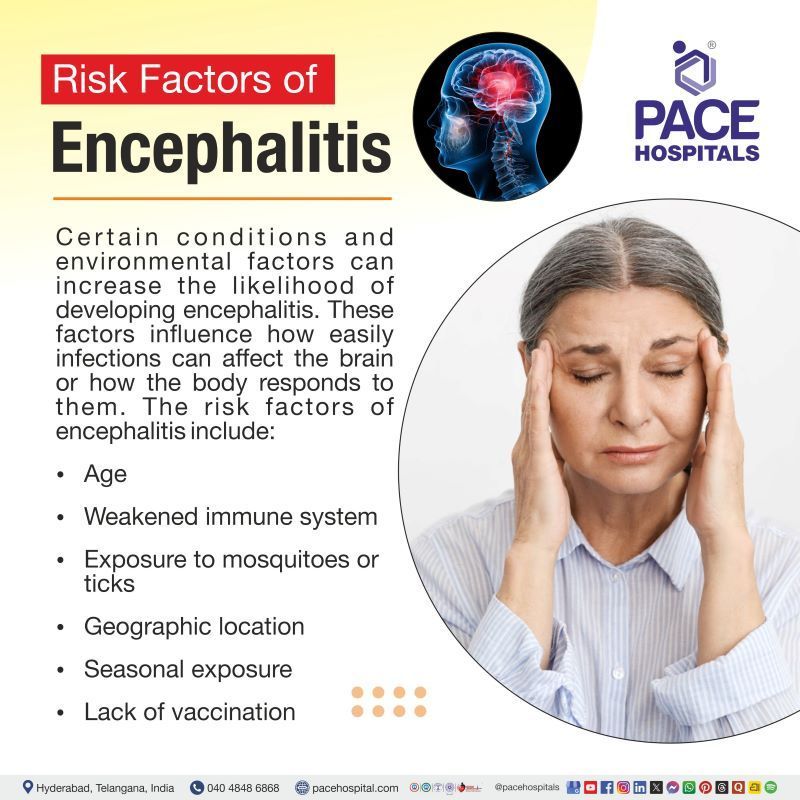
Certain conditions and environmental factors can increase the likelihood of developing encephalitis. These factors influence how easily infections can affect the brain or how the body responds to them. The risk factors of encephalitis include:
- Age
- Weakened immune system
- Exposure to mosquitoes or ticks
- Geographic location
- Seasonal exposure
- Lack of vaccination
Age: Young children and elderly adults are at higher risk of developing encephalitis. Their immune systems may not respond as effectively to infections as those of healthy adults. As a result, viruses and other pathogens may spread more easily to the brain and cause inflammation.
Weakened immune system: People with weak immune systems are more prone to develop infections that can affect the brain. Conditions such as HIV infection, cancer, or some medications can reduce the body’s ability to fight pathogens. This allows viruses, bacteria, or other organisms to cause serious complications like encephalitis.
Exposure to mosquitoes or ticks: Some viruses that cause encephalitis are transmitted through mosquito or tick bites. When a person is bitten by an infected insect, the virus can enter the bloodstream and eventually reach the brain. Areas with large mosquito or tick populations may therefore have a higher risk of infection.
Geographic location: The likelihood of encephalitis can vary depending on the region where a person lives or travels. Certain viruses responsible for encephalitis are more common in particular parts of the world. Environmental conditions and the presence of specific insects or animals influence how frequently these infections occur.
Seasonal exposure: In many places, the risk of encephalitis increases during warmer seasons. Mosquitoes and ticks are more active during spring, summer, and early autumn, increasing the risk of virus transmission. As a result, insect-bite infections are more frequently reported during these periods.
Lack of vaccination: Not receiving recommended vaccines can increase the risk of infections that may lead to encephalitis. Diseases such as measles, mumps, and certain mosquito-borne viral infections can sometimes cause inflammation of the brain. Vaccination helps in protecting individuals by preventing these infections and reducing complications.
Complications of Encephalitis
Encephalitis can sometimes lead to serious long-term health problems because inflammation can damage brain tissue. Complications vary depending on the severity of the infection and the part of the brain affected. They are:
- Memory loss
- Difficulty speaking or understanding language
- Seizure disorders (epilepsy)
- Personality and behavioural changes
- Weakness or paralysis in parts of the body
- Coordination and movement problems
- Hearing or vision problems
- Persistent fatigue
- Loss of consciousness or coma
- Death in severe cases
Memory loss: Inflammation of the brain can affect regions responsible for memory and learning. As a result, individuals may struggle to recall recent events or store new information. Some people experience mild forgetfulness, while others may develop long-term cognitive difficulties that affect daily activities.
Difficulty speaking or understanding language: Damage to language centres in the brain may interfere with communication. People with this complication might find it difficult to speak clearly, form words, or understand conversations. In some cases, speech therapy may be needed to help improve communication skills.
Seizure disorders (epilepsy): Inflammation of brain tissue can disrupt normal electrical signals in the brain. This may trigger seizures during the illness or even after recovery. Some individuals may develop chronic seizure disorders that require ongoing medical treatment.
Personality and behavioural changes: Encephalitis can affect parts of the brain responsible for emotions and behaviour. Individuals may experience mood swings, irritability, anxiety, or unusual behavioural patterns. These changes can affect relationships, work, and daily social interactions.
Weakness or paralysis in parts of the body: When areas of the brain that control movement are affected, patients may develop weakness or partial paralysis. This can make it difficult to walk, move limbs, or perform routine tasks. Rehabilitation therapies such as physiotherapy may help improve mobility.
Coordination and movement problems: Damage to certain brain structures may cause problems with balance and coordination. Patients may have trouble controlling body movements, maintaining balance, or performing fine motor tasks. These symptoms can disrupt daily activities like walking or writing.
Hearing or vision problems: Damage to brain areas that process sensory information could make it harder to see or hear. Some individuals may experience partial hearing loss, blurred vision, or difficulty processing visual information. These sensory problems may persist even after recovery from the infection.
Persistent fatigue: Many people recovering from encephalitis experience long-lasting fatigue. This extreme tiredness can occur even after adequate rest and may interfere with daily activities. Fatigue may persist for months as the brain gradually heals.
Loss of consciousness or coma: Severe inflammation of the brain can interfere with the brain’s ability to maintain alertness and consciousness. In serious cases, patients may become unresponsive or enter a coma. This condition requires immediate medical care and intensive monitoring.
Death in severe cases: In rare but severe conditions, encephalitis can cause life-threatening complications. Extensive brain inflammation may interfere with vital brain functions that control breathing and other essential processes. Early diagnosis and treatment help to reduce the risk of fatal outcomes.
Encephalitis Diagnosis
Encephalitis is diagnosed using clinical evaluation and specialized tests to confirm brain inflammation and identify its underlying cause. The following are the diagnosis of encephalitis:
- Medical history
- Physical examination
- Imaging Tests
- Magnetic Resonance Imaging (MRI)
- Computed Tomography (CT) scan
- PET scan
- Laboratory tests
- Autoimmune encephalitis panel
- Blood tests
- Complete Blood Count (CBC)
- Serology / Antibody tests
- PCR tests in blood
- Blood cultures
- Cerebrospinal fluid (CSF) analysis / Lumbar puncture
- CSF cell count and differential
- CSF protein and glucose levels
- PCR testing for viral pathogens
- CSF antibody testing
- CSF culture
- Brain Function Tests
- Electroencephalogram (EEG)
- Invasive diagnostic procedure
- Brain biopsy
- Lumbar puncture
Encephalitis Treatment
When treating encephalitis, the goal is to manage the symptoms and give the body the support it needs to recover. The treatment for encephalitis is as follows:
- Non-pharmacological treatment
- Pharmacological treatment
- Surgical treatment
Non-pharmacological treatment
- Regular monitoring of vital signs, fluid balance, and nutrition
- Providing adequate rest to promote brain healing.
- Creating a safe environment to manage seizures and prevent injuries.
- Physical therapy
- Occupational therapy
- Speech therapy
- Psychological support
Pharmacological treatment
- Antiviral medications
- Antibiotics
- Antifungal medications
- Anti-inflammatory drugs
- Intravenous immunoglobulin (IVIG)
- Plasmapheresis
- Anticonvulsant medications for seizures
- Tumour screening/treatment (paraneoplastic cases)
Surgical treatment
- Craniotomy
- Decompressive Craniectomy
- Ventriculostomy (Ventricular Drainage)
Medical Services at PACE Hospitals
Specialist Doctors Across Medical Disciplines
Diagnostic & Treatment Services
Clear Information on Care & Costs
24x7 Emergency & ICU Services
Encephalitis Prevention
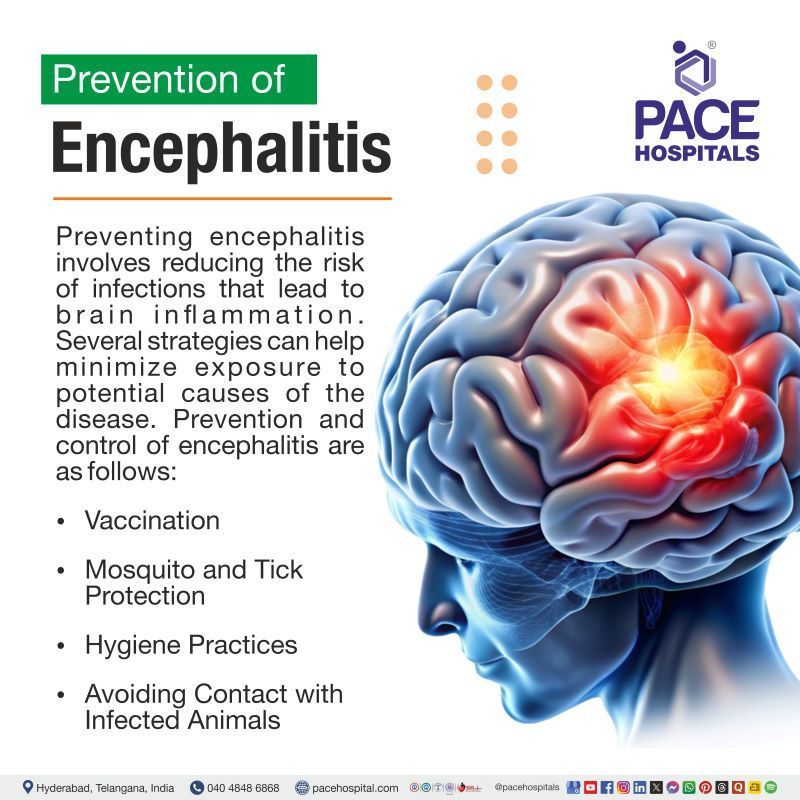
Preventing encephalitis involves reducing the risk of infections that lead to brain inflammation. Several strategies can help minimize exposure to potential causes of the disease. Prevention and control of encephalitis are as follows:
- Vaccination
- Mosquito and Tick Protection
- Hygiene Practices
- Avoiding Contact with Infected Animals
Vaccination: Vaccines help in protecting against infections like measles, mumps, rubella, and Japanese encephalitis, which may cause encephalitis. Rabies vaccination is also recommended for individuals who are at high risk. Staying up-to-date with vaccinations helps reduce the chances of infection and subsequent brain inflammation.
Mosquito and Tick Protection: In places where there are diseases spread by mosquitoes, use insect repellent, wear protective clothing, and sleep under mosquito nets. To keep mosquitoes away, get rid of any standing water around the house. These steps help keep the risk of insect-borne infections that cause encephalitis minimal.
Hygiene Practices: Proper handwashing and good hygiene practices can prevent infections that lead to encephalitis. Avoiding close contact with sick individuals helps reduce exposure to viruses like enteroviruses, which can cause brain inflammation.
Avoiding contact with Infected Animals: Avoiding contact with animals that may carry rabies or other infectious diseases. Ensure pets are vaccinated and avoid strays. Taking precautions, especially in regions where rabies is common, can prevent encephalitis caused by animal-borne viruses.
Difference between Encephalitis and Meningitis
Encephalitis and meningitis both involve inflammation in the central nervous system but affect different areas. Meningitis targets the protective membranes around the brain and spinal cord, while encephalitis directly affects the brain tissue itself. The following are the meningitis and encephalitis differences:
Encephalitis vs Meningitis
| Parameters | Encephalitis | Meningitis |
|---|---|---|
| Definition | Encephalitis is inflammation of the brain, generally caused by infections such as viruses or by the immune system attacking brain tissue. | Meningitis is inflammation of the brain and the spinal cord protective membranes (meninges), caused by infections such as bacteria or viruses. |
| Etiology | Viral infections (e.g., herpes simplex, mosquito-borne viruses) or autoimmune reactions | Bacterial (e.g., Neisseria meningitis, Streptococcus pneumoniae) or viral. |
| Pathophysiology | Viral infections or immune responses cause inflammation in brain tissue, damaging neurons. | Infections cause inflammation of the meninges, leading to swelling and pressure on the brain. |
| Symptoms | Fever, confusion, headache, seizures, and changes in behaviour. | Fever, nausea, stiff neck, headache, and sensitivity to light. |
| Diagnosis | It includes CSF analysis, MRI/CT, and PCR for viral detection. | CSF analysis, blood cultures, MRI/CT, and PCR for pathogens. |
| Treatment | Antiviral medications or supportive care. | Antibiotics for bacterial meningitis, supportive care for viral meningitis. |
Frequently Asked Questions (FAQs) on Encephalitis
What is encephalitis?
Encephalitis is the inflammation of the brain due to an infection or the body's immune response to an infection. It happens when a virus, bacteria, parasite, or even the immune system itself causes brain tissue to swell, which makes the brain unable to function properly. Fever, headache, seizures, confusion, and, in severe cases, brain damage or death are some of the symptoms that may result from this condition. Better outcomes depend on early diagnosis and treatment.
Is encephalitis curable?
Encephalitis can be treated, but the results depend on the cause. Viral and bacterial encephalitis can be treated with antiviral or antibiotic treatments when diagnosed early. Autoimmune encephalitis treated with immunosuppressive therapy. However, the extent of recovery and the possibility of long-term effects vary based on the type and severity of the condition.
Is encephalitis contagious?
No, encephalitis is not contagious. It is not transmitted from person to person. However, some viruses that cause encephalitis, like arboviruses (transmitted by mosquitoes or ticks), can be spread through insect bites or in contact with infected animals. These viruses do not spread through casual human interaction. Therefore, encephalitis itself cannot be contracted from someone with the condition.
How is encephalitis transmitted?
Encephalitis is usually spread by viruses, and the most common ways are through mosquito or tick bites (like West Nile virus or Japanese encephalitis) or through direct contact with infected animals. Some types, like herpes simplex virus encephalitis, can be spread from one person to another through direct contact, like oral or genital contact. In rare cases, it can also result from bacterial infections or autoimmune responses. Encephalitis does not spread through casual contact.
Can encephalitis cause permanent brain damage?
Yes, encephalitis can lead to permanent brain damage if left untreated. The inflammation in the brain can cause long-term neurological problems like memory loss, difficulty moving, and behavioural changes. The severity of permanent damage depends on how severe the encephalitis is and how quickly medical assistance is provided.
Is encephalitis hereditary?
No, encephalitis is not hereditary. It is mostly caused by viral, bacterial, or fungal infections or autoimmune conditions, not by being passed down from one family member to another. However, genetic factors may play a major role in an individual’s susceptibility to certain infections or autoimmune conditions that can lead to encephalitis.
Can meningitis and encephalitis occur at the same time?
Yes, meningitis and encephalitis can occur simultaneously, resulting in a condition called as meningoencephalitis, in which inflammation occurs in both the brain tissue and the protective membranes. This occurs when an infection (such as a virus or bacteria) affects both areas at once, and it may be more severe than either condition alone. To reduce symptoms and prevent complications, early diagnosis and interventions are crucial.
How is encephalitis treated in children?
Encephalitis in children is treated with antiviral medications if a viral cause is suspected, along with supportive care to manage symptoms. In autoimmune encephalitis, immunosuppressive treatments like steroids or intravenous immunoglobulin (IVIG) are used. Frequent hospitalization is o required for monitoring and managing complications, including seizures and swelling of the brain.
What is Japanese encephalitis?
Japanese encephalitis is a viral infection caused by the Japanese encephalitis virus (JEV), transmitted through infected mosquitoes. It affects the brain, causing symptoms like fever, headache, confusion, and seizures. In severe cases, it can cause permanent neurological damage or death. Vaccination is the most effective preventive measure.
What is autoimmune encephalitis?
Autoimmune encephalitis is a condition where the body's immune system mistakenly attacks the brain, causing inflammation. It can result in symptoms like confusion, seizures, memory loss, and behavioural changes. Treatment usually involves immunosuppressive therapies to reduce the immune response and manage symptoms.
Is encephalitis fatal?
Yes, encephalitis in severe conditions or when caused by specific viral or bacterial infections can become fatal. Inflammation of the brain can lead to serious neurological damage, coma, or death if not treated immediately. To reduce the risk of death, it is very important to obtain medical attention immediately. Encephalitis can cause permanent brain damage or even death if it is not treated properly.
Can encephalitis cause death?
Yes, encephalitis can cause death if not treated promptly or due to severe complications like swelling of the brain or respiratory failure. The cause of death depends on the cause, the severity of the condition, and the timeliness of treatment.
What are the causes of encephalitis?
Encephalitis can be caused by viral infections, such as herpes simplex virus (HSV), varicella-zoster virus (VZV), and the West Nile virus. Other causes include autoimmune disorders, where the immune system attacks the brain, and bacterial or parasitic infections. In some cases, encephalitis can result from a post-infectious immune response.
Which virus causes encephalitis?
Several viruses can cause encephalitis, including herpes simplex virus (HSV), varicella-zoster virus (VZV), and the West Nile virus. Other causes include enteroviruses, Epstein-Barr virus (EBV), and the Japanese encephalitis virus. Diagnosis depends on identifying the specific virus through tests such as PCR and serology.
What are the symptoms of encephalitis?
Symptoms of encephalitis depend on the cause and severity, but common signs include fever, headache, confusion, nausea, vomiting, and sensitivity to light. Other symptoms may include seizures, difficulty speaking or understanding speech, changes in behaviour or personality, and weakness or paralysis. In severe cases, patients may lead to coma or loss of consciousness. Immediate medical attention is important for diagnosis and treatment.
Who is most at risk for encephalitis?
Individuals most at risk for encephalitis are those with weak immune responses, like those with HIV/AIDS, cancer, or those on immunosuppressive treatments. Young children, older adults, and pregnant women are also more likely to get sick. People who have been exposed to certain viruses (e.g., through mosquito or tick bites) or have a history of viral infections like herpes simplex virus are at higher risk as well.
How common is encephalitis?
Encephalitis is a rare but serious condition, affecting approximately 3.5 to 7.5 per 100,000 people annually. Over the past decade, there have been over 250,000 cases reported in the United States. While it can affect anyone, it is most common in children, older adults, and individuals with weakened immune systems.
Can encephalitis cause seizures?
Yes, seizures can occur as a result of encephalitis. The brain inflammation associated with the condition can disrupt normal electrical activity, triggering seizures. Seizures are a frequent symptom of encephalitis and may require medical intervention to control and prevent further episodes.
Can encephalitis go away on its own?
In mild cases, encephalitis may go away on its own if it is caused by a viral infection that self-resolves. But in most cases, medical care is needed to lower inflammation and prevent long-term damage to the nervous system. Medications such as antivirals, antibiotics, are used to reduce symptoms and prevent complications. Without treatment, encephalitis can lead to serious health issues.
How to differentiate between meningitis and encephalitis?
Meningitis is when the meninges, which are the membranes that protect the brain and spinal cord, get inflamed. Whereas encephalitis, is when the brain tissue itself gets inflamed. Fever, headache, and stiff neck are common signs of meningitis. People with encephalitis may have symptoms like confusion, seizures, and changes in their mental state. Differentiation is done through clinical evaluation and diagnostic tests like lumbar puncture and MRI.
Which organ does encephalitis affect?
Encephalitis primarily affects the brain. It involves inflammation of the brain tissue, which leads to disturbance in the function of the brain and leads to neurological symptoms like confusion, seizures, and cognitive impairments.
When to consult a doctor for encephalitis?
Consult a doctor for encephalitis if you experience symptoms such as confusion, severe headache, fever, or seizures. Signs that indicate a need for medical assistance include:
- Persistent or worsening headache
- Difficulty speaking or understanding speech
- Sudden changes in behaviour or personality
- Seizures or convulsions
- Severe weakness or paralysis
- Loss of consciousness or confusion
If these symptoms continue, it is important to see a encephalitis doctor for a proper diagnosis and treatment. Seek medical emergency if there are any symptoms like trouble breathing, high fever, or sudden neurological symptoms, as these could indicate severe complications. A neurologist or infectious disease specialist can provide the appropriate encephalitis treatment to manage encephalitis and minimize long-term effects.
Share on
Request an appointment
Fill in the appointment form or call us instantly to book a confirmed appointment with our super specialist at 04048486868
Appointment request - health articles
Recent Articles