Successful Debridement & Suturing of Forehead Laceration in a Baby
PACE Hospitals
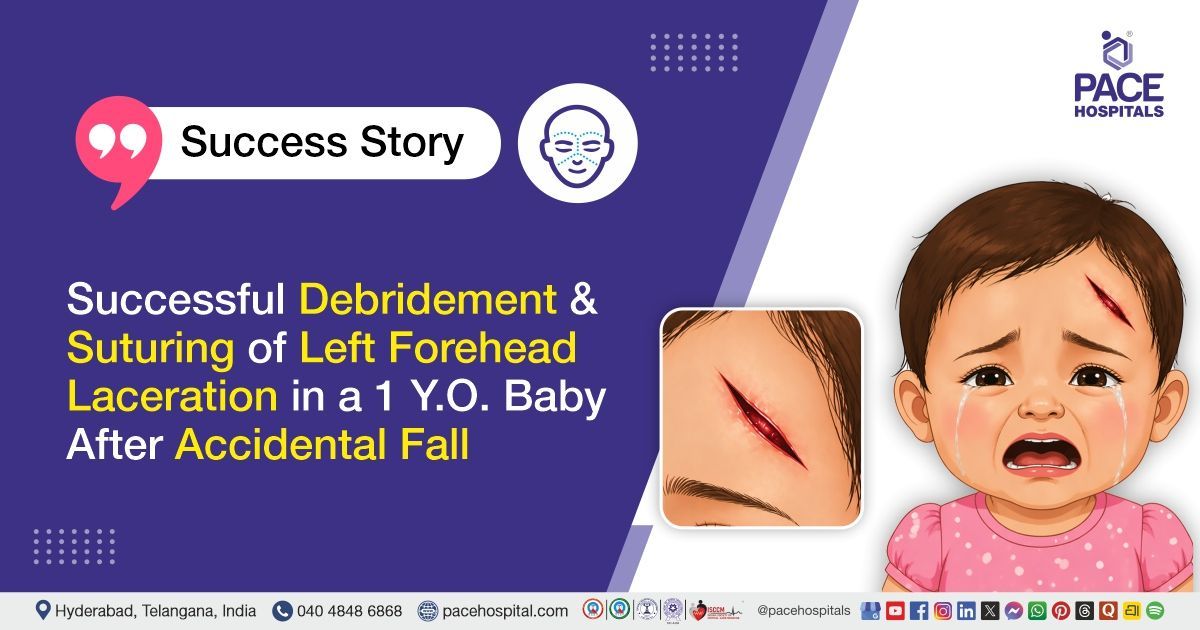
PACE Hospitals’ expert Plastic and Reconstructive Surgery team successfully performed Debridement and Suturing on a 1-year-5-month-old baby with a left forehead laceration. The procedure was undertaken to remove devitalized tissue, reduce the risk of infection, and promote proper wound healing with minimal scarring, ensuring the best possible functional and cosmetic outcome.
Chief Complaints
A 1-year-5-month-old baby girl presented to the Plastic and Reconstructive Surgery Department at PACE Hospitals, Hitech City, Hyderabad, with an alleged history of injury to the left forehead following an accidental fall at home. On evaluation, there was no history of loss of consciousness, seizures, vomiting, or ENT bleeding. There was also no history of any other associated injuries.
Past Medical History
The patient had no known past medical history and no prior history of chronic illnesses, hospitalisations, or surgeries. There were no known allergies, and her developmental history was reported to be appropriate for her age.
On Examination
On examination, the child was conscious, coherent and oriented. There were no signs of pallor, cyanosis, clubbing, lymphadenopathy, or pedal edema. Systemic examination was otherwise unremarkable, with stable vital parameters and adequate oxygen saturation on room air.
Diagnosis
Following the clinical examination, the Plastic and Reconstructive Surgery team conducted a thorough assessment, including a detailed review of the patient’s medical history and presenting complaints of injury to the left forehead following an accidental fall at home, with no associated history of loss of consciousness, seizures, vomiting, ENT bleeding, or other injuries.
A focused local examination of the forehead was performed to assess the extent of the wound. Relevant clinical parameters were evaluated to rule out associated systemic or neurological involvement. The assessment primarily focused on identifying the depth of the laceration, presence of contamination, tissue viability, and any signs of active bleeding or underlying structural injury.
To confirm the diagnosis and determine the extent of tissue involvement, the affected area was carefully examined. The evaluation revealed a left forehead laceration without evidence of foreign body involvement or associated complications.
Based on the confirmed diagnosis, the patient was advised to undergo
Left Forehead Laceration Treatment in Hyderabad, India, under the Plastic and Reconstructive Surgery team to remove devitalized tissue, prevent infection, promote optimal wound healing, and achieve a favorable cosmetic outcome.
Medical Decision Making (MDM)
After a detailed consultation with Dr. Kantamneni Lakshmi, Senior Consultant Plastic, Reconstructive & Aesthetic Surgeon, a comprehensive evaluation was performed to determine the most appropriate diagnostic and therapeutic approach. Considering the patient’s history of injury to the left forehead following an accidental fall, with no associated loss of consciousness, seizures, vomiting, ENT bleeding, or other injuries, a focused local examination of the forehead was undertaken to assess the extent of the laceration, tissue involvement, and presence of contamination or devitalized tissue. Clinical findings were suggestive of a clean laceration over the left forehead without evidence of deeper structural or neurological involvement.
Based on the clinical findings, which confirmed a left forehead laceration, it was determined that debridement and suturing under general anesthesia was identified as the most suitable intervention to remove devitalized tissue, achieve adequate wound cleansing, ensure proper wound closure, prevent infection, and promote optimal healing with a favorable cosmetic outcome, particularly considering the patient’s young age and the location of the injury.
The patient’s family members were thoroughly counselled regarding the diagnosis, need for the procedure, details of surgical management, potential risks, and expected recovery. Informed consent was obtained, ensuring their understanding and active participation in the treatment plan.
Surgical Procedure
Following the diagnosis, the patient was scheduled to undergo Debridement and Suturing Procedure in Hyderabad at PACE Hospitals, under the supervision of the expert Plastic and Reconstructive Surgery team.
The surgical procedure involved the following steps:
- Anaesthesia and Patient Preparation: The patient was taken to the operating room and placed under general anesthesia. After ensuring adequate anesthesia, the patient was positioned appropriately. The surgical site over the forehead was prepared under strict aseptic precautions, painted with antiseptic solution, and draped to maintain a sterile field.
- Wound Assessment and Debridement: A thorough inspection of the forehead laceration was performed to assess the extent of tissue injury. All devitalized, contaminated, and non-viable tissue was carefully debrided to create clean wound margins, which is essential for preventing infection and promoting optimal healing.
- Wound Irrigation (Wash): The wound was copiously irrigated with sterile solution to remove debris, contaminants, and reduce bacterial load. Proper wound cleansing was ensured to minimize the risk of postoperative infection and prepare the site for closure.
- Layered Wound Closure: The wound was closed in two layers to restore anatomical integrity. The deeper layer was approximated using absorbable sutures (5-0 Vicryl) to provide strength and support, followed by precise skin closure using finer sutures (6-0 Rapide Vicryl) to achieve good cosmetic results and minimize scarring.
- Hemostasis and Dressing: Hemostasis was secured throughout the procedure to prevent bleeding. After confirming adequate closure and absence of active bleeding, a sterile aseptic dressing was applied over the wound. The procedure was completed without any complications, and the patient tolerated it well.
Postoperative Care
The postoperative period was uneventful, and the patient recovered well following debridement and suturing of the left forehead laceration. During the hospital stay, she received appropriate care for infection prevention, pain control, gastric protection, and supportive postoperative management. The patient remained clinically stable throughout the hospital course with satisfactory wound condition and no complications. She was discharged in a stable condition with follow-up instructions.
Discharge Medications
Upon discharge, the patient was prescribed medications to prevent wound infection, support stomach protection, and manage pain and fever. Infection prevention therapy was advised to reduce the risk of postoperative complications, along with stomach protection to prevent irritation during recovery. Medicines for pain and fever control were provided to ensure comfort and aid healing. The caregivers were instructed to administer all medications as directed and complete the prescribed course for optimal recovery.
Advice on Discharge
The patient was advised to resume a normal diet as tolerated. Caregivers were instructed to maintain head end elevation to reduce swelling and support recovery. Proper wound care with regular sterile dressing changes and maintenance of hygiene at the surgical site was emphasized. In case of any altered consciousness or unusual neurological symptoms, prompt neurosurgical evaluation was advised for further assessment and management.
Emergency Care
The patient was informed to contact the emergency ward at PACE Hospitals in case of any emergency or development of symptoms like fever, increasing pain, swelling or discharge from the wound, or any signs of altered consciousness.
Review and Follow-up Notes
The patient was advised to return for a follow-up consultation with the Consultant Plastic, Reconstructive & Aesthetic Surgeon in Hyderabad at PACE Hospitals after 2 days.
Conclusion
This case highlights a left forehead laceration following accidental trauma, managed with timely surgical debridement and layered suturing under general anesthesia. The intervention ensured effective wound cleaning, infection prevention, and optimal healing. The postoperative period was uneventful with stable recovery and good wound outcome. The case emphasizes the importance of early surgical care and proper follow-up in pediatric facial injuries.
Early Surgical Management in Pediatric Facial Laceration Ensures Optimal Functional and Cosmetic Outcome
Timely evaluation and prompt intervention by a plastic surgeon / plastic surgery doctor play a crucial role in pediatric facial injuries, where both functional integrity and cosmetic appearance are important considerations. In this case, early debridement and layered suturing under general anesthesia ensured thorough wound cleansing, prevention of infection, and precise anatomical closure. Careful tissue handling and meticulous closure techniques helped achieve satisfactory healing with minimal scarring potential, while adherence to aseptic principles reduced the risk of postoperative complications and supported faster recovery. The case highlights the importance of early plastic surgical intervention and structured postoperative care in achieving excellent outcomes in facial injuries among young children, with regular follow-up further ensuring proper healing and an aesthetically acceptable result.
Frequently Asked Questions (FAQs)
What should be done immediately after a forehead injury?
After a forehead injury, it is important to gently clean the wound and avoid putting pressure directly on the injury. Medical attention should be sought immediately. If the injury is serious, medical professionals will assess the wound and may perform a procedure to clean and stitch it under general anesthesia to promote proper healing.
What are the common treatments for forehead lacerations?
When dealing with forehead lacerations, the wound is first cleaned to remove any debris. The wound is then sutured in layers to ensure the skin heals correctly. For children or those who may find the procedure distressing, general anesthesia is used during the process.
How long is the recovery period after forehead suturing?
The recovery time for forehead suturing varies but generally takes a few days to a week for the initial healing. A follow-up appointment is often scheduled to check on the progress and remove sutures if needed. During recovery, prescribed medications are important for preventing infection and controlling pain.
What medications are commonly prescribed after forehead surgery?
After forehead surgery, medications are given to prevent infection, manage pain and fever, and protect the stomach from irritation. These help reduce the risk of infection, ensure comfort during recovery, and support overall healing. Gastric protection is included to improve tolerance of postoperative treatment and aid smooth recovery.
What kind of follow-up care is needed after forehead surgery?
Follow-up care usually includes checking the wound to ensure it is healing properly. If necessary, the dressing may be changed, and any signs of infection, such as swelling or redness, should be monitored. A visit to the plastic surgeon for a follow-up examination is often scheduled after discharge.
How can the wound be cared for at home after discharge?
After being discharged, the wound should be kept clean and dry. It's essential to avoid any direct trauma to the area. Instructions for wound care should be followed, which may include applying prescribed ointments and avoiding unnecessary pressure on the site.
What signs should prompt immediate medical attention after forehead injury?
Immediate medical attention should be sought if there are signs such as fever, worsening pain, changes in consciousness, or vomiting. Additionally, if the wound appears to be infected or not healing properly, contacting a healthcare provider is important for further evaluation.
Can scarring be minimized after a forehead laceration?
While it’s difficult to avoid scarring entirely, proper care can reduce its appearance. This includes protecting the wound from direct sunlight, keeping it clean, and following all post-surgery care instructions. Specialized suturing techniques may also help reduce scarring, but healing can take several months.
What factors may affect the healing process of a forehead injury?
The healing process can be affected by factors such as age, health, and infections. Since children's skin is more delicate, it may take them longer to heal. Following the doctor's advice and keeping the wound clean is important. With the right care, the healing process can be faster and smoother.
How should parents manage a child’s discomfort after forehead suturing?
Parents should ensure the child takes prescribed pain medications as directed. It is also important to keep the child calm and comfortable while monitoring for any signs of infection or unusual discomfort. Regular follow-up visits will help track the healing process and address any concerns.
Share on
Request an appointment
Fill in the appointment form or call us instantly to book a confirmed appointment with our super specialist at 04048486868
Appointment request - health articles
Recent Articles