Affordable Rotator Cuff Repair Surgery Cost in Hyderabad, India
PACE Hospitals
All You Need To Know About Rotator Cuff Repair Surgery
Laminectomy is a spinal decompression surgery performed to relieve pressure on the spinal cord or spinal nerves. In this procedure, the surgeon removes a small part of the vertebral bone called the lamina, which forms the back portion of the spinal canal.
This surgery is commonly done for conditions such as spinal stenosis, disc herniation, bone spurs, or nerve compression. By creating more space in the spinal canal, surgery helps reduce pain, numbness or tingling-like sensation, weakness, and difficulty walking caused due to compression of the nerves.
The main goal of laminectomy surgery is to improve nerve function, relieve symptoms, and help patients return to daily activities with better mobility and comfort.
Get a Cost Estimate for Rotator Cuff Repair Surgery
Rotator Cuff Repair Surgery Cost Query
Rotator Cuff Repair Surgery Cost in India
On average, Rotator cuff repair cost in India ranges from ₹1,50,000 - ₹8,00,000 and above (approximately US$ 1,575 – US$8,396). However, the actual cost may vary depending on several factors, including:
- The extent and severity of the rotator cuff tear
- Surgical technique (open repair, mini-open, or arthroscopic)
- Expertise of the surgeon and the type of hospital (private, corporate, or trust hospitals)
- Suture anchors and implants are used in repairs
- Investigations before surgery (MRI, X-rays, blood tests)
- Hospital stay and the room category
- Physiotherapy and rehabilitation following surgery
- Eligibility for cashless treatment or insurance coverage
- Possible complications that could arise during or after the surgery and necessitate further care
Rotator Cuff Repair Surgery Cost in Hyderabad, Telangana
On average, Rotator Cuff Repair Surgery costs in Hyderabad range from ₹ 2,00,000 to ₹ 7,50,000 (approximately US$2,091–US$7,850). These rates offer a competitive and cost effective option compared to other top hospitals in the city, with advanced surgical care and personalized treatment planning readily available.
However, the cost of Rotator Cuff Surgery in Hyderabad is influenced by several factors, such as:
- The rotator cuff tear's size, complexity, and severity
- The surgical technique (open, mini-open, or arthroscopic)
- The hospital facilities and infrastructure chosen
- Orthopedic multidisciplinary care and surgeon expertise
- The quantity and type of implants or suture anchors needed
- Pre-operative evaluation and the degree of recovery following surgery
- The length of stay in the hospital and the need for anesthesia
- Corporate insurance approval or insurance coverage for cashless services
- Possible complications that could arise during or after the surgery and necessitate further care
Cost Breakdown According to Type of Rotator Cuff Repair Surgery
- Arthroscopic Rotator Cuff Repair Surgery – ₹1,20,000 - ₹3,20,000 (US $1,258 – US $3,354) (approx.)
- Mini-Open Rotator Cuff Repair Surgery – ₹1,50,000 - ₹3,00,000 (US $1,572 – US $3,145) (approx.)
- Open Rotator Cuff Repair Surgery – ₹1,00,000 - ₹2,50,000 (US $1,048 – US $2,621) (approx.)
- Massive or Complex Rotator Cuff Tear Repair Surgery – ₹2,80,000 - ₹5,50,000 (US $2,935 – US $5,765) (approx.)
- Revision Rotator Cuff Repair Surgery – ₹4,50,000 - ₹8,00,000 + (US $4,717 – US $8,386 +) (approx.)
Note: These are approximate cost estimates that may change depending on common treatment methods. After a thorough assessment by the orthopaedic shoulder expert, which considers the size and severity of the tear, tendon quality, surgical approach, implants needed, and the expected length of hospital stay, the precise cost for each patient is established.
Additional Information: The type of repair procedure (arthroscopic, mini-open, or open), the degree of tendon damage, the number of tendons involved, the quality and quantity of surgical anchors used, the cost of anesthesia, the length of hospital stay, the need for post-operative rehabilitation, and the orthopedic surgeon's skill are some of the variables that can affect the cost of rotator cuff repair surgery. This guarantees that every patient receives a clear cost estimate based on their specific medical condition and a customized treatment plan.
Breakdown of Rotator Cuff Repair Surgery Costs
The severity of the tear, the surgical method (arthroscopic, mini-open, or open repair), the patient's general health, and the length of hospital stay all affect the cost of rotator cuff repair surgery. The costs usually related to rotator cuff repair surgery are broken down in detail below:
Pre-Surgery Costs
- Consultation Fees: Depending on the surgeon's experience and the hospital's resources, consultation fees for orthopaedic and shoulder specialists may vary.
- Diagnostic Tests: To determine the size, position, and severity of the rotator cuff tear and to help with surgical planning, imaging tests such as X-rays, ultrasounds, MRIs, or CT scans (if necessary) are used.
- Routine Pre-Operative Tests (for Anesthesia): To ensure fitness for anesthesia and surgery, a thorough health assessment is performed, including a complete blood count (CBC), blood sugar levels, liver function test (LFT), kidney function test (KFT), electrolytes, coagulation profile (PT/INR, PTT), ECG, and chest X-ray.
- Pre-Surgical Evaluation and Physical Examination: To establish the best surgical technique, a thorough evaluation of shoulder pain, range of motion, previous injuries, medical history, muscular strength, joint stability, and concomitant conditions such as arthritis or tendon degeneration is conducted.
Rotator Cuff Repair Surgery Costs
- Hospitalization Charges: Costs associated with admittance, choice of room type, nursing care, use of the operating room, and inpatient services. If specialized monitoring is needed, there may be ICU fees.
- Surgical Procedure Charges: These include operating room costs and the surgeon's professional fees for Arthroscopic Rotator Cuff Repair, Mini-Open Repair, Open Rotator Cuff Repair, and Complex/Massive Tear Reconstruction.
- Anesthesia and Surgical Team Fees: Charges for anesthesiologists, anesthesia medications, surgical assistants, and other medical professionals involved in the surgery.
- Surgical Implants and Anchors: The cost of specific suture anchors, fixation instruments, and other implants required to reattach the torn tendon to the shoulder bone securely.
Post-Surgery Care Costs
- Post-Operative Monitoring: Fees for wound care, pain control, recovery room surveillance, and monitoring just after surgery.
- Hospital Stay: The cost of a post-operative hospital stay, which usually lasts 1-3 days depending on the complexity of the procedure, the patient's recovery, and any related medical issues.
- Medications and Rehabilitation: The cost of prescription physiotherapy sessions, antibiotics, shoulder immobilizers or slings, and painkillers that are necessary to restore shoulder strength and mobility.
- Follow-Up Visits: Regular appointments to track tendon healing, evaluate shoulder function, take out sutures if needed, examine imaging findings, and direct the course of rehabilitation.
This transparent cost structure helps patients understand the many expenses related to rotator cuff repair surgery. PACE Hospitals, Hyderabad, offers customized cost estimates based on the severity of the rotator cuff tear, the surgical technique required, the use of implants, and each patient's unique requirements to deliver comprehensive, superior orthopedic care.
Who Needs Rotator Cuff Repair Surgery?
Not all patients with shoulder discomfort or rotator cuff injuries require surgery. It is typically advised when conservative measures like rest, medication, physical therapy, or injections fail to alleviate a rotator cuff tear's chronic pain, weakness, or loss of shoulder function.
Common Conditions Indicating the Need for Surgery:
- Persistent Shoulder Pain: Chronic shoulder pain affects daily activities, sleeping and sports even with nonsurgical treatment.
- Full-Thickness Rotator Cuff Tear: Complete tendon tears that severely limit shoulder strength and range of motion.
- Large or Progressive Rotator Cuff Tears: Tears that get larger over time and, if left untreated, might cause more tendon injury.
- Shoulder Weakness and Loss of Function: Inability to carry objects, raise the arm, reach overhead, or carry out daily tasks.
- Traumatic Rotator Cuff Injury: In younger, active patients with acute tendon tears brought on by falls, collisions, sports injuries, or abrupt heavy lifting are known as traumatic rotator cuff injuries.
- Failed Conservative Treatment: Symptoms that don't go away after several months of physical therapy, painkillers, activity adjustment, and other nonsurgical treatments.
- Active Individuals and Athletes: Individuals who require optimal shoulder strength and mobility for physically demanding jobs, sports, or an active lifestyle.
- Reduced Quality of Life: Stiffness, extreme pain, or functional limitations that affect independence and general well-being.
Who is Not Eligible for Rotator Cuff Repair Surgery?
Although rotator cuff repair surgery is a highly successful treatment for tendon tears, not everyone may benefit from it. Certain medical disorders, lifestyle factors, or shoulder-related problems may make surgery more risky or less likely to be successful.
- Active Infections: Infections raise the risk of problems during surgery; patients with active skin, shoulder, or systemic infections may require therapy before surgery.
- Uncontrolled Medical Conditions: Risks associated with surgery and anesthesia may be increased by severe diabetes, uncontrolled hypertension (high blood pressure), substantial heart or lung illness, bleeding disorders, or other serious health issues.
- Advanced Shoulder Arthritis: Instead of rotator cuff repair, patients with severe shoulder arthritis may benefit more from alternative procedures, such as shoulder replacement.
- Irreparable or Chronic Massive Rotator Cuff Tears: Restoration may be difficult or impossible in certain situations where the torn tendon has undergone irreversible muscle degeneration or has retracted significantly.
- Poor Compliance with Rehabilitation: Postoperative physical treatment and activity limitations are critical to a full recovery. Patients who are unable or unwilling to engage in rehabilitation may not benefit from surgery.
- Smoking and Unhealthy Lifestyle Factors: Obesity, heavy alcohol use, active smoking, and poor nutrition can all hinder tendon healing and raise the possibility of problems or repair failure.
- Minimal Symptoms or Functional Limitations: For those with minor tears that can be successfully treated nonsurgically and cause minimal pain or functional impairment, surgery might not be required.
To determine whether Rotator Cuff Repair Surgery is the appropriate treatment choice and to ensure the best possible outcome, a thorough evaluation by an Orthopedic Shoulder Specialist is crucial.
Rotator Cuff Repair Surgery – How is the Procedure Done?
General anesthesia is used during rotator cuff repair surgery, and a regional nerve block is occasionally added for pain management. The goal of the treatment is to restore shoulder function by reattaching the damaged rotator cuff tendon to the humerus, the upper arm bone. Usually, the surgical steps consist of:
- Preoperative Evaluation: To assess the size and severity of the rotator cuff tear, a clinical examination, X-rays, and MRI scans are performed.
- Anesthesia Administration: To guarantee patient comfort during the surgery, general anesthesia is administered.
- Surgical Repair: The method depends on the pattern of the tear and the surgeon's preference. The damaged tendon will then be repositioned and secured to the bone with specialized sutures and anchors.
- Closure and Dressing: For securing the repair, the wounds are closed, sterile dressings are put on, and the arm is immobilized or placed in a shoulder sling.
- Recovery and Rehabilitation: Depending on the surgical technique and the patient's overall health, patients are typically discharged on the same day or within 1 to 2 days. Restoring shoulder strength, flexibility, and function requires a planned physiotherapy program.
Experienced orthopedic and shoulder specialists perform rotator cuff repair surgery at PACE Hospitals in Hyderabad using cutting-edge surgical techniques. Anesthesiologists, physiotherapists, and committed nursing staff provide comprehensive perioperative care and the best possible recovery outcomes.
Types of Rotator Cuff Repair Surgery
Depending on the type, position, and extent of the rotator cuff tear, different surgical methods are used. The decision of treatment and overall expense depends on the type of surgery selected:
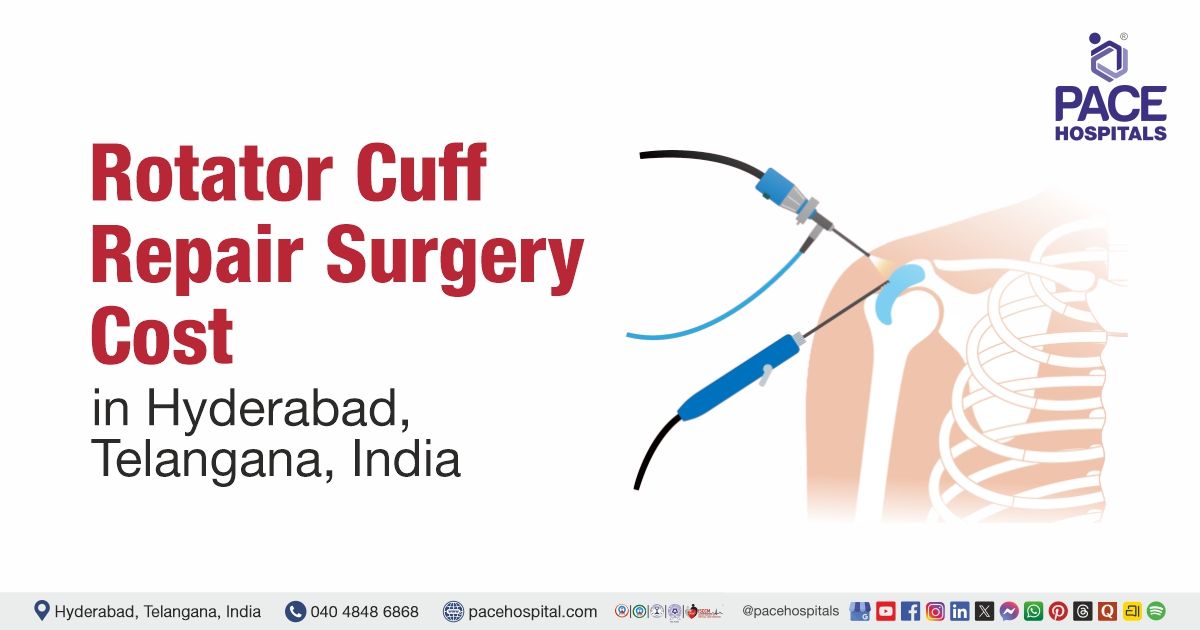
- Arthroscopic Rotator Cuff Repair: A camera and specialized tools are used in a minimally invasive procedure performed through tiny incisions. Frequently used for minor to moderate injuries, it provides a quicker recovery and less post-surgical pain.
- Mini-Open Rotator Cuff Repair: This procedure repairs the damaged tendon by combining arthroscopy with a tiny open incision. Ideal for moderate tears that need to be directly seen and repaired.
- Open Rotator Cuff Repair: A more conventional surgical method that requires a larger incision to reach and fix the tendon. usually advised for rotator cuff tears that are large, complicated, or persistent.
- Massive or Complex Rotator Cuff Tear Repair: Large injuries involving many tendons or significant tendon retraction are treated with this treatment. It may be required to use advanced repair techniques, tendon transfers, graft augmentation, or prolonged rehabilitation.
- Revision/Advanced Rotator Cuff Repair Surgery: It is performed when a previous rotator cuff surgery has failed or when the tendon has torn once again. These procedures are often more complex and may require additional surgical techniques, as well as postoperative care.
Note: The cost may vary depending on the type of rotator cuff repair, the extent and complexity of the tear, the surgical technique, the implants or graft materials utilized, the type of anesthesia, the surgeon's expertise and the length of hospital stay. Advanced, revision, or complicated reconstructive procedures are usually more costly than standard arthroscopic treatments.
Post-Rotator Cuff Repair Surgery Care Tips
After rotator cuff repair surgery, careful attention is essential to promote healing, restore shoulder function, and achieve the best possible outcome:
- It is advised to monitor shoulder rehabilitation and tendon healing by attending all scheduled follow-up consultations.
- Wearing the immobilizer or shoulder sling as directed is recommended to protect the healed tendon.
- It is recommended to follow the physiotherapy and rehabilitation plan prescribed by the surgeon in order to gradually restore strength and mobility.
- It is advised to avoid undertaking overhead chores, lifting heavy objects, or making sudden shoulder movements until the doctor provides the all-clear.
- To reduce the risk of infection, keep the surgical incision dry and clean, and adhere to wound-care guidelines.
- It is advised to take prescription drugs, such as antibiotics or painkillers, exactly as directed if they are given at discharge.
- Until the surgeon gives the go-ahead, it is recommended to refrain from driving, engaging in intense exercise, participating in contact sports, and engaging in physically demanding activities.
- It is advised to notify the healthcare professional immediately if you experience symptoms like worsening discomfort, redness, significant edema, fever, drainage from the incision, or loss of shoulder function.
After rotator cuff repair surgery, adhering to these guidelines can help ensure a safe recovery, appropriate tendon healing, enhanced shoulder function, and the best possible long-term outcomes.
Key Factors Influencing Rotator Cuff Repair Surgery Cost
The overall cost of rotator cuff repair surgery may vary depending on several factors. Understanding these crucial elements makes it easier for patients to prepare effectively:
Pre-Surgery Evaluation
Comprehensive evaluations, which include orthopedic consultations, physical examinations, X-rays, MRI scans, and other diagnostic testing, have an impact on the overall cost of surgery.
Insurance Coverage
Out-of-pocket costs for rotator cuff repair surgery can be greatly impacted by policy terms, cashless treatment approvals, and the scope of health insurance coverage.
Hospital and Location
The hospital's reputation, facilities, and location can all affect treatment costs. Compared with smaller towns or suburban areas, hospitals in larger cities often charge higher fees.
Post-Surgery Care and Rehabilitation
Subsequent consultations, medicines, physiotherapy, shoulder braces or slings, and rehabilitation are some factors that add to the total cost of treatment.
Complications During or After Surgery
Some complications, such as infections, stiff shoulders, nerve damage, or tendon re-tears, can lead to increased medical expenses.
Surgeon Expertise
Expert orthopedic or shoulder surgeons usually charge higher fees because of their experience, advanced training and surgical outcomes.
Surgical Technique
Due to variations in surgical complexity and equipment needs, the type of procedure—arthroscopic repair, mini-open repair, open repair, or complex tendon reconstruction—directly affects the total cost.
Travel and Accommodation
Patients from distant states or towns may pay more for transportation, housing, meals, and caregiver support during treatment and recovery.
Tear type, size and severity
When a rotator cuff tear is larger, full-thickness, involves multiple tendons, or has been there for a long time, the cost of repair may go up because these types of injuries typically require more complicated surgery, longer operating times, and more surgical supplies, all of which raise the overall cost of treatment.
Duration of Hospital Stay and Infrastructure
The total treatment charges depend on the number of days that you will have to be in the hospital, your choice of rooms (whether private, semi-private, or just regular), and the need for higher medical supervision like that in ICU units.
Additional Procedures
The cost will increase if your surgeon needs to perform a subacromial decompression, distal clavicle excision, or biceps tenodesis to repair your shoulder fully.
Why Choose PACE Hospitals for Rotator Cuff Repair Surgery in Hyderabad, India?
PACE Hospitals, Hyderabad, is a trusted center for Rotator Cuff Repair Surgery:
- Experienced orthopedic surgeons, shoulder specialists, anesthesiologists and rehabilitation specialists
- Modern operating theatres with arthroscopic equipment for minimally invasive and open shoulder surgery
- Access to all diagnostic facilities, including advanced imaging for precise tear assessment and surgical planning
- Individual post-operative care, physiotherapy and rehabilitation programs to aid recovery and restore shoulder function
- Patient-focused care with customized treatment plans and transparent cost estimates
For patients searching for the Best Rotator Cuff Repair Surgery Hospital in Hyderabad, Telangana, India, PACE Hospitals provides expert care, competitive costs, advanced surgical techniques, and safe treatment outcomes.
Financial Assistance and Payment Plans at PACE Hospitals
Rotator Cuff Repair Surgery should be available without financial stress. Our team helps patients with insurance and cashless support.
- Cashless admissions with empanelled insurers and TPAs, as per policy conditions and eligibility criteria
- Assistance in pre-authorization and documentation for easy admission
- Assistance in reimbursement to those patients who are not eligible for cashless treatment under their policy
- Transparent information regarding pre-admission cost estimates based on the surgical procedure and duration of hospital stay
- Help with corporate insurance as well as state-provided insurance schemes when needed
- Billing services to guide patients about cost estimates and insurance coverage before surgery
Success Rate of Rotator Cuff Repair Surgery
Rotator Cuff Repair Surgery has proven to be very successful with a success rate of 80%-95%, which depends on various aspects, including tear size, quality of tissue, age of patient, and techniques used for recovery. Many individuals have achieved great pain relief, improved shoulder function, and enhanced quality of life following surgery.
After successful Rotator Cuff Repair Surgery, patients may experience:
- Decreased discomfort and pain in the shoulders
- Enhanced range of motion and strength in the shoulders
- Improved capacity to carry out daily tasks, work-related tasks, and athletic activities
- Improved functional independence and general quality of life
Long-term success depends on factors such as the severity of the tear, timely surgical intervention, adherence to post-operative rehabilitation, and attending regular follow-up appointments to monitor healing and recovery.
Frequently Asked Questions (FAQs) on Rotator Cuff Repair Surgery
When is Rotator Cuff Repair Surgery recommended?
Patients with a rotator cuff tear that is not improving with medicine, physiotherapy, or other conservative treatments and is causing persistent shoulder pain, weakness, or loss of function may consider rotator cuff repair surgery. Large, severe, or progressive tears may require early surgery.
What are the common symptoms of a rotator cuff tear that may require surgery?
Persistent shoulder pain, weakness when lifting or turning the arm, difficulty with overhead tasks, decreased range of motion, and sleep disturbances due to shoulder discomfort are common symptoms. Severe tears can significantly affect day-to-day activities.
What is the success rate of Rotator Cuff Repair Surgery?
In carefully chosen individuals, the success rate of rotator cuff repair surgery ranges from 80% to 95%. After rehabilitation, most people report significant pain relief, increased shoulder strength, and improved overall function.
How long is the recovery period after Rotator Cuff Repair Surgery?
While full recovery and strength restoration may take 4 to 12 months, initial recovery typically takes 6 to 12 weeks. The severity of the tear, the patient's age, and compliance with rehabilitation guidelines all affect recovery time.
What are the risks and complications associated with Rotator Cuff Repair Surgery?
Infection, hemorrhage, shoulder stiffness, chronic pain, nerve damage, blood clots, complications from anesthesia, and re-tear of the repaired tendon are among the possible dangers. When appropriate surgery and rehabilitation procedures are followed, most complications are uncommon.
Can a repaired Rotator Cuff Tear again after surgery?
Yes, a healed rotator cuff may re-tear, particularly in cases of significant tears, in elderly patients, in smokers, or in people who resume physically demanding activities too soon. Re-injury risk is greatly decreased by adhering to rehabilitation procedures.
What is the expected life expectancy after Rotator Cuff Repair Surgery at PACE Hospitals, Telangana, India?
Rotator Cuff Repair Surgery is intended to restore shoulder function and improve quality of life rather than to reduce life expectancy. Patients who have successful surgery, rehabilitation, and adequate shoulder care can maintain long-term shoulder function and resume normal daily activities for years.
What is the cost of Rotator Cuff Repair Surgery in Hyderabad?
The cost of Rotator Cuff Repair Surgery in Hyderabad typically ranges from ₹ 2,20,000- ₹7,50,000 (approximately US$2,300 – US$7,850) and above, depending on factors such as the degree of the tear, the surgical technique, the hospital amenities, the surgeon's proficiency, and the implants needed. For an accurate cost estimate, you will need a detailed evaluation.
What factors can increase or decrease the cost of Rotator Cuff Repair Surgery?
It can depend on various factors, such as the type of damage sustained, the procedure adopted (arthroscopy or open repair), the surgeon's expertise, hospital infrastructure, duration of hospital stay, diagnostic tests, implants, and rehabilitation needs.
What are the different types of Rotator Cuff Repair Surgery?
Arthroscopic, mini-open, and open rotator cuff repair are the three primary types. The decision is based on the size, location, and intricacy of the tear as well as the surgeon's evaluation.
How long does Rotator Cuff Repair Surgery take?
The procedure usually takes 1 to 3 hours. The length of the process can be influenced by the complexity of the tear, the number of tendons involved, and whether additional treatments are carried out during surgery.
Is Rotator Cuff Repair Surgery performed under general anesthesia?
Yes, general anesthesia is frequently used during rotator cuff repair surgery. To further relieve discomfort during and after treatment, a localized nerve block may be used.
When can I return to work after Rotator Cuff Repair Surgery?
Patients with desk jobs can return to work in two to six weeks. People who engage in heavy lifting, overhead work, or physical labor may need 3 to 6 months, or more, to resume their full responsibilities.
How long should I wear a sling after Rotator Cuff Repair Surgery?
To protect the repaired tendon and promote healing, a shoulder sling is usually worn for 4 to 6 weeks. The exact duration depends on the size of the tear and the surgeon's recommendations.
Is physiotherapy necessary after Rotator Cuff Repair Surgery?
Yes, physiotherapy plays a crucial role in healing. In addition to reducing the risk of stiffness and re-injury, a structured rehabilitation program helps restore shoulder mobility, strength, stability, and function.
Does health insurance cover Rotator Cuff Repair Surgery?
Yes, many health insurance policies cover rotator cuff repair surgery when it is medically necessary. The insurer may impact coverage, insurance terms, waiting periods, exclusions, and pre-authorization procedures.
Can I get cashless treatment for Rotator Cuff Repair Surgery at PACE Hospitals?
Yes, PACE Hospitals offers cashless hospitalization services through empanelled insurance providers and TPAs, subject to policy eligibility and approval. The hospital's insurance support team can help patients with pre-authorization and claim processing.
Share on
Request an appointment
Fill in the appointment form or call us instantly to book a confirmed appointment with our super specialist at 04048486868
Appointment request - health articles
Recent Articles