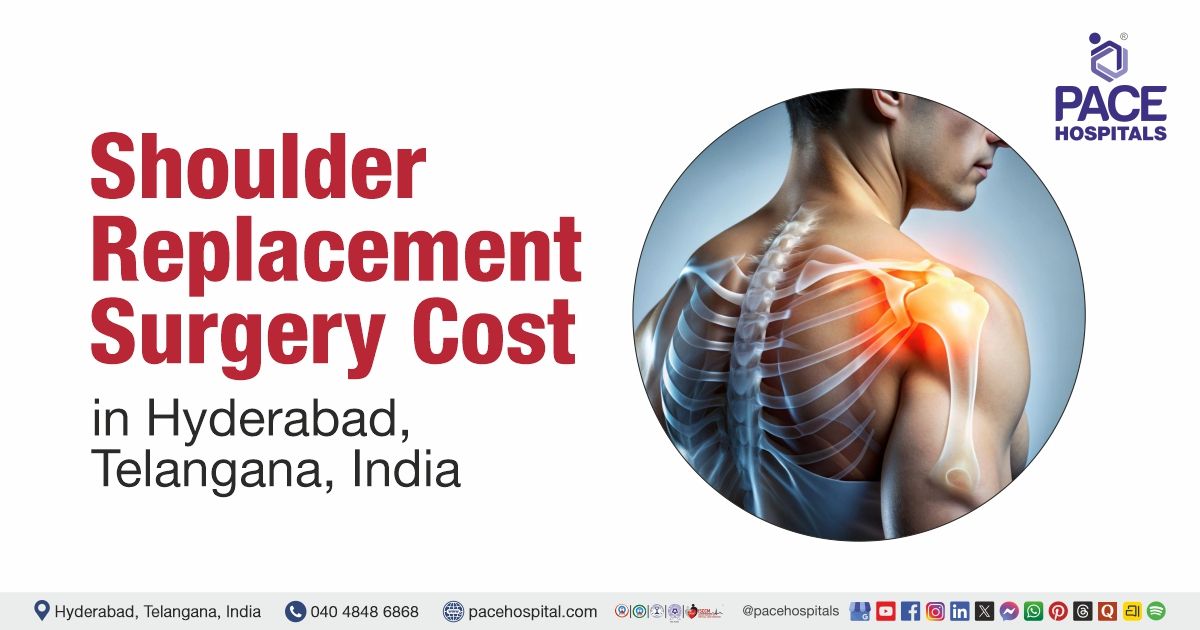
Affordable Shoulder Replacement Surgery Cost in Hyderabad, India
PACE Hospitals
All You Need to Know About Shoulder Replacement Surgery
Shoulder Replacement Surgery, also known as Shoulder Arthroplasty, is an advanced orthopedic procedure in which artificial implants (prostheses) composed of premium plastic and metal components are used to replace the damaged or diseased elements of the shoulder joint.
- Patients with severe shoulder arthritis, persistent shoulder discomfort, complicated fractures, rotator cuff tear arthropathy and stiffness that substantially interferes with everyday activities are frequently advised to undergo shoulder replacement surgery.
- When conservative treatments have failed to give sufficient relief, the main objectives of shoulder replacement surgery are to improve range of motion, relieve discomfort, restore joint function, and improve the patient's overall quality of life.
Get a Cost Estimate for Shoulder Replacement Surgery
Shoulder Replacement Surgery Cost Query
Shoulder Replacement Surgery Cost in India
On average, Shoulder Replacement Surgery costs in India range from ₹1,80,000- ₹8,00,000 (approximately US$2,100 to US$9,600). However, the actual cost may vary depending on several factors, including:
- The type of shoulder replacement surgery
- Severity of shoulder damage and underlying condition
- The type and quality of the implant used
- The type of hospital (private, corporate, or trust hospitals)
- Surgeon's expertise and experience
- The type of room and hospital amenities were chosen
- Preoperative examinations and diagnostic procedures
- Fees for the operating room and anesthesia
- Length of hospital stays
- Prescription drugs, surgical supplies, and postoperative care
- Prerequisites for rehabilitation and physiotherapy
- Existing health issues that need more attention
- Any additional treatments or procedures administered during surgery
- Insurance coverage or corporate approvals for cashless treatment
Shoulder Replacement Surgery Cost in Hyderabad, Telangana
On average, Shoulder Replacement Surgery cost in Hyderabad ranges from ₹2,80,000 - ₹7,50,000 and above (approximately US$2,940 – US$7,870). These rates offer a competitive and cost effective option compared to other top hospitals in the city, with advanced surgical care and personalized treatment planning readily available.
However, the cost of Shoulder Replacement Surgery in Hyderabad is influenced by several factors, such as:
- Type of shoulder replacement surgery performed
- Severity of shoulder joint damage and underlying condition
- Type and quality of implant used
- Surgeon’s expertise and experience
- Hospital facilities and room category selected
- Preoperative tests, medications, and postoperative rehabilitation are required
- Duration of hospital stay and any additional treatment needed.
- Insurance or corporate approvals for cashless services
Cost Breakdown According to Type of Shoulder Replacement Surgery
- Shoulder Resurfacing (Humeral Resurfacing): ₹1,80,000- ₹4,00,000 (US $2,120–US $4,710) (approx.)
- Partial Shoulder Replacement (Hemiarthroplasty): ₹2,00,000- ₹ 3,20,000 (US $2,350– US $3,765) (approx.)
- Total Shoulder Replacement (Anatomic Shoulder Arthroplasty): ₹2,80,000- ₹5,50,000 (US $3,295– US $6,470) (approx.)
- Reverse Shoulder Replacement: ₹ 3,20,000- ₹ 7,00,000 (US $3,765– US $8,235) (approx.)
- Revision Shoulder Replacement Surgery: ₹4,90,000- ₹8,00,000 (US $5,764– US $9,411) (approx.)
Note: These are approximate cost estimates that may change depending on common treatment methods. After a thorough evaluation by the orthopedic team, which includes an assessment of the shoulder condition, implant requirements, general health status, and expected hospital stay, the precise cost for each patient is ascertained.
Additional Information: The type of shoulder replacement procedure carried out, the degree of joint damage, the type and quality of implant used, the surgeon's experience, the hospital's infrastructure, anesthesia costs, length of hospital stay, diagnostic tests, and postoperative rehabilitation requirements are some of the variables that can affect the cost of shoulder replacement surgery. This guarantees that every patient gets a clear cost estimate based on their medical requirements and a customized treatment plan.
Breakdown of Shoulder Replacement Surgery Costs
The type of shoulder replacement treatment, the patient's health, the implant utilized, and the length of hospital stay all affect the cost of shoulder replacement surgery. The costs usually related to shoulder replacement surgery are broken down in detail below:
Pre-Surgery Costs
- Consultation Fees: The cost of consultations with anesthesiologists, orthopedic surgeons, and other experts involved in the course of therapy.
- Diagnostic Tests: These comprise X-rays, CT scans, MRI scans, blood tests, ECGs, chest X-rays, and other imaging tests necessary to determine the degree of shoulder joint injury and schedule surgery.
- Routine Preoperative Evaluation (for Anesthesia): Extensive testing to determine suitability for anesthesia and operation, including Complete Blood Count (CBC), Liver Function Test (LFT), Kidney Function Test (KFT), Blood Sugar Levels, Electrolyte Profile, and Coagulation Profile (PT/PTT).
- Pre-Surgical Screening including Medical History and Physical Examination: A comprehensive evaluation of the patient's general health, current medical issues, medications, prior operations, and shoulder function is performed to determine surgical suitability and reduce risks.
Shoulder Replacement Surgery Costs
- Hospitalization Charges: Costs associated with being admitted to the hospital, staying in a private room, receiving nursing care, using the operating room, and staying in an intensive care unit (ICU) if necessary.
- Shoulder Replacement Procedure: Expenses related to the surgical process, such as Total Shoulder Replacement, Reverse Shoulder Replacement, Partial Shoulder Replacement (Hemiarthroplasty), or Revision Shoulder Replacement, in addition to the professional fees of the surgeon.
- Implant Costs: Depending on the type, design, material, and manufacturer of the implant, there may be different costs for the prosthetic shoulder joint components utilized during surgery.
- Anesthesia and Surgical Team Fees: Expenses for the administration of anesthesia, services provided by anesthesiologists, surgical assistants, nurses, and other operating room personnel.
Post-Surgery Care Costs
- Postoperative Monitoring: Costs associated with wound care, pain control, immediate postoperative surveillance, and tracking the course of recovery.
- Hospital Stay: Depending on the patient's condition, the type of operation, and rehabilitation requirements, a general hospital stay during recovery can range from 3 to 7 days.
- Physiotherapy and Rehabilitation: Costs associated with rehabilitation programs, physiotherapy sessions, and shoulder mobility exercises that are required to enhance healing results and restore function.
- Follow-Up Visits: Regular clinical assessments and consultations to track healing, evaluate implant effectiveness, handle problems, and direct long-term recovery.
This cost structure ensures transparency and enables patients to plan their finances efficiently for shoulder replacement surgery. At PACE Hospitals, Hyderabad, we offer thorough, customized estimates tailored to each patient's unique medical needs, guaranteeing reasonably priced, all-encompassing orthopedic care.
Who Needs Shoulder Replacement Surgery?
For patients with significant shoulder joint degeneration, persistent discomfort, and limited range of motion that does not improve with medication, physical therapy, injections, or other conservative treatments, shoulder replacement surgery is advised. The process reduces pain, restores shoulder function and improves quality of life.
Common Conditions Indicating the Need for Surgery:
- Severe Shoulder Osteoarthritis: Persistent pain and stiffness due to advanced shoulder joint wear and tear.
- Rheumatoid Arthritis: A chronic inflammatory disease that causes discomfort, joint degeneration, and decreased mobility.
- Rotator Cuff Tear Arthropathy: Extended rotator cuff tendon tears are linked to severe shoulder arthritis.
- Complex Shoulder Fractures: Severe fractures that cannot be repaired with fixation of the humerus, the upper arm bone, close to the shoulder.
- Avascular Necrosis (Osteonecrosis): When the shoulder bone's blood supply is cut off, the joint collapses and becomes painful.
- Persistent Shoulder Pain and Limited Movement: Despite non-surgical treatment, there is significant pain and discomfort, weakness, and loss of shoulder function that interfere with day-to-day activities.
- Failed Previous Shoulder Surgery: Revision shoulder replacement may be necessary for patients with ongoing symptoms or implant failure after prior shoulder surgery.
Who is Not Eligible for Shoulder Replacement Surgery?
While shoulder replacement surgery is generally safe and effective, it may not be suitable for certain individuals:
- Active Infections: Due to the risk of contaminating the new prosthetic, any systemic or shoulder joint infection precludes surgery until it is fully cleared.
- Irreparable Muscle & Tendon Damage: A functional rotator cuff is necessary for a traditional total shoulder replacement. A reverse shoulder replacement is often used when the rotator cuff is destroyed or nonfunctional. However, a reverse replacement depends solely on a functioning deltoid; surgery is typically not recommended if the deltoid is likewise completely nonfunctional.
- Severe Nerve Damage: The joint cannot be controlled after surgery if the nerves connecting the spinal cord to the shoulder and arm are injured or dysfunctional, making the procedure pointless.
- Poor Bone Quality: The bone is too brittle to firmly support a metal or plastic prosthetic due to advanced osteoporosis or significant, irreversible glenoid (shoulder socket) degradation.
- Cognitive or Neurological Impairments: A candidate is not suitable for surgery if they have conditions like advanced dementia or epilepsy, which greatly increase the risk of dangerous falls and make postoperative rehabilitation unfeasible.
- Medical Instability: Elective shoulder surgery will not be possible if the patient has severe cardiopulmonary (heart and lung) conditions or cannot safely tolerate anesthesia.
- Severe Nicotine Use: Smoking drastically reduces blood flow, which raises the risk of infection and prosthesis failure. Patients are usually required to quit nicotine use before being approved.
A thorough evaluation by an orthopedic surgeon is essential to determine eligibility and ensure the safest and most effective treatment approach.
Shoulder Replacement Surgery – How is the Procedure Done?
To reduce discomfort and enhance shoulder function, shoulder replacement surgery, also known as shoulder arthroplasty, replaces damaged shoulder joint components with an artificial component (prosthesis).
Steps Involved in the Procedure:
- Administration of Anesthesia: To ensure the patient is comfortable throughout the procedure, either a local or a general anesthesia is used.
- Surgical Incision: To reach the injured joint, the surgeon makes an incision over the front or top of the shoulder.
- Removal of Damaged Bone and Cartilage: The glenoid (shoulder socket) and any worn-out or damaged parts of the humeral head (upper arm bone) are carefully removed.
- Placement of Artificial Implants: To replace the shoulder joint, the surgeon inserts prosthetic components made of sturdy plastic or metal. The humeral head, the socket, or both may be replaced, depending on the type of surgery.
- Testing Joint Movement: Before closing the incision, the new joint is examined for correct alignment, stability, and range of motion.
- Closure of the Incision: Sutures or staples are used to close the incision, and a sterile dressing is put on.
- Postoperative Recovery: To regain strength and mobility, the arm is typically placed in a sling, and rehabilitation exercises are initiated gradually.
To ensure safe surgery, effective pain management, and thorough postoperative rehabilitation, skilled orthopedic and joint replacement specialists perform shoulder replacement surgery at PACE Hospitals in Hyderabad, with assistance from anesthesiologists, physiotherapists, and specialized nursing staff.
Types of Shoulder Replacement Surgery
Various surgical methods can be used depending on the nature of joint destruction, medical condition, and the required function. The selected method of surgery will determine the mode of treatment and expenses involved:
- Shoulder Resurfacing (Humeral Resurfacing): Replacement of only the damaged surfaces of the humeral head by retaining most of the natural bones; appropriate for certain individuals with minimal joint damage.
- Partial Shoulder Replacement (Hemiarthroplasty): It is commonly used for limited joint injuries and particular fractures. The original socket of the shoulder joint is preserved, and only the ball (humeral head) is replaced.
- Total Shoulder Replacement (Anatomic Shoulder Arthroplasty): Replacement of both the ball and socket using artificial parts; often done in patients with advanced shoulder arthritis with an intact rotator cuff.
- Reverse Shoulder Replacement (Reverse Total Shoulder Arthroplasty): An orthopedic technique that reverses the anatomy of the shoulder joint and is used in the treatment of severe rotator cuff tears, rotator cuff tear arthropathy, fractures, or previous unsuccessful shoulder operations.
- Revision Shoulder Replacement Surgery: Undertaken to replace, restore, revise, or remove the existing shoulder prosthesis, due to damage or wear to the existing implant in a previous shoulder replacement surgery.
Note: The total cost may vary depending on the type of shoulder replacement procedure, the extent of joint damage, the implant used, the surgeon's experience, the need for anesthesia, the duration of the hospital stay, and postoperative rehabilitation. Revision and reverse shoulder replacement procedures are frequently more costly than the first shoulder replacement surgery.
Post-Shoulder Replacement Surgery Care Tips
To ensure appropriate healing, restore shoulder function, and attain the best possible outcome following shoulder replacement surgery, careful attention is necessary:
- Attending all planned follow-up appointments is recommended in order to track shoulder mobility, healing, and implant position.
- To protect the joint during the first phase of the recovery period, it is advised to wear an immobilizer or shoulder sling as directed.
- To gradually rebuild strength and range of motion, it is advised to stick to the recommended physiotherapy and rehabilitation activities.
- Until the surgeon gives the all-clear, it is advised to refrain from heavy lifting, pushing, tugging, and overhead tasks.
- To lower the risk of infection, it is recommended to keep the surgical incision dry and clean and to adhere to wound care guidelines.
- If medications such as pain relievers, antibiotics, or anti-inflammatory treatments are provided at discharge, it is suggested to take them exactly as directed.
- Activities that could put undue strain on the new joint, such as falls or abrupt shoulder motions, should be avoided.
- To reduce pain and safeguard the shoulder, it's recommended to sleep with good posture and supportive pillows.
- Before any further medical or dental procedures, it is advised to inform healthcare professionals about the shoulder implant.
- It is advised to notify the treating physician immediately if you experience symptoms such as fever, worsening pain, redness, drainage from the incision, unusual swelling, or trouble moving the arm.
Adhering to these guidelines enhances shoulder function, encourages a safe recovery, and increases the long-term success of shoulder replacement surgery.
Key Factors Influencing Shoulder Replacement Surgery Cost
The following are some of the important components that play a role in influencing the cost of Shoulder Replacement Surgery:
Pre-Surgery Evaluation
The total expenses for surgery include comprehensive assessments, including orthopedic assessment, physical examination, blood tests, X-rays, CT scans, and MRI scans.
Insurance Coverage
Shoulder replacement surgery out-of-pocket costs may be significantly affected by the scope of health insurance coverage, corporate insurance approvals, or cashless treatment facilities.
Hospital and Location
Multi-speciality hospitals located in metropolitan cities might be more expensive than small hospitals or regional healthcare centres.
Post-Surgery Care and Rehabilitation
Post-surgical visits, drugs, physiotherapy, rehabilitation, use of a shoulder sling, and other follow-up activities will add to the overall cost.
Complications During or After Surgery
Any unexpected complications, such as infection, loose implants, nerve damage, blood clots, dislocation, or a second operation, may result in increased expenses.
Surgeon Expertise
More experienced orthopedic surgeons, particularly those specializing in shoulder replacement surgery, often charge higher fees due to their expertise.
Type of Shoulder Replacement Procedure
Due to variations in surgical complexity and implant requirements, the specific procedure performed—shoulder resurfacing, hemiarthroplasty (partial shoulder replacement), total shoulder replacement, reverse shoulder replacement, or revision shoulder replacement—significantly affects overall cost.
Implant Type and Quality
The prosthetic implant's brand, composition, style, and longevity can significantly affect the overall cost of the procedure. Standard implants are typically less expensive than high-end imported implants.
Patient Health Condition
The patient's age, bone quality, degree of joint injury, underlying medical disorders, obesity, or prior shoulder surgeries can all affect the difficulty of the surgery, the length of the hospital stay, and the need for postoperative care, thereby influencing the overall cost.
Travel and Accommodation
The overall financial burden is increased by costs associated with transportation, housing, and food for patients and accompanying family members, particularly when seeking treatment at another location.
Why Choose PACE Hospitals for Shoulder Replacement Surgery in Hyderabad, India?
PACE Hospitals, Hyderabad, is a trusted center for Shoulder Replacement Surgery:
- There are skilled orthopedic surgeons, anesthesiologists, physiotherapists, and nursing staff available
- Modern operating rooms with cutting-edge implant systems and surgical equipment
- Comprehensive preoperative evaluation and dedicated postoperative rehabilitation services
- Advanced diagnostic tools for precise treatment planning, such as imaging and joint evaluation
- To guarantee patient safety and recovery, specialized intensive care and postoperative monitoring units are used
- Patient-centered care that includes clear cost estimates, individualized treatment programs, and rehabilitation advice
For patients seeking the Best Shoulder Replacement Surgery Hospital in Hyderabad, Telangana, India, PACE Hospitals offers expert orthopedic care, advanced surgical techniques, comprehensive rehabilitation support, and safe treatment outcomes.
Financial Assistance and Payment Plans at PACE Hospitals
Shoulder Replacement Surgery needs to be affordable for patients. Our team ensures patients receive the necessary support for insurance and cashless treatment.
- Cashless hospitalization through insured hospitals/TPAs
- Support in obtaining authorization and documentation to ease the hospitalization and surgery processes
- Assistance in obtaining reimbursement when there is no cashless facility
- Transparency in advance estimates, depending on the shoulder replacement surgery needed by the patient
- Assistance in corporate/government health plans to cut down treatment costs
- Patient coordinators who would guide you throughout the process on insurance claims and bill-related issues
- Flexible payment options and financial counseling for better management of your treatment budget
Success Rate of Shoulder Replacement Surgery
With documented success rates of roughly 90% to 95% in well-selected patients, shoulder replacement surgery is considered a highly successful procedure. After surgery, most patients report significant pain relief, improved shoulder function, and an improved quality of life.
After Shoulder Replacement Surgery, patients commonly experience:
- Reduction of chronic shoulder pain
- Greater freedom of movement for the shoulder joint
- Ability to accomplish daily tasks like getting dressed, shaving, and reaching above overhead
- Greater strength and improved quality of life
- More independence and recreation with proper medical supervision
The achievement of long-term success is determined by several factors, including the nature of the shoulder condition, the surgical technique, the quality of the implants used, compliance with the prescribed physiotherapy program, and the frequency of check-ups. Following instructions and avoiding overload of the joint can help prolong implant life.
Frequently Asked Questions (FAQs) on Shoulder Replacement Surgery
What types of Shoulder Replacement Surgery are available?
There are several types of shoulder replacement surgery, including total shoulder replacement, reverse shoulder replacement, partial shoulder replacement (hemiarthroplasty), and revision shoulder replacement. This will depend on the extent of the damage and the shoulder joint's functionality.
What is the success rate of Shoulder Replacement Surgery?
In carefully selected individuals, the success rate of shoulder replacement surgery typically ranges from 90% to 95%. After recovery, most people report significant pain reduction, increased mobility, and improved quality of life.
How long does it take to recover after Shoulder Replacement Surgery?
While full functional recovery may take 4 to 6 months, initial recovery often takes 6 to 12 weeks. Achieving the best outcomes requires strict adherence to physiotherapy and rehabilitation.
How long does a shoulder replacement implant last?
For many patients, modern shoulder replacement implants can last 15 to 20 years. Age, degree of activity, type of implant, and compliance with postoperative care guidelines are among the variables that affect longevity.
What is the expected life expectancy after Shoulder Replacement Surgery at PACE Hospitals, Telangana, India?
The goal of shoulder replacement surgery is to enhance quality of life and joint function rather than shorten life expectancy. Patients can live active, independent lives for many years after successful surgery, appropriate rehabilitation, and routine follow-up.
What is the average cost of Shoulder Replacement Surgery in Hyderabad?
Shoulder replacement surgery in Hyderabad typically costs between ₹2,80,000 and ₹7,50,000, depending on the procedure, implant type, hospital facilities, and the patient's general health. After the assessment, a customized estimate is provided.
What factors influence the cost of Shoulder Replacement Surgery?
The type of shoulder replacement, implant quality, surgeon skill, length of hospital stay, diagnostic tests, anesthesia costs, and postoperative rehabilitation needs are among the factors that influence the total cost.
Does health insurance cover Shoulder Replacement Surgery?
Yes, most health insurance plans cover shoulder replacement surgery when it's performed for medically necessary conditions, such as severe arthritis, fractures, or joint degeneration. The terms of the insurance and the insurer determine coverage.
Can I get cashless treatment for Shoulder Replacement Surgery at PACE Hospitals?
Yes, PACE Hospitals offers cashless hospitalization services through several TPAs and insurance companies. The insurance support staff helps with necessary paperwork and pre-authorization.
Does the choice of implant affect the cost of Shoulder Replacement Surgery?
Yes, the choice of implant has a greater impact on the total cost. Although they may raise costs, high-end implants, customized designs, and cutting-edge prosthetic systems can deliver better performance and greater durability in suitable patients.
How many days of hospital stay are required after Shoulder Replacement Surgery?
After surgery, most patients need to stay in the hospital for 3 to 5 days. Age, general health, the rate of healing, and any related medical disorders can all affect how long it takes.
Can Shoulder Replacement Surgery be performed in elderly patients?
Yes, when clinically warranted, shoulder replacement surgery is frequently and safely performed on older adults. Determining surgical fitness and optimizing outcomes are aided by a comprehensive preoperative evaluation.
Are there additional costs if complications occur after surgery?
Rarely, additional medical costs may arise from complications such as infections, implant-related problems, or extended hospital stays. The exact costs depend on the nature and extent of treatment required.
Is Shoulder Replacement Surgery painful?
Patients don't experience any pain throughout the treatment because it is done under anesthesia. Following surgery, mild to moderate discomfort is common and can be successfully treated with medication and rehabilitation techniques.
How soon can I use my arm after Shoulder Replacement Surgery?
Mild shoulder and arm movement will begin a few days after surgery. But you need to avoid lifting heavy items and vigorous exercise until your orthopedic surgeon approves them.
Share on
Request an appointment
Fill in the appointment form or call us instantly to book a confirmed appointment with our super specialist at 04048486868
Appointment request - health articles
Recent Articles