Top 10 Summer Health Problems in India and Expert Prevention Tips
PACE Hospitals
Written by: Editorial Team
Medically reviewed by:
Dr. Snigda Panuganti - Consultant General Physician and Diabetologist
Beating the Heat in India: Your Guide to Summer Health
The Indian summer is here, bringing with it blistering heatwaves and residual effects of natural phenomena such as El Niño. Keeping healthy becomes a big priority. At PACE Hospitals, we emphasize the importance of protecting your health during the harsh summer season. This complete guide offers valuable summer health tips to help you get through the summer months safely and happily. Learn about common summer health problems and get expert tips on how to prevent them, so you and your loved ones stay in maximum summer health.
Understanding the Top 10 Summer Health Problems
The summer season, while often associated with holidays and outdoor activities, can also bring a host of health issues in summer. Being aware of these common health problems in summer is the first step towards effective prevention. The following table summarizes the most frequent health problems in summer and their primary causes:
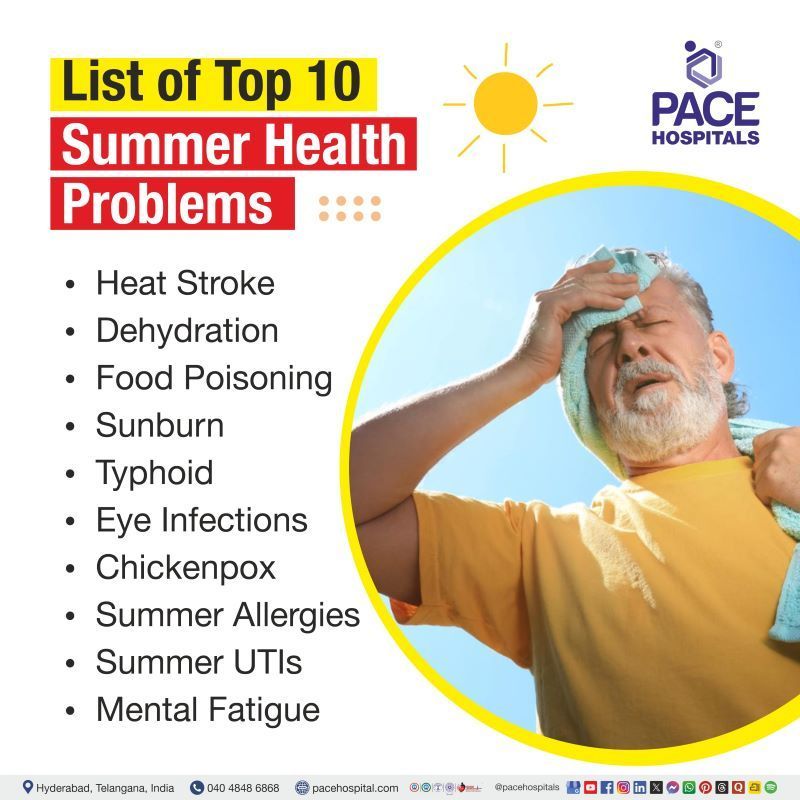
| Health Problem | Primary Cause | Key Symptoms |
|---|---|---|
| Heat Stroke | Extreme heat exposure | High body temp, confusion, nausea |
| Dehydration | Low fluid intake | Thirst, dry mouth, fatigue |
| Food Poisoning | Contaminated food | Vomiting, diarrhea, stomach pain |
| Sunburn | UV radiation | Red, painful skin, peeling |
| Typhoid | Bacterial infection | High fever, weakness, headache |
| Eye Infections | Dust and allergens | Red, itchy, watery eyes |
| Chickenpox | Viral infection | Itchy rashes, fever, fatigue |
| Summer Allergies | Pollen and dust | Sneezing, runny nose, cough |
| Summer UTIs | Extreme heat and fluid loss through sweating | Painful urination, frequent urge |
| Mental Fatigue | Heat stress | Irritability, lack of focus |
Here is a detailed look at these top 10 health problems in summer that commonly affect individuals across India:
1. Heat Stroke and Heat Exhaustion
These are possibly the most severe health issues in summer, due to exposure to excessive heat for a long period of time. Health tips for summer heat emphasise that symptoms such as dizziness, heavy sweating, nausea and confusion should be recognised. Heat stroke is a medical emergency condition, and it requires immediate attention.
2. Dehydration
Dehydration is a common summer health issue that occurs when you don’t drink enough fluids, especially in hot weather. Symptoms include thirst, dry mouth, low energy and reduced urination. Good summer health care tips always emphasise the need to drink plenty of fluids.
3. Food Poisoning and Typhoid
The hot climate encourages the growth of bacteria in food, leading to food poisoning and typhoid being common summer health problems in India. Good hygiene and freshly prepared food are two of the many summer health safety tips.
4. Sunburn and Prickly Heat
Too much sun can lead to sore sunburn and uncomfortable prickly heat rashes. Good summer health care includes sun protection and keeping the skin cool and dry.
5. Water-borne Diseases (Jaundice, Cholera)
Contaminated water sources are a significant concern during the summer season health problems, leading to diseases like jaundice and cholera. Always ensure you drink safe, purified water.
6. Eye Infections
Dust, pollution, and increased sweating can make eyes susceptible to infections with red, itchy, and watery eyes. Maintaining good eye hygiene is vital.
7. Late-Spring Viral Infections (Chickenpox, Measles)
Chickenpox and measles are both highly contagious viral infections and usually peak during the months leading up to early summer. The best way to prevent transmission is to keep your vaccination schedules up to date and avoid crowded and poorly ventilated areas.
8. Respiratory Issues (Summer Allergies, Asthma)
Pollen counts and dust levels can rise, leading to summer allergies and making asthma worse. Keep indoor environments clean and consult a doctor for medication adjustments.
9. Summer Urinary Tract Infections (UTIs)
Extreme heat and increased sweating can contribute to summer urinary tract infections, mainly in women. Drinking plenty of water is a key preventive measure.
10. Summer and Mental Health
The extreme heat and disruptions to routine can also impact mental well-being, leading to fatigue, irritability and potentially worsening existing mental health conditions. Summer mental health tips are just as important as physical health tips.
Expert Prevention Tips for a Healthy Summer
Preventing health problems during summer needs a proactive approach. Here are some of the best health tips for summer for different groups, ensuring comprehensive health and wellness tips for summer:
General Summer Health Tips
- Stay Hydrated: Consume plenty of water throughout the day. Don't wait until you feel thirsty. Always people need to carry a water bottle with them.
- Eat Light Meals: Eat fresh fruits and vegetables. Avoid heavy, spicy, and oily foods.
- Wear Light Clothing: People should prefer loose-fitting, light-colored cotton clothes to allow the body to breathe.
- Seek Shade: Avoid direct sun exposure, mainly between 11 AM and 4 PM. Use hats, umbrellas, and sunglasses.
- Maintain Hygiene: Take a bath twice a day and wash hands frequently to prevent infections.
Summer Health Tips for Students
Schools are often closed, so students may spend more time outside. Encourage your child to consume lots of fluids, play during the cooler parts of the day and wear sunscreen. “Stress the importance of a balanced diet, even on holidays”.
Summer Health Tips for Employees
If you work outdoors or in an area without air conditioning, be sure to take frequent breaks in a cool area, drink plenty of fluids and wear appropriate clothing. Employers must provide drinking water and shaded areas for employees to rest.
Summer Health Tips for Children
Children are at a higher risk of dehydration and heat-related illnesses. Make sure they drink lots of fluids, wear light clothing, and don’t play outside during the hottest hours of the day. Look for summer health tips for kids and summer health tips for children on playful hydration and sun protection.
The Summer Diet and Hydration Guide
What people eat and drink plays an important role in summer health care. Here's a guide to making smart choices:
Best Juices for Summer: Which juice is good for health in summer? Fresh fruit juices like watermelon, cucumber, mint, and lemon water are excellent choices. Sugarcane juice is also a popular and refreshing option. Is sugarcane juice good for health in summer? Yes, it provides instant energy and helps combat fatigue.
Best Fruits for Summer: Which fruit is good for health in summer? Water-rich fruits like watermelon, muskmelon, berries and oranges are highly recommended. Which dry fruit is good for health in summer? While dry fruits are nutritious, consume them in moderation due to their concentrated nature; soaked almonds can be beneficial.
Herbs & Spices: Is garlic good for health in summer? While garlic has many health benefits, some people find its heating properties less suitable for summer. Consume in moderation. Is green tea good for health in summer? Yes, green tea is a good source of antioxidants and can be consumed iced for a refreshing boost.
Conclusion
A proactive approach to wellbeing that prioritises prevention is necessary to weather the harsh Indian heat. Most seasonal diseases are readily preventable by maintaining tight hydration, adopting thoughtful dietary changes, and maintaining strict food and personal hygiene. Your biggest asset is your health; paying attention to your body's cues and acting promptly will guarantee that you and your family have a safe, vibrant, and energetic season.
Frequently Asked Questions (FAQs)
What are the earliest warning signs of heat exhaustion that I should look out for?
Heavy sweating, a fast heartbeat, dizziness, and cramping in the muscles are the first symptoms. Additionally, people can feel nauseous, have a slight headache, or suddenly feel extremely exhausted. Early detection of these symptoms and relocation to a cooler location can stop the development of a fatal heat stroke.
Why does food spoil faster during the summer, and how can we prevent food poisoning?
Bacteria can grow quickly in cooked food due to the warm, humid summer weather. Avoid storing food at room temperature for longer than two hours and always eat freshly prepared meals to prevent food poisoning. Before eating, fully reheat any leftovers in the refrigerator.
How many litres of water should an average adult drink daily during the summer months?
An average adult should drink three to four litres of water per day during the hottest part of the summer to counteract fluid loss from sweating. Maintaining adequate hydration becomes much more important if you work outside or engage in vigorous exercise. Drinking water on a regular basis is always preferable to waiting till you're thirsty.
Is it healthy to drink ice-cold water immediately after coming inside from the hot sun?
Immediately after being exposed to extreme heat, drinking ice-cold water might shock your body, causing cramping in your stomach or irritation of your throat. Additionally, it may narrow blood vessels, impeding the body's natural cooling processes for a short while. It is strongly advised to take a short break and replace it with room-temperature or earthen-pot water.
What immediate first-aid steps should be taken if someone suffers a heat stroke?
If someone shows signs of heat stroke, immediately call for emergency medical help, as it is a life-threatening crisis. Move the person to a shady, air-conditioned area and cool them rapidly using wet clothes or ice packs on their neck and armpits. Do not give them oral fluids if they are unconscious or confused.
Why are urinary tract infections (UTIs) more common in women during hot weather?
Inadequate water consumption causes less frequent urination, which allows bacteria to concentrate and grow in the urinary tract. This is the main reason why UTIs are more common in the summer. A wet environment that is favourable to bacterial development is also produced by increased sweating. The best preventive measures include staying hydrated and practicing proper personal cleanliness.
What is the best way to treat eye infections during summer?
Avoid touching the eyes at all if you have itching or reddishness to avoid further infection. After seeing a doctor, gently wash your eyes with cool, clean water and use any antibiotics or calming eye drops that have been given. Keep your hands clean at all times, and don't share pillows or towels.
How can we protect young children from prickly heat rashes and sunburns?
Children should be protected by wearing loose, breathable cotton clothing that keeps their skin dry and absorbs sweat. Avoid heavy oil-based moisturisers that clog sweat pores and give them a twice-daily bath in warm water. When engaging in outdoor activities, make sure kids are wearing wide-brimmed hats and apply a child-safe sunscreen.
Is it safe to drink street-side sugarcane or fruit juices during the peak summer season?
Although fresh juices are quite pleasant, street vendors can pose a significant danger of infection from exposed insects, ice, or contaminated water. Serious water-borne illnesses, including cholera, typhoid, or gastroenteritis, can result from consuming these. Making fresh juices in a hygienic manner at home or selecting clean, reliable vendors is safer.
What specific health tips should outdoor workers follow to stay safe from heatwaves?
The cooler early morning or late evening hours are the best times for outdoor workers to perform their most strenuous physical tasks. For every hour of continuous work, they should take 15-minute rests in cool or shaded areas. To avoid serious heat-related illnesses, it is important to consistently stay hydrated with water or ORS solutions.
How can asthma and allergy patients protect themselves from summer dust and pollen?
During windy afternoons, when dust and pollen counts are at their highest, people with respiratory conditions should limit their outdoor activities. Using indoor air purifiers and keeping windows closed during these times can greatly lessen exposure to triggers. Always keep rescue inhalers that have been prescribed, and ask your doctor about seasonal dosage modifications.
Is it necessary to limit the intake of heat-producing foods, such as garlic and dry fruits, during summer?
They should be consumed in strict moderation because of their intrinsic thermogenic (heat-producing) qualities, but there is no need to fully stop. Almonds and other dry fruits are safer to eat in the summer when they are soaked overnight to lessen their heating effect. In the same manner, reduce the amount of garlic, ginger, and chilli that you use frequently in the food you cook.
Which traditional Indian beverages are best for natural cooling and hydration?
Summertime is a great time to enjoy traditional beverages like kokum sharbat, delicate coconut water, buttermilk (chaas), and aam panna. In addition to naturally cooling the body, they restore vital minerals and electrolytes that are lost through sweating. These beverages are much better than sugary carbonated sodas, which increase dehydration.
Can the intense summer heat affect our mental health, and how do we manage it?
Yes, extended exposure to high temperatures can produce severe irritation or mental exhaustion, alter sleep patterns, and raise stress hormones. Additionally, dehydration impairs cognitive function by impairing focus and exacerbating anxiety. Your mood can be stabilised by staying in cool places and using relaxation techniques.
Share on
Request an appointment
Fill in the appointment form or call us instantly to book a confirmed appointment with our super specialist at 04048486868
Appointment request - health articles
Recent Articles