Tonsillitis Treatment, Causes, Symptoms and Self Care Explained
PACE Hospitals
Written by: Editorial Team
Medically reviewed by: Dr. Apeksha Neware - ENT Surgeon
Introduction
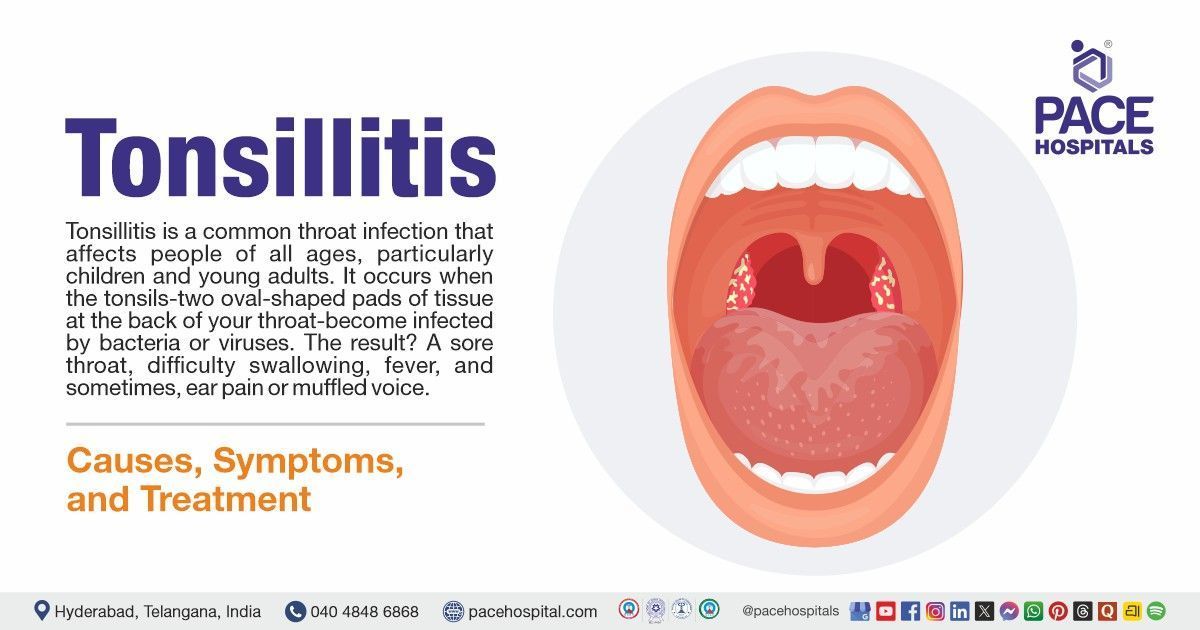
Tonsillitis is a common throat illness that affects people of all ages, but it is especially common in children and young adults. It develops when bacteria or viruses infect the tonsils, which are two oval-shaped tissues in the back of your throat, become infected by bacteria or viruses. The result? A sore throat, difficulty swallowing, fever, and sometimes, ear pain or muffled voice.
At PACE Hospitals Hyderabad, our ENT specialists offer advanced diagnostic and treatment options for tonsillitis, ranging from medical therapy to minimally invasive surgical removal (tonsillectomy) for chronic cases.

What Is Tonsillitis?
Tonsillitis is the inflammation of the tonsils induced by an infection. The tonsils are part of your body's immune defense, helping to trap germs that enter through the mouth or nose. When these tissues themselves become infected, they swell, turn red, and can develop white or yellow patches.
Common Causes
Tonsillitis may be caused by:
- Viral infections (most common) – such as adenovirus, influenza, or Epstein-Barr virus
- Bacterial infections – most commonly Streptococcus pyogenes (Group A Streptococcus), which also causes strep throat
Signs and Symptoms of Tonsillitis
Tonsillitis can develop quickly or slowly. Symptoms can vary depending on the etiology, however they typically include:
- A severe sore throat
- Painful swallowing (odynophagia)
- Tonsils are red, swollen, and may have white spots or pus.
- Fever and chills
- Headache and body ache
- Swollen lymph nodes in the neck
- Muffled or hoarse voice
- Ear pain (referred pain from throat)
- In severe cases: difficulty breathing or swallowing saliva
Children may also experience loss of appetite, drooling, and irritability.
Types of Tonsillitis
- Acute Tonsillitis – Sudden infection, often viral, lasting 3–10 days.
- Recurrent Tonsillitis – Several episodes per year despite treatment.
- Chronic Tonsillitis – Persistent infection and inflammation lasting weeks or months.
In some cases, untreated tonsillitis may lead to complications like Peritonsillar Abscess (Quinsy)—a painful collection of pus around the tonsil that can obstruct breathing and may require surgical drainage.
How Is Tonsillitis Diagnosed?
At PACE Hospitals, ENT specialists diagnose tonsillitis through:
- Physical examination – Checking throat, tonsil size, redness, pus spots.
- Throat swab culture or rapid antigen test – To detect Streptococcus bacteria.
- Blood tests – To rule out mononucleosis or other infections if needed.
- Imaging (rare) – Ultrasound or CT only if abscess or airway obstruction is suspected.
Treatment of Tonsillitis
Treatment depends on the underlying cause—viral or bacterial—and the frequency or severity of symptoms.
Medical Treatment
- Antibiotics: If bacterial infection is confirmed (e.g., Strep throat), antibiotics like penicillin or amoxicillin are prescribed.
- Pain relief: Paracetamol or ibuprofen to reduce throat pain and fever.
- Rest and hydration: Adequate fluids and warm saltwater gargles help ease discomfort.
- Avoid irritants: During the rehabilitation, avoid smoking, spicy foods, and cold beverages.
Important: Completing the full antibiotic treatment is important for preventing complications like rheumatic fever or kidney inflammation (post-streptococcal glomerulonephritis).
Surgical Treatment – Tonsillectomy
If tonsillitis is chronic or persistent,or if complications arise, surgery to remove the tonsils (tonsillectomy) may be indicated.
Indications for Tonsillectomy
- Recurrent tonsillitis (≥7 episodes/year)
- Persistent bad breath or pus discharge despite antibiotics
- Enlarged tonsils cause problems with breathing and swallowing.
- Recurrent peritonsillar abscess (Quinsy)
- Sleep apnea caused by enlarged tonsils
At PACE Hospitals Hyderabad, ENT surgeons perform minimally invasive tonsillectomy using advanced techniques such as Coblation and Laser Tonsillectomy, which minimize bleeding and postoperative pain.
Post-Surgery Care
- Soft diet (soups, mashed food, liquids) for 7–10 days
- Adequate hydration and rest
- Avoid spicy or crunchy food until healing completes
- Mild sore throat or ear pain may persist for a few days
Complications of Untreated Tonsillitis
If left untreated, tonsillitis can lead to:
- Peritonsillar Abscess (Quinsy)
- Chronic infection spreads to the ears or sinuses.
- Obstructive Sleep Apnea (OSA)
- Dysphagia, or difficulty swallowing.
- Untreated bacterial infection causes difficulties in the heart and kidneys.
Prevention Tips
You can lower your risk of tonsillitis by:
- Maintaining good oral hygiene
- Washing hands regularly, especially before eating
- Avoiding sharing utensils or drinks
- Keeping distance from people with sore throat or flu
- Staying hydrated and having a balanced diet high in vitamin C
At PACE hospitals, our ENT specialists also advise parents on how to prevent repeated throat infections in their children by promoting immunity and practicing environmental hygiene.
Cost of Tonsillitis Treatment at PACE Hospitals Hyderabad
| Treatment Type | Estimated Cost (INR) | Estimated Cost (USD) |
|---|---|---|
| OPD Consultation & Evaluation | ₹700 – ₹1,200 | $8 – $14 |
| Antibiotic & Medical Therapy | ₹2,000 – ₹4,500 | $25 – $55 |
| Tonsillectomy Surgery (Coblation/Laser) | ₹40,000 – ₹65,000 | $480 – $780 |
| Postoperative Follow-up & Recovery Care | ₹1,500 – ₹3,000 | $18 – $35 |
PACE Hospitals accepts major insurance plans and provides cashless treatment options for ENT operations.
Why Choose PACE Hospitals Hyderabad for Tonsillitis Care
- Experienced ENT Surgeons and Otolaryngologists with advanced surgical expertise.
- Advanced Coblation and Laser Surgery for a quicker, painless recovery.
- Comprehensive ENT Department providing diagnosis, treatment, and surgery under one roof.
- 24/7 emergency and ICU backup for handling complex infections like Quinsy.
- Ethical, patient-centered care with clear pricing and tailored therapy.
Frequently Asked Questions (FAQs) on Tonsillitis
What causes tonsillitis?
Most cases are viral, but bacterial infections—especially Streptococcus—can also cause it. Close contact and poor hygiene increase risk.
How is tonsillitis treated?
Treatment depends on cause—antibiotics for bacterial infection, painkillers, fluids, and rest. Severe or chronic cases may require tonsillectomy.
When is tonsil surgery required?
Tonsillectomy is advised for frequent recurrences, sleep apnea, chronic infection, or abscess formation around the tonsils.
Is tonsillitis contagious?
Yes. It spreads through droplets from coughing, sneezing, or sharing utensils. Maintain hygiene and avoid contact during infection.
How long does recovery take after tonsillectomy?
Recovery normally lasts 7-10 days, with slight throat or ear discomfort that gradually improves.
What is tonsillitis?
Tonsillitis is an infection caused by viruses or bacteria of the tonsils that causes a painful throat, fever, and difficulty swallowing.
What is Quinsy?
Quinsy is a serious complication where pus collects around the tonsil, causing severe pain and difficulty swallowing—requiring urgent drainage.
Can children outgrow tonsillitis?
Yes, many children experience fewer infections as they grow older, but recurrent or severe cases may need medical evaluation.
What foods help during recovery?
Soups, mashed vegetables, cereal, and yogurt are all soft, non-spicy foods that can help soothe and heal the throat.
Why choose PACE Hospitals for tonsillitis treatment?
PACE Hospitals provides comprehensive ENT care, expert surgeons, modern surgical technology, and compassionate follow-up for lasting relief.
Share on
Request an appointment
Fill in the appointment form or call us instantly to book a confirmed appointment with our super specialist at 04048486868
Appointment request - health articles
Recent Articles