Successful Laparoscopic Hysterectomy for Endometrial Hyperplasia
PACE Hospitals
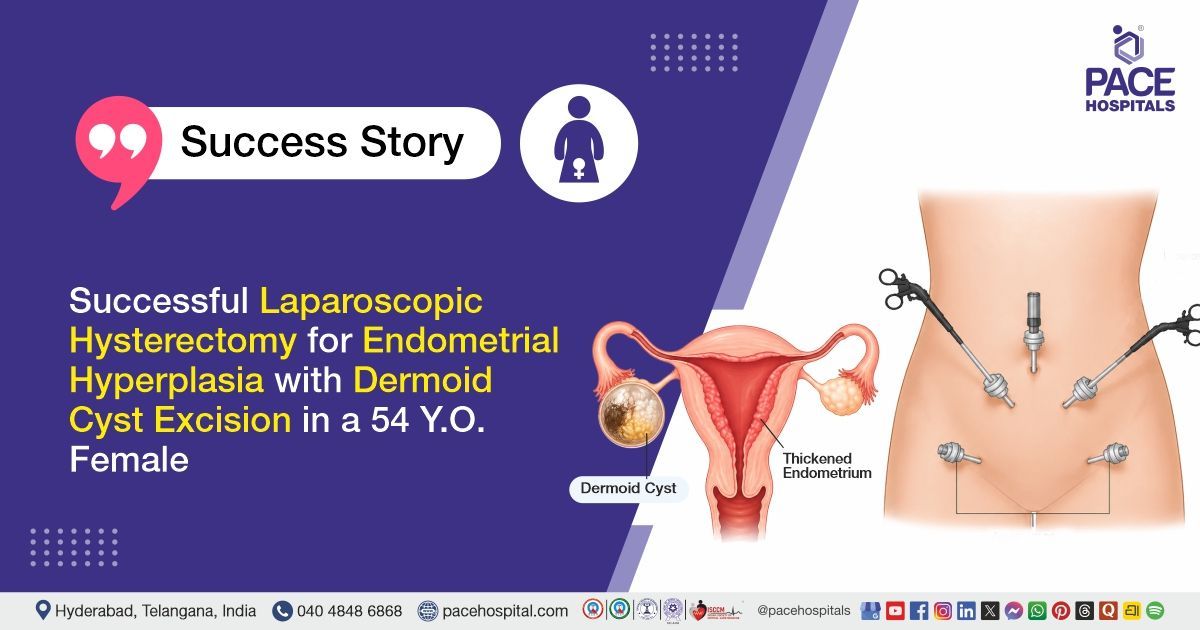
PACE Hospitals’ expert gynaecology team successfully performed a Laparoscopic Hysterectomy with Bilateral Salpingo-oophorectomy, along with Dermoid Cyst Excision and Endometrial Biopsy, on a 54-year-old female patient diagnosed with postmenopausal dysfunctional uterine bleeding associated with endometrial hyperplasia and a dermoid cyst. The aim of the procedure was to control postmenopausal dysfunctional uterine bleeding, treat endometrial hyperplasia, remove the dermoid cyst, and obtain endometrial tissue for histopathological evaluation to rule out malignancy.
Chief Complaints
A 54-year-old female patient with a body mass index (BMI) of 31 presented to the Gynaecology Department at PACE Hospitals, Hitech City, Hyderabad, with complaints of 2–3 episodes of postmenopausal bleeding. She had attained menopause 10 years earlier.
Past Medical History
The patient was a known case of diabetes mellitus, hypothyroidism, and anxiety, for which she had been on treatment. She had no known history of drug allergies.
Obstetric History
The patient was para 2, living 2 (P2L2), with a history of two full-term normal vaginal deliveries. Her menstrual cycles had been normal prior to menopause, which she had attained 10 years earlier.
On Examination
On examination, the patient was conscious, coherent, and oriented. Systemic examination revealed equal air entry bilaterally in the respiratory system and normal heart sounds on cardiovascular examination. The abdomen was soft. Breast examination was normal with no palpable lumps. Per speculum and per vaginal examination revealed a normal cervix with no fornicial tenderness. The patient was hemodynamically stable.
Diagnosis
Upon admission to PACE Hospitals, the patient was evaluated by the Gynaecology team, which included a detailed review of her medical history and a comprehensive clinical examination. The examination revealed a normal cervix with no fornicial tenderness, and the patient was found to be hemodynamically stable on assessment.
Ultrasound and clinical evaluation were suggestive of postmenopausal abnormal uterine bleeding associated with endometrial hyperplasia and an ovarian dermoid cyst. Further assessment confirmed the presence of dysfunctional uterine bleeding in a postmenopausal patient with a suspected ovarian dermoid cyst.
Based on the confirmed findings, the patient was advised to undergo Endometrial Hyperplasia Treatment in Hyderabad, India, along with an ovarian dermoid cyst excision under the expert care of the Gynaecology Department.
Medical Decision Making (MDM)
After a detailed consultation with Dr. Mugdha Bandawar, a Gynaecologist, a comprehensive evaluation of the patient was undertaken in coordination with cross consultations from Dr. Suresh Kumar S (Surgical Gastroenterologist), Dr. Tripti Sharma (Endocrinologist), and Dr. Seshi Vardhan Janjirala (Cardiologist). Considering her history of postmenopausal bleeding, dysfunctional uterine bleeding, endometrial hyperplasia, and dermoid cyst of the ovary, along with associated comorbidities including diabetes mellitus, hypothyroidism, and anxiety, the gynaecology team reviewed her clinical condition in detail. Clinical examination revealed a normal cervix with no fornicial tenderness, and the patient was hemodynamically stable on assessment.
Further evaluation, including imaging and preoperative investigations, confirmed the presence of endometrial hyperplasia associated with abnormal uterine bleeding in the postmenopausal age group along with an ovarian dermoid cyst. Laboratory investigations and systemic evaluation revealed acceptable parameters for surgical intervention with no contraindications for surgery.
Based on these findings, it was determined that laparoscopic hysterectomy with bilateral salpingo-oophorectomy, dermoid cyst excision, and endometrial biopsy was identified as the most appropriate intervention to manage symptoms, treat the underlying pathology, and rule out any malignant potential.
The patient and her family members were counselled in detail regarding the diagnosis, planned procedure, associated risks, benefits, and expected postoperative recovery, following which informed consent was obtained.
Surgical Procedure
Following the decision, the patient was scheduled to undergo a Bilateral Salpingo-Oophorectomy with Laparoscopic Hysterectomy Surgery in Hyderabad at PACE Hospitals, along with dermoid cyst excision, and endometrial biopsy under the supervision of the expert Gynaecology Department
The following steps were carried out during the procedure:
- Cervical Dilatation and Endometrial Sampling Attempt: The cervix was dilated, and dilatation and curettage were performed. However, no endometrial scrapings were obtained, and hence the sample was not sent for frozen section.
- Intraoperative Pelvic Assessment: Laparoscopic evaluation revealed an atrophied uterus. Bilateral fallopian tubes appeared normal. The left ovary was atrophied, while the right ovary appeared bulky for age with a suspected dermoid cyst.
- Mobilization of Uterus and Adnexa: The uterus along with bilateral adnexal structures was carefully dissected and mobilized laparoscopically, ensuring preservation of surrounding pelvic structures and maintaining proper surgical planes.
- Removal of Specimen: The uterus with cervix, bilateral fallopian tubes, ovaries, and associated cyst was completely excised and removed. The specimen was sent for histopathological examination for further evaluation.
- Hemostasis and Vaginal Vault Closure: Meticulous hemostasis was achieved throughout the surgical field. The vaginal vault was then closed securely, completing the procedure without intraoperative complications.
Postoperative Care
Postoperatively, the patient was monitored in the Surgical Intensive Care Unit (SICU) for observation and later shifted to the ward after achieving hemodynamic stability. Postoperative management included measures for infection prevention, pain control, gastric protection, nausea control, hydration, and metabolic stabilization. The histopathology report revealed a benign ovarian dermoid cyst (monodermal cystic teratoma), adenomyosis of the uterus, and an endometrial polyp, with no evidence of malignancy. The patient showed steady improvement and remained stable throughout the hospital stay.
Discharge Medications
Upon discharge, the patient was prescribed medications for prevention of postoperative infection, pain relief, reduction of inflammation and swelling, and gastric protection. She was also advised medications to support bowel regularity and prevent constipation, along with topical application for local wound care.
In addition, she was advised supplements for nutritional support and bone health. Medications were also prescribed for long-term management of diabetes mellitus, thyroid dysfunction, and lipid control to optimize metabolic status during recovery.
Advice on Discharge
The patient was advised to avoid heavy lifting and strenuous physical activities during the recovery period. She was instructed to follow a diabetic diet, salt-restricted, with high protein.
Emergency Care
The patient was informed to contact the emergency ward at PACE Hospitals in case of any emergency or development of symptoms such as abdominal pain, heavy vaginal bleeding, or fever.
Review and Follow-up Notes
The patient was advised to return for a follow-up appointment with the Gynaecologist in Hyderabad at PACE Hospitals after 1 week. Additional follow-ups were scheduled with the cardiologist and surgical gastroenterologist after 10 days for further evaluation and management.
Conclusion
This case highlights a postmenopausal woman with abnormal uterine bleeding due to endometrial hyperplasia with an associated ovarian dermoid cyst. She was successfully managed with a laparoscopic hysterectomy, bilateral salpingo-oophorectomy, and cyst excision with biopsy. The patient had an uneventful recovery and was discharged in a stable condition with follow-up advice.
Integrated Care in Complex Postmenopausal Gynaecological Surgery
Major gynaecological surgical cases require a multidisciplinary approach with thorough preoperative evaluation and optimization of associated medical conditions to ensure patient safety and reduce perioperative risk. Coordination with relevant specialties such as medicine, anesthesia, and other subspecialties is essential for comprehensive assessment and preparation for surgery. Intraoperative management focuses on meticulous surgical technique, adequate hemostasis, and prevention of complications through careful intraoperative care.
Postoperatively, patients are closely monitored in a high-dependency setting until stable, followed by step-down care with continued clinical assessment. Recovery is evaluated through clinical improvement and appropriate investigations, and patients are discharged in stable condition with structured follow-up for ongoing medical and surgical care under a gynaecologist/gynaecology doctor. Early mobilization and patient education play a key role in enhancing recovery outcomes. Regular follow-up ensures timely identification and management of any late complications.
Frequently Asked Questions (FAQs)
What are the benefits of a laparoscopic hysterectomy over traditional surgery?
Laparoscopic hysterectomy uses small cuts, which means less pain and quicker recovery than the regular surgery. Since the cuts are smaller, there’s less bleeding and a shorter hospital stay. Patients can return to their normal activities much faster compared to traditional surgery.
What is the importance of endometrial biopsy in this surgery?
An endometrial biopsy helps check if there are any unusual cells in the lining of the uterus. This test is important for women who have abnormal bleeding after menopause. It helps the doctor find out if there is a condition like endometrial hyperplasia, which could lead to cancer, so that the right treatment can be given.
Why is a dermoid cyst excised during a laparoscopic hysterectomy?
A dermoid cyst is a growth that can develop on the ovaries. It can cause pain or infection if not removed. By taking it out during the surgery, doctors prevent future problems and make sure it’s not cancerous. Removing the cyst helps keep the ovaries healthy and avoids further complications.
What post-operative care is necessary after a laparoscopic hysterectomy?
After surgery, it’s important to rest and avoid lifting heavy objects or doing strenuous activities to help the body heal. Doctors will give pain medications to manage any discomfort. Patients will also need to attend follow-up visits to make sure they are healing well and to check for any possible complications.
What are the common risks associated with a laparoscopic hysterectomy?
Laparoscopic hysterectomy is generally a safe procedure, but like all surgeries, it carries some risks. These may include bleeding, infection, or injury to nearby organs, although such complications are uncommon. Some patients may also have a reaction to anesthesia. However, since it is a minimally invasive surgery, the risks are usually lower and recovery is faster compared to traditional open surgery.
What dietary restrictions should be followed after surgery?
After surgery, eating healthy foods is important for healing. If someone has diabetes, they should follow a low-sugar, high-protein diet to keep their blood sugar in check. It’s also a good idea to avoid heavy or hard-to-digest foods at first, to make sure the body can heal without any extra strain.
How does a postmenopausal woman manage abnormal bleeding after menopause?
Abnormal bleeding after menopause is not normal and can indicate other health issues. If this happens, a hysterectomy (removal of the uterus) may be recommended to stop the bleeding and reduce the risk of more serious problems. This procedure helps prevent future health concerns related to the bleeding.
What is the significance of monitoring blood pressure and blood sugar levels post-surgery?
Monitoring blood pressure and blood sugar is important after surgery because high blood pressure or blood sugar can slow healing and cause other health problems. Keeping these levels stable helps the body heal faster and prevents complications like infections or poor wound recovery.
Why is a follow-up review with the doctor important after this surgery?
A follow-up visit with the doctor is necessary to make sure the recovery is going well. The doctor will check if there are any issues, such as infections or abnormal bleeding, and go over biopsy results. This visit ensures that everything is healing properly and allows the doctor to provide any additional care if needed.
What are the long-term benefits of a laparoscopic hysterectomy with bilateral salpingo-oophorectomy?
This surgery removes the uterus and ovaries, which helps to stop abnormal bleeding and eliminates the risk of ovarian cancer. It also means fewer future health concerns, as patients don’t have to worry about gynaecological problems. Overall, it improves the quality of life and reduces the need for future treatments.
Share on
Request an appointment
Fill in the appointment form or call us instantly to book a confirmed appointment with our super specialist at 04048486868
Appointment request - health articles
Recent Articles