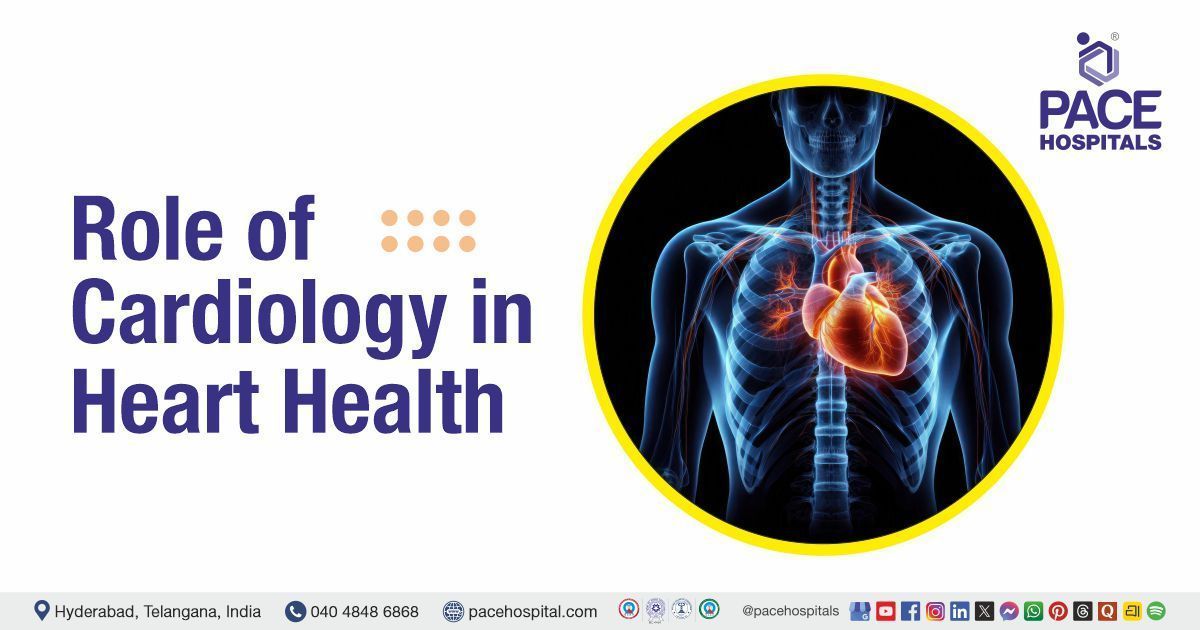
Understanding the Role of Cardiology in Overall Heart Health
PACE Hospitals
Written by: Editorial Team
Medically reviewed by: Dr. Seshi Vardhan Janjirala - Consultant Interventional Cardiologist
Cardiology and heart care are central to protecting one of the most vital organs in the human body, the heart. The heart continuously pumps oxygen-rich blood throughout the body, supporting every organ and system. Because of its constant activity, even minor problems with heart function can lead to serious health consequences if left unaddressed.
Cardiology plays a crucial role not only in treating heart diseases but also in preventing cardiovascular conditions, detecting problems early, guiding lifestyle changes, and supporting long-term heart health. Understanding the role of cardiology in heart care helps people take proactive steps to maintain a healthy heart and alleviate the risk of life-threatening complications.
What Is Cardiology?
Cardiology is the branch of medicine that deals with the care, management, and prevention of heart and vascular disorders. In simple terms, cardiology studies how the heart works, what leads to heart problems, and how these conditions can be prevented or treated.
Cardiology deals with a broad spectrum of heart and blood vessel conditions, including:
- Coronary artery disease
- Heart attacks
- Heart failure
- Heart rhythm disorders (arrhythmias)
- Heart valve diseases
- Congenital heart defects
- High blood pressure and high cholesterol
Modern cardiology strongly emphasizes preventive heart care, as many heart diseases develop gradually and can often be avoided with early diagnosis and healthy lifestyle choices.
Understanding Heart Care
Heart care is a lifelong approach to maintaining a healthy, efficient heart. It goes beyond treating disease to emphasis prevention, early diagnosis, and ongoing care. Heart care, including:
- Maintaining a heart-healthy lifestyle
- Prompt identification and control of risk factors
- Preventing heart disease and heart attacks by promoting healthy habits and proactive care.
- Managing existing heart conditions
- Improving quality of life and longevity
Cardiology provides the medical expertise, diagnostic tools, and treatment strategies that make effective heart care possible at every stage of life.
What Is a Heart Doctor Called?
A heart doctor is called a cardiologist. A cardiologist is a medical specialist who focuses on the health of the heart and the blood vessels that form the cardiovascular system. Cardiologists are trained to diagnose, treat, and prevent a wide range of heart-related conditions, including high blood pressure, high cholesterol, heart rhythm disorders, coronary artery disease, heart failure, and heart attacks.
In addition to treating heart diseases, cardiologists play an important role in preventive heart care. They assess an individual's risk of developing heart disease, recommend lifestyle changes, monitor heart health over time, and use diagnostic tools such as electrocardiograms (ECG), echocardiography, stress tests, and imaging studies to detect problems early and support long-term heart health.
What Does a Cardiologist Do?
A typical search question is: "What does a cardiologist do?" The answer highlights how cardiology supports both treatment and prevention.
A cardiologist:
- Assesses symptoms including chest pain, shortness of breath, fatigue, and dizziness.
- Detects heart conditions through ECG, echocardiography, stress tests, and other imaging techniques
- Treats high blood pressure (Hypertension), high cholesterol, and heart rhythm disorders
- Helps prevent heart attacks by identifying and managing risk factors
- Provides long-term care for chronic heart conditions
- Educates patients on heart-healthy lifestyle choices
Cardiologists use a combination of medical care, preventive measures, and patient education to protect and enhance heart health.

Preventive Role of Cardiology in Heart Care
Preventing heart problems is a major focus in cardiology, as many conditions can develop silently without obvious symptoms.
Cardiologists work to reduce the risk of heart disease by identifying and controlling important risk factors, such as:
- Use of tobacco or smoking
- Lack of regular physical activity
- Poor or unhealthy eating habits
- Ongoing stress
- Diabetes
- Excess body weight (obesity)
- Family history of heart disease
By addressing these risks early, cardiology significantly reduces the chances of heart attacks, strokes, and heart failure.
Types of Heart Doctors in Cardiology
There are different types of heart doctors, each focusing on a specific area of cardiology and heart care:
- General Cardiologist – Diagnoses and manages common heart conditions
- Interventional Cardiologist – Treats blocked arteries using procedures including angioplasty and stent placement
- Electrophysiologist – Specializes in heart rhythm and electrical disorders
- Heart Failure Specialist – Treats and manages patients with chronic or advanced heart failure.
- Preventive Cardiologist – Focuses on reducing heart disease risk through lifestyle and medical strategies
Together, these specialists form a comprehensive cardiology care system.

Role of Cardiology in Heart Attack Care
Heart attack care is one of the most critical areas of cardiology. A heart attack occurs when blood flow to part of the heart muscle is blocked, causing tissue damage.
Cardiology plays a life-saving role by:
- Quickly diagnosing heart attacks
- Reestablishing blood flow using emergency treatment.
- Prescribing medications to decrease heart damage and prevent complications
- Monitoring recovery and heart function means keeping track of the heart and treatment to help it heal properly.
- Helping prevent future heart attacks by providing continuous care and advice on healthy lifestyle choices.
Early cardiology intervention greatly improves survival rates and long-term outcomes.
Diagnostic Tools Used in Cardiology
Accurate diagnosis is essential for effective heart care. Modern cardiology relies on advanced diagnostic tools, such as:
- Electrocardiogram (ECG)
- Echocardiography
- Stress testing
- Cardiac Computed tomography (CT) and Magnetic resonance imaging (MRI) scans
- Blood tests that measure heart-related markers
These tools help detect heart conditions early and guide proper treatment.
Heart Care across Different Stages of Life
Cardiology supports heart care throughout all stages of life:
- Young adults: Emphasis is placed on prevention through regular physical activity, healthy eating, avoiding smoking, and maintaining a healthy weight to reduce future heart disease risk.
- Middle-aged adults: Regular monitoring of blood pressure, cholesterol, blood sugar, and stress levels is important to detect early heart problems and prevent complications.
- Older adults: Care focuses on managing existing heart conditions, taking medications as prescribed, and maintaining mobility, independence, and overall quality of life.
This age-specific approach ensures continuous, personalized heart care.
Cardiology and Heart Care at PACE Hospitals
Comprehensive heart care requires medical expertise, advanced technology, and a patient-centred approach. PACE Hospitals provides integrated cardiology and heart care services supported by experienced specialists and modern diagnostic facilities.
Heart care services at PACE Hospitals focus on:
- Preventive cardiology and risk assessment
- Advanced cardiac diagnostics
- Medical and interventional treatment of heart diseases
- Emergency heart attack care
- Long-term heart disease management and rehabilitation
By combining prevention, early diagnosis, and advanced treatment, PACE Hospitals plays an important role in delivering reliable and comprehensive cardiology care.
Heart-Healthy Lifestyle Supported by Cardiology
Scientific research in cardiology strongly supports the following heart care practices:
- Eating a balanced, heart-healthy diet
- Engaging in regular physical activity
- Maintaining a healthy body weight
- Managing stress effectively
- Getting adequate sleep
- Avoiding smoking and excessive alcohol consumption
These habits form the foundation of long-term heart health.
Frequently Asked Questions (FAQs) on Cardiology and Heart Health
What is cardiology, and why is it important for heart health?
Cardiology is a medical specialty that deals with the structure, function, and diseases of the heart and blood vessels. It plays an important role in heart health by helping prevent heart disease, identify problems early, provide proper treatment, and support long-term heart health and overall well-being.
Who treats heart diseases and heart-related conditions?
Heart diseases and heart-related conditions are treated by cardiologists. Cardiologists are trained specialists who diagnose heart problems, manage cardiovascular disorders, and focus on both treatment and prevention to protect and maintain heart health.
What services does a cardiologist provide in heart care?
A cardiologist provides services such as comprehensive heart evaluations, diagnostic testing, medical management of heart diseases, control of blood pressure and cholesterol, and long-term follow-up care to support overall heart health.
What heart conditions are commonly treated in cardiology?
Cardiology deals with the treatment of conditions such as coronary artery disease, heart attacks, heart failure, irregular heartbeats, valve problems, and high blood pressure (hypertension). If not treated on time, these conditions can seriously affect heart function. Early detection and proper care help prevent complications and keep the heart healthy.
What symptoms indicate I need urgent cardiology care?
Seek urgent heart care if you have severe chest pain, sudden trouble breathing, a fast or uneven heartbeat, fainting, chest pain spreading to the arm, jaw, or back, or sudden weakness or numbness. These could be signs of a heart attack or a serious heart problem.
What tests are commonly used in cardiology for heart care?
Common cardiology tests include electrocardiograms (ECG) to assess heart rhythm, echocardiography to evaluate heart structure and function, stress tests to measure heart performance during activity, cardiac CT or MRI scans, and blood tests related to heart health.
When should someone consider seeing a cardiologist?
A person should consider seeing a cardiologist if they experience symptoms such as chest pain, shortness of breath, irregular heartbeat, dizziness, or fatigue, or if they have risk factors like diabetes, high blood pressure, obesity, or a family history of heart disease.
What is the difference between a cardiologist and a cardiac surgeon?
A cardiologist diagnoses and treats heart conditions using medications, lifestyle interventions, and non-surgical procedures like angioplasty. A cardiac surgeon performs surgical procedures on the heart, such as coronary artery bypass surgery or valve replacement. Cardiologists and cardiac surgeons often work together to provide comprehensive heart care.
Can young people have heart problems, or is it only an older person's concern?
Although heart disease is more common in older adults, young people can also have heart problems, including congenital heart defects, arrhythmias, cardiomyopathy, and issues related to high blood pressure (hypertension) or diabetes. Sudden heart events can sometimes happen in young athletes, so screening is important for those with symptoms or a family history of heart disease.
What is the difference between a heart attack and cardiac arrest?
A heart attack occurs when blood flow to part of the heart is blocked, damaging the heart muscle, but the heart usually continues beating. Cardiac arrest occurs when the heart suddenly stops beating, usually due to an electrical malfunction. Both are medical emergencies, but cardiac arrest requires immediate CPR and defibrillation.
What is the role of cardiology in maintaining heart health?
The role of cardiology in maintaining heart health includes identifying risk factors, monitoring heart function, diagnosing cardiovascular conditions, and guiding both medical treatment and lifestyle changes to reduce the risk of heart disease and improve heart performance.
How does cardiology help prevent heart disease?
Cardiology plays a key role in preventing heart disease by identifying personal risk factors, guiding lifestyle improvements, using medications when needed, and regularly monitoring heart health to lower the chance of serious heart problems.
How does cardiology support long-term heart care?
Cardiology supports long-term heart care through regular follow-up visits, management of chronic heart conditions, ongoing evaluation of heart function, adjustment of treatment plans, and guidance on maintaining a heart-healthy lifestyle. This continuous care helps prevent complications, alleviate the risk of future heart problems, and improve overall quality of life.
Why is preventive cardiology important for overall heart health?
Preventive cardiology is important because it aims to lower the risk of heart disease before symptoms appear. It helps people maintain healthy heart function, prevent complications, and achieve better long-term health outcomes.
How often should I have a cardiology check-up?
How often you should visit a cardiologist depends on your age, health, and risk factors. Adults over 40, or those with high blood pressure, diabetes, or a family history of heart disease, should usually have a check-up once a year. If you already have a heart condition, your cardiologist may suggest more frequent visits.
Can lifestyle changes really prevent heart disease, or do I need medication?
Lifestyle changes are highly effective in preventing heart disease and include regular exercise, a heart-healthy diet, maintaining a healthy weight, not smoking, limiting alcohol, and managing stress. For some people with high-risk factors, medications may be necessary in addition to lifestyle changes. Your cardiologist can determine the best approach based on your individual risk profile.
What should I expect during my first cardiology appointment?
During your first cardiology appointment, expect a comprehensive medical history review, discussion of symptoms and risk factors, a physical examination focusing on the heart and circulation, and possibly diagnostic tests such as an ECG or blood tests. The cardiologist will assess your heart health and develop a personalized care plan.
Are heart palpitations always a sign of a serious problem?
Heart palpitations are usually not serious and can happen because of stress, caffeine, certain medicines, or hormonal changes. But if they occur often, last a long time, or come with chest pain, dizziness, or trouble breathing, or if you have heart disease, you should see a heart doctor for proper evaluation.
What is an interventional cardiologist, and when would I need to see one?
An interventional cardiologist specializes in catheter-based procedures to treat heart conditions without open surgery. You might need to see one for procedures like angioplasty, stent placement, or valve repair. Your general cardiologist will refer you if you have blocked arteries or specific structural heart problems requiring intervention.
How does diabetes affect heart health, and what role does cardiology play?
Diabetes greatly raises the risk of heart disease by harming the blood vessels and nerves that affect the heart. Cardiologists help manage this risk in people with diabetes through regular check-ups, controlling blood pressure and cholesterol, and preventing problems such as heart attacks and heart failure.
What is cardiac rehabilitation, and who needs it?
Cardiac rehabilitation is a guided program that helps people recover after a heart attack, heart surgery, or other heart problems. It includes supervised exercise, advice on healthy habits for the heart, counseling, and support. This program is recommended for anyone recovering from a heart event to strengthen heart function and lower the risk of future problems.
At what age should I start worrying about heart health?
Heart health should be a priority at all ages, but risk assessment typically begins in early adulthood. Those in their 20s and 30s should establish healthy habits, while those over 40 should have regular cardiovascular screenings. If you have a family history of early heart disease, risk assessment should begin even earlier, potentially in teenage years.
How long does it take to recover after a heart procedure?
Recovery time depends on the type of procedure. Less invasive procedures, such as angioplasty, may need just a few days to a week for initial recovery, while open-heart surgery can take 6 to 12 weeks or more for full recovery. Cardiac rehabilitation programs help support healing, and your cardiologist will give instructions based on your procedure and overall health.
Does insurance typically cover cardiology services and heart tests?
Most health insurance plans usually pay for cardiologist visits, tests, and treatments. They may also cover routine heart check-ups. It is important to confirm with your insurance provider about specific benefits, any copayments, and requirements before scheduling appointments. It is important to check with your insurance provider about coverage, copayments, referrals, and any limits on cardiology services.
What heart-healthy foods should I include in my diet?
A heart-healthy diet focuses on plenty of fruits and vegetables, whole grains, lean proteins like fish and poultry, nuts and legumes, and healthy fats from sources like olive oil and avocados. It is important to limit saturated and trans fats, sodium, added sugars, and processed foods. Diet plans like the Mediterranean and DASH diets are proven, evidence-based ways to support heart health.
Share on
Request an appointment
Fill in the appointment form or call us instantly to book a confirmed appointment with our super specialist at 04048486868
Appointment request - health articles
Recent Articles