
Cystocele Diagnosis, Repair, Treatment & Cost
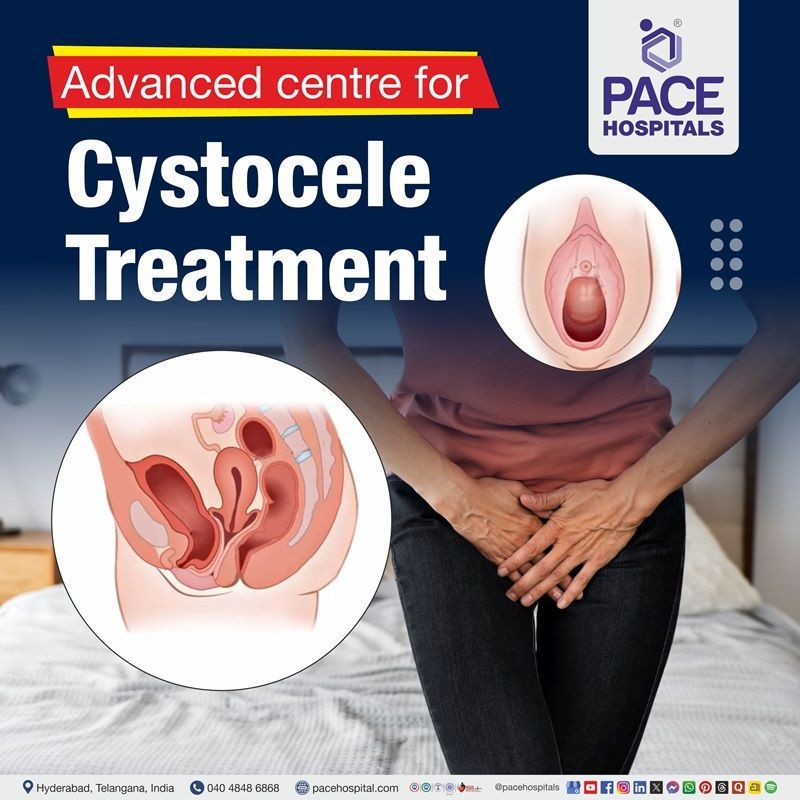
PACE Hospitals offers expert cystocele treatment in Hyderabad, India, providing personalized care for prolapsed bladder across all stages. Our specialists ensure accurate cystocele diagnosis through clinical evaluation and recommend treatment based on cystocele grading, ranging from pelvic floor therapy to advanced cystocele repair.
For severe cases, we perform precision-guided cystocele surgery with high success rates, helping restore bladder support, relieve symptoms, and improve quality of life.
Book Appointment for Cystocele Treatment
Cystocele Treatment Appointment
Why Choose PACE Hospitals for Cystocele Treatment?
Comprehensive Diagnostic Facilities: Pelvic Ultrasound, MRI Pelvis, Urodynamics & Cystoscopy for Accurate Cystocele Evaluation
Expert Urologists in Hyderabad for Comprehensive Cystocele Management
Personalized Cystocele care with Pelvic Floor Rehabilitation & Minimally Invasive Surgical Repair Options
Transparent Cystocele Treatment with Insurance & Cashless Options
Recognized for excellence in healthcare delivery with
NABH, NABL, NBE/DNB, NABH Nursing Excellence, and ISCCM accreditations.
Cystocele Diagnosis
The diagnostic process for a cystocele (prolapsed bladder) begins with a review of the patient's medical history, followed by a detailed physical and pelvic examination. Based on clinical findings, additional evaluations may be performed to assess the severity of the condition and guide appropriate management.
The urologist or urogynecologist considers several factors before selecting appropriate diagnostic tests for cystocele, including the patient's symptoms, medical history, and degree of pelvic discomfort. The following are the appropriate tests to diagnose cystocele:
- Medical history
- Physical examination
Medical History
When evaluating a person for a cystocele, a full medical background helps to find underlying causes, risk factors, and how to proceed with the test. Important points to focus on include:
- Presenting symptoms: This often includes sensations of a vaginal bulge, urine incontinence, pelvic heaviness, or difficulty urinating, all of which can suggest pelvic organ prolapse.
- Duration and progression of symptoms: It's important to find out the duration of symptoms, whether they have worsened over time, and how they affect daily life and quality of life.
- Obstetric history: This often covers the number of pregnancies, mode of deliveries (vaginal or cesarean), and any labor complications, as these are key risk factors for pelvic floor weakening.
- Menopausal status: It is critical to evaluate hormonal changes in postmenopausal women since they may reduce tissue support and have an impact on pelvic health.
- Surgical history: This includes any previous pelvic or abdominal procedures, such as hysterectomy or pelvic floor repair, which can affect anatomical support and play a role in the patient's current symptoms.
- Bowel and bladder habits: This looks into patterns of constipation, frequent straining, or incomplete bladder emptying, which can increase pressure on the pelvic organs.
- Lifestyle factors: This considers daily activities involving heavy lifting, chronic coughing, or obesity, all of which may contribute to increased intra-abdominal pressure.
- Family history: This may indicate a genetic risk, especially if close female relatives have experienced pelvic organ prolapse or other connective tissue disorders.
- Medication history: This includes both prescribed and over-the-counter drugs that may impair bladder function, bowel regularity, or hormone levels, all of which can have an impact on pelvic health.
- General medical history: It involves reviewing chronic conditions such as obesity, respiratory illnesses, connective tissue disorders, or neurological conditions, all of which may increase susceptibility to cystocele.
Physical Examination
During the physical examination for cystocele, the patient is asked to undress from the waist down to allow proper assessment of the pelvic area. The patient may be examined lying on their side with knees drawn up or in a standing position to facilitate visualization of any prolapse.
Bimanual palpation of the pelvic area is performed externally and internally through a vaginal examination to detect any bulges, lumps, or areas of weakness in the anterior vaginal wall.
A speculum is gently placed in the vagina to see the vaginal walls and check for any prolapse. The patient is often asked to perform a Valsalva manoeuvre (bearing down or straining) or spontaneous cough during the exam to increase intra-abdominal pressure and reveal prolapse more clearly.
The severity of the prolapse is graded using the Pelvic Organ Prolapse Quantification (POP-Q) system, based on the degree of descent of the pelvic organs relative to the vaginal opening.
✅Diagnostic Evaluation for Cystocele
Based on the above information, a urologist/urogynecologist may advise diagnostic tests to confirm the presence and cause of cystocele. The following are the tests that might be recommended to diagnose cystocele:
- Clinical Functional Tests
- Postvoid residual (PVR) urine measurement
- Q-tip test
- Imaging Studies
- Ultrasound
- Voiding cystourethrogram (VCUG)
- Magnetic resonance imaging (MRI)
- X-rays
- Endoscopic examination
- Cystoscopy
Clinical Functional Tests
- Postvoid residual (PVR) urine measurement: This is a non-invasive test that measures the volume of urine remaining in the bladder after voiding, typically using bladder ultrasound or catheterisation. Elevated PVR suggests incomplete bladder emptying due to bladder outlet obstruction or detrusor dysfunction caused by cystocele. It is often one of the first tests performed to evaluate urinary function.
- Q-tip test: This test measures urethral hypermobility, which is commonly associated with cystocele and may exacerbate stress urinary incontinence, but it is not routinely performed. After inserting a lubricated cotton swab into the urethra, the angle change while straining is measured; an angle greater than 30 degrees indicates hypermobility.
Imaging Studies
- Ultrasound: It is often used as an initial imaging modality. Transperineal or transvaginal ultrasound evaluates the bladder, anterior vaginal wall, bladder wall thickness, and measures postvoid residual volume. It provides a quick, non-invasive overview of pelvic anatomy and bladder function.
- Voiding cystourethrogram (VCUG): A dynamic fluoroscopic study, the VCUG involves filling the bladder with contrast and imaging it during both the voiding and filling phases. It shows the twisting, blockage, urethral mobility, and bladder descent related to cystocele, together with any diverticula or vesicoureteral reflux that may be present. In circumstances involving surgery or complexity, this exam is quite helpful.
- Magnetic resonance imaging (MRI): It provides a clear visualisation of pelvic floor muscles, ligaments, and organs with superior soft tissue contrast. Dynamic MRI performed during straining or the Valsalva maneuver is valuable for assessing the extent of cystocele and identifying pelvic floor defects, particularly in complex or recurrent prolapse.
- X-rays: Due to their limited ability to visualise soft tissues, plain pelvic X-rays are not very useful in diagnosing cystocele. They are usually not included in the standard evaluation of cystocele, but they can be used to evaluate pelvic bones or detect calcifications.
Endoscopic Examination
- Cystoscopy: It can only be applied in cases when there is a suspicion of bladder pathology,
hematuria, or recurrent
UTIs. By directly visualizing the bladder and urethra, cystoscopy makes it possible to identify and rule out tumors, diverticula, or other anomalies that could resemble or exacerbate the symptoms of cystocele.
✅Cystocele Grading
The cystocele grading system refers to the staging of a prolapsed bladder using the Pelvic Organ Prolapse Quantification (POP-Q) system. It is classified into four stages (Grades 1–4), ranging from mild to severe, based on the extent of the bladder’s descent into the vaginal wall.
Stage 0:
No descent of the bladder; the anterior vaginal wall is well supported, and there is no prolapse present.
Stage I: Mild Prolapse
- The most distal portion of prolapse is more than 1 cm above the hymen
- Clinically: a mild bulge inside the vagina, usually asymptomatic or causes only minor symptoms.
Stage II: Moderate Prolapse
- The most distal portion of prolapse is within 1 cm above or below the hymen (−1 cm to +1 cm relative to the hymen)
- Clinically, the bulge may reach or just touch the vaginal opening, and patients may start to feel heaviness or a sense of fullness in the vagina.
Stage III: Severe Prolapse
- The most distal portion of prolapse extends more than 1 cm beyond the hymen, but does not extend beyond the total vaginal length minus 2 cm.
- Clinically: bladder visibly protrudes outside the vaginal opening, and patients can experience bothersome symptoms (pressure, difficulty voiding, incomplete emptying)
Stage IV: Complete Prolapse
- There is complete eversion of the anterior vaginal wall, and the bladder prolapse extends the full length of the vagina.
- Clinically, the entire bladder may bulge outside the vagina, often accompanied by other types of pelvic organ prolapse, such as uterine prolapse or rectocele.
✅Cystocele Differential Diagnosis
The differential diagnosis of cystocele includes several other conditions that can present as vaginal or perineal masses or cause similar symptoms of pelvic organ prolapse, bulging, or urinary problems. Key differential diagnoses include:
- Bartholin gland cyst or abscess: This appears as a lump in the lower vaginal area and may cause pain or swelling. It is usually located more toward the back and side of the vaginal opening compared to a cystocele.
- Urethral diverticulum: This can form an anterior vaginal wall mass, sometimes mistaken for a cystocele; history of post-void dribbling and recurrent urinary tract infections may be present.
- Gartner duct cysts: These remnants of the embryonic mesonephric duct appear as cysts along the lateral vaginal wall and can sometimes mimic a cystocele.
- Nabothian cysts: These are benign cysts of the cervix, usually asymptomatic and easily distinguishable on physical examination.
- Vaginal neoplasms: This is rare, but tumors or cancer in the vaginal wall may present with a bulge or mass. A careful examination is necessary to exclude neoplastic causes.
- Rectocele: This is prolapse of the rectal wall into the posterior vaginal wall, distinguished from cystocele by its location and relationship to bowel symptoms.
- Enterocele: This is a herniation of the small bowel through the vaginal wall, generally found in the upper posterior vaginal wall and may coexist with cystocele.
- Ureterocele: This is a cystic dilatation of the distal ureter that may prolapse into the bladder or urethra and occasionally mimic a cystocele like bulge. It is usually associated with urinary tract anomalies, stones, obstruction, or hydronephrosis
- Benign anterior vaginal wall cysts: These can often mimic cystoceles on examination but are typically distinct on imaging and clinical assessment.
✅Goals of Treatment of Cystocele
The goals of cystocele treatment are to correct anatomical defects, alleviate symptoms, and maintain pelvic health and patient well-being. The goals include:
- To restore the normal anatomical position of the bladder by strengthening the weak vaginal wall that supports it.
- To relieve symptoms like vaginal bulge, discomfort, urinary problems (incontinence, retention), and sexual dysfunction.
- To improve or preserve sexual function and overall quality of life.
- To prevent progression or worsening of the prolapse.
- To minimise risk of recurrence and surgical complications.
- To promote recovery of bladder support and pelvic floor function.
Need clarity on cystocele diagnosis and treatment?
Get a free second opinion
At PACE Hospitals, we are committed to providing our patients with the best possible care, and that includes offering second medical opinions with super specialists for treatment or surgery. We recommend everyone to get an expert advance medical second opinion, before taking decision for your treatment or surgery.
Treatment of cystocele (prolapse of the bladder) depends on its severity and the person's symptoms. Mild cases may not require intervention, while moderate to severe cases have several management options. The following are the cystocele treatment options:
- Nonsurgical treatments
- Pelvic floor exercises (Kegels)
- Vaginal pessaries
- Lifestyle and activity changes
- Hormone replacement therapy
- Bladder and bowel training programs
- Surgical treatments
- Anterior colporrhaphy
- Paravaginal repair
- Vaginal mesh repair
- Hysterectomy
- Urethral suspension
- Obliterative surgery
- Sacrocolpopexy / sacrohysteropexy
Non-surgical Treatments
Non-surgical treatments for cystocele focus on relieving symptoms and preventing progression by strengthening pelvic support and reducing strain. These include:
- Pelvic floor exercises (Kegels): Pelvic floor muscle training strengthens the muscles that support the bladder and vaginal wall, alleviating symptoms and preventing the progression of cystocele. These exercises help to improve pelvic muscle strength, urinary symptoms, and overall quality of life. Regular practice involves contracting and relaxing pelvic muscles in sets to build muscle tone and control.
- Vaginal pessaries: A vaginal pessary is a silicone device inserted into the vagina to support the bladder and vaginal wall physically. It offers prompt symptom relief and is commonly used as a non-surgical option for women who cannot or choose not to undergo surgery. Pessaries require fitting by a healthcare provider and regular cleaning to prevent infections.
- Lifestyle and activity changes: Relieving pressure on the pelvic organs and reducing symptoms can be achieved through simple lifestyle changes.
- Avoid heavy lifting and straining during bowel movements.
- Managing constipation with a balanced diet rich in fiber and adequate hydration is also important.
- Maintaining a healthy
body mass index (BMI) and quitting smoking can help improve pelvic tissue support and overall pelvic health.
For better outcomes, these modifications are used in conjunction with other therapies. - Hormone replacement therapy: Topical hormonal therapy helps strengthen and maintain vaginal and urethral tissues, particularly in postmenopausal women with low female hormone levels. This can improve tissue quality and bulk, thereby reducing symptoms such as vaginal dryness and mild discomfort associated with prolapse. It is generally used as an adjunct to other treatments.
- Bladder and bowel training programs: These are structured, behaviour-based therapies aimed at improving control and habits of the bladder and bowel, especially when prolapse is associated with urinary urgency, frequency, incontinence, or constipation.
Surgical Treatments
Surgery aimed at restoring normal bladder position and strengthening the vaginal wall in severe cases. Cystocele surgery options include:
- Anterior colporrhaphy (cystocele repair surgery):This surgery involves tightening the connective tissue between the bladder and vagina to lift and support the bladder. It is the most common surgical treatment for cystocele and is typically performed vaginally under anaesthesia. Recovery takes a few weeks, and surgery aims to relieve symptoms and restore normal anatomy.
- Paravaginal repair: This procedure restores the attachment of the vaginal wall to the pelvic ligaments, correcting a lateral cystocele. The repair reinforces the structural support on the sides of the vagina and is often performed along with anterior colporrhaphy. It addresses defects at connective tissue attachment sites.
- Vaginal mesh repair: Vaginal mesh devices can be used to reinforce weak pelvic floor tissues and provide strong support. However, concerns about mesh related complications such as erosion into the bladder or vagina, infection, pain, and sexual discomfort have led to restricted use. Vaginal mesh is now reserved for selected complex or recurrent cases and is used cautiously after discussion of risks.
- Hysterectomy (if uterine prolapse coexists): If uterine prolapse coexists with cystocele, a hysterectomy may be performed to remove the uterus and promote pelvic floor healing. This combined strategy can improve overall pelvic support and reduce recurrence. Surgical decisions depend on symptoms and patient preference.
- Urethral suspension: This surgery lifts and supports the urethra to treat urinary incontinence associated with cystocele. It aims to restore normal bladder function and reduce leakage. Urethral suspension may be done alongside cystocele repair surgery.
- Obliterative surgery: In severe cases, when sexual intercourse is no longer desired, obliterative procedures narrow or close the vagina to provide strong support to the bladder. This option is generally reserved for elderly patients or those with extensive prolapse who are not candidates for reconstructive surgery.
- Sacrocolpopexy / sacrohysteropexy: These are abdominal or laparoscopic (often robotic assisted) mesh based surgeries that attach a mesh from the top of the vagina (sacrocolpopexy) or the uterus (sacrohysteropexy) to the sacrum to correct apical prolapse, and are often combined with anterior colporrhaphy when cystocele is present.
Cystocele Prognosis
The prognosis of a cystocele is mostly determined by the severity of the disease and the therapeutic strategy used.
- Mild cystoceles are typically effectively managed with simple lifestyle modifications such as avoiding heavy lifting, managing constipation, and completing pelvic floor exercises to strengthen the muscles.
- When the prolapse is severe, options such as vaginal pessary or surgical correction may be required.
- Surgery is usually effective, but recurrence is possible, especially if underlying conditions such as chronic straining or obesity remain.
- Postmenopausal women may also be administered vaginal hormones to help keep their tissues healthy. Continued pelvic floor support and regular follow-up care are important to preventing the issue from recurring.
- Overall, with proper management and self-care, most women experience significant symptom reduction and an improved quality of life.
Cystocele Treatment Cost in Hyderabad, India
The cost of Cystocele Treatment (also known as a prolapsed bladder) in Hyderabad generally ranges from ₹30,000 to ₹2,50,000 and above (approx. US $360 – US $3,010).
The exact cost of cystocele treatment depends on the severity of the prolapse, whether conservative or surgical treatment is required, and the type of surgical procedure (e.g., vaginal repair, abdominal surgery, or minimally invasive techniques). Additional factors such as preoperative diagnostics (ultrasound, MRI), hospitalization requirements, anesthesia, and postoperative care may also influence the total cost. Availability of cashless treatment options, TPA corporate tie-ups, and insurance assistance may further impact overall expenses.
Cost Breakdown According to Type of Cystocele Treatment
- Non-Surgical Management (Pelvic Floor Exercises & Pessaries) – ₹30,000 – ₹60,000 (US $360 – US $720)
- Vaginal Cystocele Repair Surgery (Standard Procedure) – ₹60,000 – ₹1,50,000 (US $720 – US $1,805)
- Abdominal Cystocele Repair Surgery – ₹1,00,000 – ₹2,00,000 (US $1,205 – US $2,410)
- Minimally Invasive Cystocele Repair Surgery (Laparoscopic or Robotic) – ₹1,50,000 – ₹2,50,000 (US $1,805 – US $3,010)
- Cystocele Repair with Other Pelvic Floor Surgeries (e.g., Hysterectomy) – ₹2,00,000 – ₹2,50,000+ (US $2,410 – US $3,010+)
Frequently Asked Questions (FAQs) on Cystocele
How can a cystocele be treated without surgery?
Non-surgical management includes pelvic floor exercises to strengthen the muscles, the use of pessaries to support the bladder, maintaining a healthy weight, avoiding heavy lifting, and managing constipation. These methods can alleviate symptoms or slow progression, but may not fully correct severe cases.
Which Is the Best Hospital for Cystocele Treatment in Hyderabad, Telangana, India?
PACE Hospitals, Hyderabad, is a trusted centre for the diagnosis and management of cystocele. We have highly experienced gynecologists, urogynecologists, pelvic floor specialists, and surgeons who follow evidence-based treatment protocols to address cystocele, using both non-surgical and surgical options. Whether the treatment requires conservative management (pelvic exercises) or advanced surgical procedures, our specialists provide personalized care for optimal outcomes.
We provide excellent facilities, including state-of-the-art diagnostic tools (ultrasound, MRI), advanced surgical techniques, and pelvic floor rehabilitation programs. PACE Hospitals ensures effective and patient-centred cystocele management.
How can I prevent cystocele from getting worse?
Preventing progression involves regular pelvic floor strengthening exercises (Kegels), avoiding activities that increase abdominal pressure, such as heavy lifting or straining, treating chronic cough or constipation, and maintaining a healthy weight to reduce pressure on the pelvic organs.
What Is the Cost of Cystocele Treatment at PACE Hospitals, Hyderabad?
At PACE Hospitals, Hyderabad, the cost of cystocele treatment typically ranges from ₹25,000 to ₹2,30,000 and above (approx. US $300 – US $2,770), making it a competitive option for comprehensive care of pelvic floor disorders in Hyderabad. However, the final cost depends on:
- Severity of the cystocele and symptoms
- Type of treatment (non-surgical vs. surgical)
- Type of surgery (vaginal repair vs. abdominal vs. minimally invasive)
- Preoperative diagnostics (imaging, tests)
- Hospital stay duration and anesthesia
- Postoperative care and rehabilitation
For mild to moderate cystocele, treatment costs remain towards the lower end, while advanced surgical repair (especially with additional procedures) may fall toward the higher range.
After a thorough gynecological evaluation and personalized treatment plan, our specialists provide a transparent cost estimate tailored to the treatment and patient needs.
What happens if a cystocele goes untreated?
Untreated cystocele may worsen, causing increased pelvic pressure, difficulty urinating, recurrent urinary infections, bladder stones, sexual dysfunction, and significant impairment in quality of life; severe cases may cause the bladder to protrude outside the vagina.
What happens if a prolapse occurs during pregnancy?
Prolapse during pregnancy is uncommon but can increase pelvic pressure and discomfort. It requires monitoring to prevent complications during delivery, with many cases improving postpartum through conservative care and pelvic floor strengthening.
What are the early signs of prolapse?
Early signs like a sensation of vaginal fullness or pressure, noticing a vaginal bulge, urinary symptoms like incomplete emptying or urgency, pelvic discomfort, and sometimes pain during intercourse, prompting medical evaluation.
Looking for the Best Cystocele Treatment Hospital Near Me?
If you’re searching for the top cystocele treatment hospital near me in areas like HITEC City, Madhapur, Kondapur, Gachibowli, Kukatpally, or KPHB, it is important to choose a hospital with experienced pelvic floor specialists and advanced diagnostic and surgical facilities.
Effective cystocele treatment requires:
- Accurate diagnosis through imaging and clinical evaluation
- Conservative management with pelvic floor exercises or pessaries
- Surgical intervention if needed (vaginal or abdominal repair)
- Postoperative rehabilitation and pelvic floor recovery
At PACE Hospitals, Hyderabad, patients receive structured care with both non-surgical and surgical options to ensure optimal recovery and prevent recurrence.
When should I see a doctor for cystocele symptoms?
You should see a doctor if you notice symptoms such as a feeling of pelvic pressure or heaviness, urinary incontinence, frequent urinary tract infections (UTIs), or difficulty emptying your bladder. These signs may indicate a cystocele, where the bladder protrudes into the vaginal wall. It's also important to consult a doctor if you notice a bulging or protruding mass in the vaginal area, especially when coughing, sneezing, or straining. Early evaluation helps in deciding the best treatment to prevent further complications.
If your symptoms are interfering with daily activities, such as urinary issues or discomfort during physical activities, seeking medical advice is important. Early intervention can help manage the condition and prevent progression to more severe stages of prolapse.
What lifestyle changes help manage cystocele symptoms?
Making lifestyle changes can significantly reduce the symptoms of cystocele. The strain on the bladder can be reduced by maintaining a healthy weight and avoiding activities that place excess pressure on the pelvic floor, such as heavy lifting or extended standing. Additionally, avoiding straining during bowel movements, which can exacerbate constipation, can be achieved by treating the condition with a high-fiber diet, drinking enough of water, and using stool softeners when needed.
Pelvic floor exercises, also known as Kegel exercises, can strengthen the muscles that support the bladder and improve symptoms. Avoiding smoking and controlling chronic(long term coughing can also help, as these issues contribute to the weakening of pelvic floor muscles. Lifestyle modifications, along with proper management, can significantly improve quality of life.
What is a pessary and how does it help in cystocele management?
A pessary is a medical device, often made of silicone, that is inserted into the vagina to support the bladder and vaginal walls. It helps to reduce the bulging or protrusion of the bladder into the vaginal canal, alleviating symptoms such as pelvic pressure and urinary incontinence. Pessaries are especially useful for women who are not ready for surgery, have mild to moderate cystocele, or are unable to undergo surgery for other health reasons.
The pessary is a non-invasive option that can be customized to fit each woman’s anatomy. Regular follow-ups with a healthcare expert are needed to ensure proper fitting and to manage any potential side effects such as irritation or infection.
What are the risks or complications of cystocele surgery?
Cystocele surgery, while generally safe, does carry some risks, including infection, bleeding, and injury to nearby organs such as the bladder or urethra. There's also the risk of complications related to anesthesia. Some women may experience discomfort or pain during the recovery period, though this is usually short-term.
One of the most significant risks is recurrence of prolapse. Surgery does not always prevent cystocele from reappearing, particularly if the underlying pelvic floor weakness persists. Moreover, some patients may experience changes in sexual function, urinary issues, or bowel difficulties after surgery, though these effects are generally rare and can often be managed.
Is cystocele surgery permanent or can it recur?
Cystocele surgery is generally effective and provides long-term relief, but it is not always permanent. In some cases, the condition can recur over time, especially if the pelvic floor muscles continue to weaken. Factors such as aging, multiple pregnancies, obesity, and activities that cause repeated strain, like heavy lifting or chronic constipation, can increase the risk of recurrence. Although many women experience lasting improvement after surgery, some may require additional treatment if the prolapse returns. Maintaining pelvic floor strength through regular exercise and maintaining a healthy body weight can help reduce the risk of recurrence.
Can cystocele affect sexual activity or intimacy?
Yes, a cystocele (prolapsed bladder) can have a significant impact on sexual activity and intimacy. Common symptoms such as pain during intercourse (dyspareunia), fear of incontinence (leakage), reduced vaginal sensation, and emotional effects such as anxiety or lowered sexual desire caused by the sensation of a vaginal bulge.
Are there any dietary recommendations for managing cystocele?
Dietary advice for cystocele (bladder prolapse) management include avoiding constipation, lowering strain during bowel movements, maintaining a healthy weight, and avoiding foods or beverages that can irritate the bladder. A high-fiber diet, adequate fluid intake, and limiting caffeine or spicy foods can help support pelvic floor health. These measures help reduce pressure on weakened pelvic muscles, improving overall comfort and potentially slowing the progression of the prolapse.
How soon can I return to normal activities after cystocele treatment?
Following cystocele treatment, recovery varies based on patient variables and the type of treatment. The majority of daily activities can typically be resumed immediately for women using a pessary or other non-surgical methods, while heavy lifting should be avoided. While strenuous activity, heavy lifting, and sexual activity are usually prohibited for 6–8 weeks to allow for adequate healing, minor activities can usually be resumed within 2–4 weeks after surgical repair. It is important to follow healthcare expert’s instructions and attend follow-up appointments to ensure a safe recovery and reduce the risk of recurrence.
What is the success rate of cystocele treatment?
Modern surgical treatments for cystocele are generally very effective, with studies reporting anatomical cure rates of 70% to over 90% depending on the technique. Long-term success after surgery is around 70–71%, while newer minimally invasive procedures or repairs with tissue grafts can offer even better mid-term results. However, the prolapse can still recur over time. Non-surgical options, such as pelvic floor exercises or pessaries, can relieve symptoms but usually do not fully correct the prolapse.
What tests are recommended to confirm a cystocele?
The main test is a pelvic examination using the POP Q (Pelvic Organ Prolapse Quantification) system, which measures and classifies the degree of bladder prolapse and is considered the standard for diagnosis. In more complex cases, four dimensional pelvic floor ultrasound can help distinguish cystocele types (e.g., anterior wall vs cystourethrocele) and corresponds well with physical findings. Additional tests, such as dynamic cystoproctography or multichannel urodynamics, may be used when surgery is planned or when other pelvic floor defects are suspected.
Can a cystocele resolve on its own over time?
A diagnosed cystocele typically does not resolve on its own; it usually persists or may slowly progress over time. Conservative measures such as pelvic floor muscle training (Kegel exercises) and/or a pessary can improve symptoms, bladder function, and quality of life, and may prevent worsening, but they seldom restore the anatomy to normal without surgery. For this reason, clinicians usually counsel that treatment is needed to correct the prolapse, even if it is initially mild or asymptomatic.
What is a cystocele?
A cystocele, also known as a prolapsed bladder, occurs when weakened muscles and connective tissues between the bladder and vaginal wall allow the bladder to bulge into the vagina. It is the most prevalent type of pelvic organ prolapse, affecting mostly older women and those who have given birth. Symptoms may include pelvic pressure, a vaginal bulge, urinary difficulties, and sometimes pain during sex or urinary infections.
Is cystocele repair major surgery?
Cystocele repair surgery varies from minimally invasive to more extensive procedures, depending on severity. It generally involves reinforcing the vaginal wall and bladder support using methods like anterior colporrhaphy, sometimes with grafts, and usually requires anaesthesia and a hospital stay.
What causes cystocele?
Cystocele results from weakening or tearing of muscles, fascia, and connective tissues supporting the bladder and vagina due to childbirth, ageing, chronic straining, obesity, heavy lifting, or prior pelvic surgery. Connective tissue disorders and genetic factors can also increase risk.
What is cystocele midline?
A midline cystocele is characterised by overstretching or separation of the vaginal wall's central supportive fascia, causing the bladder to bulge directly along the midline into the vagina. This midline defect is one of the common anatomic types of cystoceles.
Can a regular abdominal ultrasound detect a cystocele?
No, abdominal ultrasound is generally not adequate to diagnose cystocele due to the deep vaginal location of the defect. Diagnosis primarily relies on physical pelvic examination and sometimes specialised imaging such as transvaginal ultrasound or MRI to assess prolapse extent.
How does a cystocele lead to retention of urine?
A cystocele can cause urinary retention by distorting the bladder neck or urethra, interfering with normal bladder emptying. This obstruction can lead to incomplete urination, urinary stasis, and increased susceptibility to infections.
What is the difference between prolapse and cystocele?
Prolapse refers broadly to the descent of any pelvic organ into the vaginal canal, whereas cystocele specifically means the bladder prolapses into the anterior vaginal wall. Thus, cystocele is a specific subtype of pelvic organ prolapse.
How serious is a cystocele?
Cystocele severity ranges from mild discomfort to serious urinary obstruction, risking infections and kidney damage. It can considerably interrupt everyday functions, sexual health, and social activities, necessitating an evaluation and therapy based on symptom severity.
What can be mistaken for a prolapse?
Conditions mimicking prolapse include vaginal cysts, tumors, urethral diverticula, and pelvic masses, which should be ruled out by clinical evaluation and imaging to avoid misdiagnosis.
Is Cystocele Treatment Covered by Insurance at PACE Hospitals?
Yes, cystocele treatment is generally covered under most health insurance policies at PACE Hospitals, subject to policy terms and approval. Since cystocele surgery is considered a medically necessary procedure, it is typically included under private insurance and corporate health plans.
At PACE Hospitals, patients can benefit from:
- Cashless hospitalization facilities with empaneled insurance providers
- Assistance from a dedicated insurance and TPA coordination team
- Pre-authorization support and documentation guidance
- Transparent cost estimates before admission
- Support for government health schemes where applicable
Coverage depends on pre-existing condition clauses, outpatient vs inpatient coverage, sum insured limits, and policy inclusions. Patients are encouraged to share their insurance details at the time of admission so the hospital’s insurance desk can verify eligibility and streamline approvals.


