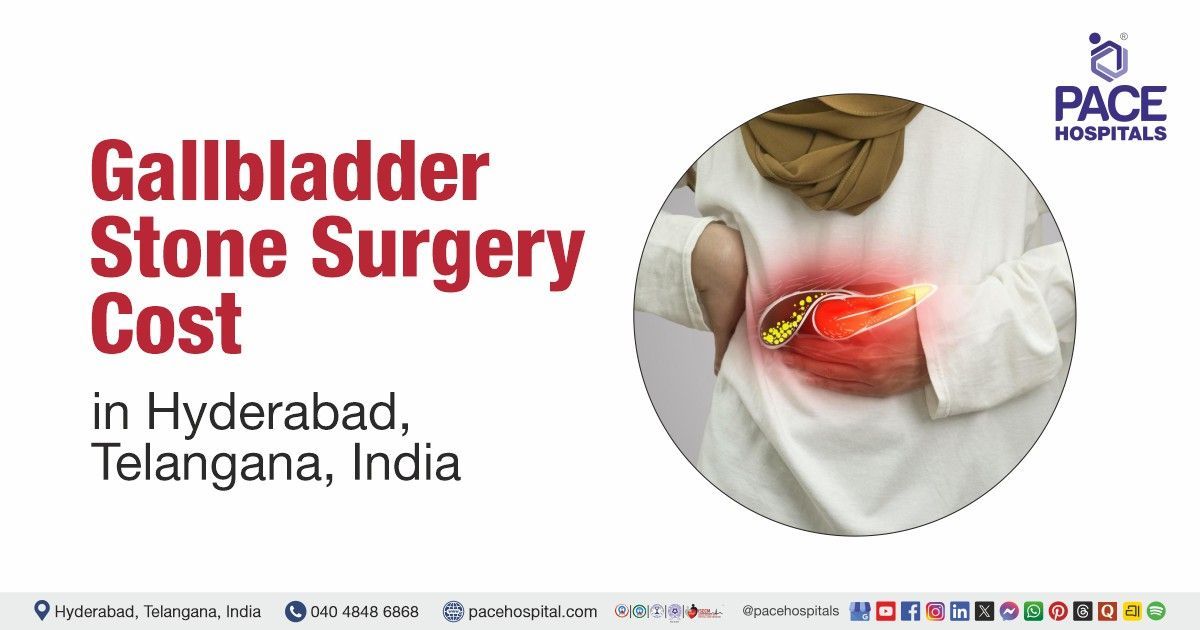
Affordable Gallbladder Stone Surgery Cost in Hyderabad, India
PACE Hospitals
All you need to know about Gallbladder stone surgery
Cholecystectomy procedure is a surgical removal of the gallbladder. The gallbladder is a small organ under the liver on the upper right side of the abdomen. It stores a digestive juice called bile, produced by the liver to break down fat, that helps digest fatty foods.
When the fatty food from a meal enters the small intestine, the gallbladder releases the bile into it for digesting the fat. An imbalance in bile leads to gall stone formation. Gallstones are stone-like debris in the gallbladder.
This surgery is usually performed when there is evidence of gallbladder problems such as polyps or gallstones and also for biliary dyskinesia (A condition in which the gallbladder doesn't function properly, where it is not contracting and ejecting bile effectively).
Get a Cost Estimate for Gallbladder Stone Surgery
Gallbladder Stone Surgery Cost Query
Gallbladder Stone Removal (Cholecystectomy) Surgery Cost in India
in India Gallbladder stone surgery (cholecystectomy) costs range from ₹40,000 to ₹3,90,000 (approximately US $417 to US$4076). However, the actual cost may vary depending on several factors, including:
- The patient’s age, overall health, and severity of gallbladder disease.
- Type of surgery (laparoscopic or open cholecystectomy, robotic).
- The type of hospital (private, government, or trust hospitals).
- Hospital charges, including room category and surgical facilities.
- Insurance coverage or corporate approvals for cashless treatment.
- Pre-operative investigations and post-operative care requirements.
- Any complications that may arise during or after the procedure.
Gallbladder Stone Removal (Cholecystectomy) Surgery Cost in Hyderabad, Telangana
The cost of Cholecystectomy Surgery (gallbladder Removal) in Hyderabad generally ranges from ₹44,000 to ₹3,50,000 (approximately US $459 to US $3658). These rates offer a cost-effective option in Hyderabad compared to many other cities, with access to advanced laparoscopic and general surgical care.
However, the cost of Cholecystectomy Surgery in Hyderabad is influenced by several factors, such as:
- The patient’s overall health condition and severity of gallbladder disease.
- The type of surgery performed (laparoscopic, open, or robotic cholecystectomy).
- The hospital facility chosen and its infrastructure.
- Insurance or corporate approvals for cashless services.
- Extent of pre-operative investigations and post-operative care.
- Potential complications during or after the procedure.
Cost Breakdown by Procedure
- Laparoscopic Cholecystectomy (Minimally Invasive): Total Surgery Cost: ₹44,000 -₹1,60,000(US $459– US $1670) (approx.)
- Open Cholecystectomy: Total Surgery Cost: ₹40,000-₹65000(US $417–US $678) (approx.)
- Laparoscopic with CBD Exploration: Total Surgery Cost: ₹70,000 - ₹1,20,000(US $ 730 – US $ 1,253) (approx.) Required if stones have moved into the common bile duct.
- Emergency Cholecystectomy: Total Surgery Cost: ₹50,000 – ₹95,000(US $522 – US$ 992) (approx.)
- Robotic Cholecystectomy: Total Surgery Cost: ₹1,45,000 - ₹3,50,000(US $ 1514– US$ 3658) (approx.)
- ERCP with Stone Removal / Standard Stent Placement – ₹30,000 – ₹55,000 (US $313 – US $574)(approx.) (This is an endoscopic procedure for bile duct stones, not gallbladder removal)
Note: These are estimated costs. The exact cost for an individual patient is determined after a thorough evaluation by the surgical care team.
Additional Information: The cost of Cholecystectomy (Gallbladder Removal Surgery) may vary depending on various factors, including the surgical approach (laparoscopic or open surgery), the severity of gallbladder disease, the presence of complications such as acute inflammation or infection, the duration of hospitalization, any additional diagnostic or therapeutic procedures required, and the experience and expertise of the surgical team. This ensures that each patient receives a personalized treatment plan and a transparent cost estimate tailored to their individual clinical needs.
Breakdown of Gallbladder Stone Surgery Costs
The total cost of a cholecystectomy (gallbladder removal surgery) involves multiple components. It varies from person to person and hospital to hospital. The main reasons for this variation include the type of surgery (laparoscopic or open cholecystectomy), the hospital where the treatment is done, and the patient’s overall health condition
Below is a detailed breakdown of the costs typically associated with Gallbladder Stone Surgery:
Pre-Surgery Costs
- Consultation Fees: Charges for consultation with the surgeon and gastroenterologist for evaluation and treatment planning.
- Diagnostic Tests: Includes blood tests, liver function tests (LFTs), ultrasound abdomen, ECG, and other imaging studies to confirm diagnosis and assess fitness for surgery.
- Pre-Surgical Assessment: Evaluation of overall health condition to ensure the patient is fit for anaesthesia and surgery.
Surgery Costs
- Hospitalization Charges: Includes admission, room charges, and pre-operative preparation. Intensive care unit (ICU) stay if required in complicated cases.
- Surgical Procedure: Cost of the cholecystectomy surgery, including the surgeon's fees and operating theatre charges.
- Anaesthesia and Surgical Team Fees: Charges for anaesthesia services and support from the surgical team during the procedure.
- Medical Consumables: Includes surgical instruments, sutures, drapes, and disposable items used during surgery.
Post-Surgery Care Costs
- Hospital Stay: Charges cover the hospital stay during the recovery period after surgery, which may range from 1–3 days for laparoscopic procedures and may be longer in cases of open surgery or if additional medical care is required.
- Medications: Includes antibiotics, pain management drugs, and other supportive medicines.
- Nursing and Wound Care: Regular observations are carried out, dressings are changed as required, and post-operative care provided throughout the hospital stay.
- Follow-Up Visits: Post-surgery consultations to assess recovery and review histopathology reports if required.
This breakdown of costs helps patients clearly understand what goes into a cholecystectomy (gallbladder removal surgery) and makes it easier to plan for the expenses. At PACE Hospitals, Hyderabad, we share detailed and patient-specific cost estimates based on individual medical needs and treatment plans, ensuring clear communication, reasonable pricing, and good quality surgical care.
Early Signs and Symptoms of Gallstones
Gallstones may remain silent in some cases, but when symptoms appear, they commonly include:
- Nausea and vomiting, sometimes accompanied by fever and chills
- Pain in the upper right or middle abdomen, which may spread to the back or shoulder blade
- Dark (tea-coloured) urine and pale or clay-coloured stools
- Yellowing of the skin and eyes (jaundice)
- If these symptoms persist or worsen, medical evaluation is recommended.
Types of Cholecystectomy
- Laparoscopic Cholecystectomy (Keyhole Surgery): This is a minimally invasive surgery in which the surgeon makes a few small cuts in the abdomen. A thin tube with a camera, called a laparoscope, is inserted through one of the cuts to help the surgeon see the gallbladder and remove it safely.
- Open Cholecystectomy: In this procedure, the surgeon makes a larger cut in the abdomen to remove the gallbladder. It is usually performed when the condition is more complex or when keyhole surgery is not a suitable option.
Who Needs Gallbladder Stone Surgery?
Cholecystectomy (gallbladder removal surgery) is not required for everyone who has gallstones. It is recommended when gallstones or gallbladder disease start causing symptoms, complications, or a risk of serious health problems that cannot be managed with medicines alone.
Common Conditions Indicating Need for Cholecystectomy
- Symptomatic Gallstones (Biliary Colic): When gallstones cause repeated pain in the upper right side of the abdomen, particularly after fatty meals. The pain may come and go and is often severe enough to affect daily life.
- Acute Cholecystitis (Gallbladder Inflammation/Infection): This condition happens when a gallstone blocks the cystic duct, causing swelling or infection of the gallbladder. It usually leads to strong pain in the abdomen, along with fever, nausea, and vomiting. In many cases, urgent surgery is needed to treat it.
- Recurrent Gallstone Attacks: If a patient has frequent episodes of abdominal pain due to gallstones, surgery is advised to prevent repeated attacks and complications in the future.
- Choledocholithiasis (Common Bile Duct Stones): When gallstones move into or block the common bile duct, it can cause jaundice (yellowing of eyes and skin), dark urine, and severe abdominal pain. Treatment often includes removal of the gallbladder to prevent recurrence.
- Gallstone Pancreatitis: Gallstones can block the pancreatic duct and cause inflammation of the pancreas, leading to severe abdominal pain, vomiting, and serious complications. Surgery is usually recommended after the acute episode is controlled.
- Complicated Gallbladder Disease: Conditions such as infection spreading outside the gallbladder, empyema (collection of pus inside the gallbladder), or perforation (a hole in the gallbladder wall) are serious complications. In these cases, surgery to remove the gallbladder is required to prevent dangerous, life-threatening problems.
- Large or High-Risk Gallstones: In some cases, very large gallstones or a condition called porcelain gallbladder (where the gallbladder wall becomes hardened due to calcium deposits) can increase the risk of gallbladder cancer and other complications. Because of this risk, doctors may recommend surgery even if the symptoms are not severe.
Who is Not Eligible for Gallbladder Stone Surgery?
While cholecystectomy (gallbladder removal surgery) is a common and generally safe procedure, it may not be suitable for every patient. In some situations, surgery may be delayed or avoided due to higher risks:
- Severe or unstable medical conditions: Patients with serious, uncontrolled health problems like unstable heart disease, severe lung disease, or uncontrolled blood pressure (BP) may need medical stabilization before surgery.
- Active severe infection or sepsis: If a patient has a severe body-wide infection (sepsis) or unstable infection that is not under control, surgery may be postponed until the condition improves.
- Poor fitness for anaesthesia: Patients who are not fit for general anaesthesia due to severe medical illness or very high surgical risk may not be immediately eligible for surgery.
- Advanced liver disease or bleeding disorders: People with severe liver failure or coagulation disorders (bleeding problems) may have a higher risk of complications during surgery.
- Very high surgical risk due to multiple comorbidities: Patients with multiple serious illnesses such as advanced kidney disease, severe diabetes complications, or frailty may need careful evaluation before deciding on surgery.
- Temporary conditions requiring stabilization first: In some cases, conditions like acute inflammation or other medical emergencies may need to be treated first before performing elective cholecystectomy.
Post–Cholecystectomy (Gallbladder Removal) Care Instructions
After gallbladder removal surgery, follow basic care steps to recover smoothly and avoid complications.
- Recovery (First 1–2 Days): Take rest for 24–48days after surgery. Start walking slowly as advised. Take medicines prescribed by the doctor regularly.
- Diet: Eat simple home foods such as rice, curd, and soups. Do not eat oily or spicy foods for 1–2 weeks. Eat small meals many times a day and drink plenty of water.
- Physical Activity : Do light work after a few days if surgery was laparoscopic. Avoid heavy lifting for 2–4 weeks. Return to normal routine in 1–2 weeks for laparoscopic surgery.
- Wound Care: Keep the wound clean and dry. Avoid getting it wet until it has healed. Check for redness, swelling, or any discharge.
- Warning Signs: Consult a doctor if you have fever, severe pain, vomiting, yellow eyes, or wound infection.
- Long-Term Care: Most people live normally after surgery. Some may have mild loose stools after fatty food, which usually improves over time.
Following these recommendations ensures safe recovery and good long-term health after gallbladder stone removal surgery.
Factors Affecting Gallbladder Stone Surgery (Cholecystectomy) Cost
Gallbladder stone surgery cost depends on several medical and hospital-related factors. The total expense varies from patient to patient based on these conditions.
Pre-op Evaluation & Diagnostics
Tests like ultrasound, blood tests, liver function tests, ECG, and pre-anesthesia check-ups are needed before surgery. These usually cost around ₹3,000–₹8,000.
Insurance Coverage
Insurance or cashless approval can reduce the amount the patient has to pay from their own pocket.
Hospital Tier
Standard multispecialty hospitals are generally more affordable, while corporate hospitals may charge up to ₹2,00,000 or more.
Hospital Stay
For laparoscopic surgery, hospital stay is usually 2–3 days. If there are complications, the stay may increase, leading to higher cost.
Type of Surgery
Laparoscopic surgery is commonly done and less expensive. Open or complicated surgeries may cost more and require longer recovery.
Surgeon Expertise
Surgeons with more experience may charge higher fees because of their skill and success in performing the surgery.
Complications During Surgery
If problems like infection, bleeding, or bile duct injury occur, additional treatment may increase the total cost.
Additional Procedures
If stones are found in the bile duct in addition to gallbladder stones, a separate procedure called ERCP may be needed to remove them. This can increase the overall treatment cost by around ₹25,000–₹50,000.
Post-Surgery Care
Expenses after surgery may include follow-up consultations, prescribed medications, wound dressing changes, and any additional tests advised during recovery.
Patient Health Condition
Age, existing diseases, and overall health condition can affect surgery complexity and recovery, which may influence the cost.
Travel and Accommodation
Patients coming from other locations may also have extra expenses for travel, food, and stay for family members.
How is Gallbladder Stone Surgery (Cholecystectomy) Done?
A cholecystectomy (gallbladder removal surgery) is performed to remove the gallbladder when it contains gallstones or is affected by other diseases. The procedure is carried out under general anaesthesia, which keeps the patient fully asleep and pain-free throughout the surgery.
Steps of the Procedure
- Anaesthesia: General anaesthesia (GA) is administered to ensure the patient remains asleep and does not experience pain during the procedure.
- Making the Incision: In laparoscopic surgery, 3–4 small incisions are made in the abdomen. Carbon dioxide (CO2) gas is used to gently inflate the abdomen, creating space for better visibility and access.
- In open surgery, a single larger incision is made in the upper abdomen to provide direct access to the gallbladder.
- Viewing the Gallbladder: In laparoscopic surgery, a laparoscope (a thin tube with a camera) is inserted via one of the incisions, allowing the surgeon to view the internal organs on a monitor.
- In open surgery, the surgeon views the gallbladder directly through the incision.
- Removal of the Gallbladder: The gallbladder is carefully separated from the liver and bile ducts and then removed.
- Closing the Incision: In laparoscopic surgery, the small incisions are closed with stitches or surgical glue.
In open surgery, the larger incision is closed with sutures or staples and covered with a sterile dressing.
After the Surgery
- Patients who undergo laparoscopic surgery can usually return home within 1–3 days, depending on how well they recover.
- Since laparoscopic surgery involves smaller incisions, most patients are able to leave the hospital within 1–3 days.
- Hospital stay is generally shorter after laparoscopic surgery, with many patients being discharged within 1–3 days.
- Most people recover faster after laparoscopic surgery and can go home within a few days.
- Laparoscopic surgery typically allows for a quicker recovery, and patients are often discharged within 1–3 days.
Why Choose PACE Hospitals for Gallbladder Stone Surgery (Cholecystectomy) in Hyderabad, India?
PACE Hospitals, Hyderabad, is a trusted centre for gallbladder stone removal (cholecystectomy).
- We have experienced general surgeons, laparoscopic surgeons, anesthesiologists, and trained nursing staff who follow safe and standard surgical protocols for effective treatment. Our facilities include modern operation theatres, advanced laparoscopic instruments, and dedicated post-operative care units to ensure smooth recovery.
- Patient-centered care is provided with minimal complications, personalized treatment plans, and clear cost estimates tailored to each patient’s condition.
For patients searching for the Best Hospital for Gallbladder Stone Surgery (Cholecystectomy) in Hyderabad, Telangana, India, PACE Hospitals offers advanced surgical care, safe procedures, and transparent treatment planning.
Financial Assistance and Payment Plans at PACE Hospitals
Gallbladder stone surgery should be accessible without financial stress. Our team assists patients with insurance and cashless support.
- Cashless hospitalisation with empanelled insurers and TPAs
- Pre-authorization and documentation guidance
- Reimbursement assistance if cashless facility is unavailable
- Transparent pre-admission cost estimates
- Support for corporate and government health schemes
Gallbladder Stone Surgery (Cholecystectomy) Success Rate
Gallbladder stone removal surgery (cholecystectomy) is highly effective with a success rate of about 95%–99%.
Patients experience:
- Relief from abdominal pain and discomfort
- No further gallstone attacks
- Better digestion and improved daily life
- Long-term success depends on eating healthy food, regular check-ups, and proper care after surgery.
Frequently Asked Questions (FAQs) on Gallbladder Stones
What are the complications of cholecystectomy surgery?
Cholecystectomy is generally a safe surgery, but like any procedure, it can have some risks. These may include infection at the wound site, bleeding, bile leakage, or injury to the bile duct. In rare cases, nearby structures may also be affected. Some patients may notice temporary digestive changes such as bloating or loose stools after surgery.
What are the side effects after gallbladder removal?
A few people may have mild digestive discomfort after gallbladder surgery, such as bloating, gas, or occasional loose motions, especially after eating oily or fatty foods. These issues are usually short-term and tend to improve as the body gradually adjusts following the surgery.
What is the recovery period after gallstone surgery?
Recovery depends on the type of surgery performed. After laparoscopic surgery, most patients recover within 1 to 2 weeks and slowly return to normal activities. Open surgery takes longer, usually around 4 to 6 weeks for recovery. Even after symptoms improve, complete internal healing may continue for a few more weeks.
What happens if gallstones are left untreated?
If gallstones are not treated, they can cause repeated abdominal pain and digestive problems. Over time, they may lead to complications such as cholecystitis (inflammation of the gallbladder), infection, or blockage of the bile duct. In some cases, serious conditions like pancreatitis or jaundice may develop. These problems often require urgent medical care or emergency surgery.
Is gallstone surgery safe?
Gallstone surgery is a common and generally safe procedure. Most patients undergo laparoscopic cholecystectomy (keyhole surgery), which has a high success rate when performed by experienced surgeons. Although serious complications are rare, possible risks include infection, bleeding, or injury to nearby organs. A proper pre-operative assessment helps doctors check fitness for anaesthesia and plan the surgery safely, supporting a smoother recovery.
What is a Cholecystectomy?
Cholecystectomy is a surgical procedure to remove the gallbladder. It is usually advised when gallstones cause pain, infection, or repeated complications. The surgery can be done using a minimally invasive laparoscopic method or, in complex cases, an open surgical approach. After removal of the gallbladder, bile flows directly from the liver into the intestine, so digestion continues normally.
How are gallbladder stones removed?
Gallbladder stones are usually treated by removing the gallbladder itself, which helps prevent the stones from forming again. The most common procedure is laparoscopic cholecystectomy, where the gallbladder is removed through small keyhole cuts using a camera for guidance. In some complicated cases, open surgery may be required to safely remove the gallbladder. If stones are found in the bile duct, a procedure called ERCP may be done to remove them and clear the blockage.
What foods should be avoided if you have no gallbladder?
After gallbladder removal, it is better to avoid high-fat and fried foods, especially in the early recovery phase. Foods like oily snacks, full-fat dairy products, and very spicy meals can cause digestive discomfort such as bloating or loose stools. Eating large meals at one time can also make digestion harder because bile now flows directly into the intestine. A low-fat diet with small, frequent meals is usually easier to digest.
How to prepare for cholecystectomy surgery?
Preparation for cholecystectomy includes blood tests, ultrasound scans, and a pre-anaesthesia check-up. Patients are usually advised not to eat or drink for several hours before surgery. Some medications may need to be stopped or adjusted as per doctor’s advice. Following all pre-surgery instructions helps ensure a safe and smooth operation.
Is gallstone removal surgery painful?
The surgery is done under general anaesthesia, so there is no pain during the procedure. After surgery, mild pain or discomfort may be felt at the incision sites. This is usually well controlled with pain medications prescribed by the doctor. Most patients feel much better within a few days.
Is gallstone surgery covered by insurance at PACE Hospitals?
Most health insurance plans cover gallbladder stone surgery when it is medically necessary. Coverage depends on policy terms, waiting periods, and approval from the insurance provider. PACE Hospitals provides support for cashless approval, pre-authorization, and reimbursement process to help patients. It is always advised to confirm coverage details with the insurer before admission.
Which is better: laparoscopic or open gallbladder surgery?
Laparoscopic surgery is preferred in most cases because it uses small cuts, causes less pain, and allows faster recovery. Patients can usually return to normal activities sooner compared to open surgery. Open surgery is used only in complicated or emergency situations where keyhole surgery is not suitable. The final decision depends on the patient’s condition and surgeon’s assessment.
What foods trigger gallbladder problems?
Foods that are high in fat, oil, and cholesterol can trigger gallbladder problems. Fried foods, fast food, processed snacks, and creamy or rich dishes may worsen symptoms or cause pain. Eating large meals or skipping meals can also increase the chance of gallbladder attacks. A simple low-fat diet with regular, small meals is usually better for preventing discomfort and flare-ups.
Can I go home the same day after gallbladder surgery?
Some patients who undergo laparoscopic surgery may go home the same day. However, most patients stay in the hospital for 24 to 48 hours for observation. Open or complicated surgeries usually require a longer hospital stay. Discharge depends on the patient’s recovery and medical stability.
Is gallstone surgery safe for elderly patients?
Yes, Cholecystectomy is generally safe for elderly patients if they are properly assessed before surgery. Laparoscopic surgery is usually preferred as it is less painful and has faster recovery, and with proper monitoring and care, most elderly patients recover well.
What is the expected life expectancy after gallstone surgery at PACE Hospitals, Telangana, India?
At PACE Hospitals, Hyderabad, gallbladder removal surgery (cholecystectomy) does not generally affect life expectancy. Most patients continue to live a normal lifespan once the gallbladder, which is not a vital organ, is removed. The body adapts by allowing bile to flow directly from the liver into the intestine, supporting normal digestion. Consistent post-operative care, dietary guidance, and regular follow-up at PACE Hospitals help ensure good long-term health and quality of life.
Share on
Request an appointment
Fill in the appointment form or call us instantly to book a confirmed appointment with our super specialist at 04048486868
Appointment request - health articles
Recent Articles