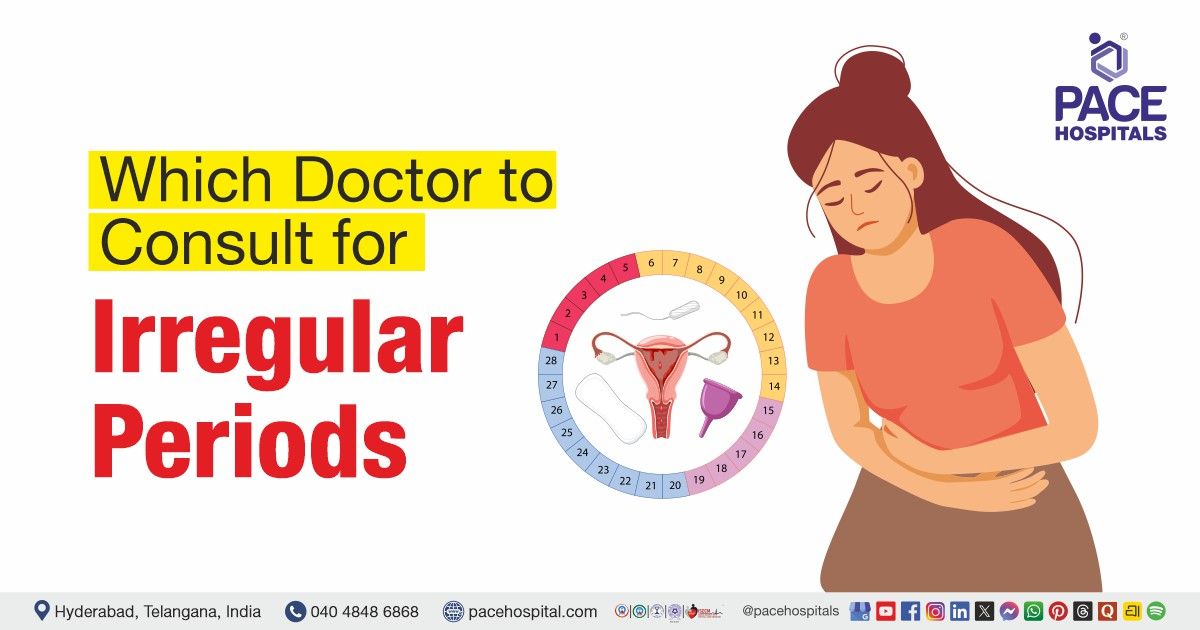
Which Doctor to Consult for Irregular Periods?
PACE Hospitals
Written by: Editorial Team
Medically reviewed by:
Dr. Mugdha Bandawar - Consultant Obstetrician & Gynaecologist
Introduction
Irregular periods are a common concern among teenage girls, young women, women planning pregnancy, postpartum mothers, and women approaching menopause. A cycle may arrive too early, too late, too heavily, too lightly, or not at all. The right doctor depends on age, bleeding pattern, pain, pregnancy possibility, hormone symptoms, fertility goals, and red-flag symptoms.
This refined article explains when to consult a
Gynaecologist,
Endocrinologist, Fertility Specialist, Pediatrician, Adolescent Gynaecologist, or
Emergency Department for irregular periods. It also covers
PCOS/PMOS,
thyroid disease, high prolactin, pregnancy, heavy bleeding, postmenopausal bleeding, tests, treatment options, and care at PACE Hospitals, Hyderabad.
Quick Answer: Which Doctor Should You Consult for Irregular Periods?
For irregular periods, missed periods, delayed periods, heavy bleeding, painful periods, or abnormal spotting, consult a Gynaecologist first. If periods are irregular because of PMOS, thyroid disease, diabetes, obesity, high prolactin, or other hormone problems, an Endocrinologist may also be needed. If irregular periods are linked with difficulty conceiving, consult a Fertility specialist. If bleeding is very heavy, pregnancy-related, or associated with fainting or severe pain, visit an Emergency Department immediately.
What Are Irregular Periods?
Irregular periods refer to menstrual cycles that are unpredictable, too early, too delayed, missed, too frequent, too heavy, too light, or accompanied by spotting. A single delayed period may occur due to stress, travel, illness, sleep disturbance, or weight change, but repeated irregularity should be evaluated.
Irregular periods may include delayed periods, missed periods, frequent periods, heavy menstrual bleeding, scanty bleeding, spotting between periods, bleeding after sexual intercourse, painful periods, absence of periods, and bleeding after menopause. Each pattern can indicate a different cause and may require a different specialist.
Irregular Periods Should Not Be Ignored
Irregular periods may be linked to several causes such as PCOS or PMOS, thyroid problems, high prolactin levels, pregnancy, breastfeeding, perimenopause, uterine fibroids, ovarian cysts, endometriosis, adenomyosis, uterine polyps, pelvic infection, anemia, diabetes, stress, eating disorders, certain medicines, or hormonal contraceptives use. Self-medicating with period-delay tablets or hormonal pills can temporarily mask the real issue and should avoid these options unless a doctor specifically recommends them.
Doctor Selection Guide: Which Specialist Should You Choose for Irregular Periods?
| Situation | First Doctor to Consult | Why? |
|---|---|---|
| Missed or delayed periods | Gynaecologist | Pregnancy, PMOS, thyroid, stress, weight change, or hormone cause suspicion. |
| Very frequent periods | Gynaecologist | Abnormal uterine bleeding, fibroids, hormonal imbalance, or infection is suspected. |
| Heavy periods | Gynaecologist | Fibroids, polyps, adenomyosis, bleeding disorder, thyroid disease, or anemia suspected. |
| Scanty or very light periods | Gynaecologist/Endocrinologist | PMOS, thyroid, stress, weight loss, ovarian reserve, or hormonal imbalance suspected. |
| Painful irregular periods | Gynaecologist | Endometriosis, adenomyosis, fibroids, pelvic infection, or ovarian cyst are suspected. |
| Irregular periods with acne/facial hair/weight gain | Gynaecologist + Endocrinologist | PMOS, insulin resistance, or androgen excess suspected. |
| Irregular periods with thyroid symptoms | Endocrinologist + Gynaecologist | Hypothyroidism or hyperthyroidism is suspected. |
| Irregular periods with breast discharge | Endocrinologist/Gynaecologist | High prolactin or pituitary-hormone cause suspected. |
| Irregular periods with difficulty conceiving | Fertility Specialist/Gynaecologist | Ovulation problem or reproductive condition suspected. |
| Irregular periods in teenage girls | Pediatrician/Adolescent Gynaecologist | Severe bleeding, prolonged irregularity, PMOS, thyroid disease, or anemia suspected. |
| Irregular periods after 40 | Gynaecologist | Perimenopause, fibroids, polyps, endometrial changes, or thyroid disease need evaluation. |
| Bleeding after menopause | Gynaecologist urgently | Prompt evaluation is required for post-menopausal haemorrhage. |
| Bleeding during pregnancy | Emergency Physician or Obstetrician | Pregnancy problems or ectopic pregnancy must be addressed |
| Very heavy bleeding with weakness/fainting | Emergency Physician/Gynaecologist | Severe blood loss or anemia suspected. |
When to See a Gynaecologist for Irregular Periods?
A Gynaecologist is the main specialist for menstrual cycle problems, reproductive health, uterus, ovaries, cervix, vaginal health, pelvic pain, pregnancy-related bleeding, abnormal uterine bleeding, and fertility-related menstrual concerns.
- Missed, delayed, early, frequent, heavy, scanty, or painful periods
- Bleeding between periods or after sex
- PMOS symptoms, which include acne, facial hair, weight gain, or hair thinning
- Suspected fibroids, ovarian cysts, endometriosis, adenomyosis, or polyps
- Pelvic pain, vaginal discharge with bleeding, or fever
- Pregnancy-related bleeding
- Postmenopausal bleeding
- Difficulty conceiving with irregular cycles
When to See an Endocrinologist for Irregular Periods?
Periods are strongly connected with hormones. An Endocrinologist may be needed when irregular periods are linked with thyroid disease, PMOS, high prolactin, diabetes, insulin resistance, obesity, adrenal hormone disorders, or unexplained hormone imbalance.
- PMOS with excess body weight, insulin resistance, diabetes, acne, facial hair, or hair thinning
- Abnormal thyroid tests or symptoms of hypothyroidism/hyperthyroidism
- High prolactin or breast discharge
- Irregular periods with unexplained weight gain or weight loss
- Diabetes or prediabetes with cycle irregularity
- Suspected adrenal hormone problems
- Irregular period cycles not improving after initial gynaecology care
When to See a Fertility Specialist?
Irregular periods generally mean irregular ovulation in a female. If a woman is trying to conceive and has irregular cycles, a Fertility Specialist or Reproductive Medicine specialist may evaluate ovulation, ovarian reserve, PMOS, uterine factors, tubal factors, semen parameters, and fertility treatment options. Earlier evaluation is important if age is above 35, cycles are very irregular, or a known case of PMOS, endometriosis, fibroids, or previous pelvic infection is present.
When to See a Pediatrician or Adolescent Gynaecologist?
Teenage girls may have irregular cycles for some time after periods begin, but severe or persistent irregularity needs care. A Pediatrician, Adolescent Gynaecologist, or Pediatric Endocrinologist may be needed for very heavy bleeding, absence of periods, severe pain, obesity, acne, facial hair, eating disorder signs, thyroid symptoms, or anemia symptoms.
When to See an Emergency Doctor?
If bleeding is very heavy, pregnancy-related, associated with severe pain, fainting, lightheadedness, fever, or weakness, do not wait and immediately visit an emergency department.
- Very heavy bleeding, soaking pads rapidly
- Large clots with weakness
- Fainting, dizziness, severe pallor, breathlessness, or palpitations
- Severe pelvic or lower abdominal pain
- Positive pregnancy test with pain or bleeding
- Bleeding during confirmed or possible pregnancy
- Shoulder-tip pain with pregnancy suspicion
- Fever which is associated with pelvic pain or foul-smelling discharge
- Bleeding after menopause
- Sudden irregular bleeding after age 40 with red flags
Types of Irregular Periods and Which Specialist Treats Each?
| Type of Period Problem | Possible Cause | Doctor/Specialist |
|---|---|---|
| Missed periods | Pregnancy, PMOS, thyroid disease, stress, breastfeeding, perimenopause | Gynaecologist; Endocrinologist if hormonal |
| Delayed periods | PMOS, stress, weight change, thyroid, medicines | Gynaecologist/Endocrinologist |
| Frequent periods | Hormonal imbalance, fibroids, polyps, infection, thyroid | Gynaecologist |
| Heavy periods | Fibroids, adenomyosis, polyps, thyroid, bleeding disorder, anemia | Gynaecologist; emergency if severe |
| Scanty periods | PMOS, low weight, stress, thyroid, ovarian reserve, adhesions | Gynaecologist/Endocrinologist |
| Spotting between periods | Hormonal changes, infection, cervical/uterine cause, polyps | Gynaecologist |
| Bleeding after sex | Cervical/vaginal/uterine causes, infection, polyps | Gynaecologist |
| Painful irregular periods | Endometriosis, adenomyosis, fibroids, ovarian cyst, PID | Gynaecologist |
| Postmenopausal bleeding | Vaginal/uterine lining changes, polyps, medicines, cancer risk | Urgent Gynaecologist |
| Irregular periods with infertility | Ovulation disorder, PMOS, endometriosis, ovarian reserve issue | Fertility Specialist/Gynaecologist |
Missed or Delayed Periods
Missed periods may be due to pregnancy, stress, weight changes, PMOS, thyroid disease, breastfeeding, perimenopause, medicines, excessive exercise, eating disorders, or hormonal imbalance. A Gynaecologist should evaluate repeated missed periods or pregnancy possibility. Pregnancy testing is often the first step.
Heavy Periods
Heavy periods can cause anemia and fatigue. The causes of heavy periods may include fibroids, polyps, adenomyosis, hormonal imbalance, thyroid disease, bleeding disorders, medicines, or uterine lining problems. Consult a Gynaecologist. Emergency care is needed if bleeding causes fainting, severe weakness, breathlessness, or rapid pad soaking.
Frequent Periods or Bleeding Between Periods
Frequent bleeding or spotting may be due to hormonal imbalance, infection, fibroids, polyps, any changes related to contraceptions, thyroid disease, pregnancy complications, cervical causes, or uterine causes. Bleeding after sex needs medical evaluation.
Painful Irregular Periods
Painful irregular periods may be linked to conditions such as endometriosis, fibroids, ovarian cysts, adenomyosis, pelvic infections, or hormonal imbalances. Severe pain that interferes with day‑to‑day activities should never be considered normal or ignored.
Irregular Periods: Hormonal, Pregnancy-Related, Age-Related and Structural Causes
Hormonal Causes of Irregular Periods
- Irregular Periods Due to PCOS/PMOS: PCOS/PMOS are the condition that most commonly cause delayed periods, irregular ovulation, acnes, facial hair, hair thinning, weight gain, insulin resistance, and difficulty in conceiving. In this condition Gynaecologists and endocrinologists doctors can work together. Management usually includes lifestyle changes, weight management, cycle regulation, treatment for insulin resistance, and fertility planning if needed.
- Irregular Periods Due to Thyroid Problems: Irregular periods due to thyroid problems can happen with both hypothyroidism and hyperthyroidism. These conditions may also cause symptoms such as weight changes, tiredness, hair fall, constipation, palpitations, heat or cold intolerance, and mood changes. Thyroid imbalance is usually managed by an endocrinologist, while a gynaecologist assesses how it is affecting your periods and reproductive health.
- Irregular Periods with High Prolactin: This condition indicate hyperprolactinemia, a condition where excess prolactin from the pituitary gland interferes with normal ovulation and hormone balance. High prolactin may cause missed periods, irregular periods, breast discharge, infertility, headaches, or low libido. Endocrinology and Gynaecology care may be needed. Evaluation can include prolactin testing, medicine review, thyroid evaluation, and imaging when clinically indicated.
Pregnancy-Related Causes
- Irregular Periods and Pregnancy: A missed period can be an early sign of pregnancy. Bleeding during pregnancy is not a normal period and should be evaluated by an Obstetrician/Gynaecologist. Emergency care is needed if bleeding is heavy or associated with pain, dizziness, fainting, or shoulder-tip pain, as ectopic pregnancy must be ruled out.
- Irregular Periods After Delivery or During Breastfeeding: Cycles may be irregular after delivery and during breastfeeding. However, heavy bleeding, foul-smelling discharge, severe pain, fever, or prolonged irregularity needs evaluation. A Gynaecologist can assess postpartum recovery, anemia, thyroid changes, contraception needs, and pregnancy possibility.
Age-Related Causes
- Irregular Periods After 40 and Perimenopause: Perimenopause can cause cycle changes, but not all irregular bleeding after 40 should be assumed to be menopause. Heavy bleeding, recurrent frequent bleeding, bleeding that occurs before sex or prolonged bleeding needs immediate Gynaecology evaluation and care. Fibroids, polyps, endometrial thickening, thyroid disease, and other causes may need assessment.
- Bleeding After Menopause: Any bleeding after menopause should be evaluated by a Gynaecologist. Causes may include vaginal or uterine lining thinning, polyps, medicines, infection, or more serious uterine/cervical conditions. Even light spotting after menopause should not be ignored.
Lifestyle, Weight and Medicine-Related Causes
- Irregular Periods with Weight Changes, Exercise or Eating Problems: Sudden weight loss, low body weight, excessive exercise, eating disorders, and low energy intake can stop or disturb periods. These conditions may require attention of a Gynaecologist, Endocrinologist, Nutritionist, and mental health support. Missing periods due to low energy availability can affect bone health and overall wellbeing.
- Irregular Periods Due to Medicines or Contraception: Hormonal contraception, emergency contraceptive pills, some psychiatric medicines, epilepsy medicines, and other drugs may affect bleeding patterns. Patients should not stop prescribed medicines without doctor advice. A Gynaecologist can review the bleeding pattern, contraception, pregnancy risk, and medication history.
Heavy Bleeding-Related Complication
- Irregular Periods and Anemia: Heavy or prolonged bleeding can cause anemia. Symptoms may include fatigue, breathlessness, lightheadedness, palpitations, pale skin, and weakness. Gynaecologist and Internal Medicine doctors are specialised in evaluating both bleeding cause and anemia. Severe anemia symptoms need urgent care.
Irregular Periods and Structural Causes
- Fibroids: Uterine fibroids are common, noncancerous muscular growths in the uterus that cause symptoms like heavy bleeding, pelvic pressure, frequent urination, and fertility-related concerns. Gynaecology evaluation and ultrasound may be needed. Treatment generally depends on size, location, symptoms, age, and pregnancy plans.
- Endometrial Polyps: These are growths from the inner lining of the uterus. They may cause irregular bleeding, bleeding between periods, heavy bleeding, or bleeding after menopause.
- Endometriosis and Adenomyosis: Endometriosis and adenomyosis may cause painful periods, pelvic pain, pain during intercourse, and painful bowel movements during periods, heavy bleeding, and fertility concerns. Severe pain affecting daily activities should be evaluated by a Gynaecologist.
- Ovarian Cysts: Ovarian cysts often cause irregular periods by disrupting the delicate hormonal balance and normal ovulation cycle. This can cause sudden severe pelvic pain, vomiting, fainting, or fever needs urgent care. Depending on the type and size of the cyst, it can lead to missed periods, bleeding between cycles, or unusually heavy flows.
Gynaecology evaluation and ultrasound may be advised.
Tests Doctors May Recommend for Irregular Periods
- Pregnancy test
- CBC/hemoglobin and iron studies when bleeding is heavy
- Thyroid profile: TSH, T3, T4
- Prolactin
- FSH, LH, estradiol, AMH if indicated
- Male hormones profile tests if PMOS symptoms exist
- Blood sugar/HbA1c and insulin resistance evaluation when needed
- Lipid profile for metabolic risk
- Pelvic ultrasound or transvaginal ultrasound when appropriate
- Pap smear tests for HPV, if indicated by age or symptoms
- Endometrial thickness assessment
- Endometrial biopsy in selected cases
- Coagulation profile if bleeding disorder suspected
- Sexually Transmitted Infections (STIs) or infection tests if indicated
Tests depend on age, pregnancy possibility, bleeding pattern, pain, PMOS symptoms, thyroid symptoms, fertility goals, anemia risk, and doctor assessment.
What to Expect at Your First Doctor Visit?
- Last menstrual period and usual cycle length
- Number of bleeding days and bleeding quantity
- Pain, clots, spotting, or bleeding after sex
- Pregnancy possibility
- Acne, facial hair, hair fall, weight gain or loss
- Thyroid symptoms or breast discharge
- Pelvic pain, fever, discharge, or unpleasant odour
- Fertility objectives and contraceptive use
- Medicines, emergency medicines, or hormone tablets
- Past pregnancy, miscarriage, delivery, PMOS, thyroid, diabetes, fibroids, or endometriosis history
Treatment Options for Irregular Periods
Treatment is totally based on underlying cause. The common treatment options include: cycle tracking, lifestyle changes for PMOS and weight-related causes, nutrition support, exercise and sleep improvement, stress management, thyroid treatment, PMOS management, anemia correction, hormonal medicines when prescribed, non-hormonal medicines for heavy bleeding when appropriate, infection treatment, fibroid/polyp/endometriosis/adenomyosis/ovarian cyst treatment, fertility-focused treatment, emergency stabilization for severe bleeding, and follow-up monitoring.
Why Choose PACE Hospitals for Irregular Period Evaluation and Management?
- Gynaecology support for menstrual disorders, PMOS, fibroids, ovarian cysts, endometriosis, adenomyosis, abnormal uterine bleeding, and pregnancy-related concerns
- Endocrinology support for thyroid issues, prolactin levels, insulin resistance, high body mass index (BMI), diabetes mellitus, and hormone-related cycle problems.
- Internal Medicine support for anemia, diabetes, metabolic concerns, and systemic illness
- Diagnostic support for blood tests and ultrasound
- Emergency care for heavy bleeding, severe pain, or pregnancy-related complications
- Personalized treatment and follow-up plans
Key Takeaway
For irregular periods, a gynaecologist is usually the best doctor to see first. If irregular periods are connected to PMOS, thyroid disease, diabetes, obesity, prolactin imbalance, or other hormone issues, you might also need to consult an endocrinologist. If mentrual cycle irregularity is affecting pregnancy planning, a patient should consult a Fertility specialist. Very heavy bleeding, pregnancy-related bleeding, fainting, or severe pelvic pain needs emergency care.
Frequently Asked Questions (FAQs)
Which doctor should I consult for irregular periods?
A Gynaecologist is the first doctor to consult for irregular periods. They evaluate missed, delayed, frequent, heavy, scanty, painful, or spotting-related periods and evaluate for PCOS/PMOS, fibroids, ovarian cysts, endometriosis, pregnancy-related bleeding, and abnormal uterine bleeding. If hormones, thyroid, diabetes, or fertility concerns are there, that may require coordinate care with an Endocrinologist or Fertility Specialist.
When are irregular periods serious?
Irregular periods are serious when bleeding is very heavy, severe pelvic pain, fever, pregnancy-related, associated with fainting, foul-smelling discharge, severe weakness, or occurs after menopause. Bleeding after sexual activity unexpected irregular bleeding after the age of 40, extended missed periods, and irregular periods with unexplained weight loss or anaemia all require medical attention. Heavy menstrual bleeding with weakness, as well as pregnancy-related pain/bleeding, require emergency attention.
What causes irregular periods?
Irregular periods are usually caused by imbalances in hormones that may disturb ovulation. Common triggers that can cause irregular periods are lifestyle changes (stress, extreme weight loss, excessive exercise), underlying medical conditions (PCOS / PMOS, thyroid-related problems), birth control, and natural life transitions that include puberty and perimenopause.
Can irregular periods affect pregnancy?
Yes, irregular periods can affect pregnancy because they may indicate irregular or absent ovulation. Conditions such as PCOS/PMOS, thyroid problems, elevated prolactin, or hyperprolactinemia, endometriosis, fibroids, or ovarian reserve problems can also affect pregnancy. If a couple is trying to conceive and cycles are irregular, a Gynaecologist or Fertility Specialist can evaluate ovulation and reproductive health of the patient.
Can irregular periods be treated permanently?
Irregular periods can be controlled or corrected when the cause is identified early, but permanent cure only depends on the individual's condition. Thyroid-related irregularity can be improved after thyroid control, fibroids or polyps may need specialised treatment, and PCOS/PMOS generally needs long-term lifestyle and hormonal/metabolic management. Treatment should be personalised and supervised by a qualified doctor.
Which is the best hospital for irregular periods treatment in Hyderabad?
PACE Hospitals, Hyderabad offers multi-speciality evaluation for irregular periods through Gynaecology, Endocrinology, Internal Medicine, diagnostics, emergency care, and fertility-related support where appropriate. Patients can receive evaluation for PMOS, thyroid-related periods, heavy bleeding, missed periods, fibroids, ovarian cysts, endometriosis, pregnancy-related bleeding, and age-related menstrual concerns.
Should I see a gynaecologist for irregular periods?
Yes, a Gynaecologist is usually the right starting point for irregular periods. They can take a detailed menstrual history, perform examination if needed, advise pelvic ultrasound and blood tests, and identify whether the cause is due to problem with structure, hormone, infection-related, pregnancy-related, or age-related. They can also refer to Endocrinology or Fertility specialists when required.
Can an endocrinologist treat irregular periods?
Yes, an Endocrinologist can treat irregular periods when the cause is hormonal or metabolic. This includes thyroid disease, PCOS/PMOS with insulin resistance, elevated prolactin hormone level, diabetes, obesity, adrenal hormone problems, or unexplained hormone imbalance. In many patients, the Gynaecologist and Endocrinologist work together to manage both menstrual and metabolic health.
Which doctor treats PMOS-related irregular periods?
PCOS or PMOS-related irregular menses are managed by a Gynaecologist, often with support from an Endocrinologist. They are specialize in reproductive health and can diagnose PCOS, manage menstrual regulation, and address related concerns. The Gynaecologist manages cycle irregularity, bleeding pattern, fertility concerns, and pelvic findings, whereas, an Endocrinologist helps with insulin resistance, obesity, diabetes risk, androgen excess, thyroid issues, or metabolic syndrome. A Fertility Specialist may be needed if pregnancy is desired.
Which doctor treats thyroid-related irregular periods?
Thyroid-related irregular periods may need both an Endocrinologist and a Gynaecologist. The Endocrinologist deals with thyroids problems such as hypothyroidism or hyperthyroidism, while the Gynaecologist generally evaluates for menstrual bleeding, fertility, pelvic causes, and related symptoms. Thyroid testing is commonly advised when periods become irregular, especially with fatigue, weight change, hair fall, constipation, palpitations, or heat/cold intolerance.
Can stress cause irregular periods?
Yes, stress can affect the hormonal signals that control ovulation and menstrual cycles. It may delay periods, make cycles unpredictable, delay ovulation, or contribute to missed periods. However, irregular periods need not to be immediately attributed to stress. Pregnancy, PMOS, thyroid disease, weight changes, medicines, and other health problems may also play a role. These factors needed to be checked when menses remains irregular.
Which doctor should teenagers consult for irregular periods?
Teenagers can start with a Pediatrician, Adolescent Gynaecologist, or Gynaecologist. Some irregularity may occur after periods first begin, but severe bleeding, no periods for many months, severe pain, anemia symptoms, obesity, acne, facial hair, or thyroid symptoms need evaluation. A Pediatric Endocrinologist may be needed if hormonal causes are suspected.
Which doctor should I consult for heavy periods?
A Gynaecologist is the main doctor for heavy periods. Heavy bleeding may be due to fibroids, polyps, adenomyosis, hormonal imbalance, thyroid disease, bleeding disorders, or uterine lining problems. If bleeding causes fainting, breathlessness, severe weakness, rapid heartbeat, or soaking pads rapidly, emergency care is needed.
Which doctor should I consult for missed periods?
A Gynaecologist is the right first doctor for missed periods. Pregnancy is usually ruled out first. If pregnancy is not the cause, the doctor may evaluate PMOS, thyroid disease, high prolactin, stress, weight change, breastfeeding, perimenopause, medicines, or hormonal imbalance. Endocrinology or fertility referral may be needed depending on findings.
What tests are done for irregular periods?
Tests may include pregnancy test, CBC, thyroid profile, prolactin, FSH/LH, androgen profile, blood sugar/hemoglobin A1c, lipid profile tests, pelvic ultrasound, Pap smear test when needed, endometrial assessment, infection tests, and coagulation profile in selected cases. The doctor chooses tests based on age, bleeding pattern, pain, pregnancy possibility, PMOS symptoms, fertility goals, and anemia risk.
Conclusion
Irregular periods should be evaluated based on age, bleeding pattern, pain, pregnancy possibility, hormone symptoms, and fertility goals. A Gynaecologist is usually the main specialist. An Endocrinologist is important for thyroid disease, PCOS/PMOS, diabetes, prolactin disturbances, excess body weight or being obese, or other hormone-related causes. A Fertility Specialist may be needed if pregnancy planning is affected. Teenage girls may need Pediatrician or Adolescent Gynecologist care. Heavy bleeding, pregnancy-related bleeding, severe pelvic pain, fainting, fever, or postmenopausal bleeding should not be ignored.
To consult experienced doctors for irregular periods evaluation and management at PACE Hospitals, Hyderabad, call 040-4848-6868 or book an appointment online at https://book.pacehospital.com.
Share on
Request an appointment
Fill in the appointment form or call us instantly to book a confirmed appointment with our super specialist at 04048486868
Appointment request - health articles
Recent Articles