Successful Laser Internal Anal Sphincterotomy for Chronic Anal Fissure in a 31 Y.O. Male
PACE Hospitals
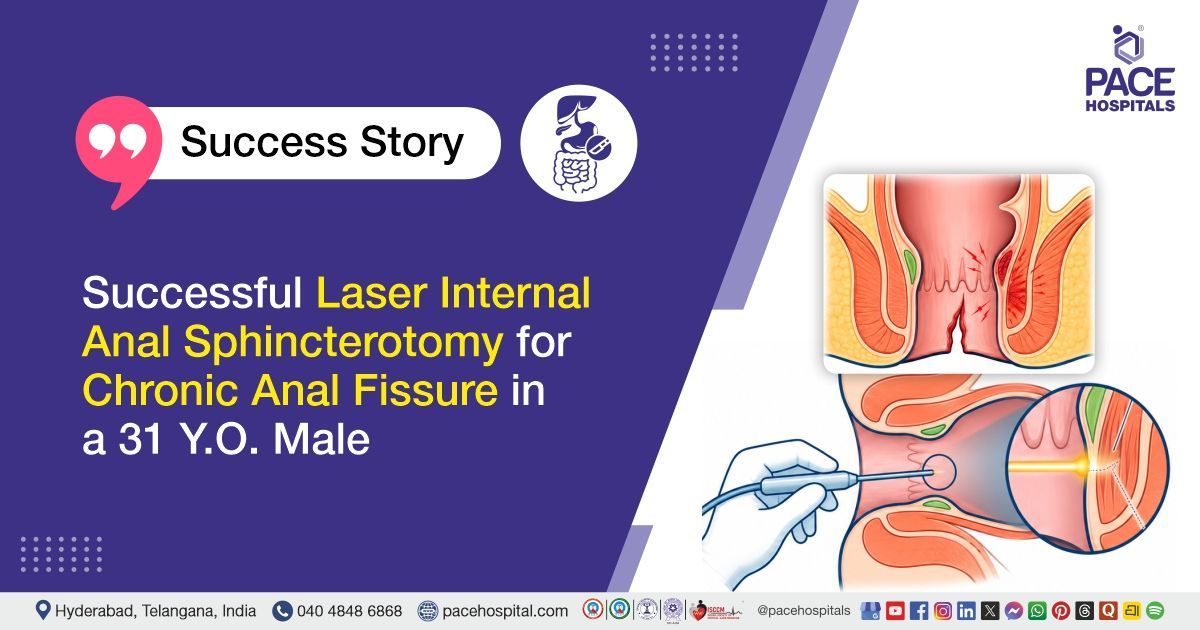
PACE Hospitals’ expert Surgical Gastroenterology team successfully performed Laser Internal Anal Sphincterotomy with Skin Tag Excision on a 31-year-old male patient diagnosed with chronic anal fissure. The aim of the procedure was to relieve anal sphincter spasm, reduce long-standing pain during defecation, promote fissure healing, remove the associated skin tag, improve bowel comfort, and prevent recurrence.
Chief Complaints
A 31-year-old male patient with a body mass index (BMI) of 20 presented to the Surgical Gastroenterology Department at PACE Hospitals, Hitech City, Hyderabad, with complaints of pain during defecation for the past 2 years. Initially, the pain responded to conservative treatment, but symptoms recurred, with increased severity over the last 2 months.
Past Medical History
The patient had a history of constipation, which was associated with recurrent fissure symptoms. There was no history of bleeding per rectum and no history of previous anorectal surgeries.
On Examination
On examination, the patient was conscious, coherent, and well oriented, with stable vital signs. General physical examination revealed a stable condition. Vital parameters were within normal limits, and there were no acute cardiorespiratory abnormalities detected.
Diagnosis
Upon admission to PACE Hospitals, the Surgical Gastroenterology team conducted a comprehensive evaluation based on the patient's history of chronic pain during defecation. A detailed medical history, clinical examination, and preoperative assessment were performed to determine the severity of symptoms and assess fitness for surgical intervention.
The patient reported recurrent symptoms for nearly 2 years, with worsening pain over the preceding 2 months despite conservative treatment. Clinical evaluation revealed a chronic anal fissure located at the 6 o’clock position, associated with a skin tag and a history of constipation.
Based on the confirmed diagnosis, the patient was advised to undergo a Chronic Anal Fissure Treatment in Hyderabad, India, under the expert care of the Surgical Gastroenterology Department.
Medical Decision Making (MDM)
After a detailed consultation with
Dr. CH Madhusudan (Senior Consultant Surgical Gastroenterologist and Liver Transplant Surgeon), along with the team, including
Dr. Suresh Kumar S (Consultant Surgical Gastroenterologist), a comprehensive evaluation was carried out considering the patient's history of chronic pain during defecation for 2 years, recurrent symptoms despite conservative treatment, worsening pain over the preceding 2 months, and associated constipation. Clinical assessment confirmed the presence of a chronic fissure in Ano at the 6 o’clock position with an associated skin tag.
Based on the clinical presentation, failure of conservative management, and examination findings, it was determined that
Laser Internal Anal Sphincterotomy with Skin Tag Excision was the most appropriate therapeutic intervention. The procedure was planned to relieve internal anal sphincter spasm, reduce pain during defecation, promote fissure healing, remove the associated skin tag, and minimize the risk of recurrence.
The patient and family members were counselled regarding the diagnosis, proposed surgical procedure, expected benefits, possible risks, and postoperative care.
Surgical Procedure
Following the decision, the patient was scheduled to undergo Laser Internal Anal Sphincterotomy with Skin Tag Excision Surgery in Hyderabad at PACE Hospitals, under the expert care of the Surgical Gastroenterology Department.
The procedure involved the following steps:
- Patient Preparation and Anaesthesia: The patient was taken to the operating room after obtaining informed consent and completing pre-anaesthetic evaluation. Under appropriate anaesthesia, the patient was positioned to allow adequate exposure of the perianal region. Standard aseptic precautions were followed throughout the procedure.
- Examination and Fissure Identification: A careful perianal examination was performed. A chronic anal fissure was identified at the posterior midline in the 6 o’clock position, along with an associated skin tag.
- Laser Internal Anal Sphincterotomy: Laser internal anal sphincterotomy was performed to carefully release part of the internal anal sphincter. This helped reduce sphincter spasm, lower anal canal pressure, and support healing of the chronic fissure.
- Skin Tag Excision: The associated skin tag was excised carefully using appropriate surgical technique. Hemostasis was achieved to prevent bleeding, and the operative area was inspected for any active bleeding or complications.
- Final Check and Completion: The surgical site was cleaned and checked thoroughly. The patient was shifted to the recovery area for postoperative monitoring and further care.
Postoperative Care
The procedure was uneventful, and postoperative recovery was satisfactory. The patient was monitored for pain, bleeding, bowel comfort, and overall clinical stability. He remained hemodynamically stable and was discharged with postoperative care instructions and follow-up advice.
Discharge Medications
The patient was discharged with medications prescribed for postoperative infection prevention, pain relief, gastric protection, and bowel softening to avoid straining during defecation. Supportive bowel-regulating medications were also advised to ensure smooth and comfortable stool passage.
Advice on Discharge
The patient was advised to continue previous medications, if any, and follow a normal diet. Blood sugar monitoring at home was advised, including fasting and post-lunch blood sugar levels. Sitz bath with 5% topical antiseptic twice daily for 5 days was recommended to promote local hygiene, reduce discomfort, and support healing.
Emergency Care
The patient was instructed to contact the emergency ward at PACE Hospitals in case of fever, abdominal pain, vomiting, worsening pain, bleeding, or any other emergency symptoms.
Review and Follow-up Notes
The patient was advised to return for a follow-up visit with the Surgical Gastroenterologist in Hyderabad at PACE Hospitals, after 5 days to review his condition, along with fasting blood sugar, postprandial blood sugar, and HbA1c reports.
Conclusion
This case highlights a chronic anal fissure managed successfully with laser internal anal sphincterotomy and skin tag excision. The procedure was uneventful, and the postoperative recovery was satisfactory. The patient was discharged in a hemodynamically stable condition with advice on sitz bath, bowel regulation, blood sugar monitoring, and regular follow-up for further evaluation.
Chronic Fissure in Ano Treated with Laser Sphincterotomy
Chronic fissure in Ano is a long-standing tear in the anal canal that can cause severe pain during defecation, especially when associated with constipation and increased anal sphincter tightness. In this case, the patient had recurrent symptoms for nearly 2 years, with worsening pain in the last two months despite conservative treatment.
A Surgical gastroenterologist / Surgical gastroenterology doctor performed laser internal anal sphincterotomy with skin tag excision to reduce sphincter pressure, relieve pain, and support fissure healing. The associated skin tag was removed to improve local comfort and hygiene. The procedure was uneventful, and the patient had satisfactory postoperative recovery. Postoperative care focused on pain relief, infection prevention, bowel softening, sitz bath, and blood sugar monitoring. The patient was discharged in a stable condition with advice to avoid constipation, maintain proper local hygiene, and attend follow-up for further evaluation.
Frequently Asked Questions (FAQs)
What is a chronic fissure in Ano?
A chronic fissure in Ano is a long-standing tear in the lining of the anal canal that fails to heal with conservative treatment. It commonly causes pain during bowel movements and may be associated with constipation. Over time, chronic fissures can lead to skin tag formation and persistent symptoms. Medical evaluation is important when symptoms continue for several weeks.
What causes chronic anal fissures?
Chronic anal fissures are commonly caused by repeated trauma to the anal canal during the passage of hard stools. Constipation, straining during bowel movements, and increased anal sphincter tone can contribute to their development. Reduced blood supply to the affected area may also impair healing.
Why was surgery recommended in this case?
Surgery was recommended because the patient's symptoms persisted despite conservative management and significantly affected quality of life. The recurrent nature of the fissure suggested that spontaneous healing was unlikely. Surgical treatment was chosen to provide lasting symptom relief and promote healing. It also helps reduce the risk of recurrence.
What is laser internal anal sphincterotomy?
Laser internal anal sphincterotomy is a procedure that partially releases the internal anal sphincter muscle using laser technology. This reduces sphincter spasm and lowers pressure within the anal canal. Improved blood flow allows the fissure to heal more effectively. The procedure is commonly performed for chronic fissures that do not respond to medical treatment.
Why was skin tag excision performed?
A skin tag may develop near a chronic fissure due to long-standing inflammation and attempts at healing. Removing the skin tag improves local hygiene and patient comfort. It also eliminates associated irritation and facilitates better healing of the fissure. Skin tag excision is often performed along with definitive fissure treatment.
Is laser treatment painful?
No, the procedure is performed under anesthesia, so the patient does not feel pain during surgery. Mild discomfort may occur during the recovery period, but this is generally manageable with prescribed medications. Most patients experience significant improvement compared to their preoperative pain.
What is the role of constipation in anal fissures?
Constipation is one of the most important risk factors for anal fissures. Hard stools can repeatedly injure the anal canal and prevent healing. Straining during bowel movements also increases pressure on the fissure. Proper bowel regulation is essential for both treatment and prevention.
How long does recovery take after laser sphincterotomy?
Most patients experience noticeable symptom improvement within a few days to weeks after surgery. The healing process varies depending on the severity and duration of the fissure. Adherence to dietary advice and postoperative care can improve recovery.
What warning signs should prompt immediate medical attention after surgery?
Patients should seek medical attention if they develop fever, severe pain, persistent bleeding, vomiting, or any unusual symptoms after surgery. Increasing swelling or signs of infection should also be evaluated promptly. Early intervention helps prevent complications. Any concerning symptoms should be reported to the treating team.
Can chronic anal fissures recur after surgery?
Recurrence is uncommon when the underlying causes, such as constipation and straining, are effectively managed. Maintaining a healthy diet, adequate hydration, and regular bowel habits can reduce the risk. Following the surgeon’s advice is important for long-term success.
Share on
Request an appointment
Fill in the appointment form or call us instantly to book a confirmed appointment with our super specialist at 04048486868
Appointment request - health articles
Recent Articles