Affordable Pacemaker Surgery Cost in Hyderabad, India
PACE Hospitals
All You Need To Know About Pacemaker Implantation Surgery
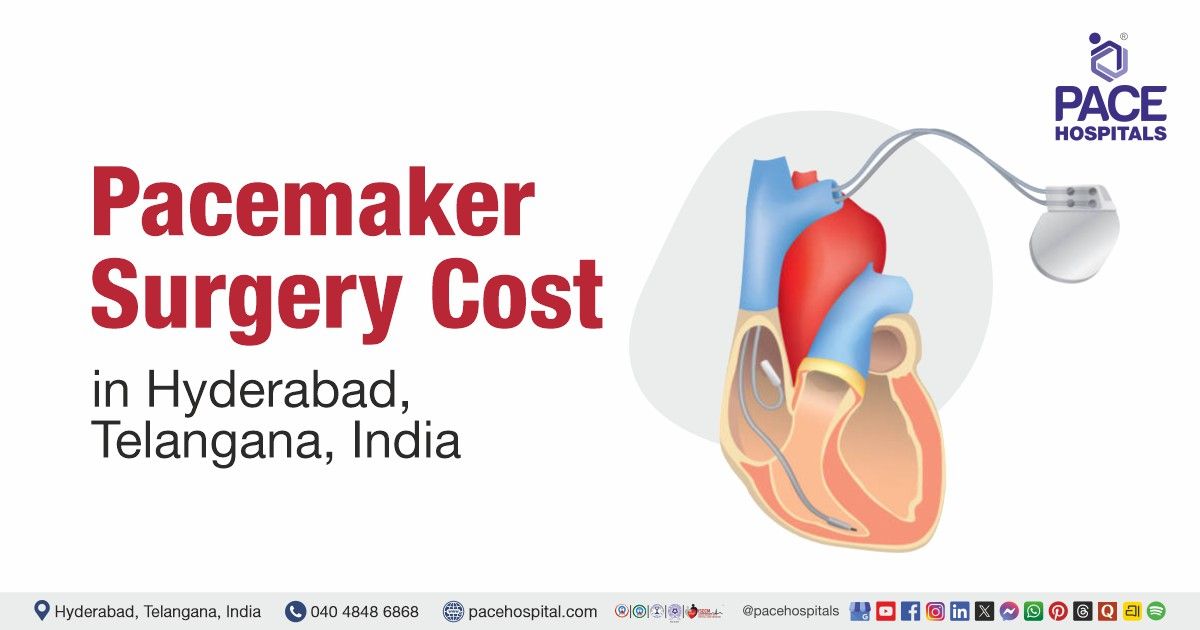
Pacemaker Surgery is a medical procedure that implants a small device under the skin to help maintain a regular heartbeat in patients whose own heart rhythm is too slow, irregular, or inefficient.
- The pacemaker is a small electronic device that generates electrical impulses delivered by electrodes to one or more chambers of the heart. It helps ensure the heart beats at an appropriate rate and rhythm to maintain effective blood flow.
- The implanted device continuously monitors heart activity and sends electrical pulses when needed to correct slow or irregular beats, reducing symptoms such as fatigue, dizziness, breathlessness, and fainting.
Get a Cost Estimate for Pacemaker Surgery
Pacemaker Surgery Cost Query
Pacemaker Surgery Cost in India
On average, Pacemaker Surgery cost in India ranges between ₹1,65,000 and ₹14,00,000 (approximately US $1,740 to US $14,715). However, the actual cost may vary depending on several factors, including:
- The patient’s age, overall health, and heart condition.
- Type of pacemaker (single-chamber, dual-chamber, CRT, or ICD).
- The type of hospital (private, government, or trust hospitals).
- Hospital charges, including room category and facilities.
- Insurance coverage or corporate approvals for cashless treatment.
- Pre-operative evaluations and post-operative care requirements.
- Any complications that may arise during or after the procedure.
Pacemaker Surgery Cost in Hyderabad, Telangana
On average, Pacemaker Surgery cost in Hyderabad ranges ₹1,80,000 and ₹12,25,000 (approximately US $1,898 to US $12,875). These rates offer a competitive and cost-effective option compared to other hospitals in the city, with advanced cardiac care readily available.
However, the cost of Pacemaker Surgery in Hyderabad is influenced by several factors, such as:
- The patient’s overall heart condition, age, and medical history.
- The hospital facility chosen and its infrastructure.
- Insurance or corporate approvals for cashless services.
- Extent of pre-operative evaluations and post-operative care.
- Potential complications during or after the procedure.
Cost Breakdown According to Type of Pacemaker Used
- Single-Chamber Pacemaker – Device Cost: ₹40,000 – ₹1,50,000; Total Surgery Cost: ₹1,90,000 – ₹3,00,000 (US $1,995 – US $3,150) (approx.)
- Dual-Chamber Pacemaker – Device Cost: ₹60,000 – ₹2,50,000; Total Surgery Cost: ₹2,50,000 – ₹3,50,000 (US $2,630– US $ 3,690) (approx.)
- Biventricular / CRT Pacemaker – Device Cost: ₹1,50,000 – ₹3,50,000; Total Surgery Cost: ₹3,80,000 – ₹5,50,000 (US $4,000– US $5,800) (approx.)
- Leadless Pacemaker – Device Cost: ₹7,00,000 – ₹10,00,000+; Total Surgery Cost: ₹8,50,000 – ₹12,00,000 (US $8,925– US $12,630) (approx.)
- Temporary Pacemaker – Device Cost: ₹30,000 – ₹1,00,000; Total Surgery Cost: ₹1,80,000 – ₹2,50,000 (US $1890– US $2,625) (approx.)
Note: These are estimated costs. The exact cost for an individual patient is determined after a thorough evaluation by the cardiac care team.
Additional Information: The cost of Pacemaker Surgery implants may vary depending on several factors, including the type and brand of the pacemaker device, the complexity of the patient’s heart rhythm disorder, the duration of hospitalization, any additional procedures required, and the experience and expertise of the cardiac surgical team. This ensures that each patient receives a personalized treatment plan and a transparent cost estimate tailored to their medical needs.
Breakdown of Pacemaker Surgery Costs
The cost of Pacemaker Surgery involves multiple components, which can vary depending on the hospital, the type of pacemaker (single-chamber, dual-chamber, CRT, or ICD), and the patient’s overall health condition. Below is a detailed breakdown of the expenses typically associated with Pacemaker Surgery:
1. Pre-Surgery Costs
- Consultation Fees: Charges for consulting with cardiologists and heart rhythm specialists, which vary depending on the doctor’s expertise and hospital.
- Diagnostic Tests: Includes blood tests, ECG, ECHO, and imaging studies (CT scans or ultrasounds) to evaluate heart function before surgery.
- Pre-Surgical Screening: Comprehensive health assessments to check heart, kidney, and other organ functions, ensuring the patient is fit for pacemaker implantation.
2. Pacemaker Surgery Costs
- Hospitalization Charges: Private room charges during the pre-surgery preparation and post-operative recovery. ICU charges if critical monitoring is needed.
- Surgical Procedure: Costs associated with the pacemaker implantation, including surgeon’s fees and operating room charges.
- Anesthesia and Surgical Team Fees: Charges for anesthesia, anesthesiologists, and the cardiac surgical team involved in the procedure.
3. Post-Surgery Care Costs
- ICU Stay Post-Surgery: Charges for intensive care, depending on the patient’s recovery progress.
- Hospital Stay: General hospitalization expenses for post-operative recovery, typically 1–2 days for standard pacemaker implantation, longer for complex cases.
- Follow-Up Visits & Device Monitoring: Routine follow-ups to check pacemaker function, battery status, and adjustment of device settings.
This cost structure ensures transparency and helps patients plan their finances effectively for Pacemaker Surgery. At PACE Hospitals, Hyderabad, we provide detailed, personalized estimates tailored to each patient’s specific medical needs, ensuring affordability and world-class cardiac care.
Who Needs Pacemaker Surgery?
Pacemaker implantation is not required for everyone with a heart rhythm abnormality. It is recommended when the heart’s natural electrical system cannot maintain a safe and effective heartbeat, and symptoms or risks justify intervention.
Common Conditions Indicating Need for a Pacemaker
- Bradycardia (slow heart rate): When the heartbeat is persistently too slow to maintain proper circulation, leading to symptoms like dizziness, fatigue, or fainting.
- Heart Block: This occurs when the electrical signals between the upper (atria) and lower (ventricles) chambers of the heart are delayed or blocked. In second-degree atrioventricular (AV) block, some signals fail to reach the ventricles, causing intermittent slow heartbeats, while in third-degree (complete) atrioventricular (AV) block, no signals reach the ventricles, resulting in a consistently slow and irregular heartbeat that can be life-threatening. A pacemaker restores a steady rhythm, improving blood flow, energy levels, and overall heart function.
- Sick Sinus Syndrome: This condition occurs when the heart’s natural pacemaker, the sinoatrial (SA) node, does not function properly, causing irregular heartbeats that may alternate between abnormally slow (bradycardia) and fast (tachycardia) rates, or pauses in the heartbeat. A pacemaker can stabilize the heart rhythm, prevent symptoms like dizziness, fainting, or fatigue, and help maintain normal blood flow and daily activities.
- Heart Failure with Dyssynchrony: Some patients with heart failure have ventricles that do not contract in sync, which reduces the efficiency of the heart. In these cases, a biventricular pacemaker (Cardiac Resynchronization Therapy - CRT) helps coordinate the contractions of both ventricles, improving blood flow and reducing heart failure symptoms.
- Post-Cardiac Surgery Arrhythmias: After complex heart surgery, some patients may experience temporary or persistent irregular heartbeats, known as arrhythmias, that do not resolve on their own. These rhythm disturbances can lead to dizziness, fatigue, or shortness of breath. A pacemaker may be recommended in cases where the heart’s natural rhythm cannot stabilize, helping restore consistent heartbeat, improve blood flow, and support recovery after cardiac surgery.
- In some case for
Congenital Heart Diseases, it is also used.
Who is Not Eligible for Pacemaker Surgery?
While Pacemaker Surgery is safe and effective for many patients, it is not suitable for everyone. Certain conditions or health risks may make implantation unsafe or ineffective:
- Active infections: Patients with ongoing infections in the body may be at higher risk for complications if a pacemaker is implanted.
- Severe or unstable heart conditions: Those with acute heart failure, uncontrolled arrhythmias, or recent cardiac events may require stabilization before considering pacemaker implantation.
- Severe comorbidities: Patients with advanced kidney disease, uncontrolled diabetes, or other serious medical conditions may have increased surgical risks.
- Short life expectancy due to other illnesses: In cases where life expectancy is limited by non-cardiac conditions, pacemaker surgery may not provide meaningful benefit.
- Allergy or intolerance to device materials: Rare patients who have allergies to pacemaker components may be advised against implantation.
Assessment by a qualified cardiologist is essential to determine eligibility. A thorough pre-operative evaluation, including ECG, ECHO, and overall health assessment, ensures that the surgery provides maximum benefit with minimal risk.
Pacemaker Implantation - How is Pacemaker Surgery Done?
Pacemaker implantation is a minimally invasive procedure performed under local anesthesia with sedation. The steps include:
- Pre-procedure evaluation: Comprehensive tests and assessments, including Electrocardiogram (ECG), Echocardiogram (ECHO), and detailed cardiac assessment
- Device selection: Determining the appropriate type of pacemaker
- Implantation procedure: Leads are inserted through veins into the heart; the generator is placed under the collarbone
- Monitoring and testing: Ensuring the pacemaker functions properly
- Recovery: Most patients are discharged within 24–48 hours
Types of Pacemakers
Different types of pacemakers are used to meet specific patient needs, and the choice of device can influence both treatment and cost:
- Single-Chamber Pacemaker: One lead; basic pacing; cost-effective
- Dual-Chamber Pacemaker: Two leads; coordinates upper and lower heart chambers
- Biventricular / CRT Pacemaker: For heart failure; improves pumping efficiency
- Advanced ICD / CRT-D Devices: Protects against dangerous arrhythmias; most advanced
Permanent Pacemaker Implantation
These are long-term devices implanted to regulate chronic or persistent heart rhythm disorders. Single-Chamber Pacemaker, Dual-Chamber Pacemaker, Biventricular / CRT Pacemaker, and Leadless Pacemaker are all types of Permanent Pacemakers.
Note: Costs may vary based on the type of pacemaker used, with advanced devices generally costing more than simpler models.
Common Surgical Techniques for Pacemaker Implantation
- Transvenous Lead Placement: Leads inserted through veins into the heart
- Leadless Pacemaker: Minimally invasive option for select patients
- Elective vs Emergency Surgery: Planned for stable patients; emergency for severe rhythm disturbances
Post Pacemaker Surgery Care Tips
After Pacemaker Surgery, careful attention to recovery is essential to ensure proper healing and device function.
- It is advised to attend the one-week follow-up for evaluation and monitoring.
- It is suggested to gently shower and cleanse the incision area with mild soap and water, and to pat the area dry carefully.
- It is recommended to avoid heavy lifting, strenuous activity, or raising the arm above the shoulder on the side of implantation for approximately four to six weeks.
- It is advised to refrain from submerging in tubs, pools, or hot tubs for at least six weeks to reduce the risk of infection.
- If antibiotics are prescribed at discharge, it is suggested to complete the entire course as instructed.
- It is recommended to inform the physician before undergoing other treatments, such as dental procedures or surgeries, that could affect heart function or the pacemaker.
- It is advised to adhere to scheduled follow-up appointments to monitor for infection, device malfunction, or other complications.
Following these recommendations ensures safe recovery and optimal long-term pacemaker function.
Key Factors Influencing Pacemaker Surgery Cost
Pacemaker Surgery is a precise cardiac procedure, and several factors influence the overall cost. Understanding these elements can help patients prepare better for the financial aspects of the surgery.
1. Pre-Surgery Evaluation
Comprehensive tests and assessments, including blood work, ECG, ECHO, and imaging studies, along with consultations with cardiologists and electrophysiologists, contribute to the total cost.
2. Insurance Coverage
The extent of insurance coverage or corporate approvals for cashless treatment can significantly affect out-of-pocket expenses.
3. Hospital and Location
Reputed hospitals in major cities like Hyderabad may have higher charges compared to smaller hospitals or clinics in suburban areas.
4. Post-Surgery Care
Follow-up visits, device monitoring, and any post-operative medications or treatments contribute to ongoing expenses after Pacemaker Surgery.
5. Complications During Surgery
Unforeseen complications, such as infection, bleeding, or lead issues, may lead to additional procedures, extended ICU stay, or longer hospitalization, increasing the overall cost.
6. Surgeon Expertise
Highly experienced cardiologists and electrophysiologists may charge higher fees for their expertise and proven track record in pacemaker implantation.
7. Device Type
Single-chamber pacemakers are generally more economical, while dual-chamber, biventricular (CRT), and advanced ICD/CRT-D devices cost more due to increased complexity and functionality.
8. Travel and Accommodation
Expenses related to travel and accommodation for the patient and family members visiting the hospital add to the overall financial considerations.
9. Patient Health
The patient’s overall health, age, comorbidities, and severity of the heart condition can influence the complexity of the procedure and post-operative care, affecting the total cost.
Why Choose PACE Hospitals for Pacemaker Surgery in Hyderabad, India?
PACE Hospitals, Hyderabad, is a trusted centre for Pacemaker implantation and Pacemaker Surgery.
- We have highly experienced cardiologists, electrophysiologists, anesthesiologists, and specialized cardiac nursing staff who follow evidence-based protocols for safe and effective procedures.
- Our facilities include state-of-the-art modular operation theatres, advanced surgical instruments, and dedicated post-operative monitoring units. Patient-centered care ensures minimal complications, with personalized treatment plans and transparent cost estimates tailored to each patient.
For patients searching for the Best Hospital for Pacemaker Surgery in Hyderabad, Telangana, India, PACE Hospitals provides advanced cardiac care, competitive costs, and transparent treatment planning.
Financial Assistance and Payment Plans at PACE Hospitals
Heart care should be accessible without financial stress. Our team assists patients with insurance and cashless support.
- Cashless hospitalisation with empanelled insurers and TPAs
- Pre-authorization and documentation guidance
- Reimbursement assistance if cashless facility is unavailable
- Transparent pre-admission cost estimates
- Support for corporate and government health schemes
Pacemaker Surgery Success Rate
Pacemaker implantation is highly effective with a success rate of approximately 95% – 98%.
Patients experience:
- Improved heart rhythm
- Reduced fatigue, dizziness, or shortness of breath
- Enhanced daily functioning
- Long-term success depends on regular follow-ups and device monitoring.
Frequently Asked Questions (FAQs) on Pacemaker Surgery
What is Pacemaker Surgery and why is it needed?
Pacemaker Surgery is a procedure that implants a small device under the skin to regulate abnormal heart rhythms. It is typically performed for conditions such as bradycardia, heart block, or heart failure requiring biventricular pacing. The pacemaker helps improve heart function, reduces symptoms like dizziness and fatigue, and allows patients to maintain daily activities safely.
What is the pacemaker of the heart?
The natural pacemaker of the heart is the sinoatrial (SA) node, which initiates the heartbeat. When this node malfunctions, an artificial pacemaker is implanted to maintain a regular rhythm, preventing fainting, fatigue, or heart complications
What heart conditions require a pacemaker?
Patients may need a pacemaker if they have bradycardia, heart block, sick sinus syndrome, or certain types of heart failure. Cardiologists determine the need based on ECG, ECHO, symptoms, and overall cardiac function.
What is a pacemaker and what does it do?
A pacemaker is a small electronic device that monitors heart rhythm and sends mild electrical impulses to maintain a consistent heartbeat. It helps prevent dizziness, fainting, and heart failure progression, ensuring safe daily activity and improving quality of life.
When is a pacemaker needed or required?
A pacemaker is needed when the heart beats too slowly or irregularly to maintain adequate blood flow. Indications include bradycardia, heart block, and certain post-surgery rhythm disturbances. Doctors evaluate symptoms, ECG, and overall cardiac health to decide the timing of implantation.
Why is a pacemaker used or required?
Pacemakers are used to correct abnormal heart rhythms that can lead to dizziness, fainting, fatigue, or more severe cardiac complications. They restore a safe and stable heartbeat, improving exercise tolerance and day-to-day life for patients with rhythm disorders.
How does a pacemaker work?
The pacemaker continuously monitors heart activity and sends electrical impulses whenever the heart beats too slowly or irregularly. This ensures consistent cardiac output, prevents complications, and stabilizes blood flow throughout the body.
How is a pacemaker installed?
Installation involves inserting leads into the heart through a vein and placing the generator under the collarbone. The procedure is minimally invasive, done under local anesthesia with sedation, and takes about 1–2 hours depending on complexity. Patients are usually discharged within 24–48 hours.
How to choose the right type of pacemaker?
The choice—single-chamber, dual-chamber, CRT, or ICD—depends on the patient’s heart rhythm disorder, overall health, and cardiologist evaluation. The right selection ensures maximum effectiveness, safety, and cost-efficiency.
Is pacemaker surgery dangerous?
Pacemaker implantation is generally safe. Risks include infection, bleeding, lead displacement, or arrhythmia, but complications are rare. Skilled cardiologists and a specialized cardiac team monitor patients closely during and after surgery.
Can elderly patients undergo Pacemaker Surgery safely?
Yes, age is not a barrier for Pacemaker Surgery. Elderly patients with slow or irregular heartbeats can safely undergo implantation. Proper evaluation by experienced cardiologists ensures that surgery risks are minimized while improving heart function, reducing symptoms, and enhancing quality of life for older patients.
Who may not be suitable for pacemaker surgery?
Patients with active infections, unstable heart conditions, or severe comorbidities may not be suitable candidates. Each patient undergoes a thorough evaluation to determine eligibility.
How long does the pacemaker implantation procedure take?
The procedure usually takes 1–2 hours, depending on the complexity of the device and the patient’s heart condition. Additional time is allocated for monitoring the heart rhythm, testing the device function, and ensuring patient stability before discharge. Patients typically stay in the hospital for 1–2 days.
What is life expectancy after pacemaker surgery?
Pacemaker implantation itself does not directly affect life expectancy. By stabilizing heart rhythm and preventing complications, patients generally maintain normal daily activities and improved quality of life.
What are the signs of pacemaker malfunction?
Symptoms may include unusual fatigue, dizziness, fainting, or irregular heartbeats. Immediate evaluation by a cardiologist is necessary to correct device function and prevent complications.
Can pacemaker surgery be performed at all stages of heart disease?
Pacemaker Surgery can be performed for various rhythm disorders, but patient suitability depends on overall cardiac health. Cardiologists assess risk and determine timing to ensure safe and effective outcomes.
What factors are included in the total cost of Pacemaker Surgery?
The total cost covers multiple aspects: the pacemaker device itself, procedure charges, hospital stay, consultations with cardiologists and electrophysiologists, diagnostic tests such as ECG and ECHO, nursing care, and post-operative monitoring. At PACE Hospitals, Hyderabad, all-inclusive packages are designed to ensure transparency and help patients plan financially.
Does insurance cover Pacemaker Surgery at PACE Hospitals?
Most health insurance plans cover Pacemaker Surgery when medically necessary. Coverage depends on policy terms, waiting periods, and the specific approvals required by the insurance provider. PACE Hospitals provides dedicated support for cashless approvals and reimbursement guidance, making it easier for patients to manage out-of-pocket expenses.
How long is the recovery period after Pacemaker Surgery?
Recovery from Pacemaker Surgery is generally quick compared to major cardiac procedures. Most patients are discharged within 24–48 hours, with light activities allowed within a few days. Heavy physical activity should be avoided for several weeks. Recovery time may vary depending on the patient’s age, overall health, and the complexity of the procedure.
How often should a pacemaker be checked after implantation?
Regular follow-up visits are essential to monitor pacemaker function, battery status, and heart rhythm control. Initially, patients return to the hospital within a week of surgery, and subsequent check-ups are typically scheduled every 3–6 months. These follow-ups help detect any device issues early and ensure long-term safety.
What are the risks or complications associated with Pacemaker Surgery?
While Pacemaker Surgery is generally safe, potential risks include infection, bleeding, lead displacement, or irregular heart rhythm. Skilled cardiologists at PACE Hospitals take precautions to minimize these risks. Any complications are promptly managed through specialized post-operative care and monitoring.
How long do pacemaker batteries last, and when is replacement needed?
Modern pacemaker batteries typically last 5 to 15 years depending on usage and device type. When battery life ends, replacement surgery is required, which is generally simpler than the initial implantation. Proper monitoring ensures that battery replacement is done proactively, avoiding any disruption in heart rhythm management.
Can Pacemaker Surgery be combined with other cardiac procedures?
In selected cases, Pacemaker Surgery can be performed alongside other minimally invasive cardiac procedures, such as angioplasty or valve repair. Combining procedures can reduce overall hospitalization time while providing comprehensive cardiac care.
What is the expected life expectancy after Pacemaker Surgery at PACE Hospitals, Telangana, India?
At PACE Hospitals, Hyderabad, pacemaker implantation does not directly alter life expectancy. However, by regulating abnormal heart rhythms and preventing complications such as fainting or progression of heart failure, patients often experience improved quality of life and functional longevity. Consistent follow-up visits and device maintenance at PACE Hospitals are essential to ensure long-term safety and optimal device performance.
Share on
Request an appointment
Fill in the appointment form or call us instantly to book a confirmed appointment with our super specialist at 04048486868
Appointment request - health articles
Recent Articles