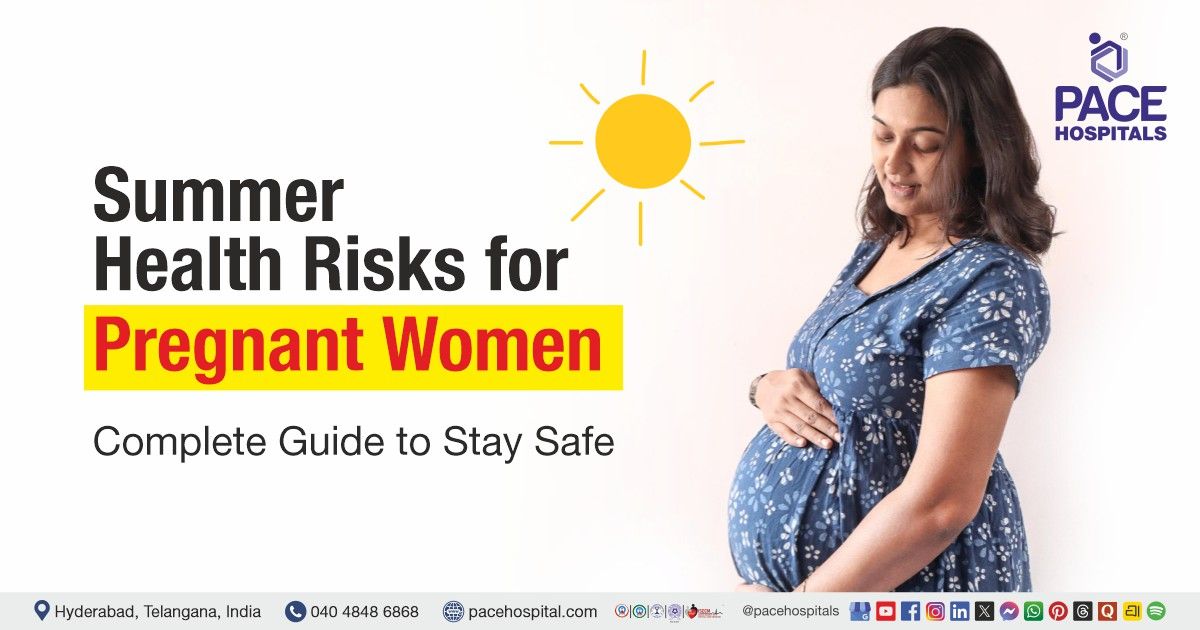
Summer Health Risks for Pregnant Women: Complete Guide to Stay Safe
PACE Hospitals
Written by: Editorial Team
Medically reviewed by: Dr. Mugdha Bandawar - Consultant Obstetrician & Gynaecologist
Pregnancy in the summer months often feels more tiring than usual. Hot weather, humidity, and the natural changes happening in the body can make everyday tasks feel harder and less comfortable. During pregnancy, the body is already putting in extra effort to support the baby's development, so the added heat of summer can make things even more challenging.
During pregnancy, the body goes through several changes such as increased blood volume, a faster metabolism, and shifting hormone levels. All of these can naturally make the body feel warmer than usual. When this is combined with hot summer weather, it can become harder for the body to stay cool. As a result, pregnant women may feel more tired, become dehydrated more easily, and may also face other heat-related discomforts.
Understanding the connection between summer and pregnancy and following practical summer pregnancy tips can help maintain comfort and reduce risks for both the mother and the baby.
Why Pregnant Women Are More Vulnerable to Heat?
Pregnancy brings several internal changes that make the body more sensitive to temperature variations. These changes are normal but increase the risk of overheating during summer.
Increased metabolic rate: The body keeps working all the time to support the baby's growth, which takes extra energy and generates more heat. Because of this added internal heat, coping with hot weather can become more difficult, especially during the hottest part of summer.
Higher body temperature: Hormonal changes during pregnancy can slightly increase the body's normal temperature. Because of this, exposure to hot weather may cause pregnant women to feel overheated and uncomfortable more quickly than those who are not pregnant.
Increased fluid requirements: Pregnant women need more water to support their baby's growth and healthy blood flow. During summer, the body loses more fluids through sweat, which can quickly lead to dehydration if enough water is not taken.
Hormonal changes affecting circulation: Some pregnancy hormones cause blood vessels to relax and widen. This can lead to lower blood pressure (hypotension) and make it harder for the body to regulate temperature efficiently.
Common Summer Health Risks during Pregnancy
Hot weather can raise the chances of some health problems. Knowing about these risks can help with early prevention and quicker treatment.
Dehydration
Dehydration is a common issue during pregnancy in hot summer weather. It can happen quickly if the body doesn't get enough fluids to keep up with its increased needs.
- Why it happens: Pregnancy can cause more sweating and a higher need for fluids, which leads to fluid loss. If these fluids are not replaced, it may affect normal body functions and blood circulation.
- Effects: Dehydration may reduce amniotic fluid and it cause headaches, dizziness, and extreme tiredness. In some cases, it may even trigger early uterine contractions.
Heat Exhaustion and Heatstroke
Prolonged exposure to high temperatures can lead to heat exhaustion, which may progress to heatstroke if not addressed in time.
- Heat exhaustion symptoms: Excess sweating, weakness, dizziness, and nausea are early warning signs. These symptoms indicate that the body is struggling to cool itself.
- Heatstroke symptoms: A very high body temperature, confusion, hot dry skin, and rapid heartbeat indicate a medical emergency. Immediate medical attention is needed.
Swelling (Edema)
Swelling is common during pregnancy but often becomes more noticeable in summer due to heat.
- Causes: Heat causes blood vessels to expand, leading to fluid accumulation in the lower limbs. Standing for long periods or wearing tight footwear can worsen swelling.
- When to worry: Mild swelling during pregnancy is normal. However, if swelling appears suddenly or becomes severe, particularly in the face or hands, it could be a sign of a more serious problem and need to be checked by a doctor.
Urinary Tract Infections (UTIs)
UTIs are more common during summer due to dehydration and increased bacterial growth.
- Why it occurs: Reduced water intake results in concentrated urine that creates a suitable environment for bacteria to multiply.
- Symptoms: Burning micturition (burning sensation) while urinating, frequent urination, and lower abdominal discomfort are common signs that should not be ignored.
Skin Problems
Skin sensitivity increases during summer and pregnancy, leading to various skin-related issues.
- Common conditions: Heat rash (miliaria), itching, and fungal infections often occur when sweating is excessive and moisture gets trapped in skin folds.
- Prevention: Wear loose, breathable clothes during pregnancy in summer and maintain good hygiene to keep the skin dry and help prevent irritation.
Low Blood Pressure
Hot weather can cause blood vessels to widen, that may lead to a drop in blood pressure. As a result, a person may feel lightheaded or weak in some cases.
- Symptoms: Dizziness, lightheadedness, and occasional fainting may occur, especially when standing up quickly.
- Management: Stay hydrated, skip sudden moves, and rest up when you need to—it really helps keep symptoms in check.
Preterm Labor Risk
Although it is rare, severe dehydration and overheating may sometimes cause uterine contractions.
- Why it happens: Fluid imbalance and stress on the body can stimulate contractions in some cases.
- Prevention: Adequate hydration and avoiding long term exposure to heat are key preventive measures.
Fatigue and Sleep Disturbances
Summer heat can worsen fatigue and affect sleep quality during pregnancy.
- Reasons: Excessive sweating, frequent urination, and trouble keeping a cool environment can disrupt sleep.
- Relief measures: Wearing light pregnancy summer dresses and keeping the room cool can improve comfort and rest.
Effects of Excess Heat on the Baby
The baby stays safe in the womb, but too much heat can still mess with its development indirectly.
Reduced placental blood flow: Dehydration may decrease blood flow to the placenta, affecting oxygen and nutrient supply.
Risk of low birth weight: Prolonged exposure to heat may impact fetal growth, leading to lower birth weight.
Preterm birth risk: Severe dehydration and stress on the body may increase the chances of early delivery in some cases.
Warning Signs That Require Immediate Medical Attention
Certain symptoms during pregnancy in summer heat should never be ignored.
- Persistent dizziness or fainting
- High fever or inability to sweat
- Severe abdominal pain
- Reduced fetal movements
- Signs of dehydration such as dark urine
- Sudden swelling of face or hands
Prompt medical consultation is important if any of these symptoms occur.
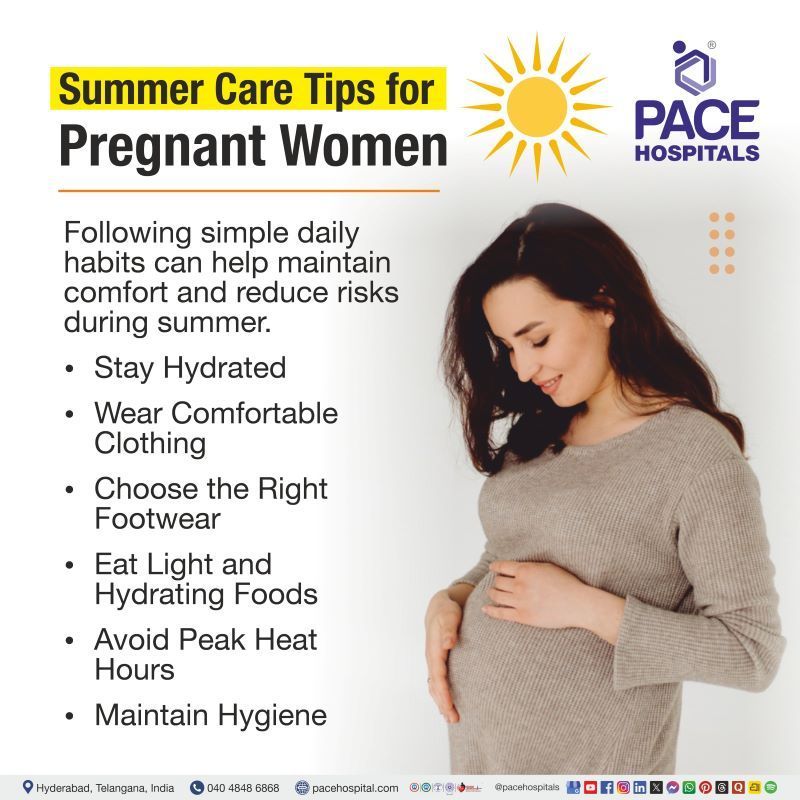
Summer Care Tips for Pregnant Women
Following simple daily habits can help maintain comfort and reduce risks during summer.
Stay Hydrated
Drink water frequently, even if you do not feel thirsty. Coconut water and buttermilk can also help maintain electrolyte balance and prevent dehydration.
Wear Comfortable Clothing
Wearing the right clothes during pregnancy in summer helps keep the body cool and comfortable. Fabrics such as cotton and linen allow air to flow easily and absorb sweat, which helps reduce discomfort.
Loose-fitting dresses are also a good option as they prevent skin irritation and make movement more comfortable.
Choose the Right Footwear
Wearing the best shoes for pregnancy in summer help to alleviate swelling and discomfort. Cushioned sandals or supportive flats give good stability and make walking comfortable.
Avoid high heels or tight footwear, as they can increase strain on the legs and cause imbalance.
Eat Light and Hydrating Foods
Adding summer fruits in pregnancy helps maintain hydration and provides essential vitamins.
Fruits like watermelon, muskmelon, oranges, and cucumbers are helps regulate body temperature naturally.
Avoid Peak Heat Hours
Try to stay indoors during the hottest part of the day. Early morning or evening is safer for outdoor activities.
Maintain Hygiene
Bathing regularly and wearing clean clothes can help prevent infections. Keeping the skin dry also lowers the chance of rashes and fungal infections.
Diet Recommendations for Summer Pregnancy
A balanced diet is essential for staying healthy and comfortable during pregnancy in the summer season.
Hydrating foods: Water-rich foods such as watermelon, cucumber, and citrus fruits help maintain fluid balance and keep the body cool during hot weather.
Electrolyte-rich foods: Coconut water and buttermilk replace lost salts. They keep the body hydrated and stop dehydration.
Protein sources: Lentils, eggs, and lean meat support fetal growth and maintain maternal strength.
Foods to avoid: Processed foods, excess caffeine, and street food need to be limited to reduce the risk of infections and digestive issues.
Prevention Strategies
Simple daily habits can help make pregnancy during summer easier to handle. Staying well hydrated, eating healthy meals, wearing loose and comfortable clothing, and staying away from extreme heat can help reduce common problems that come with the season.
Regular antenatal check-ups are also important to monitor both maternal and fetal health during pregnancy in summer heat.
Maintain proper hydration: Drink water regularly throughout the day. Do not wait until you feel thirsty.
Avoid direct sun exposure: Stay indoors during the hottest part of the day. If going outside is necessary, use an umbrella or wear protective clothing to stay safe from the sun.
Choose suitable summer pregnancy clothes: Wear loose, breathable fabrics like cotton. Comfortable summer pregnancy outfits help prevent overheating and skin irritation.
Follow a balanced summer diet: Add summer fruits like watermelon, oranges, and cucumber to the diet during pregnancy, as they help keep the body hydrated.
Attend regular antenatal visits: Routine check-ups help monitor health and detect any early concerns.
Management of Summer Health Issues
Even with proper care, some summer-related problems may still occur during pregnancy in summer heat. Early recognition and timely care can prevent complications.
Mild dehydration: Drink plenty of fluids such as water, coconut water, or oral rehydration solutions to stay hydrated. Resting in a cool place helps the body recover and makes you feel more comfortable.
Severe dehydration or heatstroke: This requires immediate medical attention. Symptoms such as fainting, confusion, or very high body temperature should not be ignored.
Urinary tract infections (UTIs): Early treatment with doctor-prescribed medication is important. Do not ignore symptoms like burning urination or frequent urge.
Swelling in legs or feet: Rest with legs slightly elevated and avoid standing for long stretches. If swelling comes on suddenly or becomes severe, it is important to get it checked by a doctor.
Heat rash or skin irritation: Keep skin dry and choose loose, light, and breathable clothes for comfort during pregnancy in summer. Avoid tight clothing. If symptoms worsen, consult a doctor.
Conclusion
Summer can pose several challenges during pregnancy, but with proper care, most risks can be managed effectively. Staying hydrated, wearing comfortable summer pregnancy outfits, eating the right foods, and following simple summer pregnancy tips can make a significant difference.
With awareness and timely precautions, it is possible to maintain a safe, healthy, and comfortable pregnancy—even during extreme summer conditions.
Frequently Asked Questions (FAQs)
Does hot weather increase the risk of miscarriage during pregnancy?
Hot weather does not directly cause miscarriage. However, very high temperatures can make dehydrated and very tired, which may put extra stress on the body during pregnancy. If this is not managed, it can affect your overall health. It is important to drink enough water and keep your body cool in hot weather. If you feel unwell or notice signs of dehydration, it is best to seek advice from a healthcare professional.
How can pregnant women avoid heat-related issues during summer?
It is generally safer for pregnant women to stay indoors during the hottest part of the day, usually from late morning to afternoon, because high temperatures can raise the risk of heat-related issues like heat exhaustion or heatstroke. Wearing light, breathable clothing, drinking plenty of water, and resting in cool places can help reduce discomfort. If going outside is necessary, using a wide-brimmed hat, sunscreen, and staying in shaded areas can help reduce direct sun exposure.
What are the best sleeping positions during summer pregnancy?
The best sleeping position during pregnancy is on your side, especially the left side, as this helps blood flow to the baby. During summer, it’s also important to keep the room cool and comfortable. Use light, breathable blankets and supportive pillows to help you get restful sleep despite the heat.
How does humidity affect pregnant women in summer?
High humidity makes the air feel hotter because sweat does not dry quickly, which reduces the body's ability to cool down. This can be especially uncomfortable during pregnancy and may cause more tiredness, dehydration, and general discomfort. Drinking enough water helps keep the body hydrated. It is also better to avoid staying in very humid places for long periods and to wear loose, breathable clothes that absorb moisture and help keep the body cool.
Is it safe to exercise outdoors during pregnancy in summer heat?
Yes, exercising outdoors during pregnancy in summer is usually safe, but you need to be careful because of the heat. Try to exercise in the early morning or evening when it is cooler. Drink enough water before, during, and after your activity to stay hydrated. Avoid very intense or heavy exercises so you don't overstrain your body. If the weather is very hot or humid, it is better to do indoor exercises like swimming or prenatal yoga instead.
What precautions should pregnant women take during a summer heatwave?
During a heatwave, it's usually best to stay indoors when it's hottest outside, since the heat can make you feel sick or overheated. Doing hard outdoor work or exercise in such weather can put extra strain on your body. Drink plenty of water and stay in cool places so your body temperature stays normal. Wearing light, loose clothes and using things like fans or cool showers can also help you feel more comfortable.
If going outdoors is necessary, using sunscreen and wearing a hat can help reduce sun exposure. Symptoms such as dizziness or fainting may indicate heat stress and may need medical attention.
What are the best cooling products for pregnant women in summer?
Cooling products such as gels, sprays, and ice packs can help keep you cool during hot weather. A cooling pillow or body wrap is also a good option for staying comfortable while sleeping. For a more natural approach, wearing lightweight, moisture-wicking clothing and using fans or air coolers can help keep the room comfortable without irritating your skin.
Can sleeping in heat affect the baby during pregnancy?
While sleeping in hot conditions may make you uncomfortable, there’s no solid evidence that it directly harms the baby. However, being in a warm environment can lead to dehydration and affect your sleep, which can have an impact on your well-being. It’s best to sleep in a cool, well-ventilated room, use lightweight bedding, and drink plenty of fluids to stay hydrated.
Is it safe to travel during pregnancy in summer season?
Traveling during summer is usually safe in pregnancy if proper precautions are followed. Try to avoid travelling during the hottest part of the day, drink enough water, and take breaks regularly to prevent tiredness and dehydration.
Whether travelling by car or plane, wear loose and comfortable clothing and move or stretch your legs often to improve blood circulation. If you are in the later stages of pregnancy or have any health issues, it is important to consult your doctor before planning any travel.
Does sweating more during pregnancy cause any harm to the baby?
Sweating more during pregnancy is normal and does not harm the baby, as it happens because the body is trying to regulate its temperature. However, excessive sweating can sometimes lead to dehydration, so it is important to drink enough water throughout the day. Keeping the skin clean and dry can also help prevent irritation, itching, and rashes caused by sweat.
Can sun exposure during pregnancy cause skin darkening or pigmentation?
Yes, Sun exposure can cause changes in the skin, especially on the face. This is known as melasma, also called the “mask of pregnancy.” It is a harmless condition but can be concerning for some women due to dark patches on the skin. To reduce the risk of skin darkening, it is helpful to use sunscreen, wear protective clothing, and avoid staying in the sun for long periods.
Can dehydration lead to low amniotic fluid levels?
Yes, dehydration can cause a decrease in the amount of amniotic fluid. When you’re dehydrated, your body may conserve water, including the fluid around your baby. It’s very important to drink enough water throughout your pregnancy, especially in the summer when you’re more likely to lose fluids through sweating. If you’re dehydrated, make sure to drink more water and talk to your doctor.
Can wearing tight clothing in summer affect pregnancy?
Wearing tight clothes in summer can feel uncomfortable because they restrict airflow and make the body feel hotter. Sweat can get trapped, which may lead to skin irritation or rashes. It is better to wear loose, comfortable clothes made from light and breathable fabrics so air can pass through easily. This helps keep the body cool and also reduces the chances of skin problems.
How can dehydration affect labor and delivery outcomes?
Dehydration during pregnancy, especially later on, can lead to complications in labor, such as longer labor or trouble with contractions. It can also affect the amount of amniotic fluid, which could lead to preterm labor. Staying hydrated is important for making sure contractions are strong and effective during labor, and that both you and your baby have enough fluids for a healthy delivery.
Share on
Request an appointment
Fill in the appointment form or call us instantly to book a confirmed appointment with our super specialist at 04048486868
Appointment request - health articles
Recent Articles