Top 10 Tips to Stay Healthy During Extreme Heat Waves
PACE Hospitals
Written by: Editorial Team
Medically reviewed by:
Dr. Mounika Jetti - General Physician and Diabetologist
Heat waves can affect anyone, but certain individuals are at higher risk, including children, pregnant women, outdoor workers, older adults and individuals with preexisting medical conditions. Heat‑related illnesses such as dehydration, heat stroke and heat exhaustion can become severe if preventive measures are not followed. This guide highlights evidence‑based tips for staying healthy during heat waves, in line with doctors' recommendations.
A heat wave brings abnormally hot weather that overwhelms the body's cooling mechanisms. Excessively high body temperature may result in dehydration, dizziness,
headaches, muscle cramps, tiredness, fainting, or even worse, life-threatening heat stroke. These simple steps will ensure your protection from summer.
Why are Heat Waves Dangerous?
Heatwaves are becoming more frequent because of the warming Earth. Heat can interfere with an individual's body's ability to regulate temperature. This results in dehydration, heat exhaustion, heatstroke, and exacerbation of existing health conditions. Vulnerable groups such as children, the elderly, pregnant women, and outdoor workers are especially at risk during prolonged periods of high temperature.
In addition to affecting one's health, excessive heat can have psychological effects on an individual; it can decrease productivity, affect sleep patterns, and cause water scarcity and power shortages. Most heat-related disorders can easily be prevented with proper awareness, hydration, and timely interventions.
Understanding the Link between Heat Waves and Heat Illnesses
Heat Waves: Heat waves refer to extended spells of extremely hot temperatures, which may also be accompanied by high levels of humidity. Such conditions overwhelm the body's natural mechanism for maintaining its normal temperature, resulting in dehydration and other forms of heat disorders.
Heat Illnesses: This encompasses different kinds of heat-induced illnesses that arise when the body fails to control its internal temperature amidst extremely hot conditions. Such conditions include dehydration, heat cramps, heat exhaustion, and heat stroke.
Heat Exhaustion: This is a type of heat illness, whereby there is an extreme loss of fluids and salts from the body due to profuse sweating, resulting in dehydration. Symptoms include excessive sweating, vomiting, tiredness, dizziness, increased heart rate, and muscle cramps. This condition needs prompt treatment involving rehydration and cooling.
Heat Stroke: This is the most dangerous type of heat illness, where the body's cooling system is overwhelmed, causing a sharp increase in body temperature, often above 104°F (40°C). Symptoms include disorientation, lack of sweating, convulsions, and even fainting. This condition is a medical emergency that requires prompt medical help.
Effects of Heat Waves
Extreme heat can have a significant effect on a person's physical condition, psychological condition, and overall quality of life. In cases where there is a lot of exposure to extremely hot weather conditions, there might be problems with the natural regulation of body temperature, resulting in situations like heat exhaustion or dehydration. It is, therefore, important to understand the consequences of heat waves to be able to take preventive measures:
Heat wave impact on human health
Heat waves may disrupt the natural regulation of the body's cooling process. Sweating too much will deplete bodily fluids and electrolytes, causing one to become weak, tired, and dizzy. This will progress to other ailments such as heat exhaustion and heatstroke, which will affect the essential organs in the body, including the brain, heart, and kidneys.
Increased risk of heat-related illnesses
Exposure to heat for an extended period could cause various health problems, ranging from heat cramps to heat exhaustion to heat stroke. The most serious of these is heat stroke, which can lead to death. Symptoms such as increased body temperature, confusion, rapid pulse, and lack of sweating indicate heat stroke requiring immediate management.
Mental and emotional effects
Extreme heat waves can equally impact mental well-being. This includes having an irritable mood, mood swings, difficulty concentrating, sleeping problems, and heightened stress. Heat can even exacerbate preexisting individual problems like anxiety and depression.
Impact on vulnerable groups
There are certain groups of people who are very susceptible to harm in heat waves, for example, older people, young children, pregnant women, and heart disease and diabetic patients, to mention a few. Labourers working outside and people without proper cooling mechanisms are equally at risk of succumbing to heat wave-related conditions. These individuals require additional care, hydration, and protection from the body's heat wave exposure.
Causes of Heat Waves in India
Heat-related illnesses result when there is an interference in the body's capacity to regulate body temperature due to prolonged exposure to high temperatures in the environment. This is due to the interaction of various elements.
- Prolonged exposure to high temperatures
- body'sation and fluid loss
- High humidity
- Strenuous physical activity
- Inadequate clothing or protective measures
- Poor ventilation and lack of cooling
- Vulnerable health conditions
- Alcohol and caffeine consumption
- Urban heat island effect
Prolonged exposure to high temperatures: Staying in very hot weather for a long time may cause heat stress or heat stroke when the body's heat-dissipation systems cannot keep up. Individuals need to remain in the shade or under the air conditioning.
Dehydration and fluid loss: This is because the body loses fluids through sweat without adequate replacement, causing dehydration. This interferes with the regulation of body temperature, making people prone to heat illnesses.
High humidity: The body's natural cooling mechanism is sweating, but when humidity is very high, sweating becomes less effective, causing the body to warm up faster and increasing the risk of heat stroke.
Strenuous physical activity: Engaging in physical work in hot weather can cause individuals to become overheated quickly. Individuals must ensure that they take regular breaks, drink plenty of fluids, and avoid heavy activities during the hottest parts of the day.
Inadequate clothing or protective measures: Wearing dark, tight-fitting clothes or failing to protect against the heat waves by wearing hats and applying sunscreen increases the likelihood of heat-related illnesses. Using light, loose-fitting clothes and a hat is essential for keeping the body cool.
Poor ventilation and a lack of cool: Being within areas with limited airflow and without any air conditioning can cause the body to fail in its cooling process. It is essential to find a cooler area with proper ventilation for safety purposes.
Vulnerable health conditions: People with certain health problems, such as heart disease or respiratory problems, are at higher risk of developing heat illness. These individuals must remain cool and well-hydrated when temperatures rise.
Alcohol and caffeine consumption: These substances will lead to fluid loss in urine, causing dehydration. These should be avoided in extremely hot conditions; only water and any other electrolyte-containing fluids should be consumed.
Urban heat island effect: Urban areas are usually warmer than surrounding regions as the structures in these areas conserve heat. Heat strokes are relatively common among city residents due to their inability to afford air conditioners or any form of cooling system.
Heat Wave Symptoms
Heat illnesses occur when the body has difficulty controlling its own temperature during extreme heat. Knowing the symptoms early is key to preventing further health problems.
Early Symptoms (Heat Stress & Dehydration)
- Feeling thirsty- Dehydration begins as the body demands more water.
- Excessive sweating- As the body attempts to cool itself, sweating increases.
- Dizziness or lightheadedness: This is a result of the body's inability to cope with heat, caused by reduced blood flow to the brain due to dehydration and blood vessel dilation.
- Fatigue or weakness: Heat can reduce energy levels, which can stress the body.
- Dark-colored urine- Urine may be very dark due to dehydration.
Symptoms of Heat Exhaustion
- Heavy sweating – Body's cooling processes are working hard.
- Nausea or vomiting – It results from reduced blood flow to the digestive system and electrolyte imbalance.
- Rapid pulse – The heart beats faster because of dehydration.
- Cool, moist skin – Despite heavy sweating, the skin feels pale and moist.
- Headache – Headaches can result from the effects of dehydration and heat exhaustion.
- Muscle cramps – Due to dehydration, muscles can contract and cause pain, especially after physical activity.
Warning Signs of Heatstroke (Medical Emergency)
- High body temperature - Temperature over 104°F (40°C) is the first and most dangerous symptom.
- Hot, dry skin - Unlike heat exhaustion, sweating is absent, and the skin feels very hot and dry.
- Confusion or delirium - A symptom of heatstroke is feeling confused or disoriented, or even becoming unconscious.
- Seizures - Extreme heat can affect the nervous system, causing convulsions.
- Loss of consciousness - The final and most critical symptom is causing someone to faint or lose consciousness.
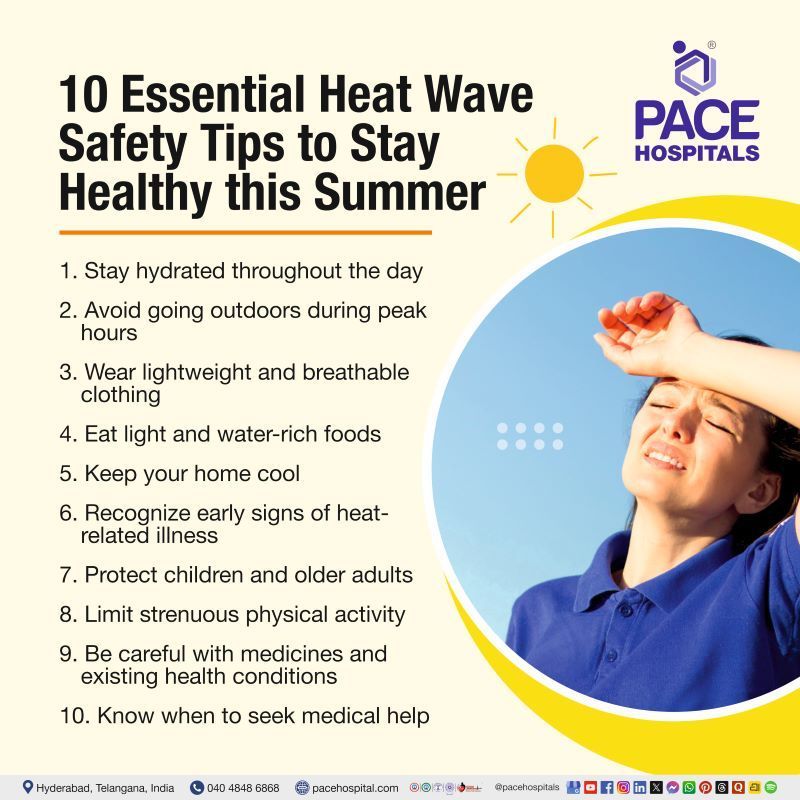
10 Essential Heat Wave Safety Tips to Stay Healthy this Summer
The prevention of heat waves requires preventive actions, which include drinking adequate water, wearing light clothes, and staying away from direct sunlight at peak times. The main preventive action that will help in achieving a perfect indoor environment using fans or air conditioning units is the ideal one that will help in reducing the risk of acquiring any health problem caused by heat waves:
1. Stay hydrated throughout the day
During a heat wave, there is a substantial loss of body fluid through sweating. Staying hydrated is essential for regulating body temperature, supporting metabolism and keeping organs healthy. Dehydration may cause heat-related illness and dizziness, including heat exhaustion or heat stroke. It is recommended that individuals who experience heavy sweating consider using oral rehydration salts (ORS), which help replace fluids and electrolytes lost during dehydration. Drinks containing caffeine and alcohol are not recommended since these drinks cause dehydration. Carry a water bottle with you and sip water regularly.
2. Avoid going outdoors during peak hours
This period is usually from 11 am to 4 pm. This is when the sun is at its peak, and it is easy to develop heat-related conditions. Some of the conditions that may arise from prolonged exposure to the sun include dehydration, heat stroke, and sunburn. The best way to stay safe is to plan activities for the morning or late in the evening, when temperatures are cooler. If you must go outside, wear sun protection and take breaks in the shade.
3. Wear lightweight and breathable clothing
Appropriate clothing choice can play an important role in maintaining body temperature. The reason is that tight, dark clothing will absorb more heat, making it harder for the body to stay cool. Individuals should choose light-colored, loose-fitting clothes, such as cotton or linen. Avoid synthetic fabrics, as they can trap heat. A wide-brimmed hat can also offer additional sun protection.
4. Eat light and water-rich foods
Large amounts of food force the body to work extra hard to digest them, leading to increased body temperature. When it is hot outside, the body needs easily digestible food and water. Individuals should eat light, small portions of foods like salads, fruits, and high-water-content vegetables, such as cucumbers, watermelon, and oranges.
5. Keep your home cool
Buildup of heat inside the house increases the risk of heat-related conditions. Cooling down the house helps to stay comfortable. Individuals should keep the blinds and curtains closed during the day to prevent the sun from heating the house. Air conditioning systems are very helpful for cooling down the house. Even without such equipment, they may choose to visit cooler spots like shopping centers or libraries.
6. Recognize early signs of heat-related illness
It is important to identify heat exhaustion and heat stroke early to prevent further complications. This condition occurs when the body is subjected to too much heat and the regulation of temperature becomes difficult. The signs and symptoms to look out for include heavy sweating, dizziness, nausea, headaches, and a fast pulse. Anyone who experiences these symptoms should immediately go somewhere cool, drink some water, and get some rest.
7. Protect children and older adults
Children and older adults are most at risk of heat-related effects. This is because their bodies are less effective at maintaining body temperature than other people's. They should ensure they stay hydrated and protect themselves from excessive sun exposure during the hottest hours. It is advisable to keep them indoors in an air-conditioned environment.
8. Limit strenuous physical activity
Exercise causes the body to warm, which can pose problems during periods of hot weather. Intense exercise may exceed the body's ability to regulate its temperature through natural mechanisms and cause heat exhaustion or heat stroke. Try avoiding exercise on the hotter part of the day. If this cannot be avoided, then rest frequently, stay hydrated, and exercise during the cooler periods. If you feel overheated, stop exercising and rest.
9. Be careful with medicines and existing health conditions
Certain types of medicines may interfere with your body’s temperature regulation, making you more prone to heat illness. Also, individuals with long-term illnesses like heart disease, diabetes, and breathing problems are at higher risk of becoming sick during extreme heat conditions. Talk to your doctor if you are taking any medication or have any preexisting health conditions. They will give you guidelines on how to protect yourself from extreme heat.
10. Know when to seek medical help
The heat-related illnesses may be fatal very rapidly if no urgent action is taken in time. The recognition of when to seek urgent care can help prevent deaths. If individuals experience signs of heat stroke, such as confusion, loss of consciousness, or a body temperature above 104°F, they should seek medical attention immediately. Heat stroke is a medical emergency that requires immediate treatment, including hydration and cooling the body.
Quick Tips Summary
- Drinking water throughout the day is highly recommended
- You should avoid the sun between 11 am and 4 pm.
- Wearing light clothes with a hat can help you keep away from intense heat waves.
- Eating small and light meals, like salads and fruit, will enable your body to maintain its coolness.
- Keep your home cooler with air conditioning and closed curtains.
- Identifying early symptoms such as dizziness, excessive sweating, or nausea.
- Keep young children and older adults cool and hydrated.
- Rest as much as possible and avoid working out during peak hours.
- Consult your physician if you take medications or have preexisting diseases.
- Seek help immediately when anyone shows signs of confusion or unconsciousness.
Additional Summer Safety Tips
Travel safety measures
- Carry water when travelling
- Avoid prolonged stays in vehicles
- Use sunshades in cars
Occupational safety measures for outdoor workers
- Have frequent rest breaks
- Wear protective body parts
- Drink lots of water
Conclusion
It is important to note that although the effects of high temperatures can be very damaging to the body's health, heat strokes and exhaustion can actually be prevented by taking some precautions. Staying hydrated, staying out of direct sunlight, consuming foods that are lower in calories, dressing in loose clothing, and being able to detect the onset of heat exhaustion by early signs of heat stroke are ways to protect yourself from extreme weather. Taking care of vulnerable family members and visiting a doctor once symptoms are detected are essential too.
FAQs to Stay Healthy During Extreme Heat Waves
How to stay healthy during a heat wave?
Individuals should drink plenty of water, stay indoors when temperatures are high, and dress lightly. Consume foods that make you more hydrated, such as fruit and salads. Stay away from any strenuous outdoor exercise.
What are the safety precautions for extreme heat waves?
Protect yourself from the sun between 11 am and 4 pm. Avoid leaving infants or pets unattended in cars. Always apply sunscreen, dress in loose cotton clothing, and watch for symptoms of heat-related illnesses.
What are the 5 signs of heat stroke?
Extreme body temperature, confusion, and dry skin are the most critical warning signs in such conditions. Increased heart rate, dizziness, and trouble breathing are other common symptoms of heatstroke, indicating the need for immediate management.
How to cool down internal body heat?
Individuals should frequently consume cold fluids such as water, coconut water, or electrolyte drinks. It is also essential to consume foods that have a cooling effect, such as cucumber, watermelon, and yoghurt. Stay in a cool environment and avoid spicy or oily foods during extreme heat.
What is the first aid for heat exhaustion?
Place the individual in a cool, shady spot and help them relax. Offer them cool water gradually and place damp towels or ice packs on their body. Consult a doctor immediately if the individual loses consciousness, vomits, or experiences mental confusion.
What foods are good for heat exhaustion?
Foods high in water content, such as watermelon, cucumber, oranges, and strawberries, help in hydration. Curds, coconut water, soups, and salads are good options in the heat. Opt for foods that are easily digested and rich in electrolytes.
What foods should you avoid during a heat wave?
Avoid any foods that cause the body to overheat. Consuming caffeine, alcohol, and drinks rich in sugar is advised against since they cause dehydration. It is best to avoid processed food during hot weather.
What are the risks for older people during heat waves?
Older people are susceptible to dehydration, heat exhaustion, and heat stroke. Some chronic conditions and some drugs make people sensitive to heat. It is crucial to the health of older people that they remain well-hydrated and stay in cooler environments.
What are the health effects of heat waves?
Heatwaves can result in dehydration, heat exhaustion, heat cramps, and heatstroke. They could aggravate heart, lung, and kidney diseases in some people. Extreme heat can also cause dizziness, headaches, confusion, and fatigue.
What are the 7 action steps for treating heat exhaustion?
Move to a cool environment, loosen any tightly fitting clothing, and lie down comfortably. Drink some cool water slowly and put on wet towels. Also, use a fan to help reduce your body temperature. Rest and visit a physician if need arises.
What are the three ways to prevent heat exhaustion?
Keep yourself well-hydrated throughout the day, even if you don't feel thirsty. Avoid exercising under extreme heat and dress comfortably. Take breaks in a cool environment.
What is the fastest way to cure heat exhaustion?
Immediate relocation to a cool place is essential, followed by consuming cool fluids. Using cold packs on the skin or taking a cool bath can also help lower body temperature. Adequate rest should be taken until the situation improves.
Which fruits are naturally cooling?
The fruits like watermelon, muskmelon, cucumber, orange, and pineapple work as cooling foods. The water content in these fruits makes them hydrating foods and gives you vital nutrients in the summer season.
What drinks help lower body heat?
Consuming coconut water, lemon water, buttermilk, and fresh fruit juices promotes cooling of the body. Electrolyte drinks serve as mineral substitutes for sweat loss. Avoid consuming too much caffeine and alcohol since they may dehydrate your body.
How to recognize dehydration during a heat wave?
The symptoms are dry mouth, dark urine, dizziness, and intense thirst. Fatigue, headaches, and decreased urination could be other symptoms. Dehydration could lead to mental confusion, a fast heart rate, and loss of consciousness.
What to wear during extreme heat?
Loose, light, and light-colored cotton clothes should be worn. Hats, sunglasses, and airy shoes can help avoid heat stress. Dark or tight clothing should be avoided since they trap body heat.
How can I prepare my home for a heat wave?
Keep your curtains closed during the day and ensure good ventilation in your house. Use air conditioners, fans, and coolers to keep yourself comfortable in the climate. Store enough drinking water and avoid using heat-producing devices.
Is air conditioning necessary during a heat wave?
Air conditioners play an effective role in protecting people from heat illness during extreme heat. If you have no access to an air conditioner, use fans, take a cool shower, and spend time at cooling centres.
How to prevent heat-related illnesses in children?
Drink plenty of water and avoid going out in the heat. Keep the babies and children well hydrated and dress them in light cotton clothes. Pay attention to their signs of irritability, tiredness, or excessive sweating.
What are the best cooling techniques for the body during extreme heat?
Cool baths, cold compresses, and a stay in a cool environment can prove beneficial. The individuals must drink plenty of water, wear loose clothes, and try to dissipate body heat by staying in the shade or air-conditioned spaces. Avoid strenuous activities in the heat.
Share on
Request an appointment
Fill in the appointment form or call us instantly to book a confirmed appointment with our super specialist at 04048486868
Appointment request - health articles
Recent Articles