Successful Living Donor Liver Transplant for a 9 Y.O. Boy with DCLD
PACE Hospitals
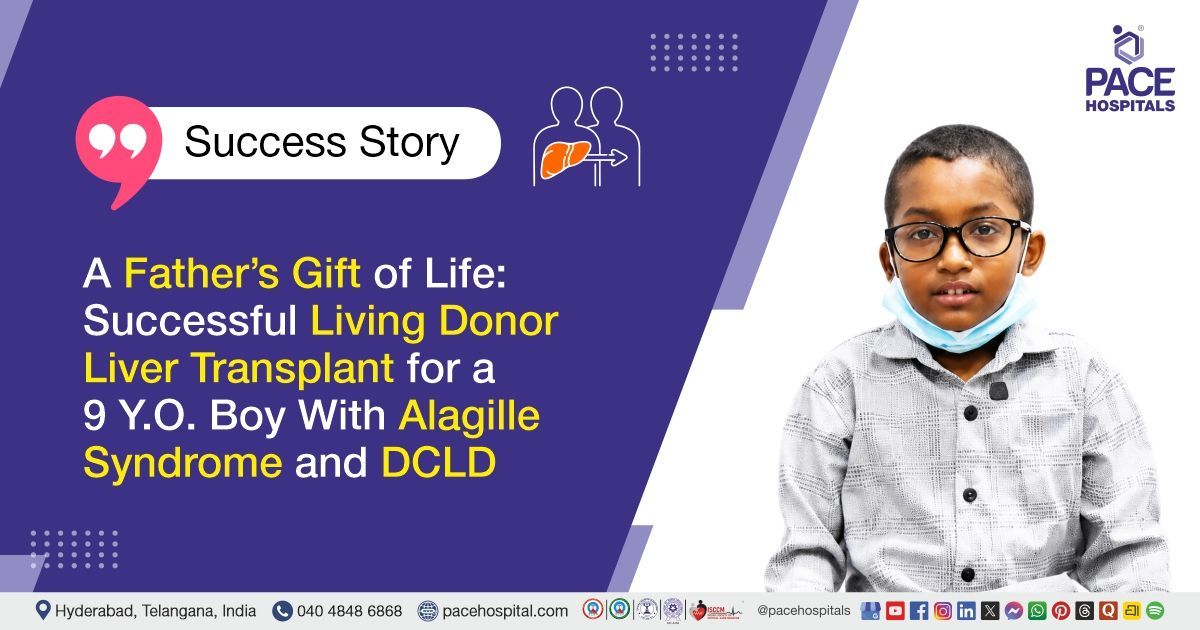
PACE Hospitals’ expert Liver Transplant team successfully performed a Living Donor Liver Transplant (LDLT) on a 9-year-old male patient diagnosed with Decompensated Chronic Liver Disease (DCLD) due to Alagille syndrome, portal hypertension, and severe jaundice, with the aim of replacing the diseased liver, restoring normal liver function, reducing complications of portal hypertension, and improving overall survival and quality of life.
Chief Complaints
A 9-year-old male patient with a body mass index (BMI) of 17 presented to the Liver Transplant Department at PACE Hospitals, Hitech City, Hyderabad, with chief complaints of progressively worsening yellowish discoloration of the eyes. He is a known case of Alagille syndrome with decompensated chronic liver disease (DCLD), portal hypertension, jaundice, coagulopathy, and sepsis. His Pediatric End-Stage Liver Disease (PELD) score was 54. The patient also had a recent history of fever for the past 3 days.
Past Medical History
The patient had a history of Alagille syndrome with chronic liver disease (DCLD), associated with portal hypertension, jaundice, and coagulopathy, along with a prior episode of fever suggestive of sepsis.
On Examination
On examination, the patient was conscious, coherent and oriented with evident icterus (yellowish discoloration of eyes). He appeared clinically ill with features of chronic liver disease, including pallor. Abdominal examination revealed hepatosplenomegaly with mild ascites, and signs suggestive of portal hypertension were present. There were no focal neurological deficits, and other systemic examinations were largely normal.
Diagnosis
Upon admission to PACE Hospitals, following the clinical assessment, the liver transplant team conducted a comprehensive evaluation based on the patient’s complaints of progressively increasing yellowish discoloration of the eyes in a known case of Alagille syndrome. A detailed medical history, physical examination, and preoperative assessment were performed to evaluate the severity of underlying liver disease and overall fitness for liver transplantation, along with identification of associated complications including portal hypertension, jaundice, and coagulopathy.
Baseline investigations, including complete blood picture, liver function tests, renal function tests, serum electrolytes, coagulation profile (PT/INR, APTT), inflammatory markers (CRP, procalcitonin), ammonia levels, thyroid profile, viral screening (Hepatitis A, Hepatitis E, COVID-19, Influenza panel), blood cultures (aerobic and anaerobic), urine culture, complete urine examination, fibrinogen levels, fibrin degradation products, arterial blood gas analysis, serum calcium, magnesium, and phosphorus levels were carried out.
Imaging and diagnostic studies, including chest X-ray, HRCT chest, ultrasonography of the abdomen, CT scan, liver Doppler studies, and 2D echocardiography, were performed. These investigations revealed features consistent with chronic liver disease, including cirrhotic liver changes, splenomegaly, minimal ascites, portal hypertension.
Based on the confirmed diagnosis, the patient was advised to undergo
Decompensated Chronic Liver Disease (DCLD) Treatment in Hyderabad, India, under the care of the liver transplant team, ensuring restoration of liver function and prevention of life-threatening complications.
Medical Decision Making (MDM)
After a detailed consultation with the liver transplant surgeon Dr. CH Madhusudhan, along with the multidisciplinary team including Dr. Seshi Vardhan Janjirala (Cardiologist), Dr. Tripti Sharma (Endocrinologist ), Dr. B Arvind ( Oral and Maxillofacial Oncosurgeon), Dr. Lakshmi Kumar Chalamarla (Interventional Radiologist), Dr. Manasa Gaddam (Anaesthesia & Critical Care specialist ), and Dr. Renuka Seshamamba Kanala (Anesthesiologist), a comprehensive clinical, biochemical, and radiological evaluation was carried out to determine the most appropriate management plan for the patient. Based on the patient’s history of progressive jaundice in a known case of Alagille syndrome with chronic liver disease and associated portal hypertension and coagulopathy, along with imaging findings from ultrasonography, CT scan, HRCT chest, and liver Doppler studies showing cirrhotic liver changes, splenomegaly, ascites, and patent vascular anatomy, a diagnosis of decompensated chronic liver disease secondary to Alagille syndrome was established.
A detailed review of investigations, including complete blood picture, liver function tests, renal function tests, serum electrolytes, coagulation profile, inflammatory markers, ammonia levels, thyroid profile, infection screening tests (Hepatitis A, Hepatitis E, COVID-19, influenza panel), blood cultures (aerobic and anaerobic), urine culture, complete urine examination, arterial blood gas analysis, fibrinogen, fibrin degradation products, serum calcium, magnesium, phosphorus levels, chest X-ray, HRCT chest, 2D echocardiography, liver Doppler studies, was performed by the multidisciplinary team to assess surgical fitness and define disease extent.
Based on the collective evaluation and multidisciplinary consensus and considering the advanced stage of liver disease with a high PELD score, progressive liver failure, and increased risk of complications such as portal hypertension, coagulopathy, and sepsis, surgical management was planned.
It was determined that Living Donor Liver Transplantation (LDLT) was the most appropriate definitive treatment to remove the diseased liver and restore normal liver function. The patient's father was evaluated and volunteered as the living liver donor.
The patient was optimized preoperatively with supportive care including correction of coagulopathy, infection control, and hemodynamic stabilization.
The patient and his family members were counselled in detail regarding the diagnosis, surgical procedure, expected outcomes, and possible complications, including graft rejection, vascular and biliary complications, infection, and the need for long-term immunosuppressive therapy, along with postoperative care instructions.
Surgical Procedure
Following the decision, the patient was scheduled to undergo Living Donor Liver Transplantation (LDLT) in Hyderabad at PACE Hospitals under the expert care of the liver transplant team.
The procedure involved the following steps:
- Recipient Exploration and Liver Mobilization: The patient was placed under general anesthesia in the supine position. A bilateral subcostal incision was made to access the abdominal cavity. Intraoperative assessment confirmed features of chronic liver disease with portal hypertension. The native liver was mobilized by dividing the falciform ligament, right and left coronary ligaments, and diaphragmatic attachments. Careful dissection was performed to free the liver from surrounding structures while maintaining hemostasis throughout the procedure.
- Hilar Dissection and Native Liver Explantation: Detailed porta hepatis dissection was carried out, and the hepatic artery, portal vein (PV), and common bile duct (CBD) were identified. The right and left hepatic arteries were clipped and divided. The bile duct was ligated and divided appropriately. The portal vein was preserved intact initially. The hepatic veins, including the middle hepatic vein (MHV) and left hepatic vein (LHV), were meticulously dissected, looped, and prepared for subsequent vascular anastomosis. Once the donor graft was ready, the diseased native liver was explanted.
- Implantation of Donor Left Extended Hepatectomy Graft: A living donor related liver transplant using a left extended hepatectomy graft harvested from the patient's father was performed. The donor MHV-LHV venous confluence was anastomosed to the recipient MHV-LHV cuff over the inferior vena cava (IVC) using 5-0 Prolene sutures. Subsequently, the donor left portal vein (LPV) was anastomosed to the recipient main portal vein (MPV) with 6-0 Prolene sutures, restoring portal inflow to the graft. The warm ischemia time was 38 minutes, cold ischemia time was 1 hour, and the anhepatic phase duration was 54 minutes.
- Hepatic Artery and Biliary Reconstruction: After satisfactory portal reperfusion, arterial reconstruction was performed by end-to-end anastomosis of the donor left hepatic artery (LHA) to the recipient left hepatic artery using 8-0 Prolene under magnification. Biliary reconstruction was then completed by anastomosing the donor left hepatic duct (LHD) to an enterotomy created on the D1 segment of the recipient duodenum using 6-0 PDS sutures in a choledochoduodenostomy (CDD) fashion. Post-anastomotic Doppler assessment demonstrated satisfactory hepatic arterial and portal venous flow.
- Hemostasis, Drain Placement, and Closure: Following confirmation of adequate graft perfusion and hemostasis, the transplanted liver was fixed in position with sutures. One right and one left subdiaphragmatic drain were placed for postoperative monitoring. The abdomen was closed in layers after ensuring complete hemostasis. Subcuticular skin suturing was performed. The donor graft weighed 389 grams with a graft recipient weight ratio (GRWR) of 2.04. The patient tolerated the procedure well and was shifted to the intensive care unit for postoperative management.
Postoperative Care
The procedure was uneventful, and the patient was closely monitored postoperatively with regular assessment of graft function and hemodynamic status. He developed anemia and coagulopathy, which were managed with blood component support, along with measures to optimize liver perfusion. Serial monitoring showed gradual improvement in liver and renal function.
Infection surveillance was performed with cultures and monitoring for sepsis, and appropriate infection control measures were undertaken when required. Glycemic fluctuations were managed with blood sugar control measures, and cardiac findings were addressed with supportive cardiac management and fluid optimization. Overall, the patient received comprehensive care including immunosuppression, supportive therapy, and monitoring, and was discharged in a stable condition.
Discharge Medications
At the time of discharge, the patient was advised medications for maintenance of graft function and prevention of rejection, along with prevention of bacterial and fungal infections due to immunocompromised status. He was also started on treatment for hepatic encephalopathy prevention and gut decontamination, and gastric mucosal protection.
Supportive therapy included medications for liver protection and antioxidant support, blood pressure stabilization, and cardiac management. Additional supplementation was given for calcium, magnesium, and nutritional support, along with measures for bowel regulation. The patient was also advised blood sugar control therapy.
Advice on Discharge
The patient was advised to follow a high-protein diet to support recovery and promote healing. He was instructed to monitor blood glucose levels daily to ensure adequate glycemic control. Precautions to prevent infection were emphasized, including avoiding crowded places and consistently wearing a mask. In addition, proper drain care and wound care were advised to prevent postoperative complications and ensure optimal healing.
Emergency Care
The patient was informed to contact the emergency ward at PACE Hospitals in case of any emergency or development of symptoms such as abdominal pain, fever, vomiting, or any signs of clinical deterioration, for prompt evaluation and management.
Review and Follow-up Notes
The patient was advised to follow up with the Surgical Gastroenterologist in Hyderabad at PACE Hospitals, after 5 days.
Conclusion
This case highlights successful management of advanced chronic liver disease with portal hypertension through liver transplantation. The postoperative course required intensive monitoring and multidisciplinary care for associated complications. With timely interventions, the patient showed good recovery and a favourable outcome.
Role of Liver Transplant doctor /specialist in Comprehensive Perioperative Care in Liver Transplantation
A Liver Transplant doctor/specialist plays a central role in ensuring successful outcomes in liver transplantation through coordinated perioperative care. Beyond surgery, careful optimization of hemodynamic status, coagulation, and metabolic balance is essential. Continuous monitoring helps in early detection and management of complications such as infection, graft dysfunction, and systemic disturbances. A multidisciplinary approach led by the surgical team ensures seamless coordination across specialties. Timely clinical decisions and therapy adjustments based on evolving patient status are crucial for maintaining graft function. Overall, integrated care and vigilant follow-up significantly improve survival and long-term outcomes.
Frequently Asked Questions (FAQs)
When is liver transplantation considered necessary in chronic liver disease?
Liver transplantation is recommended when the liver is badly damaged and is unable to function properly. In this stage, patients may develop serious complications such as portal hypertension (increased pressure in the veins supplying the liver), progressive jaundice (yellow discoloration of the eyes and skin), blood clotting problems, and repeated infections. Despite medicines and supportive treatment, the liver condition may continue to worsen, and clinical scores may show severe liver failure with poor liver reserve. In these situations, liver transplantation becomes the most effective and life-saving treatment option.
What is a living donor liver transplant and how does it work?
A living donor liver transplant involves removing a portion of liver from a healthy donor. This portion is transplanted into the patient to replace the diseased liver. Both the donor and recipient liver portions regenerate over time. This makes it an effective and timely treatment option.
What are the key goals of liver transplantation?
The main aim of liver transplantation is to replace the damaged liver with a healthy functioning liver. This helps restore normal metabolic and detoxification functions of the body. The procedure also prevents complications of liver failure such as portal hypertension, jaundice, bleeding problems, and recurrent infections. Overall, it improves both survival and quality of life.
Why is close monitoring required after liver transplantation?
Close postoperative monitoring is essential to assess the function of the transplanted liver (graft) after surgery. It helps in early identification of complications such as infection, bleeding, rejection, or graft dysfunction. Regular investigations including blood tests, liver function tests, Doppler studies, and imaging are done to guide appropriate and timely treatment. Careful monitoring supports better recovery and improves long-term outcomes.
What complications can occur after liver transplantation?
After transplantation, patients may develop complications like anemia, infections, or fluid collections. There may also be issues related to liver function or healing. Early identification is important to prevent worsening. Most complications can be managed with proper care.
Why is infection prevention important after transplantation?
After liver transplantation, medicines are given to suppress the body’s immune system so that the new liver (graft) is not rejected. Because immunity becomes weaker, the patient has a higher risk of developing infections from the environment. Maintaining good hygiene, avoiding crowded or unhygienic places, and limiting exposure to sick individuals are important preventive measures. Regular follow-up and early identification of symptoms such as fever or cough help in timely treatment and prevention of serious infections
What is the importance of long-term therapy after transplant?
Long-term therapy helps in preventing rejection of the transplanted liver. It also supports liver function and prevents infections. Regular adjustments are needed based on clinical condition. This ensures long-term success of the transplant.
How does nutrition help in recovery after liver transplant?
Proper nutrition plays a vital role in healing and recovery after surgery. A high-protein diet helps repair tissues and improve strength. Nutritional supplements may be needed to meet increased demands. Good nutrition enhances immunity and recovery.
Why is regular follow-up necessary after discharge?
Regular follow-up after liver transplantation is essential to check liver function and overall health. It allows early detection of complications such as infection, rejection, or graft dysfunction. Blood tests, liver function tests, and clinical progress help doctors adjust medicines and treatment when needed. This ensures steady recovery and improved long-term outcomes.
What lifestyle precautions are important after liver transplantation?
After liver transplantation, patients should avoid crowded places and maintain good personal hygiene to reduce the risk of infections. Regular monitoring of vital signs and other health parameters is important for early detection of any complications. Proper wound care and drain care should be followed as advised by the healthcare team to prevent infection and support healing. These precautions help ensure a safe and smooth recovery after surgery.
Share on
Request an appointment
Fill in the appointment form or call us instantly to book a confirmed appointment with our super specialist at 04048486868
Appointment request - health articles
Recent Articles