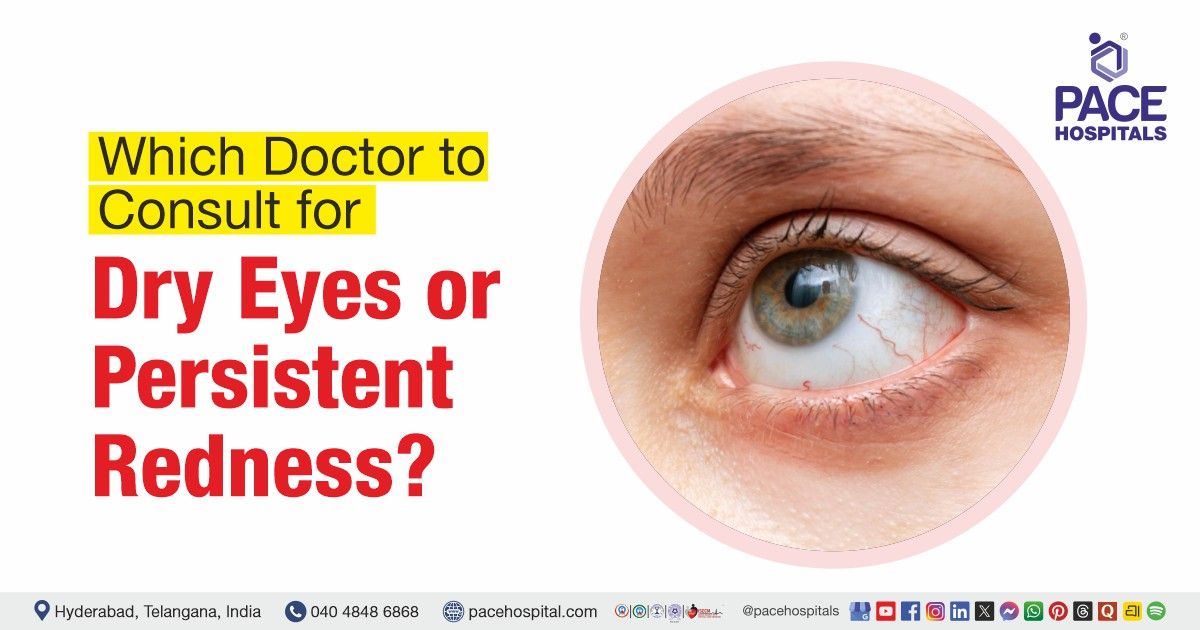
Which Doctor to Consult for Dry Eyes or Persistent Redness?
PACE Hospitals
Written by: Editorial Team
Medically reviewed by:
Dr. Mounika Jetti - General Physician and Diabetologist
Introduction
Dry eyes and persistent eye redness are among the most frequently reported eye complaints in India. Whether you feel a scratchy discomfort at the end of a long workday, notice your eyes looking red every morning, or experience burning that does not settle with rest, these symptoms deserve proper medical attention — not just over-the-counter eye drops from a pharmacy shelf.
The challenge for many patients is not just the symptom itself, but knowing who to see first. Should you book an appointment with an eye specialist? Does your allergy need a different doctor? Could a joint-related condition be affecting your eyes?
This guide from PACE Hospitals, Hyderabad, answers all those questions in a clear and comprehensive manner. It describes what dry eyes and persistent redness mean, tells you which specialist to see for each case, highlights red flags that need immediate attention and lists the advanced treatment options available to the patients in Hyderabad.
Quick Answer: Which Doctor to Consult for Dry Eyes or Persistent Redness?
See an Ophthalmologist to treat dry eyes or constant eye redness, especially if symptoms last for more than a few days, keep recurring or are accompanied by pain, blurred vision, sensitivity to light, discharge, contact lens wear or injury to the eye. If the redness is accompanied by itching and seasonal allergies, an Allergist can help. If dry eyes are associated with dry mouth, joint pain, or autoimmune symptoms such as suspected Sjögren's syndrome, a Rheumatologist may be required. Severe eye pain or sudden loss of vision needs emergency eye care right away.
What Are Dry Eyes and Persistent Redness?
Understanding Dry Eye Disease
Dry eye disease is a condition in which the eyes either do not produce enough tears or produce tears of poor quality that evaporate too quickly. The tear film that normally coats the surface of the eye has three layers — an oily outer layer, a watery middle layer, and a mucus inner layer. When any of these layers is disrupted, the eye surface becomes dry, exposed, and irritated.
According to the National Eye Institute (NEI), dry eye disease affects millions of people globally and is usually prevalent among older adults, women, and people who spend long hours in front of digital screens.
Common sensations of dry eye include:
- A burning, stinging, or gritty feeling as if something is in the eye
- Blurred vision that clears briefly when you blink
- Watery eyes (paradoxically, the eye overproduces reflex tears as a response to dryness)
- Sensitivity to light or wind
- Difficulty wearing contact lenses
- Tired eyes by the afternoon or evening
Understanding Persistent Eye Redness
Eye redness occurs when the small blood vessels on the white part of the eye (sclera) become dilated or inflamed. This can happen for many reasons — from a harmless response to dust or smoke, to more serious infections, pressure-related conditions, or autoimmune diseases.
Not every red eye is conjunctivitis, and not every dry eye is caused by screen overuse. Getting an accurate diagnosis is essential before reaching for any medication.
Dry Eyes or Red Eyes Should Not Be Ignored
Many patients ignore persistent eye symptoms as minor irritations or believe that they will resolve on their own. That's generally true in mild cases. But some types of dry eyes or redness indicate problems that can get a lot worse if left untreated.
If left untreated, dry eye disease can damage the surface of the cornea and cause scarring that affects vision. Ongoing redness may indicate spreading infection or increased pressure that threatens the optic nerve or inflammatory conditions that need disease-modifying treatment.
Seeing the right doctor early leads to:
- Accurate diagnosis instead of guesswork
- Treatment matched to the actual cause
- Prevention of complications like corneal damage or vision loss
- Better quality of life — reduced discomfort at work, while driving, or reading
Doctor Selection Guide
| Situation | First Doctor to Consult | Specialist Needed If |
|---|---|---|
| Dry eyes after long screen hours | General Physician or Ophthalmologist | Symptoms persist beyond 2 weeks or vision changes occur |
| Red, itchy eyes with seasonal sneezing | Ophthalmologist or Allergist | Recurrent seasonal pattern, skin allergy, asthma present |
| Thick yellow-green discharge with redness | Ophthalmologist | Worsening infection, corneal involvement, antibiotic resistance |
| Redness with severe pain and blurred vision | Emergency Eye Care immediately | Urgent ophthalmology evaluation required |
| Dry eyes with dry mouth and joint pain | Rheumatologist + Ophthalmologist | Sjögren's syndrome or other autoimmune condition suspected |
| Contact lens wearer with redness and pain | Ophthalmologist urgently | Corneal infection (keratitis) must be ruled out |
| Red eye after eye surgery or injury | Emergency Eye Care immediately | Urgent post-operative or trauma evaluation required |
| Watery red eyes in children | Paediatrician, then Ophthalmologist | Blocked tear duct, conjunctivitis, or other eye condition |
| Gradual vision loss with redness | Ophthalmologist urgently | Glaucoma, uveitis, or other sight-threatening condition |
| Dry eyes in lupus or rheumatoid arthritis patient | Rheumatologist + Ophthalmologist | Ongoing monitoring of ocular involvement |
| Mild occasional eye dryness, no pain | General Physician | Ophthalmologist if no improvement within 2 weeks |
| Redness with halos around lights and headache | Emergency Eye Care immediately | Acute angle-closure glaucoma must be ruled out |
When Red Eyes Need Urgent Medical Attention?
Red Flag Symptoms Checklist
The following symptoms should never be ignored or managed at home with over-the-counter drops. Seek emergency eye care at once if you experience any of the following:
- Severe eye pain — sudden, sharp, or deep pain in or around the eye
- Sudden reduction in vision — blurring, haziness, or loss of sight in one or both eyes
- Extreme sensitivity to light (photophobia) — pain when exposed to normal indoor or outdoor light
- Eye injury — trauma from a blunt object, sharp object, or foreign body impact
- Chemical exposure — any liquid, powder, or gas entering the eye
- Contact lens wearer with redness and pain — risk of infectious corneal ulcer is high
- Thick discharge with swelling of eyelids — suggests a significant infection
- Severe headache or nausea with red eye — possible acute angle-closure glaucoma
- One-sided painful red eye with photophobia — possible uveitis or iritis
- Halos or rainbow rings around lights — possible elevated intraocular pressure
- Red eye after recent eye surgery — could indicate endophthalmitis or other post-surgical complication
- Red eye in a newborn or young infant — needs immediate paediatric and ophthalmology assessment
At PACE Hospitals, Hyderabad, emergency eye care is available. If you experience any of the above symptoms, call immediately or visit our emergency department without delay.
When to See an Ophthalmologist?
An Ophthalmologist is a medical doctor (MBBS + MS or DNB in Ophthalmology) with full training in diagnosing and treating all conditions of the eye, including medical and surgical management. For dry eyes and persistent redness, an Ophthalmologist is the primary specialist you should consult.
Reasons to See an Ophthalmologist for Dry Eyes
- Dryness that has lasted more than two to three weeks
- Burning, stinging, or foreign body sensation in the eyes
- Dry eyes associated with contact lens discomfort
- Dry eyes with blurred vision, light sensitivity, or eye fatigue
- History of LASIK or refractive eye surgery with ongoing dryness
- Dry eyes related to medications (antihistamines, antidepressants, beta blockers, or hormonal therapy)
- Severe dry eyes not responding to artificial tear drops
Reasons to See an Ophthalmologist for Red Eyes
- Redness that has persisted beyond five to seven days without explanation
- Redness with any degree of pain
- Redness with a change in vision
- Redness following an eye injury
- Suspected corneal infection or ulcer
- Known history of glaucoma with a new episode of redness
- Suspected uveitis or iritis
- Red eye in a contact lens wearer
An Ophthalmologist can perform a full slit-lamp biomicroscopic examination, measure tear production, assess the corneal surface, check intraocular pressure, and diagnose conditions such as blepharitis, meibomian gland dysfunction, keratoconjunctivitis sicca, corneal ulcer, uveitis, and glaucoma.
When to See an Allergist?
An Allergist (or Allergy and Immunology specialist) treats conditions where the immune system overreacts to environmental triggers such as pollen, mould, dust mites, pet dander or certain foods.
When an Allergist Can Help with Red Eyes?
- Recurrent red, itchy, watery eyes that worsen during specific seasons (spring, winter)
- Redness accompanied by sneezing, a runny nose, or nasal congestion
- Known history of eczema, asthma, or food allergies with new eye symptoms
- Eye symptoms that recur repeatedly every year at the same time
- Skin prick testing or blood allergy tests that have not yet been done
An Allergist can perform allergy testing to identify specific triggers and recommend immunotherapy (allergy shots or sublingual drops) alongside medical treatment for allergic conjunctivitis.
However, it is essential to note that even for allergic eye conditions, an Ophthalmologist should assess the eyes directly to rule out other causes and evaluate whether the cornea or other eye structures are involved.
When to See a Rheumatologist?
A Rheumatologist is a specialist in autoimmune and inflammatory diseases affecting the joints, muscles, and organs. The connection between eyes and rheumatology is significant because many autoimmune diseases affect the eyes as part of a broader systemic process.
Dry Eyes and Autoimmune Disease
The most important autoimmune condition linked with dry eyes is Sjögren's syndrome. In this condition, the immune system mistakenly attacks the glands that produce tears and saliva, leading to severely dry eyes and a dry mouth.
Sjögren's syndrome can occur on its own (primary Sjögren's) or alongside conditions like rheumatoid arthritis, systemic lupus erythematosus (SLE), or systemic sclerosis.
When to See a Rheumatologist for Eye Symptoms?
- Dry eyes occurring together with persistent dry mouth
- Dry eyes in a patient already diagnosed with rheumatoid arthritis, lupus, or scleroderma
- Joint pain, morning stiffness, or joint swelling alongside dry eye symptoms
- Recurrent uveitis or iritis (often managed jointly with Ophthalmology)
- Elevated inflammatory markers (ESR, CRP, ANA) alongside eye symptoms
A Rheumatologist will check for systemic autoimmune activity, perform any appropriate blood tests and liaise with the Ophthalmology team. Treating the underlying autoimmune disease often leads to marked improvement of ocular symptoms.
When to See an Optometrist?
A primary eye care provider, an Optometrist, can provide vision assessments and evaluate basic eye health. Optometrists in India work together with ophthalmology departments and assist with refraction, fitting of contact lenses and initial dry eye evaluations.
Initial assessment by an optometrist within an ophthalmology clinic is a practical approach for patients with mild dry eye associated with refractive error or contact lens wear; however, if clinical assessment and treatment by the Ophthalmologist are necessary for infectious, glaucoma, uveitis or systemic causes.
When to See a General Physician?
A General Physician is a medical doctor who diagnoses and manages common medical conditions affecting the whole body. For dry eyes, a General Physician should be consulted when dryness may be linked to general health problems, medicines, dehydration, or systemic diseases.
Reasons to See a General Physician for Dry Eyes
- Dry eyes, along with dry mouth, joint pain, or fatigue
- Dry eyes associated with thyroid or diabetes disease
- Dry eyes related to rheumatoid arthritis, lupus, or autoimmune conditions
- Dry eyes after starting new medicines
- Dry eyes with frequent dehydration or reduced fluid intake
- Dry eyes with skin dryness, mouth ulcers, or body pains
- Dry eyes with unexplained weight changes or general weakness
- Dry eyes are not improving despite basic eye drops
Dry Eyes Due to Screen Use
Digital eye strain or computer vision syndrome is increasingly common in Hyderabad's sygy-driven workforce. When we focus on screens, our blink rate drops significantly — from approximately 15 to 20 blinks per minute to as few as 5 to 7 blinks per minute. This leads to faster tear film evaporation and the characteristic end-of-day eye dryness that many people experience.
However, it is important to remember that not all screen-related eye discomfort is dry eye disease. Sometimes, an uncorrected refractive error (need for glasses) causes eye strain that mimics dryness. An Ophthalmologist can distinguish between the two.
Practical measures that support screen-related eye comfort — such as the 20-20-20 rule (every 20 minutes, look at something 20 feet away for 20 seconds), adjusting screen brightness, and ensuring adequate room lighting — are helpful but not a substitute for medical evaluation if symptoms persist.
Consult an Ophthalmologist if screen-related dryness lasts more than two to three weeks, worsens over time, or occurs with blurred vision.
Red Eyes Due to Allergy
Allergic conjunctivitis is one of the most common causes of red, itchy, watery eyes. The American Academy of Ophthalmology notes that allergic eye disease affects a significant portion of the population and is strongly associated with other atopic conditions.
In Hyderabad, common triggers include seasonal pollen, dust exposure during construction or outdoor activity, and pet dander. Monsoon season can raise mould spore counts, while dry summer months increase dust exposure.
Recognising Allergic Eye Redness
- Intense itching — the hallmark symptom of allergy
- Redness in both eyes simultaneously
- Watery, clear discharge (not thick or coloured)
- Puffiness of the eyelids
- Often worse outdoors or in specific environments
- Associated with nasal symptoms, skin itching, or sneezing
Important Caution: Do not self-apply steroid or antibiotic eye drops for allergic redness without a doctor's prescription. Steroid eye drops, when used without proper supervision, can elevate intraocular pressure and increase the risk of glaucoma or cataract. An Ophthalmologist or Allergist must evaluate the eye before prescribing any medicated drops.
Red Eyes Due to Infection
Infectious conjunctivitis (commonly called "pink eye") can be caused by bacteria, viruses, or, less commonly, fungi or parasites. It is important to understand that not every red eye is infectious conjunctivitis, and not every case of conjunctivitis requires antibiotic treatment.
Bacterial Conjunctivitis
- Thick yellowish or greenish discharge
- Eyelids may be stuck together in the morning
- Usually starts in one eye and may spread to the other
- Treated with antibiotic eye drops prescribed by a doctor
Viral Conjunctivitis
- Watery, clear discharge
- Often related to a cold, sore throat, or recent viral illness
- Highly contagious
- Generally resolves on its own; supportive treatment only
- Antibiotic drops are not useful against viral infections
When Infection Needs Urgent Ophthalmology Care?
- Corneal involvement (pain, light sensitivity, blurred vision)
- Infection in a contact lens wearer
- Neonatal conjunctivitis (in newborns)
- Infection in an immunocompromised patient
- Failure to improve after 5 to 7 days of appropriate treatment
Contact Lens-Related Redness
Contact lens wearers who experience eye redness should treat it as a higher-priority concern compared to non-lens wearers. This is because the contact lens can act as a surface on which bacteria, fungi, or amoeba can colonise, leading to infectious keratitis — a potentially sight-threatening corneal infection.
Warning Signs for Contact Lens Wearers
- Redness with pain — even mild pain is significant
- Redness with discharge
- Sensitivity to light while wearing lenses
- Blurred vision that does not improve when you remove the lens
- Redness that starts suddenly after extended lens wear or sleeping in lenses
Any contact lens wearer with redness and discomfort should remove lenses immediately and consult an Ophthalmologist on the same day. Do not re-insert lenses until evaluated by a doctor.
Dry Eyes with Dry Mouth
The combination of dry eyes and dry mouth — particularly when persistent and unexplained — is one of the key indicators of Sjögren's syndrome, an autoimmune condition in which the body's immune system attacks its own moisture-producing glands.
Sjögren's syndrome can develop at any age but is more common in women, particularly those over 40. According to the American College of Rheumatology, Sjögren's syndrome may affect up to 4 million people in the United States alone, and is frequently underdiagnosed because symptoms often overlap with other conditions.
Additional Features of Sjögren's syndrome
- Difficulty swallowing dry foods
- Dental cavities are appearing more frequently despite good oral hygiene
- Dry nasal passages or chronic nasal congestion
- Fatigue that feels disproportionate to activity levels
- Joint pain or swelling
- Skin dryness
- Numbness or tingling in the hands or feet
If you experience dry eyes alongside these features, a combined evaluation by an Ophthalmologist and Rheumatologist is recommended. Blood tests such as ANA, anti-Ro/SSA, and anti-La/SSB antibodies help in diagnosis.
Persistent Redness in One Eye
Redness affecting only one eye can have several distinct causes that differ from bilateral redness. While one-sided redness is sometimes as simple as a burst blood vessel (subconjunctival haemorrhage) — which looks alarming but is usually harmless — it can also indicate conditions that need prompt attention.
Causes of One-Sided Eye Redness
- Subconjunctival haemorrhage — a red patch on the white of the eye, usually painless, resolves within one to two weeks
- Uveitis or iritis — inflammation inside the eye, often painful and light-sensitive
- Acute angle-closure glaucoma — extremely painful, associated with nausea, halos, and vision change
- Corneal ulcer or abrasion — pain, discharge, and redness after injury or contact lens use
- Episcleritis or scleritis — inflammation of the outer layers of the eye, may be linked to autoimmune disease.
- Foreign body — a particle embedded in the eye
Persistent one-sided redness lasting more than a week, or accompanied by pain, discharge, or vision change, should always be evaluated by an Ophthalmologist.
Dry Eyes in Elderly Patients
Older adults are more likely to develop dry eye disease because of changes in tear production and quality with age. Tear volume and lipid content of tears usually decrease after 50 years of age, which results in more rapid evaporation and decreased tear film stability.
Additional factors in elderly patients include:
- Multiple medications (many of which reduce tear production)
- Meibomian gland dysfunction (oil glands at the lid margin become blocked or atrophied)
- Reduced eyelid closure during sleep (leading to overnight corneal exposure)
- Post-cataract surgery dry eye
- Parkinson's disease (reduced blink rate)
- Diabetes-related neuropathy affecting corneal sensation
In elderly patients, dry eyes are often more severe, longer-lasting, and associated with other conditions. An Ophthalmologist familiar with elderly care should evaluate these patients comprehensively, including a medication review.
Dry Eyes in Women
Women are disproportionately affected by dry eye disease at every stage of life. This is strongly linked to hormonal changes.
Hormonal Phases That Affect Dry Eyes in Women
- Pregnancy — changes in hormone levels alter tear film composition
- Oral contraceptive use — Use of certain birth control pills may affect the quality and stability of tears, leading to dryness and eye discomfort in some individuals.
- Perimenopause and menopause — natural hormonal changes during this stage can affect the oil-producing glands in the eyes and reduce tear production, increasing the risk of dry eyes and irritation.
- Thyroid conditions — both hypothyroidism and hyperthyroidism (more common in women) affect the eyes.
- Sjögren's syndrome — predominantly affects women (9:1 female-to-male ratio)
Women experiencing worsening dry eyes around menopause, during hormonal medication use, or alongside thyroid symptoms should discuss this with their Ophthalmologist, who may refer them to a Gynaecologist or Endocrinologist as part of a coordinated care plan.
Causes and Conditions
| Condition / Cause | Common Features | Doctor / Specialist to Consult | Why? |
|---|---|---|---|
| Dry eye disease (Keratoconjunctivitis sicca) | Burning, gritty sensation, blurred vision, watery eyes | Ophthalmologist | Full evaluation of tear film and corneal surface |
| Allergic conjunctivitis | Intense itching, watery discharge, both eyes, seasonal | Ophthalmologist + Allergist | Differentiate from infection; allergy testing |
| Bacterial conjunctivitis | Thick yellow-green discharge, eyelid crusting | Ophthalmologist | Prescription antibiotic drops; cornea assessment |
| Viral conjunctivitis | Watery discharge, recent cold or viral illness | Ophthalmologist | Rule out corneal involvement; no antibiotics needed |
| Sjögren's syndrome | Dry eyes + dry mouth, fatigue, joint pain | Ophthalmologist + Rheumatologist | Systemic autoimmune work-up; coordinated care |
| Meibomian gland dysfunction | Foamy tears, eyelid crusting, burning, worse in mornings | Ophthalmologist | Lid hygiene, warm compresses, and in-office procedures |
| Blepharitis | Eyelid redness, crusting, and flaking at the lid margins | Ophthalmologist | Eyelid cleaning protocol, antibiotics if infected |
| Uveitis / Iritis | One red eye, pain, photophobia, blurred vision | Ophthalmologist urgently | Anti-inflammatory treatment; rule out systemic cause |
| Acute angle-closure glaucoma | Severe pain, nausea, halos, sudden vision change | Emergency eye care | Immediate IOP reduction to prevent optic nerve damage |
| Contact lens keratitis | Redness, pain, and discharge in a contact lens wearer | Ophthalmologist urgently | Corneal smear, culture, antifungal or antibiotic cover |
| Subconjunctival haemorrhage | Bright red patch on white of the eye, no pain | Ophthalmologist (non-urgent) | Confirm diagnosis, assess for blood pressure issues |
| Scleritis / Episcleritis | Deep eye pain, sectoral redness, often autoimmune-linked | Ophthalmologist + Rheumatologist | Systemic disease association; anti-inflammatory therapy |
| Computer vision syndrome | End-of-day dryness, eye fatigue, and screen use | Ophthalmologist | Rule out refractive error; dry eye treatment |
| Thyroid eye disease (TED) | Bulging eyes, redness, and lid retraction | Ophthalmologist + Endocrinologist | Thyroid function tests; orbital assessment |
| Drug-induced dry eyes | Dryness linked to antihistamines, antidepressants, etc. | Ophthalmologist + prescribing doctor | Medication review; alternative options |
| Systemic or medication-related dry eyes | Dry eyes along with dry mouth, fatigue, dehydration, joint pain, diabetes, thyroid disease, or dryness after starting medicines | General Physician + Ophthalmologist | To evaluate underlying health conditions, review medicines, check hydration and metabolic causes, and refer to an eye specialist if needed |
Tests Doctors May Recommend
An Ophthalmologist or relevant specialist may order or perform any of the following tests, depending on clinical findings:
For Dry Eyes
- Schirmer's small paper strip, placed under the lower eyelid, measures how much tears are produced in 5 minutes. Low values suggest reduced tear production.
- Tear break-up time (TBUT) — a dye is placed on the eye surface, and the doctor measures how long it takes for the tear film to break apart. A short break-up time indicates tear film instability.
- Lissamine green or Rose Bengal staining — these dyes stain damaged or dead cells on the eye surface, helping map areas of dryness-related damage.
- Meibomian gland evaluation — the Ophthalmologist examines and expresses the oil glands in the eyelids to assess their function and secretion quality.
- Osmolarity testing — measures the salt concentration of the tears. Higher osmolarity suggests dry eye disease.
- Corneal topography — maps the surface of the cornea to detect irregular patterns caused by chronic dryness.
For Persistent Redness
- Slit-lamp biomicroscopy — a detailed microscopic examination of the front of the eye, including the cornea, iris, lens, and conjunctiva
- Intraocular pressure (IOP) measurement — to screen for glaucoma, especially in red eyes with headache or halos
- Anterior segment OCT (Optical Coherence Tomography) — cross-sectional imaging of the front of the eye
- Conjunctival or corneal swabs — for bacterial or viral culture when infection is suspected
- Fluorescein staining — detects corneal abrasions or ulcers
Blood Tests (When Systemic Causes are Suspected)
- ANA (Antinuclear Antibody) — screening test for autoimmune conditions
- Anti-Ro/SSA and Anti-La/SSB antibodies — specific markers for Sjögren's syndrome
- Rheumatoid factor (RF)
- ESR and CRP — inflammation markers
- Complete blood count (CBC)
- Thyroid function tests (TFT) — TSH, T3, T4
- Blood glucose — to screen for diabetes-related eye changes
- HLA-B27 — when uveitis is associated with
ankylosing spondylitis or reactive arthritis
Treatment Options
Treatment for dry eyes and persistent redness is matched to the underlying cause. No single treatment works for every patient. An Ophthalmologist will tailor a management plan based on the severity of dry eye disease, the root cause, and your lifestyle.
Medical Treatment for Dry Eyes
- Preservative-free artificial tear drops — first-line treatment for mild-to-moderate dry eyes. Lubricating drops replenish the tear film and relieve symptoms.
- Lubricating gels and ointments — thicker preparations used at night when eye closure is prolonged.
- Calcineurin inhibitor ophthalmic emulsion — a prescription anti-inflammatory eye drop that helps increase natural tear production in chronic dry eye disease.
- Lifitegrast ophthalmic solution — another prescription drop that reduces inflammation on the eye surface.
- Ophthalmic lubricant or Artificial tear drops — viscosity-enhancing agents that extend moisture retention.
- Oral omega-3 fatty acid supplementation — evidence from the Tear Film & Ocular Surface Society (TFOS) DEWS II report supports the role of omega-3 in improving meibomian gland function.
- Oral Muscarinic agonists— used in Sjögren's syndrome to stimulate gland secretion (prescribed by Rheumatologist/Ophthalmologist).
In-Office Procedures for Dry Eyes
- Punctal plugs — tiny silicone or collagen plugs inserted into the tear drainage ducts to keep natural tears on the eye surface longer.
- Warm compress therapy and lid massage — for meibomian gland dysfunction; unblocks oil glands.
- Intense Pulsed Light (IPL) therapy — a procedure applied around the eyelids to reduce inflammation in meibomian glands and improve oil secretion.
- LipiFlow thermal pulsation — applies controlled heat and pressure to the eyelids to evacuate blocked meibomian glands.
- Autologous serum eye drops — drops made from the patient's serum, used in severe dry eye disease that does not respond to conventional drops.
- Amniotic membrane application — for severe corneal surface disease related to dry eyes.
Treatment for Allergic Red Eyes
- Antihistamine-mast cell stabiliser combination drops — the most effective class for allergic conjunctivitis (must be prescribed by a doctor)
- Cold compresses — provide immediate relief from itching and puffiness
- Allergen avoidance — reducing exposure to identified triggers
- Immunotherapy — allergy desensitisation under an Allergist for recurrent or severe allergic conjunctivitis
- Treatment for Infectious Red Eyes
- Bacterial conjunctivitis — antibiotic eye drops prescribed by an Ophthalmologist
- Viral conjunctivitis — supportive care; antiviral drops only for herpetic infections under specialist guidance
- Fungal keratitis — antifungal eye drops or oral agents under specialist care
- Corneal ulcer — intensive antibiotic or antifungal drops, close monitoring; may require hospitalisation
Systemic Treatment (for Autoimmune Causes)
- Disease-modifying drugs (DMARDs) — prescribed by a Rheumatologist to control the underlying autoimmune process affecting the tear glands.
- Biologic therapy — for severe systemic autoimmune disease with ocular involvement
Important: Do not buy or use steroid eye drops, antibiotic eye drops or combination eye drops unless you have a valid prescription from a qualified doctor. If steroids are used in the eye without supervision, they can cause steroid-induced glaucoma or speed up the development of cataracts.
Specialists at PACE Hospitals, Hyderabad
PACE Hospitals, Hyderabad, has a dedicated Ophthalmology department with experienced consultants with subspecialty expertise in managing dry eye disease, corneal conditions, medical retina, glaucoma and oculoplasty.
The Ophthalmology team at PACE Hospitals works in close coordination with the Rheumatology department, General Medicine department and the Allergy and Immunology specialists to provide integrated, patient-centred care for complex eye conditions with systemic causes.
Key specialists available for dry eye and persistent redness management include:
- Ophthalmologists with experience in dry eye disease, corneal and external eye diseases, and anterior segment disorders
- Cornea and external disease specialists for advanced dry eye and infectious keratitis
- Glaucoma specialists for red eyes associated with elevated intraocular pressure
- Rheumatologists for systemic autoimmune-related dry eye conditions, including Sjögren's syndrome
- Allergists / Immunologists for allergic conjunctivitis and atopic eye disease
For patients who require emergency eye care, PACE Hospitals provides round-the-clock ophthalmology services with access to advanced diagnostic equipment.
Why Choose PACE Hospitals?
PACE Hospitals, Hyderabad, is a leading multi-speciality hospital committed to delivering comprehensive, evidence-based eye care at the highest standard of quality.
Here is why patients in Hyderabad choose PACE Hospitals for dry eye and red eye evaluation and treatment:
- Experienced Ophthalmology team — consultants with extensive clinical experience in managing complex dry eye disease, corneal conditions, glaucoma, uveitis, and allergic eye disease
- Advanced diagnostic technology — state-of-the-art equipment including slit-lamp biomicroscopy, anterior segment OCT, corneal topography, IOP tonometry, meibography, and tear osmolarity testing
- Integrated multi-speciality care — seamless coordination between Ophthalmology, Rheumatology, Allergy and Immunology, Endocrinology, and Emergency Medicine
- Patient-centred approach — each treatment plan is personalised to the patient's lifestyle, occupation, and systemic health.
- Emergency eye care availability — prompt evaluation for urgent red eye symptoms such as pain, vision loss, injury, or chemical exposure
- Comprehensive treatment range — from lubricating drops and punctal plugs to IPL therapy, autologous serum drops, and immunosuppressive therapy for autoimmune dry eye
- Transparent communication — doctors take the time to explain diagnoses and treatment options in a language patients can understand
- Convenient appointment booking — available online and by phone for both routine and urgent appointments
Key Takeaway
- An Ophthalmologist is the primary doctor to consult for dry eyes or persistent eye redness, especially when symptoms last more than a few days, recur frequently, or occur with pain, blurred vision, light sensitivity, discharge, or contact lens use.
- An Allergist should be involved if redness is driven by seasonal allergy, recurrent itching, and is part of a broader atopic condition.
- A Rheumatologist is essential when dry eyes accompany dry mouth, joint pain, fatigue, or other signs of autoimmune disease — conditions like Sjögren's syndrome require coordinated systemic management.
- Red flag symptoms — severe pain, sudden vision loss, light sensitivity, eye injury, chemical exposure, halos, redness after surgery — require emergency eye care immediately.
- Self-medication with steroid or antibiotic eye drops is dangerous without proper diagnosis. Always consult a qualified doctor before starting any medicated eye drops.
- Dry eyes are not always from screens, and red eyes are not always conjunctivitis. Getting the correct diagnosis makes all the difference in choosing the right treatment.
Frequently Asked Questions (FAQs)
Which doctor should I consult for dry eyes?
The right doctor for dry eyes is an Ophthalmologist — a medical specialist trained in all conditions of the eye. An Ophthalmologist can evaluate your tear film, assess the corneal surface, check your eyelid glands, and determine the exact cause of dryness. If your dry eyes are linked with dry mouth and joint pain, a Rheumatologist should also be involved to rule out Sjögren's syndrome or another autoimmune condition. For mild, screen-related dryness, a General Physician can provide an initial assessment and refer you to an Ophthalmologist if symptoms persist beyond two to three weeks. At PACE Hospitals, Hyderabad, experienced Ophthalmologists are available for dry eye evaluation and treatment.
When is red eye an emergency?
A red eye becomes a medical emergency that requires immediate care when it is accompanied by any of the following: severe eye pain, sudden loss of vision or significant blurring, extreme sensitivity to light, coloured halos or rainbow rings around lights (possible acute glaucoma), a recent eye injury or chemical splash, redness in a contact lens wearer with pain or discharge, thick discharge with severe eyelid swelling, or redness occurring after recent eye surgery. These symptoms can indicate conditions that threaten permanent vision loss if not treated within hours. At PACE Hospitals, Hyderabad, emergency eye care is available. Please do not wait — come in or call 040-4848-6868 immediately.
Can screen time cause dry eyes?
Yes, prolonged screen use is a known contributor to dry eye symptoms. When we look at screens, our blink rate drops dramatically, causing tear film to evaporate faster and leading to that familiar burning or gritty feeling by the end of the day. This is commonly referred to as computer vision syndrome or digital eye strain. But it is important to understand that screen use alone does not account for all dry eye cases. Uncorrected refractive error, meibomian gland dysfunction, and systemic conditions can also be responsible. The 20-20-20 rule and screen hygiene help, but if the dryness continues despite these measures, consult an Ophthalmologist for a proper evaluation.
Can dry eyes be linked with autoimmune disease?
Yes. Sjögren's syndrome is the most important autoimmune condition directly causing dry eyes by attacking the lacrimal (tear-producing) glands. However, other autoimmune conditions — including rheumatoid arthritis, systemic lupus erythematosus (SLE), systemic sclerosis, and inflammatory bowel disease — can also cause eye surface inflammation and dry eye disease as part of their systemic involvement. If you have dry eyes alongside persistent dry mouth, joint pain, fatigue, skin rashes, or a known autoimmune diagnosis, it is important to see both an Ophthalmologist and a Rheumatologist. Blood tests, including ANA, anti-Ro/SSA, and anti-La/SSB, can help in diagnosis. Treating the underlying autoimmune condition improves eye symptoms significantly.
Are steroid eye drops safe for red eyes?
Steroid eye drops are effective medications for specific eye conditions, but they are NOT safe for unsupervised or long-term self-use. When prescribed by an Ophthalmologist for the correct condition and duration, they are appropriate and valuable — for example, in uveitis, post-surgical inflammation, or severe allergic conjunctivitis. However, using steroid drops without proper evaluation can be dangerous. Steroids can mask an underlying infection and allow it to worsen. They can raise intraocular pressure (steroid-induced glaucoma) and accelerate cataract formation with prolonged use. Never purchase or use steroid eye drops (alone or in combination preparations) without a valid prescription from a qualified doctor. If a pharmacist suggests steroid drops for redness, please see an Ophthalmologist first.
Which is the best hospital for dry eye or red eye treatment in Hyderabad?
PACE Hospitals, Hyderabad, is the leading choice for patients looking for complete evaluation and treatment of dry eye disease and persistent eye redness. The hospital has had Ophthalmologists with subspecialty expertise, advanced diagnostic equipment, including meibography, anterior segment OCT, tear osmolarity testing and corneal topography, and a full range of treatment options from lubricating drops and punctal plugs to IPL therapy and autologous serum drops. A coordinated care under one roof between Ophthalmology and Rheumatology is beneficial for patients with autoimmune-related dry eyes. Emergency eye care for urgent cases may be seen. To make an appointment, call 040-4848-6868 or visit.
Which doctor should I consult for persistent red eyes?
For persistent red eyes, the first specialist to see is an Ophthalmologist. Persistent redness — particularly when it lasts more than five to seven days — can have many causes beyond simple irritation, including infection, dry eye disease, uveitis, glaucoma, or corneal damage. An Ophthalmologist will perform a thorough slit-lamp examination and assess intraocular pressure to determine the cause accurately. If redness is linked to seasonal itching and sneezing, an Allergist should be consulted. If redness occurs with joint pain or autoimmune disease, a Rheumatologist may also be needed. Never ignore persistent redness, especially if accompanied by pain or vision changes.
Should I see an ophthalmologist for dry eyes?
Yes, absolutely. An ophthalmologist is the best doctor to see for dry eyes, especially if the symptoms have lasted for more than two to three weeks, are affecting everyday activities such as reading or driving, are worsening over time, or if there are any dry eye symptoms in combination with the use of contact lenses, prior eye surgery, or systemic health issues. An Ophthalmologist can assess tear production using the Schirmer's tear film stability, using the break-up time test of the tear film, assess meibomian gland function and devise an evidence-based treatment plan. For the very mild case, Artificial tears alone are appropriate, but a proper evaluation will ensure that no underlying cause is missed.
Can an allergy cause red eyes?
Yes. Allergic conjunctivitis is one of the most common causes of red, itchy eyes. When the eyes are exposed to allergens such as pollen, dust, mould, or pet dander, the immune system releases histamine, causing the conjunctival blood vessels to dilate and producing redness, intense itching, and watery discharge. In Hyderabad, common triggers include seasonal pollen and dust. The hallmark symptom that distinguishes allergic redness from infection is intense itching — allergic eyes are extremely itchy, while infected eyes are typically painful or discharging. Both an Ophthalmologist and an Allergist can help, depending on whether the eye needs direct treatment or allergy testing is also required.
Which doctor treats a red eye with discharge?
Red eye with discharge — particularly thick yellow or green discharge — suggests a bacterial eye infection and requires evaluation by an Ophthalmologist. The Ophthalmologist will examine the eye, assess whether the cornea is involved, and prescribe the appropriate antibiotic eye drops. Watery, clear discharge with redness is more typical of a viral infection or allergy and may not need antibiotics. It is important not to self-prescribe antibiotic eye drops, as incorrect use can mask serious infections, cause resistance, or delay treatment of other causes. If discharge is severe, the eye is very painful, or vision is affected, seek same-day ophthalmology evaluation at PACE Hospitals, Hyderabad.
Is red eye with pain serious?
Yes. Red eye combined with pain should always be taken seriously and evaluated promptly by an Ophthalmologist. Pain in or around the eye alongside redness can indicate conditions such as uveitis (internal eye inflammation), corneal ulcer or abrasion, acute angle-closure glaucoma, scleritis, or a severe infection. Some of these conditions can permanently damage vision if treatment is delayed. The severity of pain does not always correspond to the severity of the underlying condition — even moderate pain with redness warrants same-day evaluation. If the pain is severe, or if redness with pain is accompanied by blurred vision, light sensitivity, or nausea, treat this as an emergency and visit PACE Hospitals immediately.
What tests are done for dry eyes?
There are several tests for diagnosing and grading the severity of dry eye disease. The Schirmer's test measures the real tear production with a small paper strip placed under the lower eyelid. The tear film break-up time (TBUT) test is used to evaluate how quickly the tear film evaporates after a blink. The damaged cells on the surface of the eye stain with lissamine green or rose Bengal. Meibomian gland assessment looks at the oil-producing glands in the eyelids. Testing of tear osmolarity is a marker of disease severity based on measuring the concentration of salt in the tears. It shows surface irregularities. Corneal topography and blood tests are also ordered if there is suspicion of an autoimmune disease. This includes ANA and anti-Ro/SSA antibodies. The Ophthalmologist at PACE Hospitals will decide the tests to be done based on your symptoms and history.
What tests are done for persistent redness?
For persistent red eyes, an Ophthalmologist will start with a slit-lamp biomicroscopic examination — a detailed look at the entire front of the eye, including the conjunctiva, cornea, iris, and anterior chamber. Fluorescein staining is used to detect corneal abrasions or ulcers. Intraocular pressure measurement screens for glaucoma. If infection is suspected, conjunctival or corneal swabs may be sent for culture and sensitivity. Anterior segment OCT provides cross-sectional imaging when the depth of inflammation needs to be assessed. For suspected systemic causes, blood tests such as ESR, CRP, ANA, HLA-B27, and rheumatoid factor may be ordered. The specific tests used depend on your symptoms, history, and clinical findings.
Can dry eyes be treated permanently?
Dry eye disease is usually a chronic condition that needs ongoing management rather than a cure. For many patients, regular use of lubricating drops, lid hygiene, meibomian gland treatment and lifestyle changes will control symptoms and prevent progression. Procedures like punctal plugs, IPL therapy, and LipiFlow provide longer-lasting relief. In cases where dry eyes are caused by a reversible factor — such as a medication that can be changed, or a hormonal condition that is treated — significant or complete improvement is possible. For autoimmune-related dry eye (such as in Sjögren's syndrome), managing the systemic disease with a Rheumatologist alongside Ophthalmology care substantially improves eye symptoms. Regular follow-up is important to monitor corneal health over time.
Conclusion
Dry eyes and persistent eye redness are not conditions to be managed with self-prescribed drops from the nearest medical store. Both symptoms have a wide range of causes — from screen use and seasonal allergy to corneal infections, autoimmune disease, and sight-threatening glaucoma — and each cause requires a specific, targeted treatment approach.
An Ophthalmologist is the primary doctor to consult for nearly all cases of dry eyes and persistent eye redness. An Allergist offers important expertise for symptoms associated with allergy, seasonal triggers and atopic conditions. Dry eye and dry mouth, joint pain, or a known autoimmune disease require a Rheumatologist on the care team.
The most important message is this: do not ignore eye symptoms that persist, recur, or worsen. And if you experience severe eye pain, sudden vision change, light sensitivity, eye injury, or chemical splash, seek emergency eye care without any delay.
At PACE Hospitals, Hyderabad, the Ophthalmology team is equipped and experienced to evaluate, diagnose, and treat the full spectrum of dry eye disease and eye redness — from mild lubrication needs to complex autoimmune eye disease — with the accuracy, compassion, and care that every patient deserves.
Share on
Request an appointment
Fill in the appointment form or call us instantly to book a confirmed appointment with our super specialist at 04048486868
Appointment request - health articles
Recent Articles