Endoscopic Ultrasound (EUS): New approach for early detection of HPB Cancer
PACE Hospitals
Endoscopic Ultrasound (EUS) is a highly advanced, minimally invasive imaging procedure that combines endoscopy and ultrasound to provide detailed, high-resolution images of the digestive tract and nearby organs such as the pancreas, liver, and bile ducts. It plays a crucial role in diagnosing gastrointestinal (GI) and hepato-pancreato-biliary (HPB) disorders, offering both diagnostic precision and therapeutic capabilities.
In recent years, EUS has revolutionized the way gastroenterologists approach complex digestive diseases, enabling early detection, staging of cancers, and even targeted treatment — all without the need for major surgery.
What Is Endoscopic Ultrasound (EUS)?
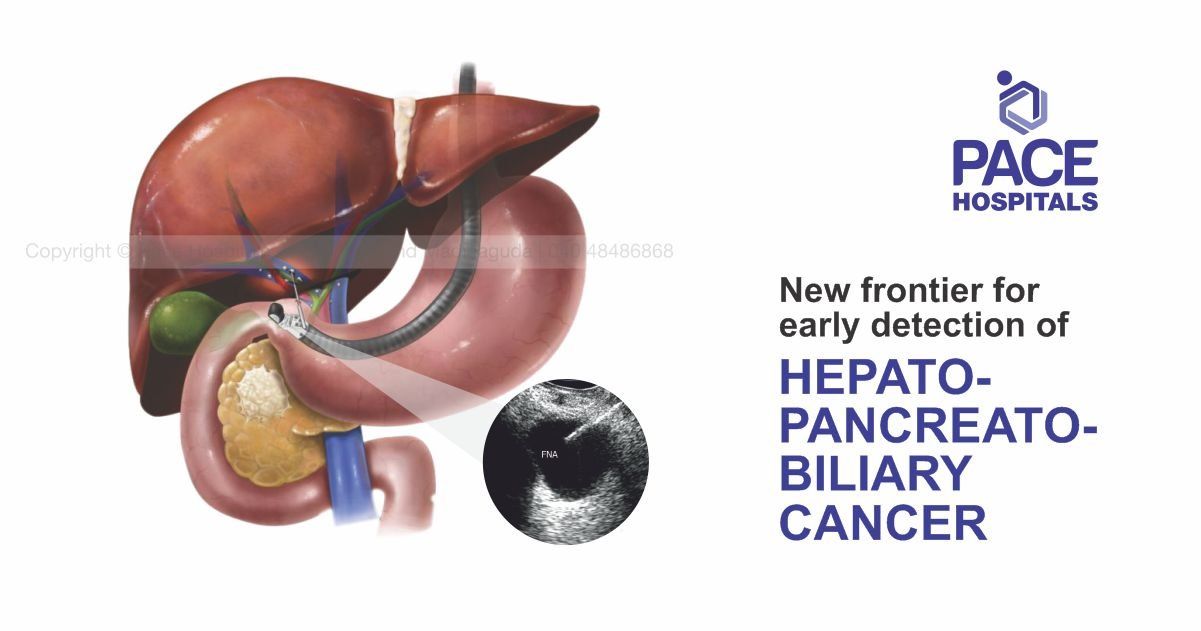
EUS is a medical procedure that involves the use of a specialized endoscope equipped with an ultrasound probe at its tip. This combination allows doctors or gastroenterologist to visualize not just the inner lining of the digestive tract but also the deeper layers of the intestinal wall and surrounding structures, including the pancreas, liver, lymph nodes, and bile ducts.
When necessary, EUS can be combined with Fine-Needle Aspiration (FNA) or Fine-Needle Biopsy (FNB) to collect tissue samples or drain fluid collections for diagnosis purpose. This makes EUS a valuable tool not only for diagnosis but also for image-guided interventions.
How the EUS Procedure Works
- Preparation: The patient is asked to fast for at least six hours before the procedure.
- Sedation: EUS is performed under conscious sedation or general anesthesia to ensure comfort.
- Insertion: The thin, flexible endoscope is gently passed through the mouth (for upper GI evaluation) or the rectum (for lower GI evaluation).
- Imaging: The ultrasound probe at the tip emits high-frequency sound waves that generate detailed internal images on a monitor.
- Tissue Sampling (Optional): If an abnormal area is seen, a fine needle can be inserted through the endoscope to collect tissue for microscopic examination.
The entire procedure usually takes around 30–60 minutes duration, depending on the complexity of the evaluation.
When Is Endoscopic Ultrasound Used?
EUS is used for both diagnostic and therapeutic purposes across a different range of GI and HPB conditions.
Diagnostic Applications
- Cancer Evaluation:
- Esophageal, gastric, pancreatic, ampullary, rectal, and colon cancers
- Lung and mediastinal masses
- Neuroendocrine tumors
- Lymphomas
- Benign Disorders:
- Pancreatitis and pancreatic cysts
- Bile duct stones and gallbladder stones
- Anorectal disorders such as fistula-in-ano, abscess, or sphincter injury
Staging and Assessment
- EUS helps to assess:
- How deep a tumor has penetrated or spread into the digestive wall
- If the cancer has spread to the lymph nodes, affected lymphatic system or nearby organs
- The involvement of major blood vessels, helping in pre-surgical planning
- Therapeutic Applications: Modern EUS systems also allow minimally invasive therapeutic interventions such as:
- EUS-guided Fine-Needle Aspiration (FNA) or Fine-Needle Biopsy (FNB) as it helps for sampling of the tissue
- EUS-guided drainage of pancreatic pseudocysts and abscesses
- EUS-guided biliary and pancreatic duct stenting for obstruction or liver problem like jaundice
- EUS-guided injection therapy for variceal bleeding or localized chemotherapy
- EUS-guided gallbladder drainage for patients unfits for surgery
These procedures offer a non-surgical alternative to open or laparoscopic surgical intervention.
EUS Accuracy and Clinical Impact
Several clinical research-based studies have validated and trusted the accuracy of EUS.
EUS and EUS-FNA combined for diagnosing GI and pancreatic cancers have demonstrated up to:
- 99.1% accuracy
- 88.8% sensitivity
- 100% specificity
This makes EUS one of the most reliable diagnostic tools for modalities available for gastrointestinal and hepatobiliary diseases.
Advantages of Endoscopic Ultrasound (EUS)
EUS provides multiple advantages compared to traditional imaging or surgical interventions:
| Advantage | Description |
|---|---|
| High Resolution Imaging | Provides a better detailed cross-sectional view of GI tract and surrounding adjacent organs |
| Minimally Invasive | No external incisions required; gives faster recovery |
| Accurate Tumor Staging | Determines in depth view and spread of cancers to other parts |
| Precise Biopsy Access and Imaging | Targets the deep-seated lesions with the help of ultrasound |
| Therapeutic Utility | Enables for easy drainage and placement of stent without any major surgery |
| Reduced Radiation | Unlike Computed Tomography (CT) or fluoroscopy methods, EUS procedure uses the sound waves and not X-rays |
Risks and Possible Complications
Endoscopic ultrasound procedure is generally considered safe method, but like any such other medical procedure, it carries certain minimal risks:
- Mild sore throat or bloating after the procedure
- Small risk of infection or bleeding at the biopsy site
- Very rare chance of perforation (less than 0.03%)
- Allergic reaction to anesthesia (extremely uncommon)
These risks are minimized when it is performed by experienced endoscopists in accredited centers.
Who Should Undergo EUS?
Your doctor may recommend EUS if you:
- Have unexplained abdominal pain or weight loss
- Have abnormal results from CT Scan, MRI, or ultrasound
- Are suspected to have a pancreatic or bile duct disorder
- Need tissue sampling from deep-seated abdominal or chest structures
- Have been diagnosed with cancer and require staging before treatment
EUS is especially valuable for patients who cannot undergo surgery due to high risk or comorbid conditions.
EUS at Advanced Centers (e.g., PACE Hospitals)
Hospitals with advanced gastroenterology and hepatobiliary departments—like PACE Hospitals—offer EUS as part of a comprehensive diagnostic and interventional GI service.
Such centers typically provide:
- Latest EUS equipment with FNA/FNB capability
- Expert gastroenterologists and hepatologists trained in interventional endoscopy
- 24×7 multidisciplinary care for complex pancreatic and biliary critical cases
- Day-care EUS procedures with same-day discharge option
EUS performed at such centers ensures a better result accompanied with precision diagnosis, early cancer detection, and personalized therapeutic intervention with minimal patient discomfort.
Cost of Endoscopic Ultrasound (EUS)
The cost of Endoscopic Ultrasound (EUS) procedure in India varies depending on the various type of procedure and whether FNA/FNB or any other therapeutic intervention is required or not.
| Type of Procedure | Approximate Cost (₹ INR) | Approximate Cost (USD) |
|---|---|---|
| Basic EUS (diagnostic procedure) | ₹12,000 – ₹18,000 | $140 – $220 |
| EUS combined with FNA/FNB | ₹20,000 – ₹28,000 | $240 – $330 |
| EUS-guided for drainage/stenting | ₹30,000 – ₹50,000 | $360 – $600 |
The final estimated cost will vary and depend on the factors including consumables, complexity, accessories (if required), and hospitilization duration till discharge. So, consultation with a specialist is essential for accurate costing calculation.
Preparing for an EUS
Before the procedure:
It is required for individuals to keep fasting for at least 6–8 hours
and follow any advice given by the gastroenterologist before the Endoscopic ultrasound particular date of examination.
- Need to inform the gastroenterologist or healthcare professional about the medications of blood thinners or anticoagulants if taken or consuming.
- It is advised to arrange for someone to accompany the patient home after the procedure is over.
- If having any allergies or previous reactions to anesthesia need to inform about it to the healthcare professional.
After the procedure:
- You may experience mild bloating or throat discomfort
- Resume light meals once fully awake
- It is advised to avoid driving, doing any sternous exercise or operating heavy machinery for 12–24 hours
Recovery and Follow-Up
Recovery after EUS is generally smooth. Most patients can go home within a few hours.
The gastroenterologist or experienced healthcare professional will review thoroughly the EUS images and biopsy results, then recommend:
- Further imaging (if required)
- The medical or surgical management depending on diagnosis
- Regular follow-ups for cancer surveillance or chronic disease management
Conclusion
Endoscopic Ultrasound (EUS) has brought a big transformation for modern gastroenterology by bridging the gap between imaging and intervention. It helps to provide precise diagnostic insights into complex diseases of the pancreas, bile ducts, and gastrointestinal tract, while offering therapeutic solutions with minimal discomfort.
With high accuracy, safety, and versatility, EUS stands as a cornerstone of advanced digestive care, helping detect and manage diseases earlier and more effectively than ever before.
FAQS on Endoscopic Ultrasound (EUS)
Is Endoscopic Ultrasound (EUS) medical procedure painful?
No. As Endoscopic Ultrasound procedure is performed under sedation process, it is quite ensuring you remain relaxed and pain-free. Some mild throat discomfort may occur temporarily.
How long does the EUS procedure take?
Typically, it takes 30 to 60 minutes duration, but it may slightly differ depending on the area being examined and whether FNA or therapy is performed.
What’s the difference between EUS and regular endoscopy?
A regular endoscopy views the surface of the digestive tract, while EUS provides internal imaging of deeper structures using ultrasound — allowing evaluation of nearby organs like the pancreas, liver, and lymph nodes.
Is EUS better than CT or MRI?
EUS provides superior resolution for small lesions, precise tumor staging, and real-time biopsy guidance, making it complementary rather than a replacement for CT/MRI.
When is EUS preferred over surgery?
When the goal is diagnosis or drainage without invasive exploration. EUS can replace many exploratory surgeries for pancreatic cysts, tumors, and abscesses.
Can EUS detect cancer?
Yes. EUS is one of the most sensitive tools for early detection and staging of GI and pancreatic cancers, often identifying tumors missed by CT or MRI.
What is EUS-guided FNA or FNB?
It’s a minimally invasive procedure in which ultrasound guides fine-needle for aspiration or biopsy is performed under EUS guidance to obtain tissue or fluid samples for microscopic analysis, essential for confirming diagnosis.
Is hospitalization required after EUS?
Most EUS procedures are done on a day-care basis. Hospitalization is only needed for complex interventions or if the patient has other medical conditions.
Share on
Request an appointment
Fill in the appointment form or call us instantly to book a confirmed appointment with our super specialist at 04048486868
Appointment request - health articles
Recent Articles