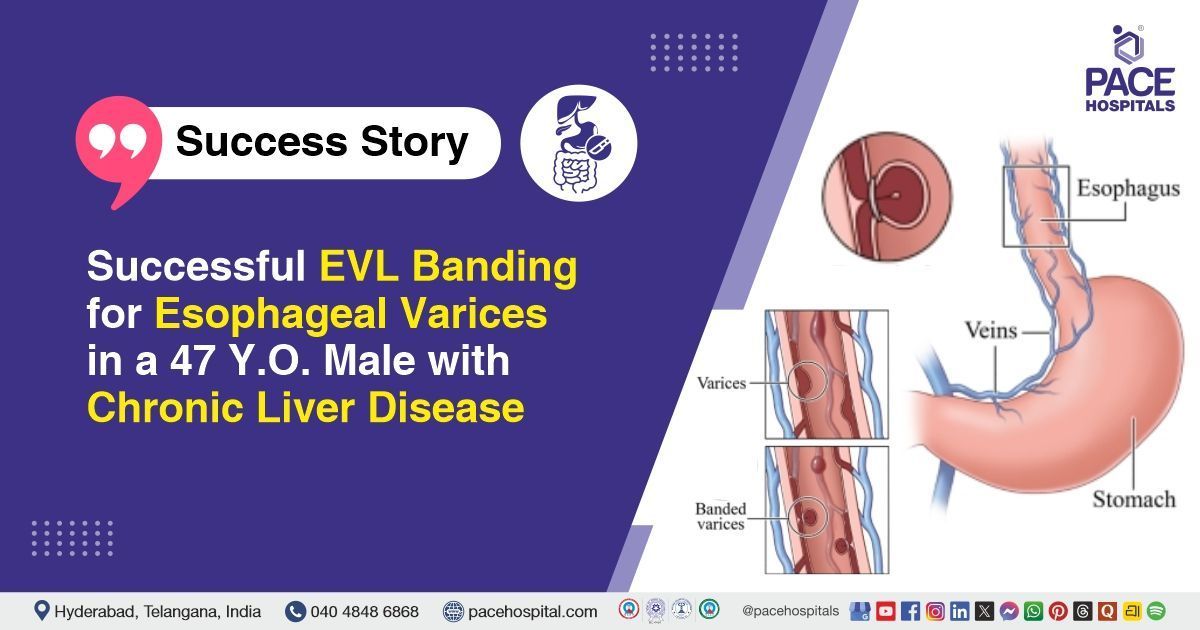
Successful EVL Banding for Esophageal Varices in a 47 Y.O. Male with Chronic Liver Disease
PACE Hospitals
PACE Hospitals’ expert Surgical Gastroenterology team successfully performed an Endoscopic Variceal Ligation (EVL) in a 47-year-old male patient diagnosed with Chronic Liver Disease (CLD) with Esophageal varices. The procedure aimed to control high-risk varices, prevent variceal bleeding, and reduce complications related to portal hypertension while avoiding the need for invasive surgical intervention.
Chief Complaints
A 47-year-old male, with a body mass index (BMI) of 22 and a known history of chronic liver disease for the past five years, presented to the Surgical Gastroenterology Department at PACE Hospitals, Hitech City, Hyderabad, with complaints of leg swelling for the last three months, jaundice for one month, and passage of black-colored stools (melena) for one month. He also reported an episode of fever for two days prior to admission. There was no history of constipation, hematemesis, altered behavior, or decreased urine output. He had a history of previous hospitalization for similar complaints one month earlier.
Past Medical History
The patient had a known history of chronic liver disease (CLD) for five years with past alcohol consumption. There was no history of hypertension (HTN), coronary artery disease (CAD), or other major medical comorbidities. He had been hospitalized previously for complications related to chronic liver disease.
On Examination
On general examination, the patient had signs consistent with chronic liver disease (CLD), like pallor, icterus, and pedal edema. He was conscious, coherent, oriented, and hemodynamically stable at the time of assessment. Systemic examination findings were consistent with portal hypertension, while the cardiovascular and respiratory examinations did not show any acute abnormalities.
Diagnosis
Upon admission to PACE Hospitals, the patient was thoroughly evaluated by the Surgical Gastroenterology team in view of his known history of chronic liver disease and current complaints of leg swelling, jaundice, melena, and fever. Clinical findings and initial investigations raised suspicion of portal hypertension with variceal bleeding as a complication of chronic liver disease.
The patient underwent a comprehensive diagnostic evaluation, including laboratory investigations and upper gastrointestinal endoscopy. Blood tests revealed anemia, thrombocytopenia, deranged liver function tests, coagulopathy, and impaired renal parameters consistent with chronic liver disease. Upper gastrointestinal endoscopy demonstrated Grade II and Grade III esophageal varices with red color signs and post-EVL scarring.
Based on the confirmed diagnosis, the patient was advised to undergo Chronic Liver Disease Treatment in Hyderabad, India, under the expert care of the Surgical Gastroenterology Department.
Medical Decision Making
After a detailed consultation with the consultant surgical gastroenterologist, Dr. CH Madhusudhan, along with cross-consultation from the consultant gastroenterologists, Dr. Govind Verma, and cardiologist Dr. Seshi Vardhan Janjirala, a thorough evaluation was carried out considering the patient’s long-standing history of chronic liver disease, recent complaints of leg swelling, jaundice, melena, and fever, and the findings noted on clinical examination and laboratory investigations.
Based on the clinical presentation, deranged laboratory parameters, and upper gastrointestinal endoscopy findings showing Grade II and Grade III esophageal varices with red color signs, it was determined that Endoscopic Variceal Ligation (EVL) was identified as the most appropriate therapeutic intervention. This approach was chosen to reduce the risk of variceal bleeding, manage portal hypertension–related complications, and avoid the need for more invasive surgical procedures. The patient was optimised medically prior to the procedure to ensure hemodynamic stability and procedural safety.
The patient and his family members were counselled in detail regarding the diagnosis, the planned EVL procedure, possible risks such as bleeding or post-procedure discomfort, and the expected benefits in terms of preventing life-threatening variceal haemorrhage and improving overall clinical outcomes.
Surgical Procedure
Following the clinical decision, the patient was scheduled to undergo Endoscopic Variceal Ligation (EVL) in Hyderabad at PACE Hospitals, under the expert supervision of the Surgical Gastroenterology Department.
The following steps were carried out during the procedure:
- Pre-procedure Preparation: The patient was adequately prepared and stabilized prior to the procedure. Baseline investigations were reviewed, coagulopathy and anemia related to chronic liver disease were addressed, and informed consent was obtained after explaining the procedure, its benefits, and possible risks. Standard monitoring, including blood pressure, pulse rate, and oxygen saturation, was initiated before the procedure.
- Endoscopic Assessment: Upper gastrointestinal endoscopy was performed, which revealed two columns of Grade II and Grade III esophageal varices with red color signs, along with evidence of post-EVL scarring from previous banding. No active bleeding was noted at the time of endoscopy.
- Variceal Banding: A variceal band ligation device was introduced through the endoscope. The identified esophageal varices were sequentially suctioned into the banding chamber, and rubber bands were deployed at their bases to achieve effective ligation.
- Hemostasis Confirmation: Adequate ligation of the varices was confirmed endoscopically. There was no immediate bleeding, mucosal injury, or procedure-related complication observed during or after band placement.
- Post-procedure Management: The procedure was completed uneventfully. The patient remained stable and was monitored for potential post-procedure complications such as bleeding, chest discomfort, or worsening liver-related symptoms
Postoperative Care
Following the procedure, the patient was closely monitored for signs of bleeding, infection, or hemodynamic instability. He received supportive medical management, including gastric mucosal protection, lactulose therapy, and hepatoprotective medications. The patient showed symptomatic improvement after EVL and remained stable throughout the hospital stay.
Discharge Medications
Upon discharge, the patient was prescribed supportive medications aimed at protecting the upper gastrointestinal tract, improving bowel regularity, and supporting liver function. Therapy was also continued to reduce the risk of complications related to portal hypertension and chronic liver disease. He was advised to take the medications as prescribed and maintain strict adherence to treatment for optimal recovery and long-term disease control.
Advice on Discharge
The patient was advised to follow a low-salt, high-protein soft diet. He was instructed to strictly avoid alcohol and adhere to the prescribed medications.
Emergency Care
The patient was informed to contact the emergency ward at PACE Hospitals in case of any emergency or development of symptoms such as fever, abdominal pain, vomiting, or any signs of gastrointestinal bleeding.
Review and Follow-up Notes
The patient was advised to return for a follow-up visit with the Surgical Gastroenterologist in Hyderabad at PACE Hospitals, after one month, for further evaluation. A review endoscopy was planned after one month for reassessment of esophageal varices.
Conclusion
This case highlights the effective endoscopic management of esophageal varices in a patient with chronic liver disease. Timely intervention with Endoscopic Variceal Ligation, along with appropriate medical therapy and multidisciplinary care, resulted in symptomatic improvement and safe discharge in a stable condition.
Endoscopic Management of Esophageal Varices in Chronic Liver Disease
Chronic liver disease often presents with complications related to portal hypertension, including esophageal varices. Early identification and timely endoscopic intervention by a
surgical gastroenterologist/surgical gastroenterology doctor plays a crucial role in preventing life-threatening bleeding episodes. A structured, multidisciplinary approach, combined with patient education, medication adherence, dietary changes, and regular follow-up with the doctor, is needed for improving outcomes and quality of life in patients with chronic liver disease (CLD).
Share on
Request an appointment
Fill in the appointment form or call us instantly to book a confirmed appointment with our super specialist at 04048486868
Appointment request - health articles
Recent Articles