Successful Total Laparoscopic Hysterectomy with B/L Salpingectomy for Multiple Uterine Fibroids
PACE Hospitals
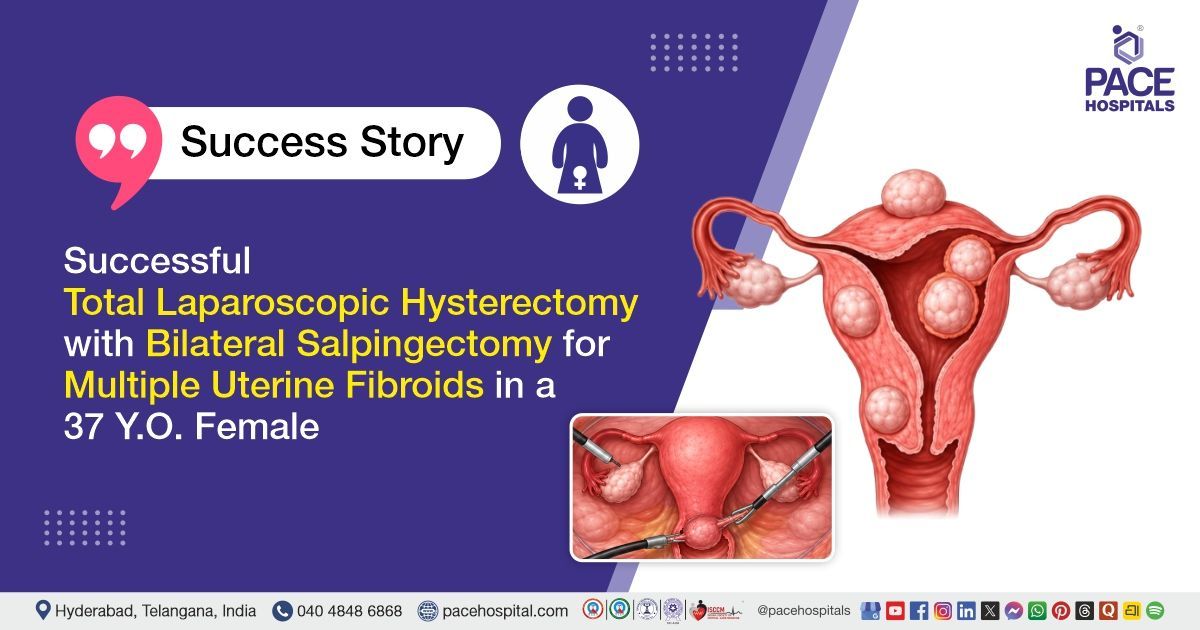
PACE Hospital's expert Gynaecology team successfully performed a Total Laparoscopic Hysterectomy (TLH) with Bilateral Salpingectomy on a 37-year-old female patient diagnosed with Abnormal Uterine Bleeding (AUB) associated with multiple uterine fibroids. The aim of the procedure was to provide definitive treatment for abnormal uterine bleeding by removing the uterus, relieve symptoms caused by multiple uterine fibroids, and improve the patient's quality of life while reducing the risk of future fallopian tube-related disease through bilateral salpingectomy.
Chief Complaints
A 37-year-old female patient with a
body mass index (BMI) of 20 presented to the Gynaecology Department at
PACE Hospitals, Hitech City, Hyderabad, with complaints of persistent menorrhagia for the past 3–4 months, which remained uncontrolled despite medical management.
Past Medical History
The patient had no known history of chronic medical illnesses such as
diabetes mellitus,
hypertension,
thyroid disorders, or other significant comorbid conditions. No previous surgical history or known drug allergies were reported.
Menstrual and Obstetric History
The patient had a regular menstrual history with the last menstrual period recorded 14 days prior to admission. She was P2L2, with two full-term normal vaginal deliveries.
On Examination
On general examination, the patient was conscious, coherent, and cooperative. Systemic examination revealed normal findings with equal air entry on respiratory examination, normal heart sounds on cardiovascular examination, and a soft, non-tender abdomen. Breast examination was normal with no palpable lumps. Per vaginal examination revealed a healthy cervix and vagina.
Diagnosis
Upon admission to PACE Hospitals, the patient was evaluated by the Gynaecology team, which included a detailed review of her medical history and a comprehensive clinical examination. The patient presented with a history of menorrhagia for 3–4 months, not controlled with medical management and was found to be hemodynamically stable on assessment.
Ultrasound findings were suggestive of a bulky uterus with multiple uterine fibroids in a case of abnormal uterine bleeding, with no other significant pelvic or adnexal abnormalities noted.
Based on the confirmed findings, the patient was advised to undergo Multiple Uterine Fibroids Treatment in Hyderabad, India, under the expert care of the Gynaecology Department.
Medical Decision Making
After a detailed consultation with Dr. Mugdha Bandawar (Obstetrician and Gynaecologist), a comprehensive evaluation of the patient was undertaken for abnormal uterine bleeding with multiple uterine fibroids. The patient presented with a history of menorrhagia for 3–4 months, not responding to medical management and was found to be hemodynamically stable on examination.
Ultrasound findings were suggestive of a bulky uterus with multiple fibroids, consistent with the diagnosis of leiomyomatous uterus causing abnormal uterine bleeding. Laboratory and clinical assessment did not reveal any other significant abnormalities, and the patient was optimized for surgical management.
Based on the clinical, radiological, and laboratory findings, it was determined that total laparoscopic hysterectomy with bilateral salpingectomy was the most appropriate definitive treatment to control symptoms, prevent recurrence of abnormal uterine bleeding, and improve the patient’s quality of life.
The patient and her family members were counselled in detail regarding the diagnosis, need for surgical intervention, procedure details, associated risks and benefits, and expected postoperative course, following which informed consent was obtained.
Surgical Procedure
Following the decision, the patient was scheduled to undergo Total Laparoscopic Hysterectomy Surgery in Hyderabad at PACE Hospitals along with Bilateral Salpingectomy under the supervision of the expert Gynaecology Department.
The following steps were carried out during the procedure:
- Exploration and Intraoperative Assessment: Upon entry into the abdominal cavity, a bulky uterus with multiple fibroids was noted. Both ovaries and fallopian tubes appeared normal, and a congested pelvic cavity was observed. The rest of the abdominal structures were found to be normal.
- Identification and Mobilization of Pelvic Structures: The uterus along with surrounding pelvic structures was carefully assessed. The fallopian tubes and supporting ligaments were identified and mobilized while ensuring preservation of adjacent normal structures.
- Hysterectomy and Bilateral Salpingectomy: A total laparoscopic hysterectomy was performed, and both fallopian tubes were removed (bilateral salpingectomy) as part of the surgical procedure. The uterus with cervix and both fallopian tubes was detached laparoscopically and retrieved vaginally.
- Specimen Retrieval: The excised uterus along with cervix and both fallopian tubes was retrieved vaginally and sent for histopathological examination (HPE) for further evaluation.
- Hemostasis and Closure: Complete hemostasis was achieved, ensuring no active bleeding. Vault closure was performed securely, and the procedure was concluded without complications.
Postoperative Care
Postoperatively, the patient was monitored in the Surgical Intensive Care Unit (SICU) for observation, hemodynamic stability, pain control, and immediate surgical recovery. Once stable, she was shifted to the ward for continued postoperative care. She was managed with intravenous medications to prevent infection, medications for pain relief, gastric protection, and other supportive care during the hospital stay and an ultrasound screening showed no abnormalities.
The histopathology report showed uterine leiomyoma (fibroids) of the uterus with pill endometrium. The cervix showed chronic cervicitis with Nabothian cysts, and a paratubal cyst was noted in the fallopian tube. No evidence of malignancy was seen.
The patient remained stable throughout the hospital stay and was subsequently discharged in a hemodynamically stable condition.
Discharge Medications
Upon discharge, the patient was prescribed medications for the prevention of postoperative infection, pain relief, reduction of postoperative inflammation and swelling, gastric protection, nutritional supplementation to support recovery, and short-term management of general weakness. Local application treatment was advised for surgical site care to promote healing and prevent local infection.
Advice on Discharge
The patient was advised to follow a soft diet during the initial recovery period. She was instructed to avoid heavy lifting, strenuous exercise, and activities that may put pressure on the abdomen. Adequate rest was advised, along with proper wound care and regular intake of prescribed medications as instructed by the treating team.
Emergency Care
The patient was informed to contact the emergency ward at PACE Hospitals in case of any emergency or development of symptoms such as severe abdominal pain, fever, vomiting, or any abnormal vaginal bleeding.
Review and Follow-up Notes
The patient was advised to return for a follow-up appointment with the Gynaecologist in Hyderabad at PACE Hospitals after 1 week.
Conclusion
This case highlights abnormal uterine bleeding due to multiple uterine fibroids not responding to medical management. A successful total laparoscopic hysterectomy with bilateral salpingectomy was performed without complications. Histopathology confirmed benign leiomyoma with no evidence of malignancy, and the postoperative course was uneventful with stable recovery.
Advancements in Minimally Invasive Gynecological Surgery
Minimally invasive gynecological surgery has become the preferred approach for many benign uterine conditions due to its safety, precision, and overall effectiveness as widely recommended by a gynaecologist/gynaecology doctor. It offers significant advantages such as reduced blood loss, minimal postoperative pain, lower risk of infection, and quicker recovery compared to traditional open surgical methods. The technique allows superior visualization of pelvic anatomy, enabling accurate dissection and preservation of surrounding vital structures with minimal tissue trauma. It also results in reduced hospital stay, faster return to daily activities, and improved patient satisfaction. In addition, it supports better cosmetic outcomes with smaller incisions and less scarring. Histopathological evaluation remains essential for confirming diagnosis and ruling out malignancy, ensuring comprehensive patient care. Overall, it represents a major advancement in modern gynecological practice, improving both surgical safety and long-term outcomes.
Frequently Asked Questions (FAQs)
Why was a total laparoscopic hysterectomy recommended instead of removing only the fibroids?
When there are multiple fibroids and heavy bleeding is not settling with medicines, removing only the fibroids may not give permanent relief. New fibroids may also develop later. For women who have completed their families, total laparoscopic hysterectomy is often a better long-term option. It removes the uterus, stops abnormal uterine bleeding, and prevents fibroids from coming back.
What is bilateral salpingectomy, and why is it done during hysterectomy?
Bilateral salpingectomy means the removal of both fallopian tubes. If the ovaries are healthy, they are usually kept in place, so hormone production continues naturally. Removing the fallopian tubes may also reduce the future risk of some ovarian cancers. It is commonly done along with a hysterectomy when medically suitable.
How long does recovery take after laparoscopic hysterectomy?
Most women can start walking within a day after a laparoscopic hysterectomy. Light daily activities can usually be started gradually within about two weeks. Since the surgery is done through small cuts, recovery is generally faster than open surgery. Complete internal healing may take around 6 to 8 weeks.
Is heavy bleeding permanently cured after a hysterectomy for fibroids?
Yes. Once the uterus is removed, periods stop permanently because there is no lining left to shed. This gives long-term relief from heavy bleeding due to fibroids. It may also help improve weakness, tiredness, and anemia caused by repeated blood loss. After recovery, many women feel healthier and more comfortable in daily life.
Can fibroids come back after a total hysterectomy?
No. Fibroids grow from the muscle layer of the uterus. Once the uterus is completely removed, fibroids cannot grow back. This makes hysterectomy a permanent treatment option for multiple or recurrent fibroids. Regular follow-up with a gynaecologist is still advised for overall health.
Why was the removed uterus sent for histopathology?
The removed uterus, cervix, and fallopian tubes were sent for histopathological examination to confirm the diagnosis under a microscope. This helps rule out unexpected abnormal or cancerous changes and confirms the nature of fibroids.
Does removing the uterus affect hormones or sexual life?
If the ovaries are preserved, hormone levels usually remain normal, meaning patients do not experience sudden surgical menopause. After complete internal healing, many women report improved quality of life as they are no longer experiencing heavy bleeding, pelvic pain, or pressure. Sexual activity can be resumed only after the doctor confirms proper healing during the follow-up visit.
What activities need to be avoided after a laparoscopic hysterectomy?
Heavy lifting, hard workouts, running, and high-impact activities should be avoided during the early recovery period. Sexual intercourse should be avoided until the doctor confirms proper healing. Gentle walking is usually safe and helps improve blood flow. These precautions help reduce the chances of pain, bleeding, and wound problems.
When is urgent medical care needed after a hysterectomy surgery?
Seek urgent medical care if there is severe abdominal pain, heavy vaginal bleeding, fever, foul-smelling discharge, or pus from the wound. Difficulty in passing urine should be evaluated immediately. Swelling, pain, or redness in the legs also requires prompt medical attention. Early treatment helps prevent complications and supports safe recovery.
Why is follow-up important after a hysterectomy?
Follow-up helps the doctor check wound healing and overall recovery. The biopsy or histopathology report of the removed uterus and fallopian tubes is also reviewed during the visit. Pain, discharge, fever, or any recovery-related concern can be discussed. The doctor also advises when normal work, exercise, travel, and daily activities can be resumed safely.
Share on
Request an appointment
Fill in the appointment form or call us instantly to book a confirmed appointment with our super specialist at 04048486868
Appointment request - health articles
Recent Articles