Successful Total Lap Hysterectomy with B/L Salpingo-Oophorectomy for Endometrial Hyperplasia in a 51 Y.O. Female
PACE Hospitals
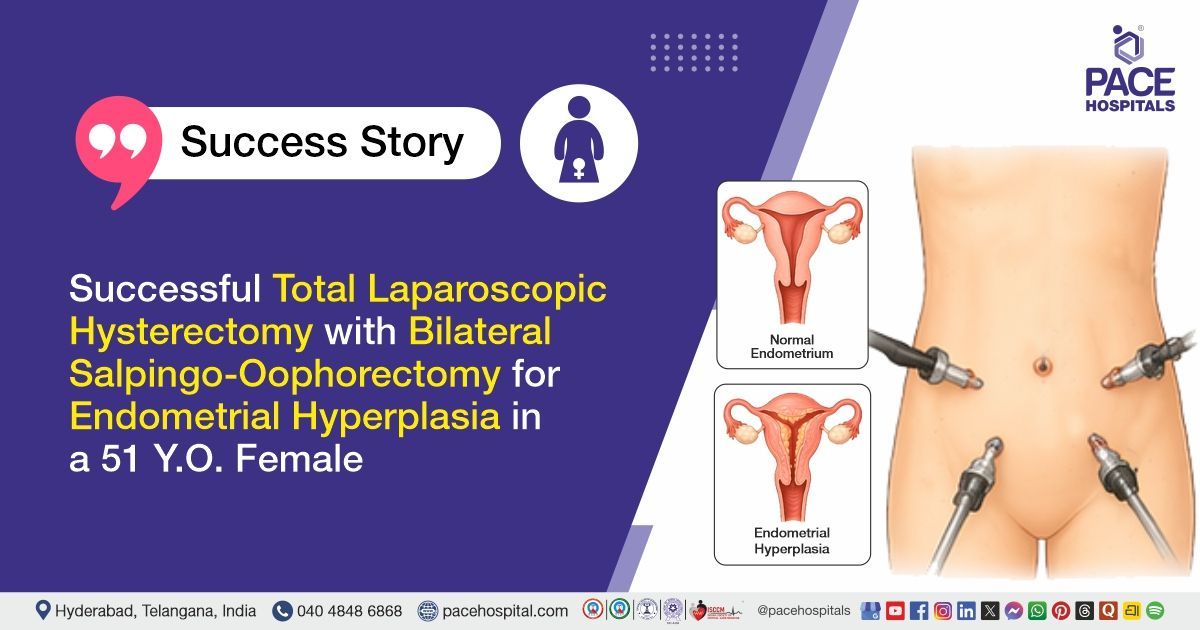
PACE Hospitals’ expert gynaecology team successfully performed a Total Laparoscopic Hysterectomy with Bilateral Salpingo-oophorectomy on a 51-year-old female patient diagnosed with abnormal uterine bleeding (perimenopausal) associated with endometrial hyperplasia, with the aim of definitively controlling the abnormal bleeding, removing the uterus along with the fallopian tubes and ovaries, and reducing the risk of progression to endometrial cancer, thereby improving the patient’s overall health and quality of life.
Chief Complaints
A 51-year-old female patient with a body mass index (BMI) of 21 presented to the Gynaecology Department at PACE Hospitals, Hitech City, Hyderabad, with complaints of perimenopausal menorrhagia (heavy or prolonged menstrual bleeding) with passage of clots and intermittent dysmenorrhea (painful menstrual periods), which was not relieved with medications.
Past Medical History
The patient was a known case of uncontrolled diabetes mellitus and hypertension and had been on treatment for these conditions.
Obstetric History
The patient was a multiparous woman (P2L2), with both deliveries conducted by normal vaginal delivery, and had undergone tubal sterilization (tubectomised).
On Examination
On examination, the patient was conscious, coherent, and oriented. Systemic examination revealed normal air entry bilaterally in the respiratory system, normal first and second heart sounds on cardiovascular examination, and a soft, non-tender abdomen. Breast examination was normal with no palpable lumps. Per vaginal examination showed a bulky cervix with no fornicial tenderness. The patient was hemodynamically stable on general examination.
Diagnosis
Upon admission to PACE Hospitals, the patient was evaluated by the Gynaecology team, which included a detailed review of her medical history and a comprehensive clinical examination. The examination revealed a bulky cervix with no fornicial tenderness, and the patient was found to be hemodynamically stable on assessment.
Ultrasound findings were suggestive of endometrial hyperplasia in the case of abnormal uterine bleeding in the perimenopausal age group. Evaluation and investigations revealed uncontrolled diabetes mellitus and hypertension, along with elevated glycaemic parameters, while renal function tests, electrolytes, and cardiac evaluation were within acceptable limits for surgery.
Based on the confirmed findings, the patient was advised to undergo Endometrial Hyperplasia Treatment in Hyderabad, India, under the expert care of the Gynaecology Department.
Medical Decision Making (MDM)
After a detailed consultation with Dr. Mugdha Bandawar, a Gynaecologist, a comprehensive evaluation of the patient was undertaken in coordination with cross consultations from Dr. Tripti Sharma, Endocrinologist, and Dr. Seshi Vardhan Janjirala, Cardiologist. Considering her history of perimenopausal abnormal uterine bleeding with menorrhagia and clots, associated dysmenorrhoea not relieved with medical management, and ultrasound findings suggestive of endometrial hyperplasia, along with known uncontrolled diabetes mellitus and hypertension, the multidisciplinary team reviewed her clinical condition in detail. Clinical examination revealed a bulky cervix, and investigations demonstrated poor glycaemic control, while renal, electrolyte, and cardiac assessments were optimized and deemed suitable for surgery with medical management.
Further assessment confirmed abnormal uterine bleeding (perimenopausal) secondary to endometrial hyperplasia in a high-risk metabolic background. Based on multidisciplinary evaluation, it was determined that total laparoscopic hysterectomy with bilateral salpingo-oophorectomy was identified as the most appropriate definitive management to control bleeding, address the underlying endometrial pathology, and reduce the risk of progression to endometrial hyperplasia-associated complications, including malignancy.
The patient and her family members were counselled in detail regarding the diagnosis, planned surgical procedure, associated risks, benefits, and expected postoperative recovery, following which informed consent was obtained.
Surgical Procedure
Following the decision, the patient was scheduled to undergo a Bilateral Salpingo-Oophorectomy with Total Laparoscopic Hysterectomy Surgery in Hyderabad at PACE Hospitals under the supervision of the expert Gynaecology Department.
The following steps were carried out during the procedure:
- Exploration and Assessment of Pelvic Structures: Intraoperatively, the uterus was found to be bulky, while both fallopian tubes and ovaries appeared normal. A thorough assessment of the abdominal cavity was performed, and the rest of the abdomen was noted to be normal with no visible pathology.
- Dissection and Mobilization of Uterus and Adnexa: The uterus along with bilateral fallopian tubes was carefully dissected and mobilized laparoscopically, ensuring preservation of surrounding structures and maintaining meticulous surgical planes.
- Removal of Uterus with Cervix and Adnexa: The uterus with cervix and both fallopian tubes was retrieved vaginally as a single specimen and sent for histopathological examination (HPE) for further evaluation.
- Vaginal Vault Closure: Following specimen retrieval, the vaginal vault was closed securely using standard laparoscopic suturing techniques to ensure anatomical restoration and prevent postoperative complications.
- Hemostasis and Completion of Procedure: Meticulous hemostasis was achieved throughout the surgical field, and the procedure was completed without complications, ensuring a stable operative outcome.
Postoperative Care
Postoperatively, the patient was kept in the Surgical Intensive Care Unit (SICU) for close monitoring and later shifted to the ward after achieving hemodynamic stability. Postoperative management included infection prevention, pain control, gastric protection, control of nausea, maintenance of hydration, and optimization of blood glucose levels. Ultrasound screening showed no abnormal findings in the postoperative period. She was also reviewed by the endocrinology team for glycaemic management and showed steady clinical improvement. The biopsy revealed a benign uterine fibroid (Leiomyoma) with associated changes in the endometrial lining, likely due to pill use, and no evidence of malignancy. The patient was discharged in a hemodynamically stable condition.
Discharge Medications
Upon discharge, the patient was prescribed medications for infection prevention following surgery, pain control, reduction of postoperative inflammation and swelling, gastric protection, and supportive care to aid recovery. Additional medications were advised for local wound care application and nutritional and metabolic support during the recovery period.
In view of uncontrolled diabetes mellitus, she was also prescribed medications for strict blood glucose control, including agents targeting fasting and postprandial glucose levels and combination therapy to improve glycaemic regulation and insulin sensitivity.
Advice on Discharge
The patient was advised to follow a diabetic diet and to avoid heavy lifting and strenuous physical activities during the recovery period.
Emergency Care
The patient was informed to contact the emergency ward at PACE Hospitals in case of any emergency or development of symptoms such as abdominal pain, fever, vomiting, or any abnormal vaginal bleeding.
Review and Follow-up Notes
The patient was advised to return for a follow-up appointment with the Gynaecologist in Hyderabad at PACE Hospitals after 10 days. A subsequent review was scheduled after 1 week with the Endocrinologist for assessment of fasting and postprandial blood sugar levels and ongoing diabetes management.
Conclusion
This case highlights a perimenopausal woman with abnormal uterine bleeding due to endometrial hyperplasia, managed by total laparoscopic hysterectomy with bilateral salpingo-oophorectomy. The patient had uncontrolled diabetes mellitus and hypertension, which were optimized with multidisciplinary care before surgery. The procedure was uneventful, and the postoperative recovery was stable. She was discharged in a hemodynamically stable condition with advice for follow-up and glycaemic control.
Multidisciplinary Approach in Major Gynaecological Surgery
Major gynecological surgical cases often require thorough preoperative evaluation and optimization of associated systemic conditions to ensure patient safety. Involvement of relevant specialties such as medicine, anesthesia, and other subspecialties helps in reducing perioperative risks and improving surgical outcomes under the supervision of a gynaecologist/gynaecology doctor. Intraoperative care focuses on achieving adequate hemostasis and preventing complications through careful surgical technique. Postoperatively, patients are closely monitored in a high-dependency setting followed by step-down care once clinical stability is achieved. Recovery is assessed through clinical status and appropriate investigations to rule out complications. Patients are discharged in stable condition with structured follow-up to ensure continued recovery and long-term medical and surgical management.
Frequently Asked Questions (FAQs)
What are the risks of surgery for patients with diabetes and high blood pressure?
Surgery can be more challenging for people with diabetes and high blood pressure. Uncontrolled blood sugar can slow down healing, increase the risk of infection, and cause problems with wound recovery. High blood pressure can lead to heart complications. Therefore, it’s crucial to manage these conditions before surgery to reduce risks and ensure a smoother recovery.
Why was a hysterectomy recommended for endometrial hyperplasia?
Endometrial hyperplasia is a condition where the lining of the uterus thickens, which can increase the risk of uterine cancer. When medications don’t control the condition, a hysterectomy, or removal of the uterus, is often recommended to prevent cancer and eliminate the symptoms, such as heavy bleeding. It’s a common and effective solution for women in this situation.
What are the benefits of laparoscopic surgery over traditional surgery?
Laparoscopic surgery, also known as minimally invasive surgery, involves smaller cuts compared to traditional surgery. This results in less pain, faster recovery, and a lower risk of complications like infections. Patients generally experience shorter hospital stays and quicker returns to normal activities, making it a preferred choice for many types of surgery.
How does controlling blood sugar help recovery after surgery?
Keeping blood sugar under control before and after surgery is important for proper healing. High blood sugar can slow down wound healing and increase the risk of infection. When blood sugar is stable, the body heals better and recovery is smoother. Good sugar control also helps reduce complications after surgery.
What can be expected during recovery for someone with diabetes and high blood pressure?
Recovery for patients with diabetes and high blood pressure may take a bit longer due to the need for careful monitoring of these conditions. Blood pressure and blood sugar levels should be regularly checked to avoid complications, such as infections or poor wound healing. A balanced diet, proper medications, and regular follow-ups will help speed up recovery and minimize risks.
Why were both ovaries and fallopian tubes removed in this surgery?
The removal of both ovaries and fallopian tubes, called bilateral salpingo-oophorectomy, is often done to reduce the risk of future complications like cancer or other conditions affecting these organs. In this case, it was done to ensure complete removal of any tissue that could contribute to the patient’s symptoms or increase the risk of cancer, ensuring better long-term health and safety.
How do doctors from different specialties help during surgery?
In surgeries involving complex health conditions, specialists work together to ensure the patient’s overall well-being. An endocrinologist monitors blood sugar levels, while a cardiologist keeps track of heart health, especially if the patient has hypertension or other cardiovascular issues. This teamwork ensures that all aspects of the patient’s health are taken care of before, during, and after the surgery.
What complications should be watched for after surgery in patients with diabetes and hypertension?
After surgery, patients with diabetes (DM) and high blood pressure (HTN) need close monitoring for possible problems like infection, slow wound healing, and changes in blood sugar or blood pressure (BP). Blood sugar levels may go up and down during recovery. High blood pressure can also put extra stress on the heart. It's important to manage these conditions with medication and lifestyle changes to support a smooth recovery process.
How does abnormal bleeding affect a woman’s health before surgery?
Abnormal bleeding, such as heavy menstrual bleeding or prolonged periods, can lead to anemia, where the body doesn’t have enough red blood cells to carry oxygen. This can make a patient feel weak, tired, and more susceptible to complications during surgery. Treating the underlying cause, such as endometrial hyperplasia, can help improve overall health and make surgery safer.
What follow-up care is needed after surgery for someone with diabetes and high blood pressure?
After surgery, regular follow-up is important for patients with diabetes and high blood pressure. Blood sugar and blood pressure need to be checked often to avoid problems. Diet, activity, and medicines may need changes based on recovery. Ongoing doctor support helps ensure proper healing and good long-term health. It also helps in early detection of any complications. This ensures safer recovery and better overall control of chronic conditions.
Share on
Request an appointment
Fill in the appointment form or call us instantly to book a confirmed appointment with our super specialist at 04048486868
Appointment request - health articles
Recent Articles