Pilonidal Sinus - Symptoms, Causes, Diagnosis & Treatment
PACE Hospitals
Written by: Editorial Team
Medically reviewed by: Dr. Padma Priya - Consultant Gastroenterologist and Hepatologist
Pilonidal sinus definition
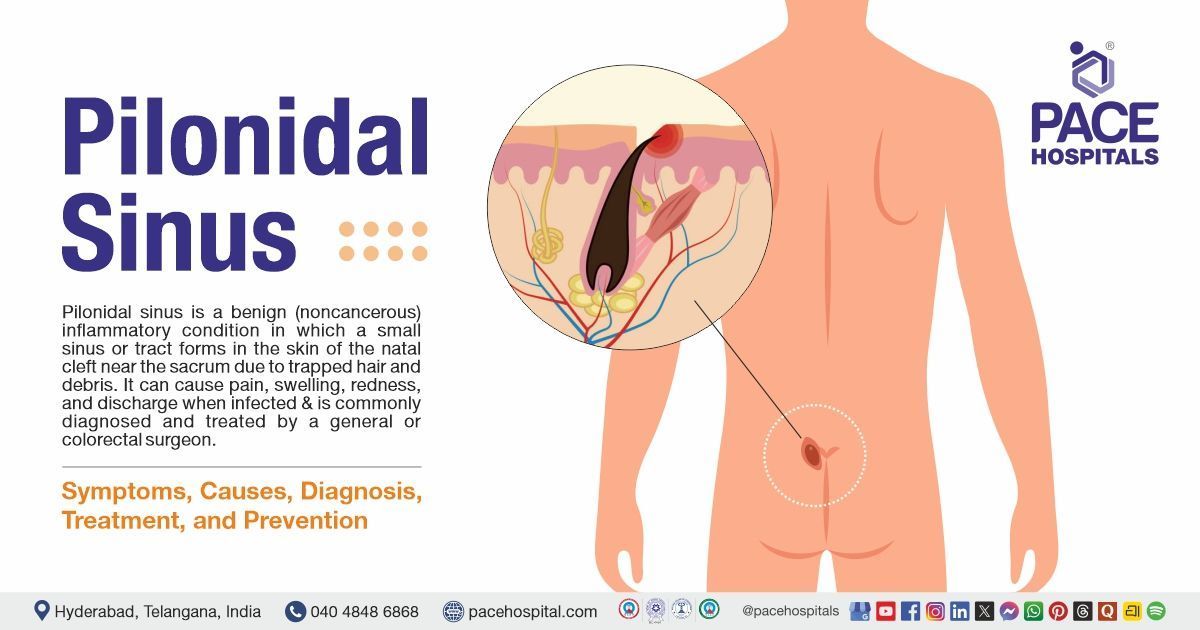
Pilonidal sinus refers to a benign inflammatory condition in which a small hole, tunnel, or tract forms in the skin, most commonly in the cleft between the buttocks near the base of the spine (sacrum). It occurs due to the trapping of hair and debris in the skin, leading to local irritation, foreign body reaction, and potential cyst or abscess formation.
Pilonidal sinus disease is associated with symptoms such as pain, swelling, redness, discharge of pus or fluid, and discomfort while sitting or walking, especially when the sinus becomes infected. The condition is not related to cancer and usually remains harmless unless an infection develops. Risk factors include prolonged sitting, excessive body hair, obesity, family history, poor hygiene, and friction in the affected area.
Diagnosis and treatment are often managed by a general surgeon or colorectal surgeon or proctologist, based on clinical examination. Treatment may include antibiotics for infection, drainage of abscesses, proper hygiene, hair removal, and, in some cases, surgical intervention to remove the sinus and prevent recurrence.
Pilonidal sinus meaning
Pilonidal sinus derives from the Latin words “pilus” (hair) and “nidus” (nest), meaning a “nest of hair.” It is a small cavity or tract in the skin, usually located in the cleft between the buttocks near the base of the spine, which often contains hair and debris. The condition was first described by O.H. Mayo in 1833, later named “pilonidal disease” by R.M. Hodges in 1880, and became common among U.S. soldiers, earning the nickname “Jeep disease.”
Pilonidal Sinus Statistics
Pilonidal sinus statistics in the World
Pilonidal sinus affects nearly 26 per 100,000 people globally, with higher rates seen in young adult males aged 15-40. Incidence peaks in industrialized regions, where factors like long term sitting and increased hairiness contribute to its development.
Pilonidal sinus statistics in India
In India, studies report varying rates, with some estimating up to 6.6% in specific high-risk groups or contexts, and an annual incidence of around 3% among young adults. Post-COVID sedentary lifestyles have contributed to rising cases in urban populations. Rates appear higher than global averages because of demographic and lifestyle parameters.
Pilonidal Sinus Symptoms
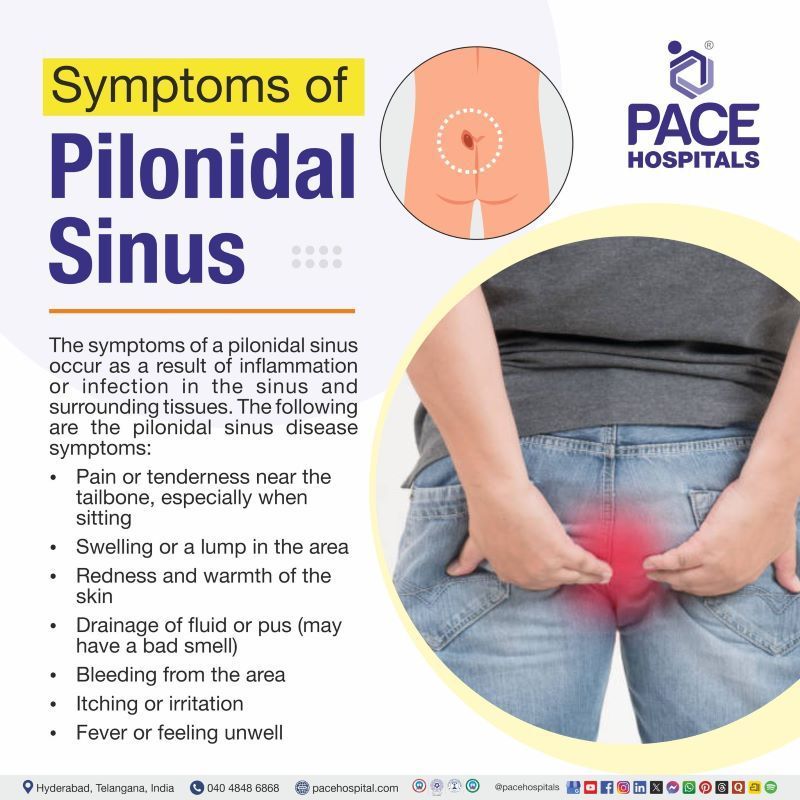
The symptoms of a pilonidal sinus occur as a result of inflammation or infection in the sinus and surrounding tissues. The following are the pilonidal sinus disease symptoms:
Pain or tenderness near the tailbone, especially when sitting
- Swelling or a lump in the area
- Redness and warmth of the skin
- Drainage of fluid or pus (may have a bad smell)
- Bleeding from the area
- Itching or irritation
- Fever or feeling unwell
Pain or tenderness near the tailbone (especially when sitting): This happens because the sinus becomes inflamed or infected, irritating nearby tissues. Sitting puts pressure on the area, which increases pain and discomfort.
Swelling or a lump in the area: A blocked hair follicle or trapped hair can cause a pocket under the skin to fill with fluid or pus. This leads to a noticeable lump or swelling near the tailbone.
Redness and warmth of the skin: Infection causes increased blood flow to the area, making the skin appear red and feel warm. This is a common sign of inflammation.
Drainage of fluid or pus (may have a bad smell): When the sinus becomes infected, pus or fluid may leak out through a small opening. The smell is due to bacteria present in the infection.
Bleeding from the area: The skin over the sinus can become fragile and irritated, leading to small amounts of bleeding. This may happen with movement or drainage.
Itching or irritation: Ongoing moisture, discharge, or healing skin can irritate the area. This can cause itching or an uncomfortable sensation around the sinus.
Fever or feeling unwell: If the infection spreads, the body may react with fever or general weakness. This suggests a more serious infection that needs medical attention.
Pilonidal Sinus Causes
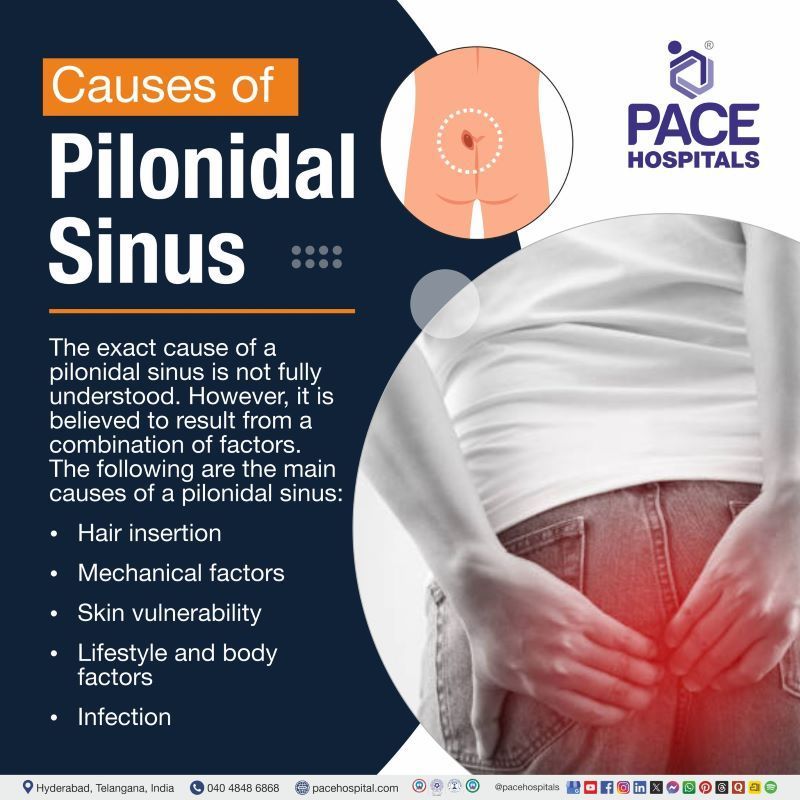
The exact cause of a pilonidal sinus is not fully understood. However, it is believed to result from a combination of factors. The following are the main causes of a pilonidal sinus:
- Hair insertion
- Mechanical factors
- Skin vulnerability
- Lifestyle and body factors
- Infection
Hair insertion: Loose, ingrown, or coarse hairs penetrate the skin, acting as foreign bodies and causing inflammation. These hairs can become trapped under the skin, resulting in cyst or sinus formation.
Mechanical factors: Pressure and friction from prolonged sitting or irritation push hairs into the skin. Repeated movement or trauma in the area can worsen the penetration and inflammation.
Skin vulnerability: Certain areas, like congenital dimples near the tailbone, are more prone to hair penetration. Thin or sensitive skin in these regions is more easily irritated and infected.
Lifestyle and body factors: Obesity, excessive sweating, and poor hygiene create a moist environment that promotes infection. These conditions also slow healing and increase the risk of cyst recurrence.
Infection: Bacteria infect the trapped hair and surrounding tissue, worsening the cyst and potentially forming abscesses or sinus tracts. Infection can also cause pain, redness, and systemic symptoms like fever.
Pilonidal Sinus Risk Factors
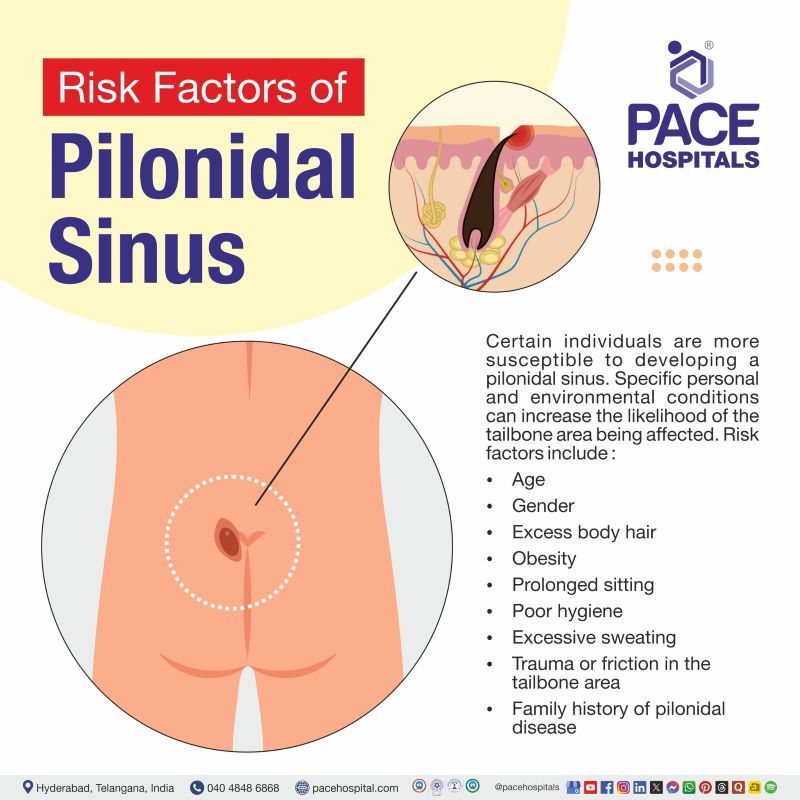
Certain individuals are more susceptible to developing a pilonidal sinus. Specific personal and environmental conditions can increase the likelihood of the tailbone area being affected. Risk factors include:
- Age
- Gender
- Excess body hair
- Obesity
- Prolonged sitting
- Poor hygiene
- Excessive sweating
- Trauma or friction in the tailbone area
- Family history of pilonidal disease
Age: Most common in young adults between 15–35 years, likely due to active hair growth and hormonal changes. Hormonal activity during puberty may make hair follicles more prone to irritation and penetration.
Gender: Men are more prone because they generally have coarser body hair and deeper natal clefts. This anatomical difference increases friction and the likelihood of hair becoming trapped.
Excess body hair: Thick, coarse, or curly hair can penetrate the skin, acting as a foreign body leading to cysts. Loose hairs can easily enter the cleft and trigger inflammation.
Obesity: Extra weight increases pressure and friction in the tailbone area, making hair penetration more likely. It can also create deeper skin folds, which trap hair and bacteria.
Prolonged sitting: Long periods of sitting put pressure on the coccyx, which can push hair into the skin. Sedentary habits can worsen inflammation and delay healing of any early cysts.
Poor hygiene: Inadequate cleaning can allow bacteria to thrive, increasing the risk of infection and cyst formation. Bacterial growth further irritates the area and may worsen the sinus.
Excessive sweating: Moisture softens the skin and traps bacteria, creating a favorable environment for infection. Sweating also increases friction, that may push hairs into the skin.
Trauma or friction in the tailbone area: Repeated irritation or minor injuries can trigger inflammation in the area. This can exacerbate an existing cyst or contribute to the formation of a new one.
Family history of pilonidal disease: Genetic factors may make some people more prone to developing the condition. Inherited skin structure or hair characteristics can increase vulnerability.
Pilonidal Sinus Complications
Pilonidal sinus can cause complications if not treated, including infections, abscesses, and scarring. Severe cases may lead to systemic infection and significant discomfort. The following are the pilonidal sinus disease complications:
- Abscess formation
- Chronic infection
- Cellulitis
- Fistula formation
- Recurrence
- Sepsis (rare)
- Scarring
- Squamous cell carcinoma (very rare)
Abscess Formation: An abscess forms when bacteria infect the pilonidal sinus, leading to pus accumulation that causes painful swelling, redness, and tenderness in the buttock cleft. This requires urgent incision and drainage to relieve pressure and control the infection, preventing further spread to surrounding tissues.
Chronic Infection: Chronic infection develops from persistent bacterial activity in the sinus tract, resulting in ongoing foul-smelling discharge, pain, and inflammation that resists simple treatments. It often leads to repeated episodes and may necessitate surgical excision to achieve lasting resolution.
Cellulitis: It occurs as the infection spreads beyond the sinus into nearby skin and soft tissues, marked by expanding redness, warmth, swelling, and fever. Antibiotics are essential, but it signals a need for addressing the underlying sinus to halt progression.
Fistula Formation: It involves the creation of abnormal tracts connecting the sinus to the skin surface or deeper structures, allowing continuous pus drainage. These complicate healing and typically demand surgical removal to eliminate the pathways and reduce recurrence risk.
Recurrence: It happens when the sinus tract redevelops after initial treatment, often due to incomplete removal of diseased tissue, residual hair, or ongoing irritation, affecting 10-50% of cases. Preventive measures like hygiene and advanced surgical techniques help lower these rates.
Sepsis (Rare): Sepsis, though rare, arises when the localized infection enters the bloodstream, causing systemic symptoms such as high fever, chills, rapid heart rate, and potential organ dysfunction. Immediate hospitalization with IV antibiotics and source control is important for survival.
Scarring: It occurs from repeated infections, inflammationor surgical interventions, producing thickened, fibrotic tissue that may cause discomfort or cosmetic changes in the sacral region. It generally improves with time but can persist in severe or recurrent cases.
Squamous cell carcinoma (very rare): Chronic, untreated pilonidal disease may rarely lead to malignant transformation in sinus tracts.
Pilonidal Sinus Diagnosis
Pilonidal sinus diagnosis is primarily based on clinical evaluation, including medical history and physical examination, to assess the presence and extent of disease near the tailbone. Below are the steps involved in the diagnosis of a pilonidal sinus:
- Medical history
- Physical examination
- Differential diagnosis
- Imaging tests (in selected cases)
- Ultrasound
- Magnetic resonance imaging (MRI)
- Laboratory Investigations(not routinely necessary)
- Complete blood count (CBC)
- Pus culture and sensitivity
Pilonidal Sinus Treatment
Treatment of pilonidal sinus depends on its stage (asymptomatic, acute, or chronic), with goals to control infection, remove sinus tracts, and prevent recurrence. Management ranges from conservative care to surgery. The following are the treatment options for pilonidal sinus:
- Assess the type and severity of disease
- Asymptomatic Pilonidal Pit
- Acute Pilonidal Abscess
- Chronic or Recurrent Pilonidal Sinus
- Conservative (Non-Surgical) Management
- Management of Acute Pilonidal Abscess
- Incision and Drainage (I&D)
- Antibiotics (selective)
- Analgesics and wound care
- Definitive Surgical Treatment (Chronic or Recurrent Disease)
- Excision Techniques
- Off-Midline Flap Procedures
- Intraoperative Adjuncts
- Methylene Blue or laser ablation
Medical Services at PACE Hospitals
Specialist Doctors Across Medical Disciplines
Diagnostic & Treatment Services
Clear Information on Care & Costs
24x7 Emergency & ICU Services
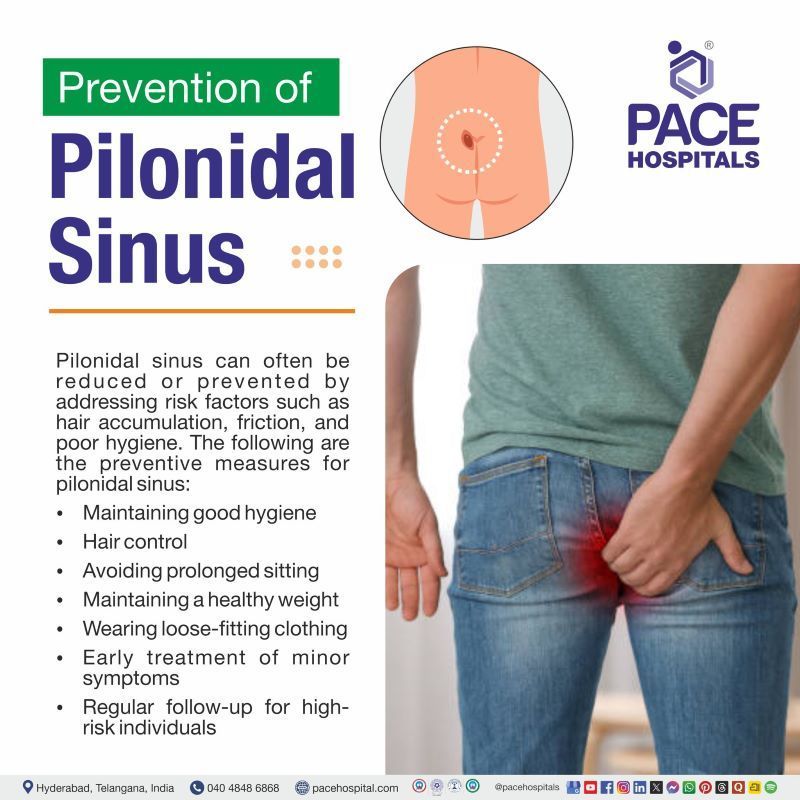
Pilonidal Sinus Prevention
Pilonidal sinus can often be reduced or prevented by addressing risk factors such as hair accumulation, friction, and poor hygiene. The following are the preventive measures for pilonidal sinus:
- Maintaining Good Hygiene
- Hair Control
- Avoiding Prolonged Sitting
- Maintaining a Healthy Weight
- Wearing Loose-Fitting Clothing
- Early Treatment of Minor Symptoms
- Regular Follow-Up for High-Risk Individuals
Maintaining Good Hygiene: Regular cleaning of the natal cleft with mild soap and water prevents the accumulation of dirt, sweat, and bacteria. Maintaining the area dry decreases the risk of infection and hair embedding.
Hair Control: Excess hair in the natal cleft can embed in the skin and cause sinus formation. Regular hair removal using shaving, depilatory creams, or laser therapy reduces this risk.
Avoiding Prolonged Sitting: Sitting for long periods increases pressure and friction in the sacrococcygeal area, promoting sinus formation. Taking breaks and using cushions can help reduce this stress.
Maintaining a Healthy Weight: Obesity increases pressure and friction in the natal cleft, making pilonidal sinus more likely. Maintaining a healthy body mass index (BMI) through diet and exercise lowers the risk.
Wearing Loose-Fitting Clothing: Tight clothing traps sweat and increases friction in the buttock area. Wearing loose, breathable clothing allows ventilation and alleviate irritation in the natal cleft.
Early Treatment of Minor Symptoms: Small pits, irritation, or minor infections should be addressed promptly. Early intervention prevents progression to abscess or chronic sinus formation.
Regular Follow-Up for High-Risk Individuals: People with a family history, previous pilonidal disease, or deep natal clefts need to monitor the area regularly. Prior detection helps prevent recurrence or chronic disease.
Difference between Pilonidal Sinus and Fistula
Pilonidal Sinus vs Fistula
Pilonidal sinus and fistula are often confused because both involve abnormal tracts near the anal region, but they have different causes, locations, and treatments. Understanding these differences helps doctors diagnose and manage them appropriately. The table below highlights the key differences between the two conditions:
| Feature | Pilonidal Sinus | Fistula |
|---|---|---|
| Location | Recurrence | It starts from the anal canal, opening on the perianal skin |
| Cause / Etiology | Caused by ingrown hair, friction, and debris | Caused by infection of the anal glands (cryptoglandular origin) |
| Presentation | Midline pits, swelling, pain, and purulent discharge (foul-smelling) above the anus | External opening surrounding the anus, intermittent pus discharge, and perianal pain |
| Tract Pathway | Tracts are subcutaneous, may branch laterally, and are not connected to the anal canal | Tracts connect the internal anal canal to the external perianal skin |
| Predisposing Factors | Hirsutism, prolonged sitting, deep natal cleft, obesity, poor hygiene | Anal abscess, chronic infection, Crohn’s disease, trauma, prior surgery |
| Treatment | Hygiene, hair removal, incision & drainage for abscess, surgical excision, flap procedures | Fistulotomy, fistulectomy, and seton placement, depending on type and complexity |
| Recurrence | Hygiene, hair removal, incision & drainage for abscess, surgical excision, flap procedures | Recurrence occurs if the internal opening is missed or the sphincter damaged |
Frequently asked questions (FAQs) on Pilonidal Sinus
What is a pilonidal sinus?
Pilonidal sinus is a small hole or tunnel in the skin near the cleft between the buttocks. It often collects hair and dirt and can become infected. It is more common in teenagers and young adults. It may look like a small pit, swelling, or wound that leaks fluid. Pain or discomfort is usually worse when sitting.
What causes a pilonidal sinus?
Common causes include excessive body hair, sweating, poor hygiene, obesity, and prolonged sitting. Repeated friction in the buttock cleft increases risk. It is not usually present at birth. Sitting for long periods increases pressure in the area. Family tendency may also play a role.
Is a pilonidal sinus dangerous?
Pilonidal sinus is usually not dangerous but can cause pain, swelling, and infection. If left untreated, it may lead to abscess formation or recurrent infections. Serious complications are uncommon with proper care. Chronic infection may affect quality of life. Early treatment helps avoid complications.
How to cure a pilonidal sinus naturally?
Mild cases may improve with good hygiene, warm compresses, and hair removal. These measures may reduce symptoms but do not always cure the condition. Medical treatment is often required for complete healing. Natural care mainly helps prevent infection. Chronic cases rarely resolve without medical help.
Is a pilonidal sinus serious?
It is usually a minor condition but can become serious if infections recur. Chronic (long term) pain and discharge may affect daily life. Early treatment prevents complications. Recurrent disease may require surgery. Most individuals recover fully with treatment.
Can pilonidal sinus heal on its own?
Small, non-infected pilonidal sinuses may settle temporarily. Complete healing without management is rare. Infected people generally need medical care. Symptoms may appear and go. Delayed treatment increases recurrence.
Can pilonidal sinus be cured without surgery?
Early or mild cases may be managed with antibiotics and local care. Chronic or recurrent cases often require surgery. Treatment depends on severity. Non-surgical care may control symptoms temporarily. Surgery offers the best chance of cure in long-term cases.
What Is the Difference Between Pilonidal Cyst and Pilonidal Sinus?
A pilonidal cyst is a closed sac beneath the skin that may contain hair, debris, or fluid, and it may remain symptom-free until infection occurs. A pilonidal sinus, on the other hand, is a narrow tract or channel that connects the deeper tissue to the surface of the skin, often draining fluid or pus. While the cyst represents the initial localized lesion, the sinus forms as a result of chronic infection or repeated drainage of the cyst.
Why does a pilonidal sinus occur?
Pilonidal sinus occurs when loose hairs penetrate the skin and cause inflammation. Friction, pressure, and prolonged sitting contribute to this process. The body treats the hair as a foreign object. This leads to infection and sinus formation. Hormonal changes after puberty may increase risk.
How to prevent a pilonidal sinus?
Prevention includes keeping the area clean and dry, removing excess hair, and avoiding prolonged sitting. Maintaining a healthy body weight also helps. Wearing loose clothing reduces friction. Regular bathing reduces sweat buildup. Proper posture may reduce pressure on the area.
Can a pilonidal sinus cause death?
Pilonidal sinus itself does not cause death. Very rarely, severe, untreated infections could lead to complications. Such outcomes are extremely uncommon with timely medical care. Most cases are easily managed. Prompt treatment prevents serious infection.
How common is pilonidal sinus?
Pilonidal sinus is relatively common, especially in young males. It typically occurs after puberty. Sedentary lifestyles increase their frequency. It is less common in children and older adults. Many cases go unreported until infection occurs.
How Are Pilonidal Cyst, Pilonidal Sinus, and Abscess Related?
A pilonidal cyst is a fluid‑filled cavity that typically forms near the tailbone and can be caused by hair, debris, or infection in the skin of the natal cleft. When such a cyst or hair‑related infection becomes acutely infected, it can form a painful abscess, which is a collection of pus in the tissue. Over time, chronic infection or repeated abscesses can lead to the development of one or more sinus tracts—small tunnel‑like passages that connect the deeper lesion to the skin surface. Thus, cysts, abscesses, and sinuses represent different stages or manifestations of the same underlying pilonidal disease process.
Is pilonidal sinus chronic?
Pilonidal sinus can become chronic if it keeps recurring. Some people experience repeated infections over time. Proper treatment reduces recurrence. Incomplete healing increases chronicity. Long-term care may be required in some cases.
What is the difference between fistula and pilonidal sinus?
A pilonidal sinus is a skin condition that usually occurs near the cleft between the buttocks and is often caused by trapped hair. A fistula is an abnormal passage that connects two internal body parts, commonly near the anus. Their causes and treatments are different. Fistulas usually involve deeper tissues, while a pilonidal sinus affects mainly the skin.
When to consult a doctor for a pilonidal sinus?
Consult a doctor for a pilonidal sinus if pain, swelling, or discomfort near the buttock cleft continues for several days, worsens, or interferes with sitting or daily activities. Signs that need immediate medical attention include:
- Redness, swelling, or warmth in the area
- Pain increases while sitting or moving
- Pus or fluid discharge from the skin
- Fever or general feeling of illness
- Repeated episodes of infection or non-healing wounds
If these symptoms continue, it is important to consult a pilonidal sinus specialist / pilonidal sinus surgeon who can assess the condition and recommend the right treatment plan. Seek urgent medical attention if there is severe pain, high fever, or rapidly spreading swelling, as these may indicate serious infection. A general physician or surgeon can provide appropriate pilonidal sinus treatment to control the condition and prevent complications.
Share on
Request an appointment
Fill in the appointment form or call us instantly to book a confirmed appointment with our super specialist at 04048486868
Appointment request - health articles
Recent Articles