What Is the Role of Nephrology in Kidney Health?

PACE Hospitals
Written by: Editorial Team
Medically reviewed by: Dr. A Kishore Kumar - Consultant Nephrologist and Renal Transplant Physician
Nephrology is the medical speciality dedicated to the prevention, diagnosis, treatment, and long-term management of kidney-related diseases. Nephrologists—physicians who specialize in kidney care—play a critical role in protecting kidney function, slowing disease progression, and improving quality of life for patients with both early and advanced kidney conditions.
Kidneys filter around 200 quarts of blood daily, eliminating waste and excess fluid while balancing essential minerals. When kidney function declines, it affects your entire body—from blood pressure and heart health to bone strength and energy levels. This is where nephrology becomes essential.
With rising rates of diabetes, hypertension, and late detection of kidney disease, nephrology in India has become increasingly important as a public health speciality addressing a growing national burden of chronic and acute kidney disorders.
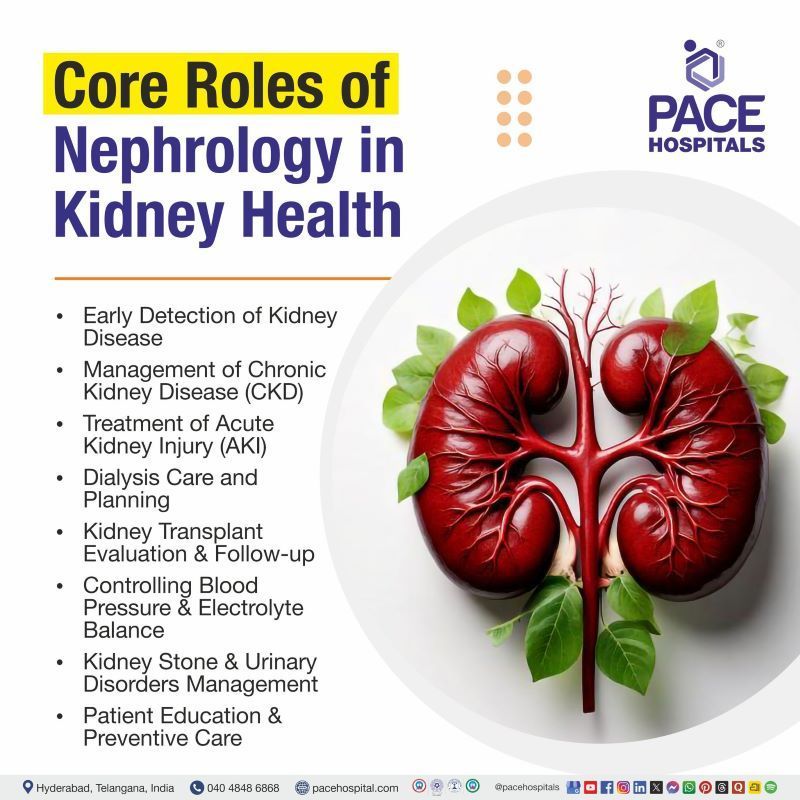
Core Roles of Nephrology in Kidney Health
1. Early Detection of Kidney Disease
Kidney problems often develop silently, with many people showing no symptoms until 60-70% of kidney function is already lost. Nephrology focuses on:
- Identifying early-stage chronic kidney disease (CKD) through routine screening
- Monitoring blood tests, including creatinine, estimated glomerular filtration rate (eGFR), and blood urea nitrogen (BUN)
- Detecting protein (proteinuria) or blood (hematuria) in urine, which are early warning signs
- Monitors your kidneys over time to spot even minor changes.
Why it matters: Early intervention can prevent permanent kidney damage and delay or even prevent the need for dialysis. Studies show that patients who see a nephrologist early in CKD have better long-term outcomes.
2. Management of Chronic Kidney Disease (CKD)
Chronic kidney disease (CKD) impacts millions of people worldwide, with India carrying one of the highest burdens due to diabetes and hypertension (high blood pressure), yet 90% don't know they have it. Nephrologists help:
- Slow CKD progression through targeted treatment plans
- Control underlying causes like diabetes and hypertension, which account for nearly two-thirds of all CKD cases
- Adjust medications to protect kidney function and avoid nephrotoxic drugs
- Prevent complications such as anemia, mineral and bone disorders, cardiovascular disease (CVD), and fluid overload
- Coordinate care with primary care physicians, cardiologists, and endocrinologists
Kidney care usually involves dietary guidance (limiting sodium, protein, phosphorus, and potassium), medication management (including angiotensin-converting enzyme inhibitors (ACE inhibitors) and angiotensin receptor blockers (ARBs), and regular monitoring to adjust treatment as kidney function changes.
3. Treatment of Acute Kidney Injury (AKI)
Acute kidney injury is a sudden decline in kidney function that can occur within hours or days. Common causes include:
- Severe infections (sepsis)
- Severe dehydration
- Drug toxicity (NSAIDs, contrast dye, certain antibiotics)
- Major surgery or trauma
- Urinary obstruction
Nephrologist or Kidney specialists help diagnose and treat AKI early, often stopping the condition from leading to long-term dialysis. In hospital settings, kidney specialists work alongside ICU teams to care for critically ill patients with kidney failure, focusing on careful management of fluid balance, electrolytes, and medications.
4. Dialysis Care and Planning
Dialysis becomes necessary when the kidneys can no longer filter waste effectively, usually when kidney function falls below 10–15%. Nephrology oversees:
- Hemodialysis (in-center or home-based) and peritoneal dialysis
- Deciding the right time to start dialysis based on symptoms, lab values, and quality of life
- Managing dialysis-related complications, including access problems, infections, and fluid imbalances
- Improving patient comfort and outcomes through personalized treatment plans
- Preparing vascular access (fistula or graft) months before dialysis is needed
Nephrologists also help patients transition smoothly to transplant when possible, offering the best chance for improved quality of life.
5. Kidney Transplant Evaluation & Follow-up
Kidney transplantation offers the best long-term outcomes for eligible patients with end-stage kidney disease. Nephrologists are central to:
- Pre-transplant evaluation to determine candidacy
- Donor–recipient compatibility testing and matching
- Post-transplant care, including monitoring kidney function and preventing rejection
- Management of immunosuppressive medications to prevent organ rejection while minimizing the risk of infection.
- Preventing and treating complications, such as infections, cancer risk, and metabolic issues
- Long-term graft monitoring to increase transplant lifespan
6. Controlling Blood Pressure & Electrolyte Balance
Kidneys regulate important body functions, including:
- Blood pressure (BP) through fluid balance and hormone production (renin-angiotensin system)
- Sodium and potassium levels, which affect heart rhythm and muscle function
- Calcium and phosphorus balance are necessary for bone health
- Acid–base balance (pH), crucial for cellular function
Nephrology focuses on keeping these factors stable, particularly in patients with heart disease, diabetes, or electrolyte problems. Uncontrolled blood pressure (BP) can worsen kidney damage, and nephrologists work to prevent this harmful cycle.
7. Kidney Stone & Urinary Disorders Management
While urologists handle surgical stone removal, nephrologists help with:
- Recurrent kidney stones requiring medical management
- Metabolic assessment to recognize fundamental causes (high calcium, uric acid, or oxalate)
- Long-term prevention strategies, including dietary changes and medications
- Chronic urinary abnormalities, such as persistent blood or protein in urine
- Rare kidney stone disorders like cystinuria or primary hyperoxaluria
8. Patient Education & Preventive Care
A major role of nephrology is empowering patients through education, including:
- Kidney-friendly diets (DASH diet, low-sodium, controlled protein and potassium)
- Medication safety and avoiding harmful over-the-counter painkillers (NSAIDs)
- Lifestyle changes, including weight management, exercise, and smoking cessation
- Regular screening for high-risk individuals (diabetes, hypertension, family history)
- Understanding lab results and what kidney function numbers mean
- Preparing for future treatments before they become urgent
Why Nephrology Is Essential for Lifelong Kidney Health?
- Kidneys affect multiple organ systems: Heart health, blood pressure, bones, red blood cell production, and metabolism
- Kidney disease dramatically increases cardiovascular risk: Patients with chronic kidney disease CKD are 2-3 times more likely to have heart attacks and strokes
- Timely nephrology intervention: It can significantly reduce the need for dialysis, with research indicating up to a 50% reduction.
- Coordinated care improves long-term survival: Managing kidney health with a team approach lowers hospital visits and risk of death.
- Quality of life preservation: Proper management minimizes symptoms and maintains independence longer
When Should Someone Consult a Nephrologist?
Your primary care doctor may refer you to a nephrologist if you have:
- Persistent high blood pressure, especially if difficult to control with medications
- Diabetes with abnormal urine tests (protein in urine)
- Swelling (edema) of legs, ankles, or face without a clear cause
- Blood or foam in urine (could indicate protein leak)
- Rising creatinine levels or declining eGFR on blood tests
- Recurrent kidney stones (more than one episode)
- Family history of kidney disease, particularly polycystic kidney disease
- eGFR below 30 or rapidly declining kidney function
- Electrolyte imbalances (elevated potassium, low sodium)
- Unexplained anemia potentially related to kidney disease
Early referral is key: Patients are usually referred to a nephrologist when eGFR drops below 30, but seeing a specialist earlier (eGFR 30–60) can help, especially for those with diabetes, quickly worsening kidney function, or complicated health issues.
Expert Nephrology Care Matters
Early evaluation by an experienced nephrology team at PACE Hospitals can significantly slow the progression of kidney disease and improve long-term outcomes. Advanced diagnostics, multidisciplinary care, and personalised treatment plans play an important role in preserving kidney function and quality of life.
Frequently Asked Questions on Nephrology and Kidney Health
What is the difference between a nephrologist and an urologist?
Nephrologists manage kidney disease medically, while urologists treat structural and surgical problems of the urinary tract. Nephrologists are internal medicine specialists who manage kidney diseases medically, including chronic kidney disease, dialysis, hypertension, and electrolyte disorders. Urologists are surgeons who treat structural problems of the urinary system, including kidney stones requiring surgery, prostate issues, bladder problems, and cancers of the urinary tract. Both may work together under certain conditions, like recurrent kidney stones.
When should I see a nephrologist instead of my primary care doctor?
You should see a nephrologist when kidney function declines, or kidney-related problems become complex or persistent. See a nephrologist when you have declining kidney function (eGFR below 60), persistent protein or blood in urine, difficult-to-control high blood pressure, recurrent kidney stones, or complex kidney conditions. When kidney problems need more advanced care, your primary physician will usually refer you to a specialist.
What tests does a nephrologist typically order?
Nephrologists use blood tests, urine tests, imaging, and sometimes a biopsy to evaluate kidney function and diagnose disease. Standard tests such as blood tests (creatinine, eGFR, BUN, electrolytes), urine tests (urinalysis, 24-hour protein collection, albumin-to-creatinine ratio), kidney ultrasound or CT scan, kidney biopsy in some cases, and specialised tests for autoimmune diseases or genetic kidney conditions. These help diagnose the cause and severity of kidney problems.
What foods should I avoid if I have kidney disease?
People with kidney disease often need to limit salt, potassium, phosphorus, and excess protein. Depending on your kidney disease stage, you may need to limit sodium (processed foods), potassium (bananas, tomatoes), phosphorus (dairy, nuts, cola), and protein (large portions of meat). A kidney dietitian can create a personalised plan based on your kidney function and treatment stage.
How often should I see my nephrologist?
Visit frequency is based on the stage and severity of kidney disease. Early CKD may require yearly visits, while advanced stages need more frequent monitoring. Stage 1-2 CKD: annually or as required. Stage 3: every 6-12 months. Stage 4-5: every 3-6 months or more frequently. Dialysis patients: weekly or as often as needed during dialysis sessions. Post-transplant: very frequently at first, then every 1-3 months long-term. Your nephrologist will decide the proper follow-up schedule.
Can supplements or herbs help with kidney disease?
Many supplements and herbal remedies can harm the kidneys and should be used with caution. Be extremely cautious. Many supplements marketed for "kidney cleansing" or "detox" can harm the kidneys. Some herbs (aristolochic acid, certain traditional Chinese medicines) cause kidney damage. Even seemingly harmless supplements may interact with medications or worsen kidney problems. Always consult your nephrologist before taking ANY supplements, vitamins, or herbal products.
Can kidney disease be reversed or only managed?
Acute kidney problems may be reversible, but chronic kidney disease (CKD) is usually managed, not cured. Some acute kidney injuries can be fully reversed if treated promptly. Chronic kidney disease usually cannot be reversed, but its progression can often be slowed significantly or even halted with proper treatment. Early detection and management are crucial studies show that controlling blood pressure and blood sugar can preserve kidney function for years.
What does an eGFR number mean, and what's normal?
Estimated Glomerular Filtration Rate (eGFR) shows how well your kidneys filter waste products; higher numbers indicate better kidney function. The estimated glomerular filtration rate (eGFR) measures how well your kidneys filter waste. Normal is 90 or above. Stage 1 CKD: 90+ with kidney damage. Stage 2: 60–89. Stage 3a: 45–59. Stage 3b: 30–44. Stage 4: 15–29. Stage 5 (kidney failure): below 15. Your nephrologist monitors eGFR trends over time, as a single low reading doesn't necessarily indicate kidney disease.
How can I protect my kidneys if I have diabetes or high blood pressure?
Strict control of blood sugar and blood pressure (BP) is the most effective way to safeguard kidney health. Control blood sugar (target A1C under 7%), maintain blood pressure below 130/80, take prescribed medications (especially ACE inhibitors or ARBs), limit salt intake, stay hydrated, avoid NSAIDs, maintain a healthy weight, exercise regularly, don’t smoke, and get regular kidney function tests.
Are there medications I should avoid with kidney disease?
Certain painkillers and medications can worsen kidney damage and should be avoided or adjusted. Avoid NSAIDs (ibuprofen, naproxen), some antibiotics, prolonged use of proton pump inhibitors, and contrast dyes when possible. Always consult a doctor regarding kidney disease, because many medications require dose adjustments.
What are the early warning signs of kidney disease?
Early kidney disease often has no symptoms, which makes regular screening essential. As kidney disease progresses, signs may include swelling, foamy or bloody urine, fatigue, frequent urination at night, poor appetite, itchy skin, muscle cramps, or difficulty controlling blood pressure. If you have diabetes or hypertension, regular screening is essential since symptoms appear late.
What is dialysis, and when does it become necessary?
Dialysis replaces kidney function when the kidneys can no longer remove waste and excess fluid. Dialysis is an artificial process that eliminates waste products and excess fluid from the blood when the kidneys fail. It becomes necessary when kidney function drops to 10-15% (eGFR below 15), AND you have severe symptoms like fluid overload, dangerous electrolyte imbalances, nausea, extreme fatigue, or toxin buildup. Some people start earlier, others later, depending on symptoms and quality of life.
Can I donate a kidney if someone in my family needs one?
Many healthy individuals can donate a kidney after a thorough medical evaluation. Possibly, Living kidney donation requires extensive medical and psychological evaluation to ensure you're healthy enough and understand the risks. You'll need a compatible blood type, normal kidney function, no diabetes or uncontrolled high blood pressure, no active cancer, and overall good health. To protect both the donor and the recipient, the transplant team carefully evaluates all potential donors.
Is kidney disease hereditary?
Some kidney diseases are inherited, while others develop due to lifestyle or medical conditions. Genetic conditions, including polycystic kidney disease, Alport syndrome, and some forms of nephrotic syndrome, can run in families. A family history of kidney disease elevates the risk of non-genetic conditions. If you have blood relatives with kidney disease, especially requiring dialysis before age 60, talk to your doctor about screening. Early detection in high-risk individuals improves outcomes.
What's the difference between acute and chronic kidney disease?
Acute kidney injury develops suddenly and may reverse, while chronic kidney disease progresses slowly and is usually permanent. Acute kidney injury (AKI) develops suddenly over hours or days due to trauma, infection, dehydration, or medication toxicity, and often reverses with treatment. Chronic kidney disease (CKD) develops gradually over months to years from ongoing damage (diabetes, hypertension), is generally irreversible, but can be slowed with proper treatment. Some people develop CKD after severe or repeated AKI episodes.
Medical Disclaimer: This article provides educational information about nephrology and kidney health. This information does not replace professional medical advice, diagnosis, or treatment. For personalised care regarding kidney conditions, consult a qualified nephrologist or healthcare professional.
Share on
Request an appointment
Fill in the appointment form or call us instantly to book a confirmed appointment with our super specialist at 04048486868
Appointment request - health articles
Recent Articles