Affordable Spinal Fusion Surgery Cost in Hyderabad, India
PACE Hospitals
All You Need To Know About Spinal Fusion Surgery
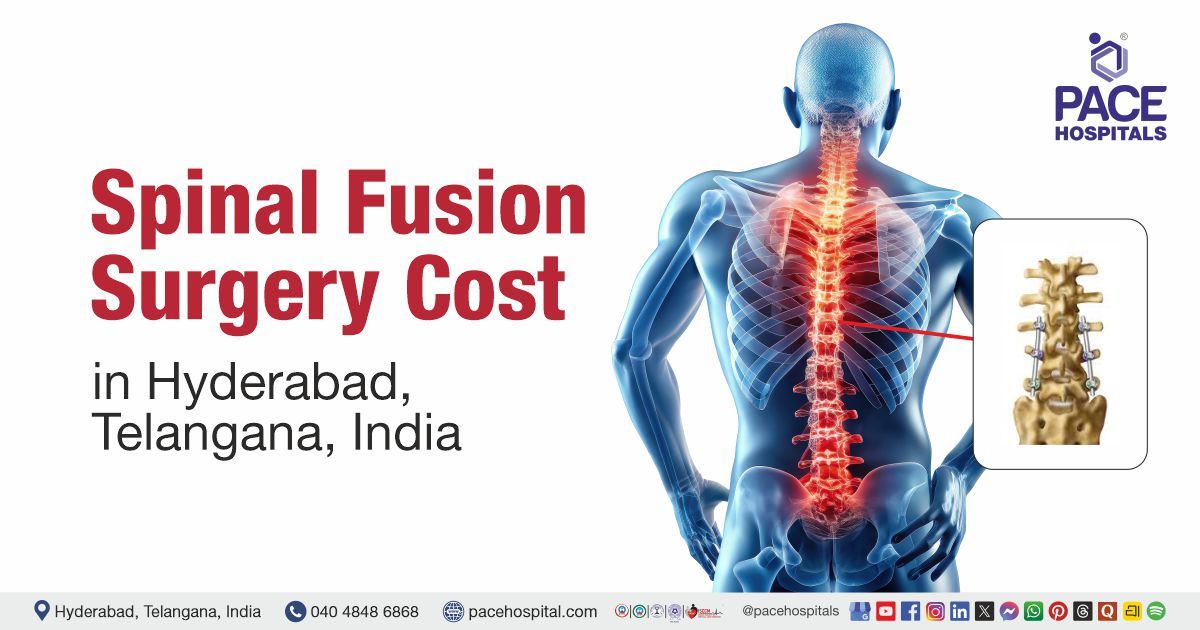
Spinal fusion surgery is a surgical procedure performed to permanently join two or more vertebrae (bones of the spine) so that they heal into a single solid bone. The surgery is primarily used to stabilize the spine, reduce painful movement between vertebrae, correct spinal deformities, and relieve pressure on the spinal cord or nerve roots.
Spinal fusion surgery may be recommended for conditions such as degenerative disc disease, spinal instability, spondylolisthesis, scoliosis, spinal fractures, recurrent disc problems, spinal tumors, or severe spinal stenosis. Depending on the patient's condition, the surgery can be performed using traditional open techniques or
minimally invasive spine surgery (MISS) approaches.
Get a Cost Estimate for Spinal Fusion Surgery
Spinal Fusion Surgery Cost Query
Spinal Fusion Surgery Cost in India
The average cost of spinal fusion surgery in India may ranges from ₹2,30,000 to ₹6,00,000 (approximately US $2,410 – US $6,289). In complex cases or when robotic-assisted multi-level fusion is required, the cost can increase to ₹9,40,000+ (US $9,853). The final cost depends on the procedure, implants, hospital stay, and how complex the spinal condition is:
- The patient’s age, overall health, and underlying spinal condition.
- The number of spinal levels requiring fusion.
- The type of spinal fusion procedure performed (lumbar, cervical, thoracic, or multilevel fusion).
- Types of techniques used (minimally invasive or robotic-assisted techniques).
- The type and number of implants used, such as screws, rods, cages, and bone graft materials.
- The type of hospital (private, government, or trust hospitals).
- Hospital charges, including room category, ICU stay, and surgical facilities.
- Insurance coverage or corporate approvals for cashless treatment.
- Pre-operative investigations and post-operative rehabilitation requirements.
- Any complications that may arise during or after the procedure.
Spinal Fusion Surgery Cost in Hyderabad, Telangana
On average, Spinal Fusion Surgery costs in Hyderabad ranges from ₹2,70,000 to ₹7,50,000+ (approximately US $2,830- US $7,861+). These rates offer a competitive and cost-effective option compared to many other metropolitan cities, with access to advanced spine care, modern surgical technologies, and experienced spine surgeons.
However, the cost of Spinal Fusion Surgery in Hyderabad is influenced by several factors, such as:
- The patient's spinal condition, age, overall health, and medical history.
- The number of spinal levels requiring fusion.
- The surgical approach used (open, minimally invasive, endoscopic-assisted, or robotic-assisted spine surgery).
- The type and quantity of implants, cages, screws, rods, and bone graft materials required.
- The hospital facility chosen and its infrastructure.
- Insurance or corporate approvals for cashless services.
- Extent of pre-operative investigations and post-operative rehabilitation.
- Potential complications during or after the procedure.
Cost Breakdown According to Type of Spinal Fusion Surgery
(Approximate ranges; may vary by hospital, city and individual case)
- Single-Level Lumbar Fusion (with implants) – Total Surgery Cost: ₹2,50,000 – ₹3,80,000 (US $2,623– US $3,988) (approx.)
- Thoracic Spine Fusion – Total Surgery Cost: ₹2,50,000 – ₹5,80,000 (US $2,623– US $6,087) (approx.)
- Cervical Spine Fusion (ACDF) – Total Surgery Cost: ₹2,60,000 – ₹5,30,000 (US $2,728– US $5,562) (approx.)
- Multi-Level Fusion (2–3 levels) – Total Surgery Cost: ₹2,50,000 – ₹6,50,000 (US $3,673– US $6,821) (approx.)
- Minimally Invasive Spinal Fusion (MISS Fusion) – Total Surgery Cost: ₹2,80,000 – ₹5,80,000 (US $2,938– US $6,087) (approx.)
- Robotic-Assisted Spinal Fusion Surgery – Total Surgery Cost: ₹4,00,000 – ₹7,40,000 (US $4,197– US $7,766) (approx.)
- Complex or Revision Surgery – Total Surgery Cost: ₹4,50,000 – ₹9,40,000 + (US $4,722– US $9,865+) (approx.)
Note: These are estimated costs. The exact cost for an individual patient is determined after a thorough evaluation by the spine surgery team, including clinical examination, imaging studies (MRI, CT scan, or X-rays), neurological assessment, overall health evaluation, and surgical planning.
Additional Information: The cost of spinal fusion surgery may vary depending on the number of vertebral levels being fused, the complexity of the spinal disorder, the type of implants/bone graft materials used, the surgical technique employed, duration of hospitalization, ICU requirements, physiotherapy and rehabilitation needs, and the experience and expertise of the spine surgery team. The cost of robotic-assisted spinal fusion may also vary depending on its availability and suitability for the patient's condition. This guarantees that every patient gets a clear cost estimate based on their medical needs as well as a tailored treatment plan.
Breakdown of Spinal Fusion Surgery Costs
The cost of spinal fusion Surgery may vary depending on the hospital, the type of spinal fusion procedure, how many number of spinal levels involved, the implants used, and the patient’s overall health condition. Below is a detailed breakdown of the expenses typically associated with spinal fusion surgery:
Pre-Surgery Costs
- Consultation Fees: Charges for consulting with spine surgeons, neurosurgeons, or orthopaedic spine specialists, which vary depending on the doctor’s expertise and hospital.
- Diagnostic Tests: Diagnostic evaluations may include many tests to check the patient's eligibility, including blood tests, X-ray, MRI of the spine, CT scan, nerve conduction studies, ECG, chest X-ray, and other investigations required to confirm the diagnosis and plan the surgery.
- Pre-Surgical Screening: A comprehensive health assessment is performed to evaluate the heart, lungs, and kidneys, and to assess overall medical fitness before spinal fusion surgery.
Spinal Fusion Surgery Costs
- Hospitalization Charges: Private room charges during admission and recovery, along with ICU charges if intensive monitoring is required after surgery.
- Surgical Procedure: Costs are generally associated with the spinal fusion surgery, including surgeon’s fees, operating room charges, spinal implants, cages, rods, screws, and bone graft materials.
- Anaesthesia and Surgical Team Fees: Charges for anaesthesia services, anaesthesiologists, operating theatre staff, and the multidisciplinary spine surgery team involved in the procedure.
Post-Surgery Care Costs
- ICU Stay Post-Surgery: Charges for intensive care monitoring, depending on the complexity of the surgery and the patient’s recovery status.
- Hospital Stay: General hospitalization expenses during the post-operative recovery period, which may range from a few days to a week or longer for complex procedures.
- Physiotherapy and Rehabilitation: Expenses related to rehabilitation programs, mobility training, post-operative physical therapy, and recovery assistance with the goal of regaining strength and function.
- Follow-Up Visits and Imaging: Follow-up consultations, wound assessments, and imaging studies like CT scans and X-rays monitor spinal fusion progress and implant positioning.
This cost structure ensures transparency and helps patients plan their finances effectively for spinal fusion surgery. At PACE Hospitals in Hyderabad, we offer clear, personalised estimates suited to each patient's spinal condition and treatment needs. We focus on affordability and high-quality spine care.
Who Needs Spinal Fusion Surgery?
Spinal fusion surgery is not required for everyone with back pain or spinal disorders. It is generally recommended when there is significant spinal instability, deformity, nerve compression, or persistent pain that does not improve with medications, physiotherapy, lifestyle modifications, or other non-surgical treatments.
Common Conditions Indicating Need for Spinal Fusion Surgery
- Degenerative Disc Disease: In this, the spinal discs wear down with age or injury, and they may lose their ability to cushion and stabilize the spine. In some patients, this leads to chronic back pain and abnormal spinal movement. Spinal fusion can stabilize the affected segment, reduce pain, and improve daily functioning.
- Spondylolisthesis: This occurs when one vertebra slips forward over another, resulting in spinal instability and nerve compression. Spinal fusion can be helpful in restoring stability, preventing additional slippage, and alleviating nerve compression.
- Spinal Stenosis with Instability: Spinal stenosis refers to narrowing of the spinal canal, which can compress the spinal cord or nerve roots. When decompression surgery alone may lead to instability, spinal fusion is performed to maintain spinal alignment and provide long-term stability.
- Recurrent Herniated Disc: In some patients, repeated disc herniation at the same spinal level may occur despite previous treatment. So after careful investigation, spinal fusion may be recommended for certain patients to stabilize the affected segment and reduce the risk of further recurrence.
- Spinal Fractures and Trauma: Severe spinal fractures caused by accidents, falls, or injuries can make the spine unstable, so in these situations, spinal fusion helps stabilize the damaged vertebrae, protect the spinal cord and nerves.
- Spinal Deformities: In these conditions, there is an abnormal spinal curvature that can cause pain, imbalance, breathing difficulties, and progressive deformity. Spinal fusion surgery is often used to correct spinal alignment, prevent further progression, and improve overall function.
- Spinal Tumors or Infections: Tumors or any severe infections affecting the spine may weaken the vertebrae and compromise spinal stability. Following removal of the diseased tissue, spinal fusion may be necessary to reconstruct and stabilize the spine.
Who May Not Be Suitable for Spinal Fusion Surgery?
Spinal fusion surgery is not appropriate for everyone who has back pain or spinal disorders. In many cases, symptoms can be effectively managed with medications, physiotherapy, activity modification, lifestyle changes, or minimally invasive treatments. Spinal fusion is generally considered only when there is clear evidence of spinal instability, deformity, or persistent symptoms that significantly affect quality of life and do not respond to conservative treatment.
Here are some situations where spinal fusion surgery is usually not recommended:
- Unmanaged Health Conditions or Poor Wound-Healing Risk: Patients with uncontrolled diabetes, severe heart disease, advanced kidney disease, poor nutritional status, or weakened immunity may have a higher risk of infection, delayed healing, implant-related complications, and anaesthesia-related problems.
- Severe Osteoporosis: Osteoporosis weakens the bones and may reduce the ability of screws, rods, and other implants to achieve stable fixation. This can increase the risk of implant loosening, hardware failure, or unsuccessful spinal fusion.
- Severe Obesity: Excess body weight can place additional stress on the spine and surgical implants. It may also increase the risk of anaesthesia complications, wound healing problems, infections, blood clots, and prolonged rehabilitation.
- Psychological and Chronic Pain Disorders: Severe anxiety, depression, chronic pain syndromes, or unrealistic expectations may affect recovery, pain perception, and overall satisfaction post surgery. Psychological evaluation and support may be recommended before considering fusion surgery for the spine.
- No Clear Structural Cause of Pain: Fusion surgery is usually avoided when imaging studies such as MRI, CT scans, or X-rays do not clearly identify a spinal condition that explains the patient's symptoms. Performing fusion without a well-defined cause may not improve outcomes.
- Active Infection: Patients with an active infection elsewhere in the body or near the spine are generally not candidates for spinal fusion until the infection has been completely treated, as surgery may increase the risk of spreading infection.
- Bleeding Disorders or Blood-Thinner Related Risks: Individuals who are dealing with uncontrolled bleeding disorders or those taking anticoagulant medications may face a higher risk of excessive bleeding during or after surgery. Appropriate medical management is required before surgery can be safely performed.
- Inability to Participate in Rehabilitation: Successful recovery after spinal fusion depends on adherence to rehabilitation, physiotherapy, activity restrictions, and follow-up care. Patients who are unable to comply with post-operative instructions may not achieve the desired surgical outcome.
Assessment by a qualified spine surgeon is essential to determine eligibility for spinal fusion surgery. A thorough pre-operative evaluation, including clinical examination, neurological assessment, X-rays, MRI or CT scans, and overall health evaluation, helps to identify spinal instability, deformity, or nerve compression and ensures that the surgery provides maximum benefit with less risk to the patient.
Spinal Fusion Surgery - How is Spinal Fusion Surgery Done?
Spinal fusion surgery is performed under general anaesthesia to stabilise the spine, correct deformities, and reduce pain caused by abnormal movement between vertebrae. The steps include:
- Pre-operative evaluation: Comprehensive assessments and overall health evaluation.
- Surgical planning: Determining the spinal levels to be fused, selecting the appropriate surgical approach, and planning implant placement.
- Fusion procedure: The affected vertebrae are prepared, bone graft material is placed between the vertebrae, and screws, rods, plates, or cages are used to stabilise the spine while fusion occurs.
- Monitoring and verification: Intraoperative imaging and neurological monitoring may be used to ensure accurate implant placement and spinal alignment.
- Recovery: Most patients remain in the hospital for 2–7 days depending on the complexity of the procedure and overall recovery progress.
Types of Spinal Fusion Surgery
Different types of spinal fusion procedures are performed based on the location and nature of the spinal disorder. The type of surgery can influence both treatment outcomes and overall cost:
- Lumbar Spinal Fusion: Performed in the lower back to treat instability, degenerative disc disease, spondylolisthesis, or recurrent disc problems.
- Cervical Spinal Fusion (ACDF): Performed in the neck region to relieve nerve or spinal cord compression caused by disc degeneration, herniation, or cervical instability.
- Thoracic Spinal Fusion: Performed in the mid-back region for spinal deformities, fractures, tumors, or instability.
- Multi-Level Spinal Fusion: Involves fusion of multiple spinal segments and is commonly used for complex spinal instability or deformity correction.
Instrumented Spinal Fusion
These procedures use specialised implants such as screws, rods, plates, cages, and bone graft materials to provide stability while the vertebrae fuse into a single solid bone.
Note: Costs may vary based on the number of spinal levels fused, the type of implants utilised to stabilise, the complexity of the spinal condition, and the surgical technique employed. More complex and multi-level procedures generally cost more than single-level fusion surgeries.
Common Surgical Techniques for Spinal Fusion Surgery
- Open Spinal Fusion Surgery: This is a traditional approach involving a larger incision to provide direct access to the spine.
- Minimally Invasive Spinal Fusion (MISS): This procedure is performed through small incisions using specialised instruments, resulting in less tissue damage and potentially faster recovery.
- Robotic-Assisted Spinal Fusion: This is a modern and advanced robotic guidance system to improve implant placement accuracy and surgical precision.
- Elective vs Emergency Surgery: Elective fusion is planned for chronic spinal conditions, while emergency fusion may be required for severe spinal trauma, instability, fractures, or neurological compromise.
Post Spinal Fusion Surgery Care Tips
Careful attention to recovery is essential to promote proper bone healing, maintain spinal stability, and achieve a good surgical outcome.
- It is advised to attend all scheduled follow-up appointments for clinical evaluation, wound assessment, and monitoring of the fusion process through imaging studies.
- It is suggested to keep the surgical incision clean and dry, and to follow wound-care instructions provided by the spine surgery team.
- It is recommended to avoid bending, twisting, heavy lifting, and strenuous physical activities for the duration advised by the surgeon, usually for several weeks to months.
- It is advised to use a spinal brace, if prescribed, as instructed to support the spine during the healing period.
- It is recommended to gradually increase walking and light physical activity, as this helps improve circulation, maintain muscle strength, and support recovery.
- If pain medications, antibiotics, or other prescribed medicines are given at discharge, it is suggested to take them exactly as directed.
- It is advised to avoid smoking, tobacco products, and nicotine use, as these can interfere with bone fusion and delay healing.
- It is advised to avoid prolonged sitting or remaining in one position for extended periods unless specifically instructed otherwise by the surgeon.
- It is recommended to participate in physiotherapy and rehabilitation programmes as advised to restore mobility, strength, and function safely.
- It is advised to seek immediate medical attention if symptoms like fever, wound redness, drainage, increasing pain, weakness, numbness, loss of bladder or bowel control, or difficulty walking develop.
- It is recommended to adhere to all follow-up visits to monitor fusion progress, implant position, and recovery, and to detect any complications at an early stage.
Key Factors Influencing Spinal Fusion Surgery Cost
The cost of spinal fusion surgery may vary from patient to patient depending on the complexity of the spinal condition, surgical planning, and recovery needs. Important factors include:
- Patient’s age and overall health: Existing conditions such as diabetes, hypertension, heart disease, kidney disease, or obesity may require additional evaluation and care.
- Type of spinal condition: Degenerative disc disease, spondylolisthesis, spinal stenosis, deformity, fracture, tumor, or infection can affect the complexity of surgery.
- Number of spinal levels fused: Single-level fusion usually costs less than multi-level or complex fusion surgery.
- Type of surgery performed: Lumbar, cervical, thoracic, minimally invasive, or robotic-assisted fusion may have different cost ranges.
- Implants and bone graft materials used: Implants utilised may affect the overall cost screws, rods, cages, plates, and graft materials can significantly influence the total cost.
- Hospital infrastructure and room category: Private room, ICU stay, operation theatre charges, and hospital facilities can affect overall expenses.
- Surgeon’s expertise and surgical team: The experience of the spine surgeon, anaesthesiologist, and surgical team may influence the procedure cost.
- Pre-operative investigations: X-rays, MRI, CT scans, blood tests, cardiac fitness, and anaesthesia evaluation add to the total cost.
- Duration of hospital stay: Longer admission or ICU monitoring may increase hospitalisation charges.
- Post-operative care and rehabilitation: This includes physiotherapy, medications, follow-up visits, wound care, and imaging to monitor fusion progress, all of which contribute to the overall cost.
- Complications or emergency care: Complications post-surgery, which may include infection, bleeding, nerve-related issues, implant concerns, or delayed recovery, may increase treatment costs.
- Insurance or cashless approval: The extent of insurance coverage or corporate approvals for cashless treatment can significantly affect out-of-pocket expenses.
Why Choose PACE Hospitals for Spinal Fusion Surgery in Hyderabad, India?
PACE Hospitals, Hyderabad, is a trusted centre for Spinal fusion surgery and advanced spine care.
- We have highly experienced spine surgeons, neurosurgeons, orthopaedic spine specialists, anaesthesiologists, physiotherapists, and specialised nursing teams who follow evidence-based protocols to ensure safe and effective surgical outcomes. Our multidisciplinary approach helps provide comprehensive care for a wide range of spinal disorders, from degenerative spine conditions and spinal instability to complex deformities and spinal trauma.
- Our facilities include state-of-the-art modular operating theatres, advanced imaging systems, intra-operative navigation technology, minimally invasive spine surgical approach, and dedicated intensive care and rehabilitation services.
For patients seeking the Best Hospital for Spinal Fusion Surgery in Hyderabad, Telangana, India, PACE Hospitals offers advanced spine care, experienced spine specialists, modern surgical technology, competitive costs, and transparent treatment planning personalised for each patient's unique needs.
Financial Assistance and Payment Plans at PACE Hospitals
Spine care should be accessible without financial stress. Our team assists patients undergoing Spinal fusion surgery with insurance and cashless support to help make treatment more affordable and convenient.
- Cashless hospitalisation with empanelled insurers and TPAs
- Pre-authorization and documentation guidance
- Reimbursement assistance if cashless facility is unavailable
- Transparent pre-admission cost estimates
- Support for corporate and government health schemes
Spinal Fusion Surgery Success Rate
Spinal fusion surgery is a well-established procedure with reported success rates ranging from 75% to 95%.
Patients may experience: -
- Reduced back or neck pain
- Improved spinal stability
- Relief from nerve-related symptoms
- Better mobility and capacity to complete daily tasks
- Improved quality of life and functional outcomes
Frequently Asked Questions (FAQs) on Spinal Fusion Surgery
What is the recovery time after spinal fusion surgery?
Recovery time may vary from person to person and depends on the type of surgery, the number of spinal levels that were fused, and the patient's overall health. Most patients can resume light daily activities within a few weeks, while complete bone fusion may take several months. Following the surgeon's advice and participating in rehabilitation can help support recovery.
What is the difference between spinal fusion surgery and a laminectomy?
A laminectomy is a surgical procedure that removes part of the vertebra called the lamina to relieve pressure on the spinal cord or nerves. Spinal Fusion Surgery, on the other hand, permanently joins two or more vertebrae to stabilize the spine. In some cases, both procedures may be performed together. The choice usually depends on the patient's condition and the presence of spinal instability.
Is spinal fusion surgery recommended for spinal instability?
Yes, Spinal Fusion Surgery is one of the most common treatments used for spinal instability. It helps prevent excessive movement between vertebrae, which can cause pain, nerve compression, and functional limitations. The procedure can reduce symptoms and improve spinal function by stabilising the affected spinal segments. The procedure is performed for spine stability, but the decision is based on clinical evaluation, imaging findings, and symptom severity.
How long is the hospital stay after spinal fusion surgery?
The length of hospital stay following spinal fusion surgery varies based on the procedure's type and complexity. Most patients stay in the hospital for 2 to 7 days for observation, pain management, and early rehabilitation. Patients undergoing more complex operations may require a lengthier stay.
How much does spinal fusion surgery cost?
Spinal fusion surgery can be expensive, and the exact cost depends on the spine problem, how many levels need fusion, the technique used, and the hospital chosen. In India, spinal fusion typically costs around ₹2,30,000 to ₹6,00,000 (approx. US $ 2,410- US $ 6,289) for most patients, and can go up to about ₹9,40,000 or more (US $9,853+) for complex or robotic assisted multi level cases. In Hyderabad, typical fusion surgeries in major hospitals often fall roughly in the ₹2,70,000 to ₹5,50,000 range (approx. US $2,830- US $ 5,765), with very complex or advanced procedures sometimes reaching ₹7,50,000 or higher (US $ 7,861), depending on the number of levels fused, implants used, hospital type, ICU stay, and rehabilitation needs.
What is spinal fusion surgery?
Spinal fusion surgery is a surgical procedure that joins two or more vertebrae (spinal bones) together so they heal as a single solid bone. It is performed to stabilise the spine and reduce painful movement between vertebrae. The surgery may involve the use of bone grafts and implants such as screws, rods, or cages. It is commonly used to treat various spinal disorders that cause pain or instability.
Why is spinal fusion surgery performed?
Spinal fusion surgery is performed to treat conditions that cause spinal instability, deformity, or nerve compression. Common causes include degenerative disc disease, spondylolisthesis, spinal fractures, scoliosis, and severe spinal stenosis. The procedure is highly helpful for stabilising the spine, reducing pain, and relieving pressure on the nerves. Its goal is to improve mobility and overall quality of life.
Is spinal fusion surgery a major procedure?
Yes, spinal fusion is considered a major procedure because it involves operating on the spine and permanently joining vertebrae. Depending on the condition, implants and bone grafts may be used to achieve stability. However, modern minimally invasive and robotic-assisted techniques can make the surgery less traumatic. Even though this surgery is a major surgery, most patients recover well with proper post-operative care and rehabilitation.
When can patients return to work after spinal fusion Surgery?
The timing for returning to work depends on the type of surgery performed and the nature of the patient's job. Individuals with desk-based work may return within 4 to 8 weeks if recovery progresses well. Those with physically demanding jobs may need several months before resuming full duties. The spine surgeon will determine the safest time based on the patient's healing progress.
What activities should be avoided after spinal fusion surgery?
Patients who have undergone spinal fusion surgery should avoid heavy lifting, bending, twisting, and high-impact activities for several weeks or months. Strenuous exercise, contact sports, and unexpected movements should be avoided until the spine has completely recovered.
What types of implants are used during spinal fusion surgery?
Spinal fusion surgery may involve the use of screws, rods, plates, cages, and other specialised implants to stabilise the spine. These implants serve to keep the vertebrae in normal alignment while they fuse together. Most implants are constructed of strong materials like titanium or medical-grade alloys. The type of implant used is determined by the spinal condition and surgical plan.
How many vertebrae can be fused during one surgery?
The number of vertebrae fused varies according to the patient's spinal condition and the severity of the disease. Some patients may only require fusion of one spinal level, while others may require fusion of several levels. Complex disorders such as scoliosis or severe spinal abnormalities may necessitate the fusion of many vertebrae. The surgeon decides the optimal amount based on imaging results and treatment objectives.
Is spinal fusion surgery suitable for patients with osteoporosis?
Spinal fusion surgery can be performed in selected patients with osteoporosis, but careful evaluation is required before surgery. Weak bones may affect the stability of screws and other implants used during the procedure. In some cases, treatment to improve bone strength may be recommended before surgery. The spine surgeon will assess bone quality and determine the safest treatment approach.
How can patients improve fusion success after spinal fusion surgery?
Patients can improve fusion success by closely following the surgeon's instructions during the recovery period. Avoiding cigarette smoking and using tobacco products, eating a balanced diet high in protein, and attending physiotherapy sessions, can aids bone healing. It's also vital to take prescribed medications as directed and avoid activities that strain the spine. It is also advised to participate in regular follow-up visits, which help to monitor healing.
What diagnostic facilities are available at PACE Hospitals before spinal fusion surgery?
PACE Hospitals offers comprehensive diagnostic facilities to evaluate patients before undergoing surgery. These exams may involve advanced MRI scans, CT scans, digital X-rays, laboratory investigations, heart fitness assessments, and neurological evaluations to determine that the patient is fit for surgery. The diagnostic team works closely with spine specialists to accurately identify the spinal condition and plan the most appropriate treatment.
How does PACE Hospitals ensure patient safety during spinal fusion surgery?
PACE Hospitals follows strict patient safety protocols before, during, and after spinal fusion surgery. Experienced spine surgeons, anaesthesiologists, nursing teams, and rehabilitation specialists work together to provide full care to the patient. Advanced operating rooms, modern imaging techniques, and constant patient monitoring all help improve surgical precision and safety. Dedicated post-operative care and rehabilitation also provided to further support recovery and reduce the risk of complications.
Share on
Request an appointment
Fill in the appointment form or call us instantly to book a confirmed appointment with our super specialist at 04048486868
Appointment request - health articles
Recent Articles