Which Doctor to Consult for Mouth Ulcers?
PACE Hospitals
Written by: Editorial Team
Medically reviewed by:
Dr. Mounika Jetti - General Physician and Diabetologist
Introduction
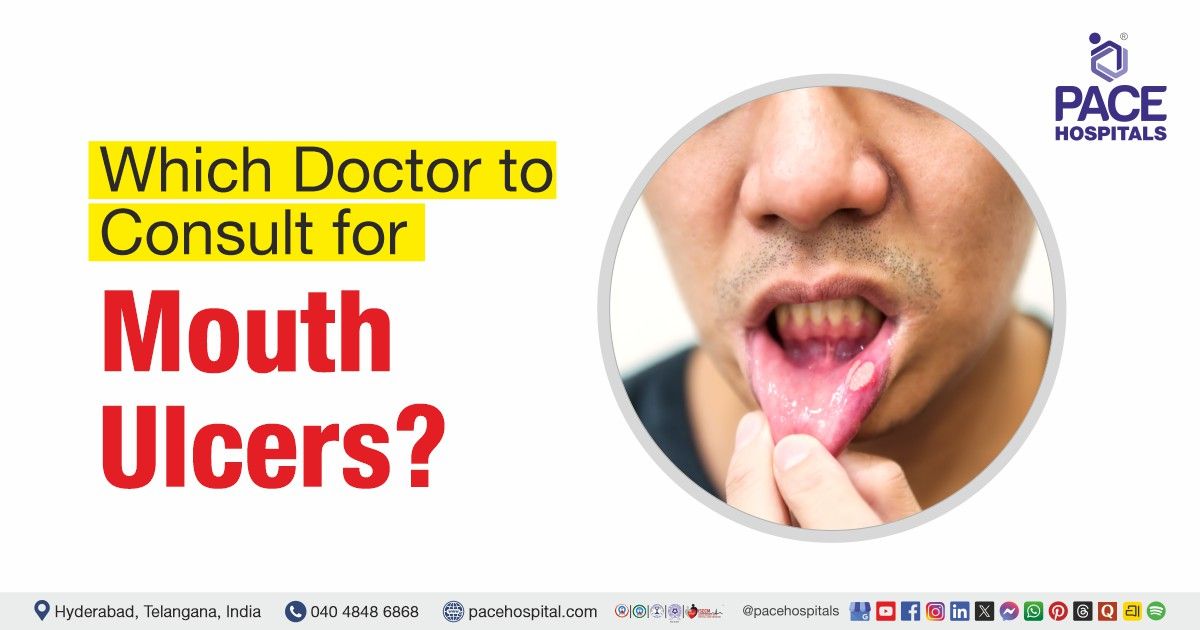
Mouth ulcers are painful sores that may appear on the tongue, cheeks, lips, gums, floor of the mouth, or throat. Most small ulcers heal within 1 to 2 weeks, but recurrent, large, painful, bleeding, or non-healing ulcers require medical evaluation.
Proper consultation depends on whether the ulcer is a mouth sore, a tongue ulcer, or a skin ulcers or rash, and on the presence of other accompanying features, such as fever, smoking, and health status. This article provides guidelines on when to see a
Dentist,
ENT Specialist,
Dermatologist,
Gastroenterologist,
General Physician, or Paediatrician.
Quick Answer: Which Doctor Should You Consult for Mouth Ulcers?
For most mouth ulcers, consult a Dentist or Oral Medicine specialist first, especially if ulcers are painful, recurrent, caused by sharp teeth, braces, dental trauma, or gum problems. Consult an ENT specialist if an ulcer does not heal, is on the tongue or throat, bleeds, causes swallowing difficulty, or occurs with a neck lump. A General Physician, Dermatologist, or Gastroenterologist may be needed for recurrent ulcers linked with vitamin deficiency, autoimmune disease, fever, acidity, or digestive problems.
Why Mouth Ulcers Should Not Be Ignored?
Mouth ulcers can be caused by accidental biting, sharp teeth, braces, dentures, nutritional deficiencies, stress, infections, autoimmune disease, gut disorders, medicines, diabetes, or tobacco-related oral disease.
The use of random gel, antibiotic therapy, or home remedies without a proper diagnosis can lead to further complications. Any mouth ulcer that lasts for more than two weeks, particularly those that are painless, hard, bleeding, and/or accompanied by a lump, requires prompt evaluation.
Doctor Selection Guide: Which Specialist Should You Choose?
| Situation | First Doctor to Consult | Specialist Needed If |
|---|---|---|
| Occasional small ulcer | Dentist/General Physician | If recurrent, large or very painful |
| Ulcer due to sharp tooth, braces or dentures | Dentist/Oral Medicine specialist | Dental trauma needs correction |
| Recurrent mouth ulcers | General Physician/Dermatologist/Dentist | Deficiency, autoimmune or systemic cause suspected |
| Tongue ulcer not healing | ENT specialist/Dentist | Suspicious ulcer must be ruled out |
| Mouth ulcers with skin rash or genital ulcers | Dermatologist | Autoimmune or skin-mucosal disorder suspected |
| Mouth ulcers with acidity, abdominal pain, diarrhea or weight loss | Gastroenterologist | Digestive or absorption disorder suspected |
| Ulcers with fever | General Physician/Internal Medicine | Infection or systemic illness suspected |
| Ulcer with neck lump, bleeding or weight loss | ENT/Oral surgeon | Urgent evaluation needed |
| Mouth ulcers in children | Pediatrician/Dentist | Viral infection, deficiency or injury suspected |
When to See Each Specialist?
Dentist or Oral Medicine Specialist
A Dentist or Oral Medicine specialist is usually the first doctor for mouth ulcers caused by local oral factors such as sharp teeth, braces, dentures, accidental biting, gum disease, poor oral hygiene or dental procedures. They can examine the lesion, correct dental trauma, prescribe topical treatment when appropriate, and refer for biopsy if needed.
ENT Specialist
A referral to an ENT specialist is indicated for any ulcers on the tongue, throat, tonsillar region, or soft palate, particularly if non-healing, bleeding, asymptomatic, accompanied by voice changes, dysphagia, a neck mass, or a history of smoking/drinking.
Dermatologist
A Dermatologist is important when ulcers are recurrent or associated with skin rashes, blisters, genital ulcers, eye symptoms, lichen planus, pemphigus, Behçet-like symptoms or other autoimmune conditions.
Gastroenterologist
A Gastroenterologist may be needed when mouth ulcers occur with abdominal pain, diarrhea, blood in stool, acidity, weight loss, celiac disease, inflammatory bowel disease, malabsorption or recurrent nutritional deficiency.
General Physician or Internal Medicine Doctor
A General Physician can evaluate fever, anemia, vitamin B12/iron/folate deficiency, diabetes, medication-related ulcers, immunity-related causes and systemic illness. They are useful when the cause is unclear or multiple symptoms are present.
Pediatrician
Children with mouth ulcers, poor oral intake, fever,
dehydration, recurrent sores, or suspected viral illness should be evaluated by a Pediatrician or Dentist.
When are Mouth Ulcers a Medical Emergency?
Most mouth ulcers are not emergencies, but some symptoms need urgent care.
- Difficulty breathing or swallowing
- Rapid swelling of the mouth, tongue or face
- Severe dehydration or inability to drink
- High fever with severe ulcers
- Uncontrolled bleeding from an ulcer
- Severe pain preventing eating or drinking
- Ulcers in immunocompromised patients
- Child unable to drink or passing very little urine
Emergency note: If mouth ulcers are associated with breathing difficulty, swallowing difficulty, rapid swelling, severe dehydration, high fever, uncontrolled bleeding or inability to drink, seek urgent medical care.
Common Causes and Which Doctor Treats Each
| Cause / Pattern | Common Clues | Doctor/Specialist |
|---|---|---|
| Dental trauma | Sharp tooth, braces, dentures, cheek bite | Dentist |
| Recurrent aphthous ulcers | Repeated painful ulcers without obvious trauma | Dentist/Dermatologist/Internal Medicine |
| Vitamin deficiency | Fatigue, anemia, poor diet, recurrent ulcers | General Physician |
| Autoimmune/skin disease | Rash, blisters, genital ulcers, eye symptoms | Dermatologist |
| Digestive disease | Diarrhea, abdominal pain, weight loss, acidity | Gastroenterologist |
| Non-healing suspicious ulcer | Hard edges, bleeding, neck lump, tobacco history | ENT/Oral surgeon |
| Childhood viral ulcers | Fever, poor intake, hand-foot-mouth symptoms | Pediatrician |
Non-Healing Mouth Ulcer
An ulcer that does not heal within two weeks, grows, bleeds, has hard or raised edges, or appears with a neck lump should be evaluated promptly by an ENT specialist, Dentist, Oral Medicine specialist or Oral surgeon. This does not mean it is cancer, but suspicious causes must be ruled out.
Mouth Ulcers and Vitamin Deficiency
Iron, vitamin B12, folate and sometimes zinc deficiency may contribute to recurrent ulcers. A General Physician can order blood tests and treat deficiencies when confirmed. Supplements should not be taken blindly for long periods without medical advice.
Mouth Ulcers with Digestive Symptoms
Recurrent mouth ulcers with diarrhea, abdominal pain, weight loss, blood in stool or malabsorption symptoms may need Gastroenterology evaluation for gut-related causes such as inflammatory bowel disease or celiac disease.
Tests Doctors May Recommend for Mouth Ulcers
Tests depend on age, symptom pattern, severity, medical history, physical examination, and the doctor’s assessment. Common investigations may include:
- Oral and dental examination
- CBC
- Ferritin/iron studies
- Vitamin B12 and folate
- Blood sugar/HbA1c
- Inflammatory markers, if indicated
- Celiac or IBD-related tests if symptoms suggest
- Swab/culture if infection suspected
- Biopsy for non-healing or suspicious ulcers
Treatment Options for Mouth Ulcers
The treatment will depend on the underlying causes. The patient could be treated with dental correction, pain relief gel, antiseptic mouthwash, deficiency correction, infection treatment, autoimmune treatment, and digestion-related illness, and advised to avoid irritants such as tobacco, sharp foods, or trauma.
Avoid self-use of steroid gels, antibiotics, or strong mouthwashes without a doctor's advice. Unhealed ulcers should be examined, not treated repeatedly.
Mouth Ulcers Specialists at PACE Hospitals, Hyderabad
PACE Hospitals, Hyderabad provides multi-speciality evaluation for mouth ulcers through Dentistry, ENT, Dermatology, General Medicine, Gastroenterology, Pediatrics and relevant diagnostic support.
Patients with recurrent, non-healing or complex ulcers can benefit from coordinated evaluation rather than repeated trial-and-error treatment.
Why Choose PACE Hospitals for Mouth Ulcers Evaluation and Management?
- Dental and oral evaluation for local causes
- ENT support for tongue/throat and non-healing ulcers
- Dermatology support for autoimmune and skin-mucosal disorders
- Gastroenterology support for gut-related ulcers
- Internal Medicine support for deficiencies, diabetes and systemic causes
- Diagnostic support, including blood tests and biopsy referral, where needed
Key Takeaway
For most mouth ulcers, start with a Dentist or Oral Medicine specialist. See an ENT specialist for non-healing tongue or throat ulcers, a Dermatologist for recurrent ulcers with skin or autoimmune symptoms, and a Gastroenterologist when digestive symptoms are present. Ulcers lasting more than two weeks or associated with bleeding, weight loss or a lump need prompt evaluation.
Frequently Asked Questions (FAQs)
Which doctor should I consult for mouth ulcers?
A dentist or a general physician can evaluate mouth ulcers. The dentist will examine the mouth for any oral problems, whereas the physician will check for any underlying diseases that may be causing this condition. If you have recurring ulcers, the doctor may refer you to a specialist. Seek medical advice if ulcers do not heal or keep returning.
Can a vitamin deficiency cause mouth ulcers?
Yes, nutritional deficiencies of vitamins like B12 and folic acid have also been found to lead to oral ulcers. Iron deficiency can also cause ulcers. If an individual suffers from recurring mouth ulcers, they may be advised to undergo blood tests to detect any nutritional deficiencies.
Are mouth ulcers a sign of cancer?
Not all mouth ulcers are cancerous, and they usually heal on their own in about 1 to 2 weeks. A mouth ulcer that persists beyond 2 or 3 weeks could be a symptom of oral cancer and needs further investigation from a doctor. Some other symptoms of mouth cancer include the presence of lumps, red or white spots, trouble swallowing, and bleeding without any known cause. Seek medical attention if a mouth ulcer is persistent or recurrent.
When is a mouth ulcer serious?
Mouth ulcers are considered severe when they fail to heal after 2-3 weeks, recur, are abnormally large, or cause significant discomfort. It is advisable to visit a doctor if the mouth ulcers are associated with difficulty swallowing, unexplained weight loss, swelling in the mouth or neck, or red or white patches that do not heal.
Which doctor treats mouth ulcers in children?
Pediatric mouth ulcers are generally diagnosed and managed by either a pediatrician or a pediatric dentist. Such health professionals will diagnose possible factors contributing to mouth ulcers, such as injury, infection, or nutrient deficiencies. If the child has chronic or severe ulcers that fail to heal within a couple of weeks, consulting a specialist for further evaluation is advisable.
How are mouth ulcers treated?
Mouth ulcer treatment will depend on the cause and will focus on relieving symptoms and promoting healing. These can range from proper dental hygiene and avoiding foods that irritate the ulcerated area to the use of prescription medications such as corticosteroid formulations. Treatment of any underlying conditions or nutritional deficiencies that cause mouth ulcers helps prevent recurrence.
Which is the best hospital for mouth ulcer treatment in Hyderabad?
PACE Hospitals in Hitech City, Hyderabad, offer comprehensive evaluation and treatment for mouth ulcers, with experienced Dentists, Oral Medicine Specialists, ENT Specialists, Gastroenterologists, and General Physicians working in a coordinated multi-speciality system. Advanced diagnostic facilities, including oral examinations, blood investigations, biopsy services, and imaging studies when required, are available to identify the underlying cause of recurrent or persistent mouth ulcers. To book a consultation, call 040-4848-6868 or visit pacehospital.com.
Should I see a dentist for mouth ulcers?
Yes. The dentist will normally be the first medical professional to examine mouth ulcers and can detect common causes, such as trauma, irritation from teeth and dental appliances, infection, and others. In case the ulcers recur, persist, or fail to heal after 2-3 weeks, the dentist will refer the patient to a specialist.
When should I see an ENT doctor for mouth ulcers?
An ENT specialist should be consulted if a mouth ulcer persists for more than 2–3 weeks, frequently recurs, causes difficulty swallowing, or raises concern for a more serious condition. Persistent non-healing ulcers require further evaluation to rule out underlying diseases.
Which doctor treats recurrent mouth ulcers?
Mouth ulcers that recur can be treated by a dentist, an oral medicine specialist, an ENT specialist, or a general physician, depending on the underlying cause. Further diagnostic testing may be required to determine the nutritional deficiency, immune-related disorders, or other medical conditions causing recurrent ulcers.
Can acidity or stomach problems cause mouth ulcers?
Yes. While acidity cannot be considered a primary cause of mouth ulcers, digestive problems may be linked to them. Mouth ulcers may sometimes accompany digestive tract diseases as an external symptom. Mouth ulcers that recur and fail to heal may need medical assessment for underlying digestive problems. If you have recurring mouth ulcers that fail to heal within a few weeks, consult a doctor.
What causes repeated mouth ulcers?
Some causes of frequent ulcers include stress, trauma to the mouth, hormonal fluctuations, vitamin B12 and folate deficiencies, and iron deficiency. Some health conditions that may lead to the development of ulcers include immune disorders and digestive problems. It may be helpful to consult a doctor if you have frequent or recurring mouth ulcers.
Which doctor treats tongue ulcers?
A dentist mostly treats a tongue ulcer because they can determine the causes of the condition related to oral issues, including trauma or infections. However, when there is a need to rule out underlying conditions and the ulcers persist for over 2-3 weeks or occur frequently, then individuals will need to see either an ENT specialist or an oral medicine specialist. A physician may also investigate nutritional deficiencies or systemic diseases that contribute to recurrent ulcers.
What tests are done for mouth ulcers?
Generally, mouth ulcers can be diagnosed based on medical history and an oral examination. When ulcers persist, recur, or appear abnormal, the physician may order blood tests to screen for nutritional deficiencies and other diseases. In difficult situations, a biopsy (removal of a small tissue sample) is done to investigate the underlying cause of the disease.
Can stress cause mouth ulcers?
Yes. Stress is seen as a potential cause of recurring mouth ulcers. Emotional stress can lead to ulcers in certain individuals, although the reasons for this remain unclear. Managing stress and maintaining good oral health may help reduce the frequency of episodes.
Conclusion
Most cases of mouth ulcers resolve without any special intervention and resolve within 1–2 weeks. Nonetheless, in cases of serious, recurring, unusually large, or lingering ulcers for more than two weeks, consulting a doctor becomes inevitable. Initially, it is advised to visit a Dentist, as they can diagnose common causes of the condition, such as oral infection, oral injury, or irritation from dentures. If required, you should refer to a specialist for your specific problem: an ENT specialist, Gastroenterologist, Dermatologist, or Oral Medicine specialist may be necessary. Also, it is very important to pay close attention to accompanying symptoms such as fever, unexplained weight loss, or difficulty swallowing.
Share on
Request an appointment
Fill in the appointment form or call us instantly to book a confirmed appointment with our super specialist at 04048486868
Appointment request - health articles
Recent Articles