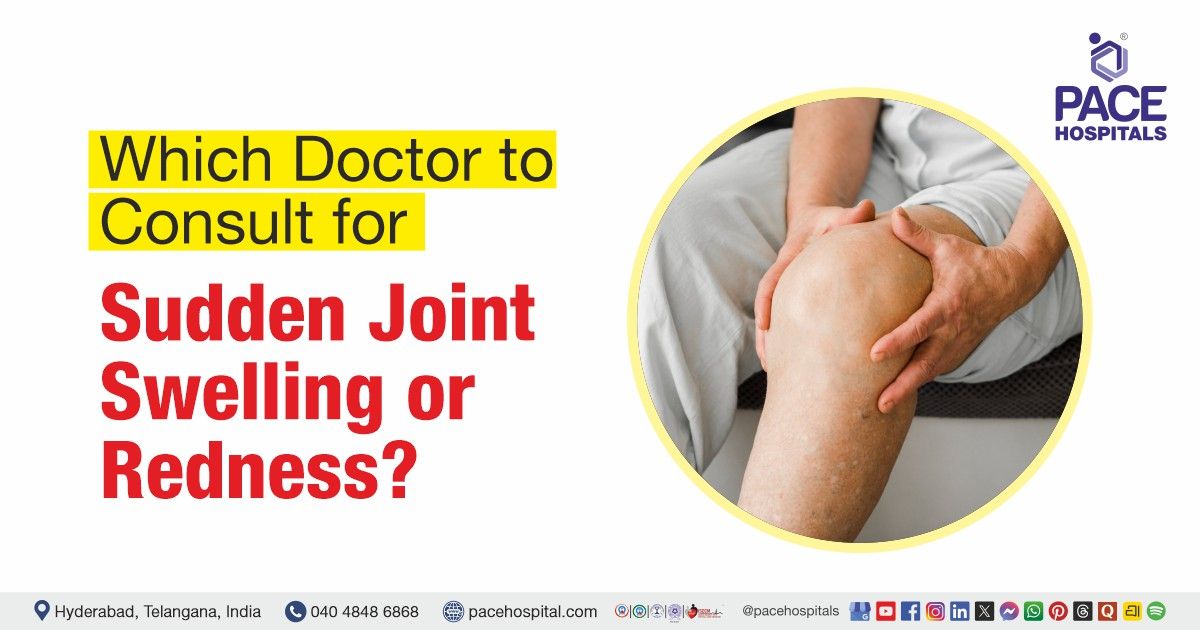
Which Doctor to Consult for Sudden Joint Swelling or Redness?
PACE Hospitals
Written by: Editorial Team
Medically reviewed by: Dr. Shweta Bhardwaj - Consultant Rheumatologist and Clinical Immunologist
Introduction
A joint that suddenly becomes swollen, red, hot, or painful can be caused by inflammation, gout, injury, infection, autoimmune arthritis, or bleeding into a joint. Some causes are manageable with planned care, while others, such as septic arthritis, require immediate emergency treatment.
This refined guide helps patients understand which doctor to consult for sudden joint swelling or redness and when emergency evaluation is the safest decision.
Quick Answer
For sudden joint swelling or redness, the choice of doctor depends on the symptoms and how the problem started.
Consult a Rheumatologist if the joint is swollen, painful, warm, recurrent, or associated with conditions such as gout, arthritis, or other autoimmune diseases. Consult an Orthopedic doctor if the swelling is experienced after injury, fall, sports activity, or if a fracture or ligament tear is suspected. Seek immediate emergency care if the joint is red, hot, severely painful, or accompanied by fever, chills, inability to walk, or recent surgery. In such cases, a joint infection must be ruled out without delay.
What Does Sudden Joint Swelling or Redness Mean?
Sudden joint swelling means fluid, inflammation, bleeding, or infection has developed in or around a joint. Redness and warmth usually indicate active inflammation and sometimes infection. The cause may involve gout, rheumatoid arthritis, septic arthritis, injury, ligament tear, fracture, bursitis, or autoimmune disease.
Sudden Joint Swelling Should Not Be Ignored
A red, hot, painful joint should not be treated casually with pain controlling medications at home. A joint infection can immediately damage cartilage and spread throughout the circulation. Gout, autoimmune arthritis, and injuries also need early diagnostic evaluations to prevent recurrence and joint damage.
Doctor Selection Guide for Sudden joint swelling or redness
Sudden joint swelling or redness can occur due to various reasons, which may include infection, injury, gout, or autoimmune conditions. Choosing the right doctor early helps ensure accurate diagnosis and timely treatment. The following table will provide a guide for doctor selection:
| Situation | First Doctor to Consult | Specialist Needed If |
|---|---|---|
| Red, hot, painful joint with fever | Emergency Physician | Septic arthritis must be ruled out urgently |
| Recurrent swollen joints | Rheumatologist | Inflammatory arthritis, gout, or autoimmune disease suspected |
| Swelling after a fall or sports injury | Orthopaedic doctor | Ligament, fracture, or meniscus injury suspected |
| Sudden swollen big toe/ankle | Rheumatologist/Internal Medicine | Gout or inflammatory arthritis possible |
| Swelling with a wound or pus | Emergency Physician/Surgeon | Joint or soft tissue infection possible |
| Multiple swollen joints with rash | Rheumatologist/Internal Medicine | Autoimmune or systemic disease suspected |
| A swollen joint in a diabetic patient | Emergency Physician/Rheumatologist | Infection risk is higher |
| Mild unclear swelling | General Physician/Internal Medicine | Initial testing and referral may be needed |
Common Causes / Conditions and Which Specialist Treats Each?
Joint swelling and redness can result from several underlying conditions, which can be caused due to injuries, infections, gout, and autoimmune disorders. Identifying the causes and consulting right specialist can be helpful in ensuring accurate diagnosis, effective treatment, and complications prevention.
| Condition / Cause | Common | Doctor/Specialist to Consult | Why? |
|---|---|---|---|
| Gout | Sudden severe pain, redness, warmth | Rheumatologist/Internal Medicine | Crystal arthritis needs confirmation and prevention |
| Septic arthritis | Red hot joint, fever, severe pain | Emergency Physician/Rheumatologist/Orthopaedics | Urgent treatment prevents joint damage |
| Rheumatoid arthritis | Multiple swollen joints, morning stiffness | Rheumatologist | Disease-modifying treatment may be needed |
| Injury/ligament tear | Swelling after a twist or fall | Orthopaedic doctor | Imaging and immobilization may be needed |
| Fracture/dislocation | Pain, deformity, inability to bear weight | Emergency/Orthopaedics | Urgent imaging and treatment needed |
| Viral arthritis | Joint pains after a fever or an infection | Internal Medicine/Rheumatologist | Supportive care and follow-up may be needed |
| Autoimmune disease | Rash, fatigue, multiple joints | Rheumatologist | Systemic disease evaluation needed |
When Sudden Joint Swelling Is a Medical Emergency?
Go to emergency care if the joint is red, warm, severely painful, that is associated with fever or chills, cannot be moved, prevents walking, follows surgery, occurs in a diabetic or immunocompromised patient, has pus or a wound nearby, or is rapidly worsening. Septic arthritis must be ruled out in these situations.
When to See a Rheumatologist?
A Rheumatologist is the main specialist for inflammatory joint diseases such as gout, rheumatoid arthritis, lupus-related arthritis, psoriatic arthritis, ankylosing spondylitis, autoimmune arthritis, recurrent joint swelling, and unexplained red or swollen joints.
When to See an Orthopaedic Doctor?
Consult an Orthopaedic doctor when joint swelling occurs after a fall, sports injury, twisting movement, or direct trauma. This is especially important if a fracture, ligament tear, meniscus injury, or other structural damage is suspected. Any kind of swelling after an injury should be properly evaluated, and imaging tests may be needed to confirm the diagnosis and guide treatment.
When to see a General Physician or Internal Medicine?
A General Physician can be an appropriate doctor to evaluate mild or unclear swelling, fever, blood tests, uric acid, infection risk, diabetes, and referral needs. However, red hot joints with fever or severe pain should go to emergency care first.
When to See an Emergency Physician?
An Emergency Physician should be consulted immediately when there is any suspicion of a serious condition like fracture, septic arthritis, dislocation, severe infection, or major trauma. These cases requires urgenassessment to avoid complications and long-term joint injury. Emergency care generally involves rapid assessment with blood tests, imaging tests, joint fluid analysis, pain control, administration of intravenous antibiotics if infection is present, and timely referral to Orthopaedics or Rheumatology, depending upon the condition of the patient.
Types of Sudden Joint Swelling
Sudden swelling in the joints can affect the knee, ankle, wrist, or fingers and may occur due to injury, inflammation, infection, or underlying medical conditions. The symptoms and pattern of swelling often provide important clues about the possible cause and the level of urgency needed for treatment.
- Sudden Swollen Knee: A suddenly swollen knee can be due to injury, gout, arthritis flare, bleeding, infection, or meniscus or ligament injury. If the knee is hot, red, and painful with fever, emergency evaluation is needed. If swelling follows injury, Orthopaedics is appropriate. Recurrent unexplained swelling may need Rheumatology.
- Sudden Swollen Ankle: A swollen ankle can occur after sprain, fracture, gout, inflammatory arthritis, infection, or fluid retention. Redness, severe pain, fever, inability to bear weight, or diabetes-related wounds require urgent evaluation.
- Sudden Swollen Wrist or Fingers: A red, hot, painful joint is a red flag because infection, gout, or severe inflammatory arthritis may be present. Fever, chills, severe pain, or inability to move the joint should be treated as an emergency.
- Joint Swelling with Fever: Joint swelling with fever can indicate septic arthritis, systemic infection, viral arthritis, autoimmune disease, or severe inflammation. Do not take steroids or antibiotics without evaluation.
- Joint Swelling after Injury: Swelling after injury can mean sprain, ligament tear, meniscus injury, fracture, dislocation, or bleeding into the joint. If there is deformity, inability to walk, or severe pain, emergency or Orthopaedic evaluation is needed.
- Gout Attack and Sudden Joint Swelling: Gout can cause sudden severe pain, redness, warmth, and swelling, commonly in the big toe, ankle, or knee. Uric acid alone does not confirm gout, and red swollen joints should not automatically be assumed to be gout without ruling out infection.
- Rheumatoid Arthritis or Autoimmune Joint Swelling: Persistent swelling, morning stiffness, symmetrical joint pain, many swollen joints, skin rash, mouth ulcers, or tiredness may indicate an autoimmune disorder. Rheumatology evaluations help to prevent long-term joint injury.
Red-Flag Symptoms Checklist
Certain symptoms associated with joint swelling or redness may indicate a serious underlying condition requiring immediate medical attention. The following red-flag signs should not be ignored and require urgent evaluation by a healthcare professional.
- Red, hot, severely painful joint
- Fever, chills, or severe weakness
- Inability to move the joint or walk
- Swelling after surgery or major injury
- Pus, wound, or spreading redness near the joint
- Joint swelling in diabetic or immunocompromised patients
- Multiple swollen joints with rash or fever
Tests Doctors May Recommend
Tests depend on symptoms, age, medical history, examination findings, medicines, red flags, and the doctor’s assessment. Common tests may include:
- Complete blood count (CBC)
- Erythrocyte Sedimentation Rate (ESR) and C-Reactive Protein (CRP)
- Uric acid
- Blood cultures if infection suspected
- Joint fluid aspiration and analysis when needed
- Gram stain/culture of joint fluid if septic arthritis suspected
- X-ray for injury or arthritis
- Ultrasound joint for fluid/inflammation
- MRI for ligament, meniscus, or occult injury
- Rheumatoid factor, anti-CCP, ANA, or HLA-B27 if indicated
Treatment Options
Treatment should be based on the confirmed cause. Patients should avoid self-medication and should not stop prescribed medicines without medical advice. Depending on the condition, treatment may include:
- Emergency drainage and IV antibiotic medication for septic arthritis (when diagnosed)
- Gout treatment and prevention under doctor's supervision
- Anti-inflammatory medications only when prescribed
- Disease-modifying antirheumatic drugs (DMARDs) for autoimmune arthritis when indicated
- Rest, immobilization, and Orthopaedic care for injuries
- Physiotherapy after infection/fracture has been ruled out or treated
- Diabetes and immune risk control in high-risk patients
- Surgery only for selected injury, infection, or joint damage cases
Specialists at PACE Hospitals, Hyderabad
PACE Hospitals, Hyderabad, provides multi-speciality evaluation and coordinated care for this symptom through relevant departments and diagnostic support, including:
- Rheumatology support if available
- Orthopaedics and Sports Medicine
- General Medicine/Internal Medicine
- Emergency and Trauma Care
- Diagnostics, X-ray, ultrasound, MRI, and lab support
- Physiotherapy and rehabilitation
Why Choose PACE Hospitals for Sudden Joint Swelling or Redness?
PACE Hospitals, Hyderabad, offers patient-centric care with coordinated specialist evaluation, emergency support, diagnostic testing, imaging studies, and follow-up planning. The aim is to quickly identify the underlying cause of joint swelling, ensure timely and appropriate treatment, and provide clear guidance on when urgent medical attention is required, with a proper structured follow-up care for better recovery.
Key Takeaway
For sudden joint swelling or redness, consult a Rheumatologist if the joint is swollen, painful, warm, recurrent, or linked with gout, arthritis, or autoimmune disease. Consult an Orthopaedic doctor if swelling follows injury, fall, sports activity, or a suspected ligament/fracture problem. If the joint is red, warm, excessive pain, that is associated with fever, chills, inability to walk, or recent surgery, visit an Emergency Department immediately because joint infection must be ruled out.
Frequently Asked Questions (FAQs)
Which doctor should I consult for sudden joint swelling?
For sudden joint swelling, you should consult an orthopaedic doctor (bone and joint specialist) first, as they can assess injuries and joint problems. If there is suspicion of infection, gout, or an inflammatory disease, the orthopaedic doctor may refer you to a physician or rheumatologist for further evaluation and treatment.
When is joint swelling an emergency?
Joint swelling is an emergency if the joint is red, hot, severely painful, associated with fever, chills, inability to walk, inability to move, recent surgery, wound, pus, diabetes, or immunosuppression. Septic arthritis must be ruled out.
What tests are done for sudden joint swelling?
For sudden joint swelling, doctors usually start with a physical examination and may order blood tests such as a complete blood count (CBC), ESR and CRP (to check inflammation or infection), and sometimes uric acid. Imaging tests, which can include X-ray or ultrasound are used to look for injury, fluid buildup, or joint damage, and MRI may be needed in more complex cases. One of the most important tests is joint aspiration, where a small amount of fluid is taken from the joint and analyzed to check for infection, crystals (like in gout), or other causes of swelling.
Is joint fluid testing needed for swollen joints?
Joint fluid testing is not needed for every swollen joint, but it is very important in some cases. Doctors usually recommend it when there is sudden or unexplained swelling, severe pain, or signs of infection like redness, warmth, or fever. It can be used when conditions like gout, pseudogout, or septic arthritis are suspected, because this test be helpful in identifying infection, crystals, or inflammation.
Can joint swelling be treated without surgery?
Many causes of joint swelling can be treated without surgery using medicines, rest, aspiration, infection treatment, gout control, arthritis care, and physiotherapy. Surgery is needed only in selected injuries, infections, or advanced joint damage.
What should I avoid when a joint is swollen?
When a joint is swollen, avoid heavy activity, putting stress on it, and forcing movement through pain. Don't apply heat in the early stage of swelling, and avoid massaging the joint if it is painful or unstable. Also, don't ignore persistent swelling or rely on painkillers without medical advice, especially if there is redness, fever, or difficulty moving the joint.
Which is the best hospital for sudden joint swelling treatment in Hyderabad?
PACE Hospitals, Hyderabad, offers multi-speciality evaluation for sudden joint swelling through Rheumatology support, Orthopaedics, Emergency and Trauma Care, Internal Medicine, imaging, lab tests, and rehabilitation services.
Which doctor should I consult for a red, swollen joint?
A red, swollen joint needs urgent evaluation. A Rheumatologist evaluates inflammatory causes such as gout and arthritis, but emergency care is safest if there is fever, severe pain, inability to move the joint, or diabetes/immunosuppression.
Should I see a rheumatologist for joint swelling?
Yes, see a Rheumatologist for recurrent joint swelling, multiple swollen joints, morning stiffness, gout-like attacks, autoimmune symptoms, or unexplained inflammation. Rheumatologists specialize in inflammatory and autoimmune joint diseases.
When should I see an orthopaedic doctor for joint swelling?
See an Orthopaedic doctor when swelling follows a fall, twisting injury, sports injury, suspected fracture, ligament tear, meniscus injury, or mechanical joint problem. Severe injury with inability to walk needs emergency evaluation.
Can gout cause sudden joint swelling?
Yes, gout can cause sudden intense joint pain, redness, warmth, and swelling, often in the big toe, ankle, or knee. However, not every red swollen joint is gout, and infection must be excluded when symptoms are severe.
Can infection cause a red swollen joint?
Yes, joint infection or septic arthritis can cause a red, hot, swollen, extremely painful joint with fever or chills. It is a medical emergency because it can damage the joint quickly.
What causes sudden knee swelling?
Sudden knee swelling can happen due to an injury such as a ligament tear, meniscus injury, or a sprain, which causes fluid or blood to collect inside the joint. It could also be caused by gout, a joint infection, or acute inflammation from arthritis. Even small strains and overuse can cause swelling and pain.
What causes sudden ankle swelling?
Sudden ankle swelling is most often caused by an injury such as a sprain, strain, or fracture that leads to tissue damage and fluid buildup. It can also arise as a result of inflammation caused by gout or arthritis flare-ups. Infections in or around the joint, poor circulation, or fluid retention after prolonged standing or walking can all cause swelling.
Can rheumatoid arthritis cause joint swelling?
Yes, rheumatoid arthritis can cause swollen, painful, stiff joints, often in both hands, wrists, and feet. Morning stiffness and repeated swelling should be evaluated by a Rheumatologist.
Conclusion
The right doctor can be chosen based on the symptom pattern, duration, associated warning signals, and medical history. Do not ignore red-flag symptoms, do not self-medicate, and seek emergency care if symptoms are sudden, severe, or overlap with systemic warning signs.
Share on
Request an appointment
Fill in the appointment form or call us instantly to book a confirmed appointment with our super specialist at 04048486868
Appointment request - health articles
Recent Articles