Successful Mandibulectomy with PMMC Flap Reconstruction for Oral Cancer
PACE Hospitals
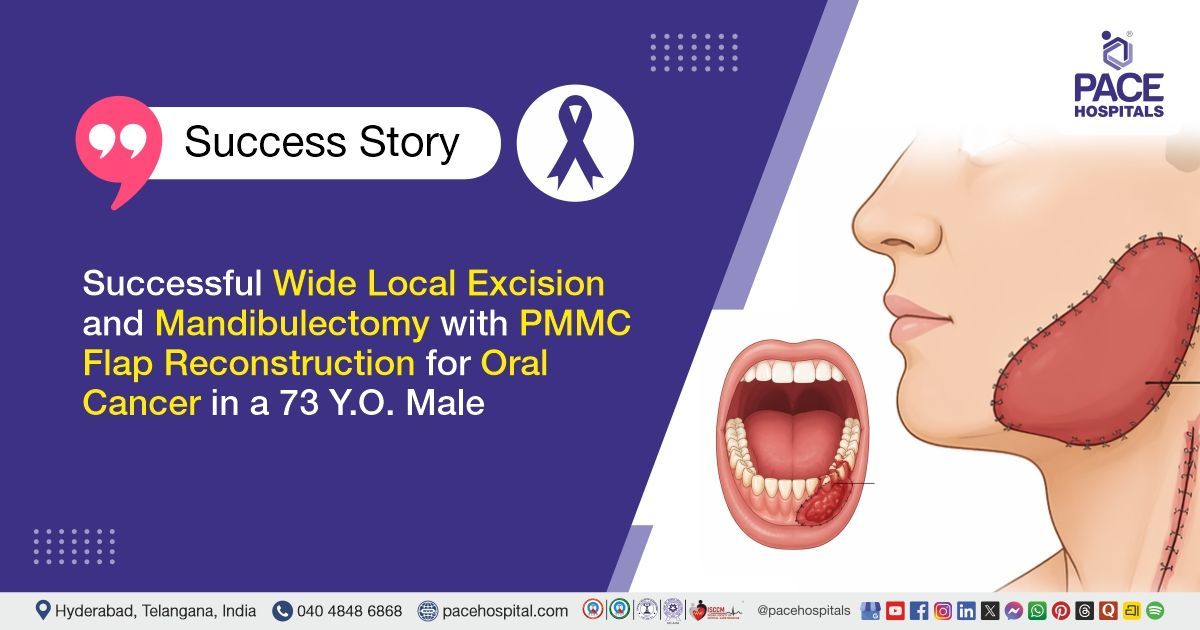
PACE Hospitals’ expert Oncology team successfully performed a Wide Local excision, Left Segmental Mandibulectomy, Selective Neck Dissection (levels I–IV), and PMMC Flap Reconstruction on a 73-year-old male patient with carcinoma of the left lower alveolus. The procedure was undertaken with the aim of complete tumor removal, prevention of regional spread through lymph node clearance, and restoration of jaw function and facial structure through reconstructive surgery.
Chief Complaints
A 73-year-old male patient with a body mass index (BMI) of 18 presented to the Oncology Department at PACE Hospitals, Hitech City, Hyderabad, with complaints of a non-healing ulcer in the left lower jaw region for three months. The lesion had initially been small but gradually increased in size and was associated with pain and a burning sensation.
He had previously been evaluated at a private hospital, where a PET-MR scan revealed an ill-defined lesion in the left lower alveolus involving the premolar and molar region (SUV max 9.9), along with an FDG-avid left level IB lymph node measuring 13 × 9 mm (SUV 4.0), raising suspicion of malignancy. A biopsy was performed, which showed pseudoepitheliomatous hyperplastic squamous epithelium with mild to moderate dysplasia and suspicious foci of invasion.
He subsequently presented to PACE Hospitals for further evaluation and management.
Past Medical History
The patient had a significant past medical history of cerebrovascular events, having suffered strokes in the past and was on regular treatment for secondary prevention. He was also a known case of hypertension on ongoing medical management. Additionally, he had been recently diagnosed with type 2 diabetes mellitus and was on treatment for glycemic control.
On Examination
On examination, the patient was conscious, coherent, and cooperative. Extraoral examination showed no obvious facial deformities and no clinically significant cervical lymphadenopathy. Intraoral examination revealed an ulceroproliferative lesion in the left lower alveolus, extending anteriorly toward the canine region and posteriorly to the retromolar trigone, with lateral extension toward the gingivobuccal sulcus and medially confined to the alveolar ridge without involvement of the floor of the mouth. On palpation, the lesion was tender with surrounding induration. Systemic examination was normal.
Diagnosis
Upon admission to PACE Hospitals, the patient underwent a comprehensive evaluation, including a detailed review of his medical history and physical examination by the Oncology team. The patient presented with a non-healing ulcer in the left lower jaw region associated with pain and progressive increase in size, and clinical examination revealed an ulceroproliferative lesion in the left lower alveolus, raising a high suspicion of malignancy.
A complete diagnostic workup was performed, including imaging, biopsy, and laboratory investigations. Imaging studies demonstrated an ill-defined lesion in the left lower alveolus with extension toward adjacent mandibular and retromolar regions, along with an FDG-avid left level IB lymph node suggestive of possible nodal involvement. Histopathological examination initially showed features of dysplastic squamous epithelium with suspicious invasive changes, which was later confirmed on frozen section as squamous cell carcinoma. Laboratory investigations revealed anemia, low serum albumin levels, and abnormal arterial blood gas values indicating mild respiratory compromise, while renal function and serum electrolytes were within acceptable limits. Glycemic assessment showed elevated HbA1c consistent with diabetes mellitus.
Based on the confirmed findings, the patient was advised to undergo Oral Cancer Treatment in Hyderabad, India, under the expert care of the Oncology Department.
Medical Decision-Making
After a thorough consultation with Dr. B Arvind, Consultant Oral and Maxillofacial OncoSurgeon, and cross-consultation with Dr. Seshi Vardhan Janjirala (Cardiologist), Dr. Pradeep Kiran Panchadi (Pulmonologist), Dr. S Pramod Kumar (Neurologist), and Dr. Tripti Sharma (Endocrinologist), a comprehensive evaluation was conducted to determine the most appropriate treatment for the patient's condition,, diagnosed with carcinoma of the left lower alveolus (Squamous Cell Carcinoma, T2 N1 M0).
Based on patient symptoms and diagnostic findings, it was determined that a wide local excision, left segmental mandibulectomy, selective neck dissection (I-IV), and PMMC flap reconstruction were identified as the appropriate approach for the condition. The decision was based on a detailed clinical assessment, including the patient's biopsy and imaging reports, and aimed at achieving optimal outcomes through timely surgical intervention.
The patient and his family were counselled in detail about the condition, including the risks and potential complications associated with the surgery. They were also informed about the importance of surgical intervention in preventing further disease progression and ensuring the best possible outcomes.
Surgical Procedure
Following the multidisciplinary decision, the patient was scheduled for Wide Local Excision with Left Segmental Mandibulectomy, Selective Neck Dissection (Levels I–IV), and PMMC flap reconstruction Surgery in Hyderabad at PACE Hospitals, under the expert care and supervision of the Oncology team.
The following steps were carried out during the procedure:
- Preoperative Preparation: The patient was assessed by multiple specialists, including a cardiologist, pulmonologist, and neurologist, to ensure their medical stability. A pre-anesthetic checkup was conducted to confirm the patient's fitness for general anesthesia. The surgical site was marked, and the patient was positioned for optimal access to the affected areas.
- Wide Local Excision: A transverse neck incision was made on the left side, combined with a midline lip split incision for better access to the tumor site. A safe surgical margin was established around the primary tumor located in the left lower alveolus. The tumor, along with any affected surrounding tissues, was excised completely.
- Left Segmental Mandibulectomy: The affected portion of the mandible, including part of the lower jaw, was removed to ensure all cancerous tissue was excised. This procedure was necessary to achieve clear margins, particularly since the tumor involved the bone structure.
- Selective Neck Dissection (I-IV): The lymph nodes in levels I through IV of the neck were carefully removed to address potential metastasis. This step was crucial for staging and preventing the spread of cancer to surrounding lymphatic tissues.
- PMMC Flap Reconstruction: A pectoralis major myocutaneous (PMMC) flap was raised for the reconstruction of the surgical defect, particularly in areas where soft tissue had been removed. The flap was inset into the defect to restore both function and appearance, providing coverage for the area that was surgically altered. The procedure concluded with hemostasis to ensure no excessive bleeding occurred, and the wound was closed layer by layer. Drains were placed to prevent fluid accumulation. The patient was then transferred to the ICU for postoperative monitoring and later moved to the ward once stable.
Postoperative Care
Postoperatively, the patient was shifted to the ICU, where he was extubated and closely monitored. Following this, he was transferred to the ward. Due to low oxygen saturation, Dr. Pradeep Kiran Panchadi (Pulmonologist) was consulted, and appropriate advice was followed, which included nebulization and oxygen support. Additionally, Dr. Tripti Sharma (Endocrinologist) was consulted for glycemic control, and her recommendations were implemented. Dr. Seshi Vardhan Janjirala (Cardiologist) was also consulted for elevated blood pressure, and his guidance was followed. Other supportive treatments included administering intravenous fluids, managing pain, and monitoring for any signs of complications.
Discharge Medications
Upon discharge, the patient was prescribed medications to manage various post-operative conditions. The patient was advised to take medications for infection prevention, pain relief, and managing nausea and vomiting. Medication was recommended to reduce stomach acid and aid in recovery. A supplement was prescribed to support nutrition, and another medication was provided to relieve constipation. For sleep management, a medication was prescribed as needed for insomnia. Oral antiseptic mouthwash was recommended for oral hygiene to prevent infection in the sutured area. A topical ointment was suggested for wound care at the sutured site. Additionally, a syrup was prescribed to support recovery and improve hemoglobin levels.
Supportive treatments included nebulization for respiratory support and oxygen therapy to maintain adequate oxygen saturation levels. The patient was advised to continue oxygen support intermittently during the day and overnight for 15 days to enhance respiratory function.
Advice on Discharge
Advice on discharge was provided by the multidisciplinary team. The Endocrinology team advised continuation of oral medication for blood sugar control, along with regular fasting and post-meal blood glucose monitoring twice weekly to ensure proper diabetes management. The Neurology team advised continuation of medication to reduce cholesterol levels and a medicine to prevent blood clots in order to lower the risk of further stroke events.
The Cardiology team advised continuation of medication to control blood pressure and reduce overall heart-related risks. The Pulmonology team advised inhalational therapy to improve breathing and lung function, along with supplemental oxygen support via nasal prongs intermittently during the day and continuously during the night to maintain adequate oxygen levels.
Emergency Care
The patient was informed to contact the emergency ward at PACE Hospitals in case of any concerning symptoms, including fever, abdominal pain, or vomiting.
Review and Follow-up
The patient was advised to schedule a follow-up appointment with the
Oncologist in Hyderabad at PACE Hospitals one week after discharge. Additionally, review after 1 week with the Endocrinology team, along with sugar charting for assessment of glycemic control. Review after 2 weeks with the Cardiology team for evaluation and continuation of cardiac care. Review after 3 weeks with the Neurology team for neurological assessment and continuation of stroke-related management.
Conclusion
This case highlights carcinoma of the left lower alveolus managed with wide local excision, segmental mandibulectomy, selective neck dissection (I–IV), and PMMC flap reconstruction after confirmation of squamous cell carcinoma. Cross consultations from cardiology, pulmonology, endocrinology, and neurology were obtained for optimal perioperative management of comorbid conditions. The patient had a stable postoperative recovery and was discharged in a hemodynamically stable condition with planned multidisciplinary follow-up.
Importance of a Multidisciplinary Approach in Cancer Treatment
A multidisciplinary approach is essential in the effective management of complex cancers, particularly those involving the head and neck region. Cancer treatment often requires the expertise of various specialists, including oncologist / cancer specialist, pulmonologists, cardiologists, endocrinologists, and neurologists, to ensure comprehensive care. Surgical interventions, such as excision and reconstruction, are critical to removing cancerous tissue and restoring function. Postoperative care and recovery require careful monitoring for complications, such as infection, respiratory issues, and managing comorbid conditions like diabetes and hypertension. The combined expertise of these specialists ensures the best possible outcomes by addressing both the cancer and the patient’s overall health, emphasizing the importance of an integrated treatment plan for optimal recovery and long-term well-being.
Frequently Asked Questions (FAQs)
What factors influence the decision to perform surgery for oral cancer?
The decision to perform surgery for oral cancer is based on several factors such as the location, size, and stage of the tumor, as well as the patient's general health. In cases like cancer of the lower jaw, the treatment plan may involve removing the tumor, part of the jawbone, and nearby lymph nodes to ensure all cancerous cells are eliminated.
How do doctors determine if cancer has spread to other parts of the body?
Doctors use imaging tests like PET scans and MRIs, along with biopsy results, to check for signs of cancer spreading. Lymph node involvement is a critical factor; if cancer cells are found in the lymph nodes, additional surgery may be required to remove them and reduce the risk of cancer spreading further.
Why do surgeons remove lymph nodes during oral cancer surgery?
Lymph nodes are removed during surgery to check if cancer has spread to these areas. If cancer is present in the lymph nodes, removing them can help prevent the cancer from spreading to other parts of the body. This step is essential for improving the chances of successful treatment and recovery.
What kind of care is required after surgery for oral cancer?
After oral cancer surgery, the main focus is on managing pain, preventing infections, and ensuring proper healing. The patient’s vital functions, such as breathing, are closely monitored. Blood sugar levels and blood pressure are also managed, especially in patients with pre-existing conditions like diabetes or hypertension.
Why is reconstructive surgery necessary after removing part of the jaw?
Reconstructive surgery is needed to restore both appearance and function after removing parts of the jaw. A flap of tissue is used to cover the surgical site, allowing the patient to regain the ability to speak, chew, and swallow, which is important for daily life after such a major procedure.
How is diabetes managed during cancer treatment?
For patients with diabetes, managing blood sugar levels is crucial during cancer treatment. High or low blood sugar can affect recovery, so doctors carefully monitor and adjust medications to keep levels stable, supporting wound healing and overall recovery after surgery.
Why do some patients need oxygen support after surgery?
Oxygen support is sometimes required after surgery to ensure the body gets enough oxygen for healing. This is particularly important for patients who have a history of breathing issues, like those who have had a stroke or other respiratory problems, and helps prevent complications during recovery.
How is blood pressure monitored during recovery from cancer surgery?
Blood pressure is monitored closely after cancer surgery, especially in patients with a history of hypertension. Keeping blood pressure normal is important for good healing and to avoid problems. Regular medicines and check-ups help keep it under control. This also decreases the risk of other health issues and helps with recovery.
What follow-up care is needed after surgery for oral cancer?
Regular follow-up visits are important to make sure the cancer has not returned and that the surgical site is healing properly. These visits help doctors closely monitor recovery and the function of the reconstructed area. Any new symptoms or problems can be identified and treated early. This ensures better healing and long-term health of the patient.
How is pain controlled after oral cancer surgery?
Pain management after oral cancer surgery is a key part of recovery. Doctors prescribe medications to control pain, helping the patient feel comfortable and allowing for better healing. Pain relief is adjusted based on the patient's needs and progress of recovery.
Share on
Request an appointment
Fill in the appointment form or call us instantly to book a confirmed appointment with our super specialist at 04048486868
Appointment request - health articles
Recent Articles