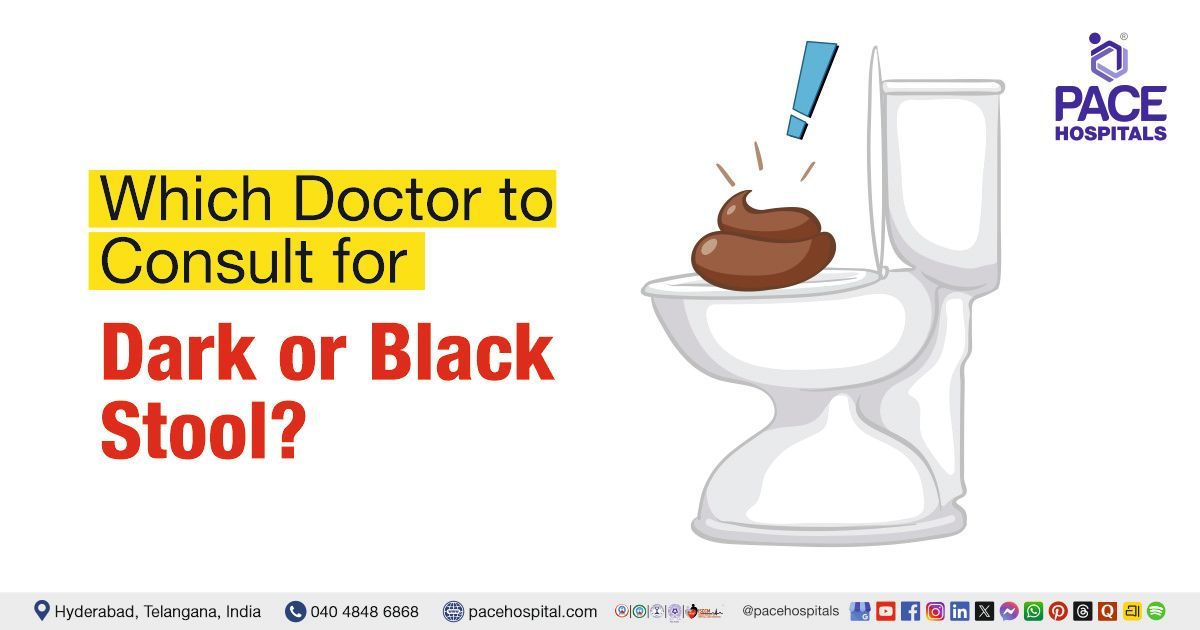
Which Doctor to Consult for Dark or Black Stool?
PACE Hospitals
Written by: Editorial Team
Medically reviewed by: Dr. Padma Priya - Consultant Gastroenterologist and Hepatologist
Introduction
Dark or black stool can create immediate worry because it may be related to something simple, such as iron tablets or certain foods, or it may be a warning sign of bleeding inside the digestive tract. The key is not just the colour, but the texture, smell, recurrence, and associated symptoms such as weakness, dizziness, abdominal pain, vomiting blood, or known liver disease.
This polished patient guide explains which doctor to consult for dark or black stool, when to see a
Gastroenterologist, when to consult a
General Physician first, when a
Proctologist might get involved and when the best option is immediate emergency care.
Quick Answer
For dark or black stool, consult a Gastroenterologist, especially if the stool is black, tarry, foul-smelling, recurrent, or associated with weakness, dizziness, abdominal pain, vomiting blood, anaemia, or blood thinner use. Black stool can sometimes occur after iron tablets or certain foods, but true black tarry stool may suggest digestive bleeding. If you feel faint, very weak, breathless, or vomit blood, visit an Emergency Department immediately.
What Does Dark or Black Stool Mean?
Dark stool means the stool appears darker than usual. Black tarry stool, medically called melena, is typically sticky, foul-smelling, and may indicate digested blood from bleeding higher in the digestive tract. However, iron tablets, bismuth-containing medicines, charcoal, and dark foods can also darken stool. Because it is difficult for patients to reliably identify the cause at home, repeated black stool or black stool with symptoms should be medically evaluated.
Dark or Black Stool Should Not Be Ignored
Dark or black stool should be taken seriously when it is new, recurrent, tarry, associated with weakness, dizziness, fainting, abdominal pain, vomiting, or use of blood thinners or pain killers. It might be ulcers, gastritis, bleeding due to liver disease, bleeding due to blood thinners or bleeding from the stomach or intestine. Evaluation delayed may lead to a higher risk of anaemia, shock, or missed diagnosis.
Doctor Selection Guide
| Situation | First Doctor to Consult | Specialist Needed If |
|---|---|---|
| Black, tarry, foul-smelling stool | Gastroenterologist/Emergency Physician | Digestive bleeding is suspected, or symptoms are present |
| Dark stool after iron tablets, no symptoms | General Physician/Internal Medicine | Colour persists, uncertainty exists, or anaemia symptoms appear |
| Black stool with vomiting blood | Emergency Physician + Gastroenterologist | Possible upper GI bleeding needs urgent care |
| Black stool with dizziness/fainting | Emergency Physician | Significant blood loss or anaemia may be present |
| Black stool with abdominal pain | Gastroenterologist/Emergency Physician | Ulcer, gastritis, ischemia, or bleeding source must be checked |
| Black stool while taking blood thinners | Emergency Physician/Gastroenterologist | Medication-related bleeding risk needs urgent assessment |
| Fresh red bleeding with anal pain | Proctologist/Colorectal Surgeon | Piles, fissures, or anorectal disease may be present |
| Black stool in liver disease | Emergency Physician/Gastroenterologist | Variceal or liver-related bleeding must be ruled out |
Common Causes / Conditions and Which Specialist Treats Each?
| Condition / Cause | Common Features | Doctor/Specialist to Consult | Why? |
|---|---|---|---|
| Iron tablets or dark foods | Dark stool without weakness or tarry smell | General Physician | Medication and diet review may clarify the cause |
| Peptic ulcer or gastritis | Black stool, pain, nausea, anaemia | Gastroenterologist | Endoscopy and treatment may be needed |
| Upper GI bleeding | Tarry stool, vomiting blood, dizziness | Emergency + Gastroenterology | May need urgent stabilization and endoscopy |
| Liver disease-related bleeding | Black stool, vomiting blood, abdominal swelling | Gastroenterologist/Hepatologist | The high-risk bleeding source must be assessed |
| Blood thinner-related bleeding | Black stool while on anticoagulants/antiplatelets | Emergency/Physician/Gastroenterologist | Do not stop medicines without coordinated care |
| Lower digestive bleeding | Blood in stool, bowel changes, and anaemia | Gastroenterologist | A colonoscopy may be needed |
| Piles/fissure | Fresh red blood, anal pain, constipation | Proctologist | Anorectal evaluation and treatment may help |
When Black Stool Is a Medical Emergency?
Visit an Emergency Department immediately if black stool is tarry or foul-smelling and occurs with vomiting blood, dizziness, fainting, severe weakness, breathlessness, chest pain, severe abdominal pain, known liver disease, heavy alcohol use, blood thinner use, or very low haemoglobin symptoms. Do not wait for an outpatient appointment in these situations.
When to See a Gastroenterologist?
A Gastroenterologist is the main specialist for black stool, suspected melena, digestive bleeding, ulcers, gastritis, liver disease-related bleeding, inflammatory bowel disease, colon disease, and cases where upper GI endoscopy or colonoscopy may be needed. Gastroenterology evaluation is especially important when black stool is recurrent, unexplained, associated with anaemia, or occurs with abdominal pain, vomiting blood, or weight loss.
When to See a General Physician or Internal Medicine Doctor?
A General Physician or Internal Medicine specialist will evaluate stable patients with mild dark stools, review diet and medications, haemoglobin test, examine blood pressure and pulse, and decide whether an urgent Gastroenterology referral is required. This is appropriate only in the absence of emergency symptoms.
When to See an Emergency Physician?
An Emergency Physician is consulted when black stool may represent active bleeding. Emergency care may consist of stabilization, monitoring of blood pressure, blood tests, IV fluids, blood transfusion if necessary and urgent Gastroenterology involvement.
When to See a Proctologist or Colorectal Surgeon?
When the bleeding is fresh red, associated with piles, fissures, rectal pain, constipation or anal swelling, a Proctologist or Colorectal Surgeon is usually involved. Black stool suggests a source higher in the digestive system, but mixed symptoms may require input from both Gastroenterology and Proctology.
Black Tarry Stool vs Dark Stool from Food or Iron Tablets
Dark coloured foods (such as berries, foods that contain iron (such as iron tablets), bismuth medicines and activated charcoal) can cause stool to be dark. True melena is generally jet black, tarry, sticky, and foul-smelling. If unsure, especially if the episodes are accompanied by weakness or recur, it is safer to seek medical evaluation rather than assume it is diet-related.
Black Stool with Vomiting Blood
Warning signs of bleeding in the digestive tract are vomiting blood and black stool. It can be seen in ulcer bleeding, severe gastritis, liver disease-related variceal bleeding or medicine-induced bleeding. The combination needs to be assessed urgently.
Black Stool with Weakness or Dizziness
Black stool with weakness, dizziness, fainting, palpitations or breathlessness may be a sign of a significant blood loss or anaemia. If these symptoms are present, even if the stool appears only once, they should be treated as urgent.
Black Stool in Patients Taking Blood Thinners
Blood thinners and antiplatelet medicines can increase the risk of bleeding, but do not by themselves explain the source of bleeding. Do not stop taking these medicines without talking to a doctor. If one notices black stool while taking blood thinners or long-term painkillers, seek urgent medical attention.
Black Stool and Liver Disease
Serious upper GI bleeding may occur in people with cirrhosis or advanced liver disease. If a person with a liver problem has black stool with blood, they are vomiting, their tummy is swollen, they are confused, or they are very weak, they need emergency care.
Dark Stool in Children
Dark stool in children can be caused by diet, medicines, swallowed blood, infection, or digestive bleeding. If the diarrhoea is persistent or the child shows symptoms, he/she should be evaluated by a Pediatrician, and emergency care is indicated if the child shows weakness, pallor, is vomiting blood, has abdominal pain or is dehydrated.
Red-Flag Symptoms Checklist
- Black, tarry, or foul-smelling stool
- Vomiting blood
- Dizziness, fainting, severe weakness, or breathlessness
- Severe abdominal pain or chest pain
- Known liver disease with black stool
- Black stool while taking blood thinners
- Low haemoglobin or anaemia symptoms
Tests Doctors May Recommend
Tests depend on symptoms, age, medical history, examination findings, medicines, red flags, and the doctor’s assessment. Common tests may include:
- CBC/haemoglobin and platelet count
- Stool occult blood test when advised
- Liver function test
- Kidney function test
- Coagulation profile/PT-INR if bleeding risk or blood thinner use exists
- Upper GI endoscopy for suspected upper GI bleeding
- Colonoscopy if lower GI source or colon disease is suspected
- Ultrasound/CT abdomen in selected cases
- Blood grouping/cross-match in emergency bleeding
Treatment Options
Treatment should be based on the confirmed cause. Patients should avoid self-medication and should not stop prescribed medicines without medical advice. Depending on the condition, treatment may include:
- Emergency stabilization with IV fluids and monitoring if bleeding is suspected
- Blood transfusion is medically necessary for severe anaemia or major bleeding
- Endoscopic treatment for selected bleeding ulcers or bleeding vessels
- Medicines such as acid-suppressive therapy, when prescribed
- Treatment of liver disease-related bleeding, where applicable
- Review of blood thinners and painkillers only under a doctor's supervision
- Colonoscopy-directed treatment for selected lower GI causes
- Proctology care for piles or fissure if fresh rectal bleeding is the cause
Specialists at PACE Hospitals, Hyderabad
PACE Hospitals, Hyderabad, provides multi-speciality evaluation and coordinated care for this symptom through relevant departments and diagnostic support, including:
- Gastroenterology and advanced endoscopy support
- General Medicine/Internal Medicine for initial assessment and anaemia evaluation
- Emergency and Critical Care for suspected GI bleeding
- Hepatology support for liver disease-related bleeding
- General Surgery/Proctology support for anorectal causes
- Diagnostic support for blood tests, imaging, endoscopy, and colonoscopy
Why Choose PACE Hospitals?
PACE Hospitals, Hyderabad, offers patient-centric care with coordinated specialist evaluation, emergency support, diagnostic testing, imaging, and follow-up planning. The goal is to identify the underlying cause early, guide safe treatment, and help patients know when urgent care is needed.
Key Takeaway
See a Gastroenterologist for dark/black stool, especially if it is black, tarry, foul-smelling, recurrent or associated with weakness, dizziness, abdominal pain, vomiting blood, anaemia or blood thinner use. Black stool can sometimes be caused by iron tablets or certain foods, but true black tarry stool may indicate bleeding in the digestive tract. If you feel faint, very weak, breathless, or if you vomit blood, seek immediate medical attention at an Emergency Department.
Frequently Asked Questions (FAQs)
Which doctor should I consult for dark or black stool?
Consult the Gastroenterologist for black, tarry, foul-smelling, recurrent, or unexplained stool, especially if there is weakness, dizziness, abdominal pain, vomiting blood, or anaemia. If symptoms are severe or you feel faint, seek emergency care. When you are otherwise stable, a General Physician can review diet, medicines and initial tests only.
Can liver disease cause black stool?
Yes, severe digestive bleeding can occur with advanced liver disease and may be seen as black stools or vomiting blood. If you have cirrhosis, abdominal swelling, jaundice, confusion or known liver disease, seek urgent medical attention if you see black stool.
What tests are done for black stool?
Investigations may include CBC/haemoglobin, stool occult blood, liver and kidney function tests, coagulation profile, upper GI endoscopy, colonoscopy and imaging in selected cases. The choice of tests will depend on the appearance of the stool, symptoms, age, medications and medical history.
When is an endoscopy needed for black stool?
If black stool suggests bleeding from the upper digestive tract, particularly if there is vomiting of blood, anaemia, abdominal pain, liver disease or recurrent tarry stool, an endoscopy may be required. The Gastroenterologist decides urgency based on the patient's symptoms and stability.
What is the difference between black stool and fresh blood in stool?
Black tarry stool usually means digested blood from higher up in the digestive tract, whereas fresh red blood may come from the lower bowel, rectum, piles, or fissure. Both need to be assessed if recurrent, heavy or associated with symptoms.
Which is the best hospital for dark or black stool treatment in Hyderabad?
PACE Hospitals, Hyderabad, provides multi-speciality evaluation for dark or black stool through Gastroenterology, Emergency Care, Internal Medicine, Hepatology, endoscopy, colonoscopy, and diagnostic support. Patients with black tarry stool or weakness should seek urgent care rather than waiting for a routine consultation.
Should I see a gastroenterologist for black stool?
Yes, a Gastroenterologist is the right specialist when black stool may be related to digestive bleeding, ulcers, gastritis, liver disease, or intestinal disease. The doctor may advise blood tests, stool testing, upper GI endoscopy, or colonoscopy, depending on symptoms and risk factors.
Is black stool an emergency?
Black stool is an emergency if it is tarry, foul-smelling, recurrent, or associated with dizziness, fainting, vomiting blood, severe weakness, breathlessness, chest pain, abdominal pain, liver disease or use of blood thinners. It is not an emergency if the stool is dark after taking iron tablets. But red flags should never be ignored.
What does black tarry stool mean?
Black tarry stool may mean digested blood in the stool, often from bleeding higher in the digestive tract. It can be linked with ulcers, gastritis, liver disease-related bleeding, or medicine-related bleeding. Since appearance alone is not enough, a doctor should evaluate black tarry stool promptly.
Can iron tablets cause black stool?
Yes, iron tablets can cause stool to darken, and this can be harmless. But iron-related stool is not usually seen with fainting, blood in the stool, severe weakness, or tarry, foul-smelling stool. If you have symptoms or are not sure, see a doctor rather than assuming it's iron.
Can food cause dark stool?
Some foods can cause the stool to look darker. However, if you have black stool that does not go away, tarry stool, or dark stool with weakness or pain, you need to see a doctor. If the colour change is related to food, it should improve when the food is stopped. If the stool is related to bleeding, it may recur or be accompanied by other symptoms.
Can ulcers cause black stool?
Yes, bleeding ulcers in the stomach or duodenum can cause black tarry stool. This may occur with abdominal pain, acidity, vomiting blood, dizziness, or anaemia. A Gastroenterologist may advise endoscopy to identify and treat the source.
Which doctor treats black stool with vomiting blood?
Black stool with vomiting blood should be treated as an emergency. Visit an Emergency Department immediately, where an Emergency Physician and Gastroenterologist can assess bleeding, stabilize the patient, and arrange urgent endoscopy if needed.
Which doctor treats black stool with weakness?
Black stool with weakness should be evaluated urgently by an Emergency Physician or Gastroenterologist because it may indicate blood loss or anaemia. Do not delay care if weakness is severe, if there is dizziness or fainting, or if the patient is elderly or on blood thinners.
Can black stool be treated?
Yes, black stool can be treated after the cause is identified. Treatment may include preventing bleeding with endoscopy, treating ulcers, managing liver disease, modifying medicines under supervision, or treating lower digestive causes. Treatment depends on the cause and severity.
Conclusion
The right doctor depends on the symptom pattern, duration, associated warning signs and medical history. Don't ignore red-flag symptoms, don't self-medicate and seek emergency care if symptoms are sudden, severe or accompanied by systemic warning signs.
Share on
Request an appointment
Fill in the appointment form or call us instantly to book a confirmed appointment with our super specialist at 04048486868
Appointment request - health articles
Recent Articles