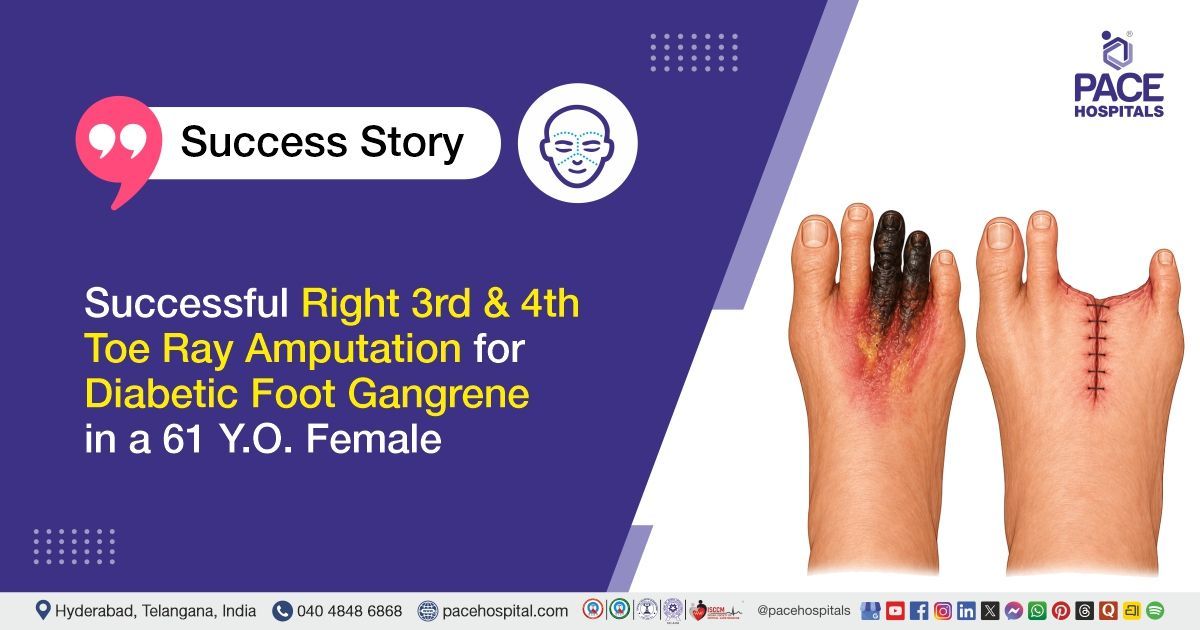
Successful Right 3rd & 4th Toe Ray Amputation for Diabetic Foot Gangrene
PACE Hospitals
PACE Hospitals’ expert Plastic and Reconstructive Surgery team successfully performed Debridement with Ray Amputation of the Right 3rd and 4th Toes on a 61-year-old female patient diagnosed with right diabetic foot cellulitis with gangrene involving the 3rd and 4th toes. The patient also had associated comorbidities, including type 2 diabetes mellitus, hypertension, hypothyroidism, and Hepatitis B surface antigen positivity. The aim of the procedure was to remove gangrenous and infected tissue, control the spread of infection, promote wound healing, preserve the healthy surrounding foot tissue, and improve overall recovery and limb preservation outcomes.
Chief Complaints
A 61-year-old female patient with a body mass index (BMI) of 20 presented to the Plastic and Reconstructive Surgery Department at PACE Hospitals, Hitech City, Hyderabad, with complaints of discoloration of the right 3rd and 4th toes for 5 days, associated with discharge from the wounds. She also complained of weakness and fever during the same period. The patient additionally reported episodes of hypoglycaemia (low blood sugar).
Past Medical History
The patient was a known case of type 2 diabetes mellitus, hypertension, and hypothyroidism, and was on regular medication for the same. She was also known to be Hepatitis B surface antigen (HBsAg) positive. The patient had a significant past history of debridement for a right great toe interphalangeal joint ulcer.
On Examination
On examination, the patient was conscious, coherent, and cooperative. General examination revealed no pallor, icterus, cyanosis, clubbing, lymphadenopathy, or pedal edema. Her vital signs were stable. Local examination revealed discolouration and gangrenous changes involving the right 3rd and 4th toes, associated with cellulitis and wound discharge. Systemic examination showed normal cardiovascular and respiratory findings, while the abdomen was soft and non-tender on examination.
Diagnosis
Following the clinical examination, the Plastic Surgery team conducted a detailed assessment of the patient’s complaints of discolouration of the right 3rd and 4th toes associated with wound discharge, weakness, fever, and hypoglycaemic episodes. A focused evaluation of the right foot revealed cellulitis with gangrenous involvement of the affected toes, suggestive of diabetic foot infection with tissue necrosis.
Considering the patient’s known history of type 2 diabetes mellitus, hypertension, hypothyroidism, previous diabetic foot ulcer requiring debridement, and HBsAg positivity, a comprehensive clinical and laboratory evaluation was performed to assess the extent of infection and associated systemic involvement.
Laboratory investigations revealed elevated random blood sugar levels and HbA1c of 8.5%, indicating poor glycaemic control. Complete blood picture showed microcytic hypochromic anemia with leucocytosis, suggestive of active infection and inflammatory response. Renal parameters and electrolytes were within acceptable limits for surgical management. Viral screening showed HBsAg positivity, while HIV and HCV screening were non-reactive.
Based on the confirmed diagnosis, the patient was advised to undergo
Diabetic Foot Cellulitis Treatment in Hyderabad, India,
with gangrene of the right 3rd and 4th toes, under the care of the Plastic and Reconstructive Surgery team, ensuring removal of infected and gangrenous tissue, control of infection, promotion of wound healing, and preservation of healthy surrounding tissue and limb function.
Medical Decision Making (MDM)
After a detailed consultation by Dr. Kantamneni Lakshmi, Consultant Plastic Surgeon, Dr. Suresh Kumar S, Consultant Surgical Gastroenterologist, and Dr. Tripti Sharma, Consultant Endocrinologist, a comprehensive clinical evaluation was performed focusing on the patient’s presentation of discoloration and gangrenous changes involving the right 3rd and 4th toes, associated with wound discharge, weakness, fever, and hypoglycaemic episodes in the background of type 2 diabetes mellitus, hypertension, hypothyroidism, and previous diabetic foot ulcer requiring debridement.
All relevant laboratory investigations and clinical findings were thoroughly reviewed, including glycaemic status, complete blood picture, viral screening, and systemic assessment. The investigations demonstrated uncontrolled diabetes mellitus with elevated HbA1c levels, leucocytosis suggestive of active infection, and anemia indicating ongoing inflammatory changes. Clinical evaluation confirmed diabetic foot cellulitis with gangrene involving the right 3rd and 4th toes.
Based on the severity of infection, tissue necrosis, and gangrenous involvement, it was determined that Debridement with Ray Amputation of the right 3rd and 4th toes was the most appropriate surgical intervention. This decision was made with the aim of removing gangrenous and infected tissue, controlling the spread of infection, promoting wound healing, and preserving the healthy surrounding foot tissue and overall limb function.
The patient and family members were counselled regarding the diagnosis, planned surgical procedure, expected postoperative recovery, wound care, glycaemic control, possible risks and complications, and the importance of regular follow-up and
diabetic foot care for optimal recovery outcomes.
Surgical Procedure
Following the decision, the patient was scheduled for Debridement with Ray Amputation of the Right 3rd and 4th Toes in Hyderabad at PACE Hospitals, under the care and supervision of the expert Plastic and Reconstructive Surgery team.
The surgical procedure involved the following steps:
- Preoperative Preparation and Anaesthesia: The patient was taken up for surgery under spinal anaesthesia (S.A). The right lower limb was prepared and draped under strict aseptic precautions. A detailed intraoperative assessment of the gangrenous toes, surrounding cellulitis, ulceration, and tissue involvement was performed before proceeding with the surgery.
- Surgical Exposure and Assessment: The operative field involving the right 3rd and 4th toes and adjacent soft tissue was carefully exposed. Intraoperative evaluation revealed gangrenous and infected tissue involving the affected toes, along with ulceration over the medial aspect of the foot. The extent of devitalized tissue and local infection was assessed to achieve adequate surgical clearance while preserving healthy surrounding tissue.
- Ray Amputation and Debridement: Ray amputation of the right 3rd and 4th toes was performed, and all gangrenous, infected, and non-viable tissue was completely excised. Debridement of the ulcers present on the medial aspect of the foot was also carried out to remove unhealthy soft tissue and reduce the infective burden. Care was taken to preserve viable adjacent structures and obtain a healthy wound bed suitable for healing.
- Hemostasis and Wound Irrigation: Following amputation and debridement, the surgical site was thoroughly inspected. Adequate hemostasis was secured, and a wound wash was given to clear residual infected and devitalized tissue. The operative field was reassessed to ensure satisfactory removal of gangrenous tissue and control of local infection.
- Wound Management and Dressing: After completion of the procedure, an aseptic dressing was applied to the surgical site.
Postoperative Care
Following the procedure, the patient received regular aseptic wound dressings with close monitoring of the surgical site for infection control and wound healing progression. Postoperative vacuum-assisted closure (VAC) dressing was also performed as part of wound management. Infection control measures, pain management, glycaemic regulation, and supportive care were continued throughout the hospital stay. Blood sugar levels were closely monitored, and diabetic medications were adjusted appropriately to support infection control and wound healing.
Discharge Medications
At the time of discharge, the patient was prescribed medications for infection control, pain relief, gastric protection, glycaemic management, lipid control, neuropathic symptom relief, hypothyroidism management, antifungal care, and nutritional supplementation. Oral antidiabetic medications were advised for optimal blood sugar control. Additional medications were prescribed to support wound healing, reduce infection risk, and prevent further diabetic complications.
Advice on Discharge
Upon discharge, the patient was advised to elevate the limb and undergo regular sterile wound care to promote healing and prevent further infection. She was instructed to follow a strict diabetic diet, maintain optimal glycaemic control, and continue all prescribed medications regularly. Active knee and ankle exercises were advised to improve circulation and support recovery. The patient was also counselled regarding proper diabetic foot care and the importance of regular monitoring to prevent recurrence or progression of foot complications.
Emergency Care
The patient was advised to contact the emergency ward at PACE Hospitals in case of fever, increasing wound pain, swelling, redness, wound discharge, vomiting, uncontrolled blood sugar levels, or any worsening symptoms suggestive of infection or systemic complications.
Review and Follow-up Notes
The patient was advised to return for follow-up consultation with the Consultant Plastic, Reconstructive & Aesthetic Surgeon in Hyderabad at PACE Hospitals after 1 week in the outpatient department for wound assessment, dressing review, and monitoring of postoperative recovery. Regular follow-up was advised for continued diabetic foot care, glycaemic management, and evaluation of wound healing progress.
Conclusion
This case highlights the successful multidisciplinary management of right diabetic foot cellulitis with gangrene in a patient with multiple comorbidities. Early identification of infection, prompt surgical intervention with debridement and ray amputation, and appropriate antimicrobial therapy played an important role in controlling infection and preventing further tissue loss.
Comprehensive postoperative care, including wound management, glycaemic control, VAC dressing, nutritional support, and rehabilitation, contributed significantly to clinical improvement and recovery. The patient remained stable throughout the postoperative period and was discharged in satisfactory condition with advice for continued wound care, diabetic management, and regular follow-up to support healing and prevent future complications.
Importance of Timely Surgical Management in Diabetic Foot Gangrene
Early recognition and prompt treatment of diabetic foot infections are essential to prevent progression of cellulitis, gangrene, and further tissue loss. Careful clinical evaluation supported by laboratory investigations helps assess the severity of infection, systemic involvement, and glycaemic status, allowing timely surgical planning and appropriate management. In high-risk diabetic patients, delayed treatment may increase the risk of extensive infection, poor wound healing, and limb-threatening complications.
A multidisciplinary approach involving Surgical Gastroenterologists, Plastic surgeon / Plastic surgery doctor, Endocrinologists, and wound care specialists plays a crucial role in achieving better clinical outcomes. In this case, timely debridement with ray amputation of the gangrenous toes, combined with antimicrobial therapy, glycaemic optimization, VAC dressing, and postoperative wound care, helped control infection and support healing. Regular follow-up, diabetic foot care, and strict blood sugar control remain important to reduce recurrence and improve long-term limb preservation outcomes.
Frequently Asked Question (FAQs)
What is diabetic foot gangrene?
Diabetic foot gangrene is a serious condition where foot tissue dies due to severe infection and poor blood supply. It commonly affects people with uncontrolled diabetes. The affected area may become black, swollen, painful, or foul-smelling. Early treatment is important to prevent the infection from spreading.
What causes gangrene in diabetic patients?
Gangrene in diabetic patients usually develops due to poor blood circulation, nerve damage, and untreated foot infections. High blood sugar levels reduce the body’s ability to fight infection and heal wounds. Even a small cut or blister can worsen if not treated properly. Delayed treatment increases the risk of tissue death.
What are the warning signs of diabetic foot infection?
Common warning signs include redness, swelling, pain, warmth, pus discharge, foul smell, skin discolouration, or non-healing wounds on the foot. Some patients may also develop fever or weakness. In severe cases, the skin may turn black due to gangrene.
Why did the patient require ray amputation of the toes?
The patient required a ray amputation because the infection and gangrene had severely damaged the affected toes and surrounding tissues. Removing the infected and dead tissue helped control the spread of infection. It also improved the chances of wound healing and helped preserve the remaining healthy part of the foot.
Can diabetic foot cellulitis spread to other parts of the body?
Yes, if left untreated, diabetic foot cellulitis can spread to deeper tissues, bones, or even the bloodstream. This may lead to severe infection or sepsis, which can become life-threatening. Early treatment with antibiotics and surgery helps prevent these complications.
How does uncontrolled diabetes affect wound healing?
High blood sugar levels reduce blood circulation and weaken the immune system, making it harder for wounds to heal. It also increases the risk of infection. As a result, even small wounds may become serious in diabetic patients. Good blood sugar control supports faster healing and recovery.
What is VAC dressing, and how does it help wound healing?
VAC dressing, also called vacuum-assisted closure therapy, uses controlled suction to help wounds heal faster. It removes excess fluid, reduces infection risk, and improves blood flow to the wound area. VAC dressing also helps healthy tissue grow. It is commonly used in complex diabetic foot wounds.
Can diabetic foot gangrene be treated without amputation?
In the early stages, some diabetic foot infections can be treated with medicines, wound care, and debridement. However, if gangrene develops and tissue becomes dead, amputation may be necessary to stop the spread of infection. The treatment depends on the severity of the condition.
How long does recovery take after toe ray amputation surgery?
Recovery time varies depending on the patient’s overall health, blood sugar control, and wound healing capacity. In many cases, wound healing may take several weeks. Regular dressing changes, medications, and follow-up visits are important during recovery. Proper diabetic care also helps improve healing outcomes.
Is toe amputation a major surgery?
Toe ray amputation is considered a limb-saving procedure performed to control severe infection or gangrene. Although it is smaller compared to major leg amputations, it still requires proper surgical care and postoperative monitoring. Timely surgery helps prevent the spread of infection to the rest of the foot or body.
Share on
Request an appointment
Fill in the appointment form or call us instantly to book a confirmed appointment with our super specialist at 04048486868
Appointment request - health articles
Recent Articles