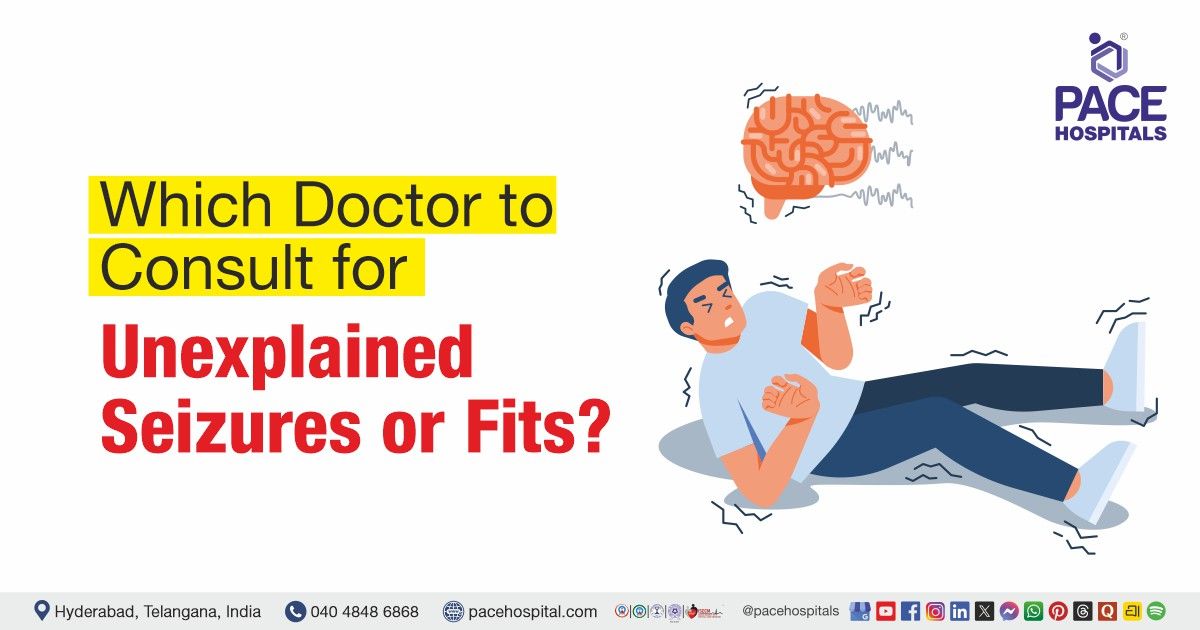
Which Doctor to Consult for Unexplained Seizures or Fits?
PACE Hospitals
Written by: Editorial Team
Medically reviewed by: Dr. S Pramod Kumar - Consultant Neurophysician & Neuromuscular Specialist
Introduction
A sudden episode of jerking movements, staring blankly into space, loss of consciousness, or convulsions can be one of the most frightening experiences for a patient or a family member. Whether it happens for the first time or has occurred repeatedly, an unexplained seizure or fit demands prompt medical attention — not guesswork.
Seizures are a symptom, not a single disease. They can arise from dozens of conditions including epilepsy, low blood sugar, high fever, head injury, brain tumours, electrolyte imbalance, pregnancy complications, or infections. Because the causes are so varied, the type of doctor you need to consult depends on the specific circumstances of the episode.
This article provides a clear, medically accurate, patient-friendly guide to understanding which specialist to consult for seizures or fits, when to seek emergency care immediately, and why PACE Hospitals, Hyderabad offers comprehensive neurology and emergency services for all seizure-related conditions.
Quick Answer: Which Doctor to Consult for Seizures?
For unexplained seizures or fits, consult a Neurologist for diagnosis, EEG, brain imaging, epilepsy evaluation, and treatment planning. If it is a first seizure, a seizure lasting more than 5 minutes, repeated seizures, a seizure with injury, during pregnancy, with fever, after a head injury, or followed by prolonged confusion — visit an Emergency Department immediately. Children with seizures should be assessed by a Pediatrician or Pediatric Neurologist.
What Are Seizures or Fits?
A seizure is a sudden, temporary episode of abnormal electrical activity in the brain. This electrical disturbance can cause a wide range of symptoms depending on which part of the brain is affected. Seizures can look very different from person to person — and not all seizures involve shaking or convulsions.
Common Types of Seizures
- Generalised tonic-clonic seizures (Grand mal): The whole body stiffens and jerks rhythmically. The person may lose consciousness and fall.
- Absence seizures: Brief episodes of staring or "blanking out," lasting a few seconds. Common in children.
- Focal (partial) seizures: Abnormal electrical activity begins in one part of the brain. The person may experience unusual sensations, involuntary movements, or altered awareness.
- Myoclonic seizures: Sudden, brief jerking or twitching of muscles.
- Atonic seizures (Drop attacks): Sudden loss of muscle tone, causing the person to fall abruptly.
- Febrile seizures: Seizures triggered by a high fever, primarily in young children aged 6 months to 6 years.
Not every seizure indicates epilepsy. Seizures may be triggered by temporary conditions such as low blood sugar, high fever, electrolyte imbalance, alcohol withdrawal, or head injury. According to the internationally accepted criteria of the International League Against Epilepsy (ILAE), epilepsy is typically diagnosed only when a person experiences two or more unprovoked seizures occurring at least 24 hours apart.
Why Unexplained Seizures Should Not Be Ignored?
Many people underestimate the seriousness of a seizure — especially if it resolves on its own within a minute or two. However, any unexplained seizure requires medical evaluation because:
- The underlying cause could be a serious, treatable condition such as a brain tumour, meningitis, stroke, or dangerous electrolyte imbalance.
- A first-time seizure carries a significant risk of recurrence, particularly if EEG or brain imaging shows abnormalities.
- Prolonged seizures (lasting more than 5 minutes) can cause brain cell damage due to lack of oxygen. This is known as status epilepticus — a medical emergency requiring immediate treatment.
- Seizures during activities such as driving, swimming, cooking, or operating machinery can be life-threatening.
- In pregnancy, seizures may indicate eclampsia — a condition that endangers both the mother and the baby.
According to the National Institute of Neurological Disorders and Stroke (NINDS), five minutes is sufficient to damage neurons, and seizures lasting this long are unlikely to end on their own, making urgent medical care essential.
Early diagnosis and proper treatment can significantly reduce the frequency and severity of seizures, protect quality of life, and help prevent complications.
Doctor Selection Guide
The right doctor depends on the specific seizure situation. The table below provides a clear reference guide.
| Situation | First Doctor to Consult | Specialist Needed If |
|---|---|---|
| First-ever seizure (adult) | Emergency Physician (ER) | Refer to Neurologist after stabilisation |
| Seizure lasting more than 5 minutes | Emergency Physician (ER) — Call 108 immediately | ICU / Neurology for status epilepticus |
| Repeated seizures with no recovery in between | Emergency Physician (ER) | Neurocritical care / Neurology |
| Known epilepsy, breakthrough seizure | Neurologist | Adjust anti-seizure medication |
| Seizure in a child with fever | Pediatrician / Emergency | Pediatric Neurologist if recurrent or complex |
| Seizure in a child without fever | Emergency Physician + Pediatric Neurologist | Pediatric Neurology for epilepsy evaluation |
| Seizure after head injury | Emergency Physician (ER) | Neurosurgeon + Neurologist |
| Seizure with low blood sugar | Emergency Physician (ER) | Endocrinologist + Neurologist |
| Seizure during pregnancy | Obstetrician + Emergency Physician | Neurologist, Maternal-Fetal Medicine |
| Recurrent unexplained seizures (adult) | Neurologist | Epileptologist if refractory |
| Seizure with stiff neck and fever | Emergency Physician (ER) | Neurologist (rule out meningitis/encephalitis) |
| Seizure with suspected brain tumour | Emergency Physician → Neurologist | Neurosurgeon |
| Seizure after stroke | Emergency Physician → Neurologist | Neurology / Stroke team |
| Seizure due to kidney/liver disease | Internal Medicine specialist | Nephrologist / Hepatologist + Neurologist |
| Seizure due to electrolyte imbalance | Emergency Physician | Internal Medicine / Endocrinology |
When Seizures Need Emergency Care?
Call 108 or go to the nearest Emergency Department immediately if any of the following occur:
Red-Flag Symptoms Checklist
- First-ever seizure in any age group
- Seizure lasting more than 5 minutes without stopping
- Two or more seizures in a row without full recovery between them
- Seizure followed by prolonged confusion or unresponsiveness (more than 30–60 minutes)
- Seizure with difficulty breathing or blue lips/face
- Seizure occurring in water (bath, swimming pool)
- Seizure during pregnancy
- Seizure following a head injury or fall
- Seizure with fever and stiff neck (possible meningitis)
- Seizure in a person with known low blood sugar (hypoglycaemia)
- Seizure with new weakness on one side of the body after the episode
- Seizure with a severe headache before or after the event
- Seizure in an elderly person for the first time
- Seizure associated with chest pain or irregular heartbeat
- Person does not return to their usual state after the seizure ends
If you are unsure whether a situation is an emergency, err on the side of caution and seek emergency care.
When to See an Emergency Physician?
An Emergency Physician is the first doctor you need when a seizure is active, prolonged, associated with injury, or occurring in a vulnerable patient such as a pregnant woman, elderly person, or young child with a first-ever episode.
Emergency doctors are trained to:
- Rapidly assess and stabilise airway, breathing, and circulation
- Administer emergency anti-seizure medications (such as intravenous benzodiazepines) to stop a seizure
- Order urgent brain CT or MRI scans, blood glucose, electrolytes, and other critical investigations
- Identify and immediately treat dangerous underlying causes such as meningitis, head trauma, eclampsia, or severe hypoglycaemia
- Arrange urgent neurology consultation when needed
In cases of status epilepticus — a seizure lasting 5 minutes or more, or multiple seizures without recovery — the Emergency Physician and Neurology team work together in an intensive care or emergency setting, as outlined by the Neurocritical Care Society guidelines.
When to See a Neurologist?
A Neurologist is the primary specialist for evaluation, diagnosis, and long-term management of seizures and epilepsy. After an emergency has been managed, or if the seizure was self-limiting and the person has recovered, a Neurologist should be consulted.
A Neurologist will:
- Take a detailed seizure history from the patient and any witnesses
- Perform a thorough neurological examination
- Order and interpret EEG (electroencephalogram) to detect abnormal brain electrical activity
- Request MRI of the brain to identify structural causes (tumours, cortical dysplasia, hippocampal sclerosis, prior strokes, malformations)
- Diagnose the type of epilepsy or seizure disorder
- Plan long-term anti-seizure medication (ASM) therapy
- Advise on lifestyle precautions, driving restrictions, and seizure safety
- Monitor treatment response and adjust medications over time
- Refer for epilepsy surgery evaluation in medically refractory cases
Individuals with recurrent unprovoked seizures, newly diagnosed epilepsy, medication side effects, or breakthrough seizures despite treatment should remain under regular Neurologist follow-up.
When Children Need a Pediatrician or Pediatric Neurologist?
Seizures in children require a different approach compared to adults. Children experience specific seizure types — such as febrile seizures, infantile spasms, and childhood absence epilepsy — that require age-appropriate evaluation and management.
Pediatrician
A Pediatrician should be consulted when:
- A child has a first episode of febrile seizure (seizure with fever)
- A child has a brief, self-resolving seizure associated with a known illness
- Parents need guidance on first-aid management and fever control
- Routine assessment after a single simple febrile seizure is needed
According to the CDC and the NHS, febrile seizures most commonly affect children between 6 months and 6 years of age and are associated with fevers of 38.9°C (102°F) or higher. Most simple febrile seizures last 2–3 minutes and do not cause lasting harm. However, every first febrile seizure should be evaluated by a doctor.
Pediatric Neurologist
A Pediatric Neurologist is a specialist physician trained in neurological conditions specific to children. This specialist should be involved when:
- A child has recurrent febrile seizures (more than one episode)
- The febrile seizure is complex — lasting more than 15 minutes, occurring more than once in 24 hours, or involving only one side of the body
- The child has non-febrile (unprovoked) seizures
- Epilepsy diagnosis is suspected
- Infantile spasms (West syndrome) or other epilepsy syndromes are present
- The child has developmental regression or neurological abnormalities
- The seizure occurs in a newborn or infant
When Internal Medicine or Endocrinology May Be Involved?
Some seizures are caused not by a primary brain disorder, but by systemic or metabolic conditions affecting the entire body. In these cases, an Internal Medicine physician or subspecialist such as an Endocrinologist, Nephrologist, or Hepatologist may be involved in management alongside a Neurologist.
Causes/Conditions Table
| Condition / Cause | Common Features | Doctor / Specialist to Consult | Why? |
|---|---|---|---|
| Hypoglycaemia (Low blood sugar) | Shakiness, sweating, pallor, confusion before seizure | Emergency Physician → Endocrinologist + Neurologist | Immediate glucose correction needed; underlying diabetes management required |
| Hyponatraemia (Low sodium) | Nausea, headache, confusion, seizures | Emergency Physician → Internal Medicine | Electrolyte correction essential; slow correction to avoid complications |
| Hypocalcaemia (Low calcium) | Muscle cramps, tetany, tingling, seizures | Emergency Physician → Endocrinologist | Calcium replacement and cause identification needed |
| Hypomagnesaemia (Low magnesium) | Muscle weakness, tremors, seizures | Emergency Physician → Internal Medicine | IV magnesium correction needed |
| Uraemia (Kidney failure) | Fatigue, nausea, confusion, seizures | Emergency Physician → Nephrologist + Neurologist | Kidney function management, dialysis may be needed |
| Hepatic encephalopathy (Liver failure) | Jaundice, confusion, asterixis, seizures | Emergency Physician → Hepatologist + Neurologist | Liver function management, ammonia reduction |
| Thyroid disorders | Fatigue, palpitations, tremors, altered consciousness | Endocrinologist + Neurologist | Thyroid hormone level correction |
| CNS infection (Meningitis/Encephalitis) | Fever, severe headache, stiff neck, seizures | Emergency Physician → Neurologist → Infectious Disease | Urgent lumbar puncture, IV antibiotics/antivirals |
| Alcohol withdrawal | Tremors, agitation, hallucinations, seizures | Emergency Physician → Internal Medicine | Benzodiazepines, supportive care |
| Drug toxicity / Overdose | History of medication or substance use, altered sensorium | Emergency Physician → Toxicology | Toxicology screen, antidote if applicable |
When Neurosurgery May Be Needed?
A Neurosurgeon may be involved in the management of seizures when the underlying cause is a structural brain lesion that requires surgical treatment.
Neurosurgery is typically considered for:
- Intracranial haematoma (blood clot in the brain) following a head injury, causing seizures
- Brain tumour — where resection of the tumour may be required, with epilepsy surgery considered if seizures persist
- Arteriovenous malformation (AVM) or cerebral aneurysm causing seizures through pressure or haemorrhage
- Medically refractory epilepsy — when anti-seizure medications fail to control seizures despite adequate trials of two or more appropriate drugs, and a surgical focus (such as hippocampal sclerosis or cortical dysplasia) is identified on MRI
- Cavernous malformation (cavernoma) causing recurrent focal seizures
- Post-traumatic epilepsy following moderate or severe traumatic brain injury
Epilepsy surgery for medically refractory cases involves careful pre-surgical evaluation including video-EEG monitoring, high-resolution MRI, neuropsychological testing, and sometimes PET scan or SPECT imaging. This is a multidisciplinary decision involving Neurology, Neurosurgery, Neuropsychology, and Neuroimaging.
First Seizure in Adults
Experiencing a seizure for the first time as an adult is a significant event that requires careful evaluation — even if the person feels completely normal afterwards.
What happens during a first seizure evaluation?
- A detailed account from the patient and any witnesses is taken (most important diagnostic step)
- Physical and neurological examination is performed
- Blood tests: blood glucose, serum sodium, potassium, calcium, magnesium, kidney function, liver function, complete blood count, blood glucose
- EEG — ideally within 24–48 hours of the event; abnormalities are detected in approximately 70% of cases when performed early
- MRI of the brain — to identify structural abnormalities
- In women of childbearing age, a pregnancy test is recommended
- Lumbar puncture if meningitis or encephalitis is suspected
The strongest risk factors for seizure recurrence after a first unprovoked seizure include a pre-existing brain abnormality, EEG showing epileptiform discharges (particularly focal spikes), and a family history of epilepsy, as reported in research published in the British Medical Journal (BMJ).
Not all patients are started on anti-seizure medication after a first unprovoked seizure. This decision is individualised based on seizure recurrence risk, occupation, lifestyle, and the patient's informed preference — a decision made jointly by the Neurologist and the patient.
Recurrent Seizures and Epilepsy
When a person experiences two or more unprovoked seizures at least 24 hours apart, a diagnosis of epilepsy is generally established. Epilepsy is one of the most common neurological disorders globally.
According to the Epilepsy Foundation, epilepsy affects approximately 50 million people worldwide. In India, the burden is significant — studies indicate a prevalence of approximately 5.59 per 1,000 population, with higher rates seen in rural areas.
Management of recurrent seizures includes:
- Accurate classification of seizure type and epilepsy syndrome
- Selection of the most appropriate anti-seizure medication (ASM)
- Monitoring of medication effectiveness and side effects
- Lifestyle counselling (sleep hygiene, avoiding triggers, driving safety, alcohol avoidance)
- Regular Neurologist follow-up
- Consideration of epilepsy surgery in medically refractory cases
Patients with epilepsy should not adjust or stop their medications without consulting their Neurologist, as abrupt withdrawal can trigger dangerous breakthrough seizures.
Seizure with Fever
Fever can trigger seizures both in children and, less commonly, in adults. The approach differs by age and by the suspected cause.
Febrile Seizures in Children
Febrile seizures are the most common type of seizure seen in children between 6 months and 6 years of age. According to the Centers for Disease Control and Prevention (CDC), up to 5% of young children experience at least one febrile seizure.The peak age is 12–18 months.
Simple febrile seizures:
- Last less than 15 minutes
- Are generalised (involve the whole body)
- Occur once in a 24-hour period
- Do not indicate epilepsy in most children
Complex febrile seizures (require urgent attention):
- Last more than 15 minutes
- Involve only one side of the body
- Occur more than once within 24 hours
Seek emergency care for any febrile seizure lasting more than 5 minutes, any first-ever febrile seizure, difficulty breathing, or prolonged drowsiness after the seizure. Per the NHS, do not put anything in the child's mouth during the seizure.
Seizure with Fever in Adults
In adults, a new-onset seizure with fever may indicate meningitis (infection of the brain's lining) or encephalitis (infection of the brain itself). This is a medical emergency. Symptoms of concern include a stiff neck, severe headache, sensitivity to light, rash, and fever together with a seizure. An Emergency Physician and Neurologist must evaluate this immediately.
Seizure After Head Injury
A seizure following a head injury can occur immediately (within 24 hours — "early seizure") or weeks to months later ("late seizure" or post-traumatic epilepsy). Both require urgent medical evaluation.
- Immediate post-traumatic seizure: Requires Emergency Department care and urgent brain CT scan to identify bleeding (epidural, subdural, or intracerebral haematoma), skull fracture, or brain contusion
- Neurosurgeon should evaluate if surgical intervention is needed
- Neurologist should be involved for anti-seizure medication management and long-term epilepsy monitoring
- People with moderate to severe traumatic brain injury have a higher risk of developing post-traumatic epilepsy
Do not dismiss any seizure that follows a head injury — even a seemingly minor bump — as insignificant. Seek immediate medical care.
Seizure with Low Sugar or Diabetes
Hypoglycaemia (low blood glucose) is one of the most common metabolic causes of seizures. Severe drops in blood sugar deprive brain cells of their primary energy source, triggering abnormal electrical activity.
This situation is particularly relevant in:
- People with Type 1 or Type 2 diabetes on insulin or certain oral medications
- People on strict fasting or inadequate nutrition
- Infants and young children
- Patients with insulin-secreting tumours (insulinoma)
- People with alcohol-related hypoglycaemia
Signs of hypoglycaemia before a seizure:
Shakiness, sweating, palpitations, pallor, dizziness, confusion, hunger, and blurred vision. If these are observed, glucose must be administered immediately (by trained personnel or family) before the person loses consciousness.
Emergency Physician manages hypoglycaemic seizures acutely with intravenous dextrose. Follow-up involves an Endocrinologist for diabetes management review and a Neurologist if seizures recur or if there is concern about underlying epilepsy.
Importantly, it is not safe to give food, sugar, water, or glucose orally to someone who is having an active seizure or is unconscious.
Seizure in Pregnancy
Seizures during pregnancy are a high-risk situation that requires immediate medical attention. There are two main scenarios:
Eclampsia
Eclampsia is a serious pregnancy complication characterised by new-onset seizures in a woman with pre-eclampsia (high blood pressure and proteinuria in pregnancy). It can occur during pregnancy, labour, or in the first few days after delivery. Eclampsia is a medical emergency. Management involves:
- Emergency Physician and Obstetrician working together
- Intravenous magnesium sulphate to prevent and treat seizures
- Blood pressure control
- Urgent delivery planning in consultation with the obstetric team
- Neurologist involvement if seizures are difficult to control or another neurological cause is suspected
Known epilepsy in pregnancy
Women with pre-existing epilepsy who become pregnant require specialised care involving both a Neurologist and an Obstetrician (ideally a Maternal-Fetal Medicine specialist):
- Anti-seizure medications need to be reviewed before conception and during pregnancy, as some are associated with fetal risks
- Folic acid supplementation is essential
- Frequent monitoring of medication levels is required
- Delivery planning should include a seizure emergency protocol
Any seizure during pregnancy — whether the cause is known or unknown — should be treated as an emergency. Call 108 or visit the Emergency Department without delay.
What Not to Do During a Seizure?
Knowing what to avoid during a seizure is as important as knowing what to do. Incorrect actions can cause injury or death.
Do NOT:
- Do not put anything in the person's mouth — fingers, spoons, cloth, tablets, or any object. This is dangerous and can cause choking, broken teeth, jaw injury, or a bite injury to the helper. People do not swallow their tongue during seizures.
- Do not try to hold the person down or restrain their movements — this can cause broken bones or dislocations.
- Do not give water, food, tablets, or any home remedies during an active seizure or to an unconscious person.
- Do not leave the person alone during the seizure.
- Do not apply force to stop convulsions.
What you should do:
- Stay calm and stay with the person
- Note the time when the seizure started
- Gently cushion the head with something soft
- Move away any hard or sharp objects nearby
- After convulsions stop, gently turn the person onto their side (recovery position) to keep the airway clear
- Call 108 if the seizure lasts more than 5 minutes, if another seizure follows, or if it is the person's first seizure
Tests Doctors May Recommend
The following investigations help identify the cause of seizures and guide treatment:
| Test | Purpose |
|---|---|
| EEG (Electroencephalogram) | Records electrical activity of the brain; identifies epileptiform discharges, seizure type and focus |
| MRI Brain | High-resolution imaging to detect tumours, hippocampal sclerosis, cortical dysplasia, strokes, malformations |
| CT Scan Brain | Emergency imaging for bleeding, fractures, swelling; faster than MRI in acute settings |
| Blood Glucose | Identifies or rules out hypoglycaemia as a cause |
| Serum Electrolytes (Na, K, Ca, Mg) | Detects sodium, potassium, calcium, magnesium imbalances |
| Complete Blood Count (CBC) | Checks for anaemia, infection |
| Kidney Function Tests (RFT) | Rules out uraemia as a cause |
| Liver Function Tests (LFT) | Rules out hepatic encephalopathy |
| Thyroid Function Tests (TFT) | Identifies thyroid disorders |
| Blood Culture / CSF Analysis | Lumbar puncture if meningitis or encephalitis is suspected |
| Urine Toxicology Screen | Identifies drug or substance-related seizures |
| Pregnancy Test | Recommended in all women of childbearing age with new seizure |
| Video EEG Monitoring | Prolonged monitoring to capture and classify seizures; differentiates epilepsy from non-epileptic events |
| PET Scan / SPECT | Brain metabolic imaging for pre-surgical epilepsy evaluation |
| Neuropsychological Testing | Assesses cognitive function; part of epilepsy surgery work-up |
| Genetic Testing | For specific childhood epilepsy syndromes with suspected genetic basis |
Treatment Options
Treatment for seizures depends on the underlying cause and the type of epilepsy.
Anti-Seizure Medications (ASMs)
Anti-seizure medications (previously called anti-epileptic drugs) are the first-line treatment for epilepsy and recurrent seizures. Commonly used medications include drugs from classes such as sodium channel blockers, broad-spectrum anti-seizure agents, GABAergic agents, and other newer generation anti-epileptic drug classes. The choice of medication depends on:
- Seizure type and epilepsy syndrome
- Patient age and gender (special considerations in women of childbearing age)
- Comorbidities and drug interactions
- Tolerability and side effects
Emergency Anti-Seizure Treatment
For active seizures or status epilepticus, benzodiazepines are the first-line emergency treatment. These are administered intravenously in the hospital setting. Second-line agents include fosphenytoin, levetiracetam, or sodium valproate. This approach follows NIH and Neurocritical Care Society guidelines.
Treatg the Underlying Cause
When seizures are provoked by a systemic condition, treating that condition is essential:
- Hypoglycaemia: Intravenous glucose correction
- Electrolyte imbalance: Intravenous electrolyte replacement
- Meningitis/Encephalitis: IV antibiotics and/or antivirals
- Eclampsia: Magnesium sulphate and delivery planning
- Tumour: Surgery, radiotherapy, or chemotherapy as appropriate
Epilepsy Surgery
Surgical options for medically refractory epilepsy include:
- Resective surgery — removal of the seizure focus (e.g., temporal lobe resection for hippocampal sclerosis)
- Laser interstitial thermal therapy (LITT) — minimally invasive laser ablation of the seizure focus
- Vagus nerve stimulation (VNS) — an implanted device that sends electrical impulses to the vagus nerve to reduce seizure frequency
- Responsive neurostimulation (RNS) — a brain-implanted device that detects and responds to seizure activity
- Corpus callosotomy — surgical disconnection to prevent seizures from spreading across the brain; used in specific cases
Ketogenic Diet
A ketogenic diet (high-fat, low-carbohydrate) has been shown to reduce seizure frequency in certain childhood epilepsy syndromes that are difficult to manage with medications. It is supervised by a dietitian and a Pediatric Neurologist.
Lifestyle Modifications
- Maintaining a regular sleep schedule
- Avoiding alcohol and recreational drugs
- Taking medications consistently at prescribed times
- Wearing a medical alert bracelet
- Safety precautions around water (no unsupervised swimming or bathing)
- Following driving regulations applicable to persons with epilepsy
Specialists at PACE Hospitals, Hyderabad
PACE Hospitals, Hyderabad provides comprehensive, round-the-clock care for patients with seizures, fits, and epilepsy through a multidisciplinary team of specialists.
| Department | Role in Seizure / Epilepsy Care |
|---|---|
| Emergency Medicine | Immediate stabilisation, airway management, IV anti-seizure medications, emergency brain imaging, blood tests |
| Neurology | EEG, MRI brain evaluation, epilepsy diagnosis, anti-seizure medication planning, long-term follow-up |
| Pediatric Neurology | Seizure evaluation and epilepsy management for infants, children, and adolescents |
| Neurosurgery | Surgical management of brain tumours, haematomas, cavernomas, and medically refractory epilepsy |
| Internal Medicine | Management of metabolic causes (electrolyte imbalance, kidney/liver disease) |
| Endocrinology | Management of diabetes-related hypoglycaemia, thyroid disorders, and other endocrine causes |
| Obstetrics & Gynaecology | Seizure management in pregnancy (eclampsia, epilepsy in pregnancy) |
| Neuroradiology | High-resolution MRI brain, CT brain, and advanced neuroimaging |
| Neurophysiology | EEG, video-EEG monitoring |
| Neuropsychology | Cognitive assessment for epilepsy surgery planning |
The hospital has advanced neuroimaging facilities that help doctors diagnose brain and nervous system conditions. It also has a dedicated Neurology department, a 24-hour Emergency Department, and a critical care unit. These services enable the hospital to provide immediate treatment for serious neurological emergencies, including status epilepticus (a prolonged seizure that requires urgent medical attention).
Why Choose PACE Hospitals?
PACE Hospitals, Hyderabad is a trusted multi-specialty hospital offering expert care for neurological conditions including seizures, epilepsy, and related emergencies.
- 24/7 Emergency Department with rapid response for seizure emergencies, including status epilepticus management
- Experienced Neurology team with expertise in epilepsy diagnosis, EEG interpretation, anti-seizure medication management, and refractory epilepsy evaluation
- Advanced Neuroimaging — high-resolution MRI brain, functional MRI, CT brain available round the clock
- Dedicated EEG and Video-EEG facilities for accurate seizure classification and monitoring
- Pediatric Neurology services for children with febrile seizures, childhood epilepsy syndromes, and infantile spasms
- Multidisciplinary collaboration between Emergency Medicine, Neurology, Neurosurgery, Internal Medicine, Endocrinology, and Obstetrics for comprehensive seizure care
- Patient-centred approach with counselling on seizure first aid, lifestyle, medication adherence, and safety
- Transparent, ethical care — no unnecessary investigations or treatment
Key Takeaway
- Any unexplained seizure deserves medical evaluation — do not dismiss it.
- Call emergency services (108) for a first seizure, a seizure lasting more than 5 minutes, repeated seizures, a seizure with injury, pregnancy, fever and stiff neck, severe headache, blue lips, or prolonged confusion.
- A Neurologist is the main specialist for diagnosis, EEG, brain MRI, epilepsy classification, and long-term treatment planning.
- A Pediatrician or Pediatric Neurologist should evaluate all seizures in children, especially first febrile seizures and non-febrile seizures.
- Internal Medicine, Endocrinology, Nephrology, or Hepatology specialists are needed when the seizure is caused by a metabolic or systemic condition.
- A Neurosurgeon is involved when a structural brain lesion — such as a tumour, haematoma, or AVM — is identified, or when epilepsy surgery is considered.
- Not all seizures mean epilepsy. Epilepsy is diagnosed after two or more unprovoked seizures at least 24 hours apart.
- Do not put anything in a seizing person's mouth. Do not restrain them. Ensure their safety and note the time.
- With correct diagnosis and appropriate treatment, the majority of people with epilepsy can achieve good seizure control and lead productive, fulfilling lives.
Frequently Asked Questions (FAQs)
Which doctor should I consult for seizures or fits?
The right doctor depends on your situation. For any active, first-ever, or prolonged seizure, visit an Emergency Department immediately — an Emergency Physician will stabilise you and run urgent tests. After the emergency is managed, a Neurologist is the main specialist for seizure evaluation, including EEG, brain MRI, epilepsy diagnosis, and anti-seizure medication planning. For children, a Pediatrician or Pediatric Neurologist should be consulted. If the seizure is related to a metabolic cause (low sugar, kidney disease), an Internal Medicine specialist or Endocrinologist may also be involved.
What causes unexplained seizures?
Unexplained seizures can have many causes. Provoked seizures result from a temporary condition such as fever, hypoglycaemia, electrolyte imbalance, alcohol withdrawal, drug toxicity, head injury, meningitis, or eclampsia. Unprovoked seizures may be caused by epilepsy, structural brain lesions (tumour, cortical dysplasia, hippocampal sclerosis, stroke-related changes), genetic factors, or autoimmune brain conditions. In some cases, a cause may not be identified even after thorough investigation — these are called seizures of unknown aetiology. A Neurologist will systematically evaluate the cause through history, EEG, blood tests, and brain MRI.
Can head injury cause seizures?
Yes. A head injury can cause seizures, either immediately after the trauma ("early post-traumatic seizures") or weeks to months later ("late post-traumatic seizures" or post-traumatic epilepsy). The risk increases with the severity of the injury. People who have sustained a penetrating head injury, intracranial bleeding, or brain contusion are at higher risk of developing post-traumatic epilepsy. Any seizure following a head injury — even a minor-seeming one — should be evaluated urgently in an Emergency Department. Brain CT or MRI is typically required. A Neurosurgeon and Neurologist will assess whether surgical intervention or anti-seizure medication is needed.
Can seizures be treated?
Yes, seizures can be treated effectively in most cases. The majority of people with epilepsy — approximately 60–70% — achieve good seizure control with appropriate anti-seizure medications (ASMs) chosen by a Neurologist. For those who do not respond to medications (medically refractory epilepsy), epilepsy surgery, vagus nerve stimulation (VNS), laser ablation (LITT), or a ketogenic diet may be considered. For provoked seizures caused by a specific condition (e.g., hypoglycaemia, electrolyte imbalance, meningitis), treating the underlying cause is the primary goal, and seizures typically resolve with correction of the triggering condition. Self-medication or stopping medications without medical guidance should be strictly avoided.
What should I avoid during a seizure?
There are important safety rules to follow during a seizure. Do not put anything in the person's mouth — including fingers, spoons, or cloth — as this can cause choking, bite injuries, or broken teeth. People do not swallow their tongue during seizures. Do not hold the person down or restrain their movements — this can cause fractures. Do not give water, food, tablets, or home remedies to someone who is seizing or unconscious. Instead: stay calm, note the time, cushion the head, move sharp objects away, and turn the person onto their side after the convulsions stop. Call emergency services (108) if the seizure lasts more than 5 minutes.
Which is the best hospital for seizures or epilepsy treatment in Hyderabad?
PACE Hospitals, Hyderabad is a trusted destination for seizure and epilepsy care in Telangana. The hospital offers a 24-hour Emergency Department for seizure emergencies, an experienced Neurology team for comprehensive epilepsy evaluation and treatment, advanced EEG and Video-EEG facilities, high-resolution MRI brain imaging, and dedicated Pediatric Neurology services. A multidisciplinary team — including Emergency Physicians, Neurologists, Neurosurgeons, Endocrinologists, and Obstetricians — ensures that every aspect of seizure care is covered. For those seeking expert neurological care, PACE Hospitals combines medical expertise with patient-centred, compassionate management.
Should I see a neurologist for seizures?
Yes. A Neurologist is the most appropriate specialist for evaluating unexplained seizures. Neurologists are trained to take a detailed seizure history, perform a neurological examination, interpret EEG findings, review brain imaging (MRI), diagnose the specific type of epilepsy or seizure disorder, and plan appropriate anti-seizure medication therapy. Even after an Emergency Department visit, follow-up with a Neurologist is important to establish a clear diagnosis, assess the risk of seizure recurrence, and begin long-term management. At PACE Hospitals, Hyderabad, our Neurology team specialises in comprehensive epilepsy evaluation and care.
Is a first seizure an emergency?
Yes, a first seizure should always be evaluated by a healthcare professional, as it may be caused by serious but treatable conditions such as brain bleeding, meningitis, a brain tumour, electrolyte imbalance, severe hypoglycaemia (very low blood sugar), or eclampsia during pregnancy. Even if the person appears to recover completely, further medical assessment is important. This usually includes brain imaging, blood tests, and an electroencephalogram (EEG) to help identify the cause of the seizure. According to the National Institute of Neurological Disorders and Stroke (NINDS), about one in three people who experience a first seizure may have another seizure in the future. Early evaluation helps doctors identify risk factors, plan appropriate treatment, and provide guidance to patients and their families.
When should seizures go to the emergency department?
Go to the Emergency Department immediately if the seizure lasts more than 5 minutes; if there are repeated seizures without recovery in between; if it is the person's first seizure; if the seizure occurs during pregnancy; if there is difficulty breathing or blue lips; if the seizure follows a head injury or fall; if there is fever with a stiff neck; if the seizure occurs in water; if there is prolonged confusion or weakness after the seizure; or if the person does not return to their normal state. When in doubt, call emergency services — prompt care saves lives.
What is epilepsy?
Epilepsy is a chronic neurological disorder characterised by a tendency to have two or more unprovoked seizures occurring at least 24 hours apart. It is one of the world's most common neurological conditions, affecting approximately 50 million people globally (Epilepsy Foundation). In India, studies estimate a prevalence of around 5.59 per 1,000 population. Epilepsy can affect people of any age, from infants to the elderly. Not every seizure means epilepsy — a single provoked seizure (due to fever, low sugar, or a head injury) is not classified as epilepsy. Epilepsy is diagnosed and managed by a Neurologist.
Can low sugar cause seizures?
Yes. Severe hypoglycaemia (low blood glucose) is a well-recognised cause of seizures. When blood sugar drops critically low, the brain — which depends almost entirely on glucose for energy — is deprived of fuel, triggering abnormal electrical discharges. This is particularly common in people with diabetes who take insulin or certain oral medications. Warning signs before a hypoglycaemic seizure include shakiness, sweating, pallor, palpitations, dizziness, and confusion. If someone is conscious and able to swallow, glucose can be given. If unconscious or seizing, do not give anything by mouth — call emergency services immediately for intravenous glucose correction.
Can fever cause seizures?
Yes. Fever can cause seizures, particularly in children aged 6 months to 6 years — these are called febrile seizures. The CDC notes that up to 5% of young children will have at least one febrile seizure, most commonly between 12–18 months of age. Simple febrile seizures are generally brief and harmless. In adults, seizures with fever may indicate a more serious condition such as meningitis or encephalitis, which is a medical emergency. Any seizure accompanied by fever, severe headache, and a stiff neck must be evaluated urgently. Do not put anything in the mouth of a seizing child or adult — keep them safe and call for help.
What tests are done for seizures?
Doctors typically recommend several investigations after a seizure, including a detailed clinical history, neurological examination, and blood tests to assess glucose (blood sugar), sodium, potassium, calcium, magnesium, kidney function, liver function, and complete blood count (CBC). A pregnancy test may be performed for women of childbearing age. An electroencephalogram (EEG) records the brain's electrical activity and is important for diagnosing epilepsy, while Magnetic Resonance Imaging (MRI) of the brain helps identify structural causes. A CT brain scan is commonly used in emergency situations. If meningitis or encephalitis is suspected, a lumbar puncture (spinal tap) may be performed. In complex or refractory cases, additional tests such as video-EEG monitoring, Positron Emission Tomography (PET) scans, or genetic testing may be required.
Is EEG needed after a seizure?
Yes. An EEG (Electroencephalogram) is strongly recommended after a seizure, particularly a first unprovoked seizure or suspected epilepsy. EEG records the brain's electrical activity and can identify epileptiform discharges (abnormal electrical patterns) that indicate a risk of recurrence or confirm a specific epilepsy syndrome. Research published in the British Medical Journal notes that EEG performed within 24–48 hours of a seizure detects significant abnormalities in approximately 70% of cases. A normal EEG does not rule out epilepsy, and an abnormal EEG does not confirm it — the result must be interpreted alongside the clinical history and brain imaging by a Neurologist.
Is MRI brain needed for seizures?
Yes. An MRI of the brain is recommended for most patients with a new seizure or suspected epilepsy. MRI provides detailed images of the brain's structure and can identify causes such as hippocampal sclerosis (the most common cause of temporal lobe epilepsy), cortical dysplasia, brain tumours, previous strokes, cavernous malformations, and other abnormalities. High-resolution epilepsy protocol MRI sequences are used for detailed evaluation. A brain CT scan may be performed first in an emergency setting (as it is faster) to rule out bleeding or large structural lesions, but MRI offers superior detail for epilepsy assessment. At PACE Hospitals, advanced MRI facilities are available.
Conclusion
Unexplained seizures or fits are a medical concern that deserves prompt and proper attention. Whether it is a first-ever episode in a child, an adult, or an elderly person — or a recurring seizure in someone with known epilepsy — the right specialist makes a critical difference in the outcome.
Several medical specialists may be involved in the care of a person with seizures or epilepsy. A Neurologist is the main specialist responsible for diagnosing seizures and managing epilepsy over the long term. An Emergency Physician provides immediate treatment for urgent situations, such as prolonged, active, or complicated seizures. In children, care is usually provided by a Pediatric Neurologist or Pediatrician. Depending on the cause of the seizures, other specialists such as Internal Medicine physicians, Endocrinologists, Nephrologists, Hepatologists, and Obstetricians may also be involved, especially when systemic or metabolic disorders are contributing factors. A Neurosurgeon may become part of the treatment team if a structural brain lesion is present or if epilepsy remains uncontrolled despite medical treatment and surgery is being considered.
At PACE Hospitals, Hyderabad, you have access to all these specialists under one roof — supported by advanced diagnostic technology, a round-the-clock emergency service, and a patient-first approach to neurological care.
If you or someone you know has experienced a seizure — however brief — do not wait. Seek evaluation promptly.
Share on
Request an appointment
Fill in the appointment form or call us instantly to book a confirmed appointment with our super specialist at 04048486868
Appointment request - health articles
Recent Articles