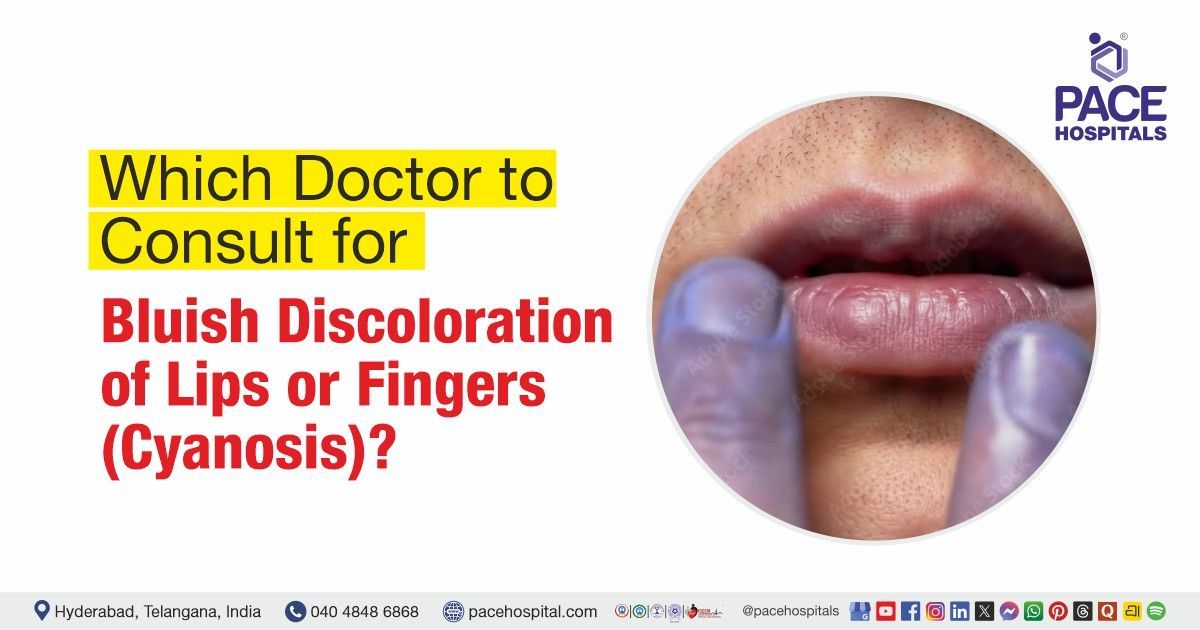
Which Doctor to Consult for Bluish Discoloration of Lips or Fingers (Cyanosis)?
PACE Hospitals
Written by: Editorial Team
Medically reviewed by: Dr. Pradeep Kiran Panchadi - Consultant Pulmonologist, Specialist in Bronchoscopy and EBUS
Introduction
When the lips, tongue, fingertips, or skin take on a bluish or purplish tinge, it is a sign that the body is trying to communicate something important. This discoloration — known medically as cyanosis — can range from a minor response to cold temperatures all the way to a life-threatening emergency involving the heart or lungs. Unlike a rash or mild skin irritation that can wait, cyanosis should never be dismissed or self-managed at home.
Many patients and families in Hyderabad are unsure where to begin: Which doctor do I call? Do I go to an Emergency Department? Is this a heart problem or a lung problem? The answers depend on the type of cyanosis, how quickly it developed, and the accompanying symptoms.
This guide from PACE Hospitals, Hyderabad, explains the different types of cyanosis, the right specialist for each situation, clear red-flag warnings that require immediate emergency care, and the tests and treatments available. Whether you are dealing with blue lips in an adult, blue fingers in the cold, or a child who appears to have a bluish tinge, this article will help you make the right decision quickly.
Quick Answer
Bluish discoloration of the lips, tongue, or fingers can indicate low oxygen and may be a medical emergency. Visit an Emergency Department immediately if it is sudden or associated with breathlessness, chest pain, confusion, fainting, severe weakness, or low oxygen. A Pulmonologist treats lung-related causes such as asthma, COPD, pneumonia, or pulmonary embolism, while a Cardiologist evaluates heart-related causes, including heart failure and congenital heart disease. Blue fingers due to cold or circulation problems may need a Vascular specialist or Rheumatologist.
What Is Cyanosis or Bluish Discoloration?
Cyanosis is a bluish, purplish, or greyish discoloration of the skin, lips, tongue, fingertips, or nail beds. It occurs when the blood circulating through the body's tissues carries less oxygen than normal. Red blood cells that are fully loaded with oxygen appear bright red, which gives the skin a healthy pink or warm tone. When oxygen levels fall, blood turns a darker shade, causing the skin and mucous membranes to appear blue or purple.
The medical threshold is meaningful: approximately 5 grams per deciliter of deoxygenated (unoxygenated) haemoglobin in the capillaries is required to produce visible cyanosis. This is why cyanosis tends to appear in areas where the skin is thin, and blood vessels lie close to the surface — the lips, tongue, fingernails, and earlobes are often the first places it becomes noticeable.
Cyanosis is not itself a diagnosis. It is a clinical finding — a visible signal that something may be interfering with oxygen delivery in the body. It can arise from lung disease, heart disease, blood vessel disorders, blood disorders, or even from certain medications and toxins. Identifying the cause is the job of a doctor, not a home remedy.
Central Cyanosis vs Peripheral Cyanosis
Understanding whether cyanosis is central or peripheral helps guide which specialist is most appropriate and how urgently care is needed.
Central Cyanosis
Central cyanosis affects areas close to the body's core — the lips, tongue, inside of the mouth, and the skin of the face and trunk. It indicates that the blood leaving the heart and lungs is already poorly oxygenated. This is usually a sign of a serious systemic problem involving the respiratory or cardiovascular system.
Causes of central cyanosis include:
- Severe asthma attack or COPD exacerbation
- Pneumonia with respiratory failure
- Pulmonary embolism (blood clot in the lungs)
- Congenital heart disease (heart defects present from birth)
- Acute heart failure
- Drug overdose or poisoning affecting breathing
- Methemoglobinemia (a blood disorder affecting oxygen-carrying capacity)
Central cyanosis is almost always medically significant and requires prompt evaluation, often in an Emergency Department.
Peripheral Cyanosis
Peripheral cyanosis affects the extremities — the fingers, toes, hands, and feet. It is often caused by reduced blood flow to those areas rather than a whole-body oxygen problem. The blood leaving the heart may be adequately oxygenated, but it is not reaching the periphery effectively.
Causes of peripheral cyanosis include:
- Exposure to cold temperatures
- Raynaud's phenomenon (vasospasm of small vessels)
- Heart failure (reduced cardiac output)
- Peripheral artery disease
- Deep vein thrombosis or arterial clot
- Shock
Peripheral cyanosis only happens in cold weather and goes away as the temperature rises; it is mostly harmless. However, a medical assessment is still necessary for peripheral cyanosis that is painful, chronic, linked to numbness or blackening of the fingers, or accompanied by systemic symptoms.
Differential Cyanosis
A third, less common pattern is differential cyanosis — where cyanosis affects the lower body (feet and toes) but not the upper body (hands and face). This pattern is strongly associated with certain congenital heart conditions and requires specialist cardiac evaluation.
Why Blue Lips or Fingers Should Not Be Ignored?
There are various reasons why cyanosis shouldn't be ignored or self-managed even if it appears as mild:
- Silently, low oxygen might get worse. When oxygen levels are progressively declining, a person may not experience acute dyspnea until the condition has reached a critical point.
- Heart and lung conditions overlap. Blue lips alone cannot tell you whether the cause is cardiac or pulmonary without proper investigation.
- Children and the elderly are at higher risk. They may not communicate symptoms clearly, and their condition can deteriorate faster.
- Blue fingers with pain, blackening, or absent pulse suggest limb ischemia — a vascular emergency that can lead to permanent tissue loss if not treated within hours.
- Recurrent or unexplained cyanosis always needs a diagnosis. Even if it resolves on its own, repeated episodes can signal a progressive underlying condition.
Importantly, cyanosis in a child — especially involving the lips, tongue, or face — should be treated as an emergency unless evaluated and cleared by a physician.
Common Causes and Conditions Leading to Cyanosis
The table below outlines the most important conditions associated with cyanosis, their common features, and the appropriate specialist to consult.
| Condition / Cause | Common Features | Doctor/Specialist to Consult | Why? |
|---|---|---|---|
| Severe Asthma Attack | Sudden breathlessness, wheezing, chest tightness, blue lips | Emergency Physician → Pulmonologist | Airway spasm reduces oxygen exchange; needs urgent bronchodilator and oxygen therapy |
| COPD Exacerbation | Worsening breathlessness, increased cough, purulent sputum, blue lips | Emergency Physician → Pulmonologist | Lung damage impairs oxygenation; needs ventilatory support assessment |
| Pneumonia (Severe) | Fever, cough, breathlessness, low oxygen, blue lips or tongue | Emergency Physician → Pulmonologist | Infected air sacs impair oxygen transfer; needs antibiotics and supportive care |
| Pulmonary Embolism | Sudden breathlessness, sharp chest pain, cyanosis, fast heart rate | Emergency Physician → Pulmonologist | Blood clot blocks pulmonary artery; life-threatening; needs anticoagulation or thrombolysis |
| Interstitial Lung Disease (ILD) | Progressive breathlessness on exertion, dry cough, and gradual low oxygen | Pulmonologist | Lung scarring reduces oxygen diffusion; it needs specialist management |
| Heart Failure (Acute) | Breathlessness, swollen legs, low oxygen, blue lips, inability to lie flat | Emergency Physician → Cardiologist | Impaired cardiac output leads to pulmonary congestion and reduced oxygenation |
| Congenital Heart Disease | Blue lips since birth or childhood, poor feeding, failure to thrive (in children) | Paediatric Cardiologist / Cardiologist | Structural heart defects allow deoxygenated blood to bypass the lungs |
| Cardiac Arrhythmia (Severe) | Palpitations, dizziness, sudden cyanosis, near-fainting | Emergency Physician → Cardiologist | Abnormal rhythm reduces cardiac output; may need cardioversion or antiarrhythmics |
| Pulmonary Hypertension | Progressive breathlessness, fatigue, blue lips, swollen ankles | Cardiologist / Pulmonologist | Elevated pulmonary artery pressure impairs oxygenation and cardiac output |
| Raynaud's Phenomenon | Blue/white fingers triggered by cold or stress, resolve with warming | Rheumatologist / Vascular Surgeon | Vasospasm reduces peripheral blood flow; needs vascular and autoimmune assessment |
| Peripheral Artery Disease (PAD) | Cold blue toes, leg pain on walking (claudication), reduced pulses | Vascular Surgeon | Arterial narrowing reduces blood flow to the extremities |
| Acute Limb Ischemia | Sudden severe blue/white painful finger or hand, absent pulse, numbness | Emergency Physician → Vascular Surgeon (urgent) | Acute arterial occlusion: a surgical emergency to restore blood flow |
| Systemic Lupus / Scleroderma | Raynaud's with digital ulcers, joint pain, rash, blue fingers | Rheumatologist | Autoimmune vasculopathy causes vascular inflammation and peripheral ischaemia |
| Methemoglobinemia | Blue discoloration not responding to oxygen, normal breathing, after medication or toxin exposure | Emergency Physician → Haematologist | Abnormal haemoglobin cannot carry oxygen; it may need methylene blue treatment |
| Severe Anaemia | Pallor, fatigue, breathlessness, and possible peripheral cyanosis | General Physician / Haematologist | Insufficient red cells reduce oxygen-carrying capacity |
| Cyanosis in Children (Congenital) | Blue lips during feeding, exertion, or crying; poor growth; cardiac murmur | Emergency Physician → Paediatric Cardiologist | Structural heart defects are common; early diagnosis and surgical correction are critical |
Doctor Selection Guide
| Situation | First Doctor to Consult | Specialist Needed If |
|---|---|---|
| Sudden blue lips, breathlessness, chest pain, confusion, fainting, low oxygen | Emergency Physician (go to the Emergency Department immediately) | Pulmonologist and/or Cardiologist based on ER findings |
| Blue lips with difficulty breathing, cough, or known lung disease (asthma, COPD, pneumonia) | Emergency Physician first; then Pulmonologist | Cardiologist, if a cardiac cause is also found |
| Blue lips with chest pain, palpitations, or known heart disease | Emergency Physician first; then Cardiologist | Pulmonologist, if a lung cause is also identified |
| Child with blue lips, tongue, or face | Emergency Department immediately — Pediatric Emergency Physician | Pediatric Cardiologist or Pediatric Pulmonologist |
| Blue fingers only, associated with cold, resolve on warming, no breathlessness | General Physician for initial assessment | Rheumatologist or Vascular Surgeon if Raynaud's or vascular disease is suspected |
| Blue fingers with severe pain, blackening, numbness, or weak/absent pulse | Emergency Department immediately | Vascular Surgeon urgently |
| Gradual, persistent low oxygen with breathlessness on exertion, known COPD or ILD Cyanosis with fever, confusion, or known infection | Pulmonologist | Cardiologist if heart failure is also suspected |
| Cyanosis with fever, confusion, or known infection | Emergency Physician | Pulmonologist, Intensivist, or relevant specialist based on findings |
| Cyanosis since childhood, known congenital heart disease | Cardiologist | Cardiac Surgeon if surgical intervention is needed |
| Recurrent blue fingers with connective tissue disease (lupus, scleroderma) | Rheumatologist | Vascular Surgeon if digital ulcers or severe ischemia develop |
When Cyanosis Is a Medical Emergency?
Some episodes of cyanosis demand immediate emergency care — not a scheduled clinic appointment. Go to the Emergency Department without delay if cyanosis is:
Red-Flag Symptoms — Emergency Checklist
- Sudden onset of blue lips, tongue, or face
- Accompanied by difficulty breathing or inability to breathe
- Chest pain or chest tightness
- Confusion, disorientation, or unresponsiveness
- Fainting or near-fainting
- Oxygen saturation below 90% on a pulse oximeter
- Rapid, laboured, or noisy breathing
- Cyanosis in an infant or child (any age)
- Cyanosis after choking or aspiration
- Blue fingers with severe pain, blackening, or absent pulse
- Cyanosis during or after an asthma or COPD attack
- Cyanosis with fever and breathlessness (possible severe pneumonia or sepsis)
- Cyanosis in a patient with known heart disease
- Sudden blue lips after surgery or prolonged bed rest (possible pulmonary embolism)
- Cyanosis with severe weakness or drooping of the face (possible stroke)
If any of these are present, do not wait. Call emergency services or go directly to the nearest Emergency Department. At PACE Hospitals, Hyderabad, the Emergency Department is equipped for 24/7 critical care management, including respiratory and cardiac emergencies.
When to See an Emergency Physiciana?
An Emergency Physician is the first specialist to assess anyone with sudden or severe cyanosis. Emergency medicine specialists are trained to stabilize the patient — secure the airway, provide oxygen, monitor vital signs, and begin a diagnostic workup — regardless of whether the underlying cause is cardiac, pulmonary, vascular, or systemic.
You need an Emergency Physician when:
- Cyanosis develops suddenly within minutes or hours
- It is associated with any red-flag symptom listed above
- You are uncertain how serious the situation is
- The patient is a child of any age with blue lips or tongue
- Oxygen levels measured at home are below 90%
An Emergency Physician does not wait for tests to treat the patient. Stabilization begins immediately while investigations are underway. This is why an emergency setting is the safest first point of contact for significant cyanosis.
When to See a Pulmonologist?
A Pulmonologist (lung specialist) is the appropriate doctor when cyanosis arises from a problem with the lungs or the respiratory system. The lungs are responsible for loading oxygen into the blood, so any condition that impairs this process can cause low blood oxygen and cyanosis.
See a Pulmonologist for cyanosis associated with:
- Asthma: When the airways become extremely constricted, severe asthma attacks can result in acute dyspnea, wheezing, and cyanosis.
- Chronic Obstructive Pulmonary Disease (COPD): In COPD, progressive lung damage reduces oxygen exchange. COPD exacerbations can cause acute drops in oxygen saturation with cyanosis.
- Pneumonia: Severe pneumonia fills the air sacs with fluid and infection, impairing oxygen transfer and causing low blood oxygen levels.
- Pulmonary Embolism: A blood clot in the pulmonary arteries blocks blood flow through the lungs. This is a life-threatening emergency presenting with sudden breathlessness, chest pain, and cyanosis.
- Interstitial Lung Disease (ILD): Progressive scarring of lung tissue leads to gradual worsening of oxygen levels and exertional breathlessness.
- Sleep Apnea: Severe obstructive sleep apnea can cause nocturnal dips in oxygen saturation, leading to cyanosis during sleep.
- Respiratory Failure: When any lung condition progresses to respiratory failure, urgent pulmonology and critical care involvement is essential.
- COVID-19 or other viral pneumonitis: Severe respiratory infections can cause silent hypoxia (low oxygen without obvious breathlessness) with eventual cyanosis.
A Pulmonologist will assess lung function through tests such as spirometry, CT of the chest, and arterial blood gas (ABG) analysis, and will recommend appropriate management.
When to See a Cardiologist?
A Cardiologist is the right specialist when cyanosis is related to the heart or major blood vessels. The heart is responsible for pumping oxygenated blood to the entire body. If the heart is failing to do this effectively, or if blood is bypassing the lungs due to a structural defect, cyanosis can result.
See a Cardiologist for cyanosis associated with:
- Heart Failure: When the heart cannot pump efficiently, fluid builds up in the lungs, impairing oxygen transfer. Patients may develop breathlessness, swelling, and cyanosis.
- Congenital Heart Disease: Heart defects present from birth — such as Tetralogy of Fallot, Ventricular Septal Defect (VSD), Atrial Septal Defect (ASD), or Patent Ductus Arteriosus (PDA) — can allow deoxygenated blood to mix with oxygenated blood, causing cyanosis.
- Arrhythmias: Severe cardiac rhythm abnormalities can reduce cardiac output, leading to poor perfusion and cyanosis.
- Cardiomyopathy: Diseases of the heart muscle can impair pumping and lead to low-output cyanosis.
- Pulmonary Hypertension: Oxygenation may be hampered by abnormally high pulmonary artery pressure, which frequently necessitates combined treatment by a cardiologist and a pulmonologist.
- Pericardial Effusion or Cardiac Tamponade: Fluid around the heart can compress it and reduce output, causing shock and cyanosis.
- Blue lips in a person with known heart disease: Any new episode of cyanosis in a cardiac patient warrants urgent cardiological review.
A Cardiologist will use tests such as echocardiography (heart ultrasound), ECG, cardiac catheterization, and cardiac CT or MRI to evaluate the cause.
When to See a Vascular Specialist or Rheumatologist?
Not all blue fingers indicate a problem with the heart or lungs. Some patients develop bluish discoloration specifically in the fingers, toes, or hands due to disorders of the blood vessels supplying the extremities. In these situations, a Vascular Surgeon or Rheumatologist may be the most appropriate specialist.
Raynaud's Phenomenon
Raynaud's phenomenon is one of the most common causes of blue fingers in an otherwise healthy individual. It occurs when small blood vessels in the fingers (or toes, ears, or nose) undergo episodes of intense spasm in response to cold temperatures or emotional stress. During an attack, the affected areas turn white, then blue, and then red as blood flow returns.
- Primary Raynaud's (Raynaud's disease) occurs on its own without any underlying disease. It is common, often manageable, and not dangerous.
- Secondary Raynaud's (Raynaud's phenomenon) is associated with an underlying connective tissue disease such as scleroderma, lupus, or rheumatoid arthritis. It is more severe and requires a Rheumatologist.
Peripheral Artery Disease
Peripheral Artery Disease (PAD) occurs when atherosclerosis (plaque buildup) narrows the arteries supplying the legs and feet. Reduced blood flow can cause pain, coldness, and bluish discoloration of the toes. A Vascular Surgeon evaluates and treats PAD.
Acute Limb Ischemia
If blue or white fingers are accompanied by severe pain, numbness, coldness, and absent pulse, this may represent acute limb ischemia — a blocked artery cutting off blood supply to the hand or foot. This is a vascular emergency requiring immediate surgical assessment.
Vasculitis
Behçet's disease, polyarteritis nodosa, and systemic lupus erythematosus (SLE) can all cause vascular inflammation, or vasculitis. A vascular surgeon may help with severe peripheral involvement, while a rheumatologist treats the underlying illness.
Blue Lips with Shortness of Breath
Blue lips combined with shortness of breath is one of the most important warning combinations in medicine. This pairing strongly suggests that blood oxygen levels are dangerously low.
Possible causes include:
- Severe asthma attack
- Acute COPD exacerbation
- Massive pulmonary embolism
- Acute heart failure or cardiogenic shock
- Severe pneumonia or respiratory failure
- Tension pneumothorax (collapsed lung)
- Anaphylaxis with bronchospasm
What to do: There is a medical emergency with this combo. Don't wait. Make an ambulance call or head straight to the closest emergency room. Don't operate a vehicle yourself. Without a prompt medical evaluation, do not try to self-manage with oxygen, inhalers, or heart medications.
Blue Fingers in Cold Weather
Raynaud's phenomenon or simple vasoconstriction (narrowing of tiny blood vessels in response to cold) is a common cause of blue fingertips triggered by cold weather alone. In mild cases, this is not dangerous and resolves when the hands are warmed.
However, blue fingers in the cold should be evaluated by a doctor if:
- The discoloration is associated with severe pain, numbness, or tingling
- The fingers do not return to normal colour after warming
- There are sores or ulcers developing on the fingertips
- There is a known connective tissue disease (lupus, scleroderma)
- The condition is worsening over time
- Blue fingers also occur without cold exposure
A Rheumatologist can assess for underlying autoimmune conditions, while a Vascular Surgeon can evaluate blood vessel integrity through Doppler ultrasound and other tests.
Cyanosis in Children
Cyanosis in children — especially in the lips, tongue, and inside of the mouth — is never normal beyond the newborn period (except for the brief, benign acrocyanosis of the hands and feet seen in the first few hours after birth). The American Academy of Pediatrics states that central cyanosis is never normal at any age beyond the very early newborn period.
When to Act Immediately for a Child with Blue Lips:
- Any infant under one year with blue lips or tongue
- A child who becomes blue during feeding, crying, or exertion
- A child with blue lips and rapid or difficult breathing
- A child with blue lips and a fever
- A child with known heart disease who develops new cyanosis
- A child who appears unwell, drowsy, or unresponsive with blue discoloration
Do not wait for a scheduled paediatric appointment. Take the child to the Emergency Department immediately.
Possible causes in children include:
- Congenital heart disease (the most important cause)
- Acute respiratory infection (croup, bronchiolitis, pneumonia)
- Severe asthma
- Choking or foreign body aspiration
- Febrile seizure (if prolonged)
- Methemoglobinemia
Evaluation by a Pediatric Emergency Physician is the first step. Depending on findings, a Pediatric Cardiologist or Pediatric Pulmonologist will then be involved.
Cyanosis with Chest Pain
The list of causes narrows down to severe cardiac and pulmonary emergencies when cyanosis coexists with chest pain:
- Acute myocardial infarction (heart attack): The classic manifestation of an acute myocardial infarction (heart attack) is sudden chest discomfort accompanied by dyspnea, perspiration, and blue lips.
- Pulmonary embolism: Breathlessness, cyanosis, and intense chest discomfort that gets worse when breathing are signs of a medical emergency.
- Aortic dissection: Cyanosis, shock, and tearing chest pain that radiates to the back.
- Tension pneumothorax: Sharp chest discomfort, tracheal displacement, and cyanosis are signs of collapsed lung under pressure.
- Cardiac arrhythmia or unstable angina with low output: Chest pain, dyspnea, lightheadedness, low blood pressure, and cyanosis from a reduced oxygen supply can all result from a heart's reduced ability to pump blood due to an irregular rhythm or poor blood flow. An immediate cardiac evaluation is necessary.
What to Do: Go straight to the emergency room. Don't wait. Chest pain associated with cyanosis requires an ECG, oxygen saturation monitoring, and an immediate professional assessment.
Cyanosis with Confusion or Fainting
When cyanosis is accompanied by confusion, altered mental state, drowsiness, or fainting, it indicates that the brain is not receiving enough oxygen. This is a critical medical emergency.
The brain is the most oxygen-sensitive organ in the body. Even a few minutes of significantly reduced oxygen supply can cause irreversible brain damage.
Possible causes include:
- Cardiorespiratory arrest or near-arrest
- Massive pulmonary embolism
- Severe cardiac arrhythmia
- Respiratory failure
- Hypoxic encephalopathy (brain dysfunction from low oxygen)
- Stroke or transient ischaemic attack (TIA)
What to do: Call emergency services immediately. If the person is unresponsive and not breathing normally, begin CPR while waiting for help. Do not leave the patient alone.
Low Oxygen and Pulse Oximeter Readings
A pulse oximeter is a tiny, non-invasive device that is worn on the fingertip to test blood oxygen saturation (SpO₂). It is helpful for monitoring oxygen levels at home, especially for people with heart or lung disorders.
Understanding Oxygen Saturation Levels:
| SpO₂ Reading | Interpretation | Action Required |
|---|---|---|
| 95% – 100% | Normal range | No concern if no other symptoms |
| 91% – 94% | Borderline low | Contact a doctor for assessment |
| 86% – 90% | Low — clinical concern | Seek medical attention promptly |
| 81% – 85% | Significantly low | Go to the Emergency Department |
| 80% or below | Critically low — emergency | Call emergency services immediately |
Important limitations of pulse oximetry:
- Readings may be inaccurate in cold hands, poor peripheral circulation, nail polish, or motion artefact
- In methemoglobinemia, pulse oximetry may read higher than actual oxygen levels (false normal)
- A normal pulse oximetry reading does not completely rule out all causes of blue lips — seek medical evaluation if concerned
- Pulse oximetry is a monitoring tool, not a diagnostic tool — a doctor must interpret it in a clinical context.
What Not to Do at Home?
When cyanosis is present — especially in the lips, tongue, or face — there are important things to avoid:
- Do not assume it is due to cold or anxiety without medical evaluation. Central cyanosis involving the lips and tongue is not caused by cold exposure alone.
- Do not self-administer oxygen from a home cylinder without medical advice. Oxygen therapy has specific indications and flow rates. Incorrect use can be harmful, particularly in COPD patients.
- Do not use inhalers, heart medicines, or blood thinners without a doctor's prescription and assessment.
- Do not wait and watch if cyanosis is sudden, worsening, or associated with any red-flag symptom.
- Do not drive yourself to the hospital during an acute episode with breathlessness or confusion — call an ambulance or ask someone to take you.
- Do not delay a child's emergency care, hoping it will resolve on its own.
- Do not search for home remedies for cyanosis — it is a medical sign requiring proper investigation.
Tests Doctors May Recommend
The tests ordered for cyanosis depend on the clinical findings, the type of cyanosis (central or peripheral), and the suspected cause. Some commonly recommended investigations include:
| Test | What It Measures | Used For |
|---|---|---|
| Pulse Oximetry | Blood oxygen saturation (SpO₂) | Initial rapid screening in the emergency |
| Arterial Blood Gas (ABG) | Precise blood oxygen, CO₂, and pH | Confirms hypoxaemia, guides respiratory treatment |
| Complete Blood Count (CBC) | Haemoglobin, haematocrit, WBC | Detects anaemia, polycythaemia, and infection |
| Chest X-ray | Lung fields, heart size, pleural fluid | Pneumonia, heart failure, pneumothorax |
| Electrocardiogram (ECG) | Heart rhythm and electrical activity | Detects arrhythmia, heart attack, strain patterns |
| Echocardiogram | Heart structure and function | Congenital heart disease, heart failure, effusion |
| CT Pulmonary Angiography (CTPA) | Pulmonary arteries | Diagnoses pulmonary embolism |
| HRCT Chest | Lung parenchyma in detail | Interstitial lung disease, bronchiectasis |
| Spirometry / PFT | Lung volumes and airflow | COPD, asthma, ILD — lung function assessment |
| D-Dimer | Clotting marker in blood | Screening for pulmonary embolism or DVT |
| BNP / NT-proBNP | Heart failure biomarker | Detects or monitors cardiac failure |
| Troponin | Cardiac muscle damage marker | Diagnoses or rules out a heart attack |
| Doppler Ultrasound | Blood flow in arteries and veins | Peripheral artery disease, DVT, Raynaud's |
| Co-oximetry | Methemoglobin and other Hb variants | Diagnoses methemoglobinemia |
| ANA, Anti-dsDNA, Complement | Autoimmune markers | Systemic lupus, connective tissue disease |
| 6-Minute Walk Test | Exercise-related oxygen desaturation | Assesses functional capacity in lung/heart disease |
| Sleep Study (Polysomnography) | Overnight oxygen and breathing | Diagnosed with sleep apnea with nocturnal desaturation |
Treatment Options
Treatment for cyanosis depends entirely on identifying and managing the underlying cause. Cyanosis itself is a symptom — not a disease — and disappears when the root problem is corrected.
Emergency Management
- Supplemental oxygen therapy (administered under medical supervision)
- Non-invasive ventilation (BiPAP/CPAP) for respiratory failure
- Mechanical ventilation (intubation) in critical cases
- Emergency bronchodilators for severe asthma/COPD exacerbations
- Anticoagulation and thrombolysis for pulmonary embolism
- Emergency cardiac medications for arrhythmia, heart failure, or heart attack
- Cardiopulmonary resuscitation (CPR) if cardiac or respiratory arrest
Pulmonological Treatments
- Inhaled bronchodilators and corticosteroids for asthma and COPD
- Antibiotics and supportive care for pneumonia
- Antifibrinolytic agents and anticoagulants for pulmonary embolism
- Long-term oxygen therapy (LTOT) for chronic hypoxaemia
- Pulmonary rehabilitation for COPD and ILD
- Targeted therapies for interstitial lung disease
Cardiological Treatments
- Heart failure medications (diuretics, ACE inhibitors, beta-blockers)
- Anti-arrhythmic drugs or cardioversion for arrhythmias
- Cardiac catheterization and intervention for coronary disease
- Surgical or percutaneous correction of congenital heart defects
- Pacemaker or implantable defibrillator for rhythm disorders
- Pulmonary vasodilators for pulmonary arterial hypertension
Vascular and Rheumatological Treatments
- Calcium channel blockers and vasodilators for Raynaud's phenomenon
- Disease-modifying antirheumatic drugs (DMARDs) for connective tissue disease
- Anticoagulation and surgical embolectomy for acute arterial occlusion
- Angioplasty or bypass surgery for peripheral artery disease
Specialists at PACE Hospitals, Hyderabad
PACE Hospitals, Hyderabad, has a dedicated team of specialists available for the full spectrum of cyanosis-related conditions — from emergency resuscitation to long-term specialist management:
- Emergency Medicine Physicians — 24/7 Emergency Department with full resuscitation capabilities, oxygen therapy, ventilator support, and cardiac monitoring for acute cyanosis
- Pulmonologists (Chest Physicians) — Experienced in managing asthma, COPD, pulmonary embolism, ILD, sleep apnea, and respiratory failure, causing low oxygen
- Cardiologists — Specialists in heart failure, congenital heart disease, arrhythmias, coronary artery disease, and pulmonary hypertension
- Cardiac Surgeons — For surgical correction of congenital heart disease and structural cardiac conditions
- Vascular Surgeons — For peripheral artery disease, acute limb ischemia, and vascular emergencies
- Rheumatologists — For Raynaud's phenomenon, systemic lupus, scleroderma, vasculitis, and other autoimmune causes of peripheral cyanosis
- Paediatric Cardiologists and Paediatric Pulmonologists — Specialist evaluation of children with cyanosis or congenital heart conditions
- Intensivists and Critical Care Specialists — Advanced respiratory and haemodynamic support in the Intensive Care Unit (ICU)
Why Choose PACE Hospitals?
PACE Hospitals, Hyderabad, offers comprehensive care for patients presenting with cyanosis, low oxygen, and related conditions across all specialties and age groups:
- This 24-hour emergency department can treat acute cardiac and respiratory problems.
- Advanced Respiratory Care Unit with high-flow oxygen therapy, BiPAP/CPAP, and mechanical breathing assistance
- Contemporary cardiac catheterization laboratory for cardiac procedures
- High-resolution CT and MRI imaging for rapid pulmonary embolism and structural diagnosis
- A dedicated OPD for cardiology and pulmonology with skilled senior physicians
- Paediatric Cardiac and Pulmonology Services for infants and children with cyanosis or congenital conditions
- Vascular and Interventional Radiology Unit for peripheral vascular disease and acute vascular emergencies
- Multidisciplinary team approach — Emergency Physicians, Pulmonologists, Cardiologists, Vascular Surgeons, and Rheumatologists collaborate on complex cases
- Experienced team in managing congenital heart disease, including surgical correction and post-operative care
- Patient-centred care with clear communication, medical responsibility advice, and a compassionate approach
Key Takeaway
- Cyanosis — bluish discoloration of the lips, tongue, fingers, or skin — is a clinical sign of low oxygen in the blood or reduced circulation and should never be ignored.
- Central cyanosis (involving the lips, tongue, and face) is almost always medically significant and often requires emergency evaluation.
- Peripheral cyanosis (fingers and toes only) can sometimes be benign, but persistent, painful, or unexplained cases need medical assessment.
- Go to the Emergency Department immediately if cyanosis is sudden, associated with breathlessness, chest pain, confusion, fainting, low oxygen, or occurs in a child.
- A Pulmonologist is the right specialist for lung-related cyanosis (asthma, COPD, pneumonia, pulmonary embolism, ILD).
- A Cardiologist is the right specialist for heart-related cyanosis (heart failure, congenital heart disease, arrhythmia, pulmonary hypertension).
- A Vascular Surgeon or Rheumatologist is appropriate for blue fingers due to Raynaud's phenomenon, peripheral artery disease, or vasculitis.
- Do not self-medicate, self-administer oxygen, or delay emergency care based on home assessment alone.
Frequently Asked Questions (FAQs)
Which doctor should I consult for blue lips?
Blue lips (cyanosis) require urgent medical attention. If the discoloration is sudden, accompanied by breathlessness, chest pain, confusion, fainting, or a low oxygen reading, go to the Emergency Department immediately — an Emergency Physician should assess you first. If blue lips are persistent but not acutely severe, a General Physician will refer you to either a Pulmonologist (if a lung cause is suspected) or a Cardiologist (if a heart cause is suspected). At PACE Hospitals, Hyderabad, our 24/7 Emergency Department and both specialist teams are available for comprehensive evaluation and care.
What is cyanosis?
Cyanosis is the medical term for a bluish, purplish, or greyish discoloration of the skin, lips, tongue, fingernails, or mucous membranes. It occurs when the blood circulating through the body's tissues carries insufficient oxygen. The dark blue color of deoxygenated blood gives the skin a bluish hue — particularly visible where the skin is thin, such as the lips, tongue, and fingertips. Cyanosis is a clinical sign rather than a diagnosis. It signals that something — a lung problem, heart problem, blood vessel disorder, or systemic illness — is interfering with normal oxygen delivery.
Can lung disease cause cyanosis?
Yes. Lung diseases are among the most common causes of cyanosis. The lungs are responsible for transferring oxygen into the blood. Any condition that impairs this process — such as severe asthma, COPD exacerbation, pneumonia, pulmonary embolism, interstitial lung disease, or respiratory failure — can cause blood oxygen levels to fall, leading to cyanosis. In lung disease, cyanosis is typically central (affecting the lips, tongue, and face) and associated with breathlessness, cough, or reduced exercise tolerance. A Pulmonologist specializes in diagnosing and treating lung-related causes of cyanosis.
Can cyanosis be treated?
Yes, cyanosis can be treated — but treatment depends on identifying and managing the underlying cause. Cyanosis itself is a sign, not a disease, and it is resolved when the root problem is corrected. Lung-related cyanosis is treated with bronchodilators, antibiotics, oxygen therapy, or ventilatory support. Heart-related cyanosis is managed with cardiac medications, procedures, or surgery. Vascular-related cyanosis is treated with vasodilators, anticoagulants, or vascular surgery. The key is accurate diagnosis. In emergency situations, stabilization with oxygen and monitoring begins while investigations are conducted. Do not attempt to treat cyanosis at home without medical supervision.
What should I avoid if my lips turn blue?
If your lips turn blue, do not attempt to manage the situation at home. Do not self-administer oxygen from home cylinders without medical supervision. Do not take inhalers, heart medications, or blood thinners without a doctor's advice. Do not assume it is simply due to cold or anxiety without getting checked, especially if cyanosis involves the tongue and is not resolving. Do not delay emergency care if you have breathlessness, chest pain, confusion, fainting, or a low oxygen reading. Do not drive yourself — call an ambulance or ask someone to take you to the Emergency Department immediately.
Which is the best hospital for cyanosis or low oxygen emergency in Hyderabad?
PACE Hospitals, Hyderabad, is a trusted choice for patients requiring emergency and specialist care for cyanosis and low oxygen. The hospital offers a 24/7 Emergency Department equipped with resuscitation facilities, oxygen therapy, mechanical ventilation, and cardiac monitoring. Experienced Pulmonologists, Cardiologists, Vascular Surgeons, Rheumatologists, Paediatric Specialists, and Intensivists are available for comprehensive diagnosis and management. Advanced imaging, including CT pulmonary angiography, echocardiography, and HRCT chest, ensures rapid and accurate diagnosis. The multidisciplinary team approach ensures that complex cases — where the cause of cyanosis is unclear — are managed collaboratively to achieve the best possible outcomes for the patient.
Which doctor should I consult for blue fingers?
Blue fingers may indicate peripheral cyanosis due to Raynaud's phenomenon, poor circulation, peripheral artery disease, or heart failure, or central cyanosis if associated with systemic low oxygen. If the blue fingers are isolated to cold conditions and resolve with warming in an otherwise well person, a General Physician or Rheumatologist can evaluate for Raynaud's. If the fingers are severely painful, blackening, or if you have an absent pulse, go to the Emergency Department immediately — a Vascular Surgeon is needed urgently. If breathlessness accompanies blue fingers, see an Emergency Physician first.
Is bluish discoloration of the lips an emergency?
Yes, in many situations it is. Bluish discoloration of the lips — especially if it involves the tongue, is sudden, or is associated with breathlessness, chest pain, confusion, fainting, or low oxygen saturation (below 90%) — is a medical emergency. Visit the Emergency Department immediately. Even if none of these warning signs are present, persistent or recurrent blue lips should be evaluated promptly by a doctor. Do not assume it is safe to wait for a routine appointment if the discoloration is new, worsening, or accompanied by any other symptom.
What causes blue lips?
Blue lips can be caused by conditions that reduce blood oxygen levels or impair circulation to the face and mouth. Common causes include severe asthma or COPD attacks, pneumonia, pulmonary embolism (blood clot in the lungs), acute heart failure, cardiac arrhythmia, congenital heart disease, and respiratory failure. Less common causes include methemoglobinemia (a blood disorder) and severe anaemia. In every case, a doctor must evaluate the underlying cause. The correct treatment depends on the cause, and self-management without diagnosis is not safe.
What causes blue fingers?
Both central cyanosis (low oxygen throughout the body) and peripheral cyanosis (reduced circulation to the extremities) can cause blue fingers. Raynaud's phenomenon (vasospasm in cold weather), peripheral artery disease, deep vein thrombosis, heart failure, acute arterial occlusion (blocked artery), and connective tissue disorders like lupus or scleroderma are common causes. A vascular emergency is indicated by blue, painful fingers that are turning black or without a pulse. The most prevalent cause of blue fingers in an otherwise healthy individual experiencing heat symptoms is Raynaud's, although a physician should confirm this.
Can heart disease cause cyanosis?
Yes. The heart pumps oxygenated blood to the entire body, and any condition that impairs this pumping function or causes deoxygenated blood to bypass the lungs can result in cyanosis. Congenital heart defects (structural abnormalities present from birth), heart failure, severe arrhythmias, cardiogenic shock, and pulmonary hypertension are all heart-related causes of cyanosis. Congenital cyanotic heart disease — such as Tetralogy of Fallot — is a major cause of persistent blue lips in infants and children. A Cardiologist evaluates and manages heart-related cyanosis.
What oxygen level is dangerous?
At rest, a blood oxygen saturation (SpO₂) of 95% to 100% is regarded as normal. Readings that fall below 95% are regarded as borderline and need to be closely watched. Saturation below 90% is clinically alarming and usually necessitates medical evaluation and additional oxygen. The brain and other key organs are at risk of irreparable damage when saturation is at or below 80%, which is extremely low and a medical emergency. Depending on the person's hemoglobin levels, visible cyanosis usually manifests when oxygen saturation falls to between 67 and 75%. Get medical help right away if your pulse oximeter reading is less than 90%.
Which doctor treats low oxygen?
The right doctor depends on the cause of low oxygen. In an acute emergency with low oxygen and symptoms such as breathlessness or confusion, an Emergency Physician is the first point of care. If the low oxygen is due to lung condition (asthma, COPD, pneumonia, ILD, or pulmonary embolism), a Pulmonologist provides ongoing treatment. If the cause is a heart condition (heart failure, congenital defect, or arrhythmia), a Cardiologist is the appropriate specialist. For ICU-level management of respiratory failure, an Intensivist (Critical Care specialist) is involved. At PACE Hospitals, Hyderabad, all these specialists work collaboratively to manage low oxygen comprehensively.
When should a child with blue lips go to the emergency department?
A child with blue lips should go to the Emergency Department immediately — there are no safe exceptions. In children beyond the newborn period, central cyanosis (blue lips, tongue, or face) is never normal. It is a red-flag sign of a serious cardiac, respiratory, or systemic problem. This includes any infant with blue lips during feeding, a child who turns blue while crying or exerting themselves, a child with known heart disease who develops new cyanosis, and any child with blue lips accompanied by fever, rapid breathing, drowsiness, or unresponsiveness. Early evaluation by a Pediatric Emergency Physician and subsequent review by a Pediatric Cardiologist or Pulmonologist can be life-saving.
What tests are done for cyanosis?
To identify the source of cyanosis, medical professionals employ a variety of tests. Pulse oximetry, arterial blood gas (ABG) analysis, chest X-ray, and ECG are among the first emergency tests. A complete blood count, cardiac biomarkers (troponin, BNP), D-dimer, and co-oximetry if methemoglobinemia is detected are the blood tests. CT pulmonary angiography (for pulmonary embolism), echocardiography (for heart structure and function), HRCT chest (for interstitial lung disease), and Doppler ultrasound (for peripheral vascular disease) are examples of imaging tests. Lung disease is evaluated using spirometry and pulmonary function tests. The specific combination of tests is guided by the clinical presentation and initial findings.
Conclusion
A bluish color of the lips, tongue, or fingers should not be ignored. Whether it's the pale-blue fingers of someone stepping in from the cold, the alarming blue lips of an adult gasping for air, or the faint purplish tinge around an infant's mouth during feeding, every circumstance calls for the proper medical attention.
Central cyanosis involving the lips and tongue is almost always a red flag for significant oxygen deficiency, and the response must be swift: an Emergency Department visit, prompt evaluation by an Emergency Physician, and appropriate specialist referral — whether to a Pulmonologist, Cardiologist, Vascular Surgeon, or Rheumatologist. Peripheral cyanosis of the fingers, while sometimes benign, still warrants evaluation when it is persistent, painful, progressive, or unexplained.
The right doctor depends on the clinical presentation — but the first step, when in doubt, is always the Emergency Department, not a home remedy or self-treatment.
At PACE Hospitals, Hyderabad, a team of experienced specialists across Emergency Medicine, Pulmonology, Cardiology, Vascular Surgery, and Rheumatology, is ready to provide medically responsible, patient-centred care for every presentation of cyanosis — from the mildest peripheral complaint to the most critical respiratory emergency.
Share on
Request an appointment
Fill in the appointment form or call us instantly to book a confirmed appointment with our super specialist at 04048486868
Appointment request - health articles
Recent Articles