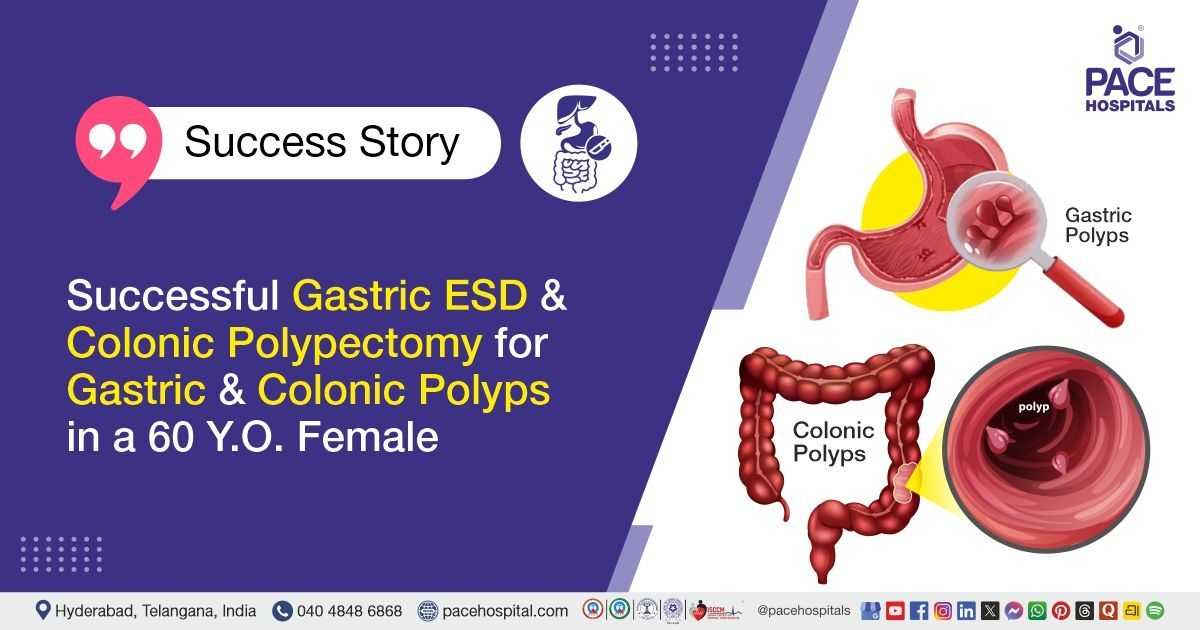
Successful Gastric ESD and Colonic Polypectomy for Gastric and Colonic Polyps in a 60 Y.O. Female
PACE Hospitals
PACE Hospitals’ expert gastroenterology team successfully performed a Gastric Endoscopic Submucosal Dissection (ESD) along with a colonic polypectomy on a 60-year-old female diagnosed with a gastric semipedunculated polyp and a colonic polyp, with underlying conditions including Type 2 Diabetes Mellitus, systemic hypertension, and dyslipidemia. The aim of the procedure was to achieve complete and safe removal of the gastric and colonic polyps and to prevent potential malignant transformation, thereby improving overall gastrointestinal health.
Chief Complaints
A 60-year-old female patient with a body mass index (BMI) of 20 presented to the Gastroenterology Department at PACE Hospitals, Hitech City, Hyderabad, with complaints of increased frequency of stools (3–4 times per day), which were semisolid in consistency. She also reported diffuse abdominal pain of mild to moderate intensity, present for many years with aggravation over the past one year. Her symptoms were associated with abdominal bloating, belching, and episodes of vomiting after food intake for the past year. There was no history of weight loss or loss of appetite.
Past Medical History
The patient was a known case of Type 2 Diabetes Mellitus, systemic hypertension, and dyslipidemia, for which she had been on regular medications. There was no documented history of other major chronic illnesses, previous gastrointestinal surgeries, or significant hospitalizations apart from the current condition.
On Examination
On examination, the patient was conscious, coherent and well-oriented. Her vital parameters were within normal limits. Systemic examination revealed a soft and non-tender abdomen with no abnormal findings noted. Overall, the general and systemic examination was unremarkable.
Diagnosis
Following the clinical assessment, the Gastroenterology team conducted a comprehensive evaluation of the patient’s symptoms, including increased frequency of stools, abdominal pain, bloating, belching, and vomiting, along with a detailed review of her medical history.
Clinical examination and endoscopic evaluation, including upper gastrointestinal (UGI) endoscopy and colonoscopy, revealed a semipedunculated gastric polyp (Hills Grade III), diminutive gastric polyps, duodenal angiorectasia (RUT-positive), and multiple colonic polyps. Laboratory investigations, including complete blood picture (CBP), renal function tests (RFT), liver function tests (LFT), and serum electrolytes, were within normal limits except for mild anemia and borderline renal function. Imaging with X-ray abdomen showed a non-specific bowel gas pattern with no evidence of free air or abnormal calcifications.
Based on the confirmed diagnosis, the patient was advised to undergo Colonic Polyp and Gastric Semipedunculated Polyp Treatment in Hyderabad, India, under the expert care of the Gastroenterology Department.
Medical Decision Making (MDM)
After a detailed consultation with consultant gastroenterologists, Dr. Govind Verma, Dr. M. Sudhir, and Dr. Padma Priya, a comprehensive evaluation was performed to determine the most appropriate diagnostic and therapeutic approach. Considering the patient’s history of increased frequency of stools, long-standing abdominal pain, bloating, vomiting, and comorbidities including Type 2 Diabetes Mellitus, systemic hypertension, and dyslipidemia, an optimal treatment strategy was formulated.
Based on clinical assessment, endoscopic findings confirming a gastric semipedunculated polyp and colonic polyps, along with laboratory investigations showing normal electrolytes, renal function, and liver function tests, but mild anemia, it was determined that Gastric Endoscopic Submucosal Dissection (ESD) with colonic polypectomy was identified as the most suitable therapeutic intervention. This approach was selected to completely remove the lesions, reduce the risk of malignant transformation, relieve gastrointestinal symptoms, and minimize postoperative discomfort and recovery time compared to conventional surgical options.
The patient and her family members were counselled regarding the diagnosis, planned procedure, associated risks, and its potential to relieve symptoms and improve quality of life.
Surgical Procedure
Following the decision, the patient was scheduled to undergo Gastric Endoscopic Submucosal Dissection (ESD) and Colonic Polypectomy Procedure in Hyderabad at PACE Hospitals, under the specialized care of the Gastroenterology Department.
The following steps were carried out during the procedure:
- Endoscopic Evaluation and Identification of Lesions: The procedure began with careful insertion of the endoscope to evaluate the upper and lower gastrointestinal tract. A semipedunculated polyp measuring approximately 15 × 10 mm was identified in the stomach. Additionally, a smaller polyp measuring 7 mm was detected in the colon, approximately 30 cm from the anal verge. Each lesion was assessed for size, morphology, and location to plan the resection technique.
- Submucosal Elevation of Polyps: For both gastric and colonic polyps, the base of the lesions was elevated by injecting a solution of Methylene blue using a sclerosant needle. This submucosal injection created a cushion beneath the polyp, lifting it away from the muscular layer and facilitating safe resection while minimizing the risk of perforation.
- Endoscopic Submucosal Dissection (Gastric Polyp): The gastric polyp underwent endoscopic submucosal dissection (ESD) using a hybrid T-knife. The mucosal layer surrounding the polyp was incised carefully, and the submucosal fibers were dissected to achieve complete en bloc removal of the lesion under direct endoscopic visualization.
- Polyp Resection and Colonic Polypectomy: The gastric polyp was resected, and the defect was closed with hemostatic clips. The colonic polyp was removed using a hot snare polypectomy technique after submucosal lifting with Methylene blue. The resected specimens were sent for histopathological examination (HPE).
- Hemostasis Confirmation: After complete resection of both gastric and colonic polyps, hemostasis was confirmed endoscopically. Hemostatic clips were applied to any visible sites of potential bleeding in the stomach and colon.
Postoperative Care
During the postoperative period, the patient was closely monitored for vital signs, hydration status, and gastrointestinal symptoms. Supportive care included intravenous fluids for maintenance of hydration, medications to prevent and treat infection, agents to reduce gastric acidity and protect the gastrointestinal lining, and other therapies aimed at managing discomfort and promoting recovery. Histopathology of biopsy specimens confirmed the presence of gastric and colonic polyps. The patient’s progress was regularly assessed, and she showed significant symptomatic improvement, including resolution of abdominal discomfort and stabilization of bowel habits, prior to discharge.
Discharge Medications
Upon discharge, the patient was prescribed medications to support recovery and manage existing health conditions. This included treatment to prevent and manage infections, therapy to reduce gastric acidity and protect the gastrointestinal lining, medications to control blood pressure, agents to manage cholesterol and triglyceride levels, therapy for mood stabilization and anxiety relief, and a medication to regulate bowel movements and prevent constipation. All medications were prescribed with appropriate timing and duration to ensure optimal post-procedural recovery and overall health maintenance.
Advice on Discharge
The patient was advised with a low-salt, strict diabetic diet to support overall health and metabolic control. For immediate post-procedural care, a liquid diet was recommended for the first two days to allow the gastrointestinal tract to recover, followed by a semisolid diet for one week to gradually reintroduce normal foods while minimizing strain on the stomach and colon.
Emergency Care
The patient was informed to contact the emergency ward at PACE Hospitals in case of any emergency or development of symptoms such as abdominal pain, vomiting, fever, or rectal bleeding.
Review and Follow-up Notes
The patient was advised to return for a follow-up visit with the Gastroenterologist in Hyderabad at PACE Hospitals after one week and with the Endocrinologist after one week, with fasting and postprandial blood sugar reports.
Conclusion
This case highlights the successful endoscopic management of gastric and colonic polyps in a patient with comorbidities. Both gastric ESD and colonic polypectomy were performed uneventfully, with histopathology confirming the polyps. The patient showed symptomatic improvement and was discharged in stable condition with dietary guidance and planned follow-up for gastrointestinal and metabolic care.
Comprehensive Endoscopic Management of Gastrointestinal Polyps
Endoscopic management of gastrointestinal polyps, performed under the guidance of a Gastroenterologist / Gastroenterology doctor, involves careful evaluation and removal of lesions in both the stomach and colon. Patients may present with nonspecific gastrointestinal symptoms such as altered bowel habits, abdominal discomfort, bloating, or postprandial vomiting. Diagnosis relies on endoscopic visualization and histopathological confirmation of polyps. Techniques like endoscopic submucosal dissection (ESD) for gastric lesions and polypectomy for colonic polyps enable complete resection while minimizing complications. Perioperative care includes management of underlying comorbidities, supportive therapy, and monitoring for potential adverse events. Structured dietary advice and follow-up by the Gastroenterology doctor are crucial to ensure proper healing, prevent recurrence, and optimize patient outcomes.
Share on
Request an appointment
Fill in the appointment form or call us instantly to book a confirmed appointment with our super specialist at 04048486868
Appointment request - health articles
Recent Articles