Successful Lap. Sleeve Gastrectomy for Morbid Obesity in a 63 Y.O. Male
PACE Hospitals
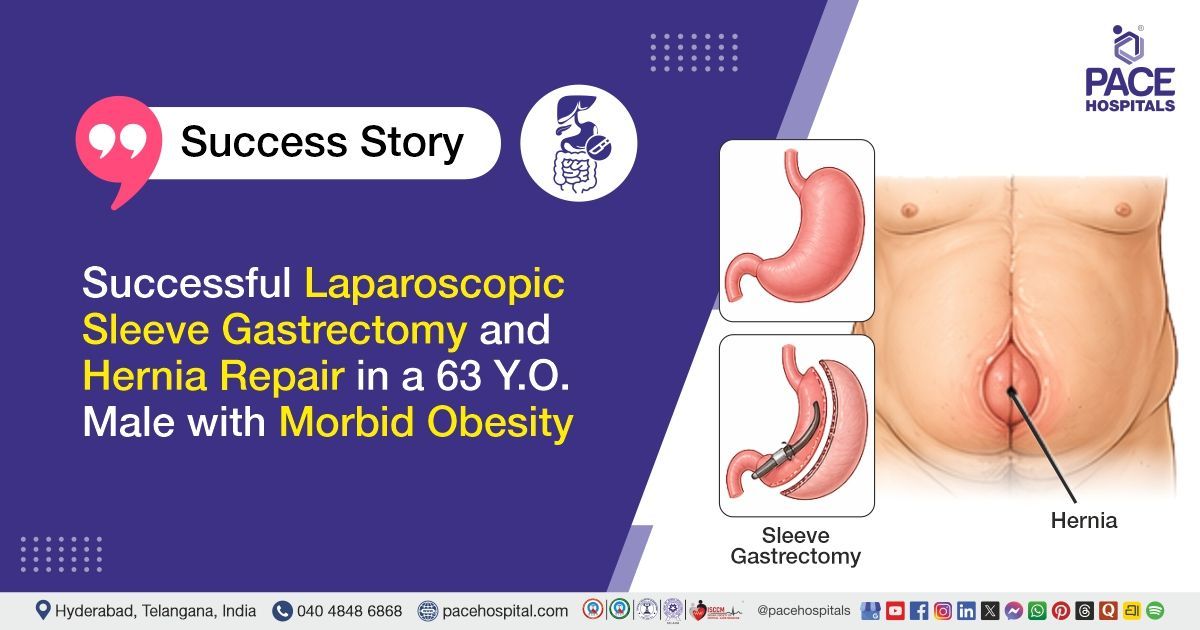
PACE Hospitals’ expert surgical gastroenterology team successfully performed a Laparoscopic Sleeve Gastrectomy combined with a Laparoscopic Intraperitoneal Onlay Mesh (IPOM) - Plus Repair on a 63-year-old male patient diagnosed with Class IV obesity (BMI 40.3 kg/m²), along with an irreducible umbilical hernia and bilateral inguinal hernia. The aim is to achieve effective weight reduction, repair abdominal wall defects, relieve symptoms, and prevent complications such as hernia strangulation, while ensuring a minimally invasive approach for faster recovery and improved overall outcomes.
Chief Complaints
A 63-year-old male patient with a body mass index (BMI) of 40.3 presented to the Surgical Gastroenterology Department at PACE Hospitals, Hitech City, Hyderabad, with complaints of swelling in the umbilical region and bilateral inguinal regions for the past two years, where the inguinal swelling was reducible, but the umbilical swelling was irreducible. He was also morbidly obese and had associated symptoms impacting daily activities.
Past Medical History
The patient was a known case of hypertension, for which he was on medication, and obstructive sleep apnea, previously managed with BiPAP support. He also had a history of bronchial asthma and was on regular inhalation therapy. No history of diabetes, coronary artery disease, or prior abdominal surgeries was reported.
On Examination
On clinical evaluation, the patient was conscious, coherent, oriented, and hemodynamically stable. Systemic examination findings were within normal limits, with normal respiratory and cardiovascular parameters. Abdominal examination revealed findings consistent with an umbilical swelling (irreducible) and bilateral inguinal swellings (reducible), while the abdomen remained soft and non-tender overall.
Diagnosis
Upon admission to PACE Hospitals, following the clinical assessment, the Surgical Gastroenterology team conducted a comprehensive clinical evaluation based on his complaints of umbilical and bilateral inguinal swellings along with a history of morbid obesity. A detailed medical history, physical examination, and preoperative assessment were performed to evaluate overall fitness for surgery and identify associated comorbid conditions.
Baseline investigations, including complete blood picture, renal function tests, liver function tests, serum electrolytes, coagulation profile, viral screening, chest X-ray, and cardiac evaluation (2D Echo), were carried out and were largely within acceptable limits for surgical intervention.
Based on the confirmed diagnosis, the patient was advised to undergo Weight loss surgery and Hernia repair Treatment in Hyderabad, India, under the expert care of the Surgical Gastroenterology Department.
Medical Decision Making (MDM)
After a detailed consultation with Dr. CH Madhusudan, Senior Consultant Surgical Gastroenterologist and Liver Transplant Surgeon, along with the team, including Dr. Suresh Kumar S, Consultant Surgical Gastroenterologist, a comprehensive evaluation of the patient was undertaken with multidisciplinary inputs. Considering the patient’s history of morbid obesity (BMI 40.3 kg/m²), irreducible umbilical hernia, and bilateral inguinal hernias, along with comorbid conditions including hypertension, obstructive sleep apnea, and bronchial asthma, the clinical condition was reviewed in detail to determine the most appropriate management strategy.
Further assessment confirmed the presence of an umbilical hernia with a defect of approximately 3 × 3 cm and associated bilateral inguinal hernias in the setting of increased intra-abdominal pressure due to obesity. Laboratory and cardiac evaluations were within acceptable limits, and the patient was optimised for surgery.
Based on the multidisciplinary evaluation, it was determined that laparoscopic sleeve gastrectomy combined with laparoscopic IPOM plus repair was identified as the most appropriate treatment to achieve weight reduction, repair hernia defects, prevent recurrence, and reduce the risk of complications such as obstruction or strangulation, while offering the benefits of a minimally invasive approach.
The patient and his family members were counselled in detail regarding the diagnosis, planned surgical procedure, associated risks, benefits, and expected postoperative recovery. Informed consent was obtained prior to proceeding with the surgery.
Surgical Procedure
Following the decision, the patient was scheduled to undergo a Laparoscopic IPOM Plus Repair Surgery with Laparoscopic Sleeve Gastrectomy in Hyderabad at PACE Hospitals under the expert care of the Surgical Gastroenterology Department.
The procedure involved the following steps:
- Exploration and Hernia Assessment: Intraoperative findings revealed an umbilical hernia with a 3 × 3 cm defect with omentum adherent to the sac. Adhesiolysis was performed, and the omentum was carefully separated and reduced.
- Gastric Mobilisation: The stomach was mobilised by dividing the gastrocolic and gastrosplenic ligaments along with other attachments to prepare for sleeve creation.
- Sleeve Gastrectomy: The stomach was stapled starting approximately 6 cm from the pylorus, and the gastric sleeve was created using multiple stapler firings. The resected portion was removed.
- Umbilical Hernia Repair: The hernia defect was cleared, excess tissue was excised, and the defect was closed using sutures.
- Mesh Reinforcement (IPOM Plus Repair): A 15 × 15 cm mesh was placed and fixed using absorbable tackers to strengthen the abdominal wall and reduce recurrence risk.
- Drain Placement and Closure: Surgical drains were placed, and port sites were closed after ensuring complete hemostasis.
Postoperative Care
The procedure was uneventful, and the patient was closely monitored during the postoperative period. He remained hemodynamically stable and was managed with intravenous therapy for infection control, pain management, gastric protection, and supportive care to ensure adequate recovery. Early mobilisation was initiated on the first postoperative day along with respiratory support as advised. On the second postoperative day, a contrast imaging study confirmed no evidence of leak, following which the patient was started on a liquid diet. By the third postoperative day, surgical drains were removed, and wound care was performed. The patient showed gradual clinical improvement and tolerated diet progression well, indicating a satisfactory postoperative recovery.
Discharge Medications
The patient was discharged in a hemodynamically stable condition following satisfactory postoperative recovery. At discharge, he was prescribed therapy for infection prevention, gastric acid suppression, pain control, and to prevent venous thromboembolism, along with nutritional supplementation to support recovery.
Advice on Discharge
The patient was advised regarding postoperative wound care, including maintaining hygiene at the surgical site and monitoring for any signs of infection. He was instructed to follow a liquid diet for one week, followed by a gradual diet progression as per dietician guidance, along with adequate hydration to support recovery and nutritional balance. Additionally, the patient was advised to adhere to prescribed medications, avoid strenuous activities, and attend regular follow-up visits for clinical evaluation and further management.
Emergency Care
The patient was informed to contact the emergency ward at PACE Hospitals in case of any emergency or development of symptoms such as fever, severe abdominal pain, persistent vomiting, breathlessness, or chest pain.
Review and Follow-up Notes
The patient was advised to follow up with the Surgical Gastroenterologist in Hyderabad, at PACE Hospitals, after 5 days for postoperative evaluation. He was also counselled regarding the importance of regular follow-up, dietary compliance, and monitoring for recovery progress.
Conclusion
This case highlights the successful management of a male patient with morbid obesity complicated by an irreducible umbilical hernia and bilateral inguinal hernias. Following comprehensive clinical evaluation and multidisciplinary decision-making, the patient underwent laparoscopic sleeve gastrectomy combined with laparoscopic IPOM plus repair, addressing both obesity and abdominal wall defects in a single setting.
The procedure was completed successfully without complications, and the patient demonstrated stable postoperative recovery with good clinical improvement. He was discharged in a hemodynamically stable condition with appropriate medications, dietary advice, and follow-up recommendations. This combined minimally invasive approach ensured effective surgical management, reduced the risk of hernia recurrence, and contributed to improved overall health outcomes and quality of life.
Multidisciplinary Approach in Managing Morbid Obesity with Umbilical and Inguinal Hernias
Management of morbid obesity with associated umbilical and bilateral inguinal hernias requires a multidisciplinary approach involving a surgical gastroenterologist / surgical gastroenterology doctor, anesthesiologist, pulmonologist, and nutritionist. In this case, a 63-year-old male with BMI 40.3 kg/m² underwent detailed evaluation including imaging, laboratory tests, and pre-anesthetic assessment to optimize surgical safety. The coexistence of obesity and hernias increases the risk of complications, making a combined and well-planned intervention essential.
Definitive management included laparoscopic sleeve gastrectomy along with laparoscopic IPOM plus hernia repair, addressing both weight reduction and abdominal wall defects simultaneously. Postoperative care focused on early mobilization, respiratory support, infection prevention, and gradual nutritional rehabilitation. This coordinated multidisciplinary strategy ensured optimal recovery, reduced recurrence risk, and improved overall quality of life.
Frequently Asked Questions (FAQs)
When is surgery like sleeve gastrectomy, advised in obesity?
Weight-loss surgery, such as sleeve gastrectomy, is usually advised when a person has severe obesity (BMI ≥40) or a BMI ≥35 along with health problems like diabetes, high blood pressure, or sleep apnea. It is considered when diet, exercise, and medications have not been successful in achieving significant weight loss. The goal is not just weight reduction but also improving overall health and preventing complications.
What does having multiple hernias mean?
Having multiple hernias means there is more than one weak area in the abdominal wall where internal tissues or organs push out, forming bulges. These can occur at different locations, such as the umbilicus, groin, or previous surgical sites. It indicates that the abdominal wall has weakened in more than one place, which may require surgical repair to prevent pain or complications.
Why was laparoscopic (keyhole) surgery used?
Laparoscopic surgery was used because it involves small cuts instead of a large incision. This helps in reducing pain, lowering the risk of infection, allowing faster healing, and helping patients return to normal activities sooner.
What is the benefit of repairing a hernia during weight-loss surgery?
Repairing the hernia during the same surgery is beneficial because it avoids the need for another operation later. It also helps fix both problems at once and reduces the chances of the hernia coming back, especially after weight loss.
How does weight loss surgery help overall health?
Weight loss surgery works by reducing the size of the stomach so that people feel full with less food. This leads to gradual weight loss and helps improve conditions like high blood pressure and sleep apnea. It also makes daily activities easier and improves overall quality of life.
Why are multiple medicines given after surgery?
After surgery, different medicines are given for different reasons. These medications help to prevent infection, reduce discomfort, prevent clot formation, and stomach medicines protect the stomach after surgery. Supplements are also given to support healing and nutrition.
What lifestyle changes are important after this surgery?
After surgery, it is important to follow a healthy lifestyle. The patient needs to follow a proper diet, starting with liquids and gradually moving to solid foods. Eating small portions, avoiding junk food, staying physically active, and maintaining long-term weight control are very important for good results.
How does a smooth recovery in hospital affect the outcome?
A smooth recovery in the hospital is a good sign that the surgery was successful and there are no early complications. Patient was able to walk early, start liquids, and had no leakage on scan, which means the recovery is likely to be better and safer in the long term.
Why was an umbilical hernia called irreducible?
An umbilical hernia is called irreducible when the swelling cannot be pushed back inside the abdomen. This means the contents inside the hernia, such as fat or intestine, get stuck. It is important because irreducible hernias have a higher risk of complications like obstruction or strangulation, which may require urgent treatment.
Which symptoms after discharge should not be ignored?
After going home, the patient should not ignore symptoms like severe abdominal pain, fever, vomiting, swelling or redness at the wound site, or difficulty in breathing. These may indicate complications and need immediate medical attention.
What is the role of protein supplements after surgery?
Protein supplements are important after surgery because they help in wound healing, maintain muscle strength, and support healthy weight loss. Since food intake is reduced after surgery, supplements ensure the body gets enough nutrition.
Share on
Request an appointment
Fill in the appointment form or call us instantly to book a confirmed appointment with our super specialist at 04048486868
Appointment request - health articles
Recent Articles