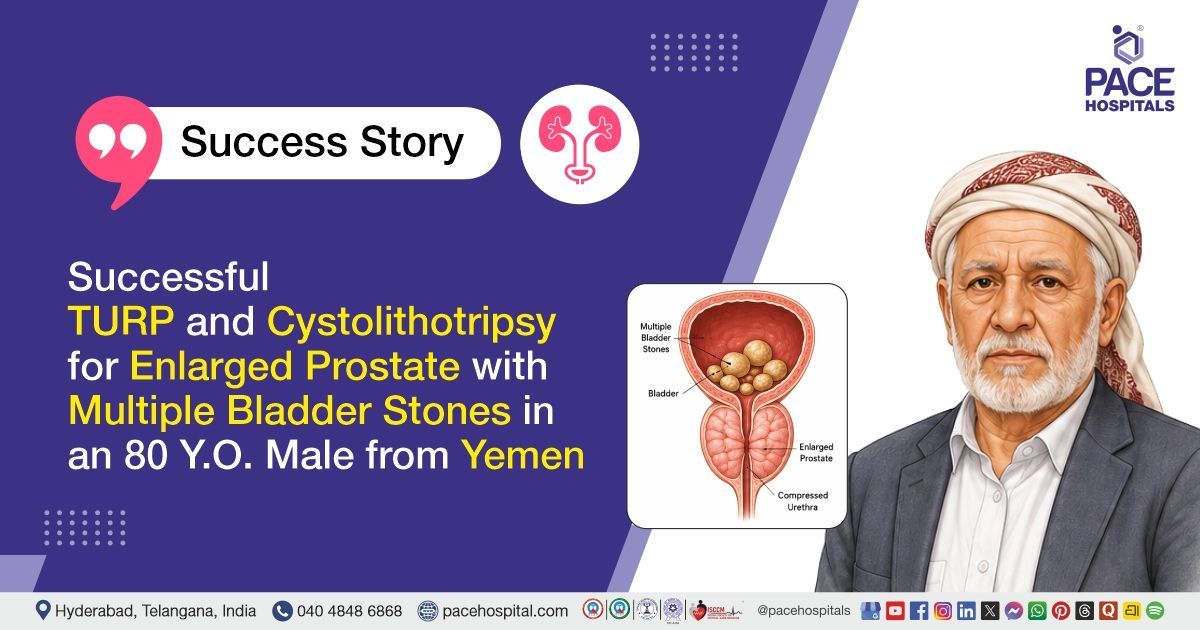
Successful TURP and Cystolithotripsy for Enlarged Prostate with Multiple Bladder Stones
PACE Hospitals
PACE Hospital’s expert Urology team successfully performed a Transurethral Resection of the Prostate (TURP), with cystolithotripsy on an 80-year-old male patient from Yemen diagnosed with benign prostatic enlargement, multiple bladder stones (vesical calculi), Parkinsonism, prior cerebrovascular accident (CVA), idiopathic normal pressure hydrocephalus (iNPH), and diabetes mellitus. The aim of the procedure was to relieve urinary obstruction caused by the enlarged prostate, remove bladder stones, improve urine flow, and reduce urinary symptoms while also helping prevent recurrent infections and other long-term urinary complications.
Chief Complaints
An 80-year-old male patient with a body mass index (BMI) of 22 presented to the Urology Department at PACE Hospitals, Hitech City, Hyderabad, with a history of urinary retention and was on catheterization at the time of presentation. He also had complaints of gait disturbance and difficulty in swallowing (deglutition).
Past Medical History
The patient had a past medical history of benign prostatic enlargement (BPE) or enlarged prostate with multiple vesical calculi, Parkinsonism, prior cerebrovascular accident (CVA), idiopathic normal pressure hydrocephalus (iNPH), and diabetes mellitus.
On examination
On examination, the patient was conscious, coherent, and oriented, and was hemodynamically stable with a urinary catheter in situ due to urinary retention. Neurological assessment revealed impaired gait and difficulty in swallowing, consistent with underlying Parkinsonism and prior cerebrovascular accident. Abdominal examination was soft and non-tender with no acute findings. Overall, clinical findings were suggestive of bladder outlet obstruction in the background of neurological comorbidities.
Diagnosis
Upon admission to PACE Hospitals, the patient was thoroughly evaluated by the Urology team, including a detailed review of his medical history and a comprehensive clinical examination. He presented with urinary retention on a catheter. Based on the initial assessment and clinical findings, a provisional diagnosis of benign prostatic enlargement (BPE) with multiple vesical calculi was made, along with associated comorbid conditions including Parkinsonism, prior cerebrovascular accident (CVA), possible normal pressure hydrocephalus (iNPH), and diabetes mellitus.
The patient was further evaluated with relevant investigations, including complete blood picture, which showed abnormal findings consistent with anemia and neutrophilic predominance, serum electrolytes, which were within normal limits, renal function tests which were within normal limits, viral screening including HIV, HBsAg, and HCV, which were non-reactive or negative, and glycosylated hemoglobin (HbA1c), which was abnormal, indicating poor glycemic control. Urine analysis, including protein creatinine ratio, was abnormal, suggestive of proteinuria.
Based on the confirmed findings, the patient was advised to undergo Enlarged Prostate Treatment in Hyderabad, India, along with Multiple Vesical (bladder) Calculi under the expert care of the Urology Department.
Medical Decision Making (MDM)
After a detailed consultation with Dr. Abhik Debnath (Consultant Laparoscopic Urologist), along with a multidisciplinary team comprising Dr. S Pramod Kumar (Consultant Neurologist) and Dr. Tripti Sharma (Consultant Endocrinologist), a comprehensive evaluation was conducted focusing on the patient’s presentation of acute urinary retention on catheter, with underlying benign prostatic enlargement, multiple vesical calculi, Parkinsonism, prior CVA, suspected normal pressure hydrocephalus (iNPH), and diabetes mellitus.
Clinical examination and diagnostic assessment, including complete blood picture, serum electrolytes, renal function tests, viral markers, urine protein–creatinine ratio, and perioperative evaluations, confirmed the presence of trilobar obstructive benign prostatic enlargement (~90 gm) with bladder outlet obstruction and multiple vesical calculi. There was no evidence of active infection, renal dysfunction, coagulopathy, or cardiopulmonary contraindications for surgical intervention.
It was determined that Transurethral Resection of Prostate (TURP) with cystolithotripsy was the most appropriate intervention in view of the significant bladder outlet obstruction due to benign prostatic enlargement associated with multiple vesical calculi and persistent catheter-dependent urinary retention, with the aim of relieving bladder outlet obstruction, fragmenting and evacuating bladder stones, restoring urinary flow, and improving quality of life.
The patient and family were counselled regarding the diagnosis of benign prostatic enlargement with multiple vesical calculi and associated neurological comorbidities contributing to voiding dysfunction. The planned surgical management, along with its risks, benefits, expected outcomes, and the possibility of persistent or prolonged voiding dysfunction due to Parkinsonism, prior CVA, suspected iNPH, and advanced age, was explained in detail, and informed consent was obtained.
Surgical Procedure
Following the decision, the patient was scheduled to undergo Transurethral resection of prostate (TURP) with Cystolithotripsy Procedure in Hyderabad at PACE Hospitals, under the expert care of the Urology Department.
The procedure involved the following steps:
- Anaesthesia and Patient Positioning: The patient was administered spinal anaesthesia, which numbed the lower half of the body while keeping him conscious. He was then positioned in the lithotomy position with legs elevated and supported to allow optimal access to the urinary tract. After positioning, the genital area was cleaned and prepared under strict sterile conditions to reduce infection risk.
- Introduction of Resectoscope and Bladder Inspection: A resectoscope was inserted through the urethra into the bladder to visualize the urinary passage internally. On inspection, a trilobar occlusive prostate was identified, indicating significant enlargement causing blockage of urine flow. The bladder wall was found to be trabeculated, suggesting long-standing obstruction. Multiple small bladder stones were also visualized inside the bladder.
- Cystolithotripsy (Stone Fragmentation and Removal): The bladder stones were addressed first using cystolithotripsy. The stones were mechanically fragmented into smaller pieces using endoscopic instruments passed through the resectoscope. These fragmented pieces were then flushed out and completely evacuated from the bladder using irrigation, ensuring a clear surgical field for the next stage of the procedure.
- TURP (Transurethral Resection of Prostate): Transurethral resection of the prostate was then performed to relieve urinary obstruction. The enlarged prostate tissue was carefully shaved off in small chips using an electrical cutting loop, particularly targeting the obstructing lobes. An amino acid solution was used continuously as an irrigant to maintain visibility and remove tissue debris. The total resection time was approximately 60 minutes.
- Final Inspection, Hemostasis, and Completion: After resection, the surgical field was carefully inspected to confirm complete removal of prostate chips and bladder stones. Any bleeding points were controlled using cauterization to ensure hemostasis. Once the bladder was clear and stable, a urinary catheter was placed for postoperative drainage and healing. The procedure was completed without any intraoperative or postoperative complications.
Postoperative Care
Postoperatively, the patient had an uneventful course with stable urine drainage through the catheter and no complications such as significant bleeding, clot retention, or infection. Urine output and color were closely monitored and showed gradual improvement with satisfactory drainage. Intravenous medication was administered to prevent postoperative infection. Blood glucose levels and neurological status were monitored regularly due to comorbid conditions. Histopathology of TURP chips showed nodular prostatic hyperplasia (benign prostatic enlargement). It also showed areas of prostatic infarction with no evidence of malignancy. He was discharged in stable condition with a catheter in situ and advised follow-up for further assessment.
Discharge Medications
Upon discharge, the patient was prescribed treatment to prevent urinary tract infection after surgery, along with medicines for pain relief as needed. He was continued on therapy to reduce prostate enlargement and improve urinary flow over time. Medications were maintained for memory impairment and Parkinsonism to support neurological function. Diabetic medications were advised for the control of blood sugar levels in diabetes. Additional treatment was given to prevent constipation and support overall recovery. Blood-thinning medicines were temporarily stopped to reduce the risk of post-operative bleeding, with planned reassessment later.
Advice on discharge
The patient was advised to follow a diabetic diet to maintain proper blood sugar control and support postoperative recovery. He was advised to avoid heavy weight lifting and forward bending to prevent strain on the operated prostate area.
He was advised to avoid straining during stools to reduce the risk of bleeding and pressure on the surgical site. He was advised to perform regular physiotherapy with assisted ambulation four times daily to improve mobility and overall recovery.
Emergency Care
The patient was instructed to contact the emergency ward at PACE Hospitals in the event of an emergency or if symptoms such as fever, increasing abdominal pain, inability to pass urine or blocked catheter, blood clots or heavy bleeding in urine, foul-smelling urine, or sudden worsening of general weakness or confusion occur.
Review and Follow-up Notes
The patient was advised to return for follow-up with the Urologist in Hyderabad at PACE Hospitals after 4 days for catheter removal. He was also advised to review with the Neurologist for medication review and swallowing assessment, along with the Endocrinologist review for diabetes mellitus control and glycemic management.
Conclusion
This case highlights benign prostatic enlargement with multiple vesical calculi causing chronic urinary retention and bladder outlet obstruction, complicated by neurological dysfunction. The patient underwent TURP with cystolithotripsy, with successful removal of prostatic obstruction and bladder stones without complications. Histopathology confirmed benign pathology. Postoperatively, the patient remained stable but may have delayed voiding recovery due to an underlying neurogenic bladder, requiring further follow-up.
Impact of Multimorbidity on Clinical Outcomes in Elderly Patients
Multimorbidity in elderly patients often complicates diagnosis, treatment planning, and overall clinical management across medical and surgical conditions. The presence of neurological, metabolic, and chronic systemic diseases can significantly alter symptom presentation, influence therapeutic decisions, and affect recovery potential. Even when the primary disease is appropriately treated by a urologist/urology doctor, functional outcomes may remain limited due to reduced physiological reserve and associated comorbidities. Such patients require thorough multidisciplinary evaluation to ensure safe, balanced, and individualized care planning.
Careful risk–benefit assessment is essential before undertaking any intervention, particularly in high-risk individuals. Outcomes are largely determined not only by the primary treatment but also by the overall health status and comorbidity burden. Recovery is often prolonged, with increased need for rehabilitation and supportive care. Therefore, close follow-up, coordinated multidisciplinary management, and clear communication with patients and caregivers are crucial to achieve optimal long-term outcomes and realistic expectations.
Frequently Asked Questions(FAQs)
Why is TURP combined with cystolithotripsy in some patients?
Sometimes, a patient has both an enlarged prostate and bladder stones. An enlarged prostate can block the normal flow of urine, while bladder stones can cause pain, infection, and difficulty passing urine. In such cases, TURP (Transurethral Resection of the Prostate) is done to remove the prostate tissue causing the blockage, and cystolithotripsy is performed to break and remove the bladder stones. Doing both procedures together helps improve urine flow and lowers the risk of repeated urinary retention.
Can TURP help patients who are already using a urinary catheter?
Yes. TURP is often recommended for patients who cannot pass urine on their own because of prostate blockage and therefore need a urinary catheter. After TURP, many patients are able to urinate without a catheter. However, the outcome depends on factors such as bladder strength, prostate size, the amount of urine left in the bladder after urination (residual urine), and any underlying neurological conditions.
Why can urinary problems continue even after TURP in patients with Parkinsonism, stroke, or iNPH?
Conditions such as Parkinsonism, a previous stroke, or iNPH (Idiopathic Normal Pressure Hydrocephalus) can affect the nerves that control the bladder. Even if TURP successfully removes the prostate blockage, the bladder may not work normally right away. Some patients may need extra time to recover bladder function and may require a catheter or clean intermittent self-catheterisation (CISC) for a period of time.
Why is a catheter kept after TURP and bladder stone removal?
A urinary catheter is usually kept in place for a short time after surgery. It helps drain urine, allows doctors to monitor any bleeding, and gives the operated area time to heal properly. In older patients or those with neurological bladder problems, the catheter may be kept longer and removed only after careful assessment by the doctor.
Is TURP safe for elderly patients with diabetes and neurological conditions?
Yes, TURP can be safely performed in elderly patients when proper medical evaluation is done beforehand. Doctors assess fitness for anaesthesia, blood sugar control, kidney function, infection risk, and neurological health. Extra care is taken in patients with diabetes, Parkinsonism, a history of stroke, or swallowing difficulties to ensure a safe recovery.
What does it mean if the prostate biopsy after TURP shows nodular hyperplasia?
Nodular hyperplasia means the prostate enlargement is benign (non-cancerous). It occurs due to an overgrowth of prostate gland tissue and stromal tissue. The histopathology examination of tissue removed during TURP helps confirm the diagnosis and checks for any signs of cancer or other abnormal changes.
Why do bladder stones develop in people with an enlarged prostate?
When an enlarged prostate blocks urine flow, the bladder may not empty completely. Urine that stays in the bladder for a long time can become concentrated and form stones. These bladder stones can cause irritation, infections, pain, and worsening urinary symptoms.
What precautions should be taken after TURP and cystolithotripsy?
After TURP (Transurethral Resection of Prostate) and cystolithotripsy, patients should avoid heavy lifting, excessive bending, and strenuous activities. Straining during bowel movements should be avoided to prevent bleeding. Adequate water intake helps maintain good urine flow and prevents blockage. Proper catheter care is essential to avoid infection. Constipation should be prevented with diet or medicines if needed. Regular follow-up with the urologist is important to monitor healing and recovery.
When should a patient seek emergency medical care after TURP?
Immediate medical attention is needed if the patient develops fever, severe abdominal pain, persistent vomiting, inability to pass urine after catheter removal, heavy bleeding or blood clots in the urine, catheter blockage, increasing weakness, confusion, or a significant decrease in urine output.
Why is follow-up with a urologist, neurologist, and endocrinologist important?
Regular follow-up is very important to make sure the patient is recovering well after treatment. The urologist checks urine flow, decides when the catheter can be safely removed, and monitors healing after surgery. The neurologist evaluates conditions such as Parkinsonism, previous stroke, suspected iNPH (extra fluid pressure changes in the brain), difficulty in walking, and swallowing problems, as these can affect bladder control and overall recovery. The endocrinologist manages diabetes and keeps blood sugar under control, which is important to prevent infections and support proper healing of tissues. Working together, these doctors ensure that all related health problems are managed properly, leading to safer recovery and better long-term health outcomes.
Share on
Request an appointment
Fill in the appointment form or call us instantly to book a confirmed appointment with our super specialist at 04048486868
Appointment request - health articles
Recent Articles